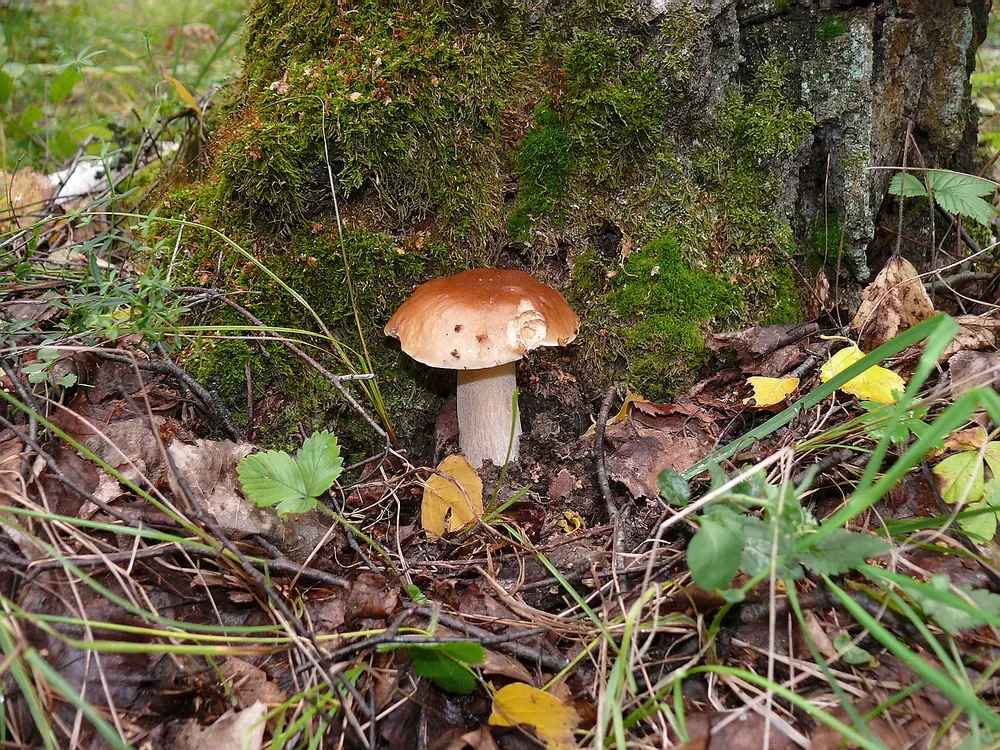
Picture a familiar scene: you find a sturdy porcini, carefully twist it out of the ground — and thin white threads trail after it, like torn roots. It seems logical: if a mushroom grows out of the ground, it must have roots, like a tree or a flower. But this is one of the most common misconceptions about mushrooms.
In fact, a mushroom has no roots. None at all. And what we're used to calling a “mushroom” is only a small visible part of a much larger and more amazing organism living under our feet.
Let's work out together what's really down there and why the fungus is something quite different from what we pick for our basket.
What we pick isn't the whole fungus
Let's start with the main thing. The cap on a stem that you put in your basket is not the whole organism. It's only the fruiting body. Its only job is to mature, spread its spores and die.
Here's a simple analogy. Picture an apple tree. The mushroom's fruiting body is like an apple on the tree. The “fungus” itself, as an organism, is the invisible “tree” hidden in the soil. Yet we usually see only the “apple” and think that's the whole plant.
So when you cut a porcini, you're not killing the fungus. You're only taking its fruit. The organism itself stays alive in the ground and next year will produce new fruiting bodies — given favorable conditions.
Mycelium: the fungus's real “body”
What lives underground is called the mycelium, or mycelial network. It isn't a root system but an entirely separate structure found only in fungi.
Mycelium is made of the finest threads — hyphae. Each hypha is many times thinner than a human hair. But together they form a dense, branching network that runs through the soil, the forest litter or wood for dozens of meters around.
How mycelium differs from a plant's roots:
- A plant's roots are part of the plant itself, a downward continuation of the stem. They anchor the plant in the ground and pump up water and minerals.
- Mycelium is the fungus itself, its main “body.” Fruiting bodies are just its way of reproducing.
- Roots grow from a single plant. Mycelium, though, can cover a huge area and essentially be one organism.
This is where one of nature's most astonishing stories hides. The largest known living organism on Earth isn't a whale or a tree but the mycelium of the dark honey fungus (Armillaria) in the US state of Oregon. It covers more than 900 hectares and, by scientists' estimates, has been alive for several thousand years.
So what are those white threads?
Back to the porcini with “roots.” The white threads trailing from the stem are part of the mycelium, just gathered into thicker strands. Sometimes a fungus forms dense cords out of hyphae — rhizomorphs. They look like roots from the outside but do a different job: they carry water and nutrients over long distances within the mycelium itself.
In other words, it's not a root feeding the mushroom from the soil but more of a “pipeline” inside the fungal organism.
How a fungus feeds without roots
If there are no roots, how does a fungus eat at all? A plant takes up water and minerals through its roots and makes sugars in the light through photosynthesis. A fungus can't do that: it has no chlorophyll, and sunlight doesn't feed it.
Fungi found another way. They're masters of recycling. The mycelium releases special substances into the soil — enzymes that break down everything around: fallen leaves, dead wood, animal remains. Then it absorbs the nutrients straight through the surface of its hyphae, like a giant sponge.
That's exactly why fungi matter so much to the forest. Without them, the forest litter wouldn't rot but would pile up for years. Fungi are nature's “cleaners” and recyclers, returning nutrients to the cycle.
Mycorrhiza: a secret friendship with trees
Now for the most interesting part. Many favorite mushrooms — porcini, brown birch bolete, chanterelle, slippery jack — can't live on their own at all. They need a partner. And that partner is a tree.
The mycelium wraps around a tree's fine roots and forms an alliance with it called mycorrhiza (from Greek — literally “fungus-root”). It isn't parasitism but a fair exchange in which both sides win:
- The tree gives the fungus some of the sugars it makes in the light. For the fungus, that's ready-made food.
- The fungus shares with the tree the water and minerals its huge mycelium gathers from the soil. The mycelium works as an extension of the tree's root system, increasing the absorbing area many times over.
That's why experienced foragers know: look for porcini under oak, birch or pine, and for slippery jacks near young pines. The mushroom and the tree are linked, and without their partner many species simply don't grow. This also explains why such mushrooms are nearly impossible to cultivate in a garden bed — they need a living forest.
Scientists even jokingly call this underground network the “wood wide web”: through the mycelium, trees can exchange nutrients and even signals. A whole hidden communication system — right under our feet.
So do mushrooms have roots or not? The short answer
To put it all together:
- A mushroom has no roots in the sense that plants do.
- What we pick is only the fruiting body, a way of reproducing.
- The fungus's real “body” is the mycelium, made of fine thread-like hyphae underground.
- The white root-like strands are rhizomorphs, part of the mycelium itself.
- Many fungi live in partnership with trees — mycorrhiza, exchanging nutrients.
So next time you find a beautiful porcini, remember: in your hands is just a small fruit of a huge hidden organism that lives in the ground for years and quietly holds up the whole forest.
Frequently asked questions
Do mushrooms have roots?
No. Fungi don't have true roots like plants. What trails out of the ground after the stem is mycelium or dense strands of hyphae (rhizomorphs), not roots.
What is mycelium?
Mycelium is the main body of a fungus. It's made of the finest thread-like hyphae that run through soil or wood in a dense network and can cover a large area.
How is mycelium different from roots?
Roots are part of a plant: they pump water and anchor it in the ground. Mycelium, on the other hand, is the fungus itself, its main organism. The fruiting bodies we pick are just its way of reproducing.
Why do white threads trail after a mushroom?
They're part of the mycelium gathered into thicker cords — rhizomorphs. They carry water and nutrients inside the fungal organism and only look like roots from the outside.
If you cut a mushroom, will the fungus die?
No. You only take the fruiting body, while the mycelium itself stays in the ground. Given favorable conditions, it will produce new mushrooms next year. So careful picking doesn't harm the mycelium.
What does a fungus feed on if it has no roots?
The mycelium releases enzymes into the soil that break down leaves, wood and remains, then absorbs the nutrients straight through the surface of its hyphae. Many fungi also get sugars from trees through mycorrhiza.
What is mycorrhiza?
It's a partnership between mycelium and a tree's roots. The fungus gives the tree water and minerals from its large network, and the tree gives the fungus some of its sugars. Both win from this friendship.
Why do porcini grow only near trees?
Because porcini live in mycorrhiza with oak, birch, pine and other trees and can't fully exist without a partner. That's exactly why such mushrooms are nearly impossible to grow in an ordinary garden bed.
Can you see mycelium?
Yes. If you carefully rake back the forest litter near mushrooms, you'll spot white cobwebby threads or strands. That's the mycelium — it usually stays hidden, but sometimes it's clearly visible to the naked eye.
Mushrooms in this article
Related articles
 Science & taxonomy
Bay bolete: health benefits and nutritional value
The bay bolete is a match for porcini in both flavor and nutrition. Here's why the bay bolete is good for you,…
August 20, 2026·2 min Science & taxonomy
Honey fungus: health benefits and risks
Honey fungus is a nourishing autumn mushroom, rich in protein and minerals. Here's why honey fungus is good fo…
August 20, 2026·2 min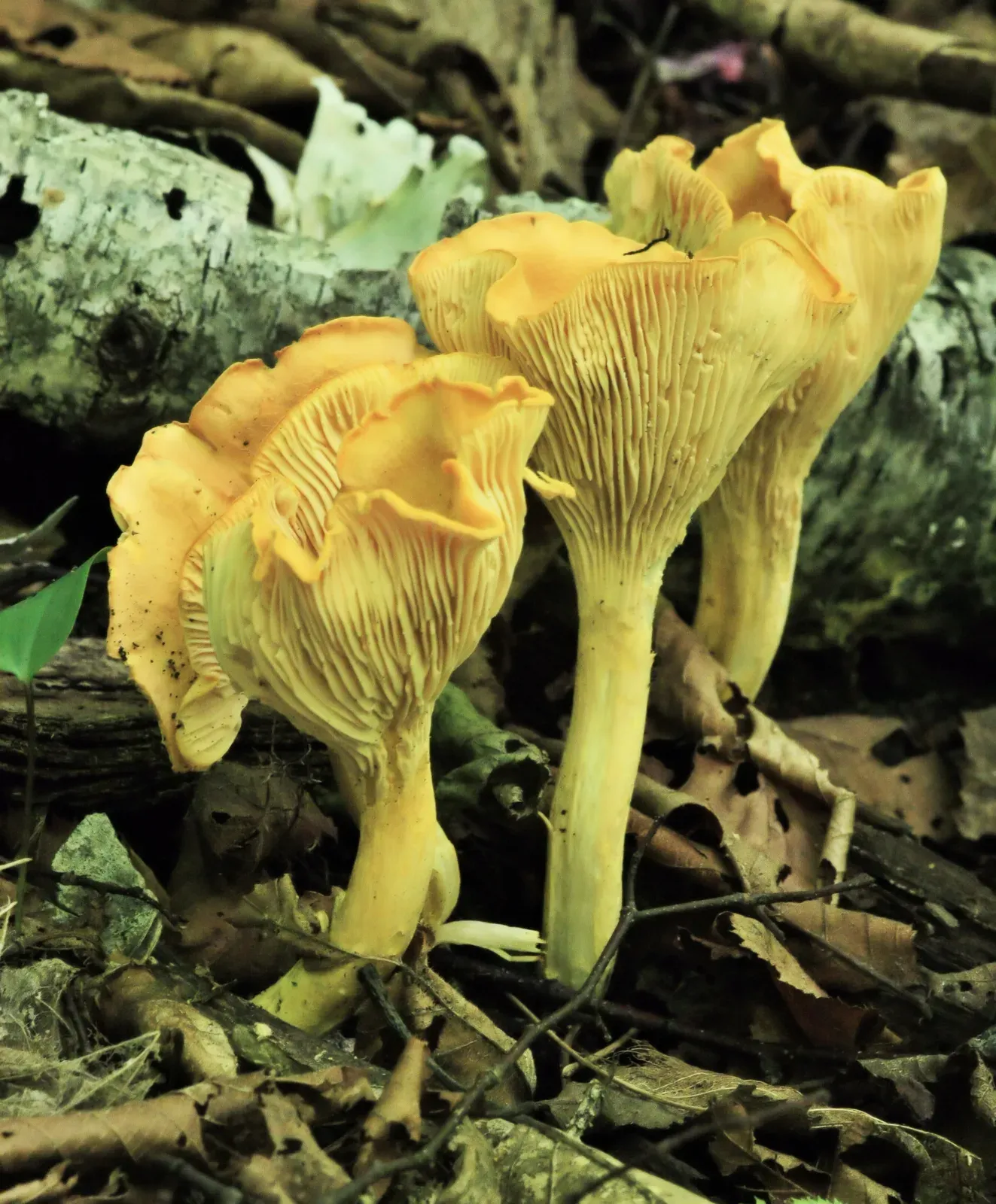 Science & taxonomy
Chanterelles: medicinal properties and health benefits
Chanterelles are credited with plenty of health-giving properties. Here's what really makes them valuable, wha…
August 23, 2026·2 min