THIS DATA HAS NOT BEEN VERIFIED BY AN EXPERT. Use at your own risk.
Boletus betulicola
Under reviewUpdated October 3, 2026
Passport
- Edibility
- Edible
- Season
- Jun — Oct
- Hymenophore
- Pored
- Cap color
- Cream
- Size
- Large (over 15 cm)
- Smell
- Pleasant
- Reviewed
- Under review
Quick answers
Where to look?
Deciduous forest, Mixed forest
When does it appear?
Jun — Oct
Active months: June, July, August, September, October.
How to recognize it? Three signs
- Cap color: Cream, Brown, White
- Cap shape: Convex, Flat
- Smell: Pleasant
Fruiting season
June – October
Description
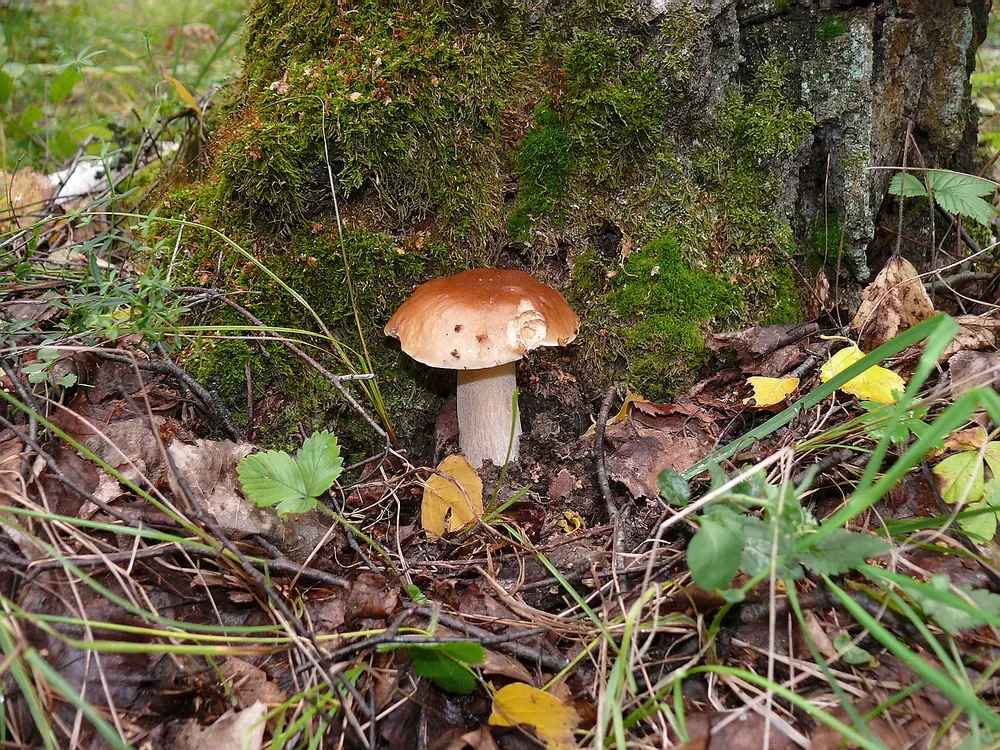
Boletus betulicola is a pale, gentle form of the famous porcini that has grown up in friendship with birch. Geneticists now place it in the collective Boletus edulis complex along with several close forms, but foragers prize it as a find in its own right: in an open birch wood, where sunlight breaks through the leaves, it stands firm and clean, as if carved from pale wood. Its cap is paler than a classic porcini — from the color of fresh bread to light chestnut — and that light cap among the white birch trunks is exactly what gives it away to an experienced eye.
In Ukraine this mushroom sticks to places with plenty of birch: light birch and mixed forests of Polissia, the Forest-Steppe, the Carpathians and the Carpathian foothills — Volyn, Rivne, Zhytomyr, Chernihiv and Sumy regions and the western oblasts. It loves forest edges, sun-warmed clearings, path verges and old clearings where young birches have already taken root. It often hides in the grass or under fallen leaves, so you find it not with your eyes but with your feet — slowly and carefully.
In flavor and culinary value, the birch porcini is every bit as good as its relatives. The flesh is firm and white, does not darken when cut, and has a delicate nutty aroma that only grows stronger as it dries. It is fried, stewed, pickled and dried — dried, it stays pale and fragrant. The one drawback: on warm days it quickly becomes a home for insect larvae, so young, firm specimens are the most coveted prize in the basket.
Cap
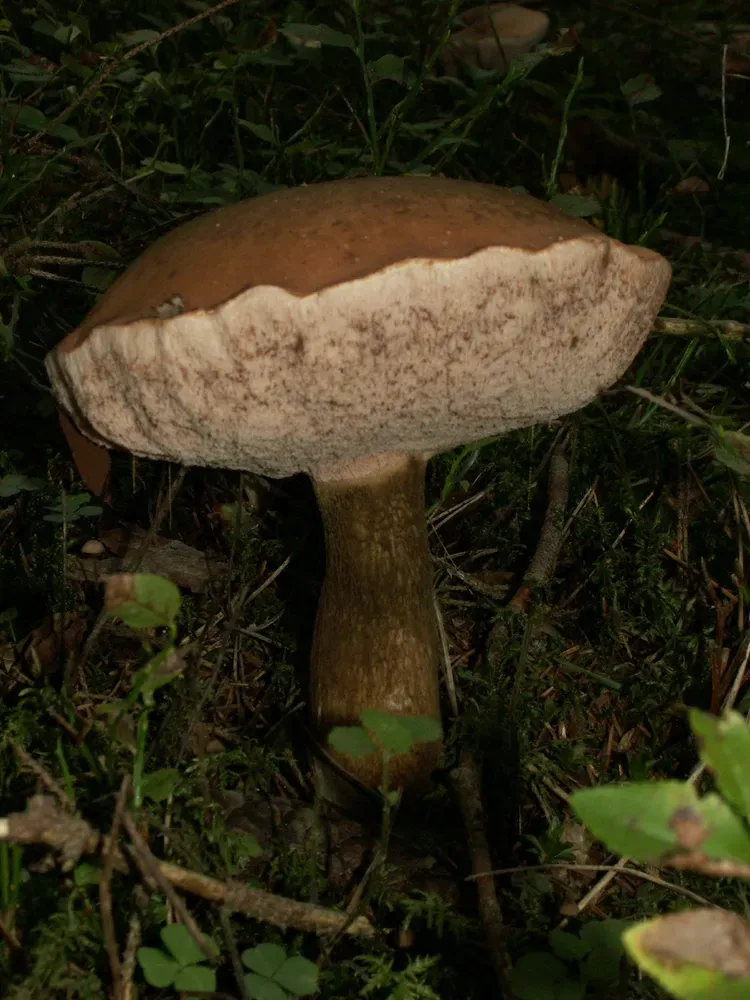
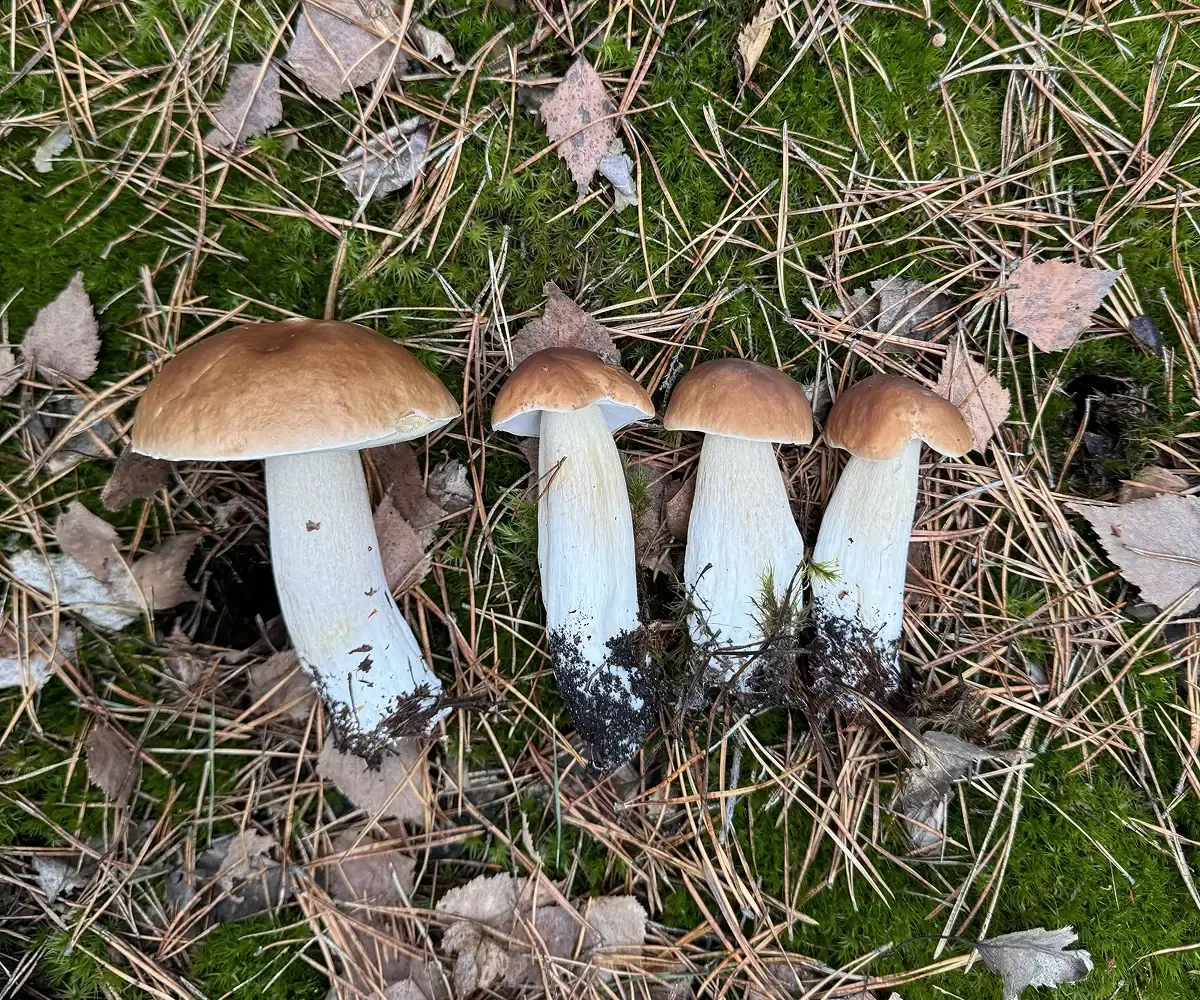
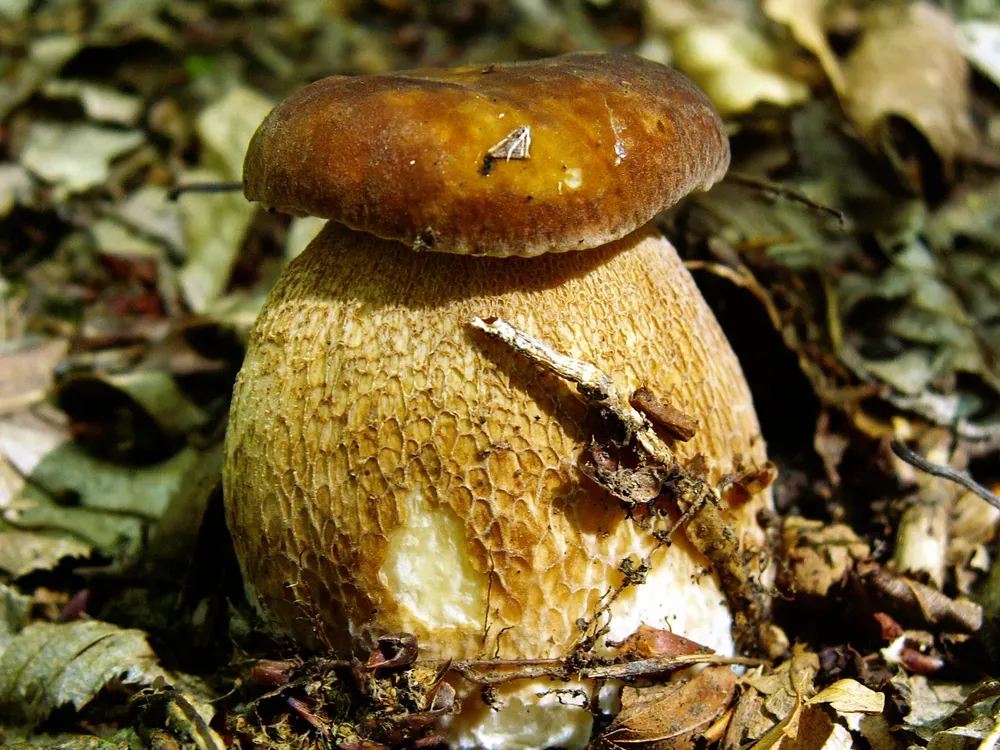
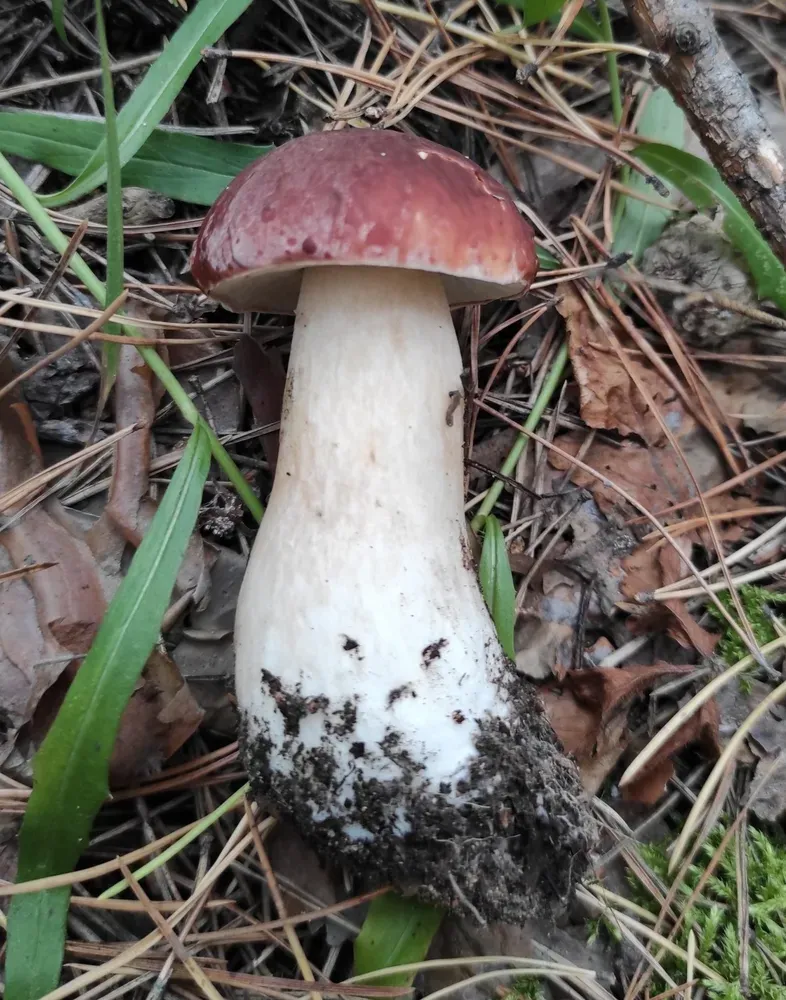
The cap is large, 7–25 cm across, hemispherical and cushion-shaped in young mushrooms, opening with age to convex-flattened. The color is light — from almost white and cream in young ones to light chestnut, hazel or the color of freshly baked bread in mature ones; noticeably paler than the pine bolete or summer bolete. The surface is dry and matte, faintly velvety to the touch when young, slightly shiny in wet weather. The margin is even, and the skin does not peel.
Hymenophore
The hymenophore is tubular, free or slightly notched at the stem, and separates easily from the flesh. In young mushrooms the tubes are pure white; as the spores mature they turn yellow and later take on an olive-greenish tint. The pores are small, round, and the same color as the tubes. An important diagnostic feature: when pressed or damaged, the hymenophore does not turn blue or change color — this sets true porcini apart from many bluing boletes.
Stem
The stem is massive, 5–20 cm tall and up to 4–6 cm thick, bulbous and swollen when young, lengthening with age to club-shaped or almost cylindrical. The color is whitish, cream or light brown, often paler than the cap. The upper part shows a fine pale net (reticulum) — white veins on an even paler background, not as contrasting as the dark net of the bitter bolete. There is no ring and no volva.
Flesh
The flesh is thick, firm and white, sometimes faintly brownish under the cap skin. When cut, the color does not change — it does not turn blue, red or dark; this is one of the key features of true porcini. The texture is springy and meaty, hard in young mushrooms and slightly softer with age. The taste is mild and pleasant, not bitter, with a delicate nutty note.
Smell
The smell is pleasant and richly mushroomy, with a warm nutty note — the classic porcini aroma. When cut it is fresh and clean, and when dried it grows much stronger, filling the house with that rich mushroom scent people dry porcini for. There are no chemical, sour or unpleasant notes at all.
›Scientific synonyms (3)
Boletus edulis var. betulicola, Boletus edulis f. betulicola, Boletus edulis subsp. betulicola
Lookalikes
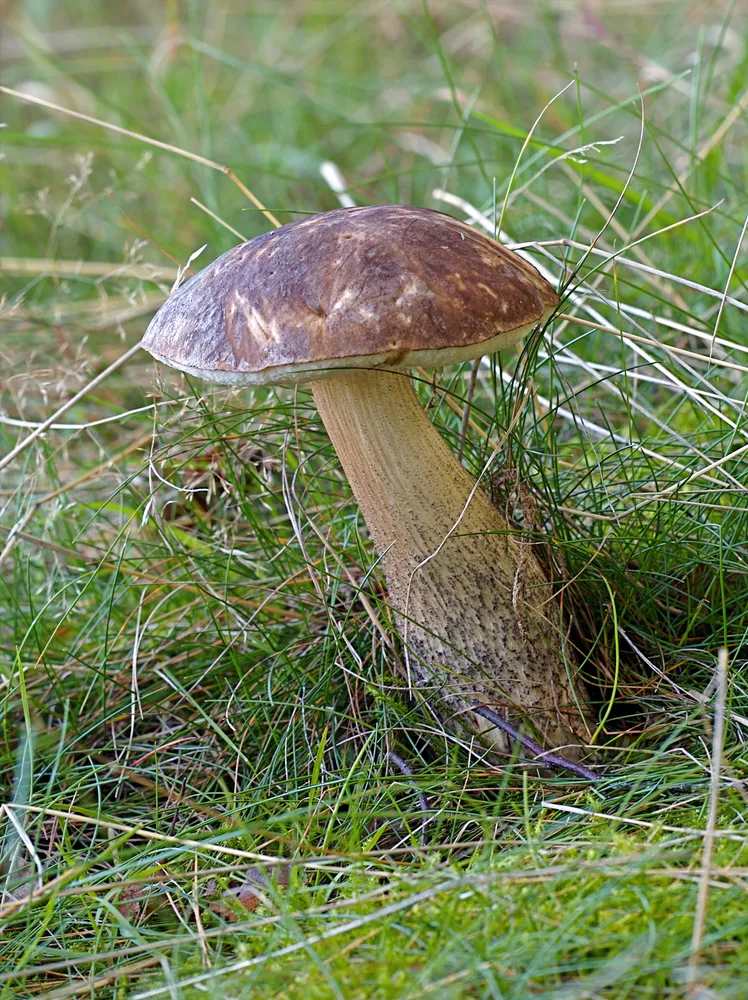
Related species
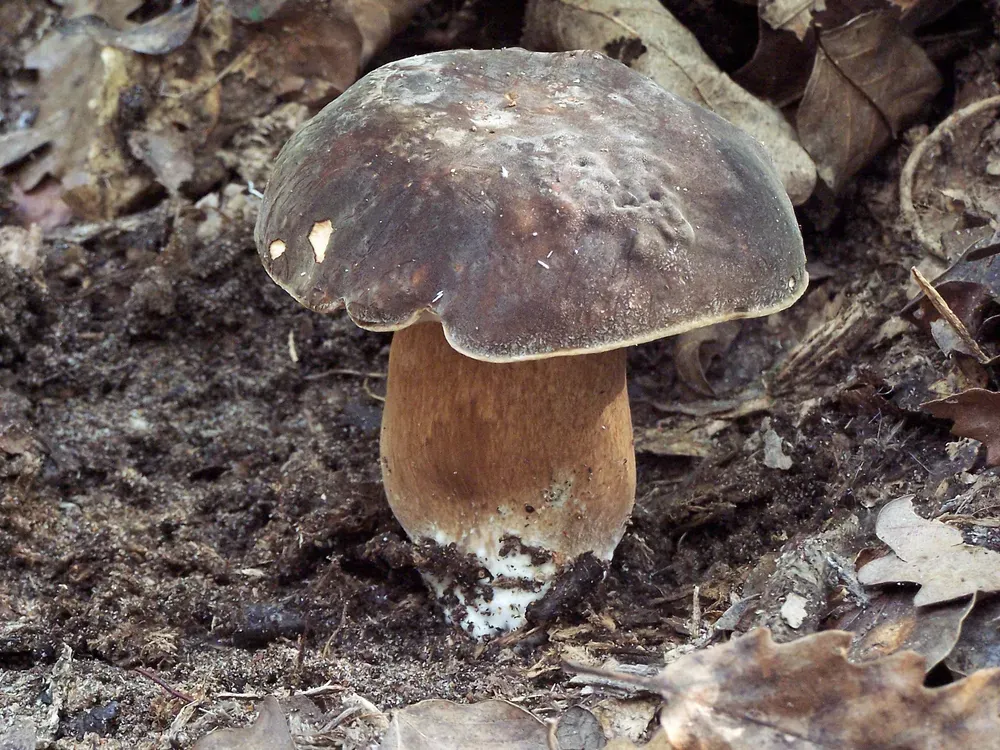
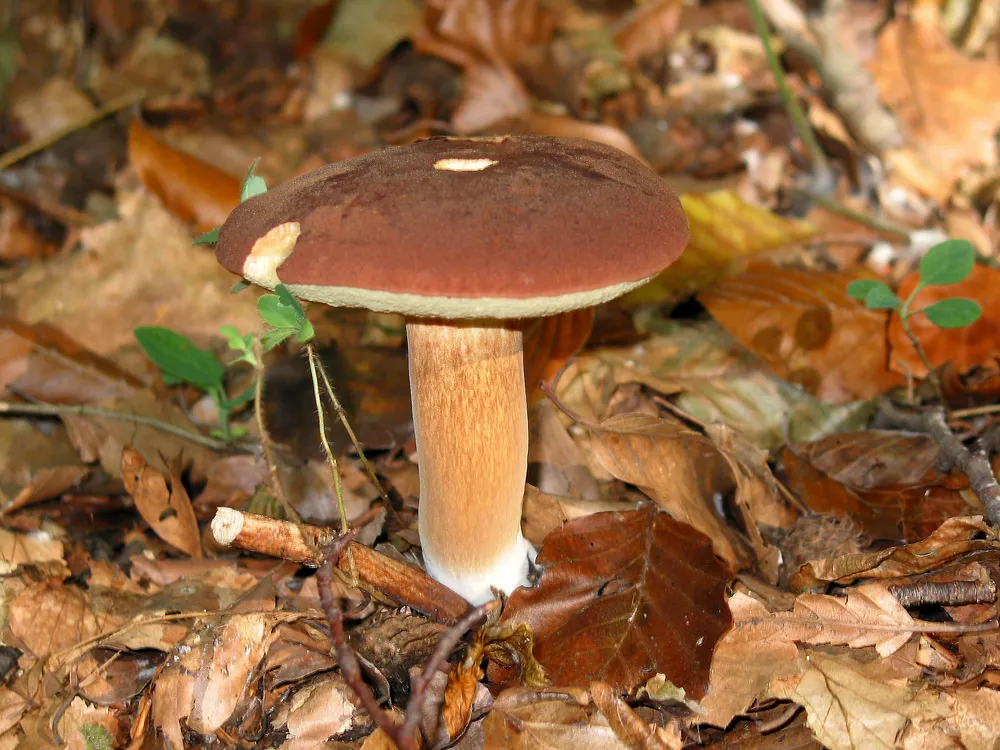
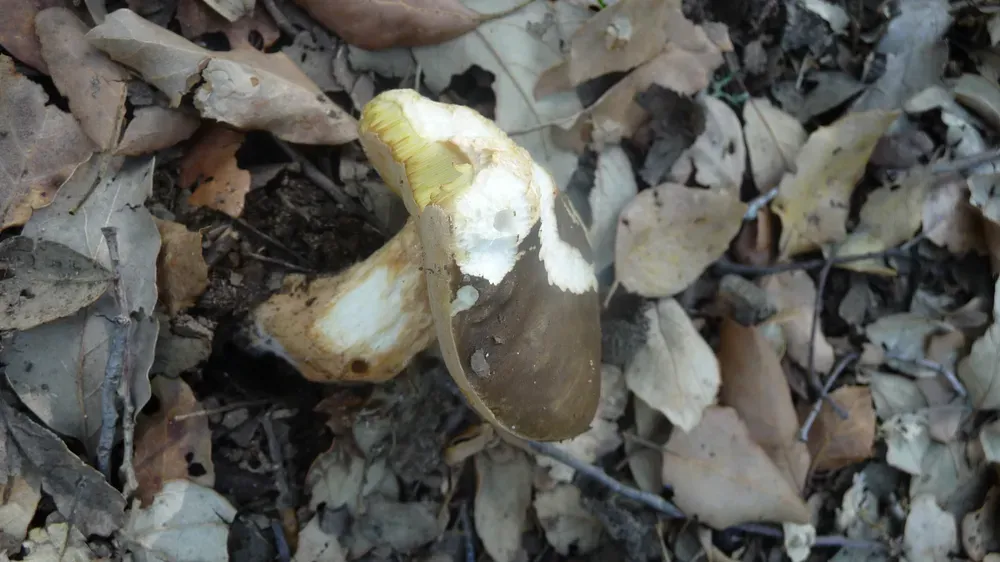
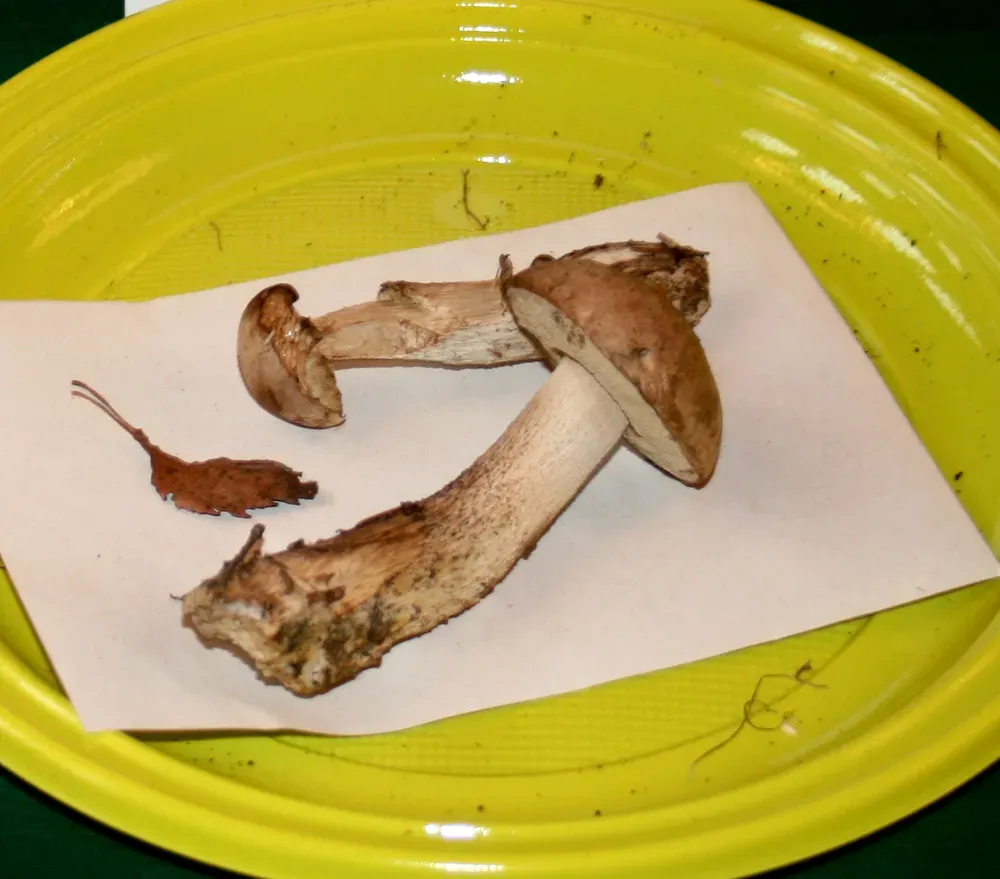
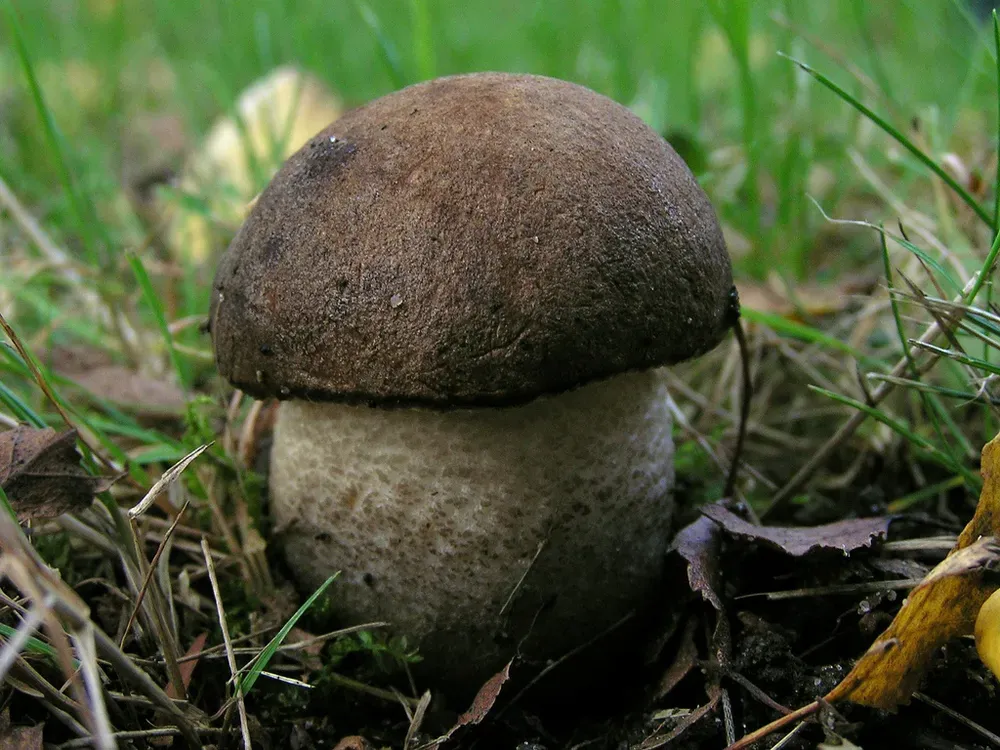
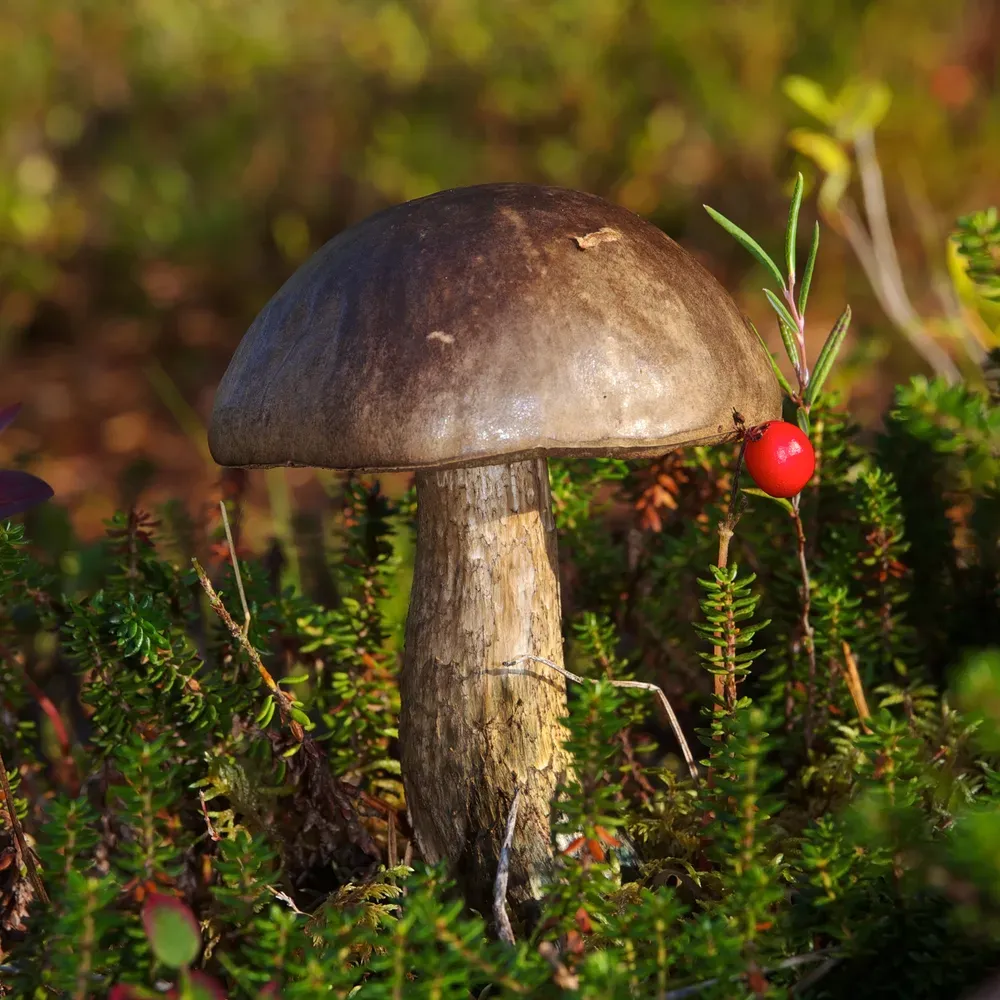
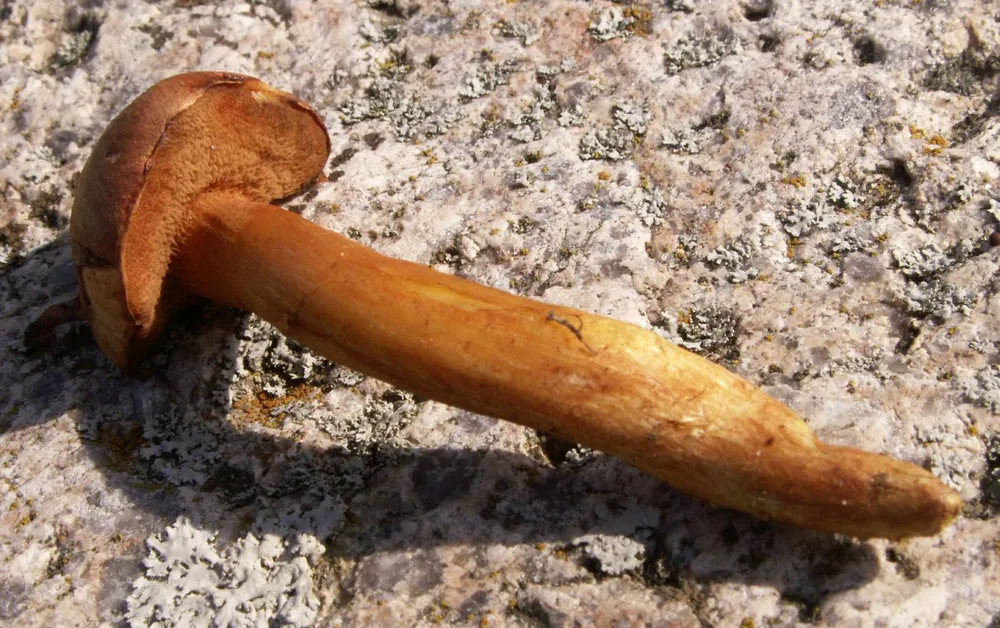
Mushrooms of the same genus and habitat — to study side by side and never mix up.
_Bresinsky_&_Manfr._Binder_533003_2015-06-29.webp)
Related reading
 Science & taxonomy
Do mushrooms have roots? What's really going on underground
You pull up a mushroom — and white threads trail after it. Are those roots? In fact, something far more amazin…
May 29, 2026·5 min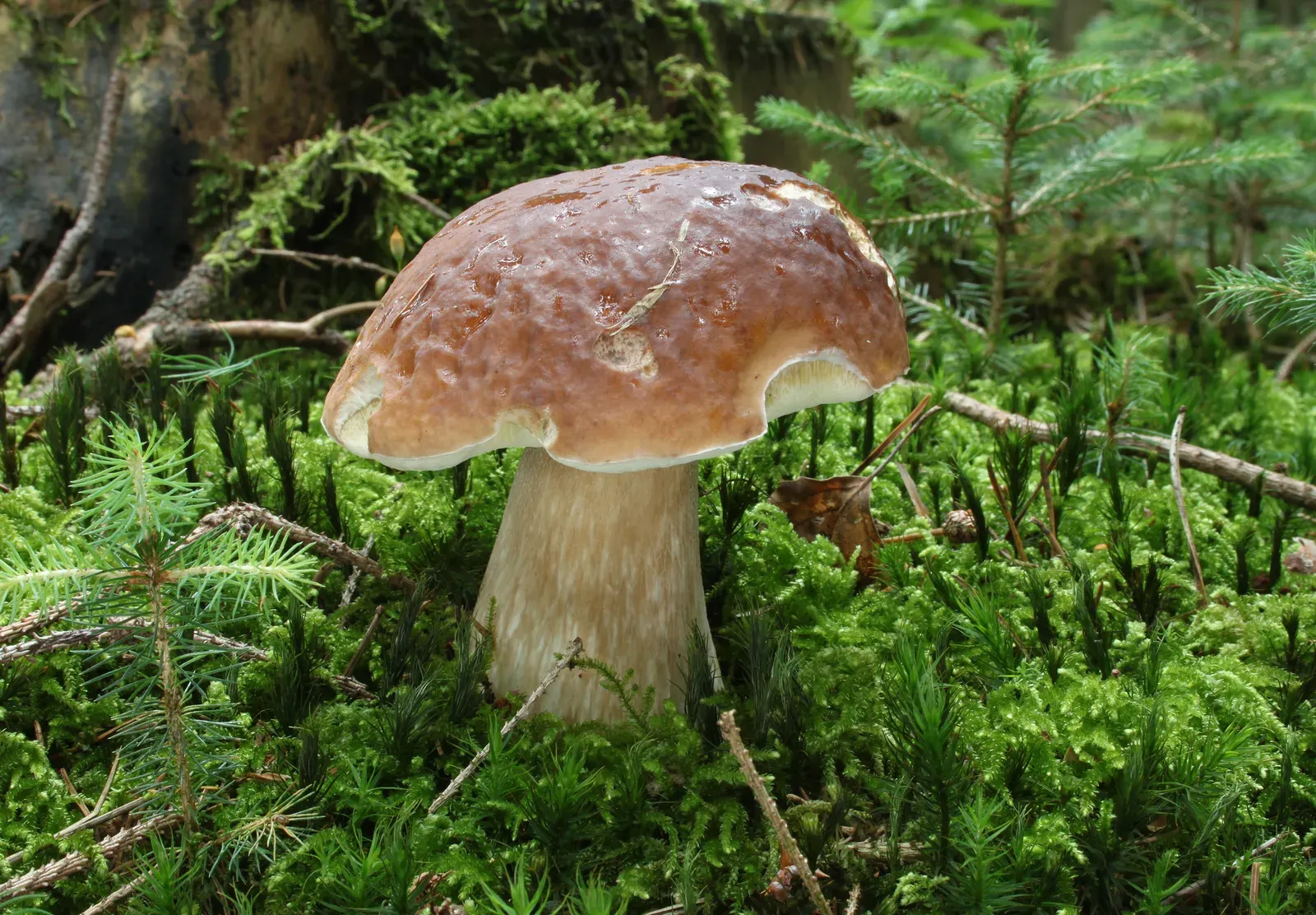 How to identify
Birch porcini, the pale companion of birches
The palest of the porcini lives alongside birches. Here's how to recognize Boletus betulicola, where to look f…
February 23, 2026·4 min.webp) Science & taxonomy
Science & taxonomyTypes of porcini: a complete guide
Porcini isn't one species but a whole family of boletes. We sort out what kinds of porcini there are, how they…
February 19, 2026·5 min
Frequently asked questions
How do you tell the birch porcini from poisonous or inedible look-alikes?
The main look-alike that is dangerous for its taste (not its toxicity) is the bile bolete, or bitter bolete (Tylopilus felleus): it has pinkish pores, a dark contrasting net on the stem and unbearably bitter flesh that ruins the whole dish. The birch porcini has white-to-yellowish pores, a pale net and a mild taste. If you touch your tongue to the cut flesh and taste bitterness — it's not a porcini, put it back.
Does the birch porcini turn blue when cut?
No. True porcini stays white when cut — it does not turn blue, red or dark. If your "porcini" turns noticeably blue within a few minutes, you are looking at a different bolete (for example, a bluing bolete). That isn't deadly, but for confident porcini identification, flesh that keeps its color is a must-have feature.
Where is the best place to look for birch porcini in Ukraine?
In light birch and mixed forests: Polissia (Volyn, Rivne, Zhytomyr, Chernihiv and Sumy regions), the western oblasts and the Carpathian foothills. It loves forest edges, sun-warmed clearings, path verges and young clearings with birch. It often hides in grass and under leaves — scan the ground carefully, without hurrying.
Which trees does it form mycorrhiza with?
Above all with birch (Betula) — hence the name. In mixed forests it may also partner with pine and spruce growing alongside birches. In pure conifer forests without birch, its place is taken by other forms of porcini — the pine bolete (Boletus pinophilus) or the summer bolete (Boletus reticulatus).
When does the birch porcini fruit?
From June to October, with the main flush in late summer and early autumn after warm rains. The first scattered mushrooms appear as early as midsummer, and the cleanest, firmest ones come in the later autumn flushes, when the heat breaks and there are fewer insects.
Is it true that early summer porcini are the most worm-ridden?
Yes. On warm summer days porcini are very quickly colonized by insect larvae, so summer specimens are often wormy within a day or two. In autumn, in the cool, the mushrooms stay clean much longer — which is why experienced foragers value the autumn flush most of all.
How does it differ from the pine bolete and summer bolete?
These are close forms of a single complex; the difference lies mainly in the partner tree and the shade. The pine bolete (Boletus pinophilus) is darker, wine-chestnut, and grows with pine; the summer bolete (Boletus reticulatus) has a more pronounced net and favors oaks and warm forests. The birch form is the palest, pale hazel, and always near birch.
How do you avoid confusing it with the brown birch bolete?
The brown birch bolete (Leccinum scabrum) also grows with birch, but it has a thin, slender stem covered in dark dotted scales, and softer, watery flesh that often turns pinkish or grayish when cut. The birch porcini has a thick stem with a delicate pale net, and its flesh is firm and unchanging. Both are edible, so a mix-up isn't dangerous — only a culinary one.
Is Boletus betulicola edible or poisonous?
Does Boletus betulicola have gills or pores?
What does the cap of Boletus betulicola look like?
What does the stem of Boletus betulicola look like?
Sources
- [1]Вікіпедія (українська)
- [2]Атлас грибів України, Зеров Д.К. (1979)
- [3]MycoBank Database
- [4]Index Fungorum
- [5]GBIF
- [6]iNaturalist Ukraine