THIS DATA HAS NOT BEEN VERIFIED BY AN EXPERT. Use at your own risk.
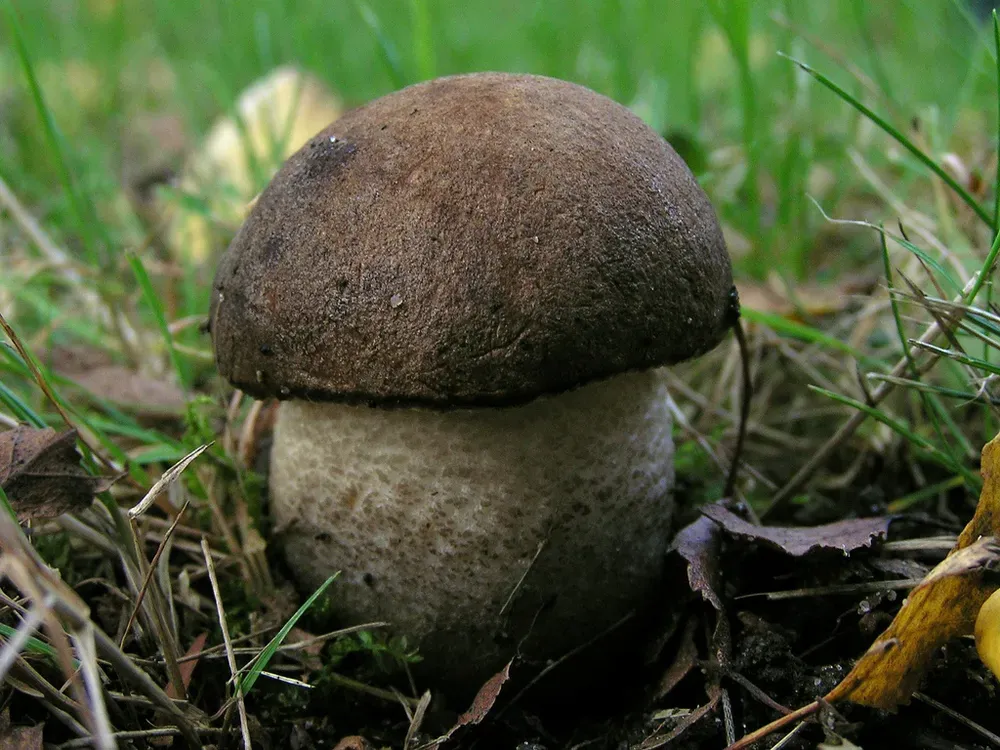
Leccinum melaneum
Under reviewUpdated October 3, 2026
Passport
- Edibility
- Edible
- Season
- Jun — Oct
- Hymenophore
- Pored
- Cap color
- Dark brown
- Size
- Medium (5–15 cm)
- Smell
- Pleasant
- Reviewed
- Under review
Quick answers
Where to look?
Deciduous forest, Mixed forest
When does it appear?
Jun — Oct
Active months: June, July, August, September, October.
How to recognize it? Three signs
- Cap color: Dark brown, Black, Brown
- Cap shape: Convex
- Smell: Pleasant
Fruiting season
June – October
Description
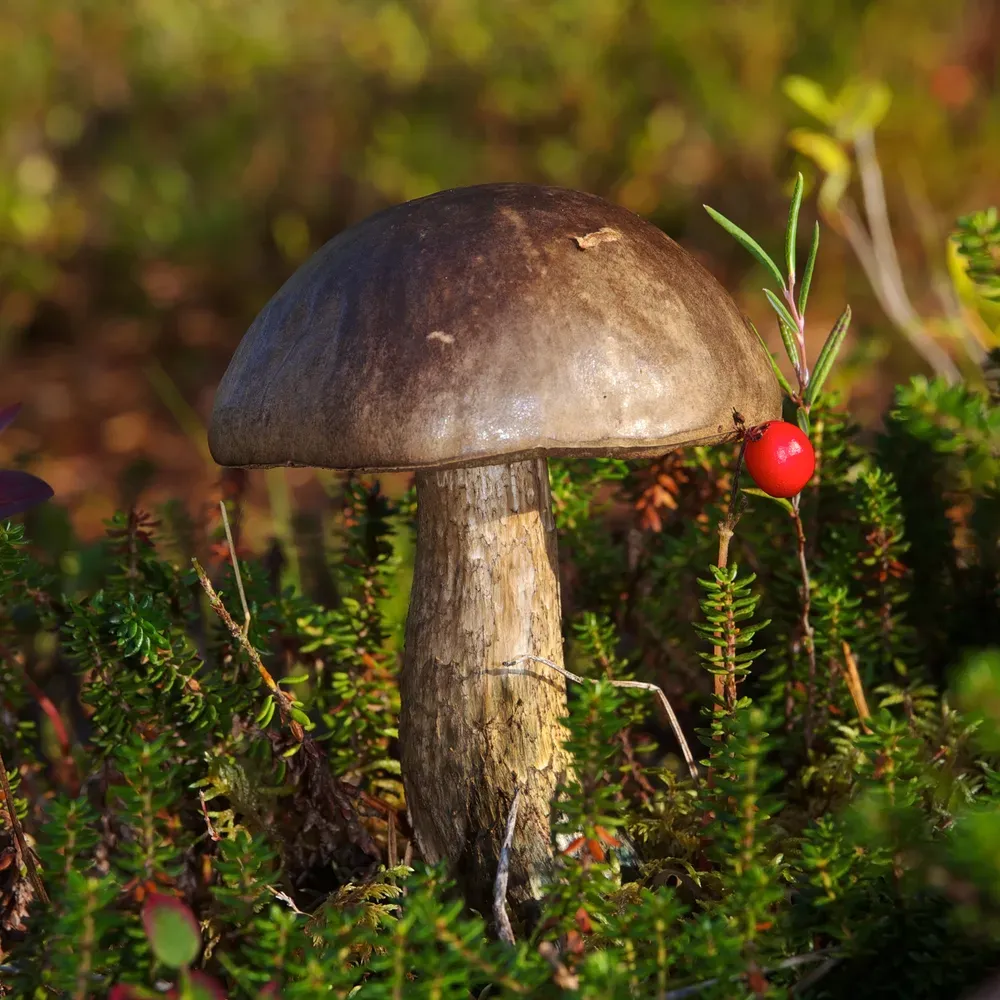
Leccinum melaneum is a dark form of the brown birch bolete that stands out among its relatives thanks to its almost black-brown cap. Like all birch boletes, it forms mycorrhiza with birches, so you will only find it where these trees grow — in deciduous and mixed forests, birch groves and shelterbelts. You can recognize it by its dark cap on a tall, pale stem densely covered in black scales.
In Ukraine, Leccinum melaneum grows wherever there are birches, throughout the country. It prefers damper, often cooler spots — forest edges, the margins of bogs and wettish birch woods. Its fruiting season runs from June to October, peaking after rain; the mushroom appears singly or in small groups.
In terms of edibility, Leccinum melaneum is a good edible mushroom. It is prepared just like the brown birch bolete: fried, boiled, pickled and dried. Young, firm specimens are the tastiest, since with age the flesh, especially in the cap, becomes soft and watery. As with all birch boletes, cook the mushrooms thoroughly — boil or fry them well — before eating; they are not eaten raw.
Cap
The cap of Leccinum melaneum reaches 5 to 12 centimeters across. When young it is hemispherical; with age it becomes convex and cushion-shaped. The surface is smooth, dry or slightly slimy in rain, and matte. The color is very dark — dark brown, gray-black or almost black, which gave the mushroom its name; the margin is sometimes paler. The dark, almost black cap reliably sets this species apart from the paler birch boletes.
Hymenophore
The spore-bearing surface is made of tubes. The tubes are long, with small round pores; in young mushrooms they are dirty white or grayish, turning gray-brown with age. When pressed, the pores may slowly darken. The tube layer separates easily from the cap flesh, which is typical of boletes. The spore print is olive-brown.
Stem
The stem is tall and slender, 6 to 15 centimeters high, whitish or grayish white, covered along its whole length with dark — gray-brown to black — scales that form a granular, net-like pattern. When young the stem is firm; with age it becomes fibrous and tough. There is no volva and no ring. The combination of a dark cap, a scaly stem and birch neighbors is what sets this species apart.
Flesh
The flesh is white and fairly firm in young mushrooms, softening and becoming watery with age. When cut it barely changes color or turns slightly gray. The taste is mild and pleasant, without bitterness. Because the flesh tends to go soft, young, firm specimens are the ones to pick for the table.
Smell
The smell is faint, pleasant and typically mushroomy, with no sharp or unpleasant notes. Aroma is not a defining feature, so for identification rely on the very dark cap, the scaly stem and the constant link with birch.
›Scientific synonyms (1)
Boletus melaneus Smotl.
Lookalikes
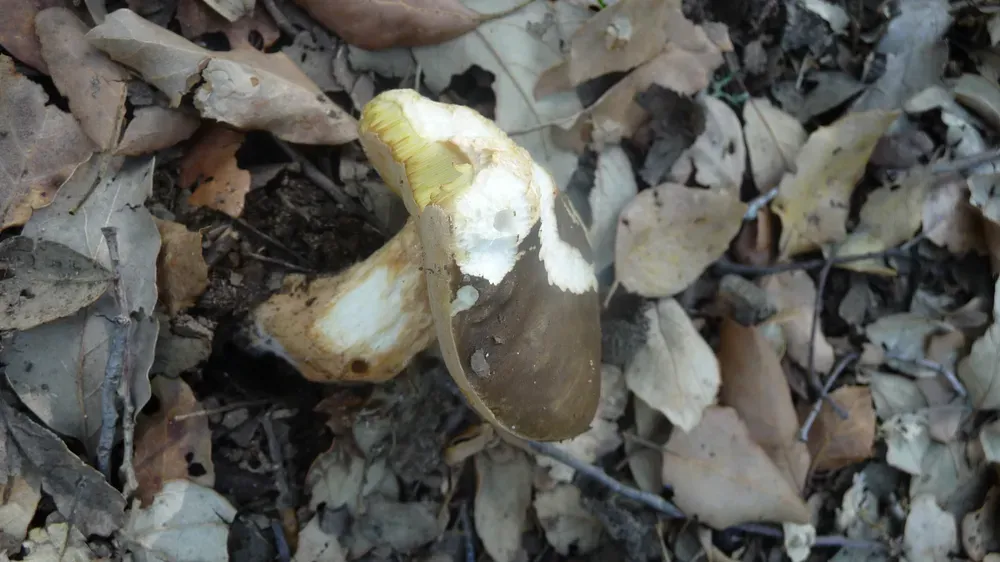
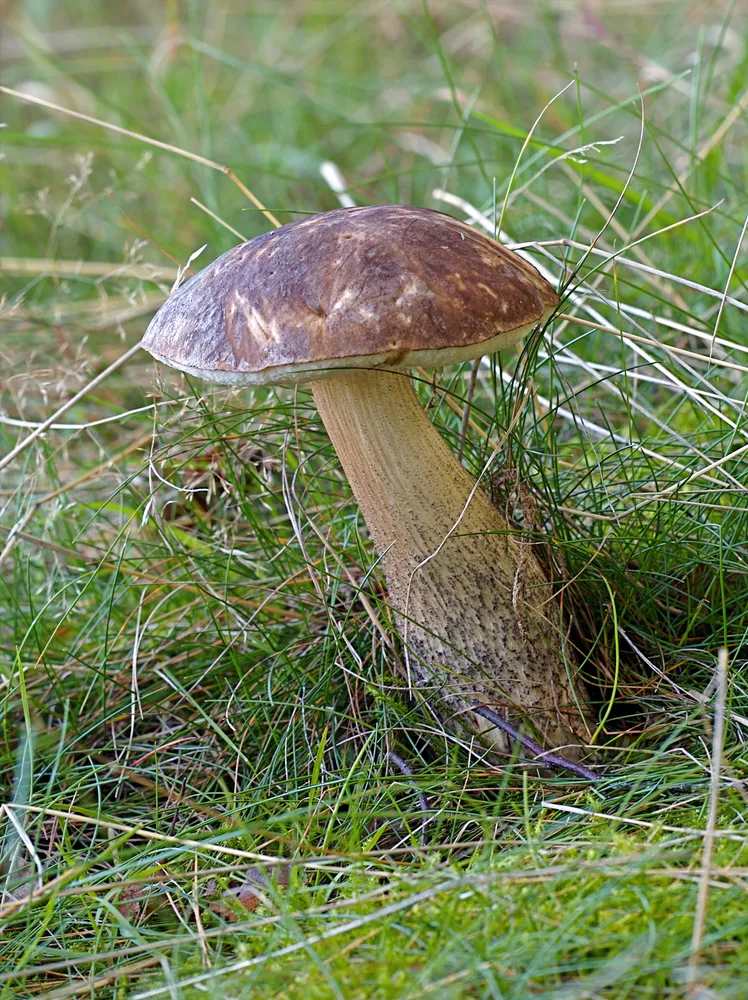
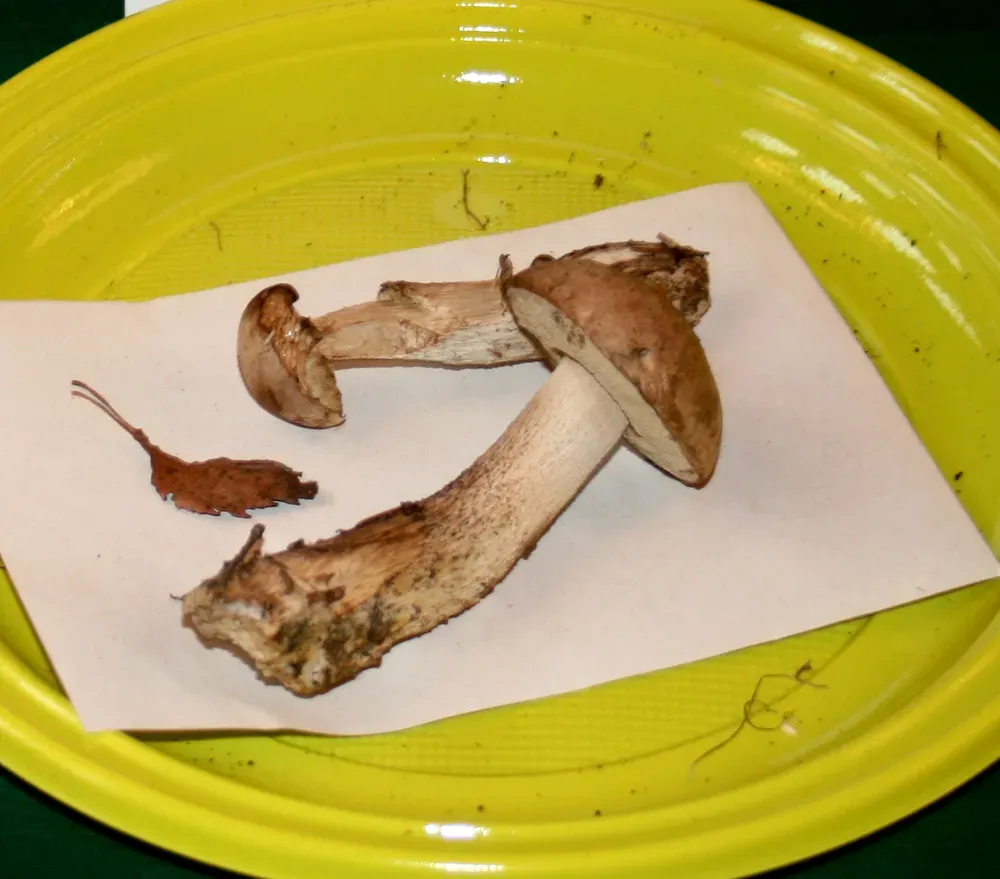
Related species
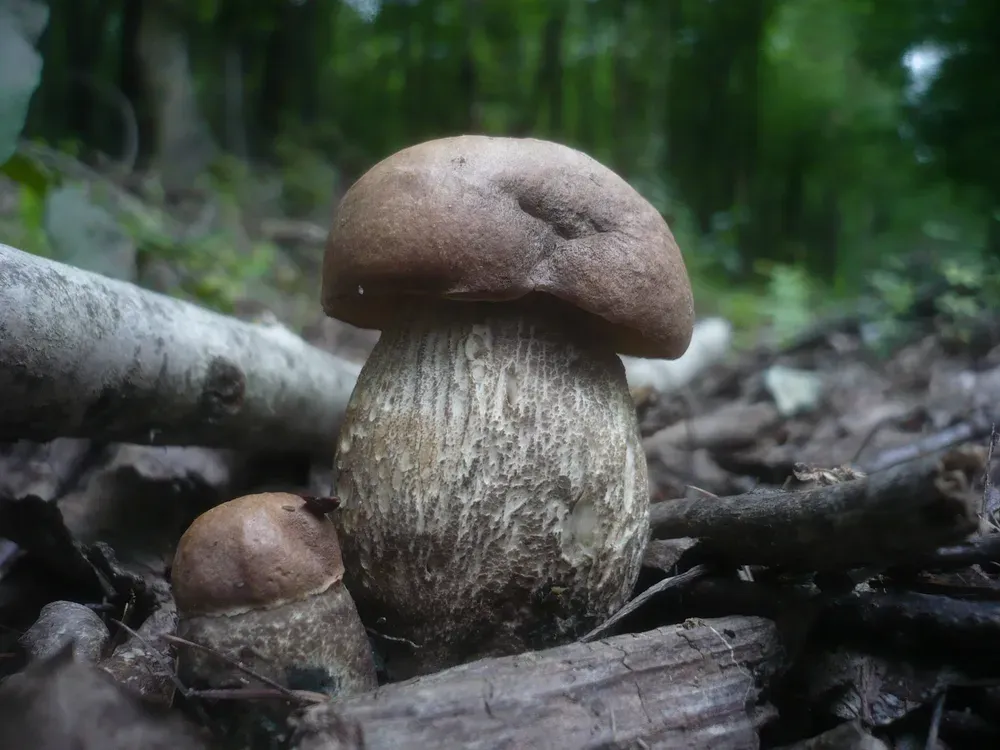
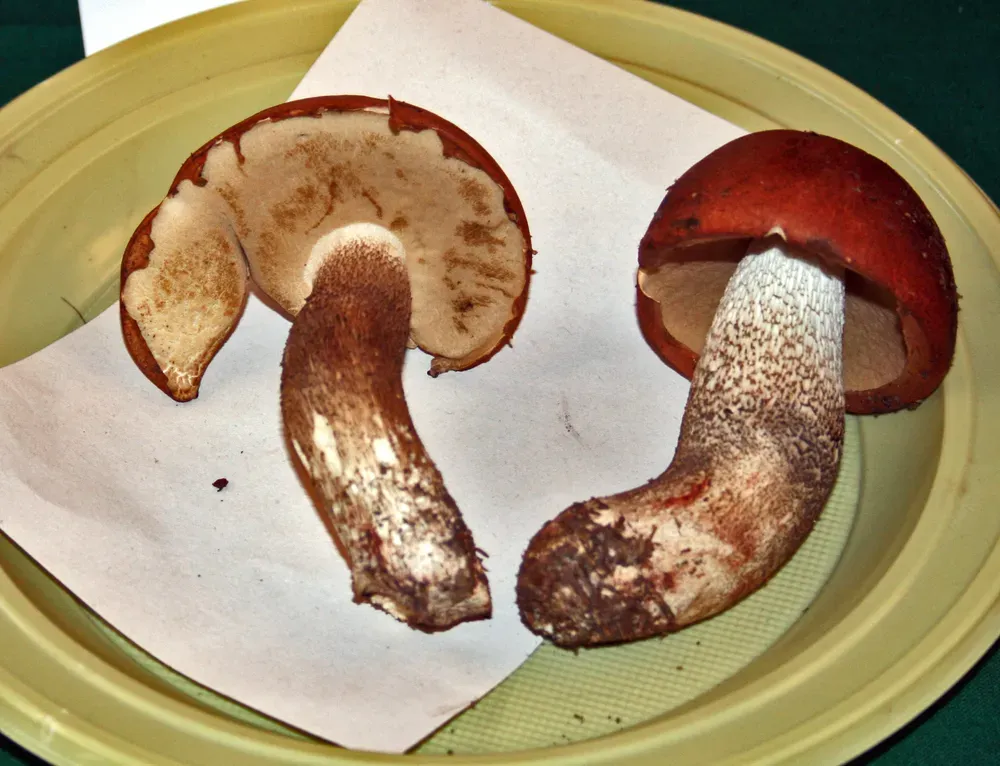
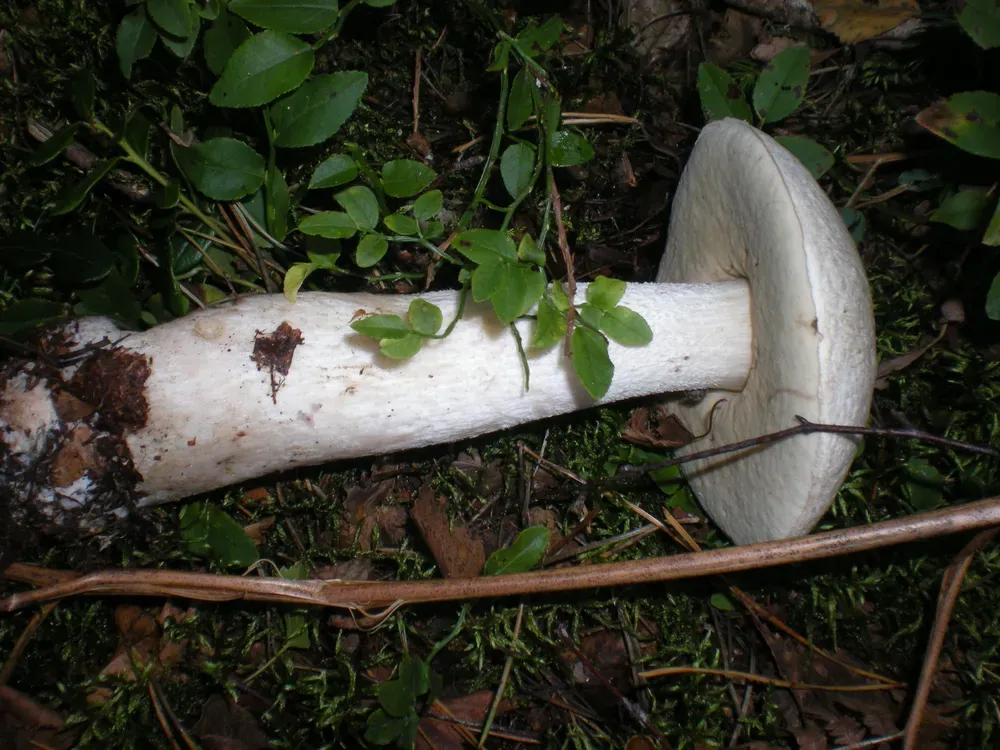
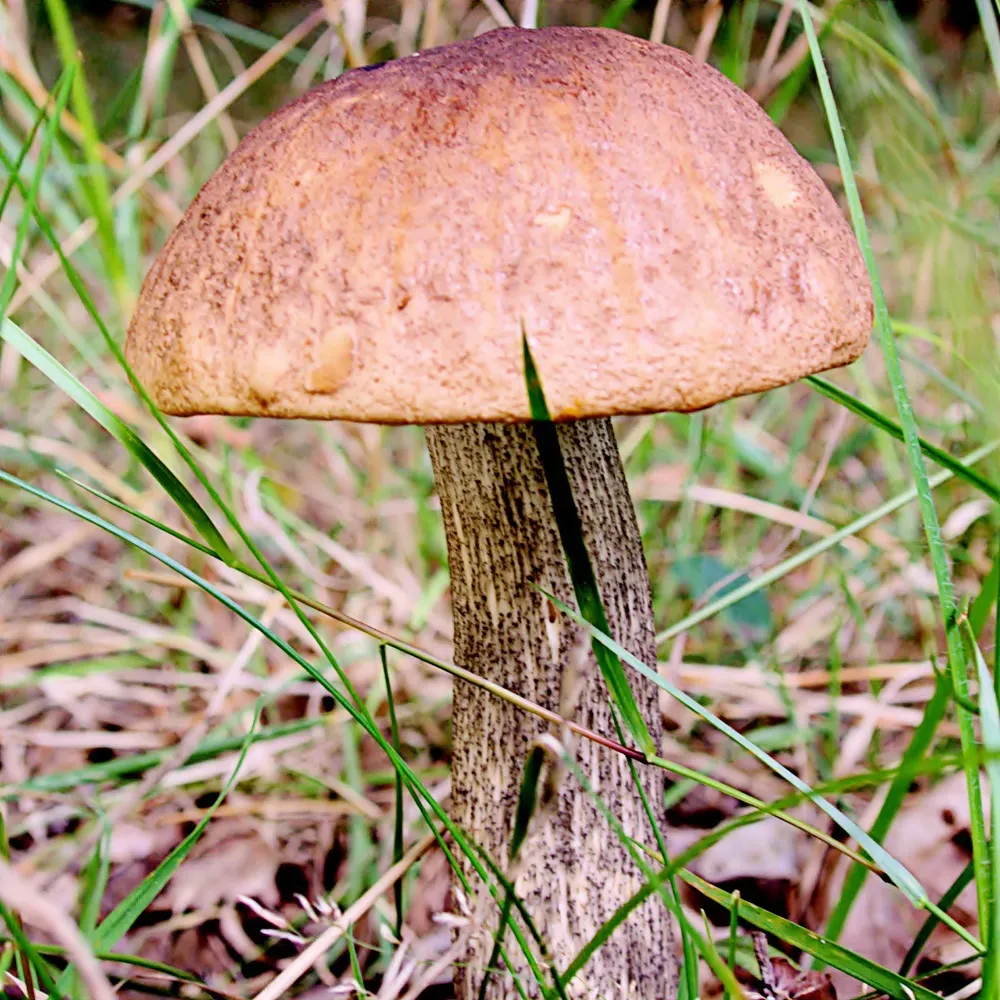
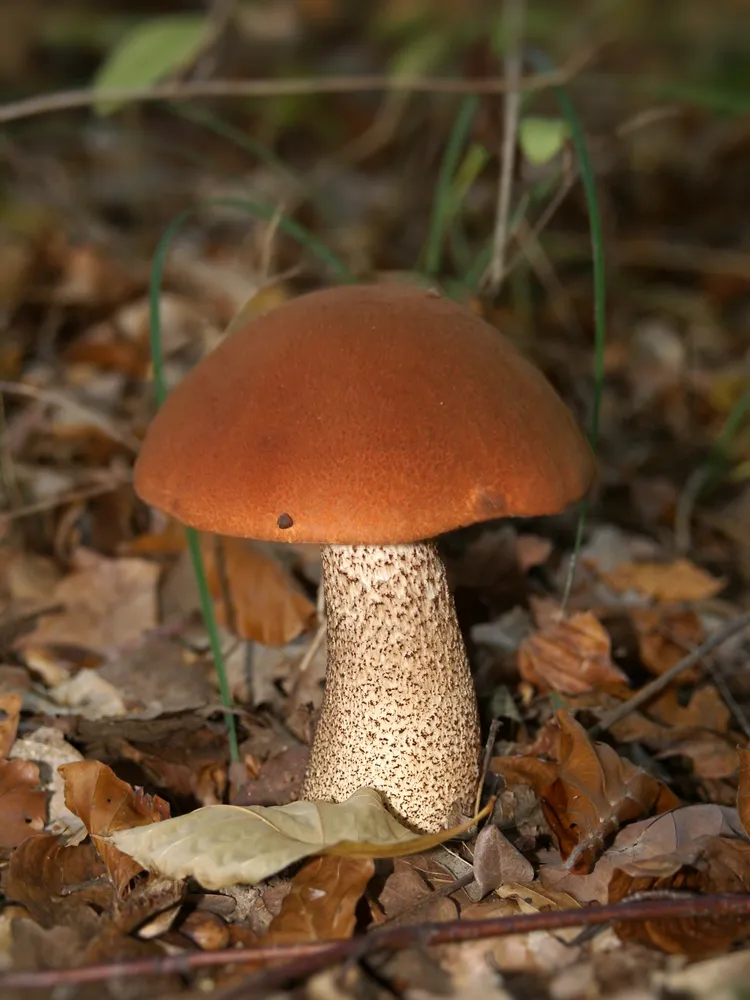
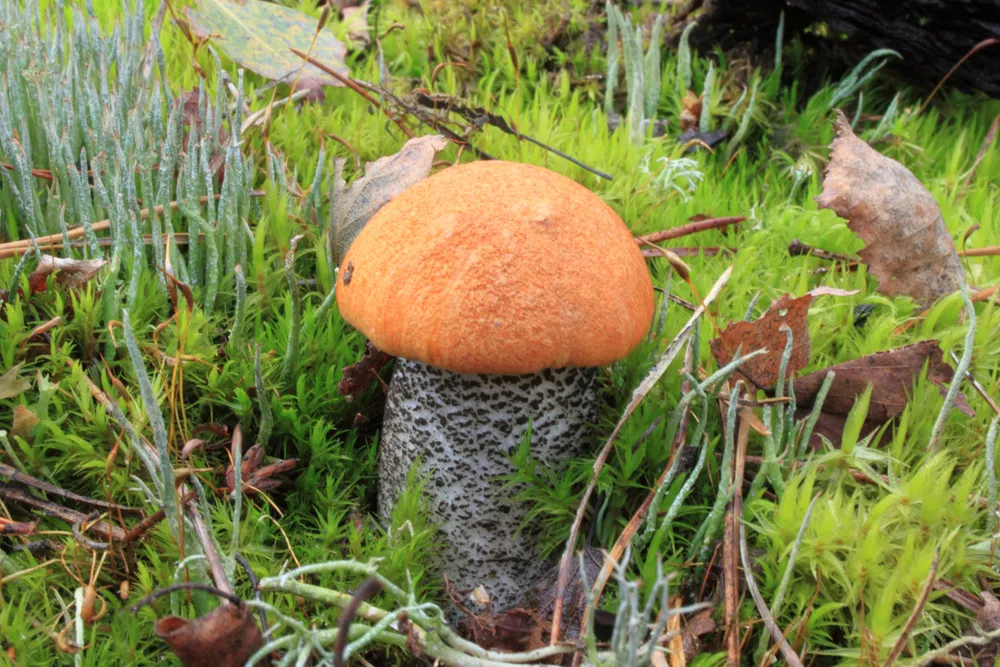
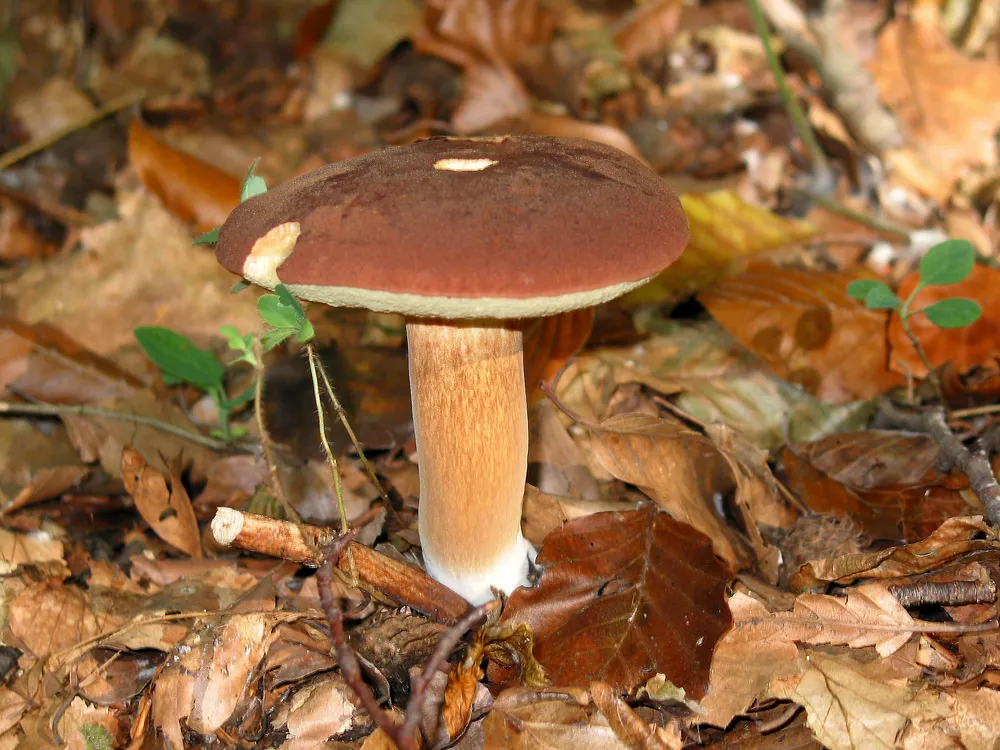
Mushrooms of the same genus and habitat — to study side by side and never mix up.
Related reading
 Recipes & cooking
How to clean and cook birch boletes
Birch boletes quickly darken and go mushy if you don't know a few tricks. Here's how to clean birch boletes, w…
May 6, 2026·4 min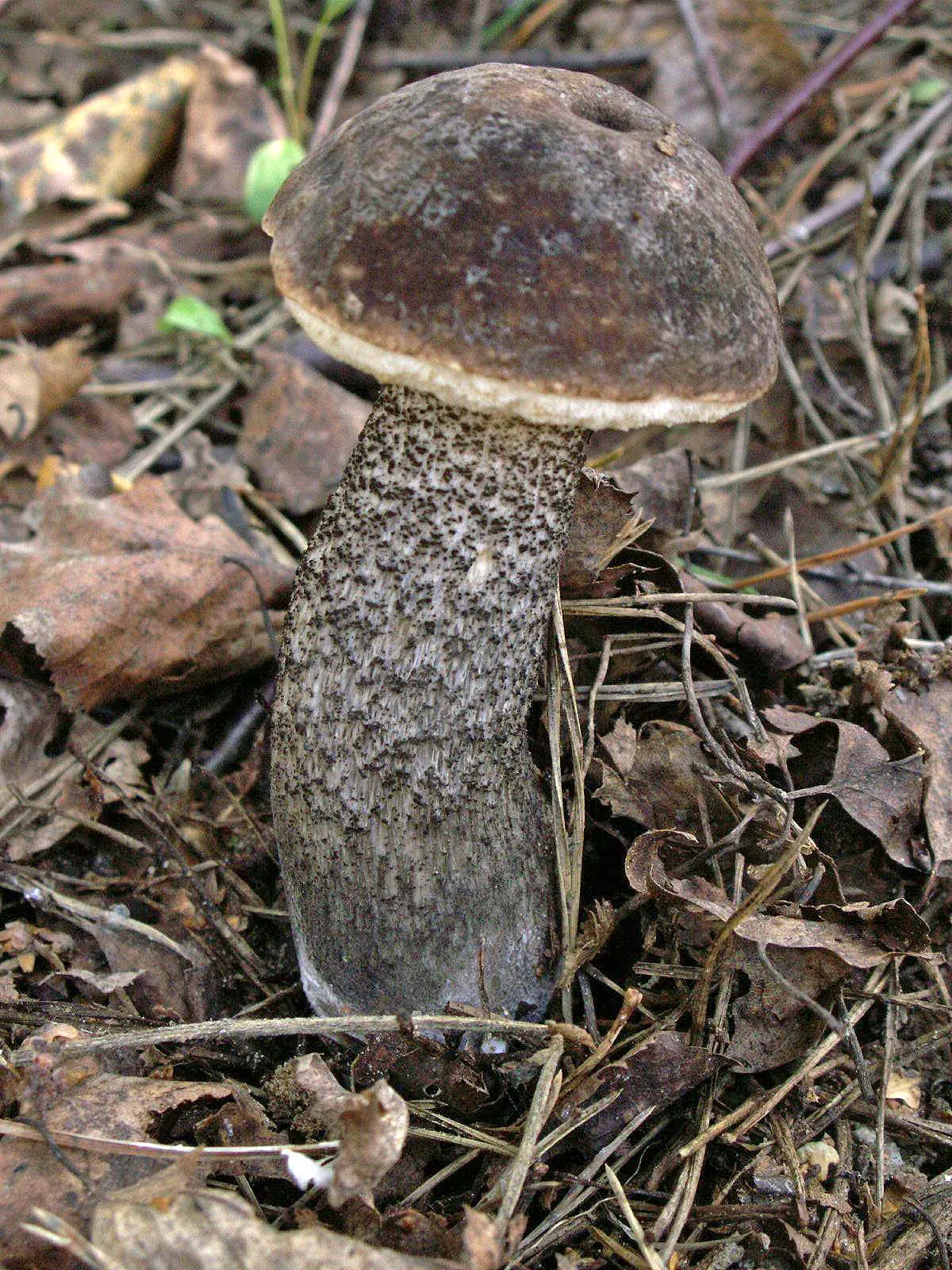 How to identify
Black birch bolete, the dark one
Leccinum melaneum is the darkest of the birch boletes, with an almost black-brown cap. Here’s how to recognize…
April 24, 2026·3 min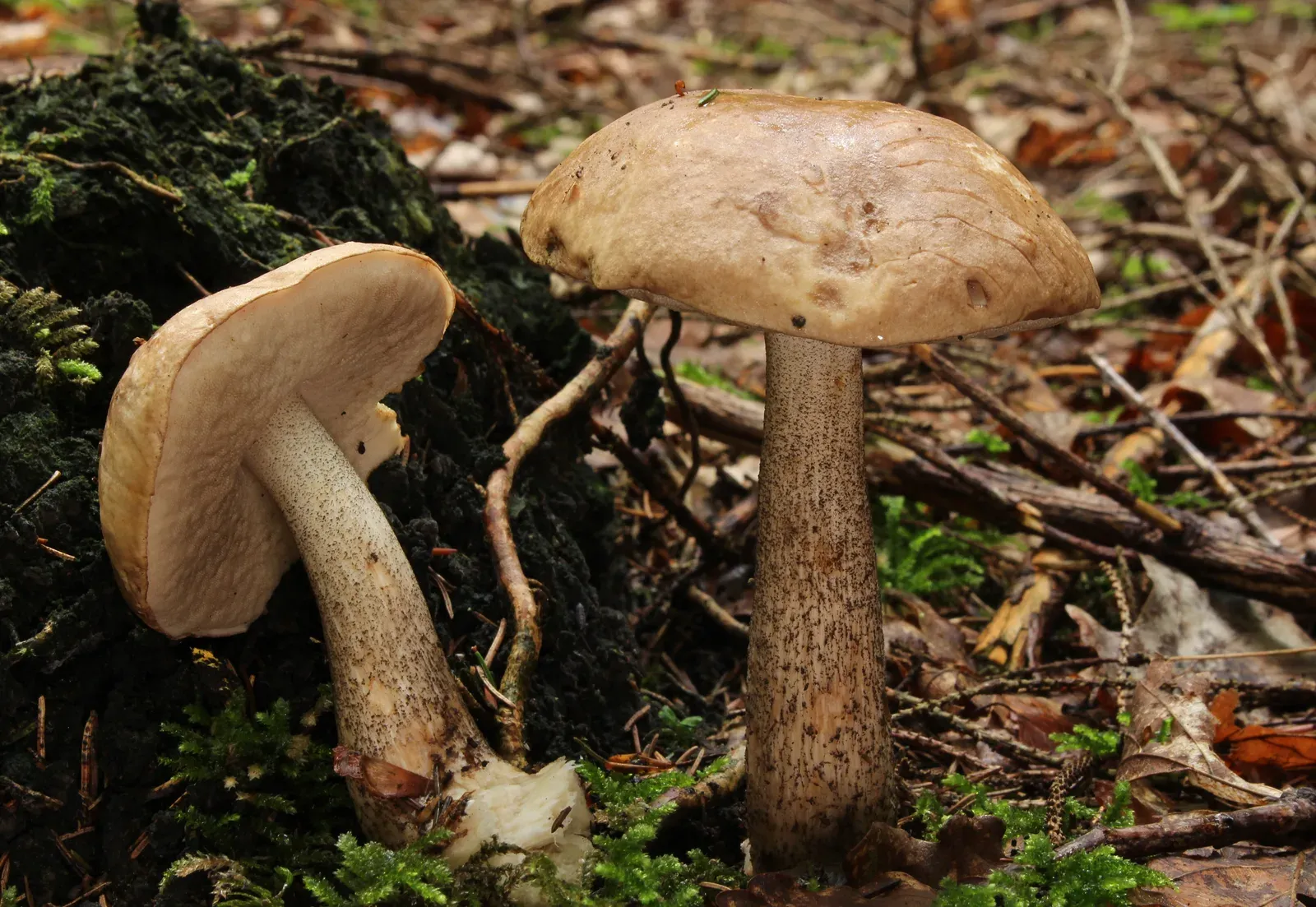 How to identify
Common birch bolete, the classic of birch groves
The brown birch bolete is the classic birch bolete everyone knows. Here’s how to recognize it, where and when…
April 18, 2026·3 min
Frequently asked questions
Is Leccinum melaneum edible or poisonous?
Does Leccinum melaneum have gills or pores?
What does the cap of Leccinum melaneum look like?
What does the stem of Leccinum melaneum look like?
What do Leccinum melaneum smell and taste like?
Where does Leccinum melaneum grow?
Which trees does Leccinum melaneum grow under?
When should you pick Leccinum melaneum?
What can Leccinum melaneum be confused with?
How do you cook Leccinum melaneum?
Can you dry Leccinum melaneum?
What is the scientific name of Leccinum melaneum?
Sources
- [1]Вікіпедія (українська)
- [2]Атлас грибів України, Зеров Д.К. (1979)
- [3]MycoBank Database
- [4]Index Fungorum
- [5]GBIF
- [6]iNaturalist Ukraine