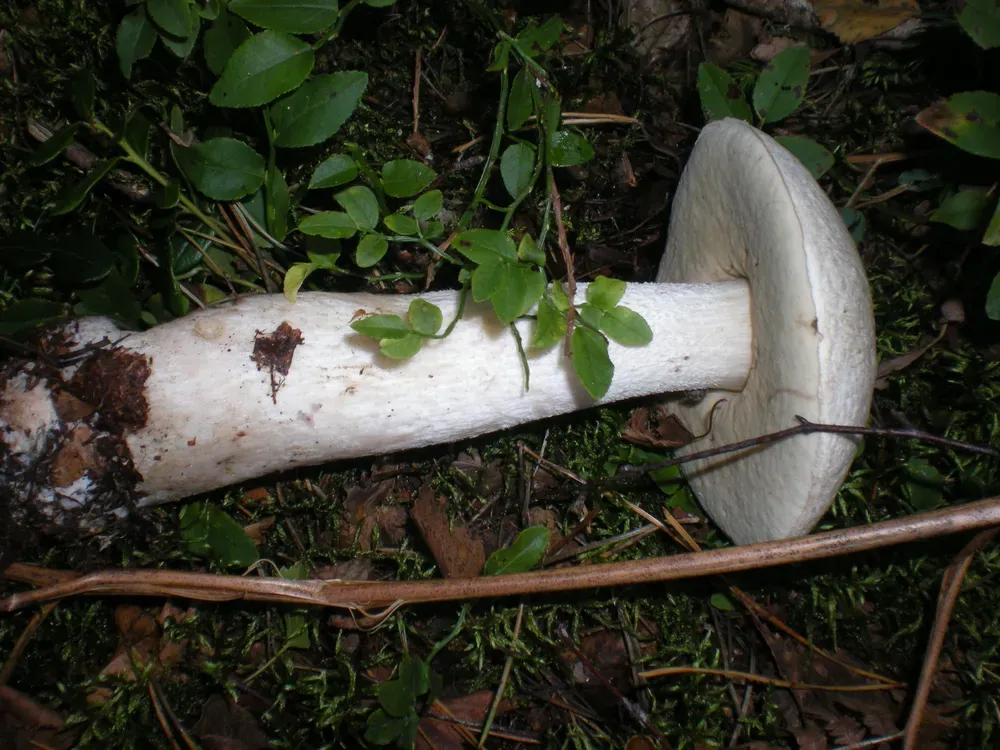
Leccinum percandidum
Expert-verifiedUpdated October 3, 2026
Passport
- Edibility
- Edible
- Season
- Aug — Oct
- Hymenophore
- Pored
- Cap color
- White
- Size
- Giant (>25 cm)
- Smell
- Pleasant
- Reviewed
- Yes ✓
Quick answers
Where to look?
Conifer forest, Mixed forest
When does it appear?
Aug — Oct
Active months: August, September, October.
How to recognize it? Three signs
- Cap color: White, Cream, Grey
- Cap shape: Convex
- Smell: Pleasant
Fruiting season
August – October
Description
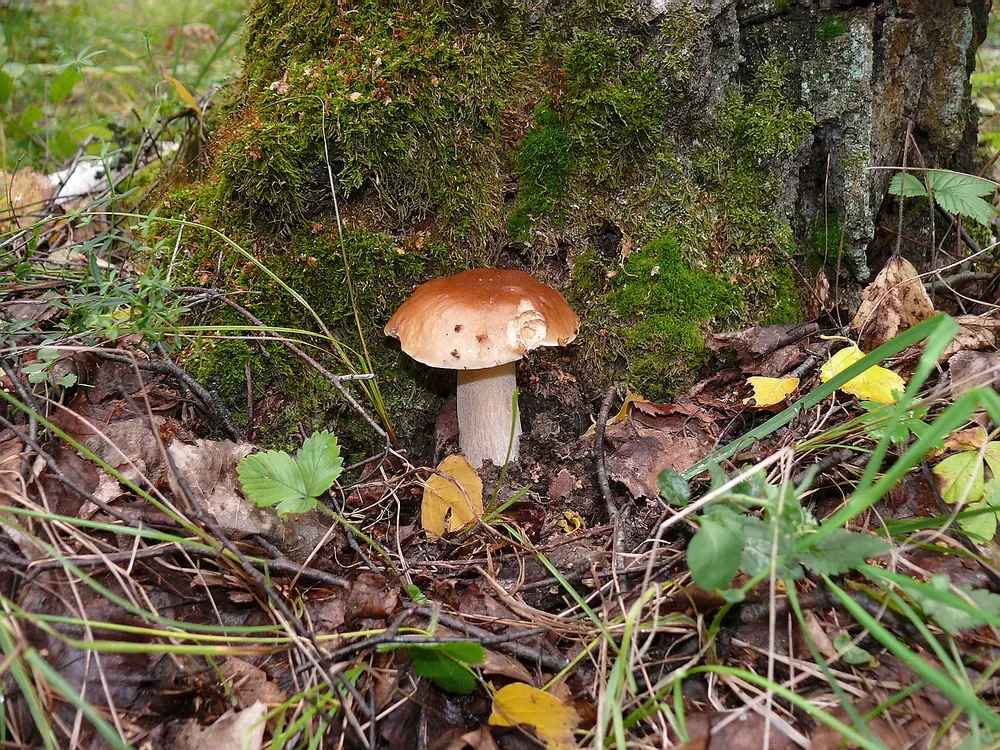
Leccinum percandidum is the most enormous of all Ukrainian aspen boletes. Its large cap, up to 25 cm across, white or grayish, with very dense, meaty flesh, looks like a well-shaped loaf of dough. The color reaction when cut is dramatic: it quickly turns blue-green, then blackens. A single mushroom can weigh more than a kilogram.
A mycorrhizal species, it grows in damp pine and mixed forests with pine and birch on light sandy or peaty soils. In Ukraine it is found mainly in Polissia (Chernihiv, Kyiv and Zhytomyr regions), in the Carpathians and Prykarpattia, in damp pine forests and alder-birch woods. Not common and never abundant — but finding even one such "loaf" makes the whole season.
Edibility: category 2, a quality mushroom. Young, firm specimens are excellent for pickling — in the jar they hold their shape better than most birch boletes. Old ones become watery and soft, and get maggoty. You can dry it, but because of the dark pigment the dried mushroom is deep black. It fries well, stews well, and goes into soups. One such "loaf" can feed a family for 2–3 days.
Cap
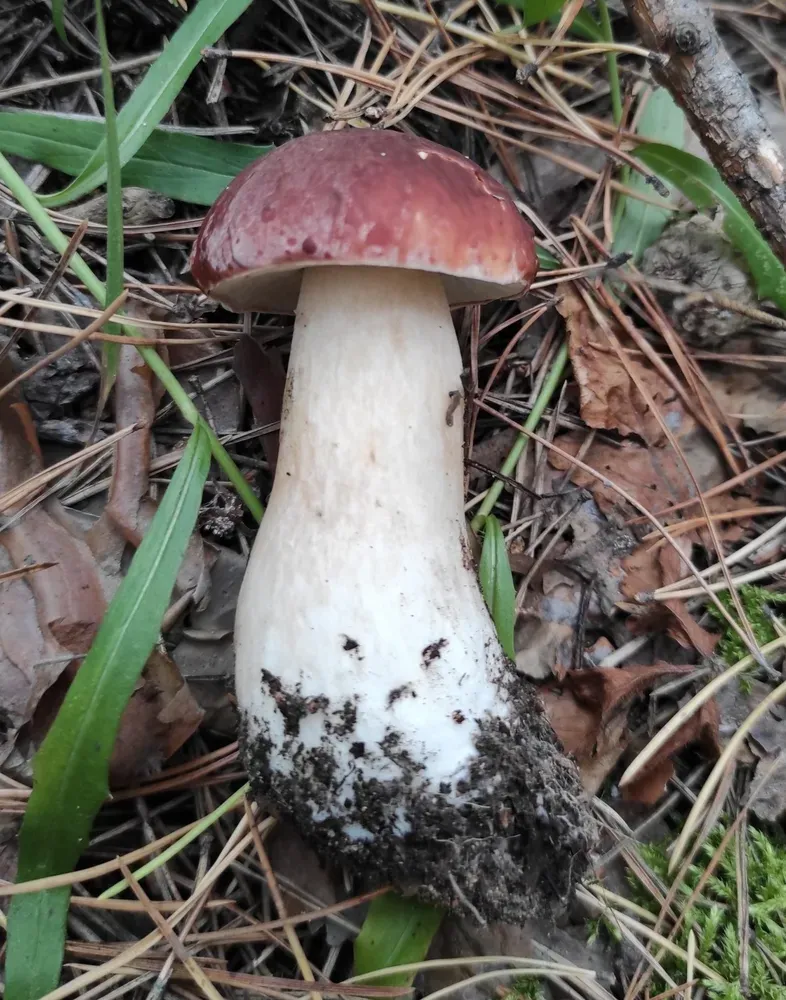
Cap up to 25 cm (usually 10–18), hemispherical in young mushrooms, then cushion-shaped, almost flat in old ones. White, cream, grayish; with age it may take on ochre or yellowish tints. The surface is matte, slightly sticky in wet weather and dry and roughish in dry weather. The skin does not peel.
Hymenophore
Hymenophore tubular, free, with a notch near the stem. White when young, then grayish cream, grayish brown in mature mushrooms. Pores small, finely rounded.
Stem
Stem massive, 10–20 cm tall, 3–5 cm thick, club-shaped in young mushrooms, cylindrical in old ones. White or grayish cream, covered with characteristic dense grayish or brownish fibrous scales — the scales noticeably darken as the mushroom ages.
Flesh
Flesh white, very dense and heavy. The reaction when cut is vivid: first it quickly turns blue-green, then gray-black. The reaction is especially intense at the stem base, where the flesh darkens almost to black. The texture is fibrous and meaty.
Smell
Smell rich and mushroomy, pleasant. Taste mild, not bitter. The dried mushroom has a strong "earthy" aroma.
Lookalikes
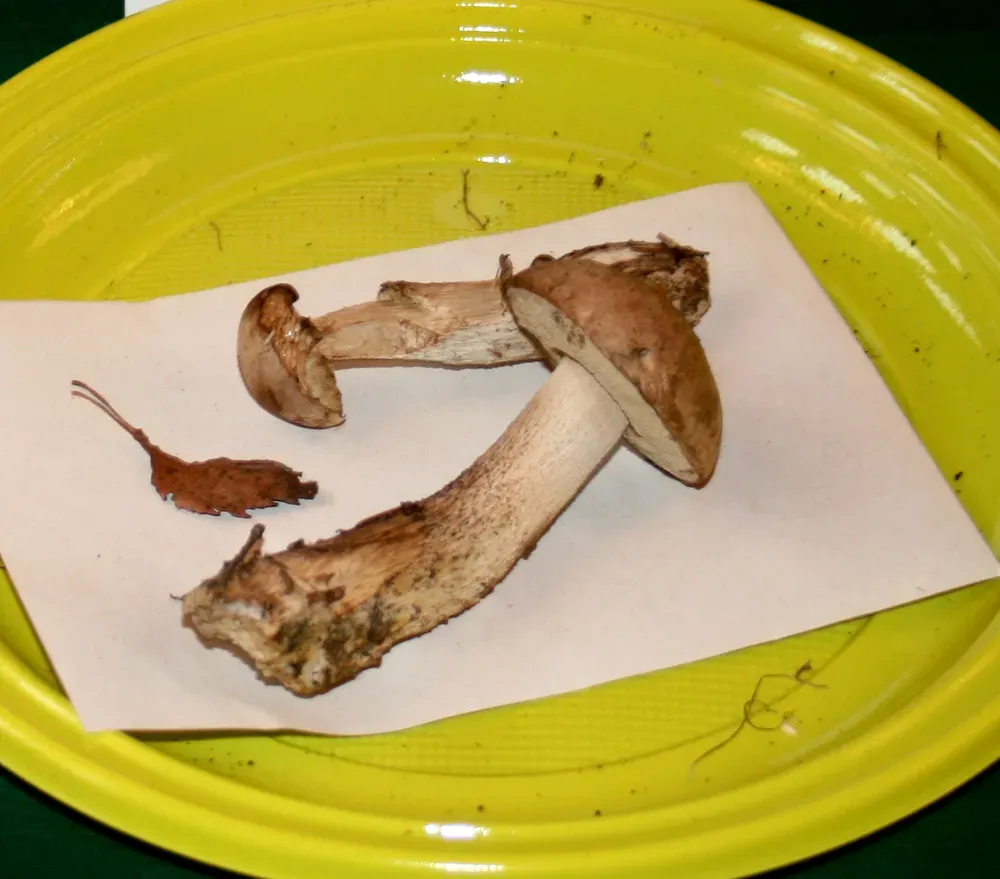
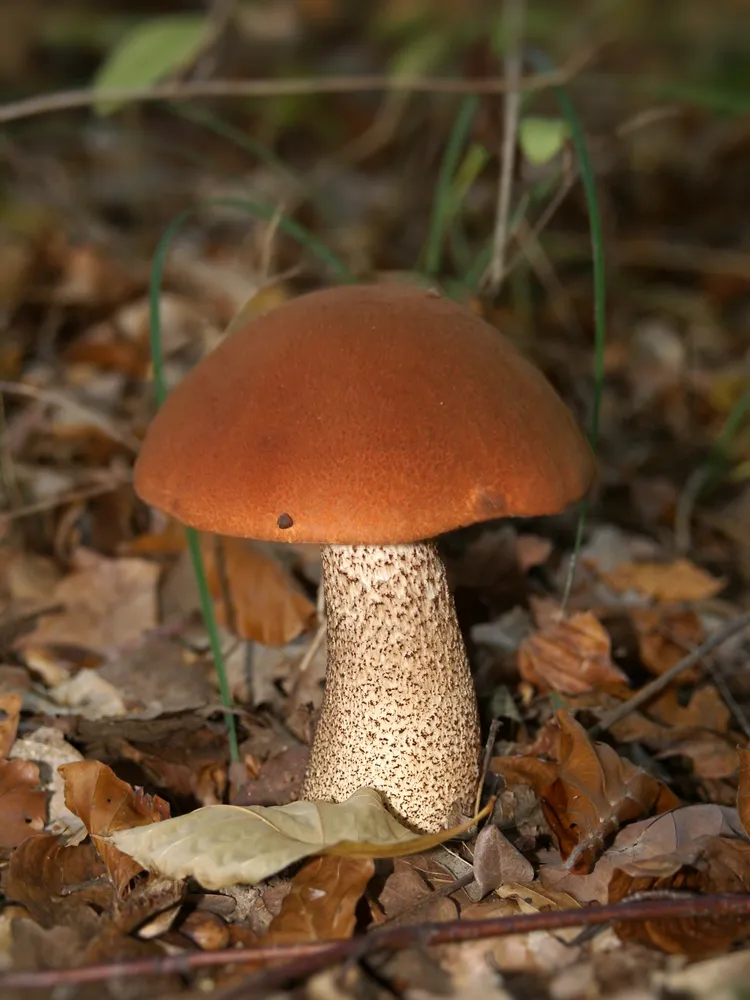
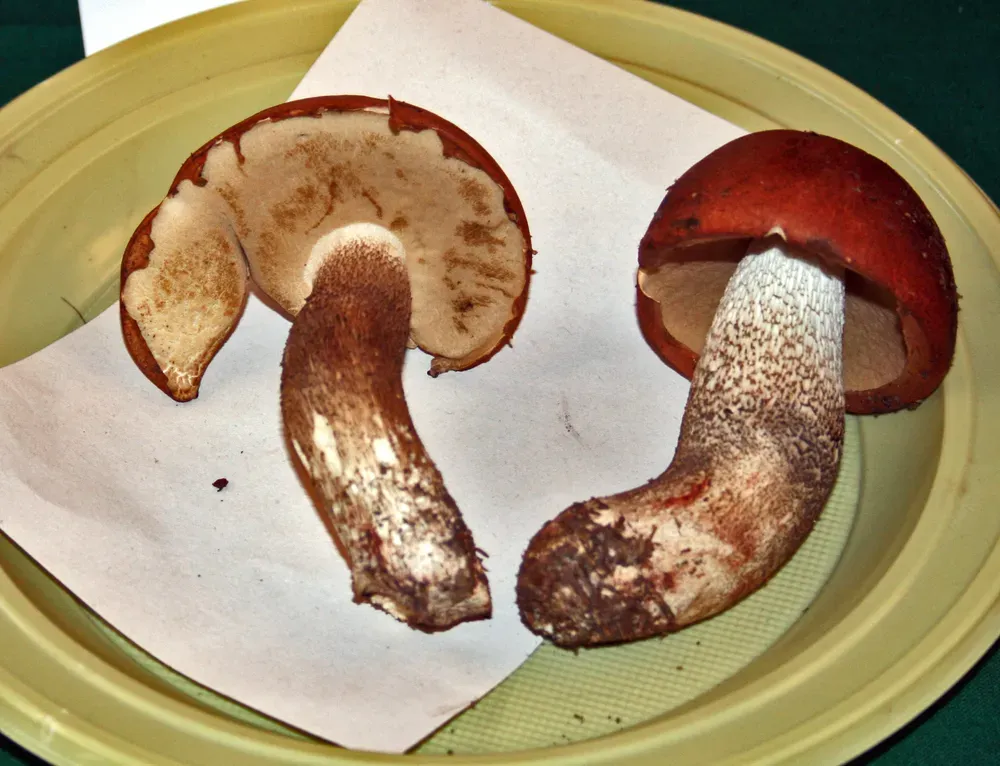
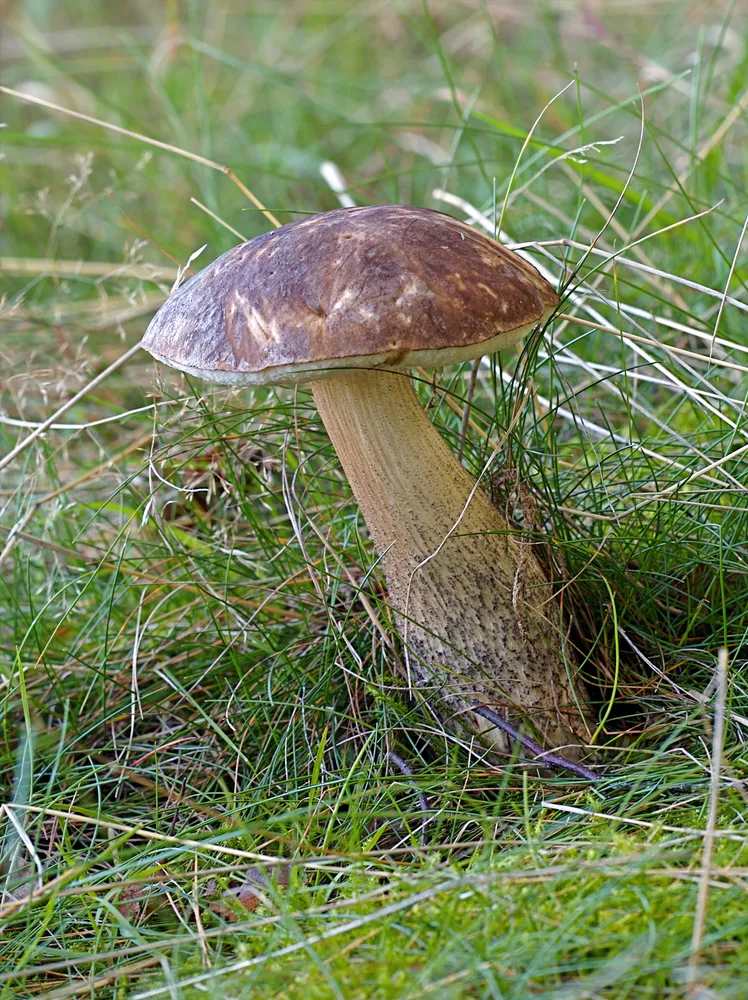
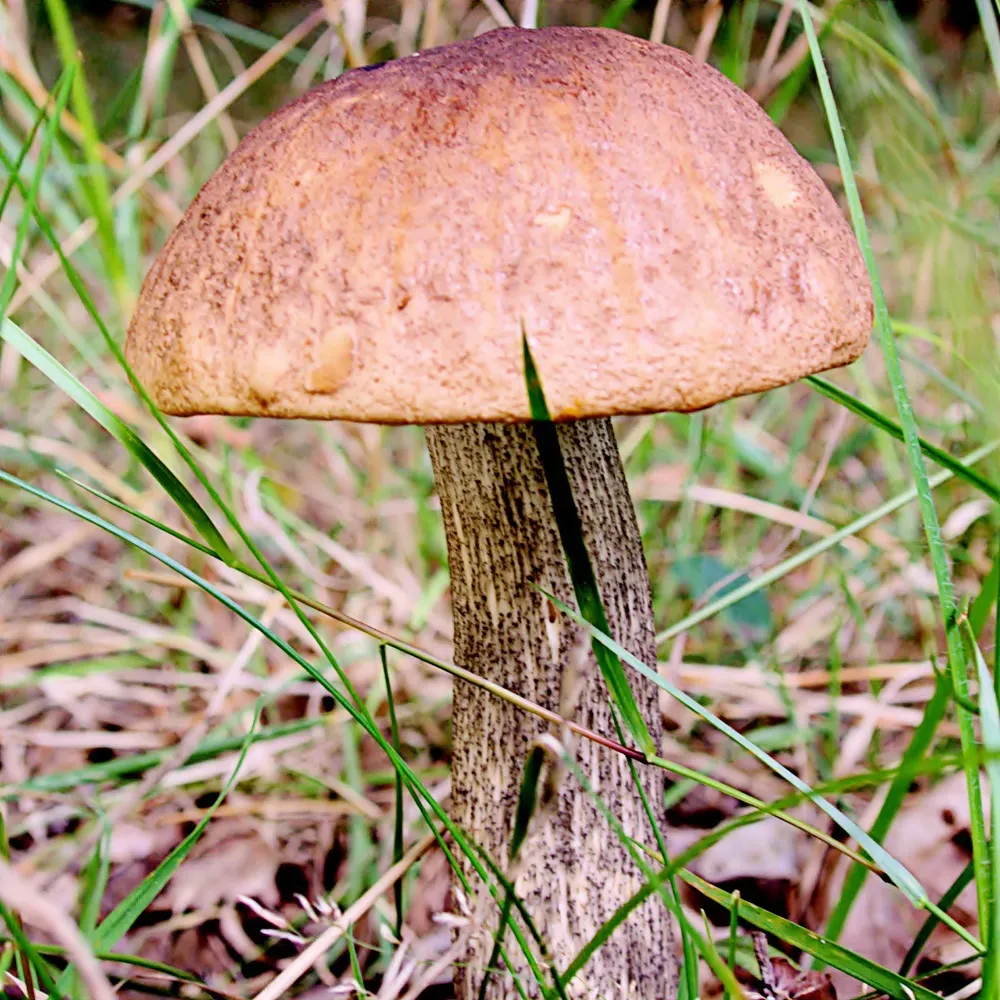
Related species
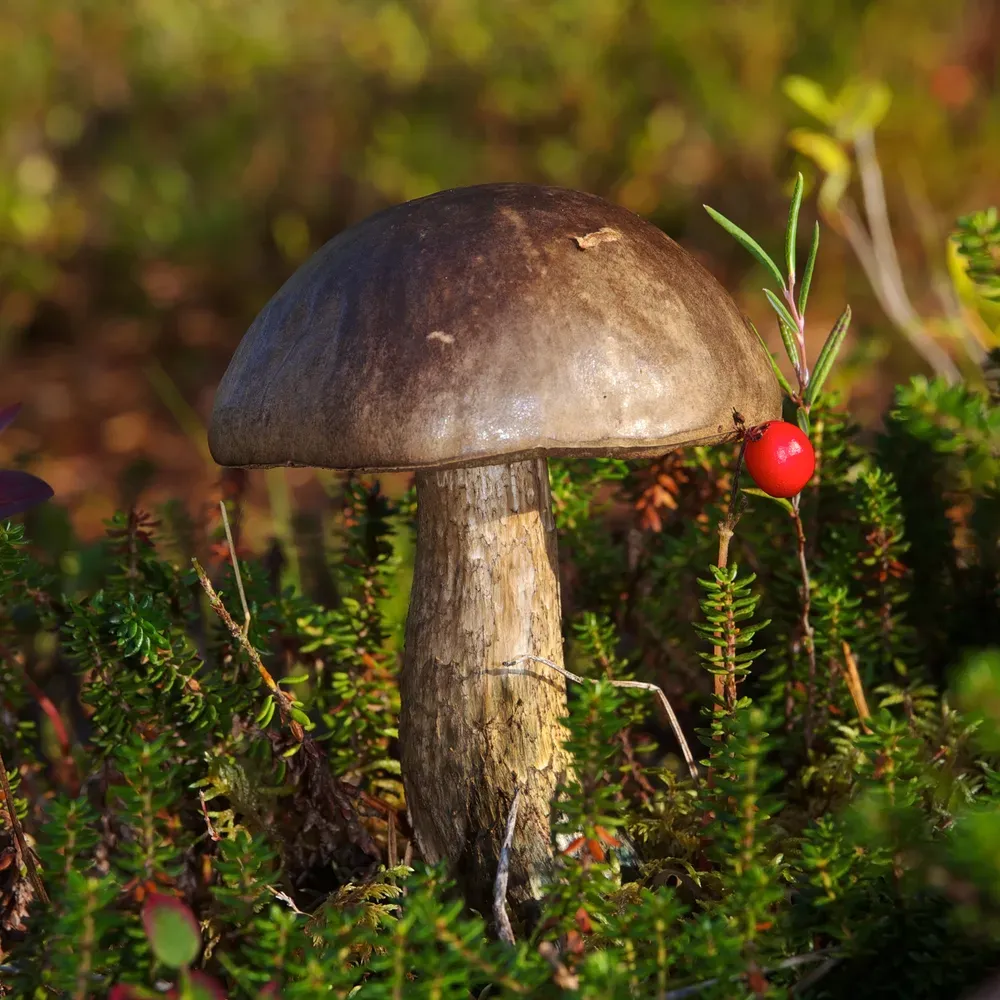
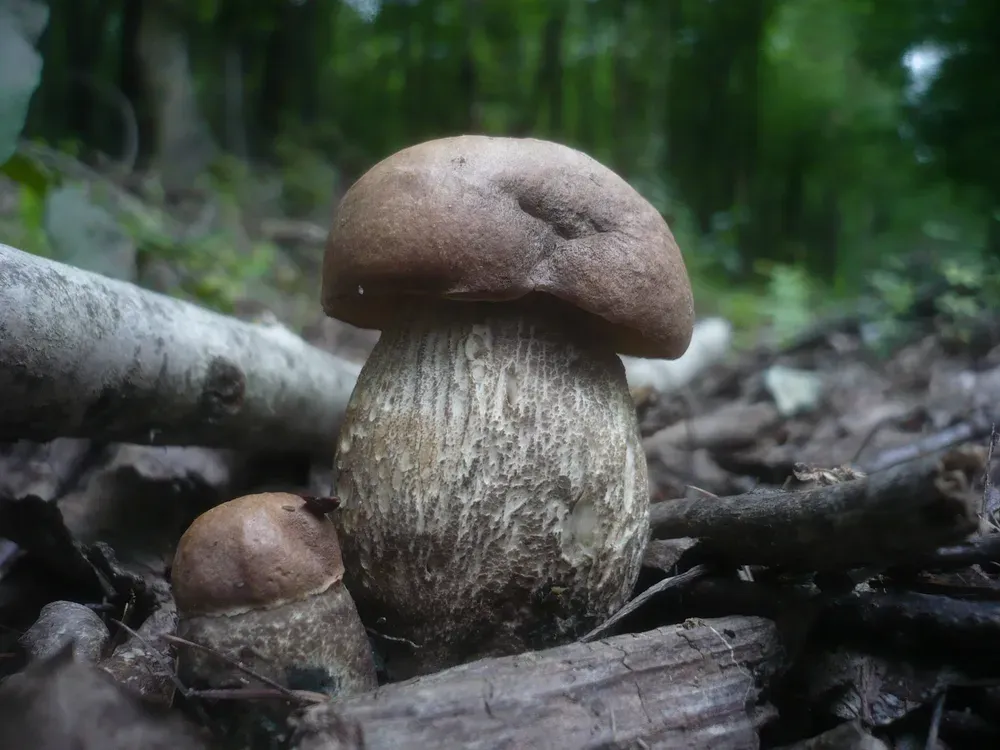
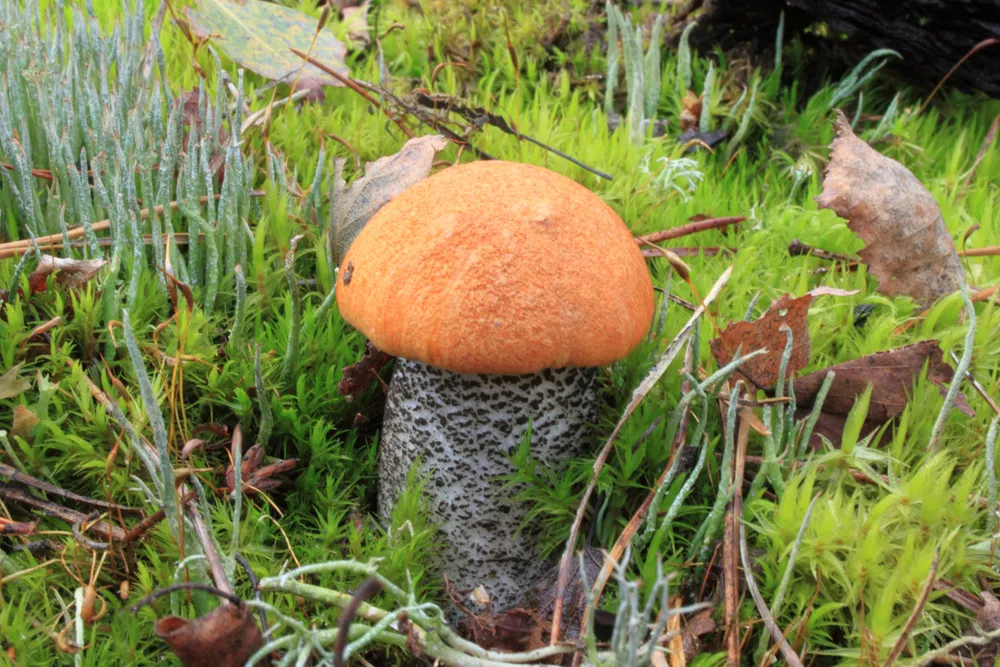
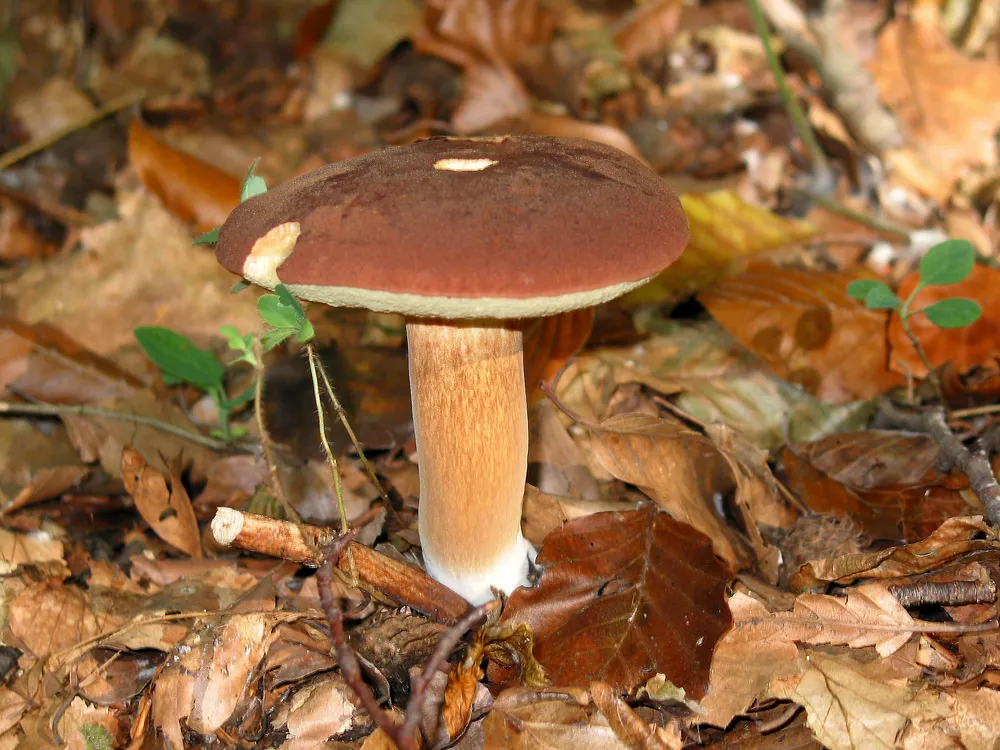
Mushrooms of the same genus and habitat — to study side by side and never mix up.
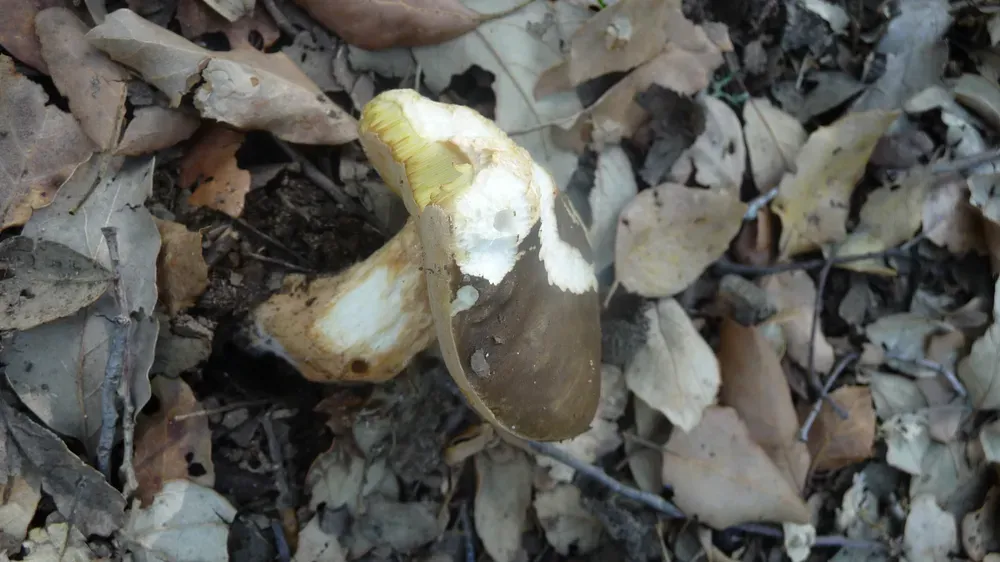
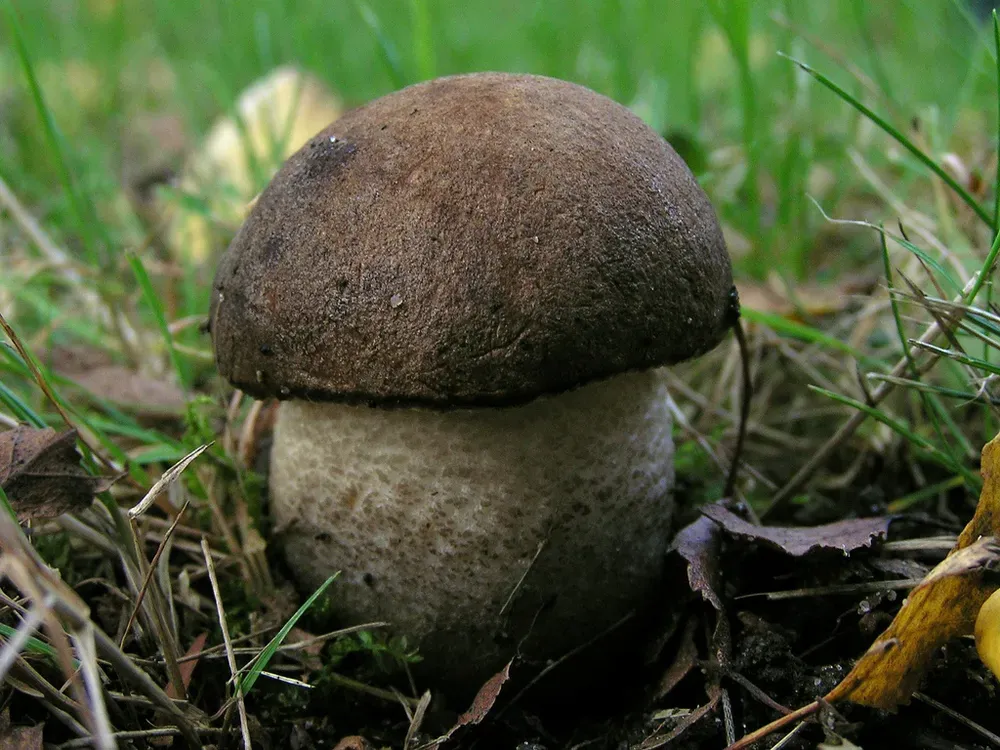
Related reading
.webp)
Frequently asked questions
Is it safe that the flesh turns black?
Yes. The intense reaction when cut (blue-green turning black) is a normal trait of the species. What's more, among all aspen boletes this reaction is the most dramatic in the white one. When cooked, the color settles to dark gray — that's normal, and the mushroom stays edible and tasty.
Are there dangerous lookalikes?
There are no serious dangerous lookalikes. All aspen boletes and birch boletes in Ukraine are edible. It can be confused with a young ghost bolete (also white), but that doesn't matter — both are safe.
Where to look in Ukraine?
Damp pine and mixed forests with pine and birch. Polissia (Chernihiv, Kyiv and Zhytomyr regions), the Carpathians, Prykarpattia. It likes peaty and sandy-boggy microhabitats. It loves mossy "cushions" with bilberry and lingonberry.
When does it fruit?
From mid-August to the end of September — a short season. In good years, after heavy summer rains, it appears en masse in September. In dry years it turns up only singly or not at all.
How is it different from the classic aspen bolete?
The classic aspen bolete (Leccinum aurantiacum) has a bright orange or red cap. The white one is white or cream. Both darken when cut, but the white one darkens more dramatically — faster and all the way to black. The white one is also bigger: up to 25 cm versus 12–15 for the classic one.
Which trees does it form mycorrhiza with?
With pine and birch, less often with spruce and alder. Most likely in damp mixed forests with both trees. It does not grow in pure deciduous forests or in the steppe belt.
How to cook it?
Young, firm ones — pickle them (they hold their shape better than most aspen boletes). Medium ones — fry with onions, add to soups. Old ones — dry them (though the color will be dark). Before cooking you can parboil it for 10–15 min and pour off the first water — this reduces the intense darkening in the pot.
Is it ever plentiful?
Not often. One fruit body per 100–200 m² is the typical density. But because of its large size (1+ kg), finding 5–7 "loaves" is enough for a full basket. Rarer than the classic aspen bolete and the orange oak bolete.
Is Leccinum percandidum edible or poisonous?
Does Leccinum percandidum have gills or pores?
What does the cap of Leccinum percandidum look like?
What does the stem of Leccinum percandidum look like?
Sources
- [1]Вікіпедія (українська)
- [2]Атлас грибів України, Зеров Д.К. (1979)
- [3]MycoBank Database
- [4]Index Fungorum
- [5]GBIF
- [6]iNaturalist Ukraine