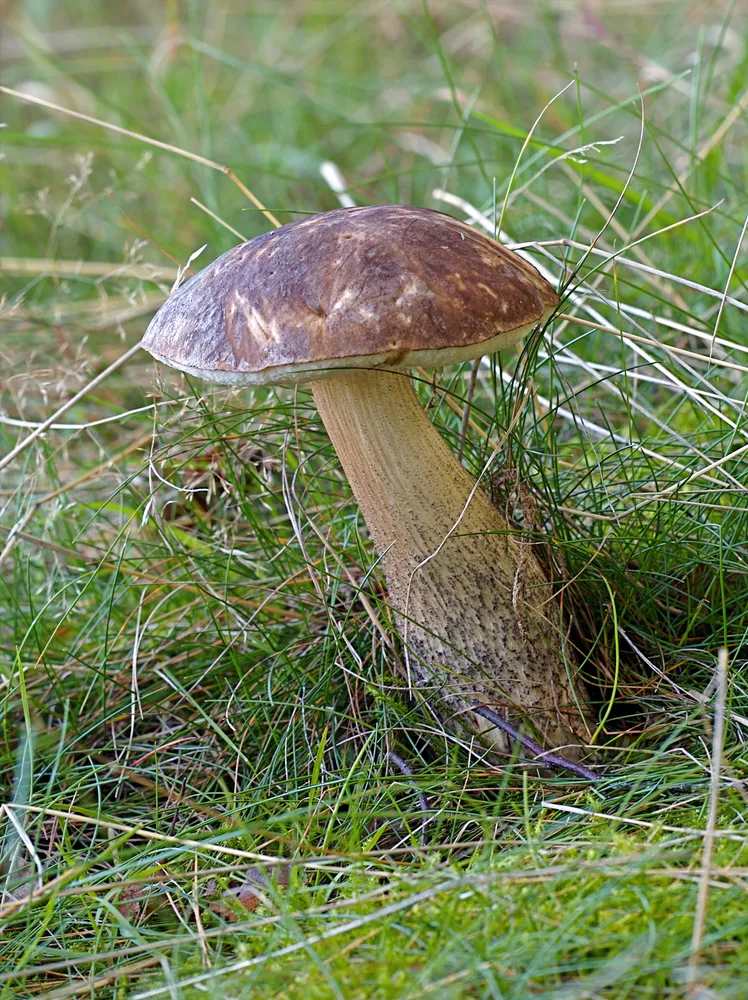
Brown birch boleteLeccinum scabrum
Expert-verifiedUpdated August 15, 2026
Passport
- Edibility
- Edible
- Season
- Jun — Oct
- Hymenophore
- Pored
- Cap color
- Brown
- Size
- Medium (5–15 cm)
- Smell
- Pleasant, mushroomy
- Reviewed
- Yes ✓
Quick answers
Where to look?
Deciduous forest, Mixed forest
When does it appear?
Jun — Oct
Active months: June, July, August, September, October.
How to recognize it? Three signs
- Cap color: Brown, Dark brown, Grey
- Cap shape: Convex
- Smell: Pleasant, mushroomy
Fruiting season
June – October
Description
The brown birch bolete (Leccinum scabrum) is a widespread edible mushroom that forms mycorrhiza exclusively with birch. You'll find it in birch groves, mixed forests with elm, and scrubland throughout the temperate zone of Eurasia.
It fruits from June to October, most abundantly in August–September. It isn't fussy about soil and grows both on dry ground and in damp spots near bogs.
Edible, but of middling culinary quality compared with the red-capped scaber stalk. With long cooking the flesh darkens to gray-black, which doesn't affect the taste but spoils the look of the dish. Best for drying.
Cap
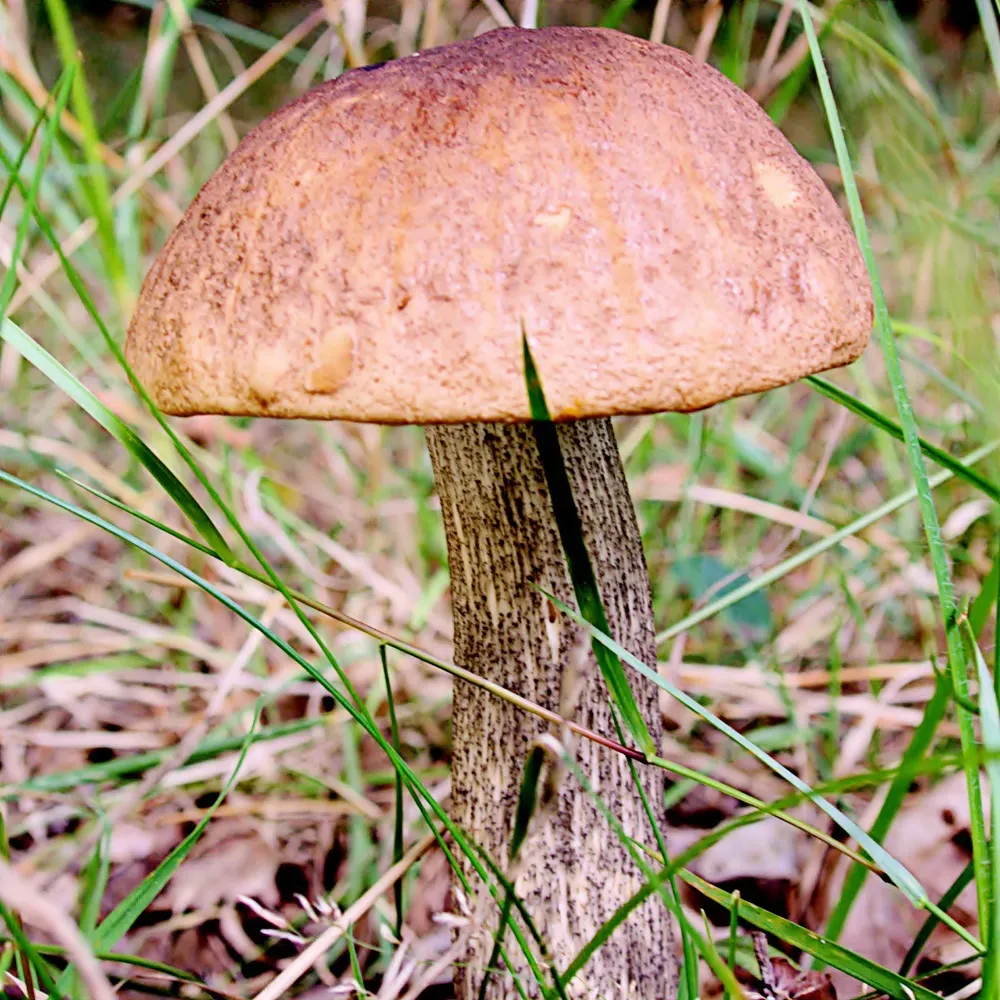
Cap 5–15 cm across, at first spherical or hemispherical, later cushion-shaped. The surface is smooth or slightly wrinkled, dry or a little sticky in wet weather. Color ranges from grayish brown to dark brown, more rarely almost black.
Hymenophore
The hymenophore is tubular. The tubes and pores are white, small in young mushrooms and wider in mature ones. When pressed, the pores turn slightly brownish, but there's no intense bluing — this is how the brown birch bolete differs from the bluing red-capped scaber stalks.
Stem
Stem 8–18 cm tall, 1.5–3 cm thick, cylindrical, fairly long and slender compared with the cap. The surface is white or grayish, densely covered with dark, fibrous scales — the hallmark of the genus Leccinum. The stem is firm and fibrous.
Flesh
The flesh is firm and white; when cut it slowly darkens to grayish or almost black — especially in cooked mushrooms. The taste is mild and neutral. The cap skin doesn't peel.
Smell
The smell is unobtrusive, pleasant and typically mushroomy. The aroma intensifies with cooking. When dried, the brown birch bolete takes on a rich scent that falls short of porcini but is noticeably better than most other pored mushrooms.
Lookalikes
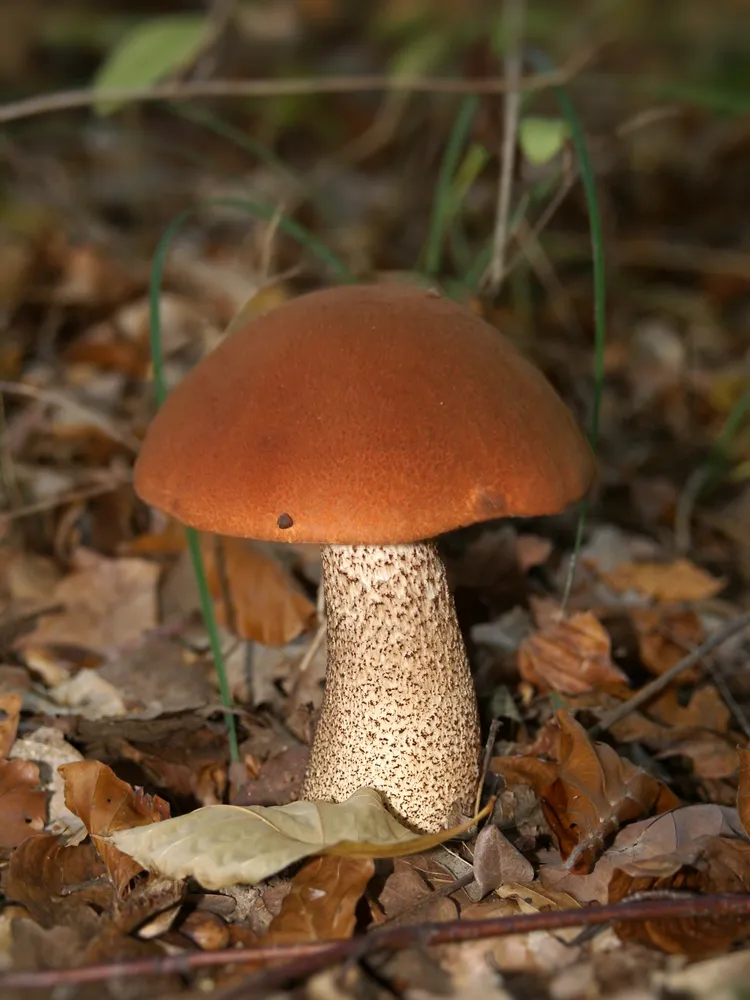
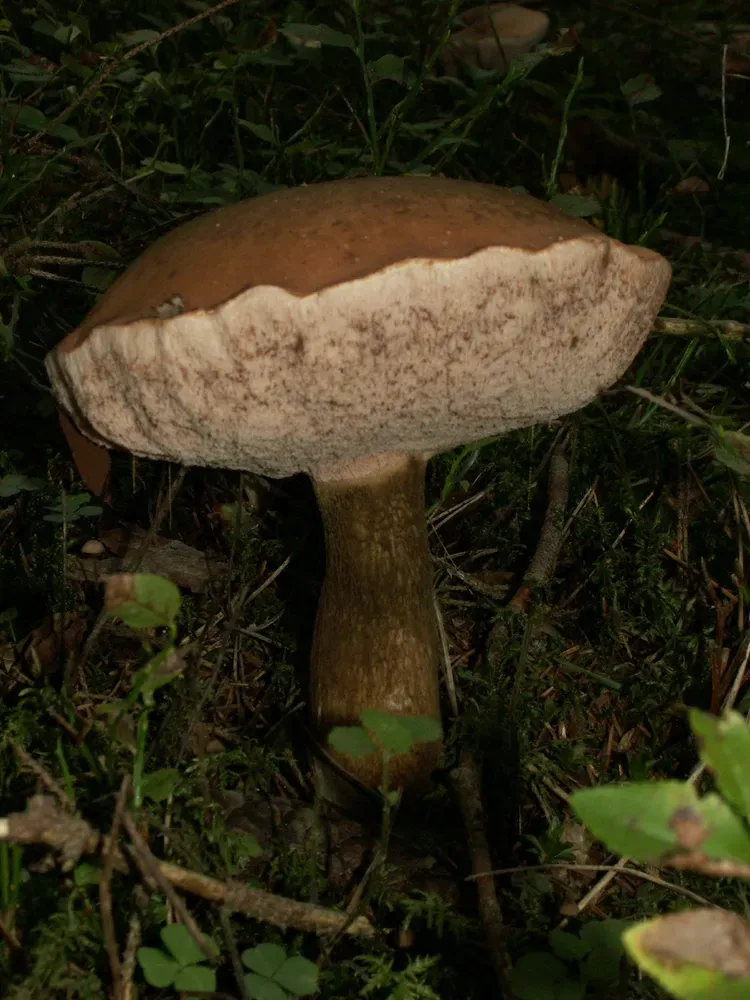
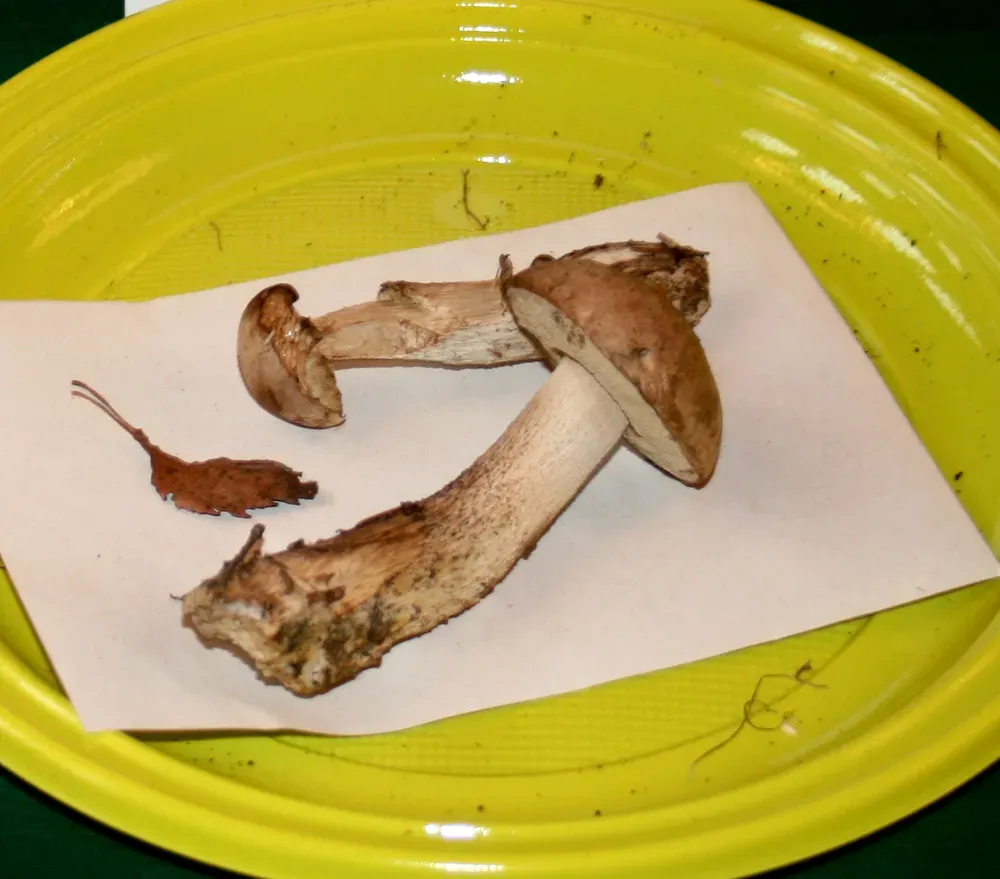
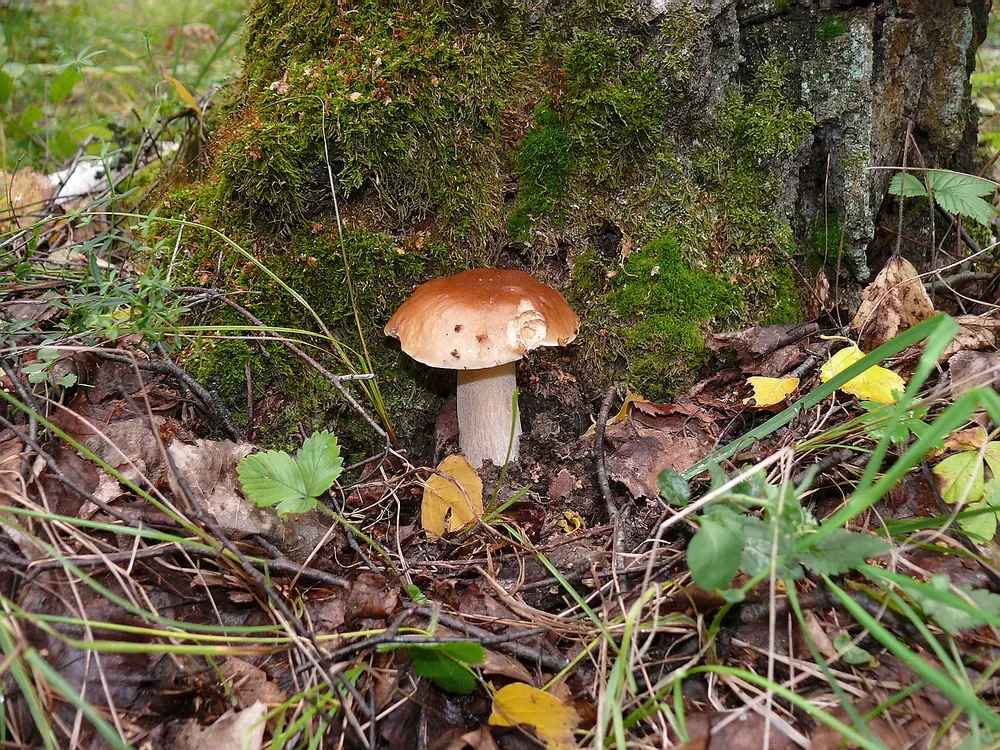
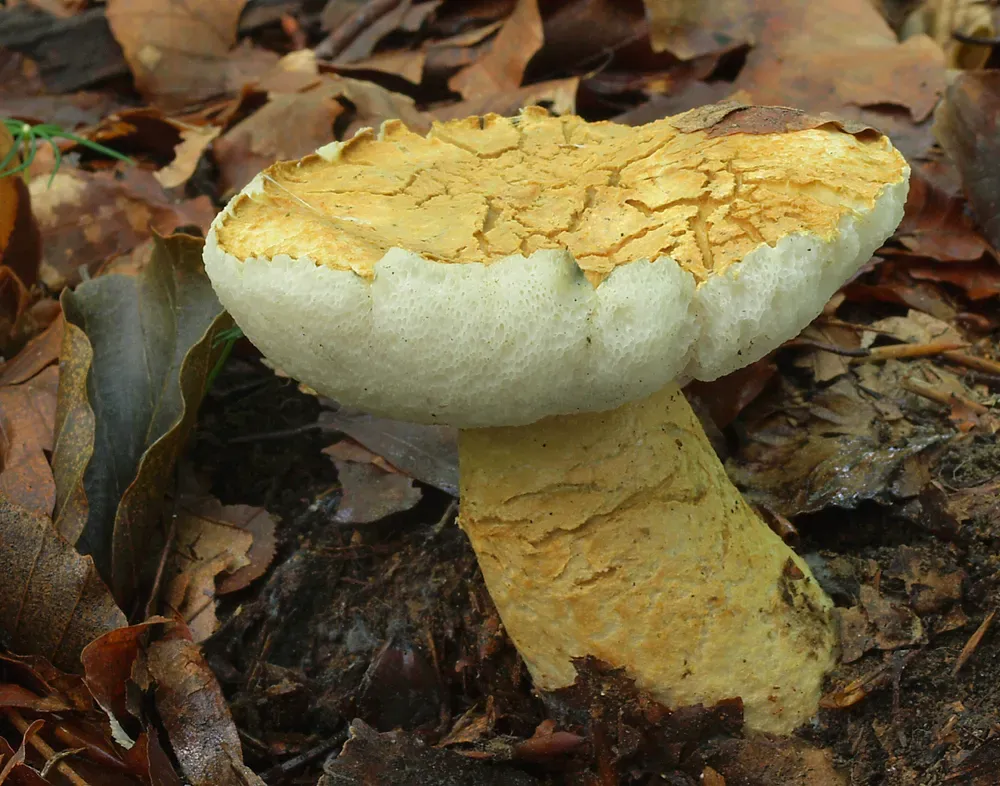
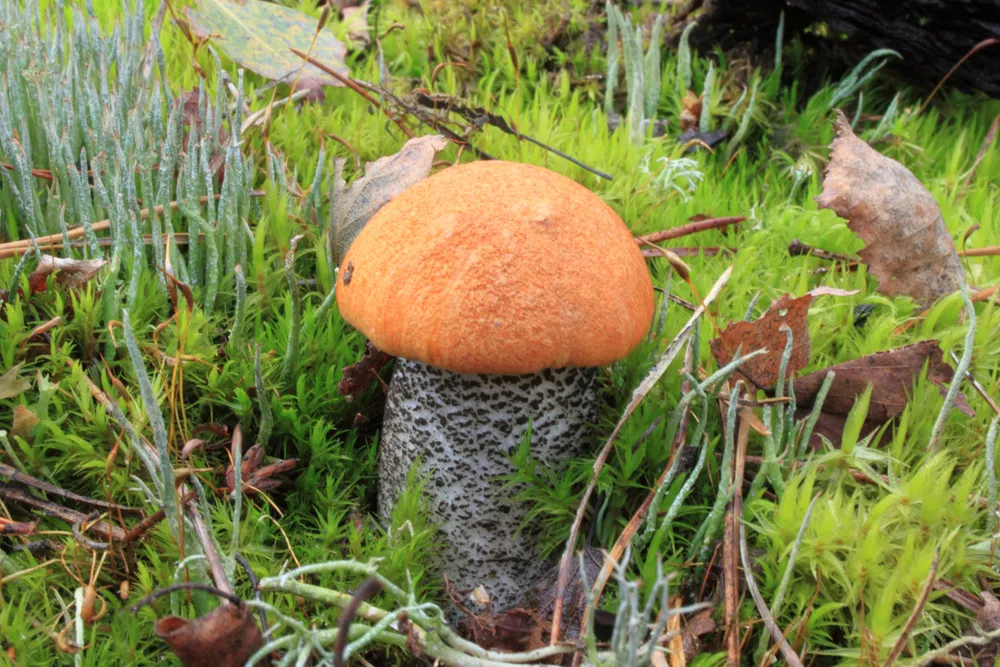
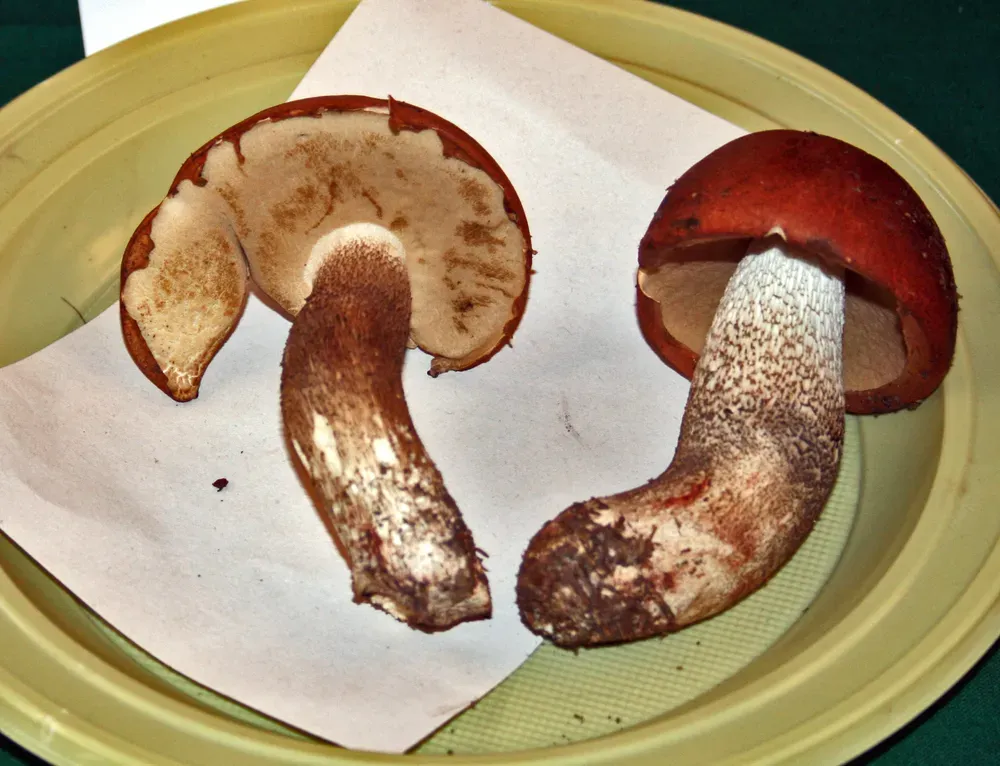
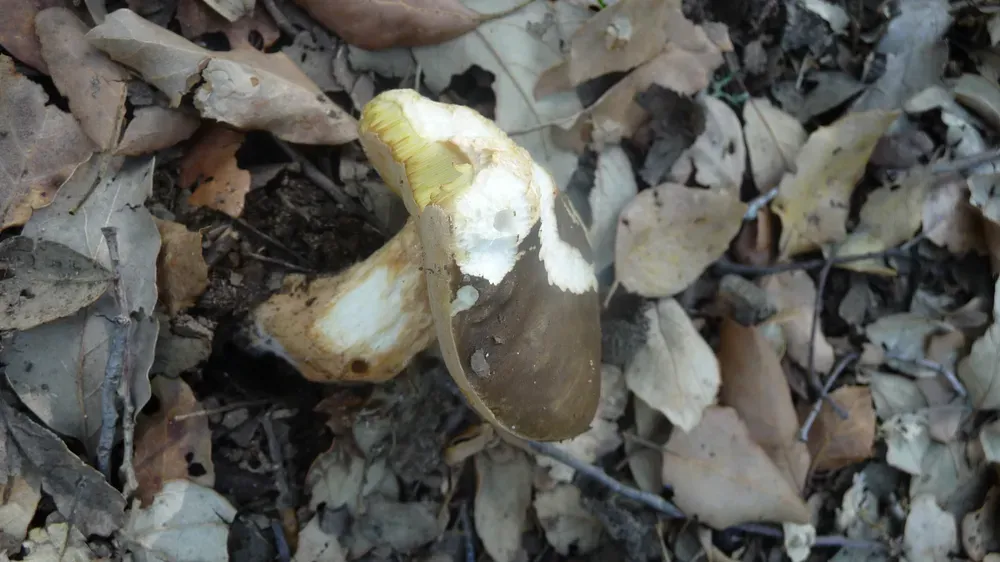
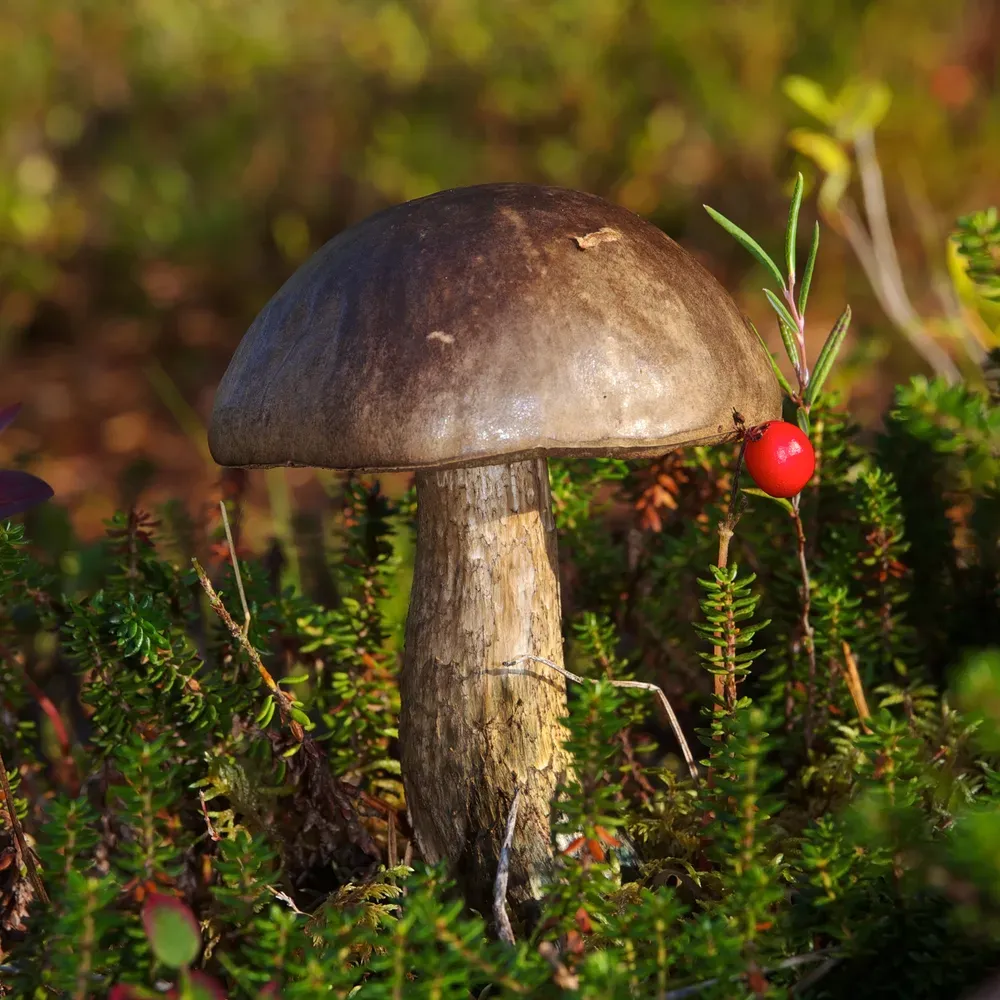
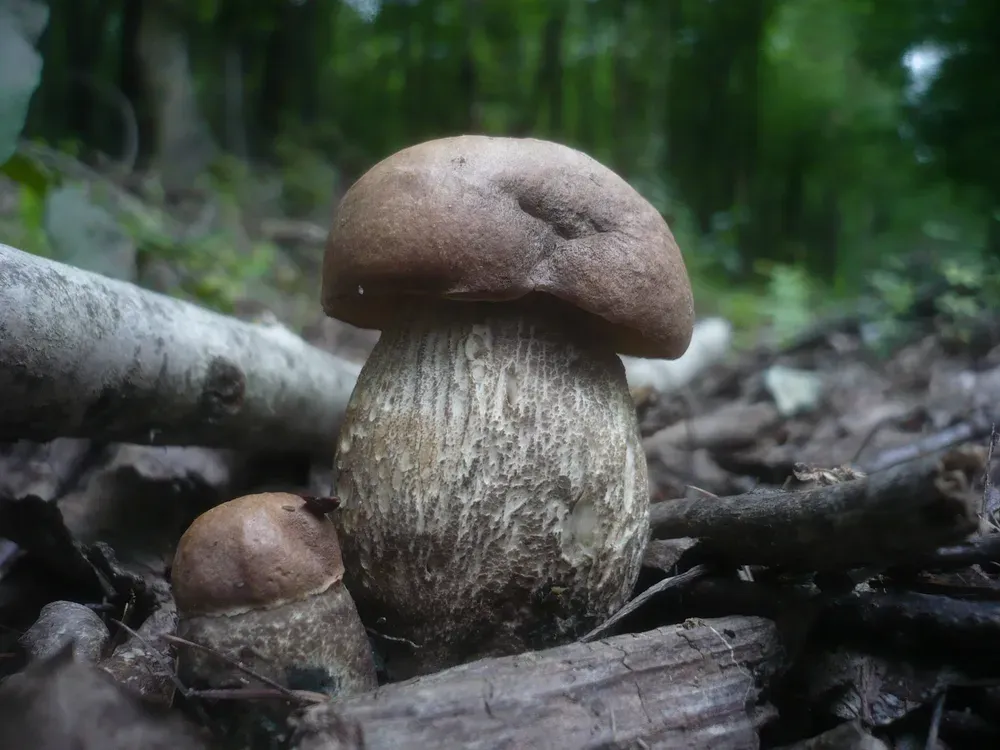
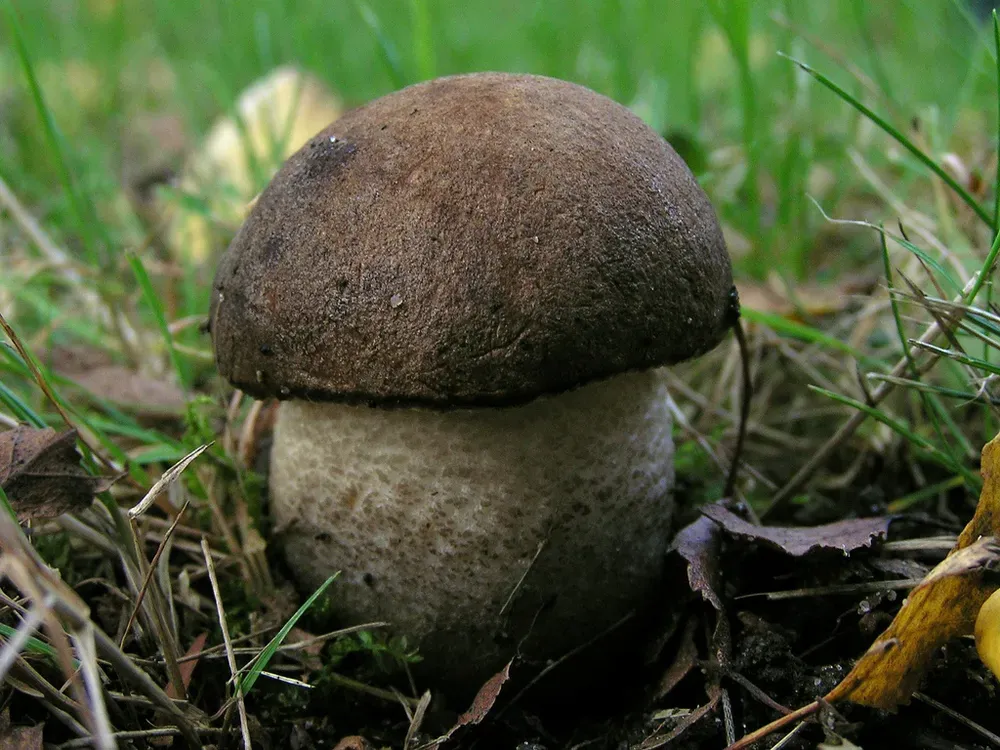
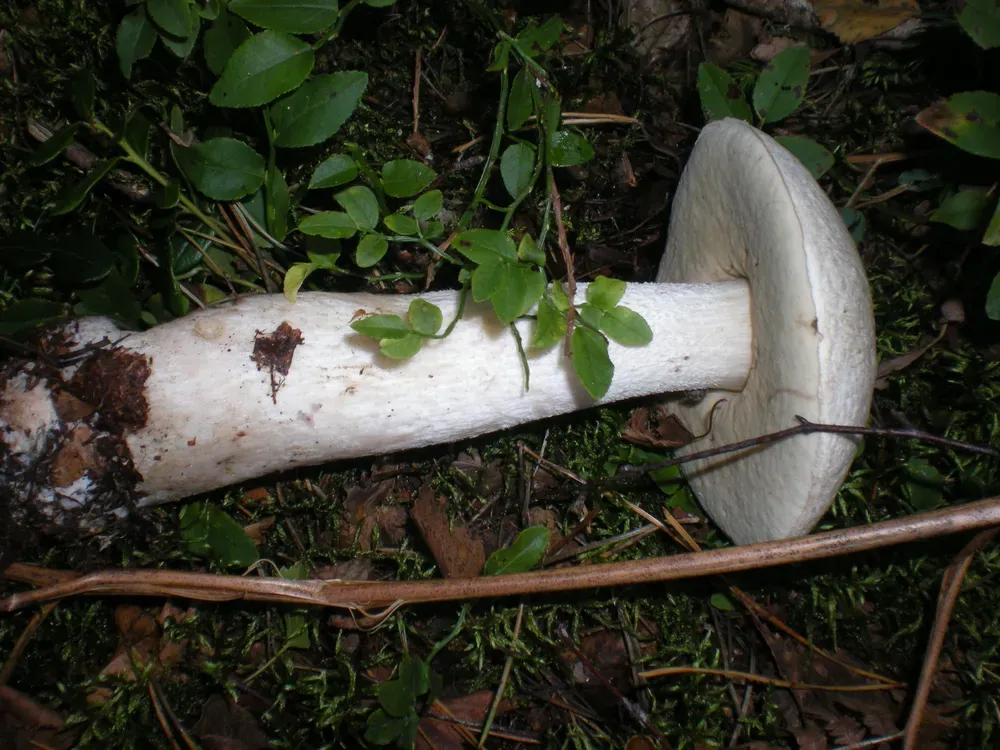
_Bresinsky_&_Manfr._Binder_533003_2015-06-29.webp)
Related species
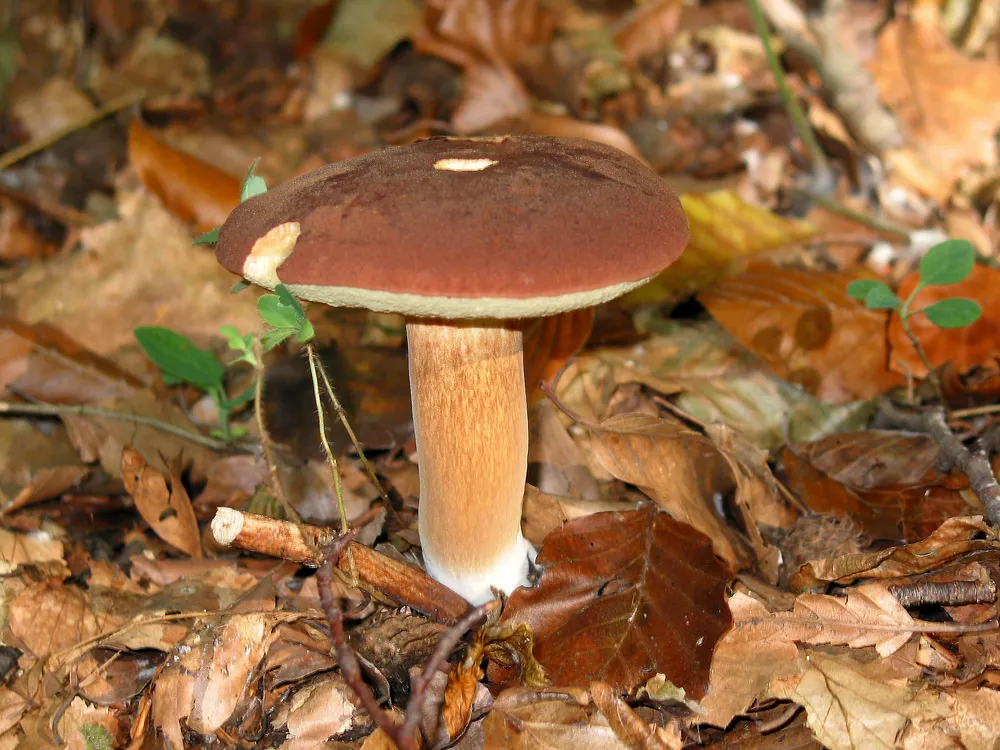
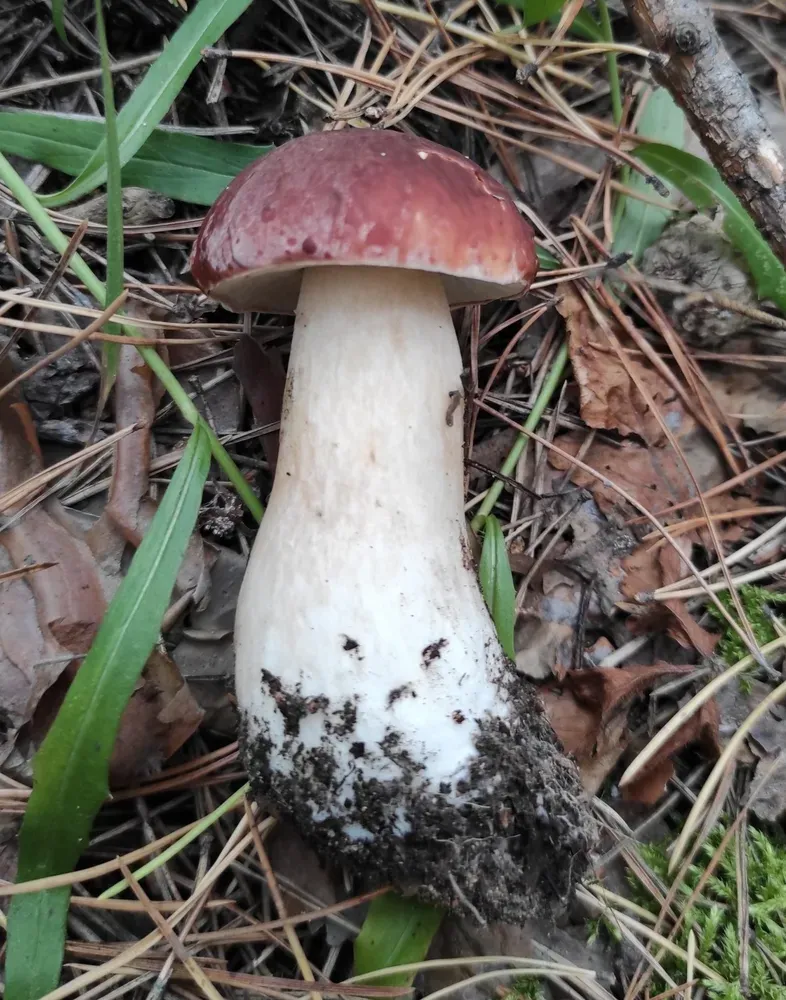
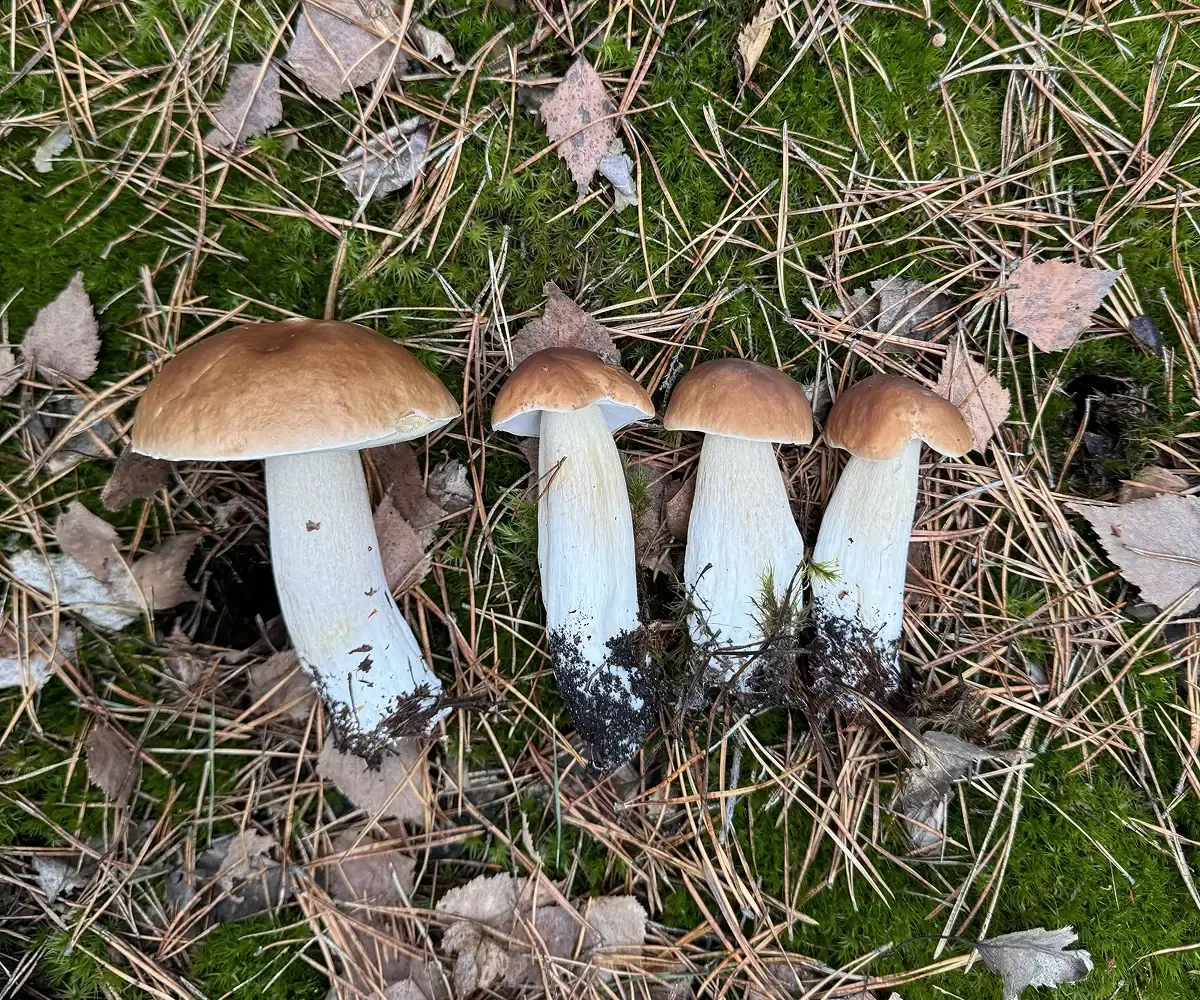
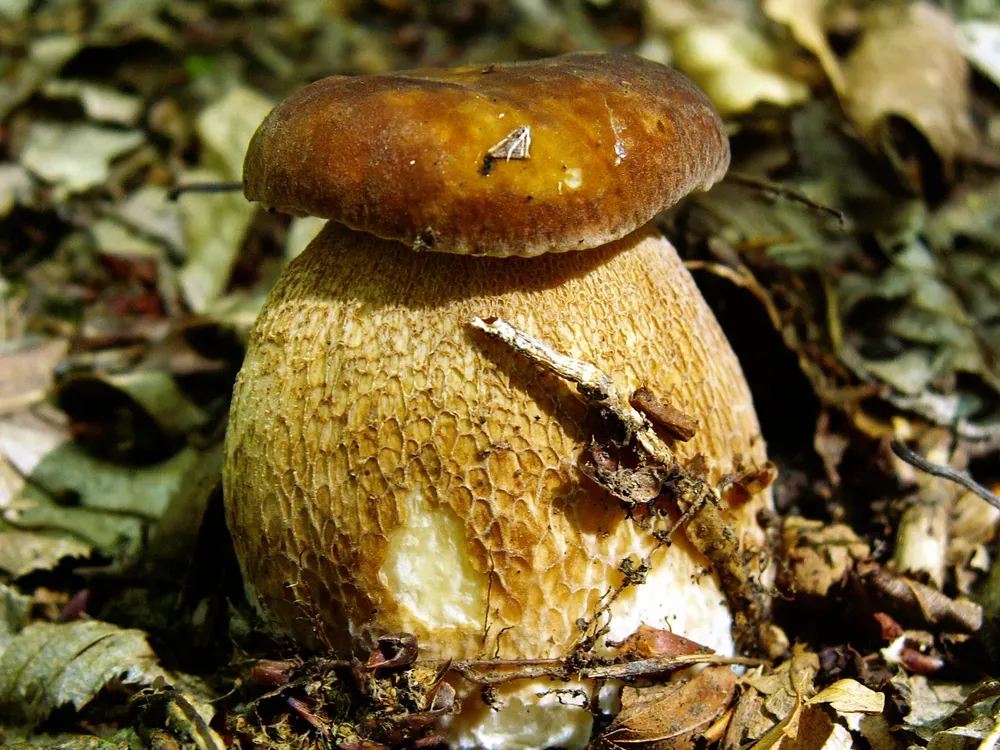
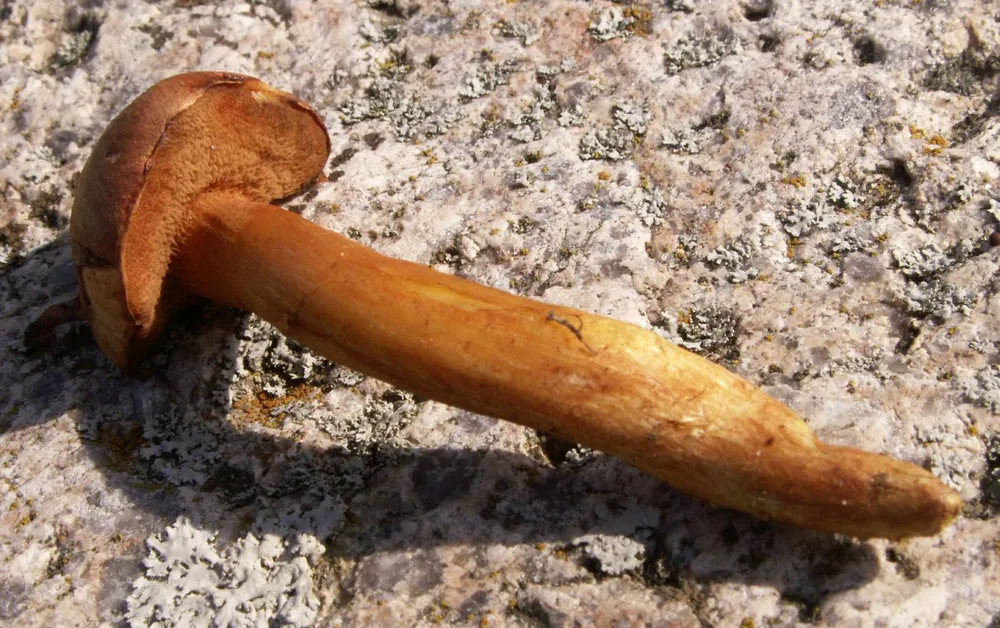
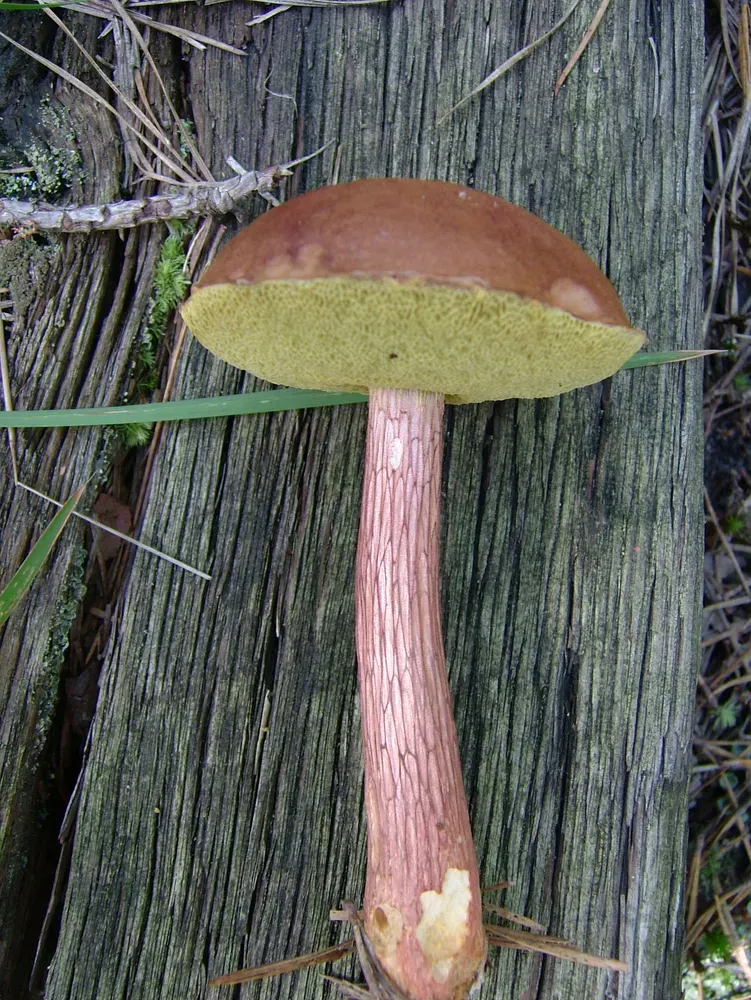
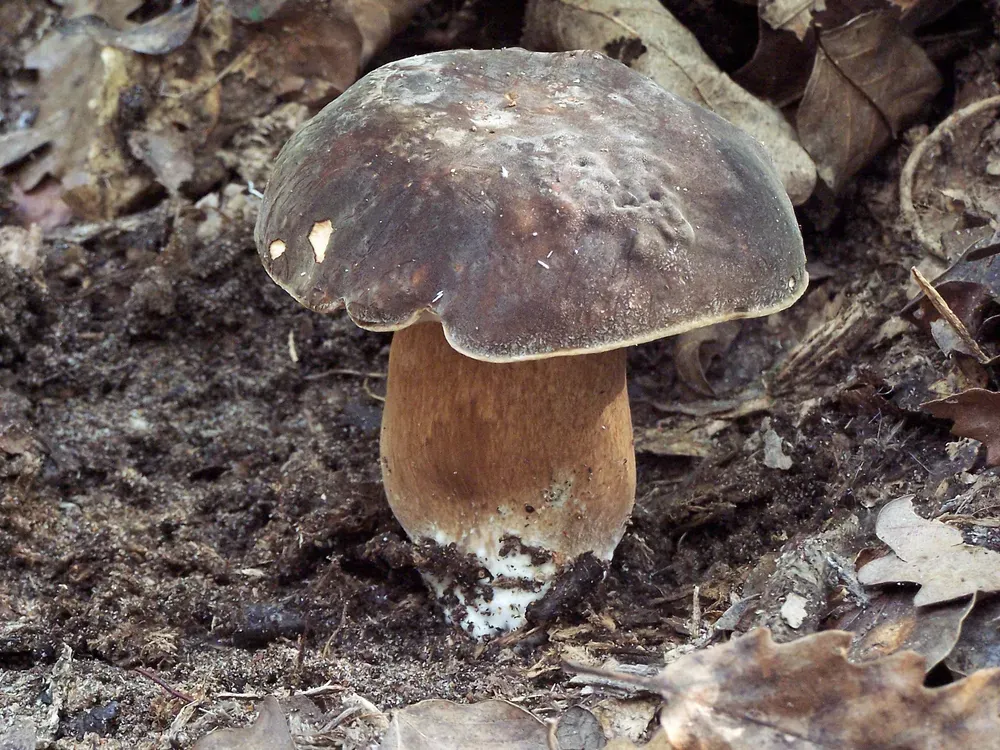
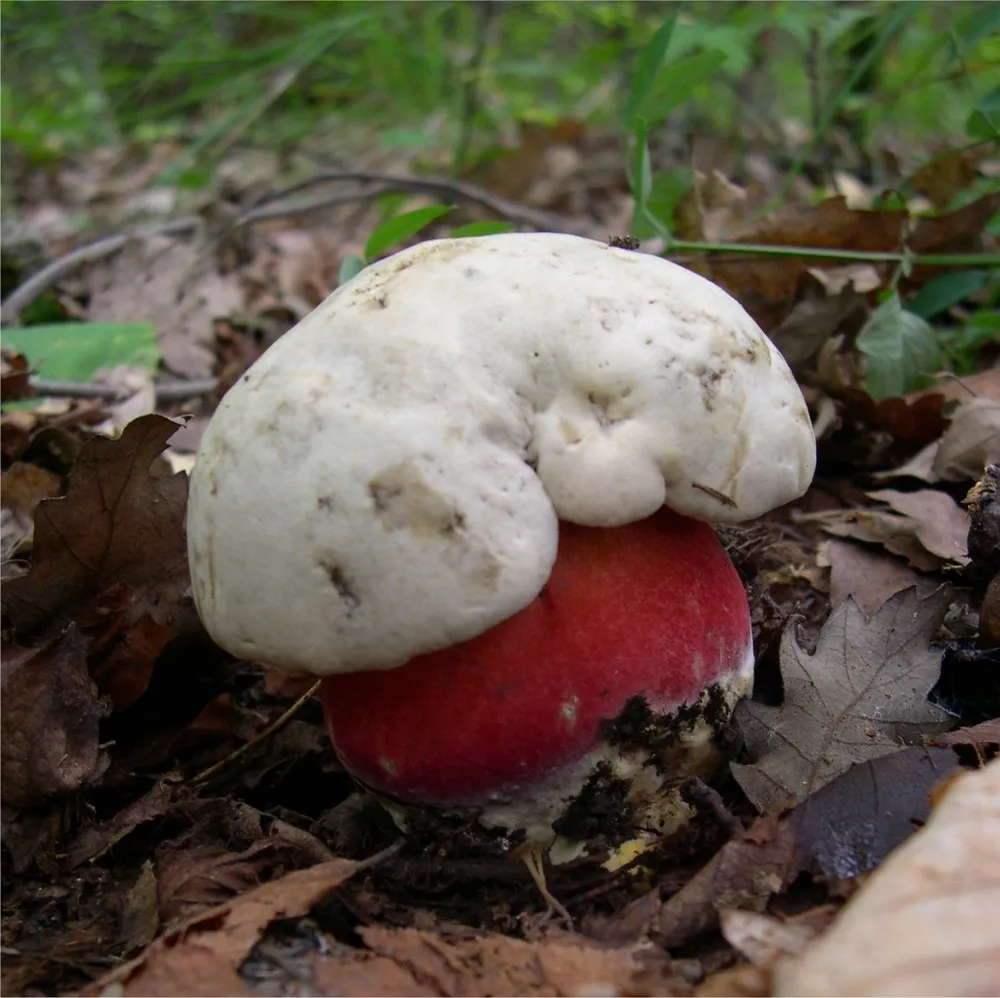
Mushrooms of the same genus and habitat — to study side by side and never mix up.
Related reading
 Where & when to forage
Mushrooms of the Kyiv region: the season, edible and poisonous species
Kyiv Oblast means Polissia pine forests in the north and mixed woods around the capital. Here's which mushroom…
August 19, 2026·3 min How to identify
Mushrooms for beginners: 7 safe species to start with
The best way to start foraging is to learn a few species that have no deadly lookalikes. We've gathered seven…
August 19, 2026·3 min Safety
Is the birch bolete poisonous?
The brown birch bolete is a safe edible mushroom — there are no poisonous birch boletes. We explain why the qu…
August 19, 2026·2 min
Frequently asked questions
Is Brown birch bolete edible or poisonous?
Does Brown birch bolete have gills or pores?
What does the cap of Brown birch bolete look like?
What does the stem of Brown birch bolete look like?
What do Brown birch bolete smell and taste like?
Where does Brown birch bolete grow?
Which trees does Brown birch bolete grow under?
When should you pick Brown birch bolete?
What can Brown birch bolete be confused with?
How do you cook Brown birch bolete?
Can you dry Brown birch bolete?
What is the scientific name of Brown birch bolete?
Sources
- [1]Атлас грибів України, Зеров Д.К. (1979)
- [2]GBIF