Aureoboletus projectellus
Expert-verifiedUpdated October 3, 2026
Passport
- Edibility
- Edible
- Season
- Aug — Oct
- Hymenophore
- Pored
- Cap color
- Brown
- Size
- Giant (>25 cm)
- Smell
- Pleasant
- Reviewed
- Yes ✓
Quick answers
Where to look?
Conifer forest, Mixed forest
When does it appear?
Aug — Oct
Active months: August, September, October.
How to recognize it? Three signs
- Cap color: Brown, Red, Dark brown
- Cap shape: Convex
- Smell: Pleasant, Sour
Fruiting season
August – October
Description
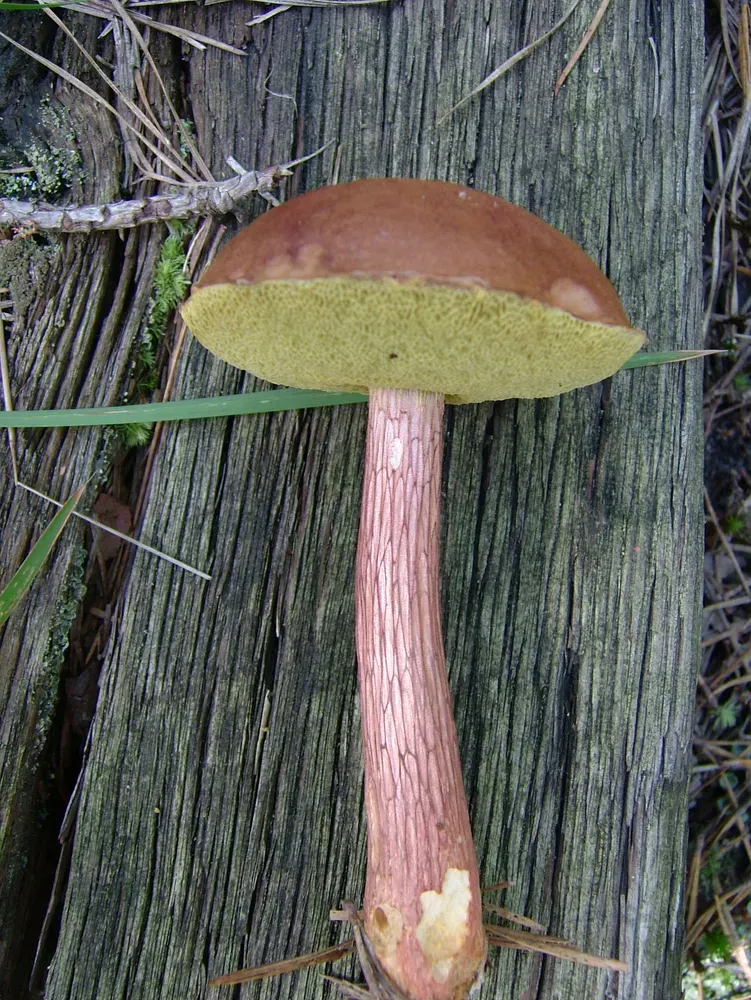
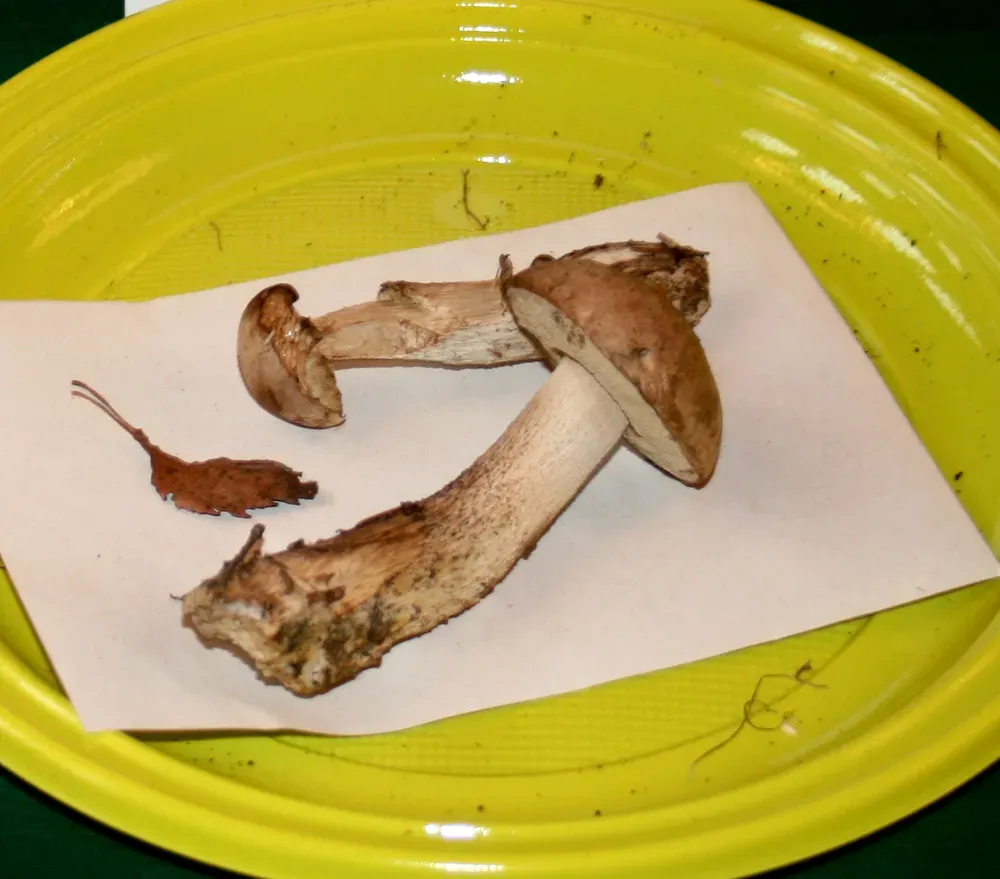
Aureoboletus projectellus is an East Asian–North American bolete species recorded in Ukraine relatively recently. Originally known only from North America and East Asia, in recent decades it has been actively spreading in Europe — the Baltics, Poland, Ukraine. It has appeared in our pine forests mostly since the 2000s.
The species is mycorrhizal, forming associations with Scots pine. In Ukraine it occurs mainly in pine and mixed forests with pine in Polissia (Chernihiv, Kyiv, Zhytomyr and Rivne regions) and in the Carpathians. It doesn't fruit abundantly — single specimens or small groups. Identification: a typical bolete shape, a large firm stem with a distinct net pattern, and flesh that does NOT turn blue when cut — this is the key diagnostic feature.
Edibility: good, a category 2 mushroom. The flesh is firm, of good culinary quality in young specimens. An interesting feature is its slightly sour taste, which sets it apart from classic porcini and gives it a certain gastronomic character. It can be fried without boiling first (unlike many other boletes). It pickles well and dries fine. Thanks to its size and firmness, it's a nice find to collect if you come across it.
Cap
Cap 4–20 cm, hemispherical in young mushrooms, then plano-convex. The color ranges from light cinnamon-brown to dark reddish-brown in young ones; with age it becomes duller, with a gray or olive-green tinge. The surface is dry, velvety, with barely noticeable fine cracks in mature mushrooms.
Hymenophore
Hymenophore tubular, yellow at first, olive-brown with age. Pores 0.5–2 mm, angular. Tubes 1–2.5 cm long. Does NOT turn blue when pressed — a key feature of the genus Aureoboletus that distinguishes it from many other boletes.
Stem
Stem massive, 9–24 cm tall, 1–5 cm thick, hard. In the upper part there's a distinct net pattern (a characteristic feature of the species). White mycelium at the base. Stem color cream to brown.
Flesh
Flesh whitish with a barely noticeable pink tinge, very firm. When cut it slowly turns yellow-brown and does NOT turn blue. The texture is fibrous, with a pleasant resistance when you slice it.
Smell
Smell faint, mushroomy, with no distinct notes. The taste is distinctive — slightly sour, which sets it apart from classic porcini. The acidity is reminiscent of apple.
›Scientific synonyms (3)
Ceriomyces projectellus Murrill (1938), Boletus projectellus (Murrill) Murrill 1938, Boletellus projectellus (Murrill) Singer (1945)
Related species
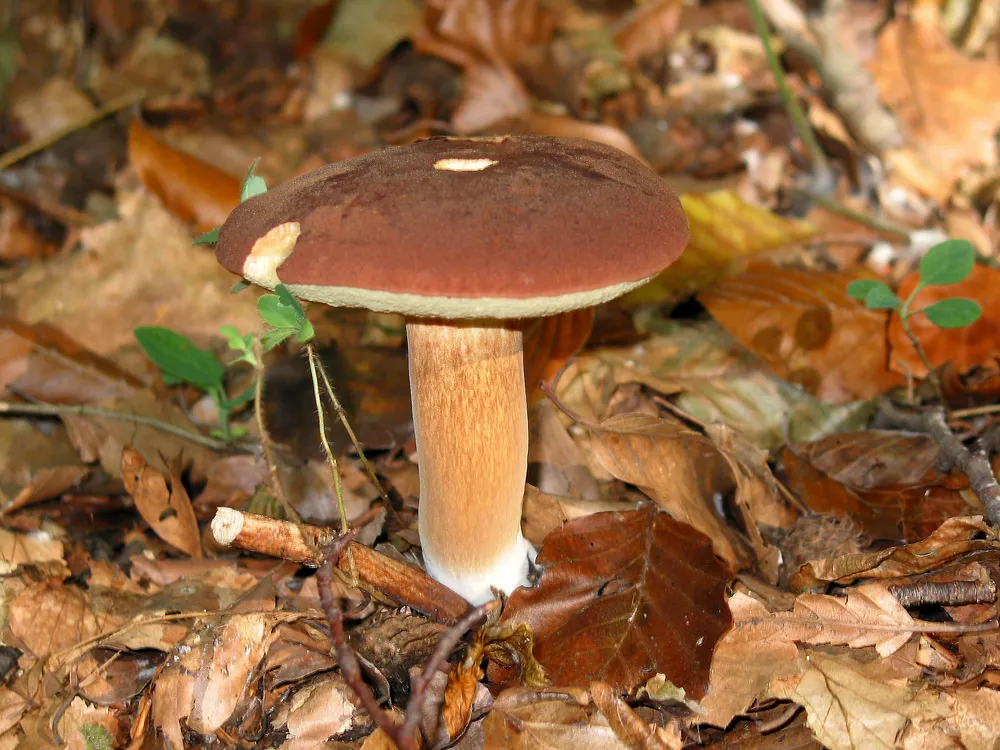
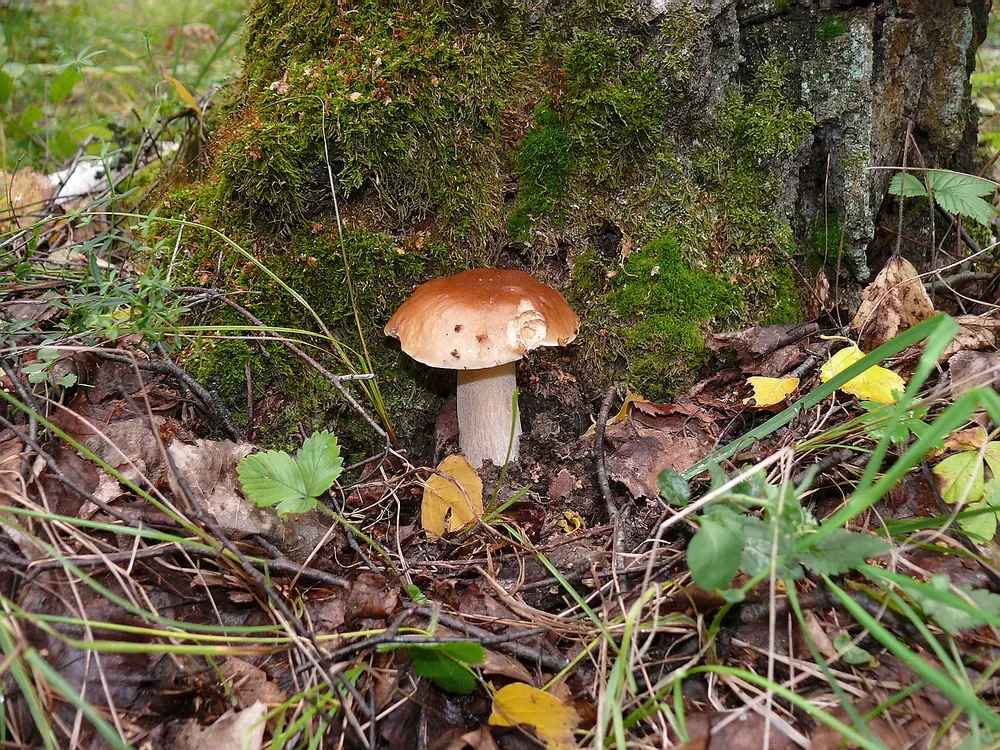
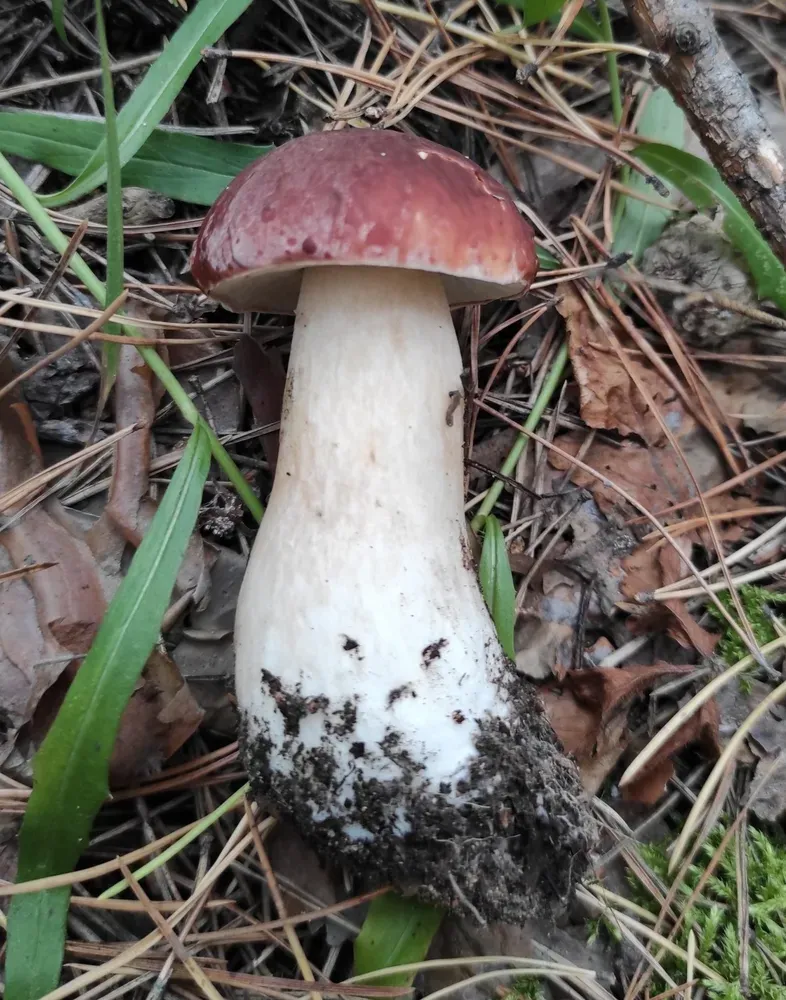
Mushrooms of the same genus and habitat — to study side by side and never mix up.
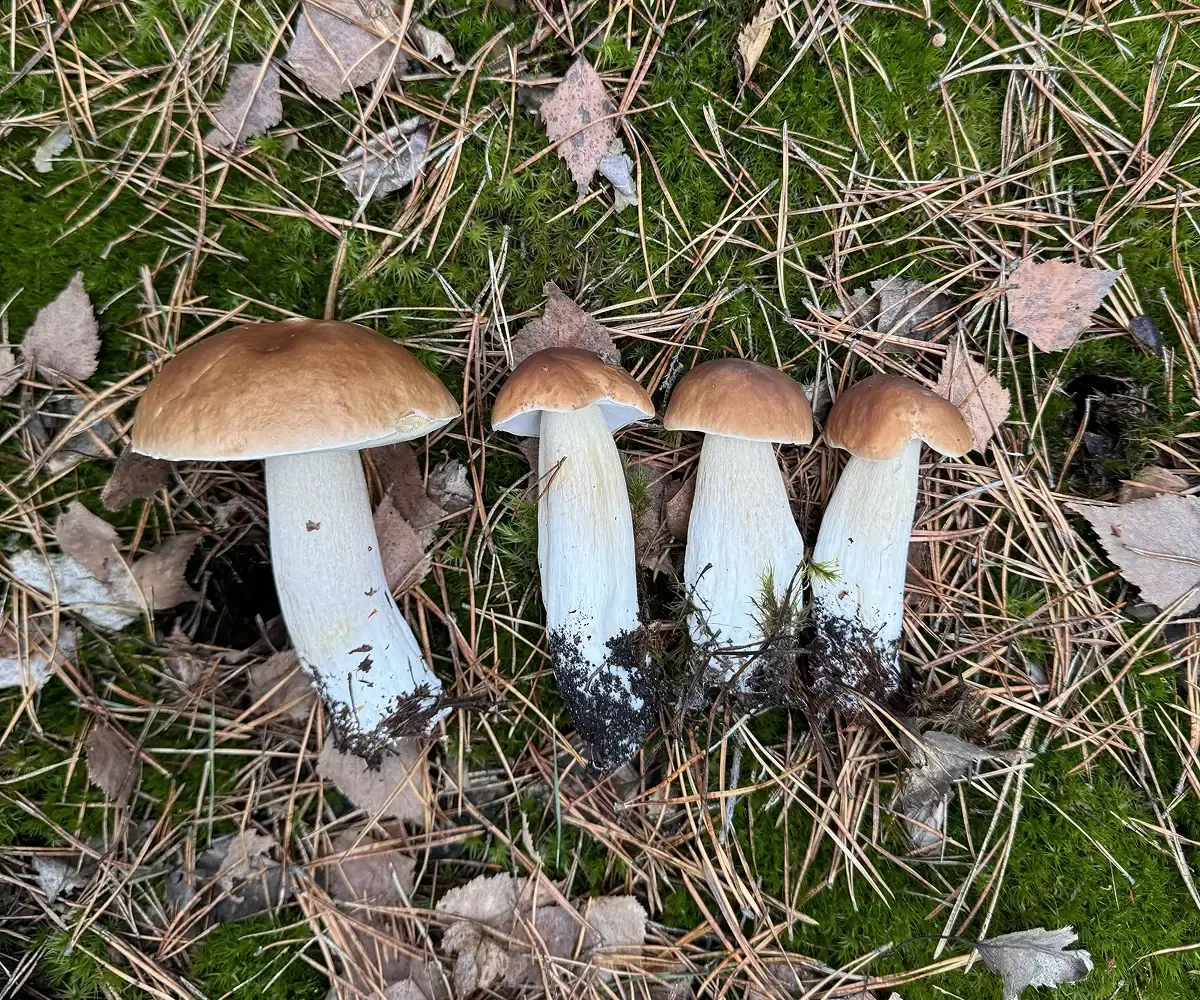
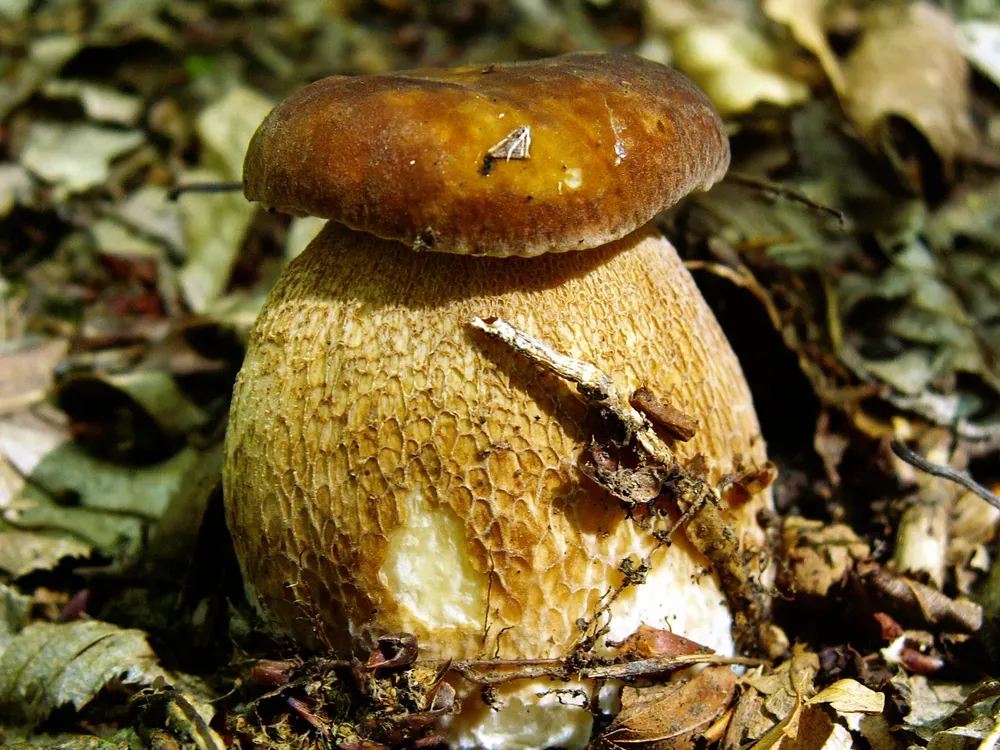
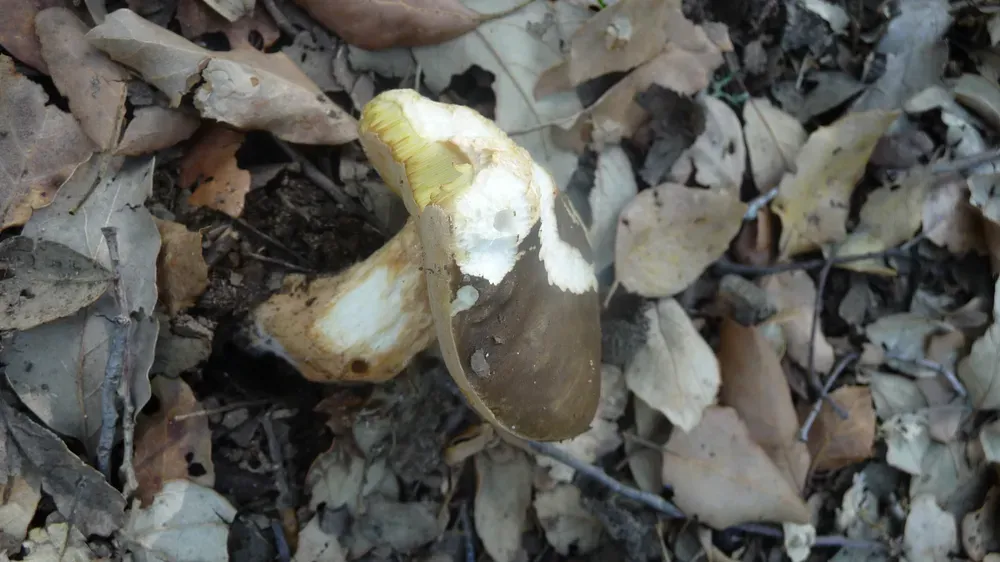
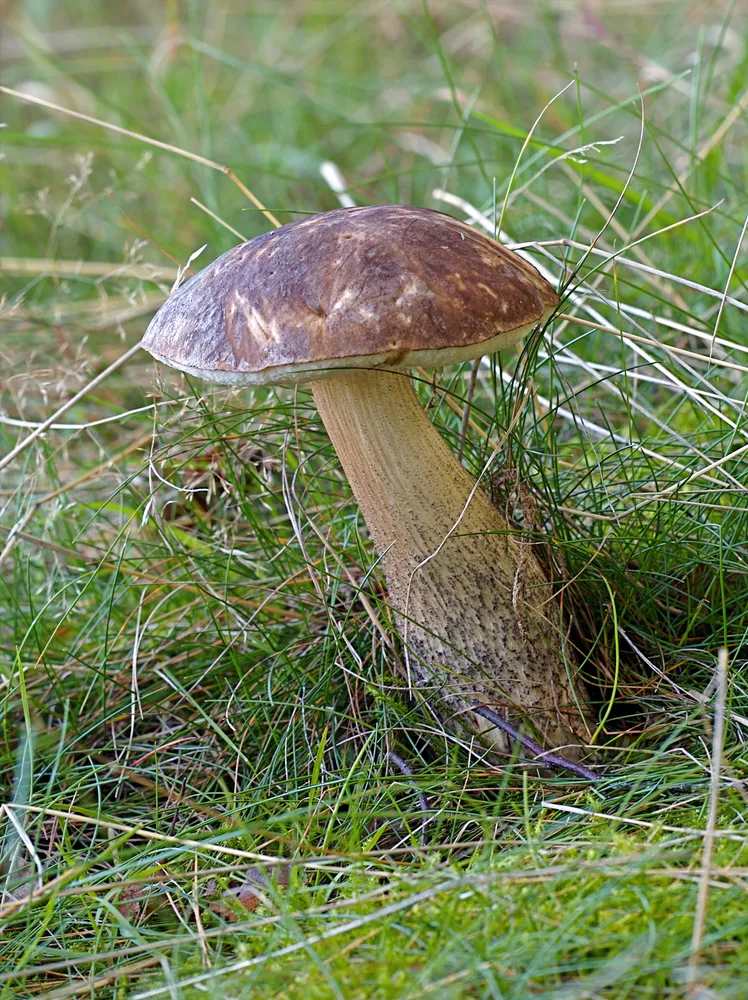
Frequently asked questions
Can it be confused with the devil's bolete?
No. The devil's bolete (Rubroboletus satanas) has red-orange pores; A. projectellus has yellow ones. The flesh of the devil's bolete turns strongly blue; A. projectellus doesn't turn blue at all. The devil's bolete cap is pale gray; A. projectellus has a brown one.
Can it be confused with porcini?
Yes, at first glance — both are cream-brown boletes with a net pattern on the stem. The difference: A. projectellus has a slightly sour taste, porcini a sweetish one. The flesh of A. projectellus turns yellow-brown when cut; in porcini it doesn't change. The net on A. projectellus is finer and more lacy.
Where to look in Ukraine?
Pine and mixed forests with pine. Polissia (Chernihiv, Kyiv, Zhytomyr and Rivne regions), the Carpathians. It doesn't grow in the steppe or in pure deciduous forests. It loves young and middle-aged pine stands on sandy soils.
When does it fruit?
From August to October, peaking in September. It loves a warm, moderately damp fall after heavy rains. In very dry years it's rare.
How does it differ from other Aureoboletus?
There are only a few species of the genus Aureoboletus in Europe. Aureoboletus gentilis (gilded bolete) is smaller, with a pink cap. Projectellus is larger, with a brown cap and a distinct net pattern on the stem. Neither turns blue — that's a trait of the genus.
Where did this mushroom come to Ukraine from?
Its native range is East Asia and North America. In Europe it's an invasive/neo-adventive species, spreading since the 1970s. In Ukraine it has been recorded since the 2000s. It spreads along with pine seedlings used for reforestation. The species is now firmly established in our pine forests.
Does the flesh turn blue when cut?
No, it doesn't. This is the key diagnostic feature of the species and of the whole genus Aureoboletus. If your cinnamon-brown bolete turns blue, it's a different species. Instead, A. projectellus slowly turns yellow-brown.
How to cook it?
It can be fried without boiling first (a rarity among boletes — most need boiling). Young ones are great fried with onions or stewed in cream. Mature ones pickle well (firm texture). It can be dried, and the aroma holds up.
Is Aureoboletus projectellus edible or poisonous?
Does Aureoboletus projectellus have gills or pores?
What does the cap of Aureoboletus projectellus look like?
What does the stem of Aureoboletus projectellus look like?
Sources
- [1]Вікіпедія (українська)
- [2]Атлас грибів України, Зеров Д.К. (1979)
- [3]MycoBank Database
- [4]Index Fungorum
- [5]GBIF
- [6]iNaturalist Ukraine