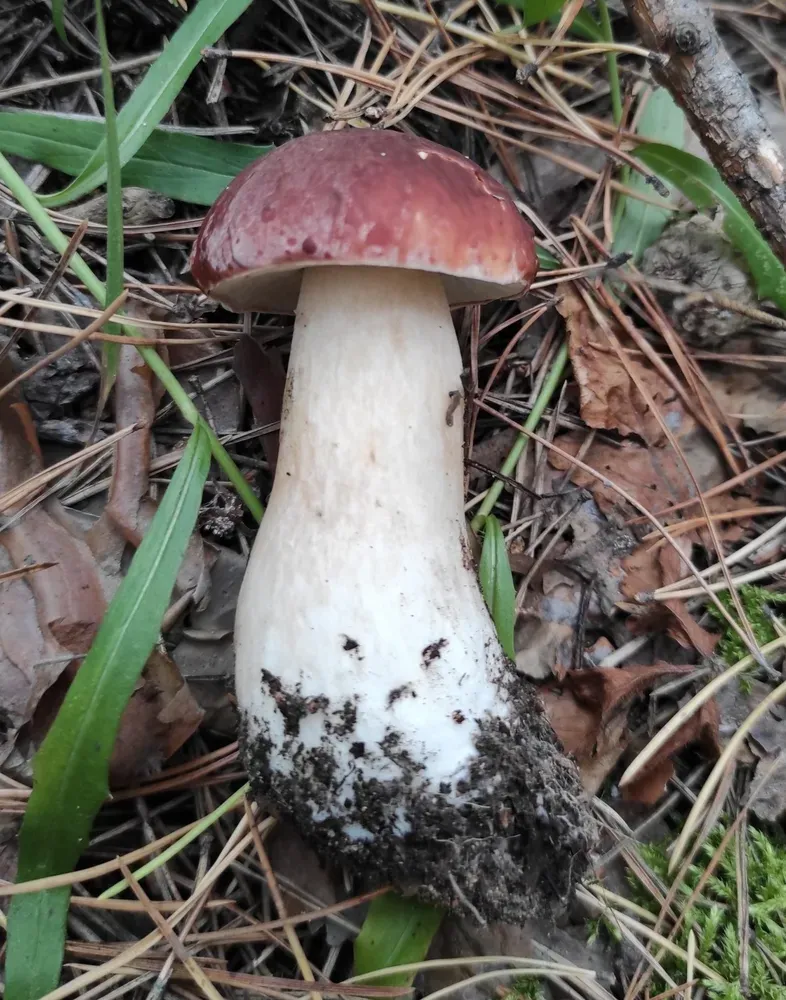
Pine boleteBoletus pinophilus
Expert-verifiedUpdated October 3, 2026
Passport
- Edibility
- Edible
- Season
- May — Oct
- Hymenophore
- Pored
- Cap color
- Red
- Size
- Large (over 15 cm)
- Smell
- Pleasant
- Reviewed
- Yes ✓
Quick answers
Where to look?
Conifer forest, Mixed forest
When does it appear?
May — Oct
Active months: May, June, July, August, September, October.
How to recognize it? Three signs
- Cap color: Red, Brown, Dark brown
- Cap shape: Convex
- Smell: Pleasant
Fruiting season
May – October
Description
Pine bolete (Boletus pinophilus) is a separate species from the famous "four" European porcini, alongside the classic B. edulis, the summer bolete B. reticulatus and the bronze bolete B. aereus. Of them, the pine bolete is the darkest and most majestic: a wine-red cap, a heavy stem with a fine net and a mild, nutty flavor. Many experienced foragers consider it the tastiest of all.
In Ukraine, pine bolete grows in pine forests and mixed forests with pine — from Polissia (Chernihiv, Kyiv, Zhytomyr and Rivne regions) to the Carpathians and the Carpathian foothills. It loves old pines 50+ years old, acidic sandy soils, forest edges and clearings with moss and bilberry. Unlike the classic porcini, which grows under various trees, the pine bolete is strictly a pine mycorrhizal partner. It does not occur in oak and beech forests.
A hallmark of the pine bolete is early fruiting. In warm springs the first ones appear as early as late May, with the peak in July–August. The flesh is firmer and drier than in the common porcini, white when cut and unchanging. In the kitchen it is a top-tier mushroom: fried, pickled, dried, added to soups. Dried pine bolete has an especially rich "forest" aroma.
Cap
Cap 8–20 cm (sometimes up to 30), hemispherical with a whitish margin in young mushrooms, later flattening to cushion-shaped. Color wine-red, dark chestnut-red, darker at the center and reddish toward the edges. The skin is matte, slightly sticky in wet weather and finely fibrous in dry weather. Whitish patches — a bloom of mycelium — are sometimes visible.
Hymenophore
Pore surface of tubes, free or notched near the stem. White when young, then yellowish, olive-green in mature mushrooms. Pores small and round. Does NOT turn blue when pressed — a key feature of all four porcini.
Stem
Stem 8–15 cm tall, 3–7 cm thick, bulbous or club-shaped, hefty. Color brownish red-brown, darker than the cap in the lower part. Along its whole length runs a characteristic net of fine reddish ridges (hence the Latin "reticulatus," although in the pine bolete the net is redder).
Flesh
Flesh white, very dense and heavy, does NOT change color when cut. Wine-red patches are sometimes visible under the cap skin. The texture is dry, with a pleasant resistance when cut. It is less often maggoty than the classic porcini.
Smell
The smell is richly mushroomy, with nutty and resinous notes. Dried, it keeps its aroma better than any other porcini species. The taste is mild, sweetish, not bitter.
›Scientific synonyms (2)
Boletus aestivalis var. pinicola, (Vittad.) Sacc
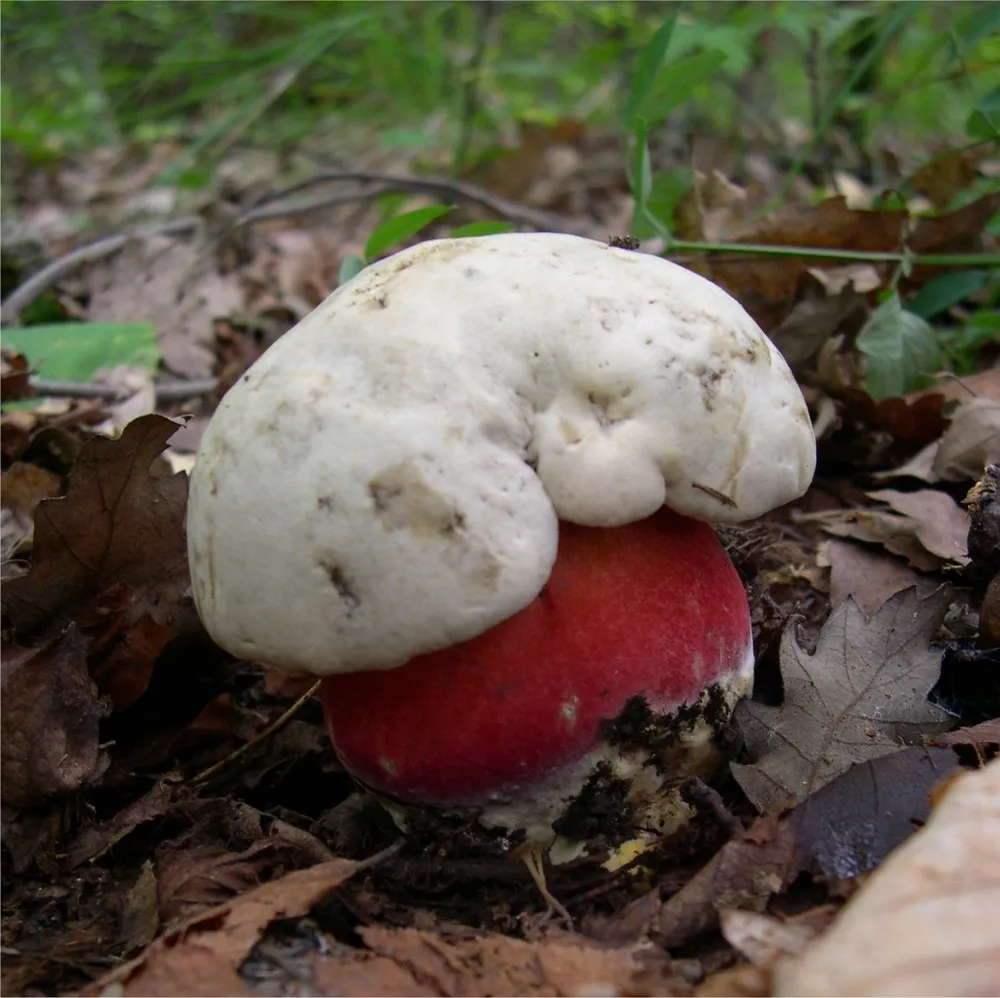
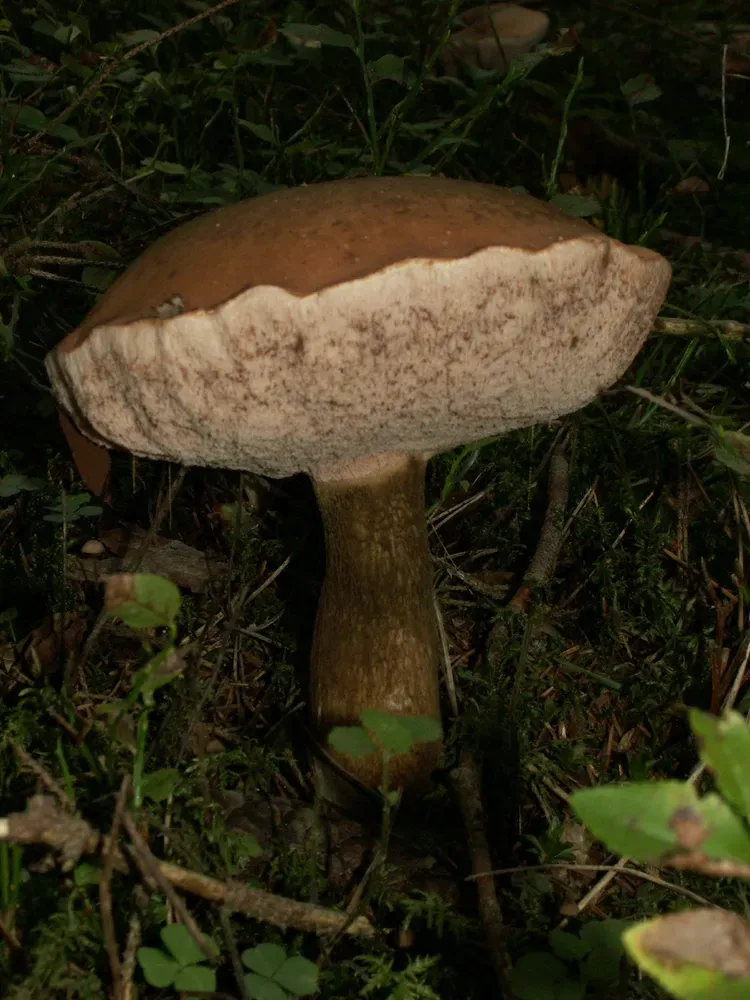
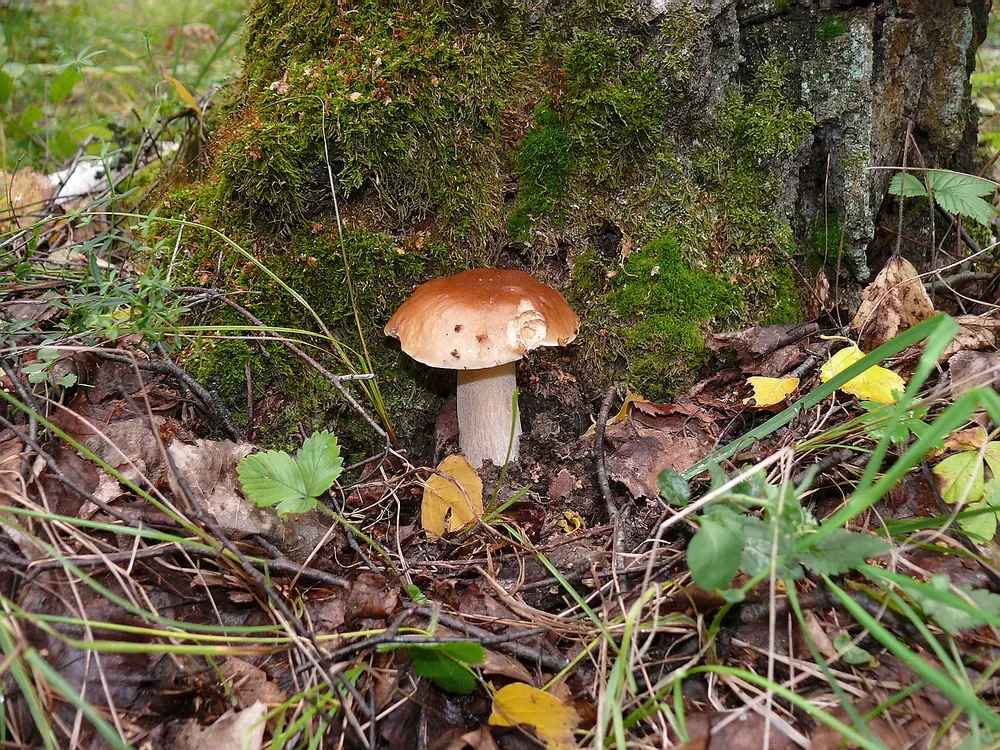
Lookalikes
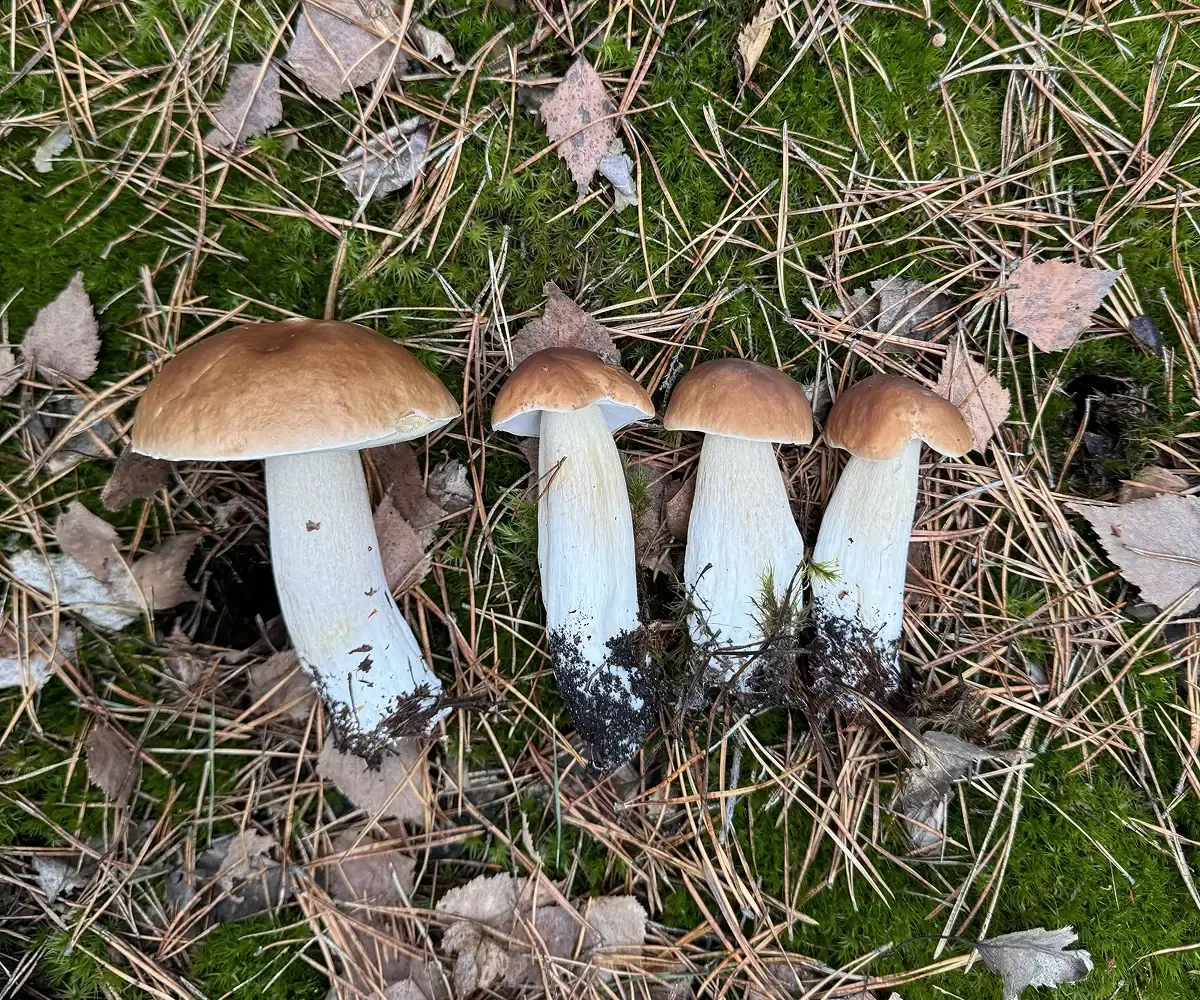
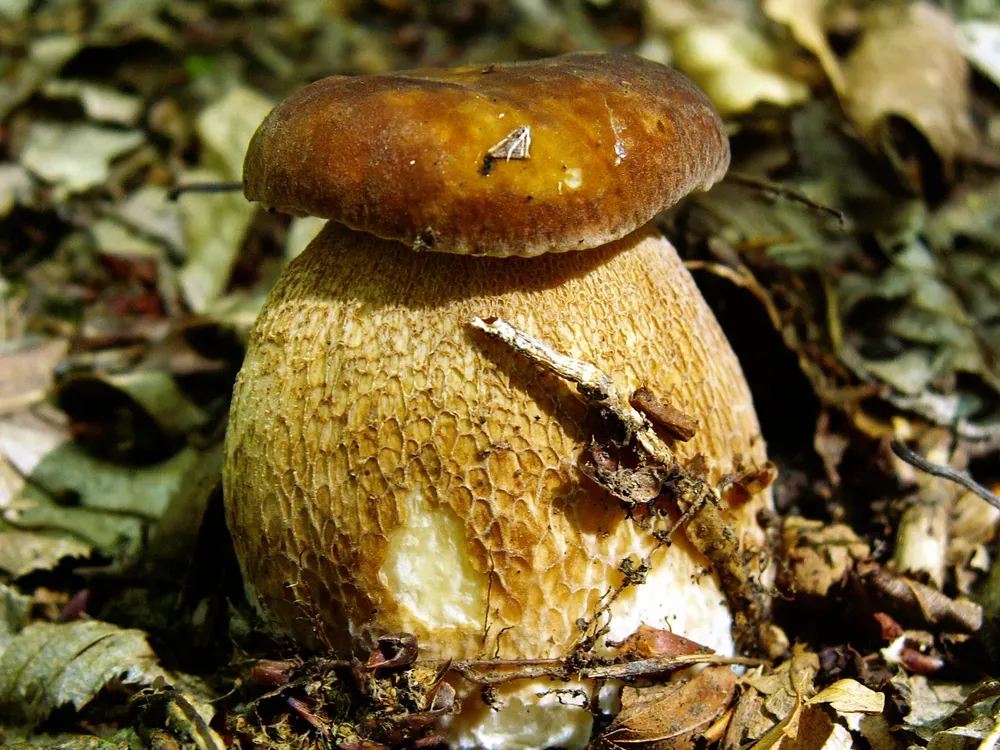
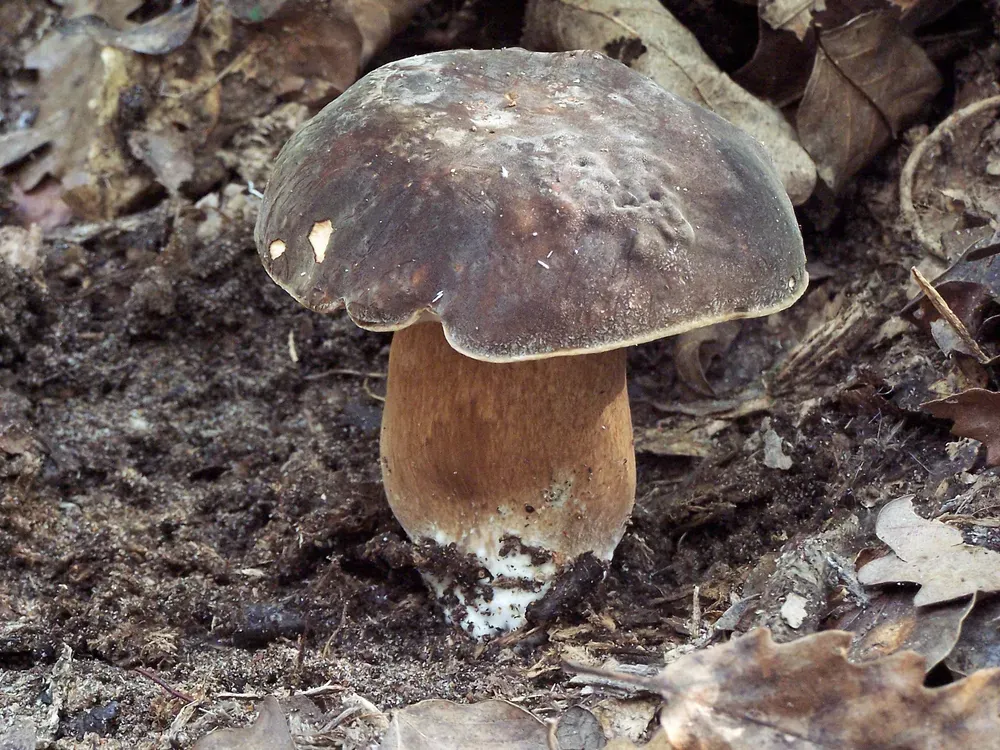
Related species
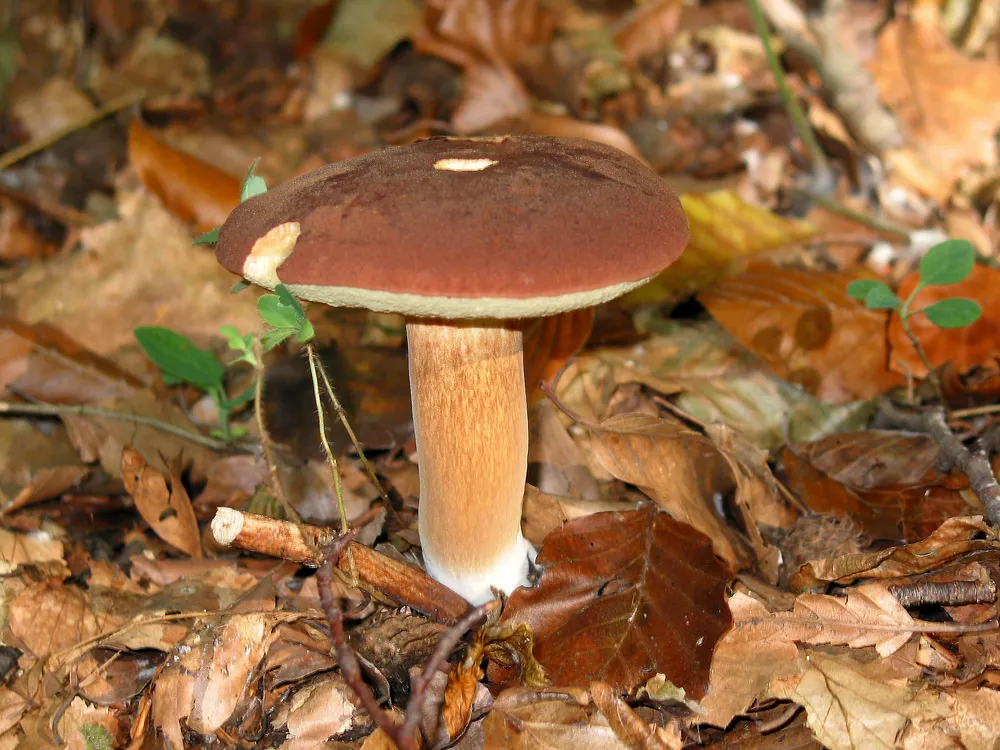
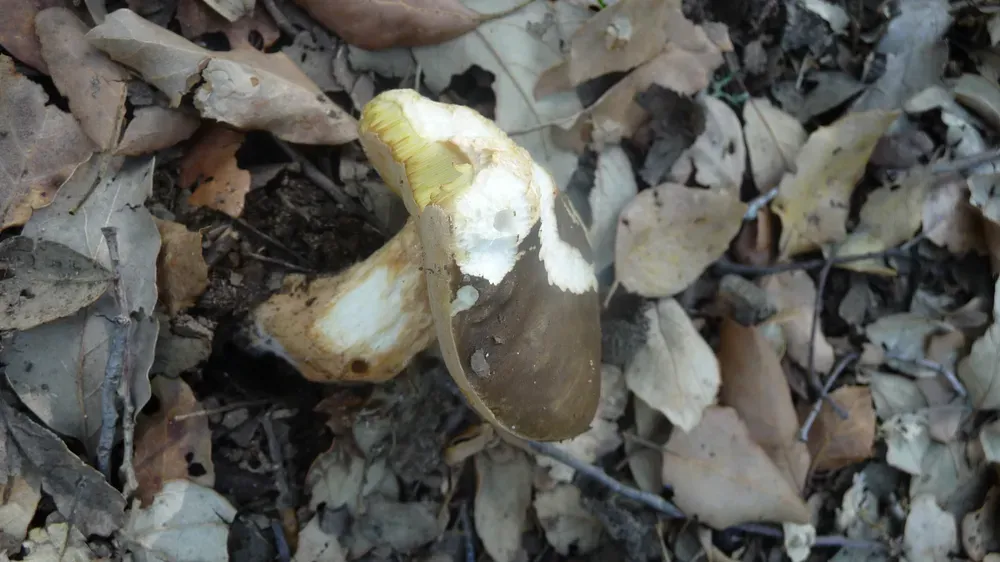
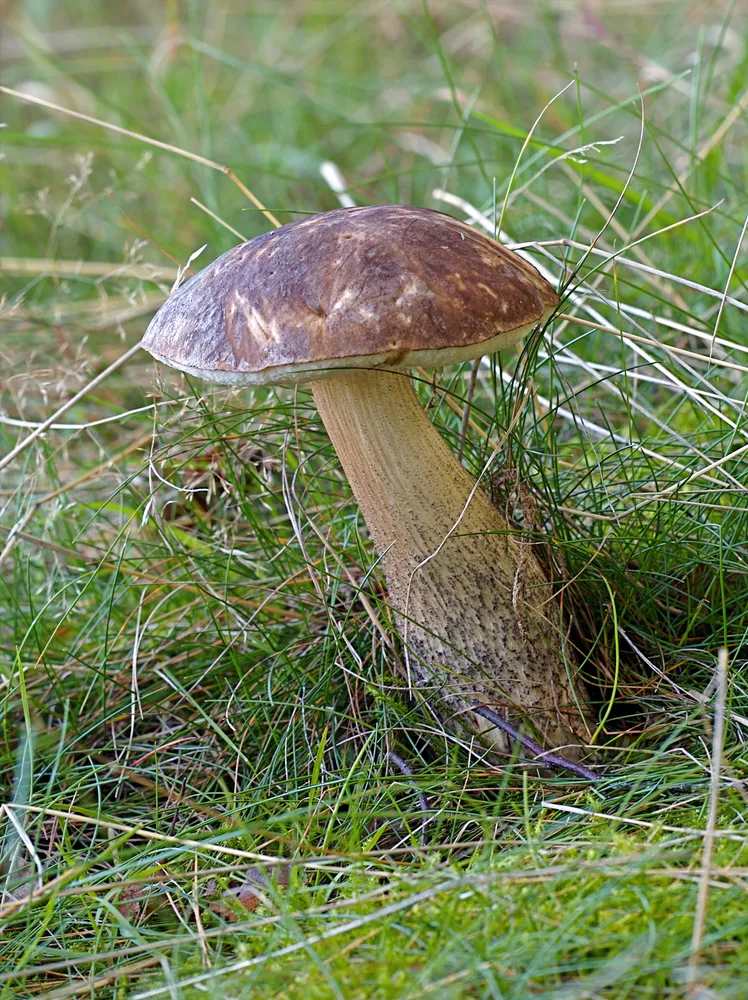
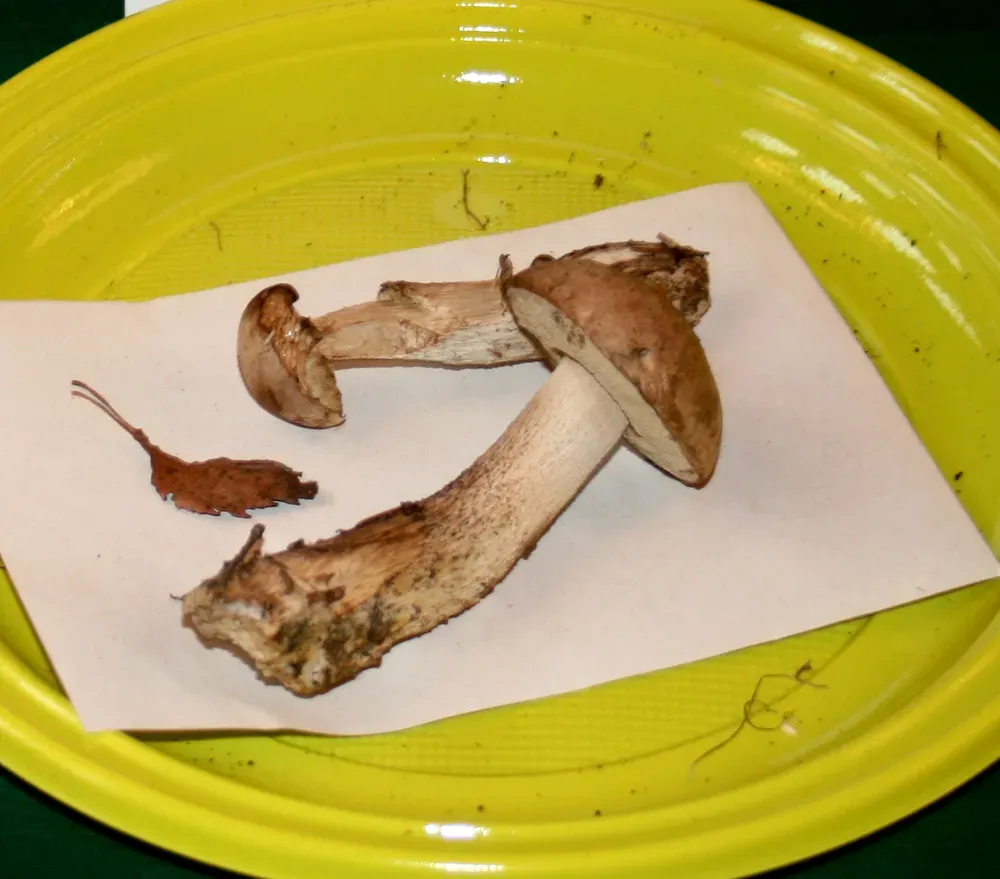
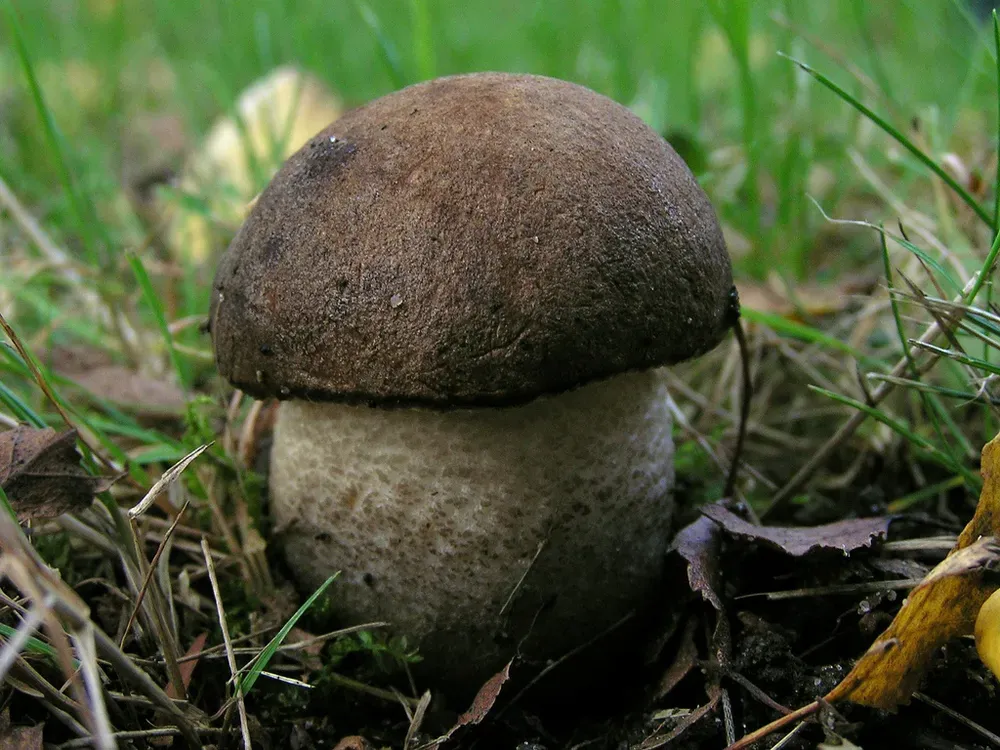
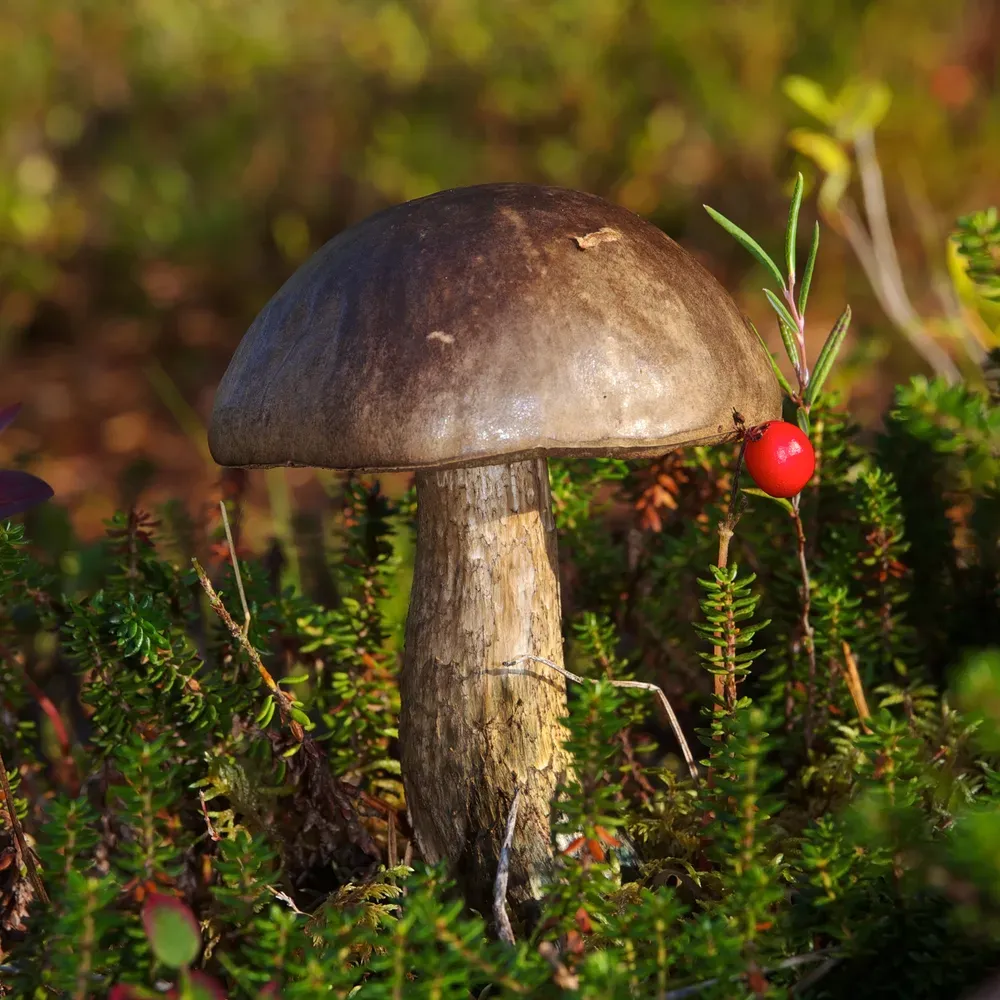
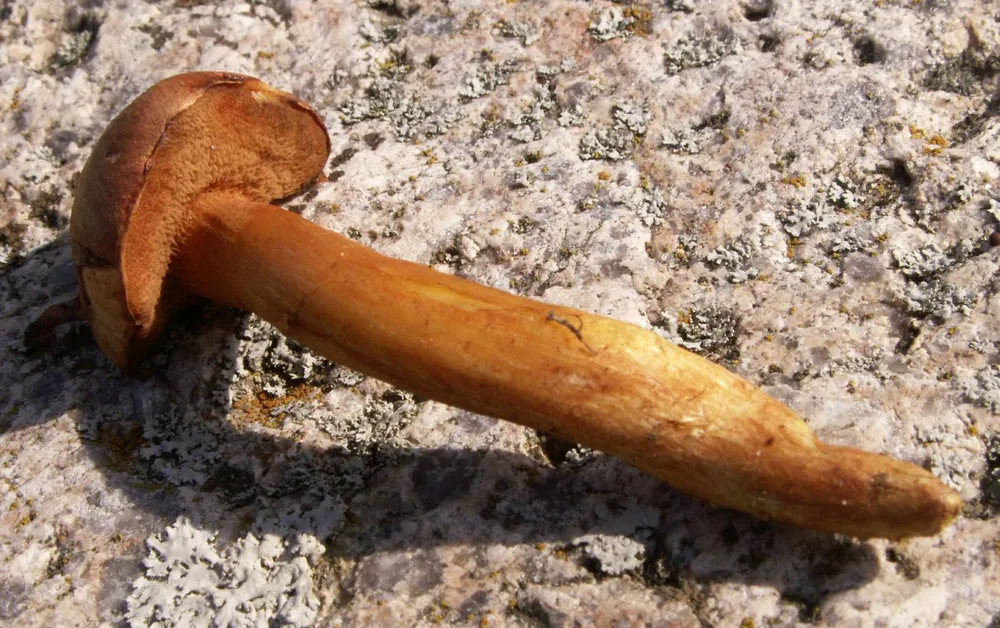
Mushrooms of the same genus and habitat — to study side by side and never mix up.
_Bresinsky_&_Manfr._Binder_533003_2015-06-29.webp)
Related reading
 Where & when to forage
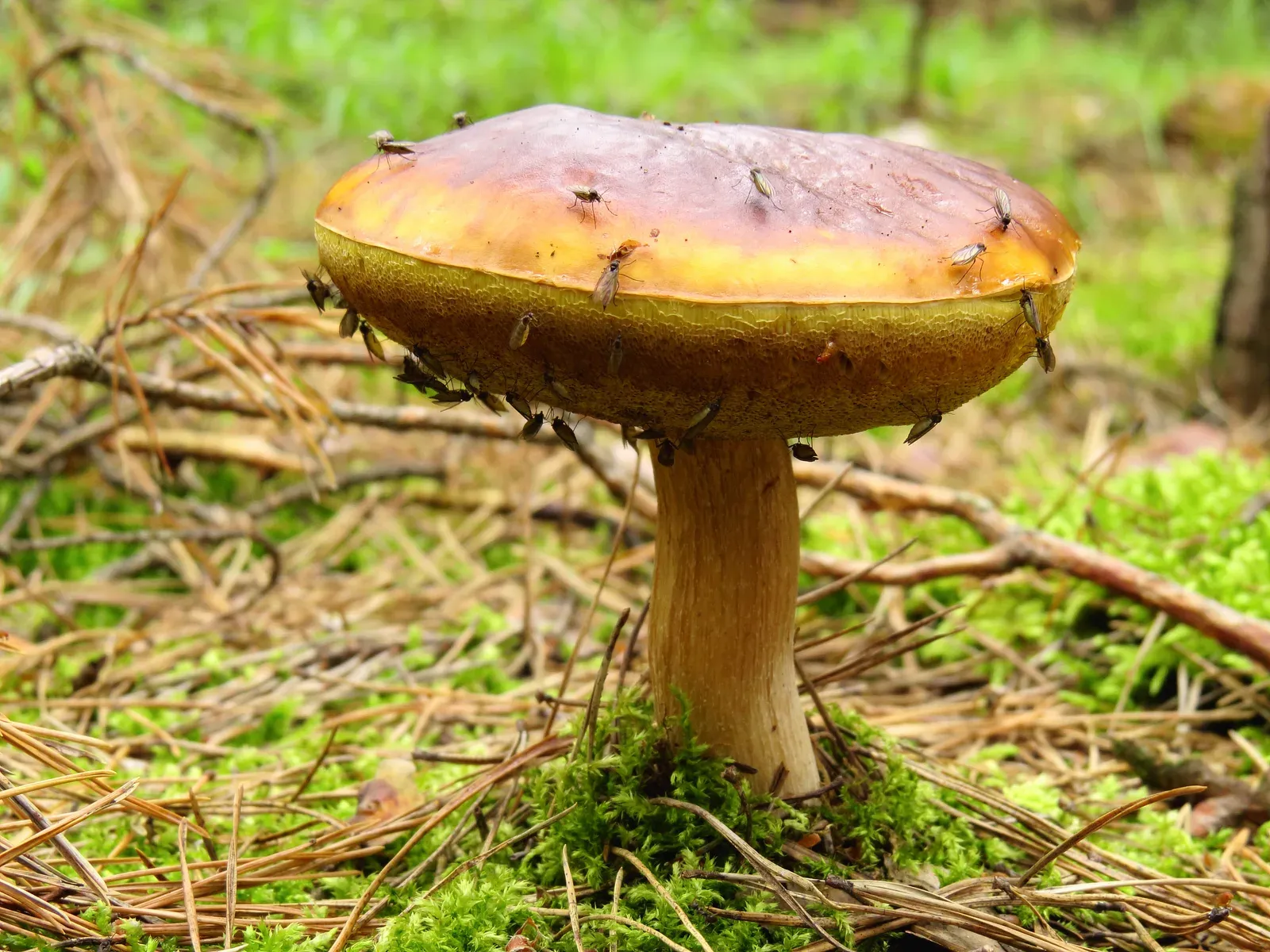
Mushrooms of Volyn: when and where to forage
Volyn is true mushroom country: pine forests, damp mixed woods and the famous Shatsk Lakes. Here's which mushr…
July 23, 2026·2 min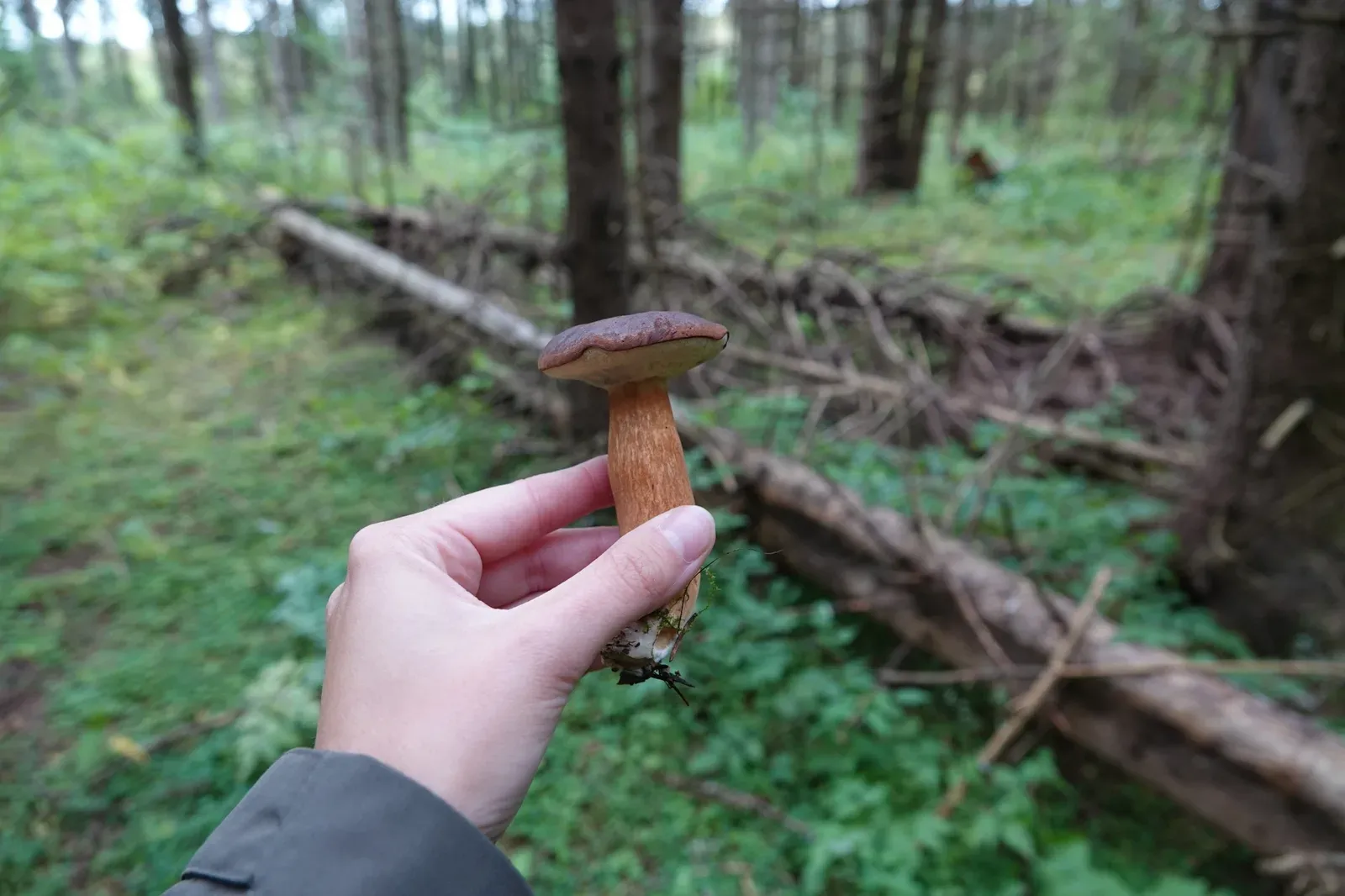 Where & when to forage
When the bay bolete grows and where to find it
The bay bolete is one of the most popular boletes, and in fall it's especially plentiful. Here's when the bay…
July 15, 2026·3 min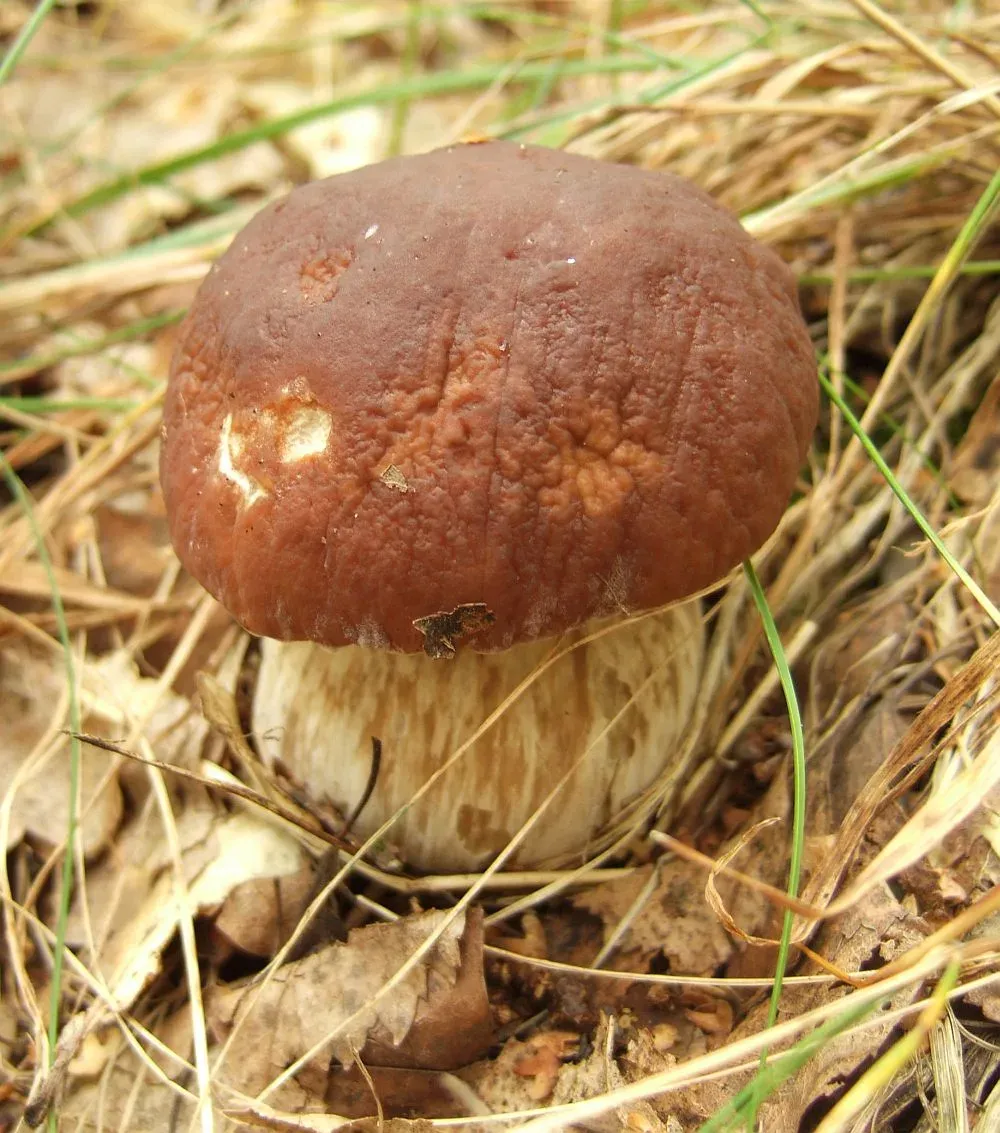 Where & when to forage
The second flush of porcini: when and where to look
Porcini don't grow steadily but in flushes. After the summer lull, in August–September, the second flush arriv…
July 11, 2026·3 min
Frequently asked questions
Can it be confused with Devil's bolete?
No. Devil's bolete (Rubroboletus satanas) has red pores, and its flesh turns strongly blue when cut. The pine bolete has white-to-yellowish pores, and its flesh does not turn blue. Besides, Devil's bolete grows in broadleaf forests and never in pure pine forests.
Can a bitter bolete be confused with a pine bolete?
The risk is low, because the bitter bolete (Tylopilus felleus) typically grows in broadleaf forests. In pine forests it is rare. But if you find a porcini in an unusual spot, touch a crumb of the flesh to your tongue: the bitter bolete is unbearably bitter, porcini is sweetish.
Where to look for pine bolete in Ukraine?
Old pine forests and mixed forests with pine. Polissia (Chernihiv, Kyiv, Zhytomyr and Rivne regions) is the main range. Also in the Carpathians and the Carpathian foothills, in spruce and pine-spruce forests. It loves sandy acidic soils with a litter of moss and needles.
When does pine bolete appear?
One of the earliest — the first mushrooms can appear as early as late May in a warm spring. Peak fruiting is July–August, the last finds come in October. In cold years the season is shorter and later.
How does it differ from the common porcini?
The pine bolete is darker and redder, especially at the center of the cap. The net on the stem is redder. Common porcini (B. edulis) has a warm light-brown cap without wine-red tints. Both occur in pine forests, but the pine bolete noticeably more often.
Which trees does it form mycorrhiza with?
Exclusively with pine (Pinus sylvestris, Pinus mugo), less often with spruce. This is the key difference — other "porcini" species can also grow with broadleaf trees. If you find a "porcini" under an oak, it is a different species, not the pine bolete.
Does the flesh turn blue when cut?
No, it does not. All four species of true porcini differ from many other boletes in this. If your porcini-like mushroom turns blue, double-check your identification more carefully.
How do you store pine bolete?
The best ways are drying (it keeps its aroma better than other species), pickling and freezing. To dry, cut into 5–8 mm slices and dry at 50–55 °C. Dried and stored in glass jars with lids, it keeps for up to 2 years.
Is Pine bolete edible or poisonous?
Does Pine bolete have gills or pores?
What does the cap of Pine bolete look like?
What does the stem of Pine bolete look like?
Sources
- [1]Вікіпедія (українська)
- [2]Атлас грибів України, Зеров Д.К. (1979)
- [3]MycoBank Database
- [4]Index Fungorum
- [5]GBIF
- [6]iNaturalist Ukraine