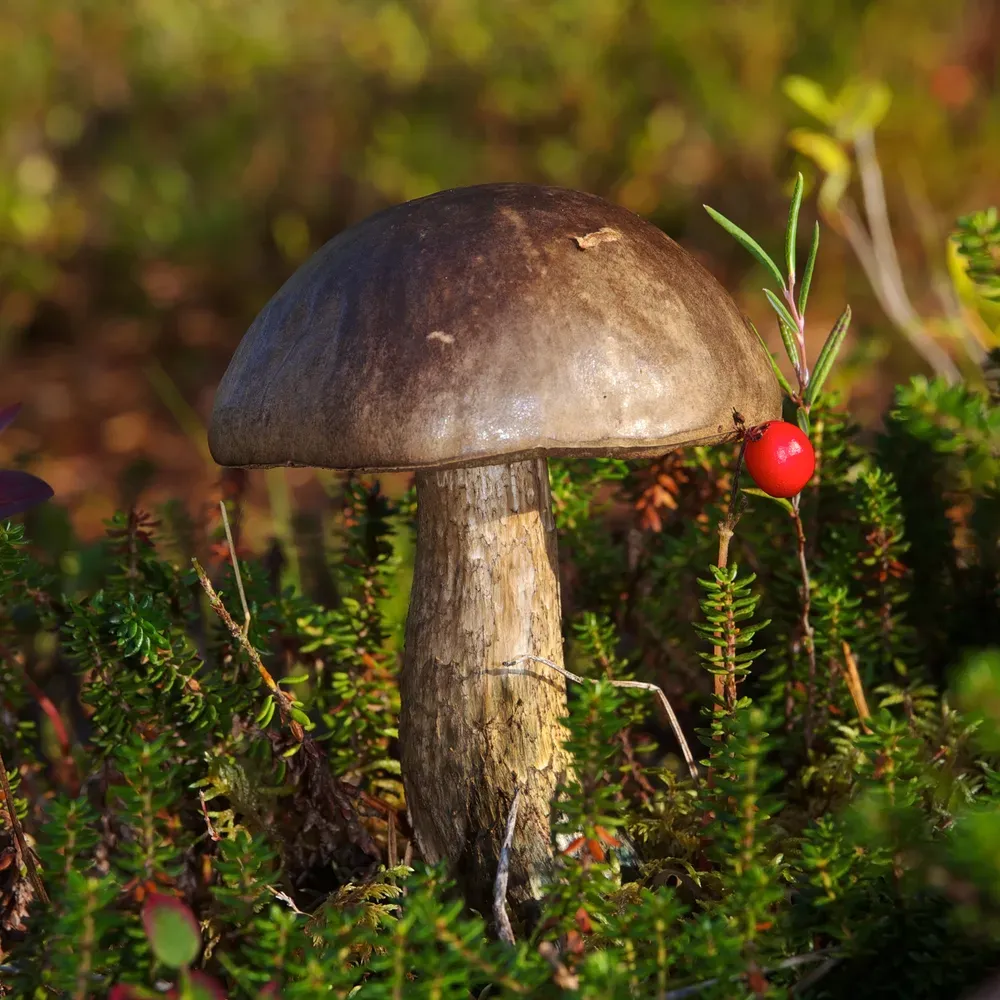
Mottled boleteLeccinum variicolor
Expert-verifiedUpdated October 3, 2026
Passport
- Edibility
- Edible
- Season
- Jun — Oct
- Hymenophore
- Pored
- Cap color
- Grey
- Size
- Medium (5–15 cm)
- Smell
- Pleasant
- Reviewed
- Yes ✓
Quick answers
Where to look?
Deciduous forest, Mixed forest
When does it appear?
Jun — Oct
Active months: June, July, August, September, October.
How to recognize it? Three signs
- Cap color: Grey, Brown, Dark brown
- Cap shape: Convex
- Smell: Pleasant
Fruiting season
June – October
Description
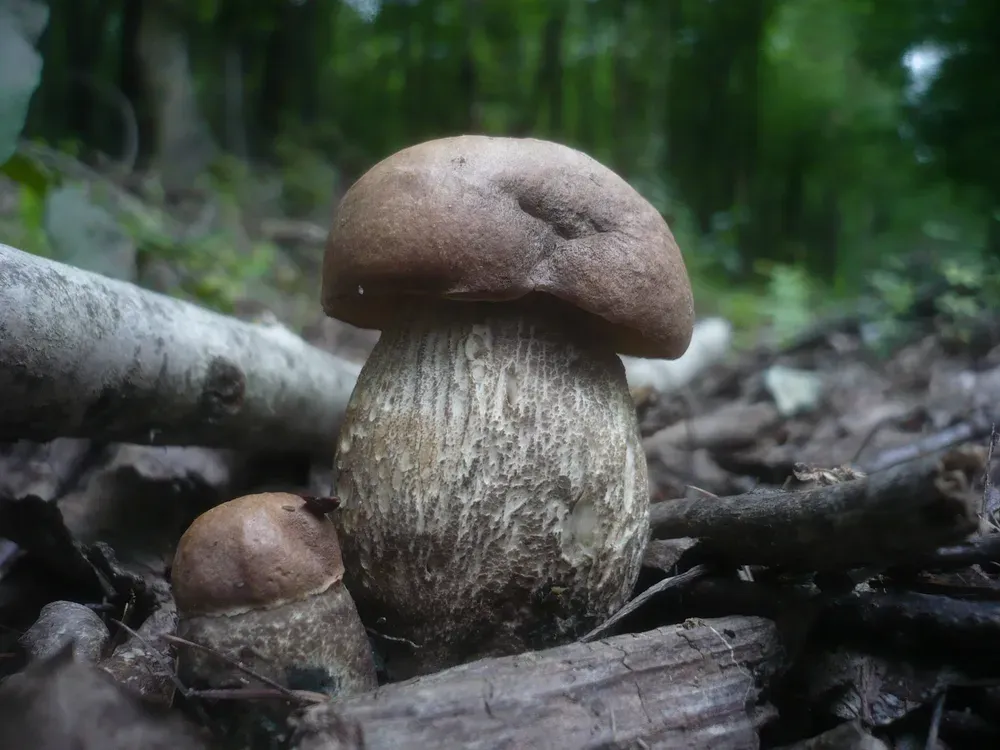
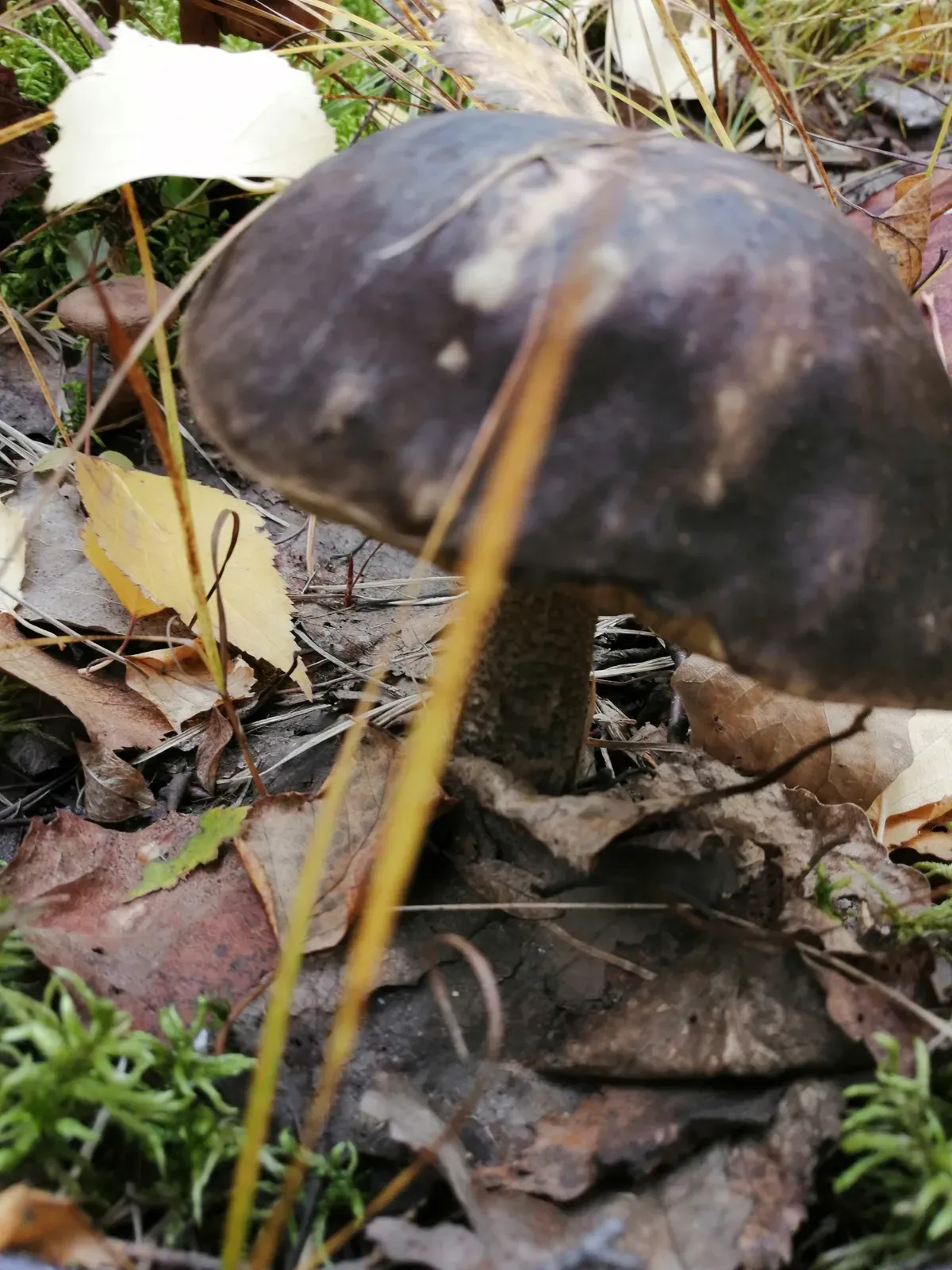
The mottled bolete (Leccinum variicolor) is one of the hardest species of the genus Leccinum to recognize. Unlike the brown birch bolete with its evenly gray or brown cap, the mottled bolete's cap looks literally “speckled”: elongated light gray or yellowish marks are scattered over a mouse-gray or dark brown background. From a distance the mushroom looks like a slightly burnt pie or a chunk of plaster.
In Ukraine it grows throughout the forest belt wherever there is birch, its main mycorrhizal partner. You'll also find it under oak, poplar and spruce, but less often. It isn't a very common species, so a chance find feels like a nice bonus rather than the backbone of your haul. It turns up most often in the birch and mixed forests of Polissia, the Western Forest-Steppe and the Carpathians.
Edibility is the same as for all birch boletes: a good mushroom of category 2–3. Young, firm specimens are excellent for pickling and frying; old ones turn watery and soft and get wormy. A quirk: when cut, the flesh in the cap turns pink, while in the stem it partly turns green and blue. This is normal and not a sign of toxicity. You can dry it, but like all birch boletes it darkens more than porcini.
Cap
Cap 5–10 cm, hemispherical in young mushrooms, then cushion-shaped. The surface is dry at first and slightly sticky in damp weather. The color is distinctive — a mouse-gray or dark brown background with scattered elongated light gray, yellowish or cream spots that resemble natural camouflage. The cap skin does not peel off.
Hymenophore
The hymenophore is tubular, free, with a notch near the stem. White when young, then beige, light brown in mature mushrooms. The pores are small. They darken slightly when pressed.
Stem
Stem 12–18 cm tall, 2–2.5 cm thick, cylindrical or slightly tapering upward. White, with characteristic dark gray or brown fibrous scales — a typical feature of the genus Leccinum. In young mushrooms the scales are lighter, in old ones darker.
Flesh
The flesh is white, firm at first, soft and spongy with age. When cut: it turns pink in the cap, slightly blue in the tubes, and in the stem partly pink, partly green or bluish at the base. This multicolored reaction gave the species its name, “variicolor” (many-colored).
Smell
Smell faint, pleasantly mushroomy. Taste mild, not bitter.
Lookalikes
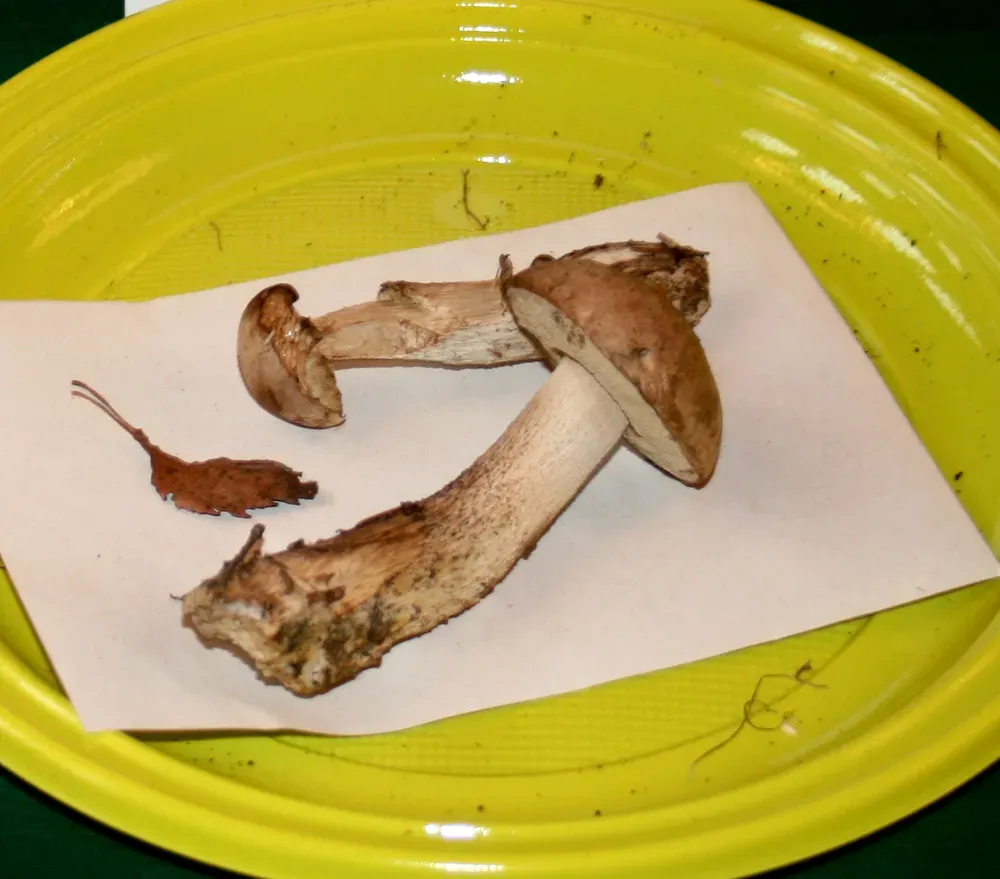
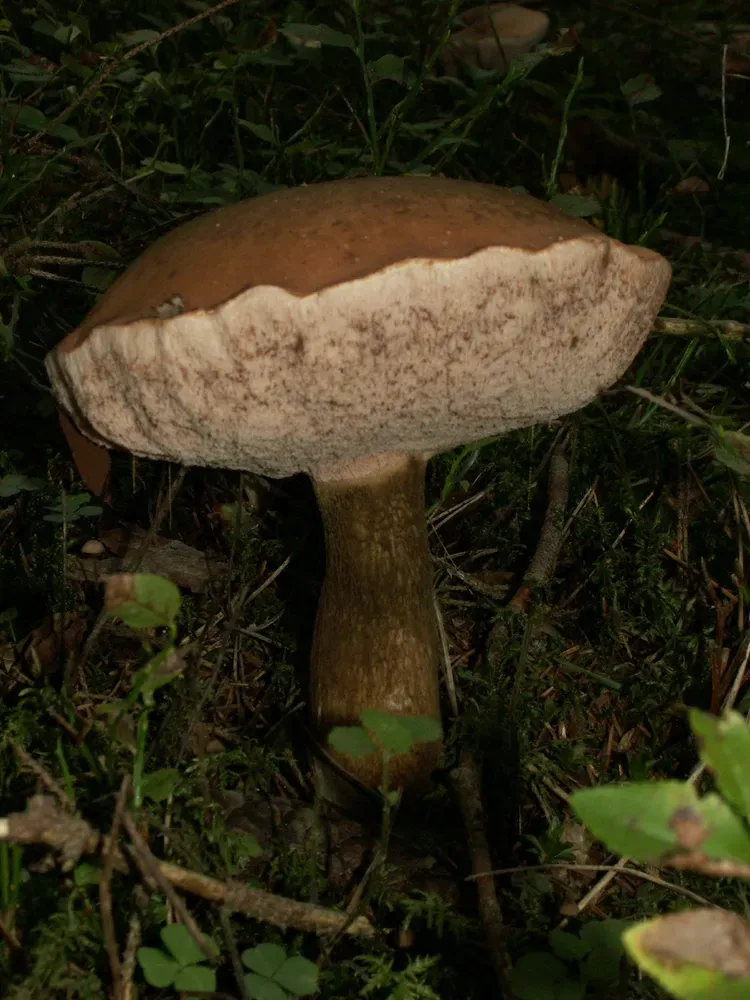
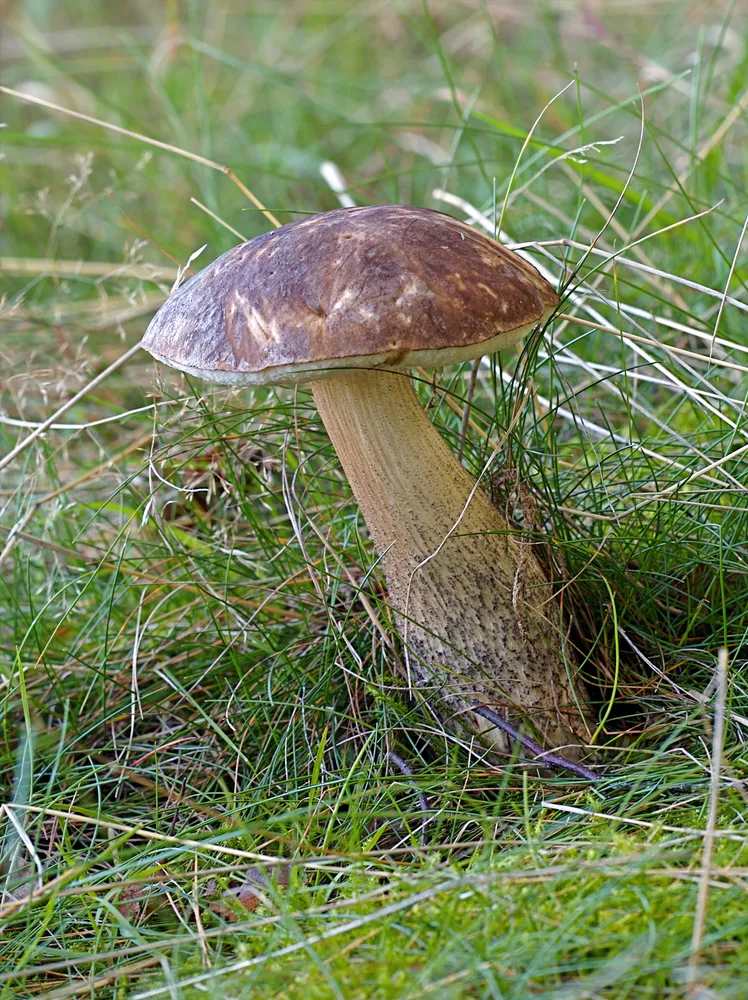
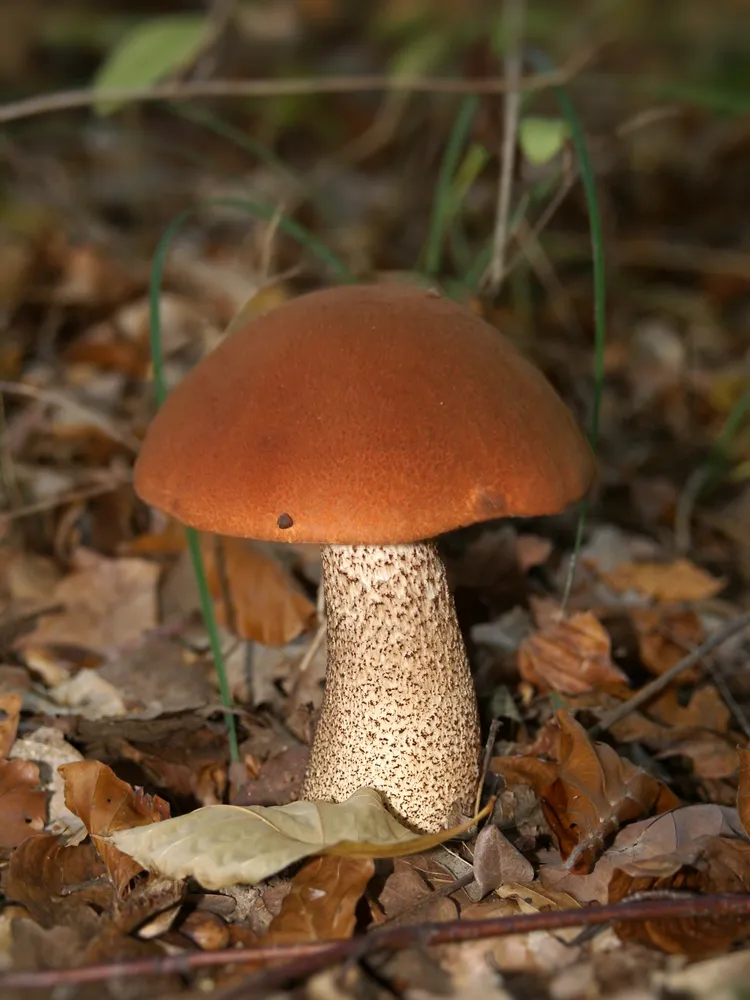
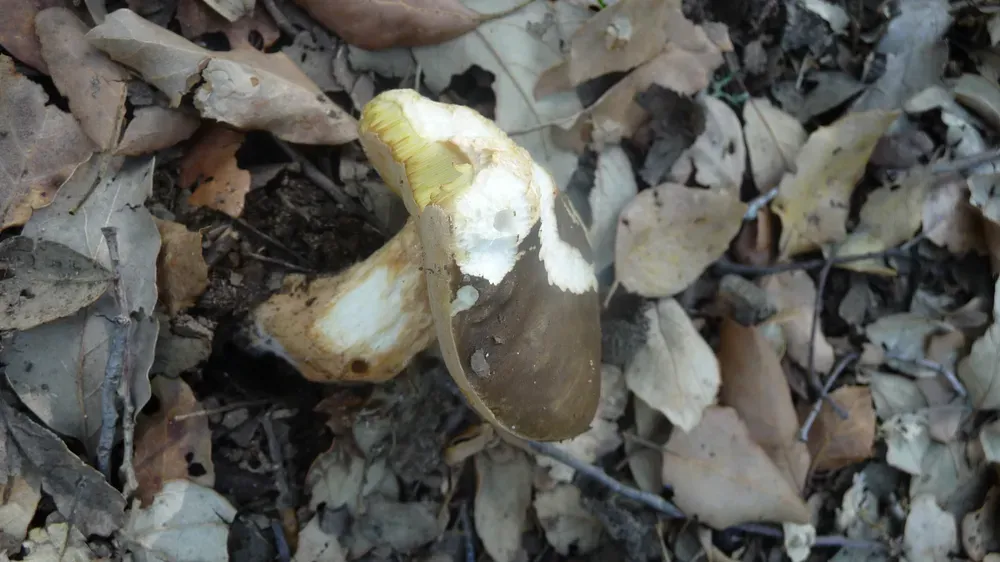
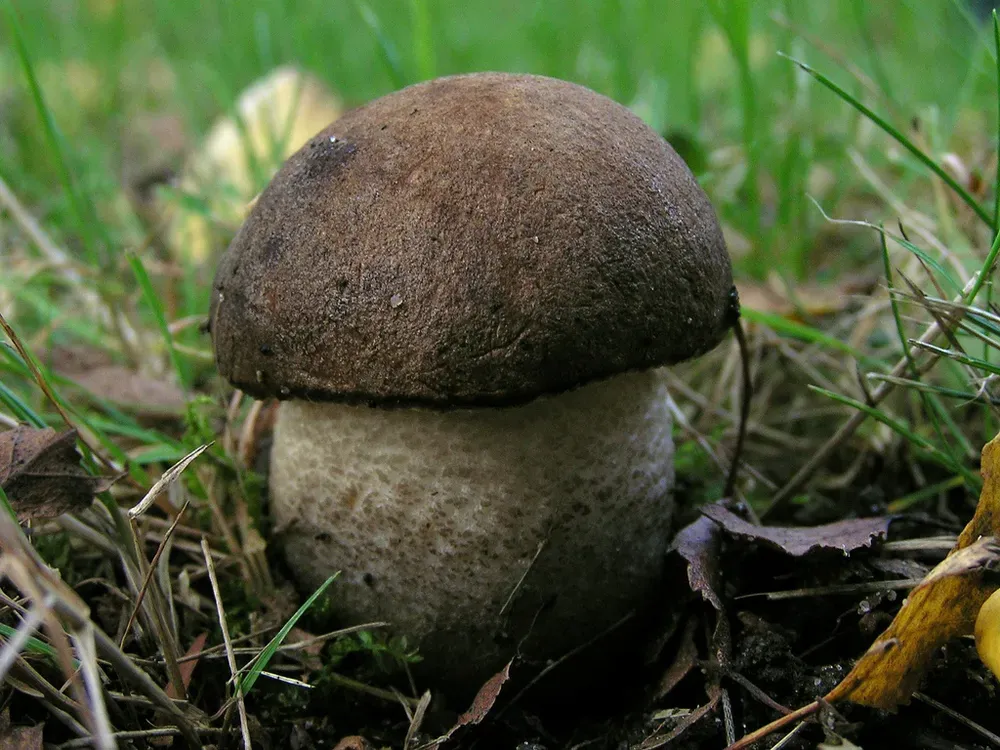
Related species
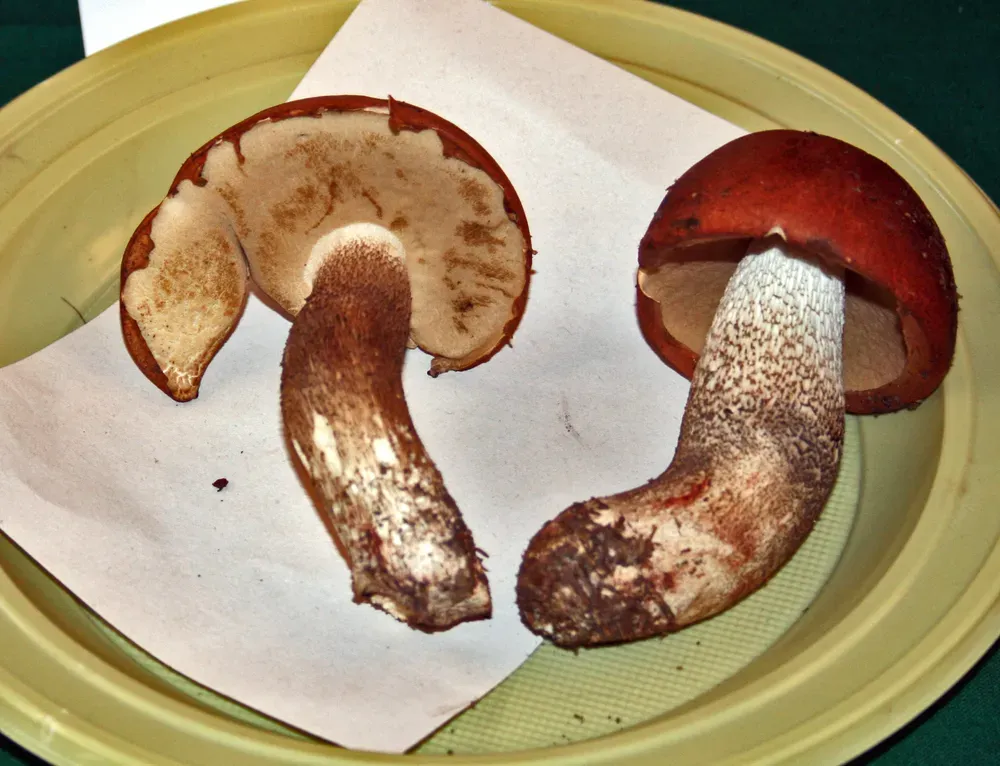
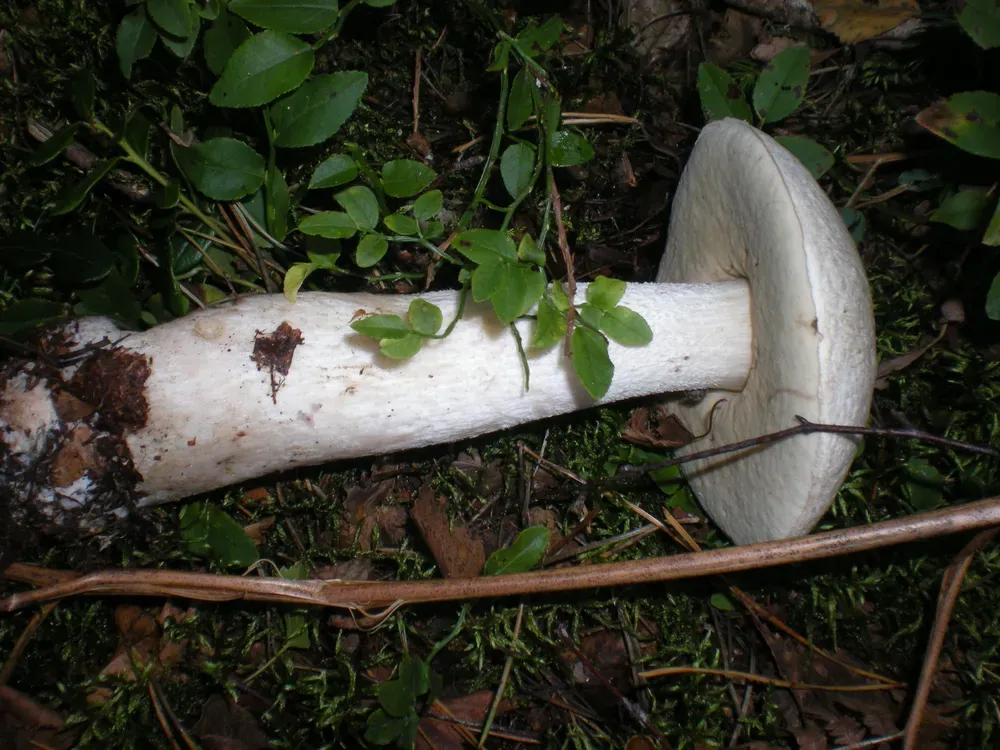
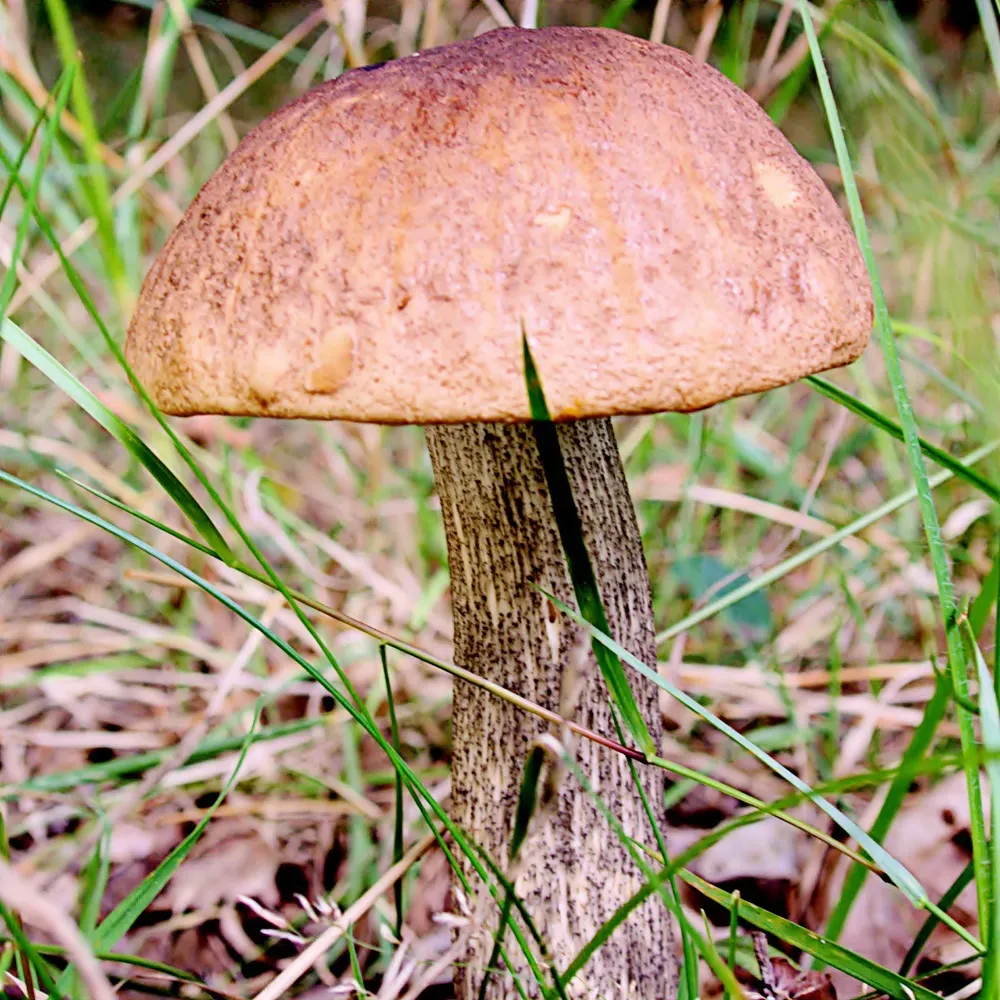
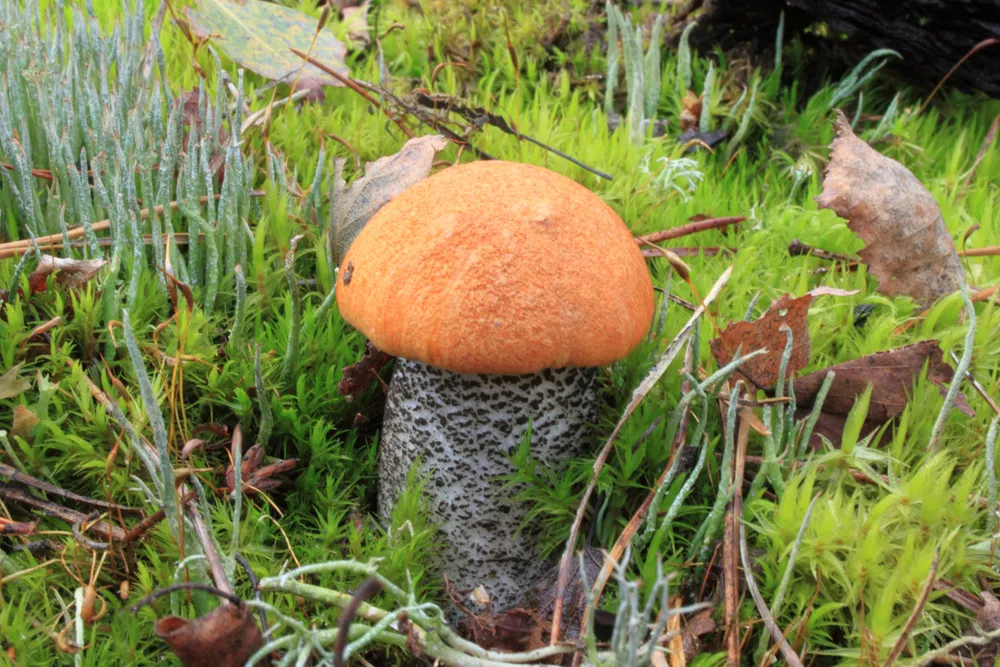
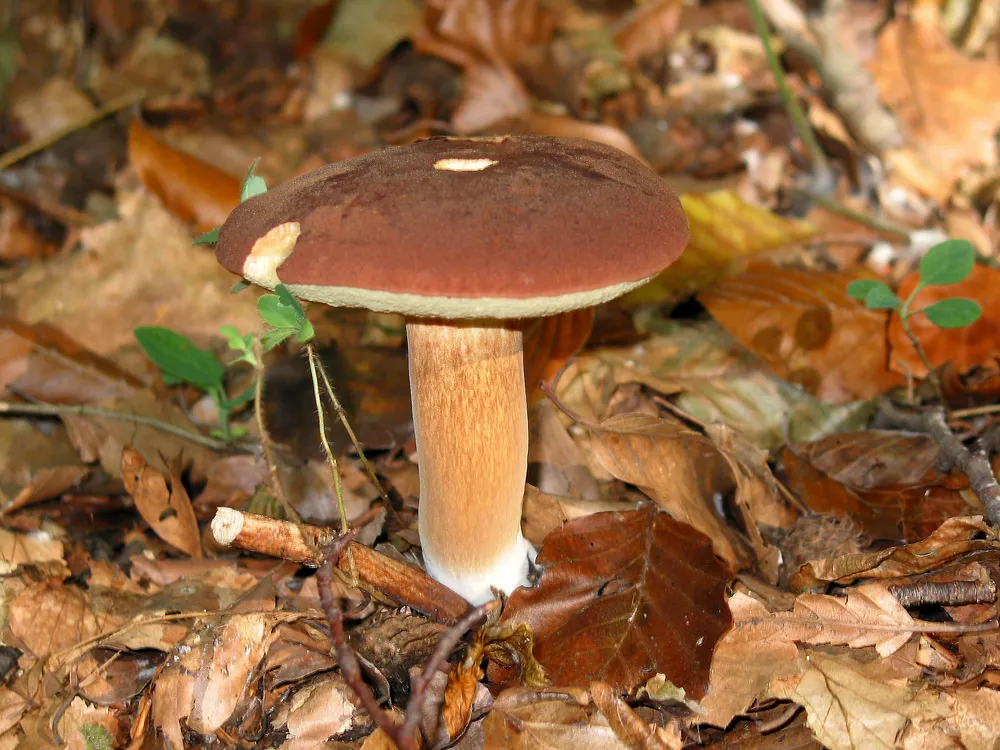
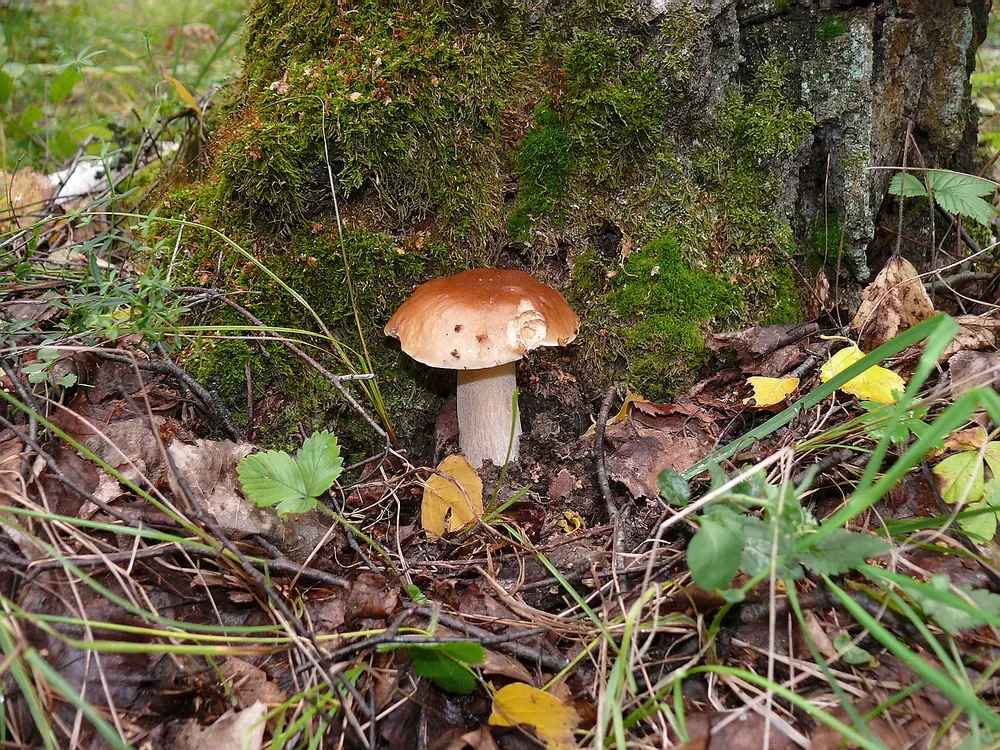
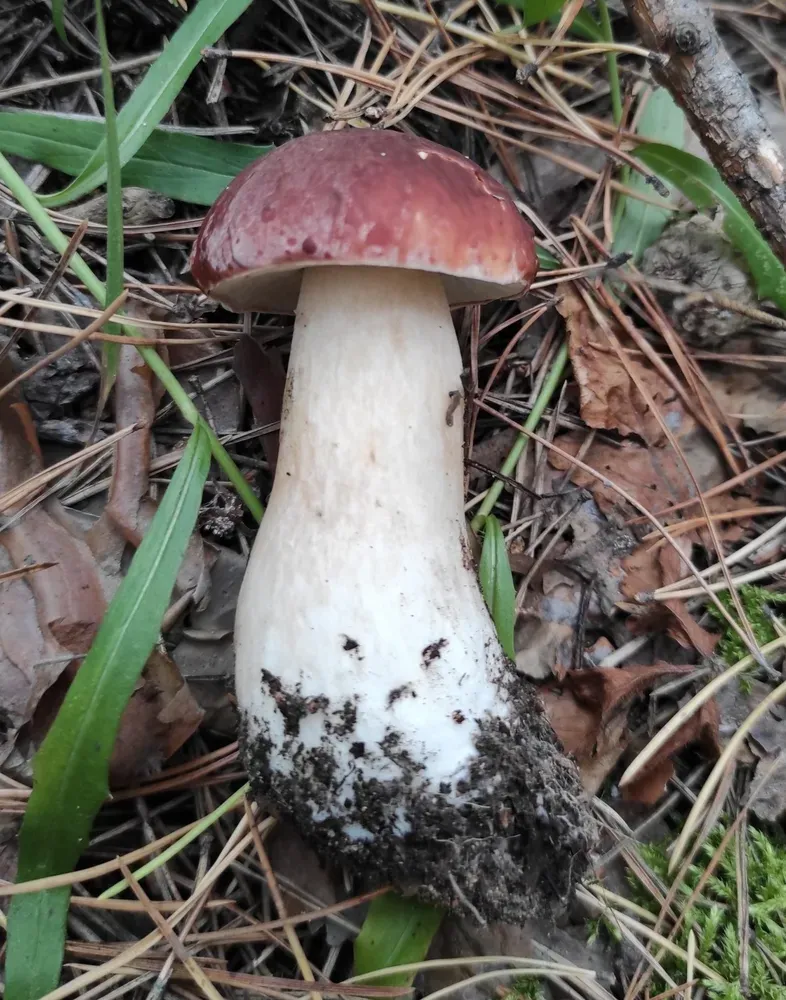
Mushrooms of the same genus and habitat — to study side by side and never mix up.
Related reading
 How to identify
Mottled bolete, the birch bolete with a changeable cap
The mottled bolete is easy to recognize by its blotchy cap and a stem that turns blue when cut. Here’s how to…
April 22, 2026·3 min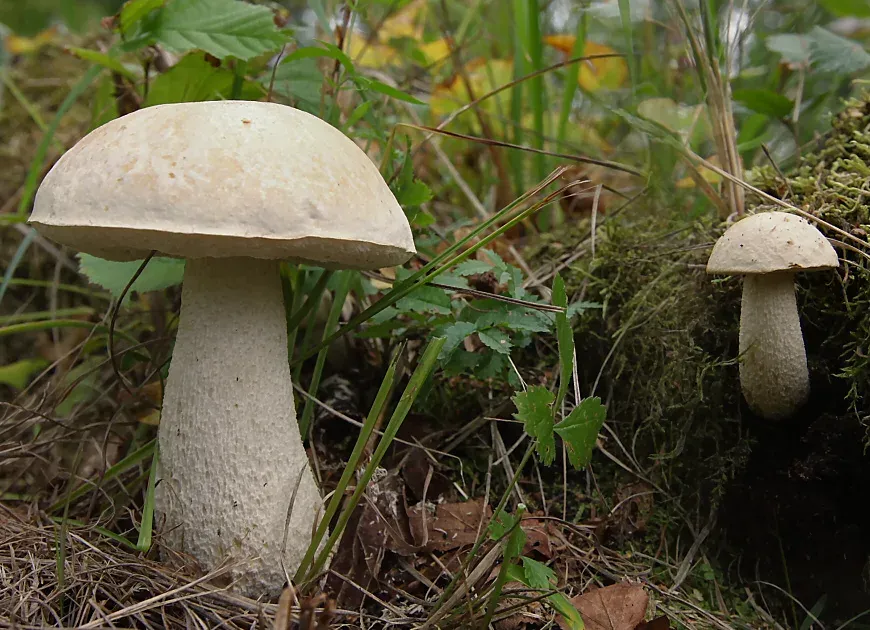 How to identify
Marsh birch bolete, the pale one from wet places
The ghost bolete is a light, almost white birch bolete of wet birch woods. Here’s how to recognize it, where t…
April 20, 2026·3 min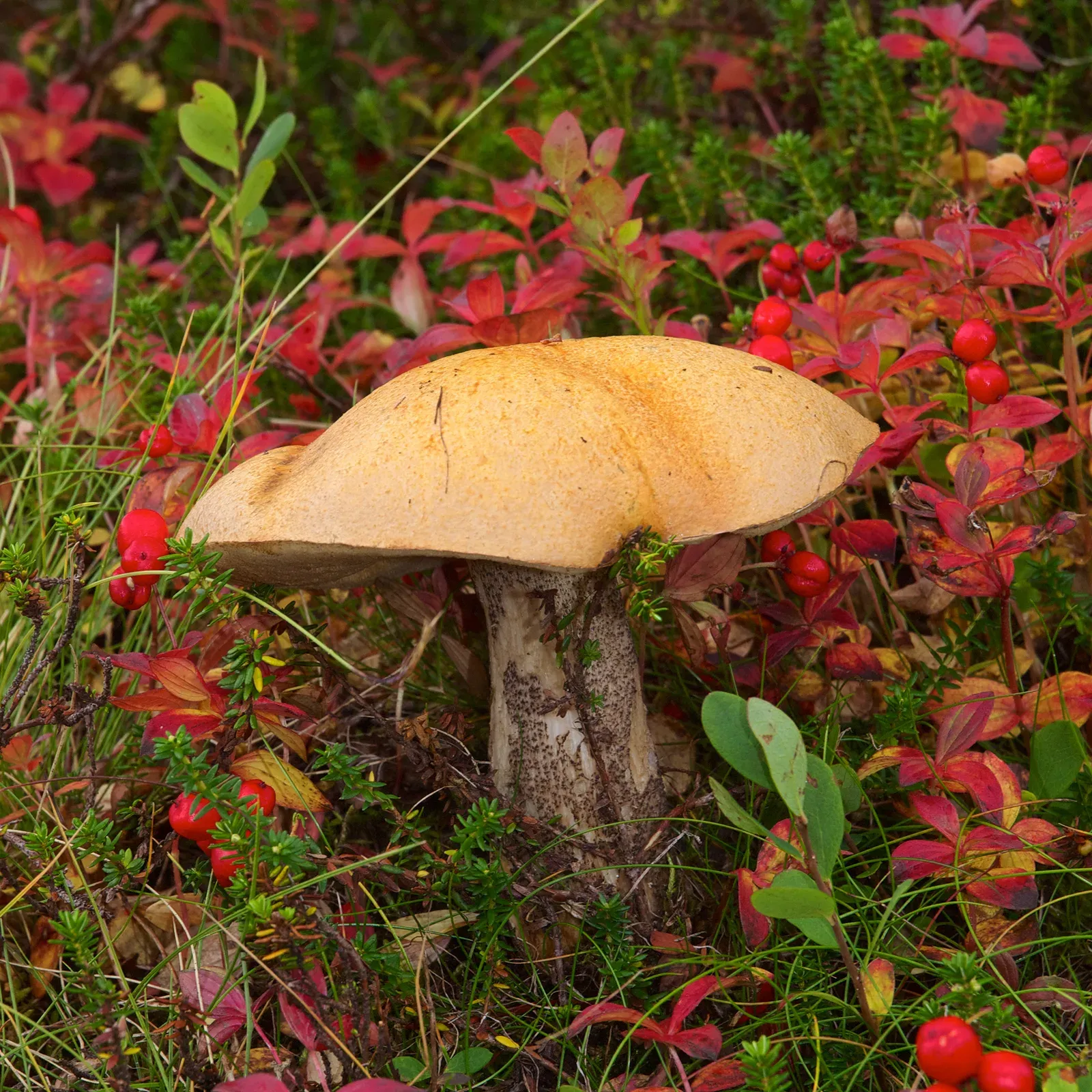 Science & taxonomy
Types of birch boletes: a complete guide
The birch bolete isn't one mushroom but a whole family of look-alike species. Here's every birch bolete specie…
April 16, 2026·4 min
Frequently asked questions
Is it safe that the flesh changes color?
Yes. The multicolored reaction when cut is a normal trait of the species, part of its name. It's oxidation of pigments, not a sign of toxicity. Birch boletes have no dangerous lookalikes among boletes at all.
Can it be confused with the bitter bolete?
The bitter bolete (Tylopilus felleus) has a dark network on the stem (not scales) and a plain, not spotted, cap. Its flesh turns strongly pink and has an unbearably bitter taste. In the mottled bolete, the scales on the stem and the spots on the cap are the telltale features.
Where to look in Ukraine?
In birch woods and mixed forests with birch, less often with oak, poplar or spruce. It likes damp microhabitats — hollows, the edges of wet ravines, the shores of forest lakes. Polissia, the Western Forest-Steppe and the Carpathians are its main range.
When does it fruit?
From June to October, peaking in August–September after heavy rains. In very dry years it's rare. It likes moderately warm, humid weather after prolonged rain.
How is it different from the brown birch bolete?
The main difference is the spotted “camouflage” cap (the brown birch bolete's is evenly gray or brown). Second, the multicolored flesh when cut (in the brown birch bolete it's white or turns slightly pink only in the stem). The scales on the stem are similar.
Can it be confused with the red-capped scaber stalk?
The red-capped scaber stalk has a bright orange or red cap (no spots), and its flesh turns blue when cut. The mottled bolete is darker, with distinctive spots, and its flesh shows a mixed reaction. Both are edible, so no harm done.
Does it get wormy quickly?
Yes, like all birch boletes — especially in warm weather. So pick only young, firm specimens with closed pores. Old mushrooms with open gray pores are usually already wormy.
How to preserve it?
Drying, pickling, freezing. Dried, it darkens more than porcini but keeps its aroma. It pickles well and holds its shape. Before pickling, parboil for 15–20 min and discard the first water.
Is Mottled bolete edible or poisonous?
Does Mottled bolete have gills or pores?
What does the cap of Mottled bolete look like?
What does the stem of Mottled bolete look like?
Sources
- [1]Вікіпедія (українська)
- [2]Атлас грибів України, Зеров Д.К. (1979)
- [3]MycoBank Database
- [4]Index Fungorum
- [5]GBIF
- [6]iNaturalist Ukraine