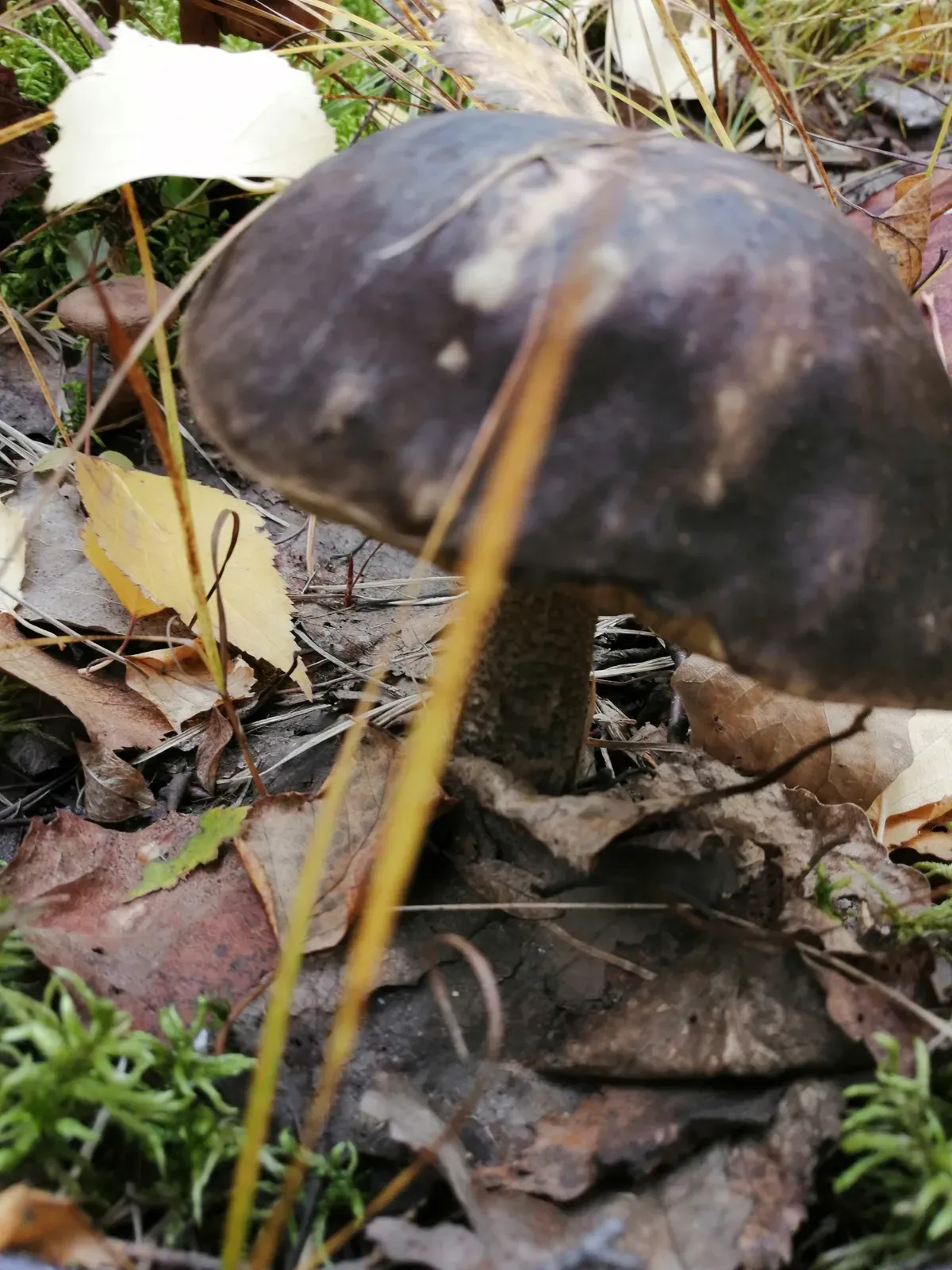
Among birch boletes there’s one with an especially whimsical look: its cap seems speckled with blotches, lighter and darker swirls. It’s the mottled bolete (Leccinum variicolor), the birch bolete with a changeable cap.
It’s a bit less known than the brown birch bolete, but well worth a place in your basket. Let’s see how to recognize it by two distinctive features, where it grows and how it differs from other birch boletes.
How to recognize it
The mottled bolete gives itself away with two traits the brown birch bolete doesn’t have.
- Blotchy cap. Lighter and darker patches are scattered over a gray-brown background, like swirls or marble. Hence the name.
- Bluing flesh. When cut, especially near the base of the stem, the flesh often turns blue or green. This is normal and doesn’t signal danger.
The other features are typical of birch boletes: a spongy pore layer, a white stem with dark scales, a slender build. But it’s the blotchy cap and the bluing at the base that let you name the species with confidence.
Where it grows
The mottled bolete leans toward damper spots, though it isn’t as “swampy” as its pale sister.
Look for it:
- in damp deciduous and mixed birch woods;
- on mossy patches, along the edges of wet hollows and clearings;
- where the soil is moist but not fully waterlogged.
It often grows alongside the ghost bolete, but differs from it by its firmer flesh and blotchy rather than pale cap. Its season is just as long, from June to October.
Is it tasty?
Yes, the mottled bolete is a good edible mushroom, and even firmer than the ghost bolete. Its flesh is denser, so it holds its shape better.
It’s cooked just like the brown birch bolete: fried, boiled, pickled and dried. The bluing on the cut disappears during cooking, so it spoils neither the look nor the taste of the finished dish.
Like all birch boletes, it’s best for the table when young. Old specimens with a sagging pore layer become spongy, so it’s better not to take them.
Why the flesh turns blue and whether it’s dangerous
The bluing scares beginners, but it’s completely harmless. It’s an ordinary chemical reaction: compounds in the flesh oxidize in the air and give a blue or greenish tint.
In the mottled bolete, it’s mostly the base of the stem that turns blue, and not always vividly. It’s not a sign of poison, just a feature of the species, as natural as the darkening of other birch boletes.
The main thing is not to mistake this trait for danger. There are no poisonous birch boletes, and the only unpleasant lookalike is the bitter bolete, which stands out with its pinkish tubes and unbearable bitterness.
The weather will tell you when to go out for birch boletes. Keep an eye on moisture and warmth with our mushroom radar: it shows when conditions line up well for mushrooms to appear.
Sources
- “Identification Guide to the Fungi of Ukraine” (Kyiv, Naukova Dumka publishing house).
- Leccinum variicolor on GBIF, the global biodiversity database.
- Leccinum on MycoBank, the international fungal nomenclature database.
- Leccinum variicolor on Wikipedia.
Frequently asked questions
How do you recognize the mottled bolete?
By its blotchy, unevenly colored cap with lighter and darker swirls, and flesh that turns blue or green when cut near the base of the stem. Its other features are typical of birch boletes.
Why does the mottled bolete’s flesh turn blue?
It’s a natural reaction as compounds in the flesh oxidize in the air. The bluing is harmless, doesn’t indicate poison and disappears during cooking.
Where does the mottled bolete grow?
In damp and , on mossy patches and along the edges of wet hollows, where the soil is moist but not waterlogged.
Is the mottled bolete edible?
Yes, it’s a good edible mushroom, even firmer than the . It’s fried, boiled, pickled and dried, and best when young.
How does it differ from the brown birch bolete?
By its blotchy cap and the bluing of the flesh near the base of the stem. The has an evenly gray-brown cap, and its flesh barely changes when cut.
Can it be confused with a poisonous mushroom?
It has no poisonous lookalikes. The only one to watch out for is the , but it stands out with its pink tubes, the dark net on its stem and its bitterness.
Does the bluing disappear during cooking?
Yes, the blue tint disappears during cooking, so it doesn’t affect the look or taste of the finished dish.
When should you pick the mottled bolete?
The season runs from June to October. It turns up most often during rainy spells in the second half of summer and in fall, when the soil is well moistened.
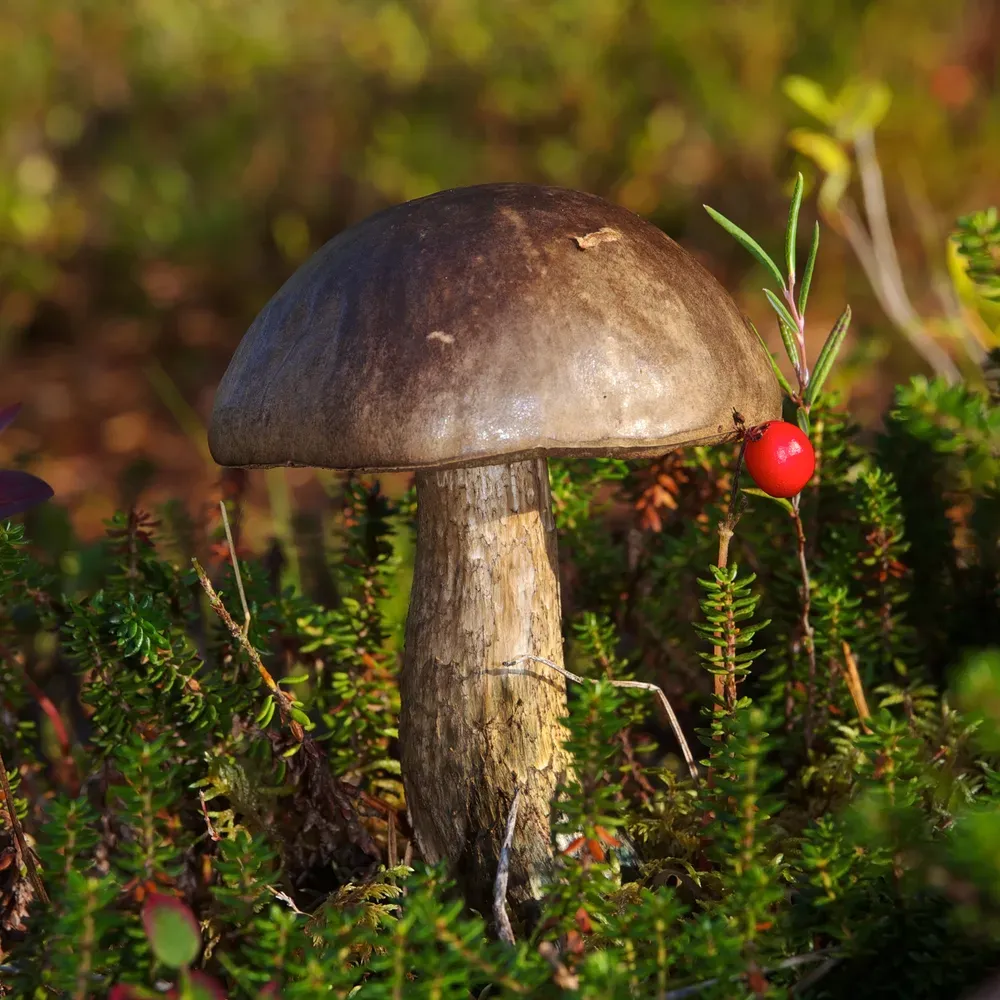
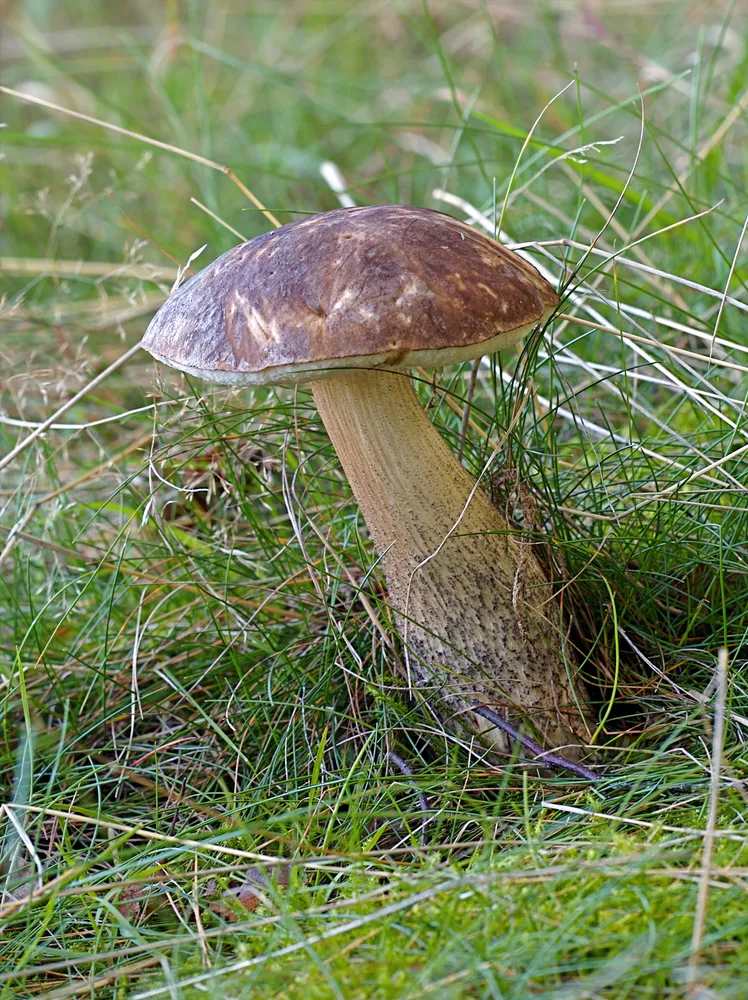
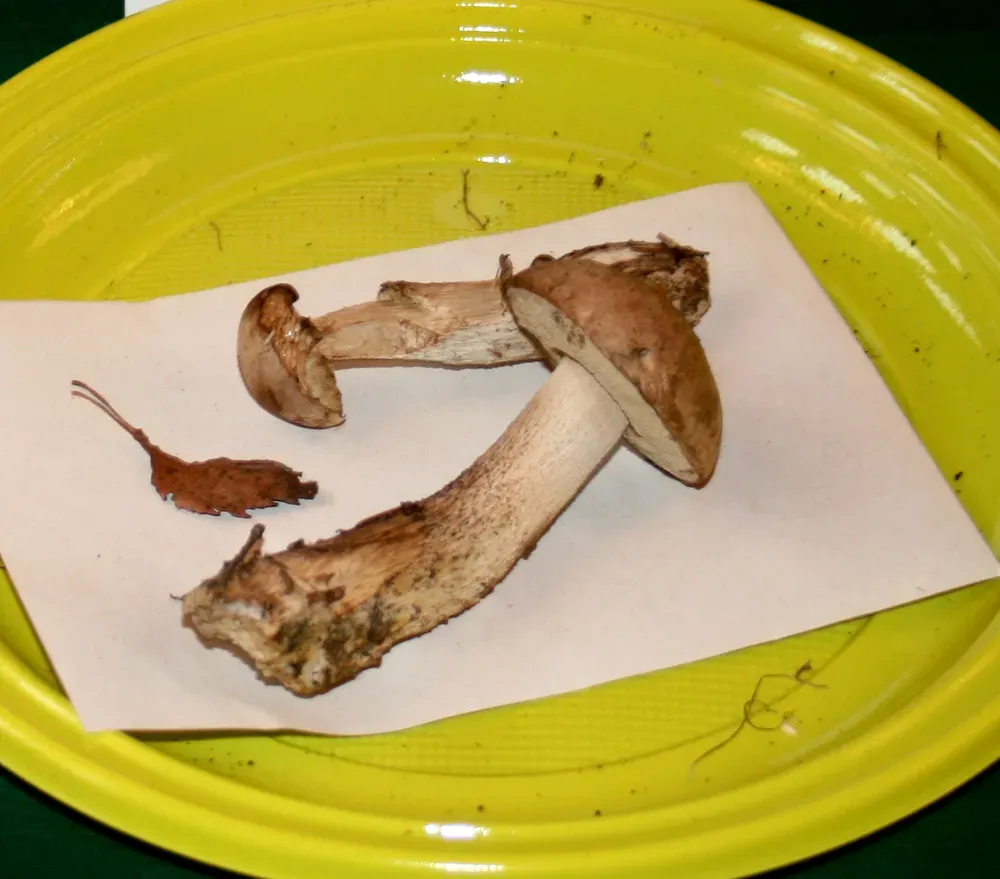
Mushrooms in this article
Related articles
 How to identify
Truffles in Ukraine: do they grow here, and where to look
Truffles aren't just a French delicacy. Several species grow in Ukraine too. Here's which ones, where they occ…
August 24, 2026·2 min Recipes & cooking
How to store fresh mushrooms, and for how long
Fresh mushrooms spoil faster than you might think. Here's how long they keep in the fridge, how to store them…
August 21, 2026·4 min Recipes & cooking
How long to boil mushrooms
Boiling time depends on the type of mushroom and on what you're cooking next. Here's a clear cheat sheet: how…
August 22, 2026·4 min