THIS DATA HAS NOT BEEN VERIFIED BY AN EXPERT. Use at your own risk.
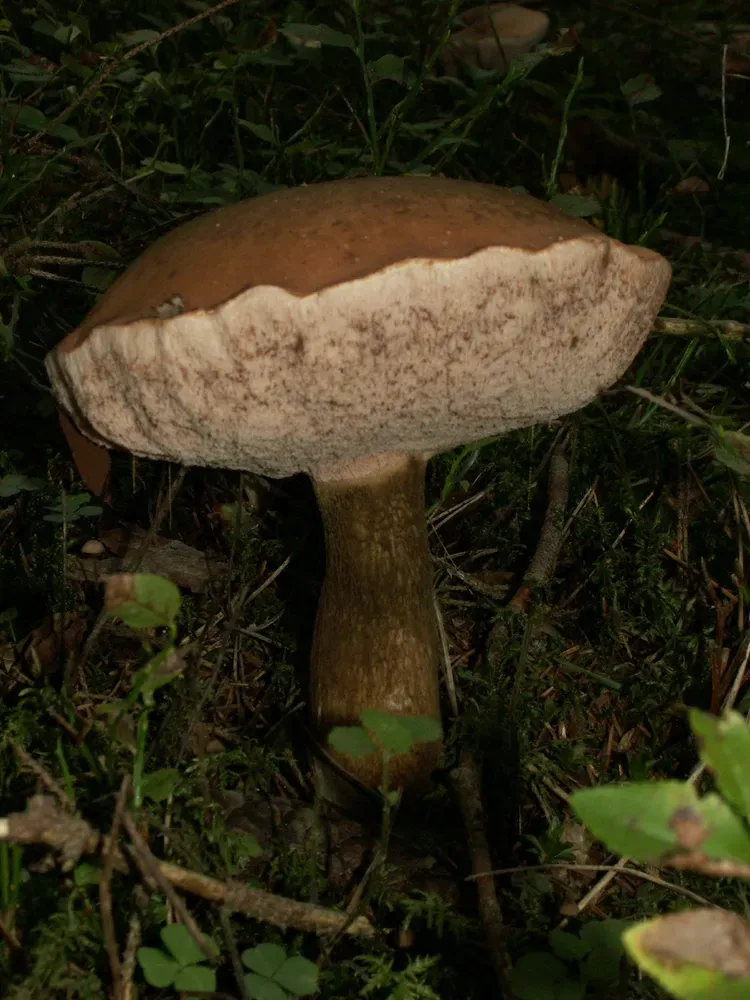
Bitter boleteTylopilus felleus
Under reviewUpdated October 3, 2026
Passport
- Edibility
- Inedible
- Season
- Jun — Oct
- Hymenophore
- Pored
- Cap color
- Brown
- Size
- Medium (5–15 cm)
- Smell
- Pleasant
- Reviewed
- Under review
Quick answers
Where to look?
Conifer forest, Mixed forest, Deciduous forest
When does it appear?
Jun — Oct
Active months: June, July, August, September, October.
How to recognize it? Three signs
- Cap color: Brown
- Cap shape: Convex
- Smell: Pleasant
Fruiting season
June – October
Description
The bitter bolete, known to science as Tylopilus felleus, is porcini's best-known lookalike, a true master of disguise in Ukrainian forests. With its sturdy build, velvety brown cap and massive stem, it resembles the noble porcini so closely that even experienced foragers sometimes put it in their basket. But that resemblance is exactly where the species' treachery lies: no other mushroom can ruin a dish so hopelessly. Forming mycorrhiza mainly with conifers, it settles on poor sandy and acidic soils, often nestling at the foot of old stumps and around the roots of pines and spruces.
In Ukraine, the bitter bolete is extremely widespread — from the pine forests of Polissia to the mixed forests of the Forest-Steppe and the mountain ranges of the Carpathians. It isn't fussy and fruits generously from early summer right up to the first autumn frosts, appearing especially abundantly in July and August after warm rains. It's precisely at this peak of the "quiet hunt", when a forager rejoices at every brown cap in the grass, that the risk of mistaking it for porcini is greatest.
In terms of edibility, the bitter bolete is inedible, but it's important to dispel the main myth right away: it is not poisonous and contains no dangerous toxins. Its one, but insurmountable, flaw is the burning, lingering bitterness of its flesh, which doesn't go away after long boiling or after drying. A single small specimen that accidentally ends up in a pot of porcini can make a whole large batch inedible. That's why knowing this mushroom "by sight" is a must for anyone who picks boletes.
Cap
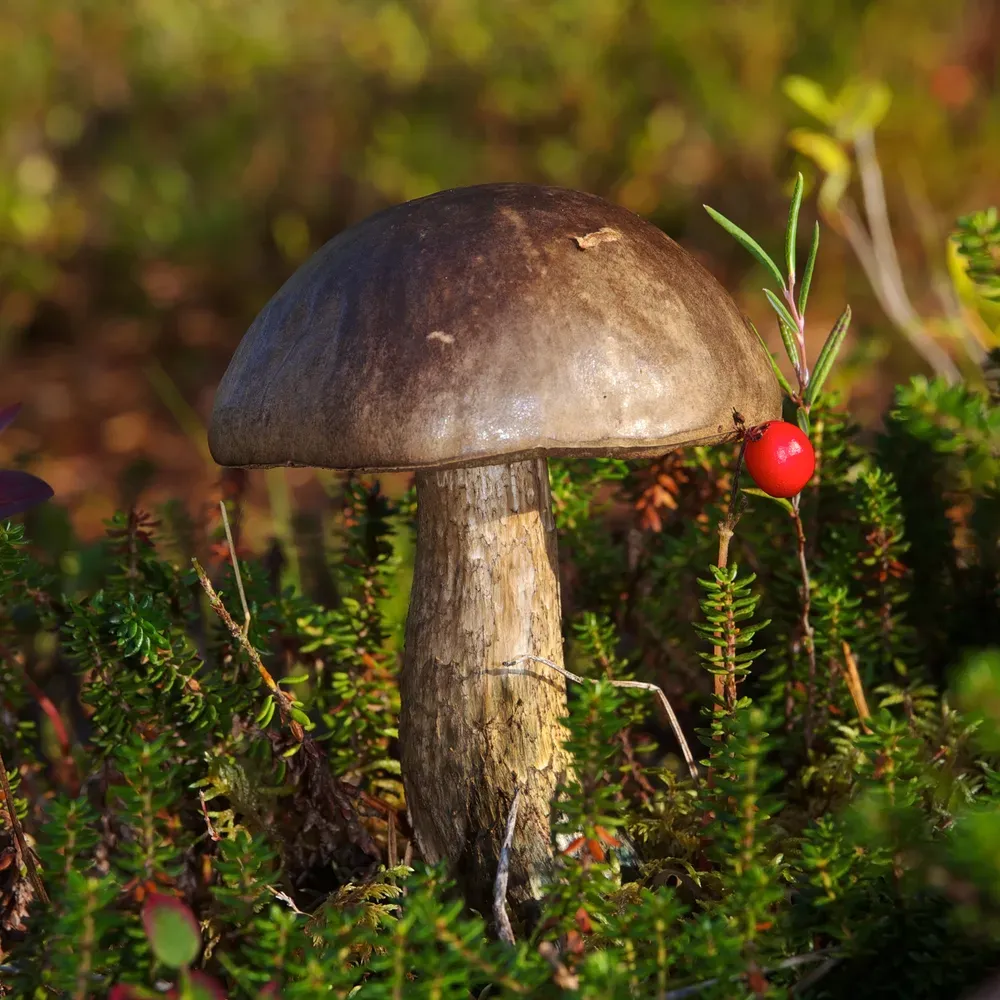
The cap of the bitter bolete reaches 4 to 15 centimeters across, and in especially good years you'll find real giants up to 20 centimeters. When young it is neatly hemispherical, opening with maturity to convex and later almost flat and spread out. The cap surface is dry, delicately velvety or finely felty to the touch in young mushrooms, but becomes smooth with age. The color palette ranges from light hazel and coffee brown to a warm ochre-brown, which especially heightens the deceptive resemblance to porcini.
Hymenophore
Under the cap lies a tubular hymenophore, which is the main giveaway of this impostor. In very young mushrooms the tubes and pores are whitish, which, once again, recalls porcini, but very quickly they take on a characteristic dirty pink or flesh-pink hue. It's this pinkness that firmly sets the bitter bolete apart from true porcini, whose hymenophore can be white, yellow or olive, but never pink. When pressed or damaged, the pores often turn brown, developing rusty brown spots.
Stem
The stem of the bitter bolete is massive and sturdy, 4 to 10 centimeters tall and up to 3 centimeters thick. It is swollen and club-shaped, especially thickened at the base, which makes the mushroom look stocky and dependable. The stem is colored in ochre-brown tones, lighter at the top and darker toward the base. The most important diagnostic detail is the net pattern: unlike porcini's delicate pale netting, the bitter bolete's net is distinct, coarse and dark, chocolate-colored or even blackish, and clearly visible to the naked eye. There is no ring and no volva at all.
Flesh
The flesh of the bitter bolete is thick, dense and fleshy, white or slightly cream-colored. When cut it mostly stays unchanged, although in some specimens it may turn faintly pink on exposure to air. There's none of the bluing typical of many boletes. But the flesh's main feature lies not in its color but in its taste: it is extraordinarily, unbearably bitter, like bile or quinine. It's this bitterness, which cooking doesn't destroy, that makes the mushroom unfit for the table.
Smell
The smell of the bitter bolete is faint and fairly nondescript, typically mushroomy, with no sharp or unpleasant notes. Unlike the taste, the aroma carries no warning at all and may well seem pleasant. That's exactly why you shouldn't rely on your nose to identify this species — the deceptively mild smell only adds to its overall resemblance to the noble porcini.
Lookalikes
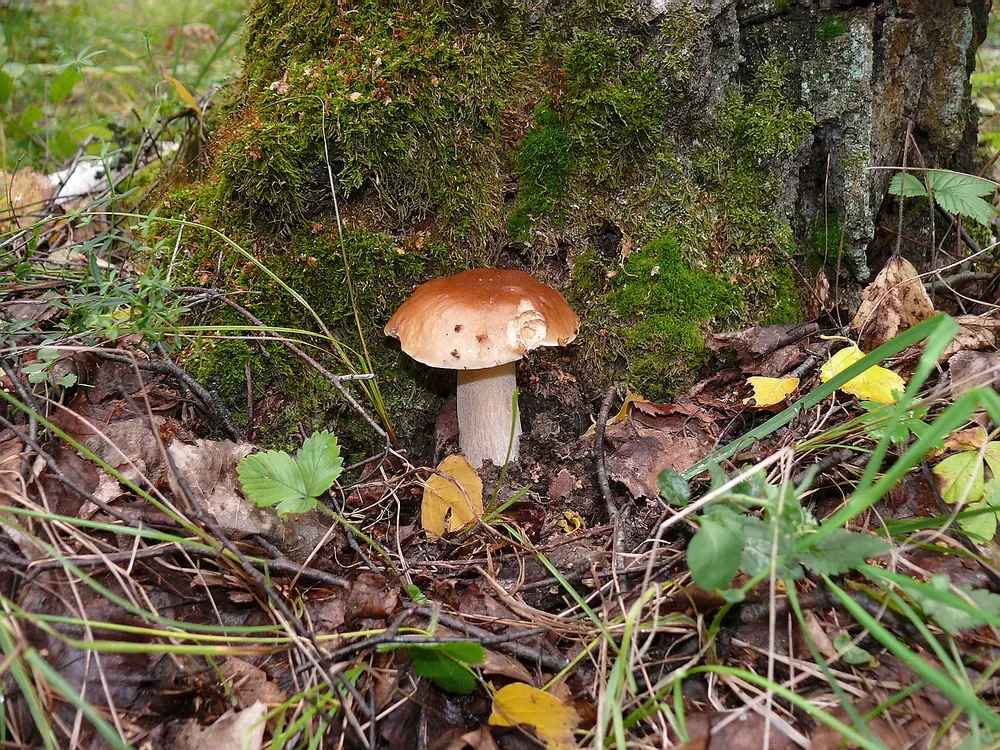
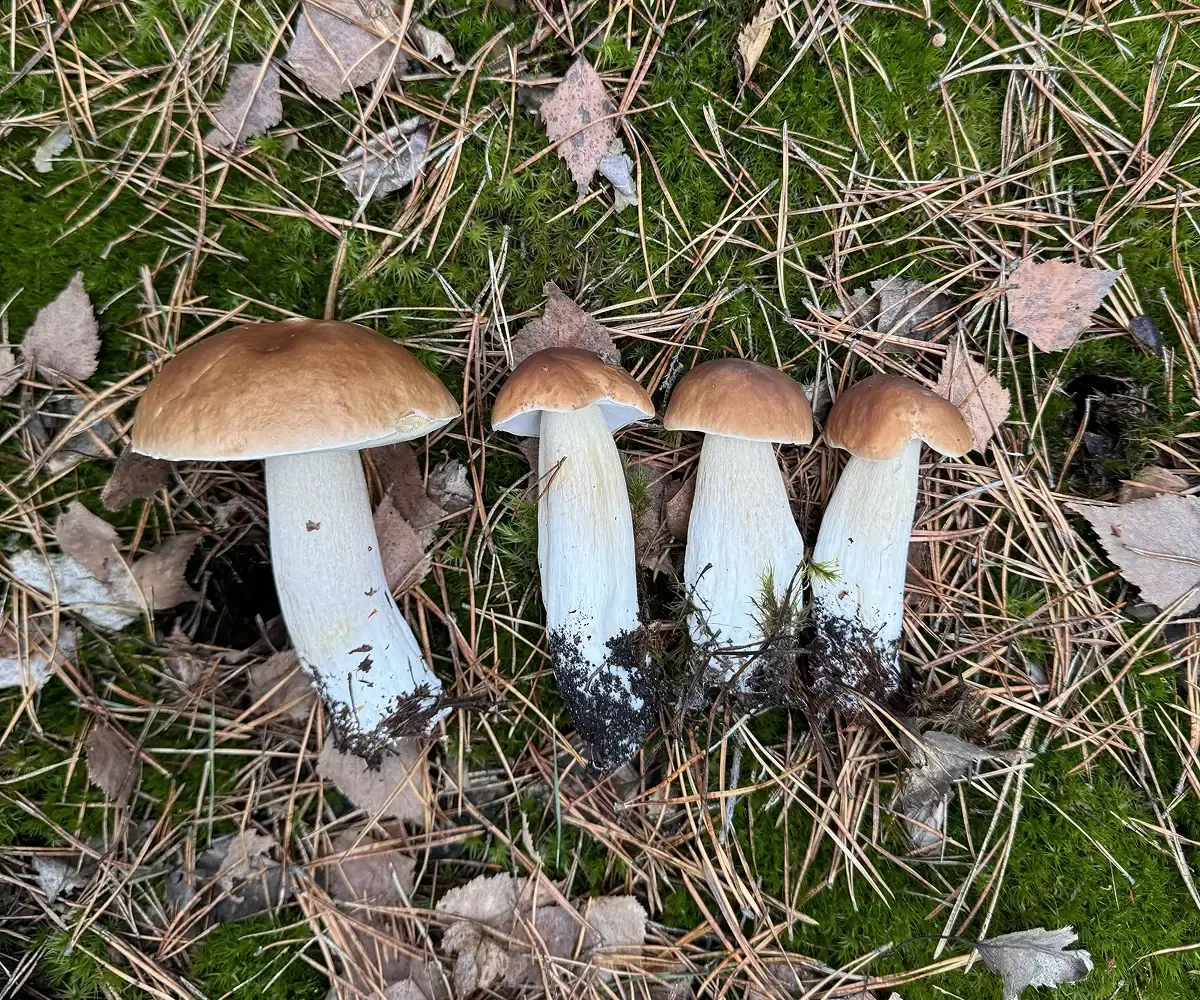
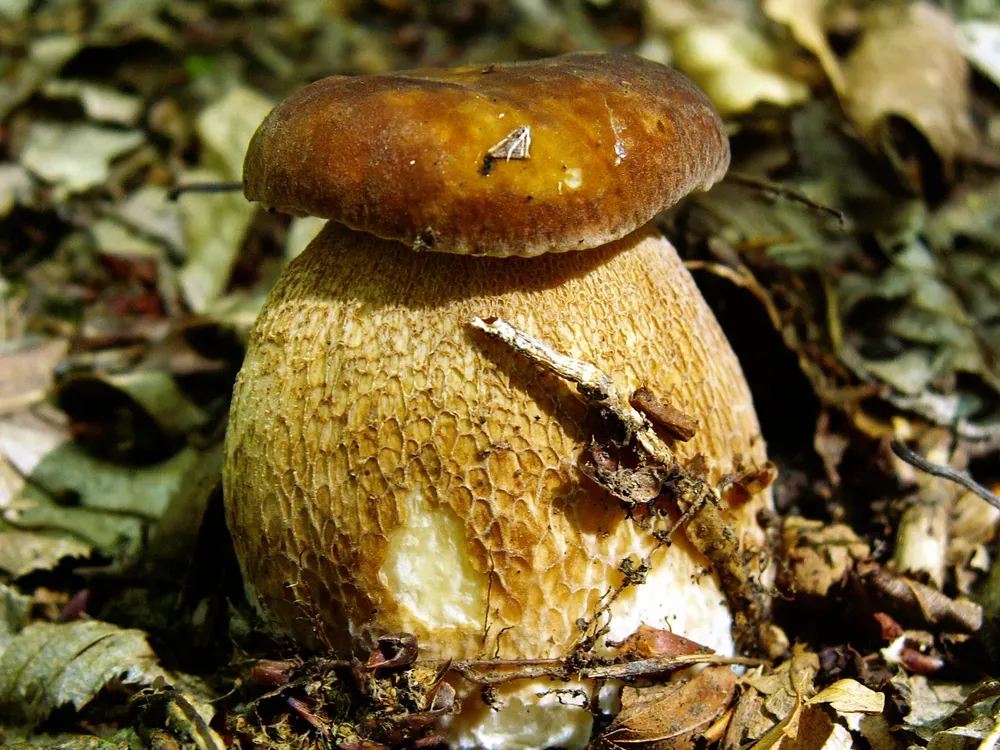
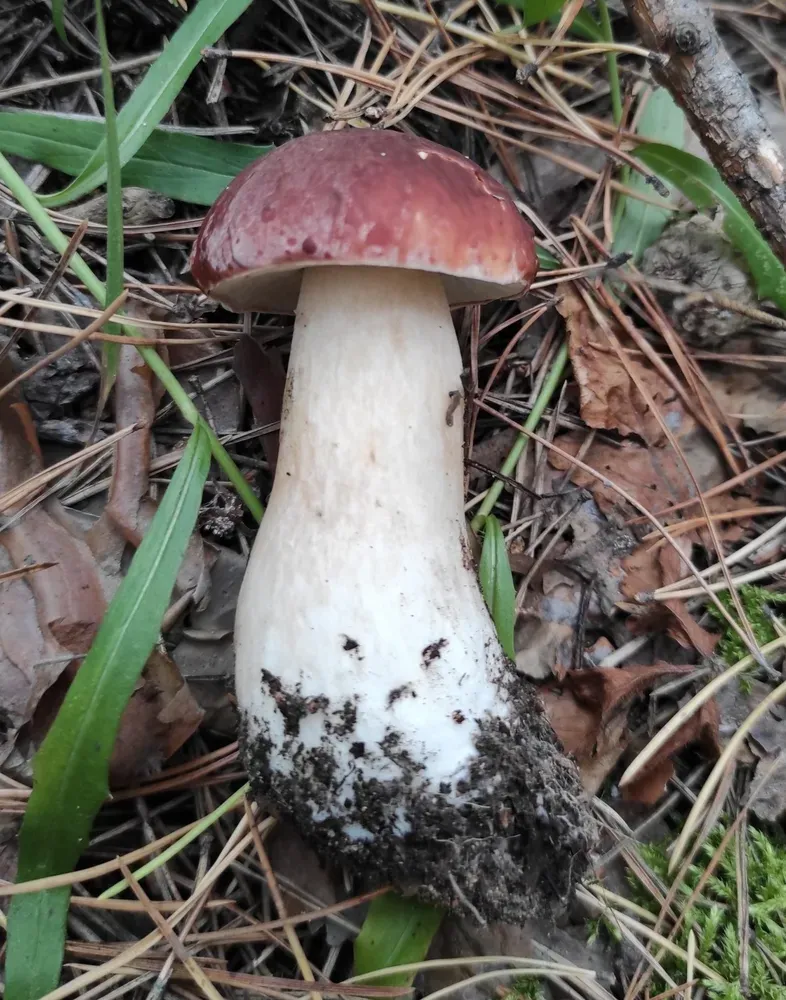
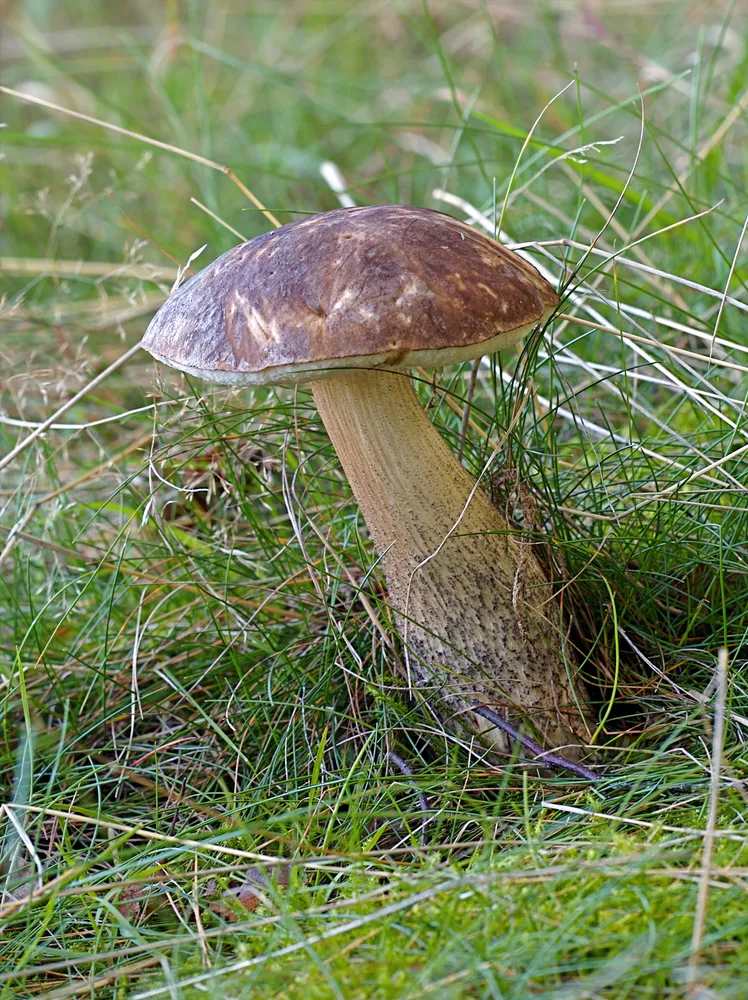
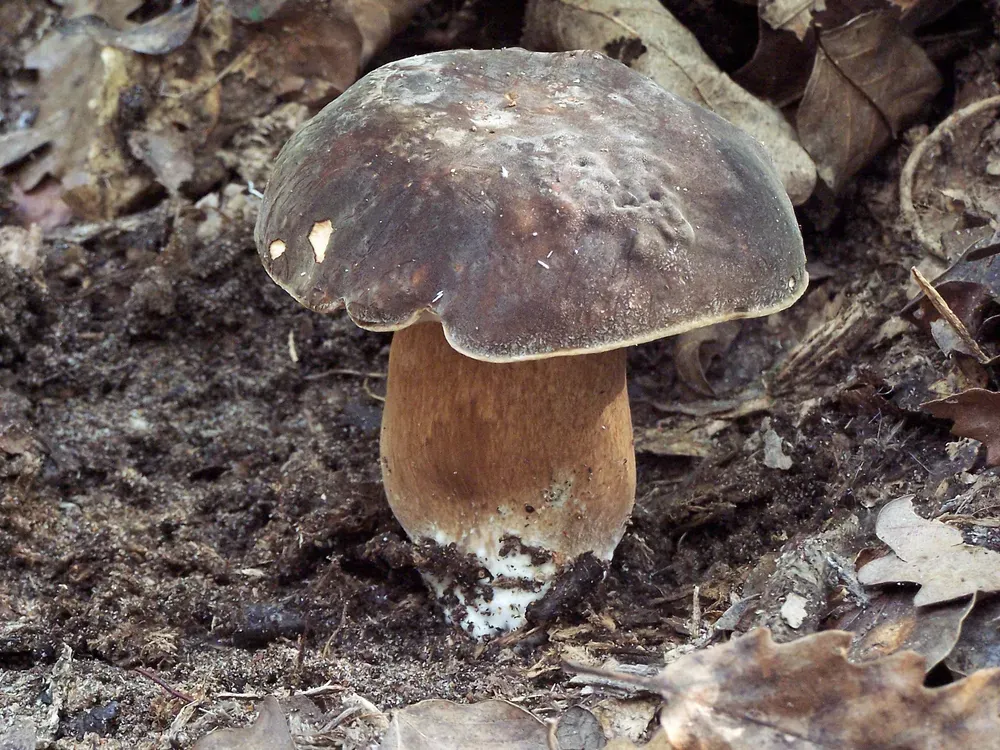
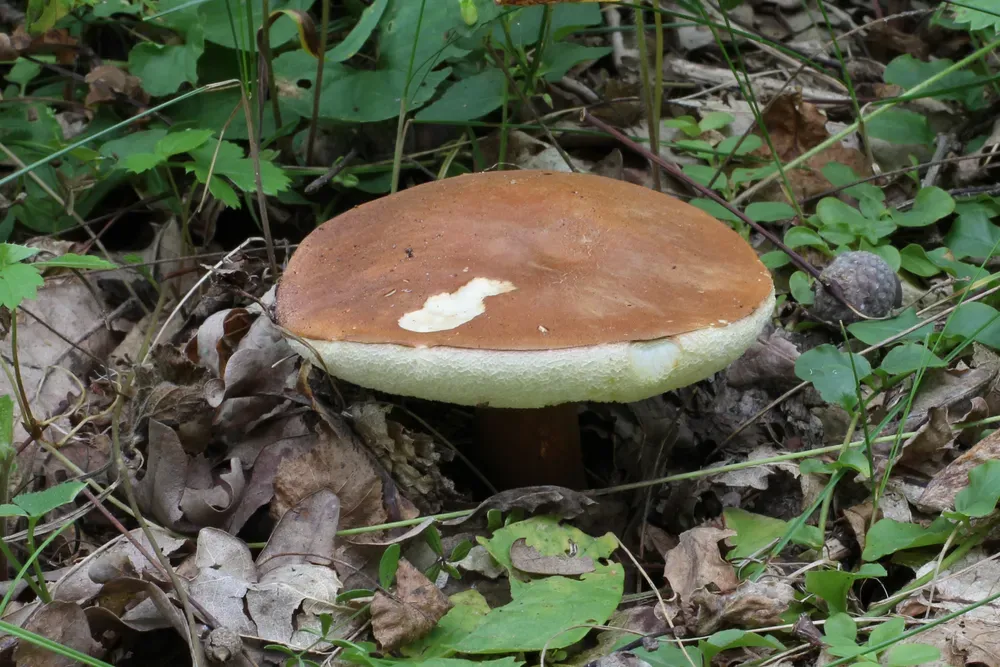
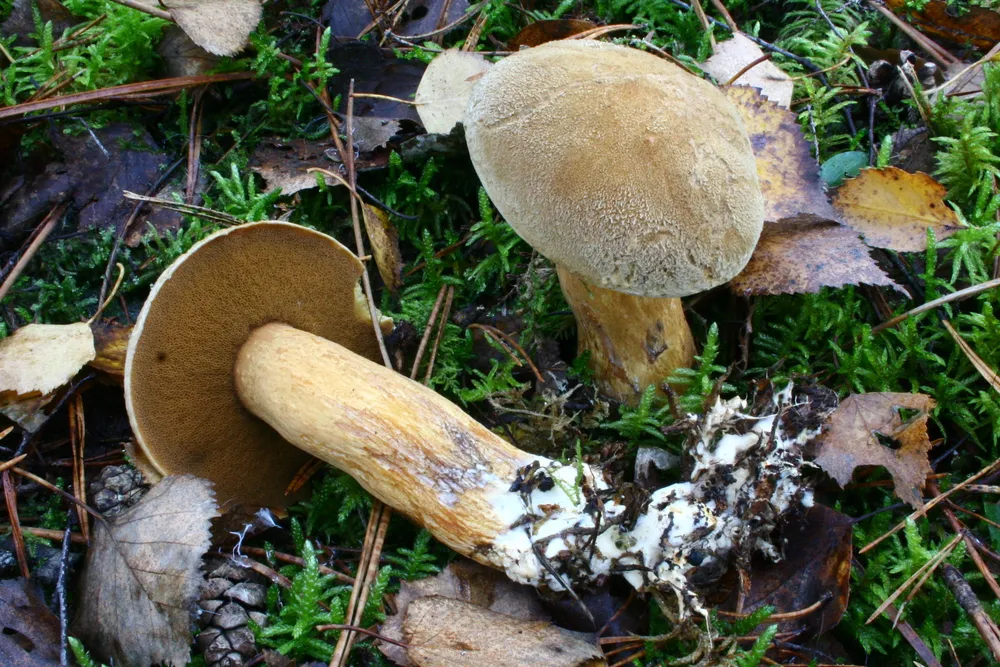
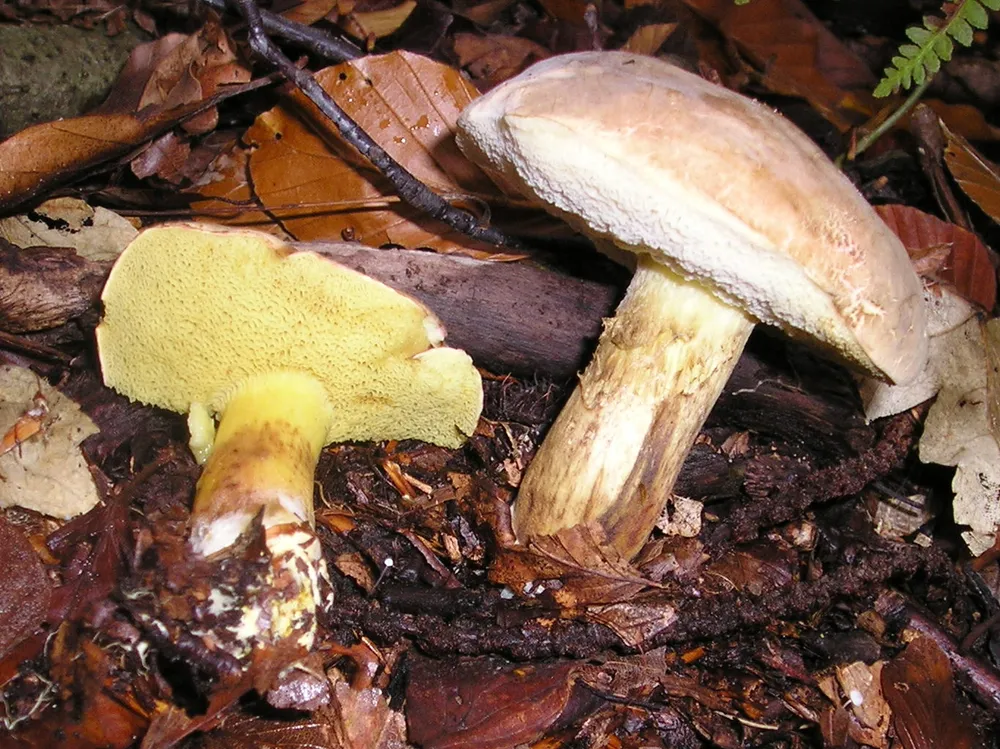
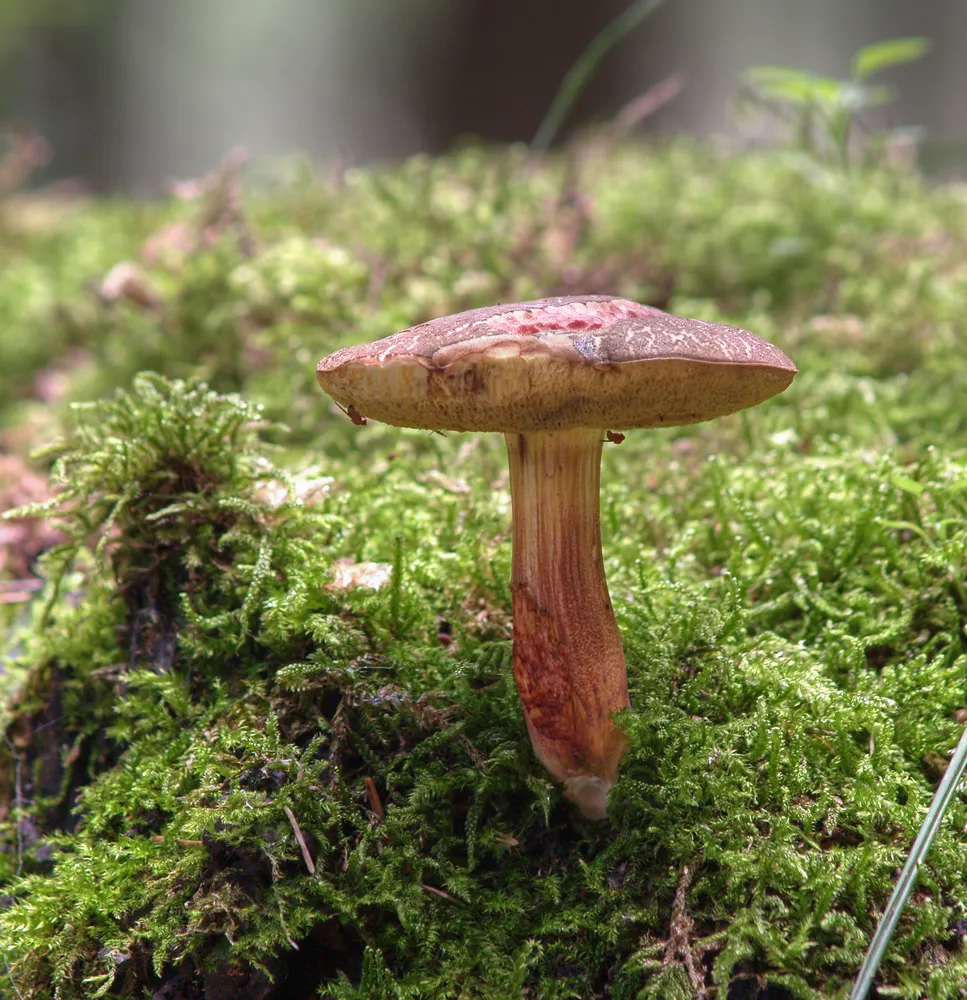
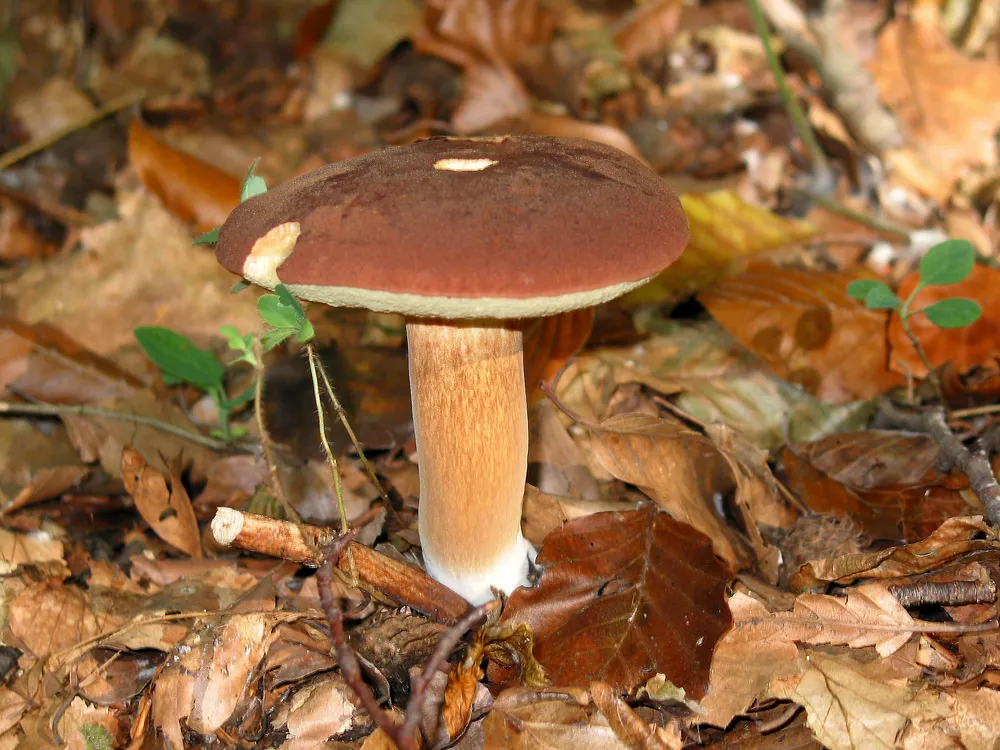
_Bresinsky_&_Manfr._Binder_533003_2015-06-29.webp)
Related species
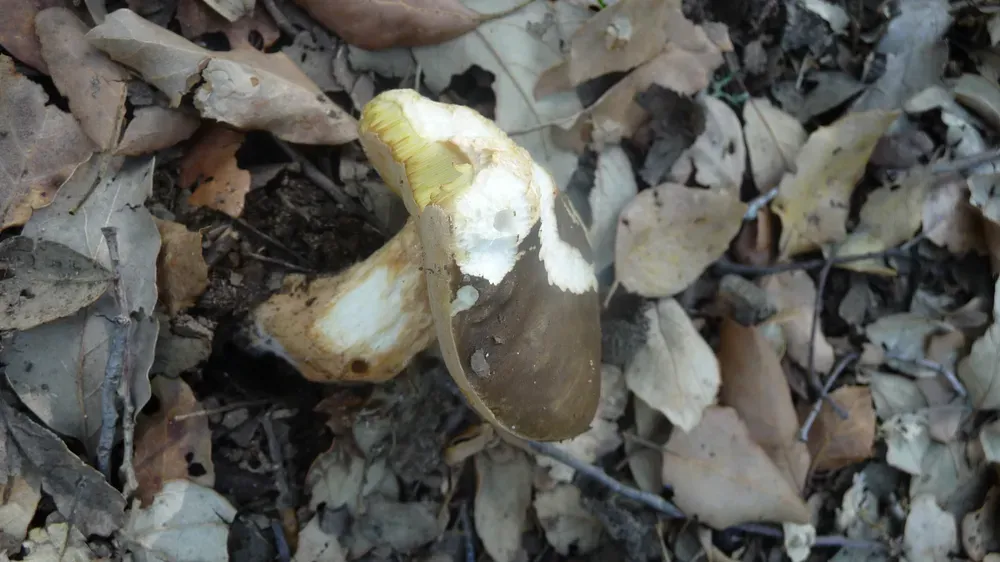
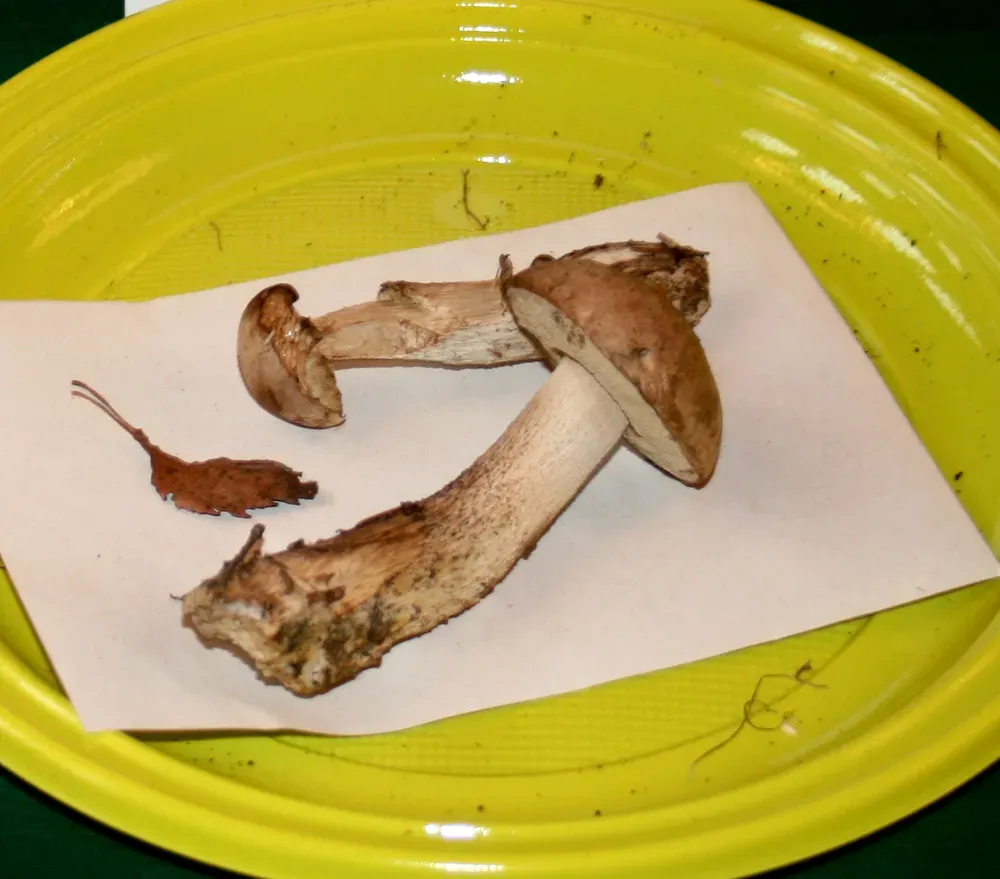
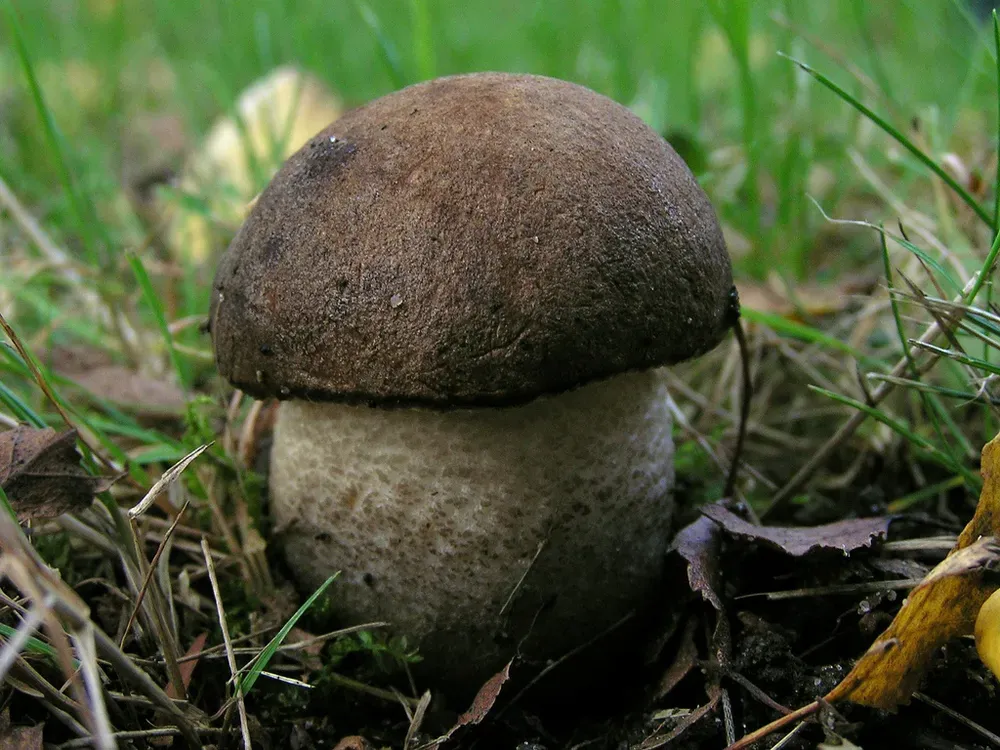
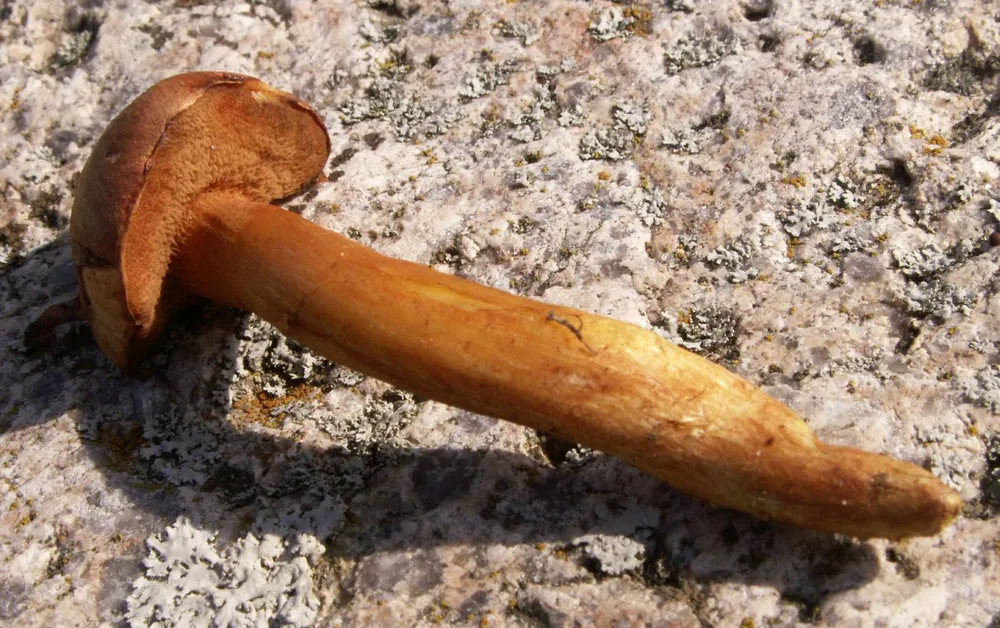
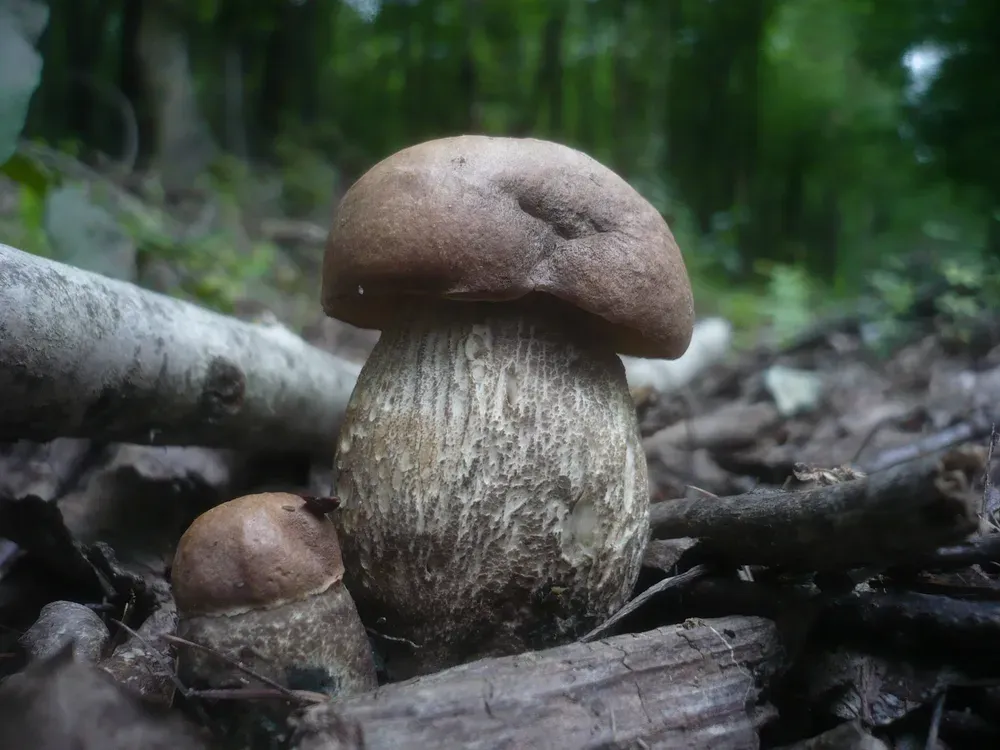
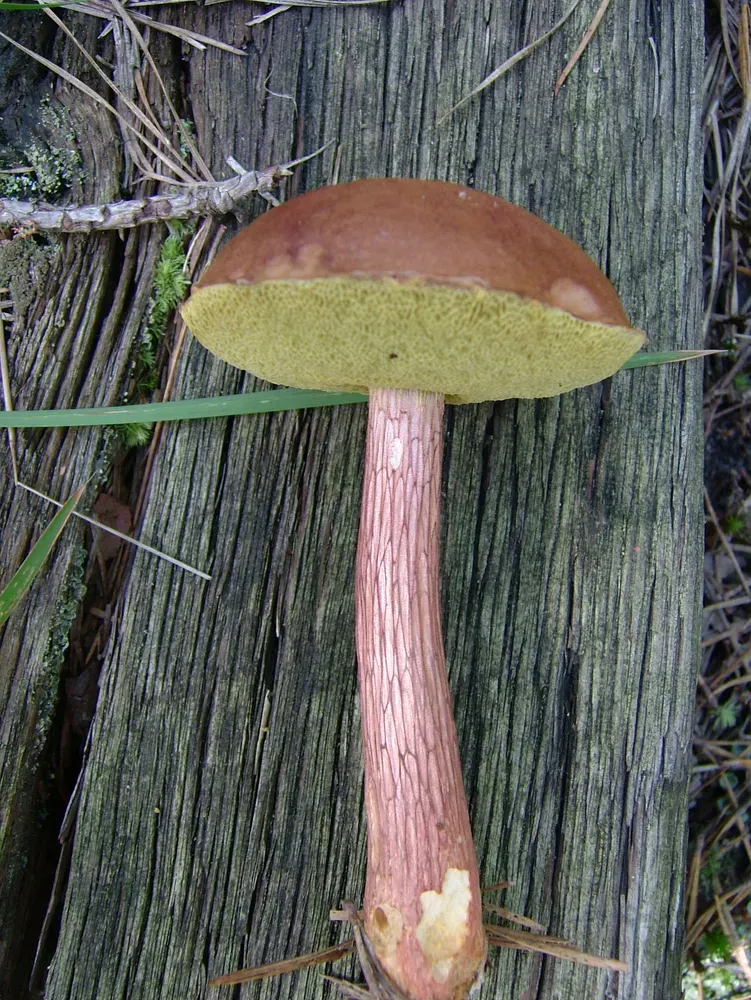
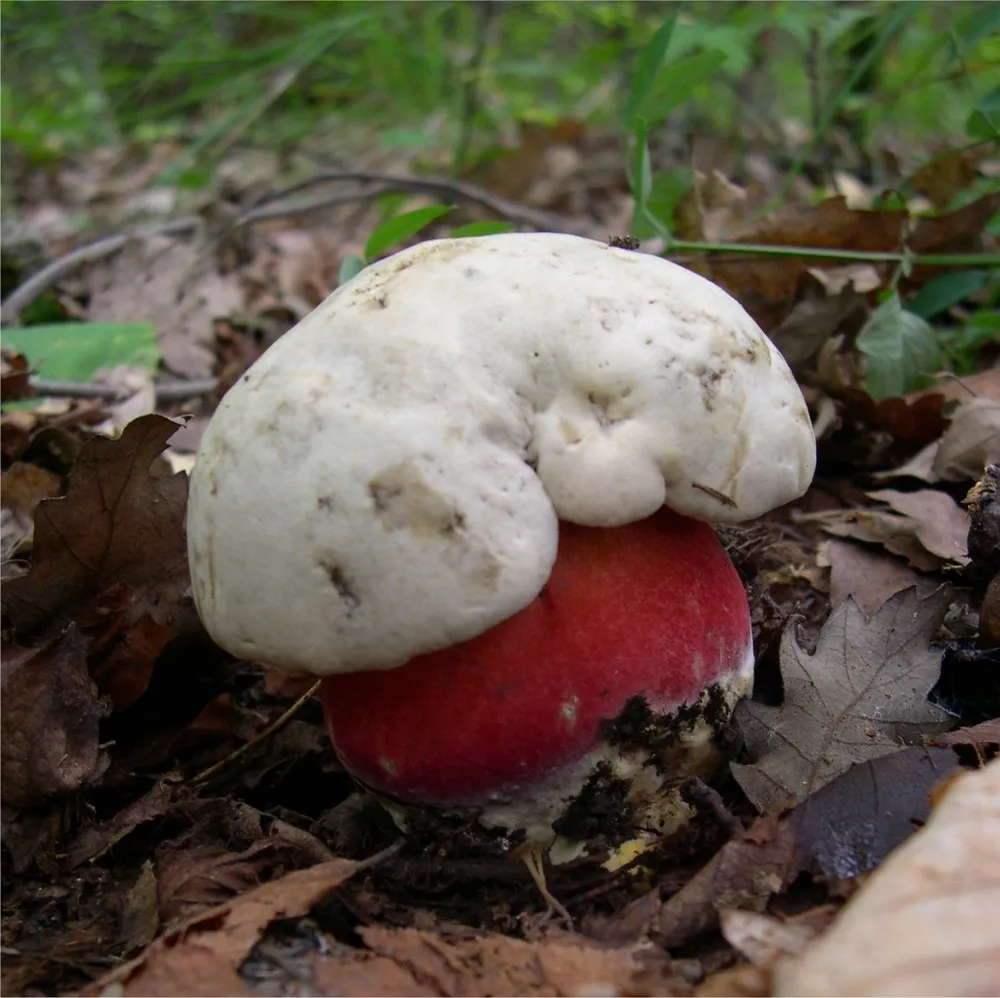
Mushrooms of the same genus and habitat — to study side by side and never mix up.
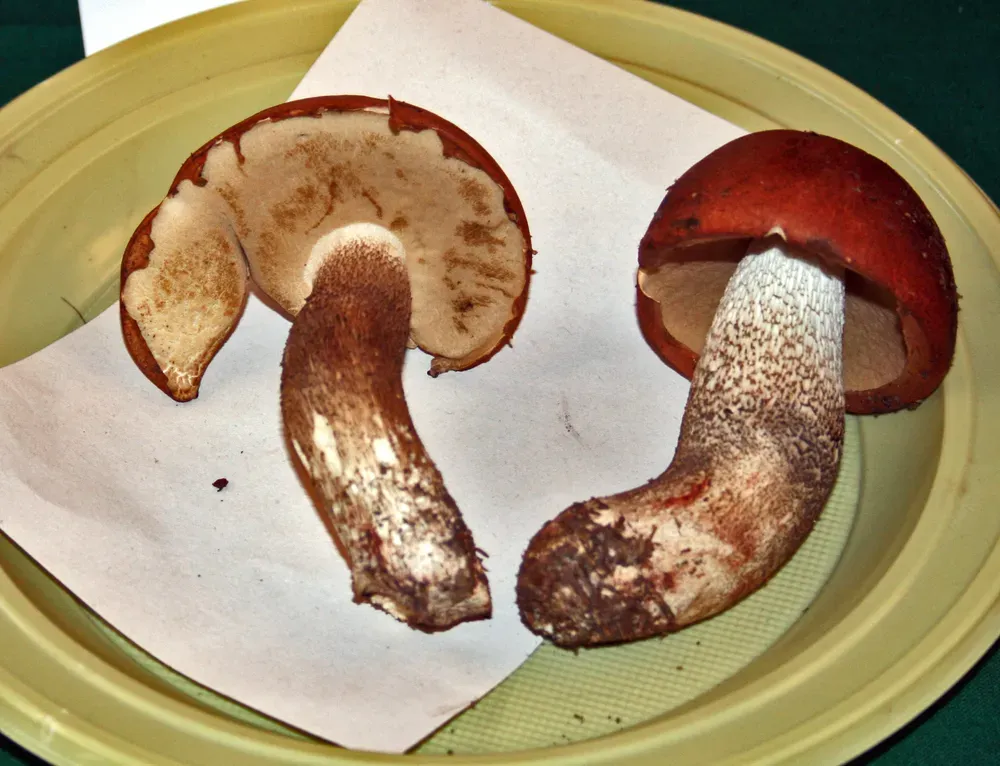
Related reading
 Safety
Poisonous mushrooms of Ukraine: photos, names, and key signs
To forage safely, you need to know “the enemy by sight.” Here are the main poisonous mushrooms of Ukraine, the…
August 13, 2026·4 min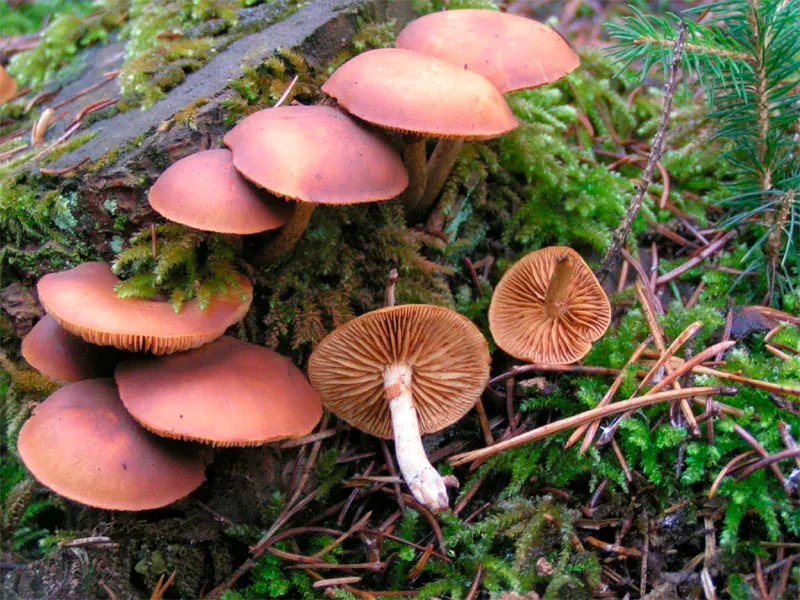 Safety
Dangerous pairs: 7 poisonous lookalikes of edible mushrooms
Most mushroom poisonings happen because of lookalikes. We've gathered the 7 most dangerous “edible mushroom —…
July 20, 2026·3 min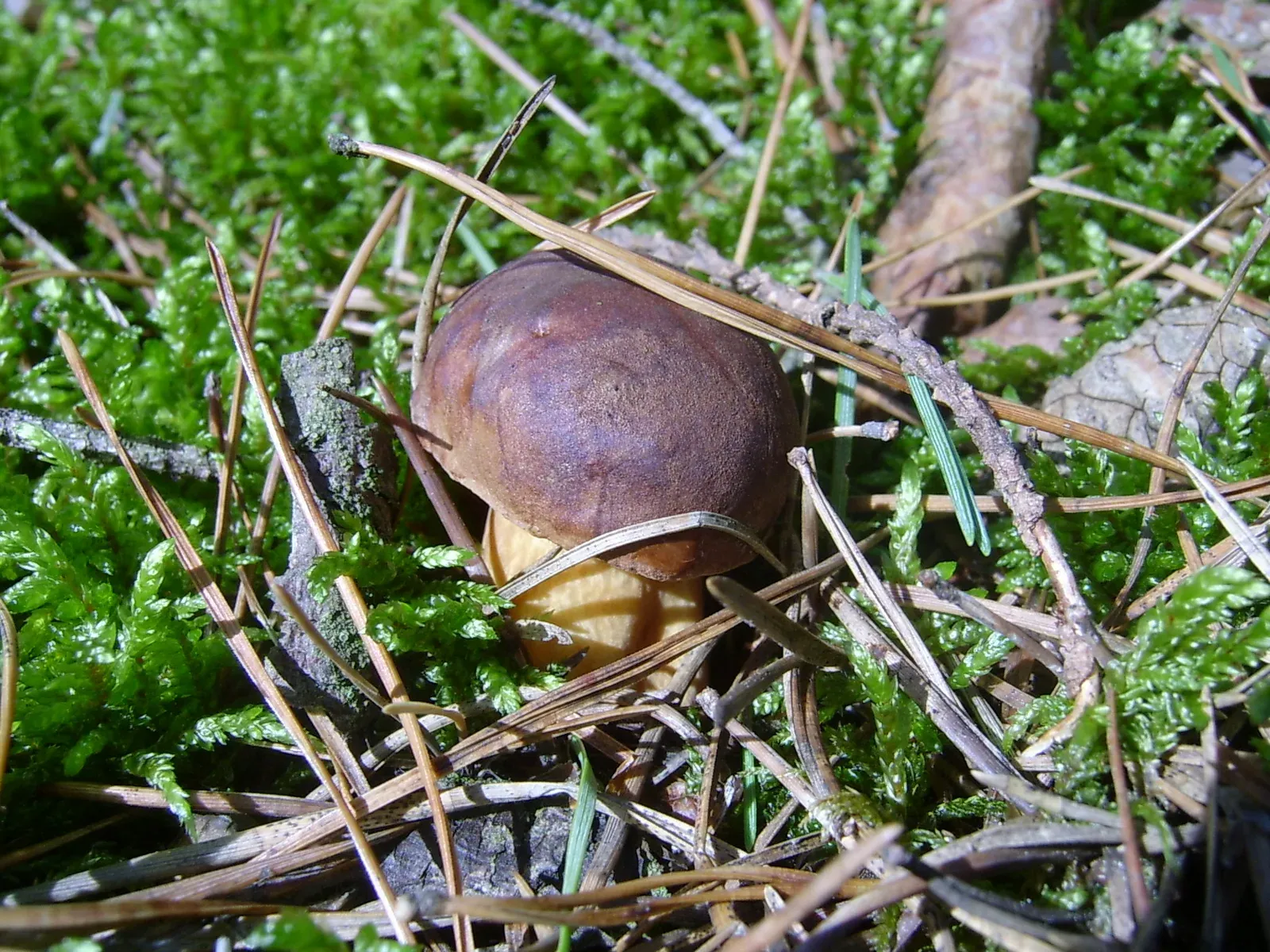 Safety
Bay bolete lookalikes: what it gets confused with
The bay bolete gets confused with porcini, with Xerocomus boletes and with the bitter bolete. Here’s which loo…
July 20, 2026·2 min
Frequently asked questions
Is Bitter bolete edible or poisonous?
Does Bitter bolete have gills or pores?
What does the cap of Bitter bolete look like?
What does the stem of Bitter bolete look like?
What do Bitter bolete smell and taste like?
Where does Bitter bolete grow?
Which trees does Bitter bolete grow under?
When should you pick Bitter bolete?
What can Bitter bolete be confused with?
What is the scientific name of Bitter bolete?
Sources
- [1]Вікіпедія (українська)
- [2]Атлас грибів України, Зеров Д.К. (1979)
- [3]MycoBank Database
- [4]Index Fungorum
- [5]GBIF
- [6]iNaturalist Ukraine