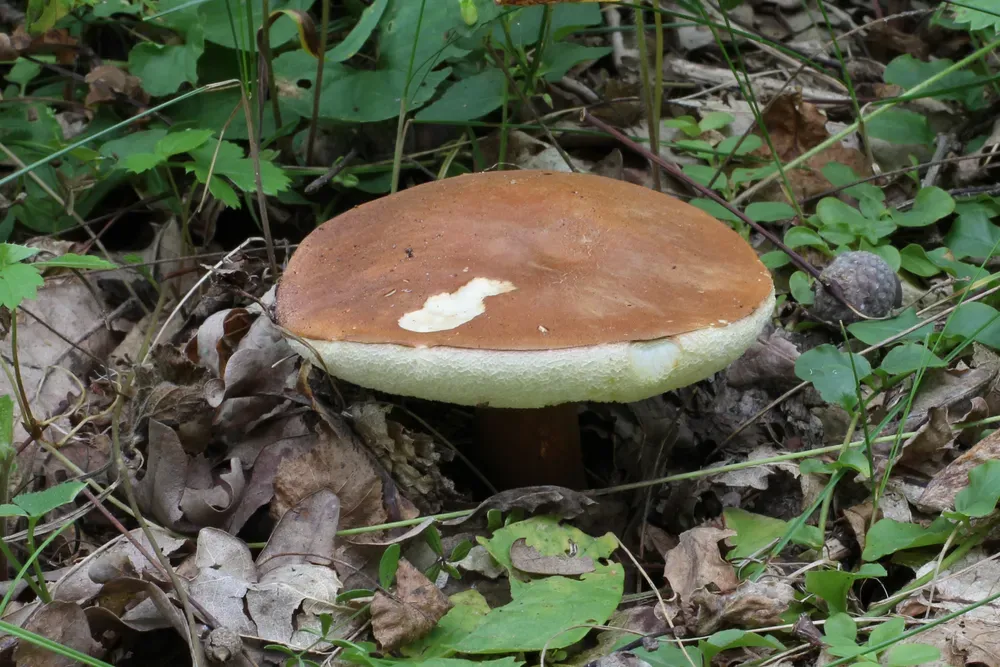
Chestnut boleteGyroporus castaneus
Expert-verifiedUpdated October 3, 2026
Passport
- Edibility
- Edible
- Season
- Jul — Oct
- Hymenophore
- Pored
- Cap color
- Brown
- Size
- Small (up to 5 cm)
- Smell
- Pleasant
- Reviewed
- Yes ✓
Quick answers
Where to look?
Deciduous forest, Mixed forest
When does it appear?
Jul — Oct
Active months: July, August, September, October.
How to recognize it? Three signs
- Cap color: Brown, Orange
- Cap shape: Convex
- Smell: Pleasant
Fruiting season
July – October
Description
Chestnut bolete, or simply the "chestnut mushroom" (Gyroporus castaneus), is a small but very recognizable bolete of oak forests. It is often mistaken for a young porcini because of its similar color, but the chestnut bolete is much smaller, with a slender stem and a distinctive "hollow" interior. It grows throughout Ukraine, from Zakarpattia to Slobozhanshchyna, but is never abundant anywhere: it turns up singly or in small clusters.
It is a mycorrhizal species that prefers oak and beech. It loves sandy, poor, slightly acidic soils, so in Polissia and on forest-steppe woodland edges it is found regularly. Because it produces few fruiting bodies and is so beautiful, it is listed in the Red Data Book of Ukraine — picking wild specimens is prohibited. In practice, the mushroom is so rare that it would be hard to fill a basket by chance.
The taste is sweetish, with nutty notes, reminiscent of a well-ripened chestnut. The flesh is firm and does not change color when cut (unlike the cornflower bolete). In Western Europe it is valued as a delicacy: fried or pickled, though it dries poorly because it is brittle. In Ukraine, to repeat, we do not pick it in the wild — we photograph it and log our finds on iNaturalist.
Cap
Cap 3–12 cm, hemispherical in young mushrooms, then flat-convex or flat. Color chestnut-brown, reddish-brown, sometimes lighter — hazel. The surface is dry, finely felty to the touch, and may crack slightly in old mushrooms. The skin does not peel off.
Hymenophore
Pore surface of tubes, white at first, then yellowish to straw-colored. Pores small and round. They do NOT turn blue when pressed — this is the key difference from its relative Gyroporus cyanescens.
Stem
Stem 4–8 cm tall, 1–3 cm thick, cylindrical or slightly tapering toward the base. Same color as the cap or a little lighter. The surface is finely felty. The most distinctive feature: in mature mushrooms the stem is hollow inside, with uneven chambers — like dried bamboo.
Flesh
Flesh white, brittle, does NOT change color when cut (an important feature — other boletes with a chestnut cap often turn blue or pink). Hollow in the stem of mature mushrooms.
Smell
The smell is faint, pleasantly mushroomy with a hint of nut. The taste is mild, sweetish, reminiscent of a real chestnut.
›Scientific synonyms (1)
Boletus castaneus
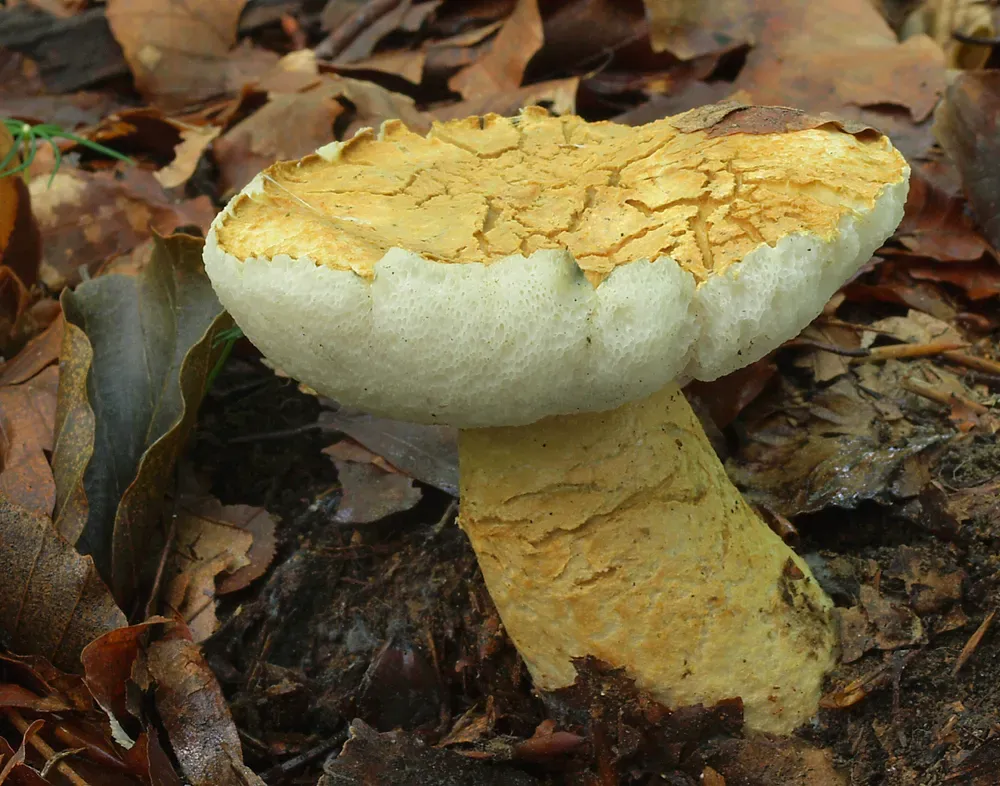
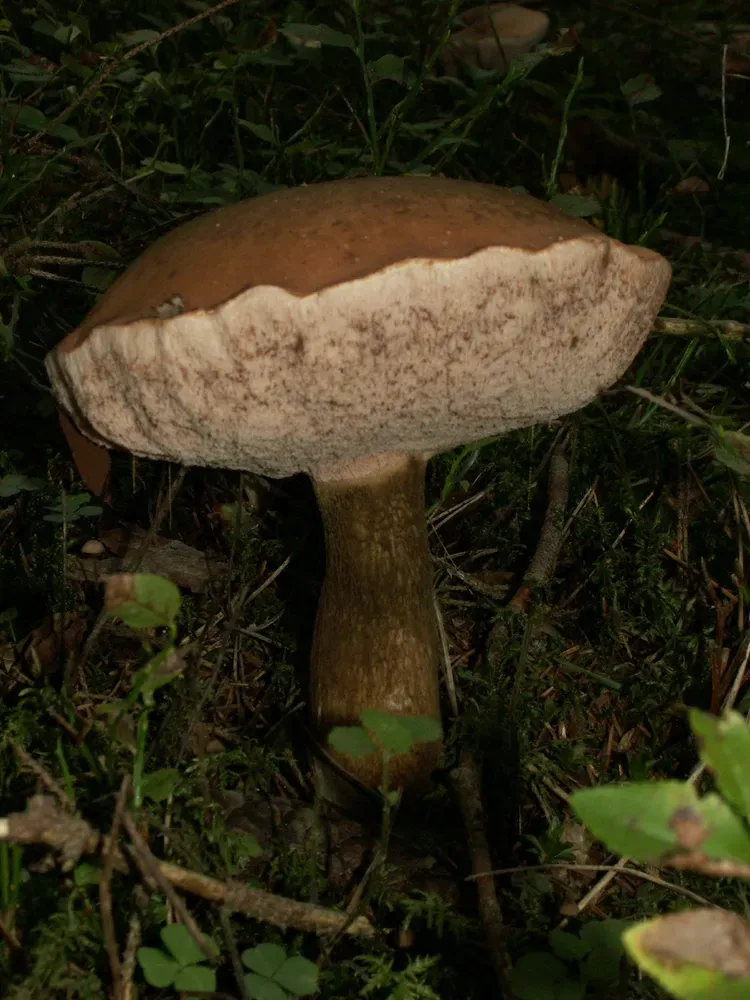
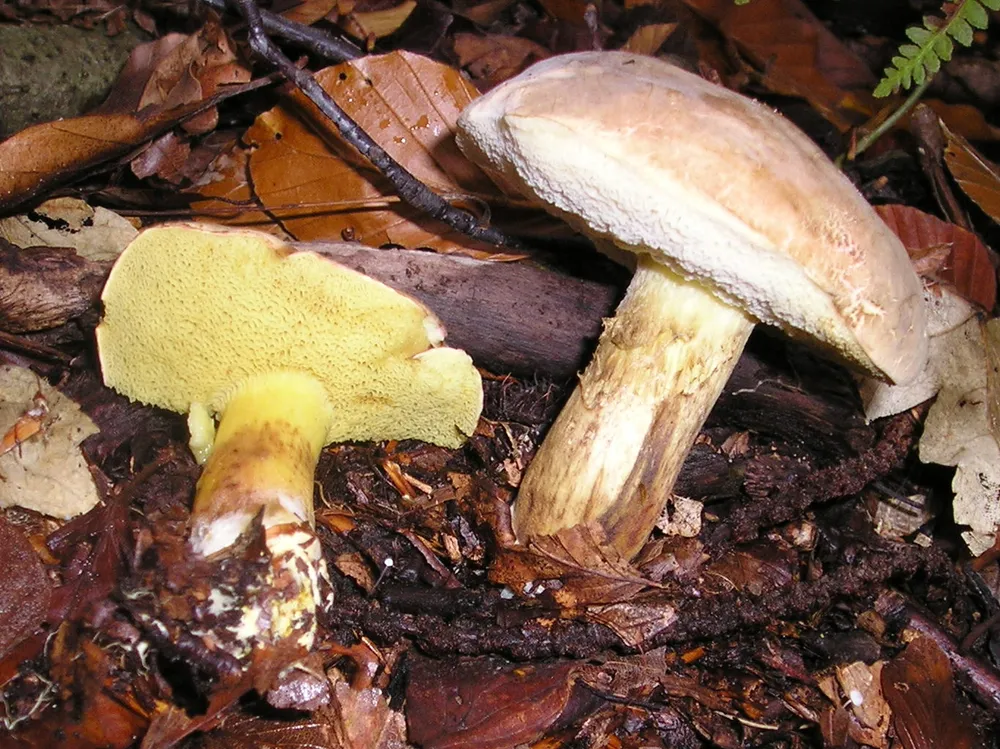
Lookalikes
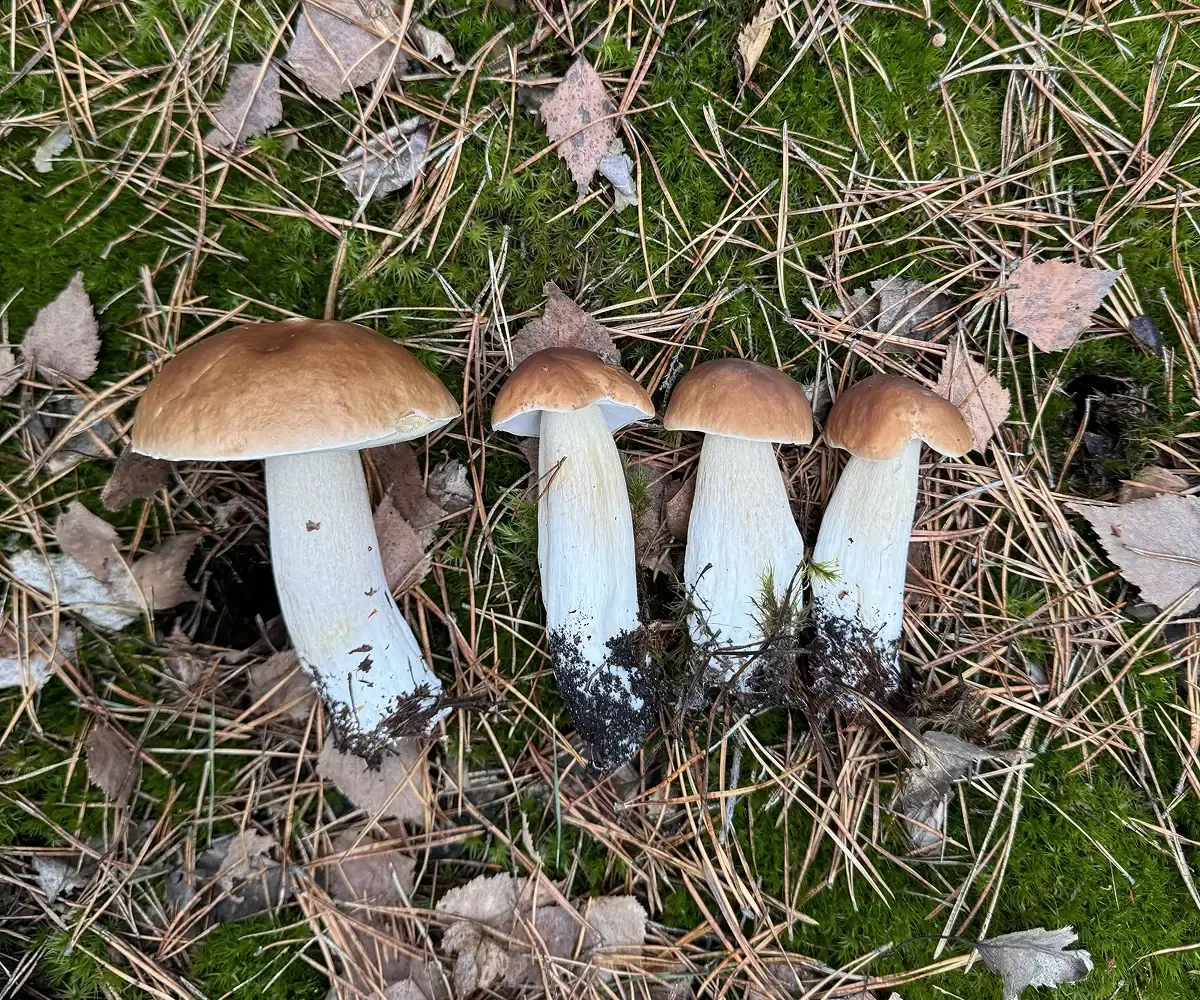
Related species
Mushrooms of the same genus and habitat — to study side by side and never mix up.
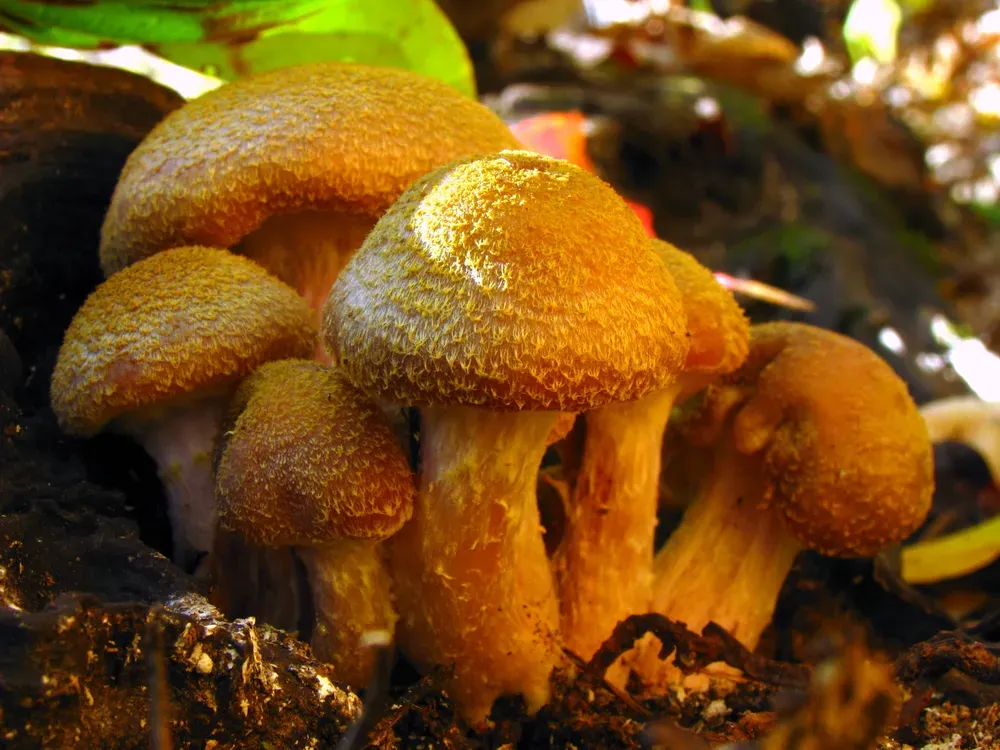
Bulbous honey fungus
Armillaria gallica
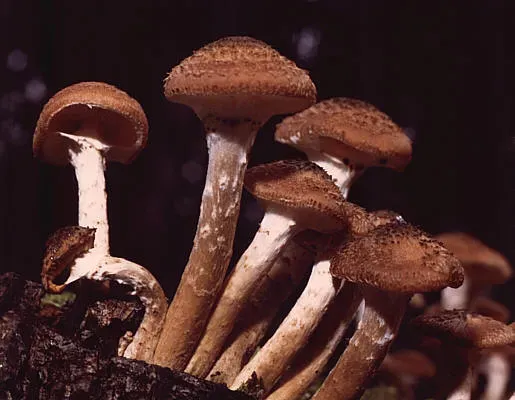
Dark honey fungus
Armillaria ostoyae
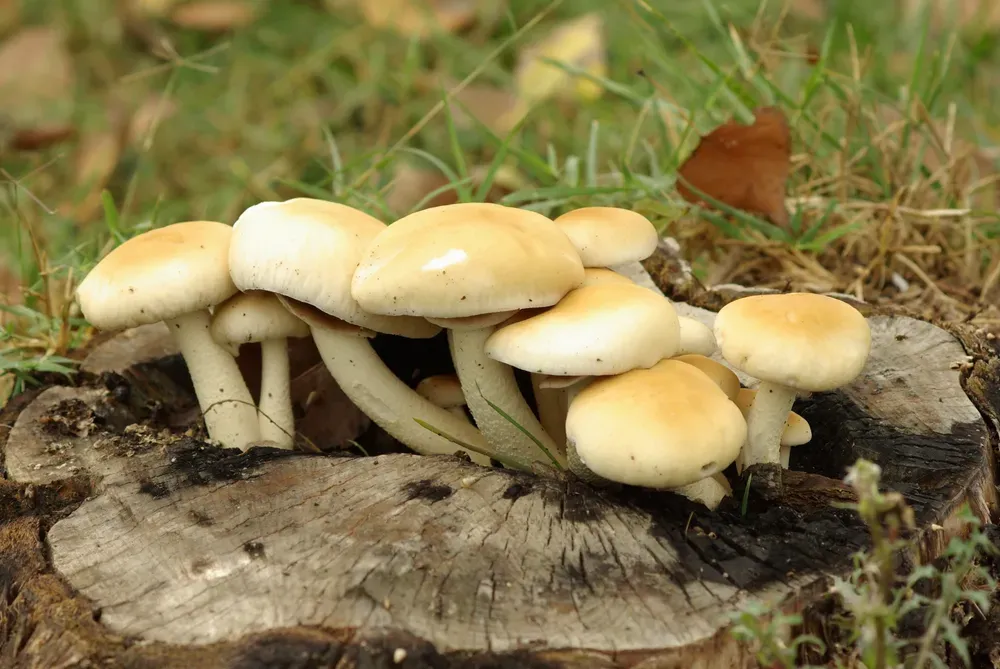
Poplar fieldcap
Cyclocybe aegerita
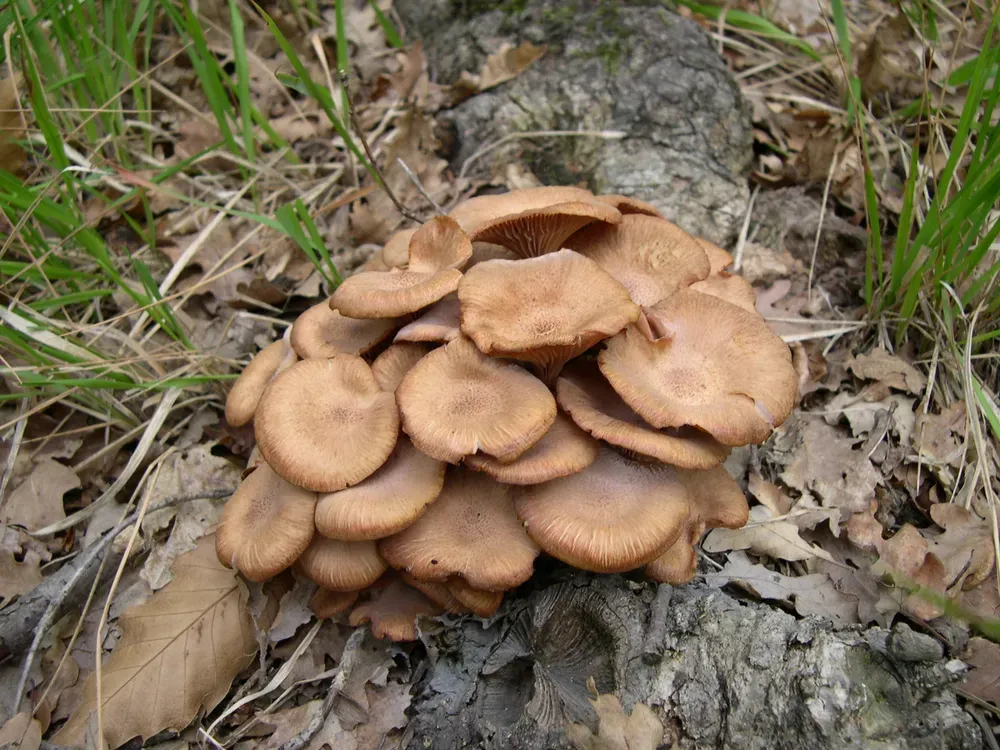
Ringless honey fungus
Desarmillaria tabescens
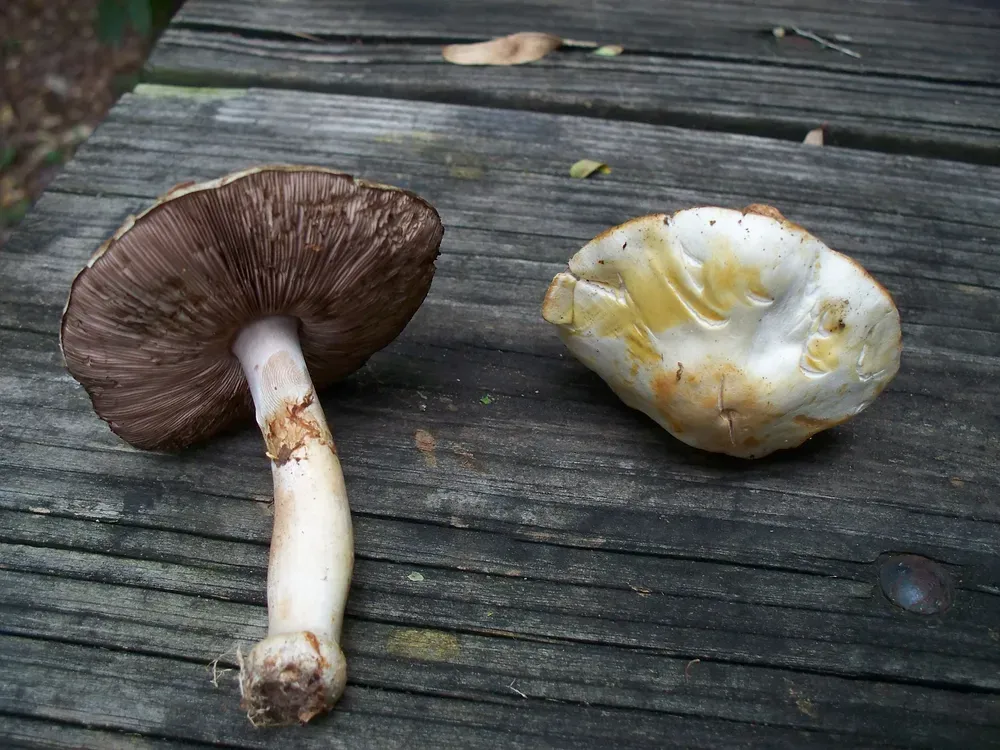
Agaricus abruptibulbus
Agaricus haemorrhoidarius
Agaricus haemorroidarius
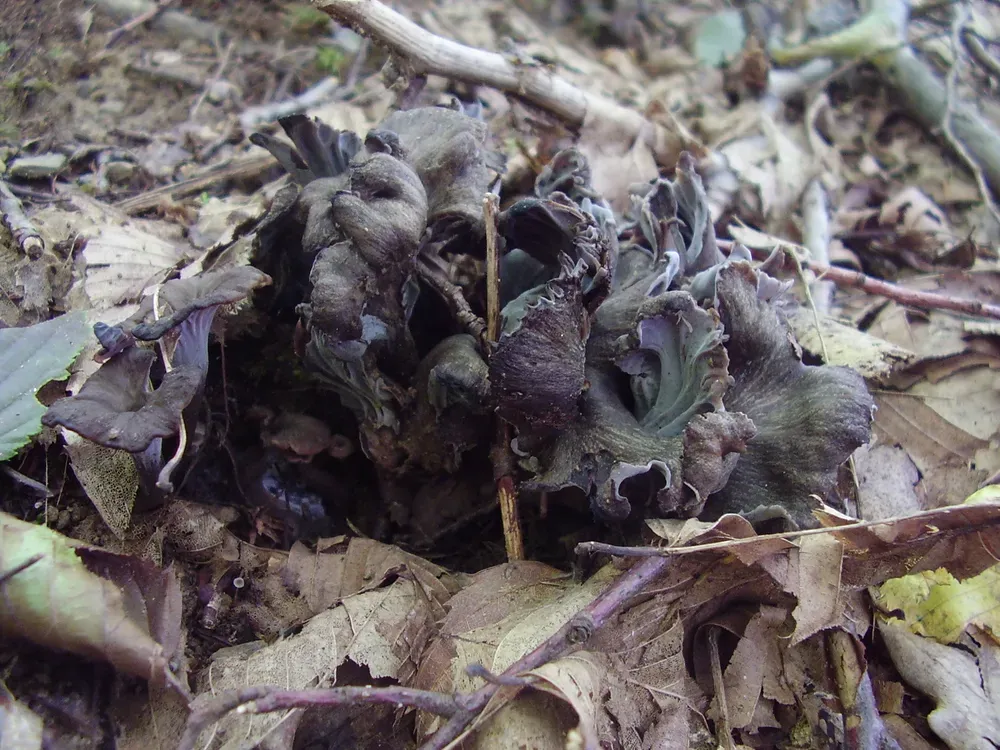
Ashen chanterelle
Cantharellus cinereus
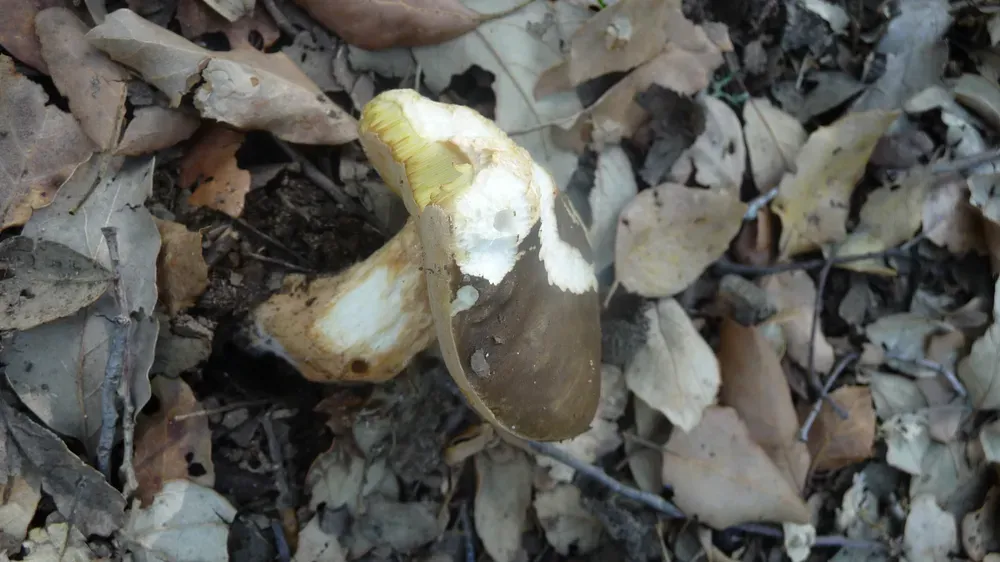
Blushing bolete
Leccinum roseofractum
Frequently asked questions
Can it be confused with porcini?
Yes, at first glance they look alike. But the chestnut bolete is much smaller (up to 12 cm), its stem is thinner, the cut flesh is NOT cream but white, and there is no net on the stem. If the stem is hollow, it is definitely a chestnut bolete. Porcini always has a solid stem.
Is it allowed to pick it in Ukraine?
No. The species is listed in the Red Data Book of Ukraine. If you find one, leave it where it grows, photograph your find and report it via iNaturalist Ukraine.
Where to look in Ukraine?
Oak and oak-beech forests on sandy, slightly acidic, poor soils. Most often in Polissia (Chernihiv and Kyiv regions) and the Forest-Steppe, with occasional finds in the Carpathians. It does not grow in the steppe or in pure conifer forests without broadleaf trees.
When does it fruit?
July to October, peaking in August–September. It loves warm, moderately moist spells after rain. In dry years it may not appear at all.
How does it differ from the cornflower bolete?
The chestnut bolete's cap is chestnut-brown, the cornflower bolete's is creamy yellow. Most importantly: the chestnut bolete does NOT turn blue when cut, while the cornflower bolete instantly turns bright blue. Both are close relatives, and both are edible.
Which trees does it form mycorrhiza with?
Mostly with oak (Quercus robur, Q. petraea) and beech, less often with chestnut, hornbeam and birch. It does not occur in conifer forests without broadleaf trees.
Does the flesh turn blue when cut?
No, the flesh of the chestnut bolete stays white when cut. If your chestnut-capped mushroom quickly turns blue, it is a different species — possibly the cornflower bolete or another bolete. For the chestnut bolete, this is a mandatory negative feature.
Can it be confused with the bitter bolete?
The bitter bolete (Tylopilus felleus) has a darker net on the stem, and its flesh turns pinkish when cut. The chestnut bolete has no net at all, and its flesh is white. The simplest test is to touch a crumb to your tongue: the chestnut bolete is sweetish, the bitter bolete unbearably bitter.
Is Chestnut bolete edible or poisonous?
Does Chestnut bolete have gills or pores?
What does the cap of Chestnut bolete look like?
What does the stem of Chestnut bolete look like?
Sources
- [1]Вікіпедія (українська)
- [2]Атлас грибів України, Зеров Д.К. (1979)
- [3]MycoBank Database
- [4]Index Fungorum
- [5]GBIF
- [6]iNaturalist Ukraine