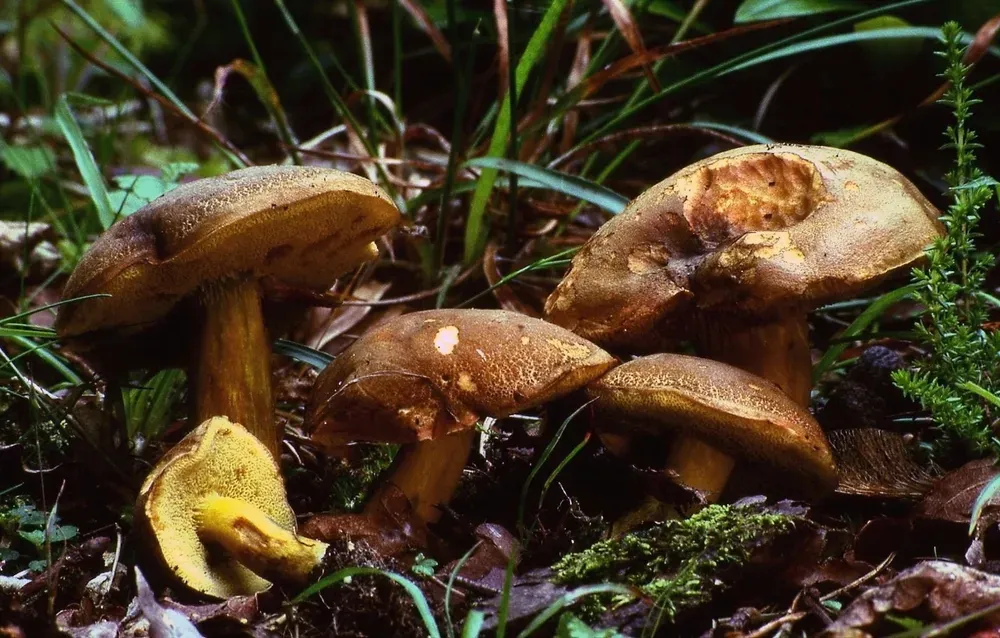
Sepia boleteXerocomellus porosporus
Expert-verifiedUpdated October 3, 2026
Passport
- Edibility
- Edible
- Season
- Jul — Oct
- Hymenophore
- Pored
- Cap color
- Brown
- Size
- Small (up to 5 cm)
- Smell
- Odorless
- Reviewed
- Yes ✓
Quick answers
Where to look?
Deciduous forest, Mixed forest
When does it appear?
Jul — Oct
Active months: July, August, September, October.
How to recognize it? Three signs
- Cap color: Brown, Olive, Cream
- Cap shape: Convex
- Smell: Odorless
Fruiting season
July – October
Description
The sepia bolete (Xerocomellus porosporus) is one of the less conspicuous and less often recognized relatives of the red cracking bolete. People often mistake it for just a “variation” of that bolete, missing the finer anatomical details. The species name “porosporus” points to a unique feature: the spores of this species have an apical pore (opening), visible only under a microscope. So identifying it in the field is hard without chemical or microscopic analysis.
In Ukraine it grows in broadleaf and mixed woods with oak, hornbeam and beech. It occurs throughout the forest zone, but less often than the red cracking bolete or the suede bolete. It doesn’t fruit abundantly — single specimens or small groups of 2–3.
Edible, but of modest culinary value — the flesh is watery, the taste neutral, and it turns bland when cooked. It is of more interest to those who collect the Boletaceae family and are learning to tell close bolete species apart. Before cooking, it’s worth boiling it for 5–10 min and discarding the first water. Best used in mixed mushroom dishes together with more aromatic species.
Cap
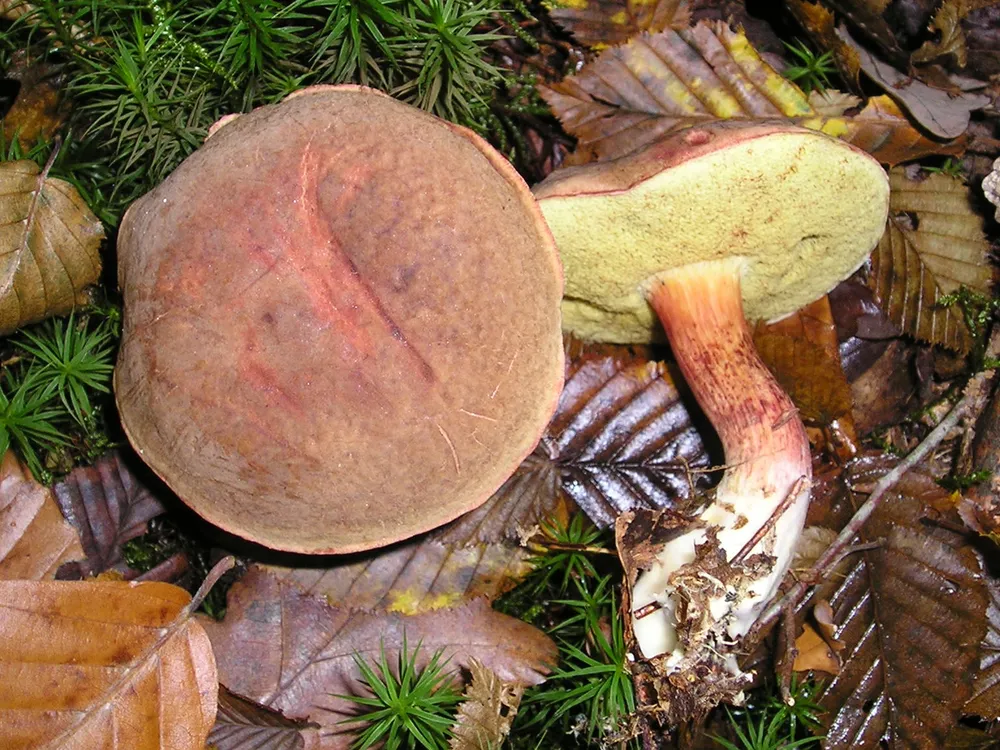
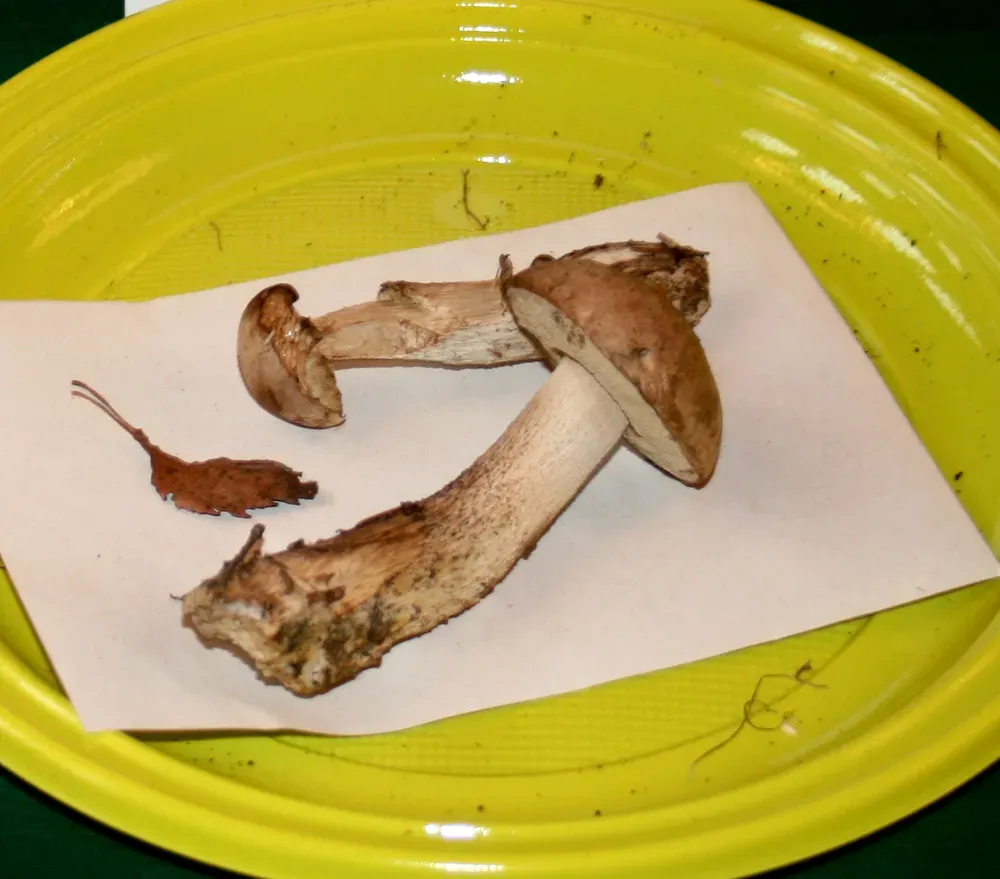
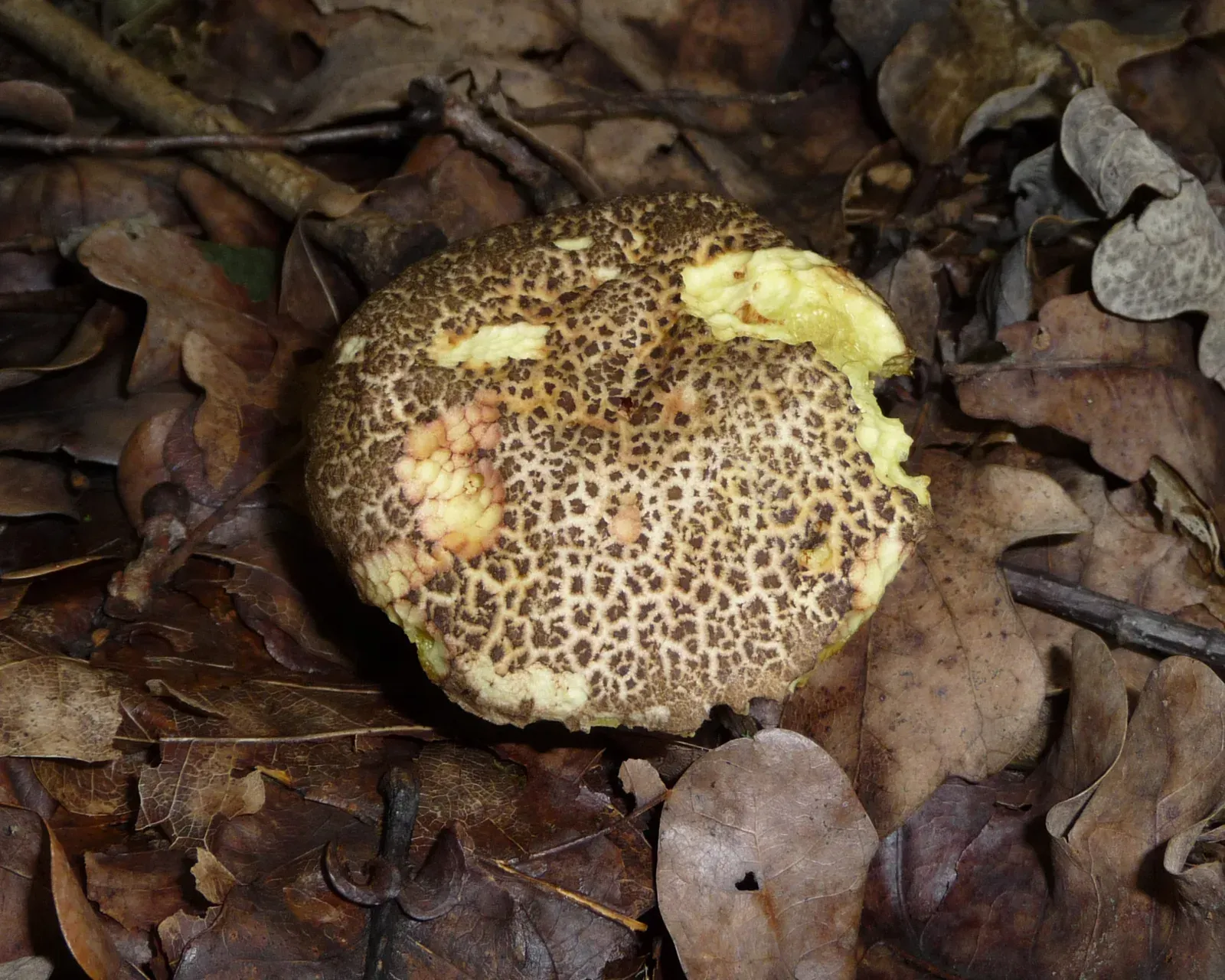
Cap up to 8 cm, flat-convex in young mushrooms; in mature ones often with distinctive radial and crosswise cracks on the surface (like the red cracking bolete). The color varies: beige, dull brown, olive, sometimes with a pinkish tint in the cracks. Surface matte, finely fibrous.
Hymenophore
The pore surface is tubular, with a small notch near the stem. Lemon yellow, olive brown in mature ones. Pores small, angular, 0.2–0.5 mm. They quickly turn blue when pressed.
Stem
Stem 3–8 cm tall, 0.5–1.5 cm thick, cylindrical, fragile. Olive yellow at the top, with reddish or orange spots or zones lower down. Darkens to brown at the base.
Flesh
The flesh is pale lemon yellow in the cap and chrome yellow in the upper stem. It turns blue when cut, especially in the tubes and the stem — this is a normal reaction. The texture is watery, cottony in mature ones.
Smell
The smell is faint, mushroomy, with no distinct notes. The taste is mild, neutral and watery.
›Scientific synonyms (2)
Boletus porosporus Imler ex Watling (1968), Xerocomus porosporus Imler
Lookalikes
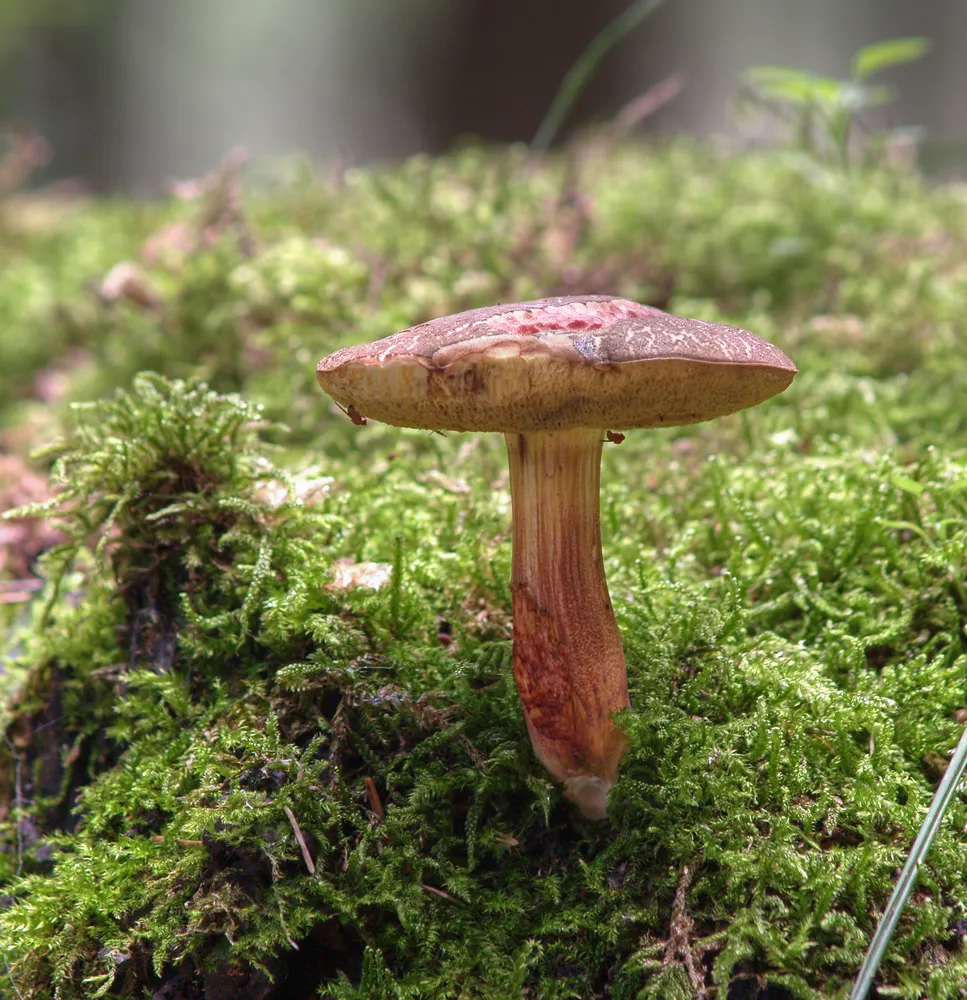
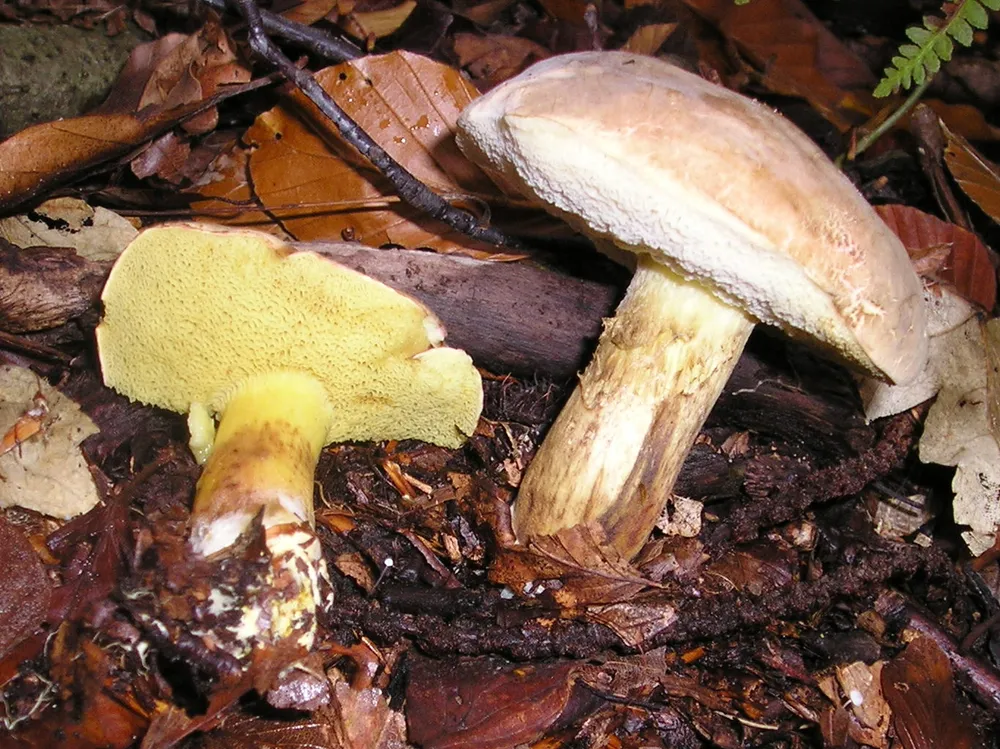
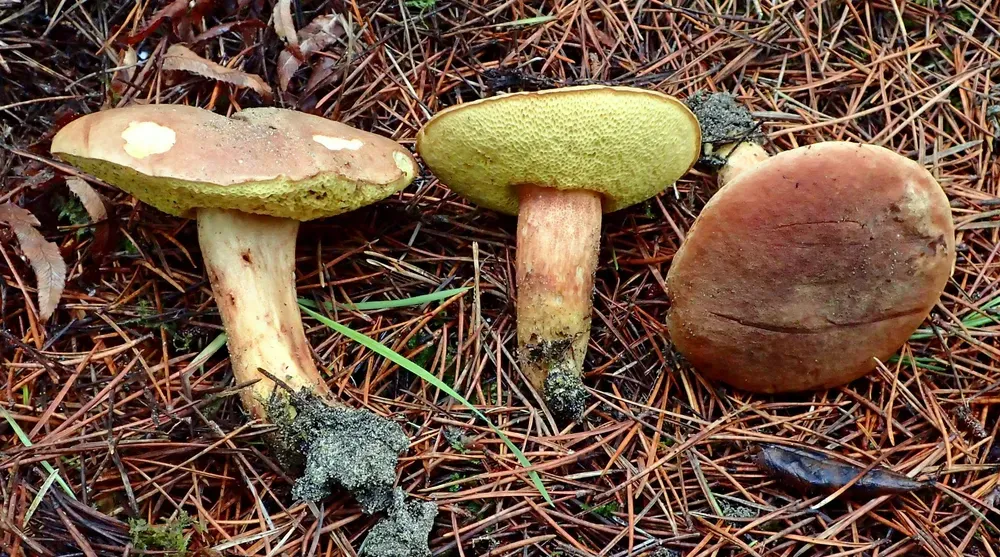
Related species
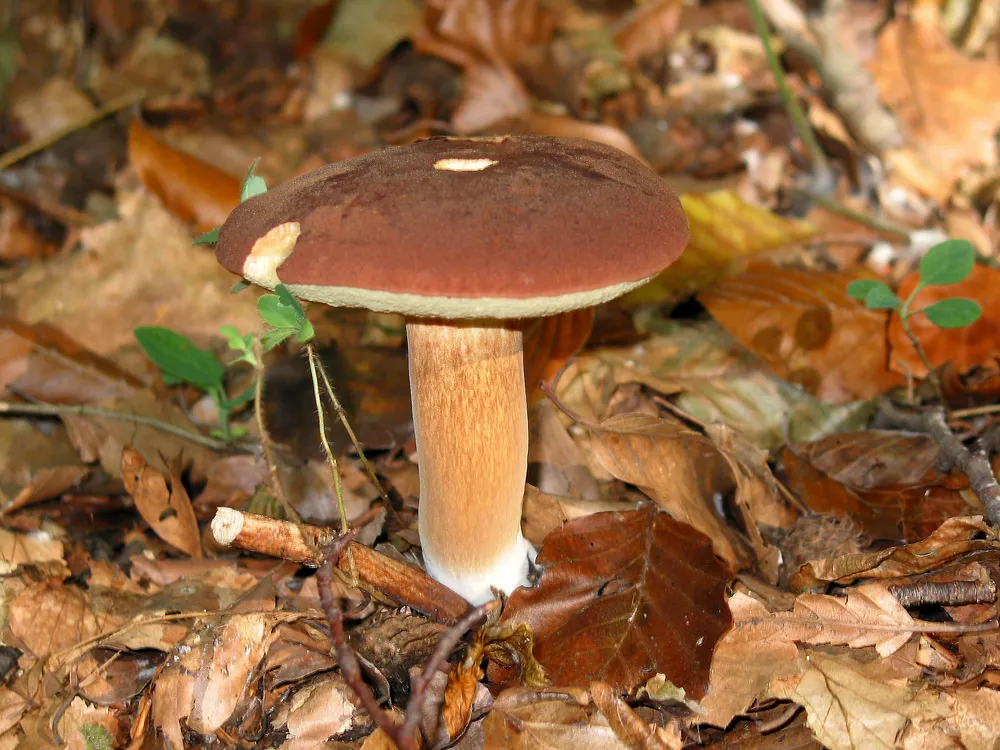
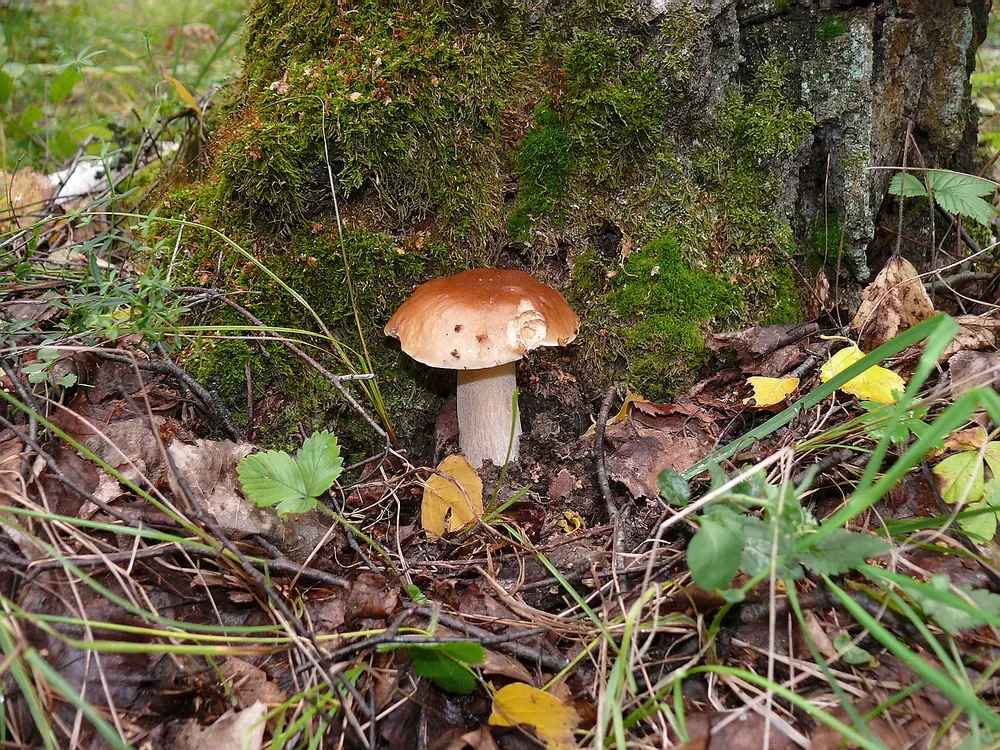
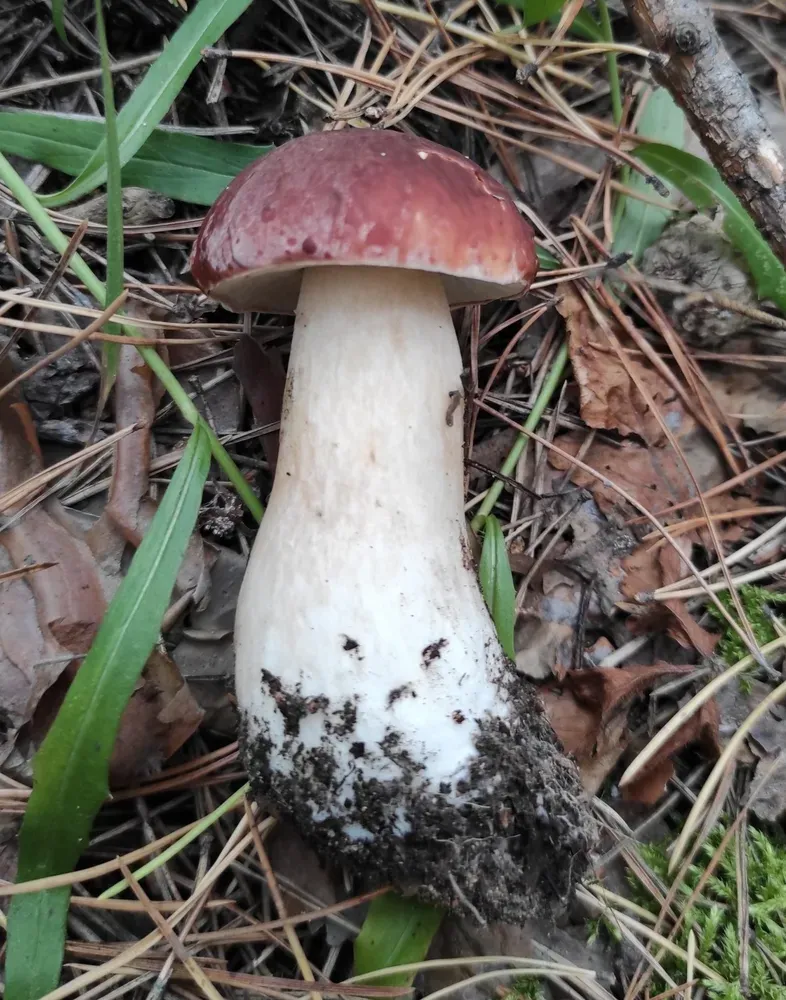
Mushrooms of the same genus and habitat — to study side by side and never mix up.
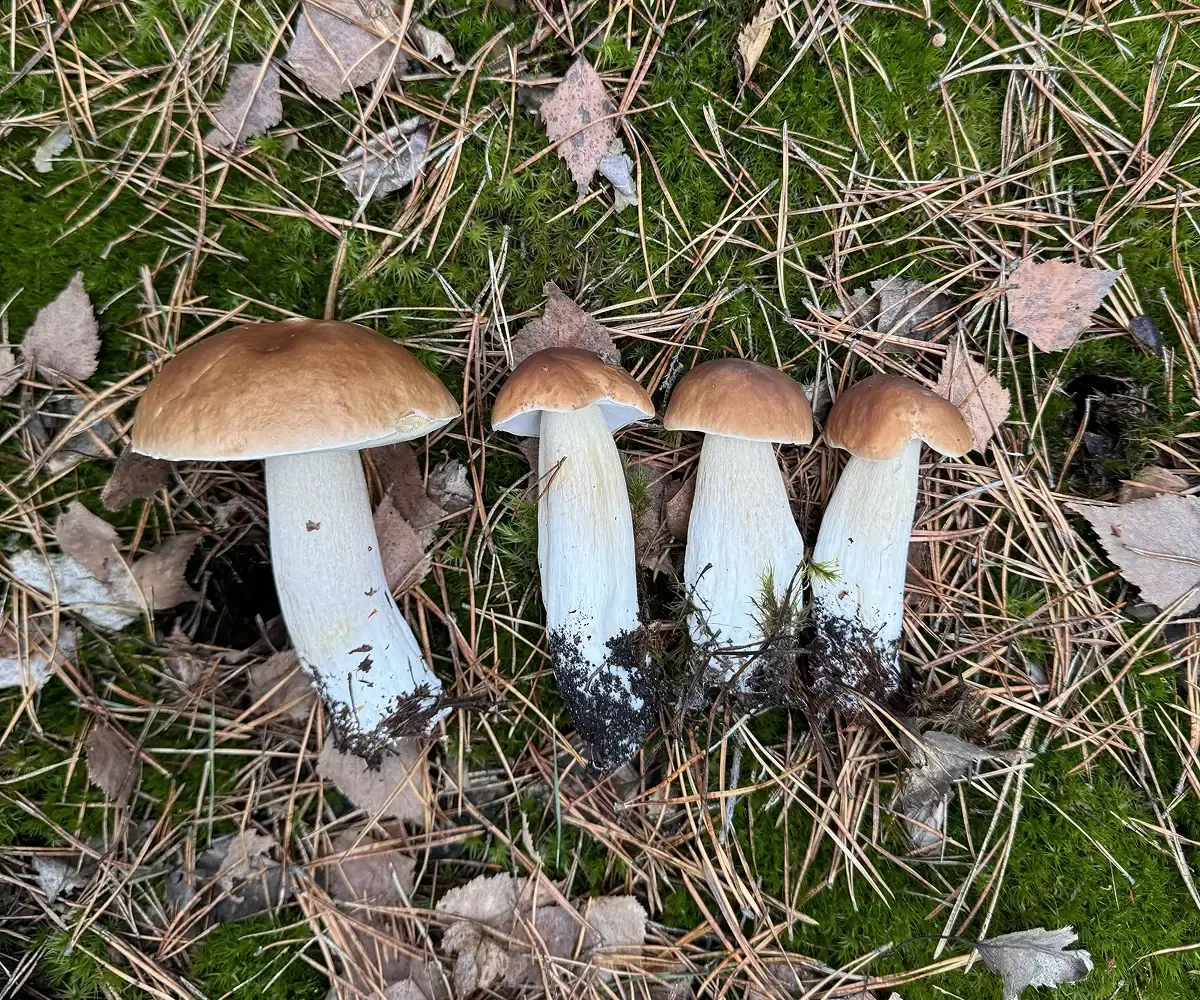
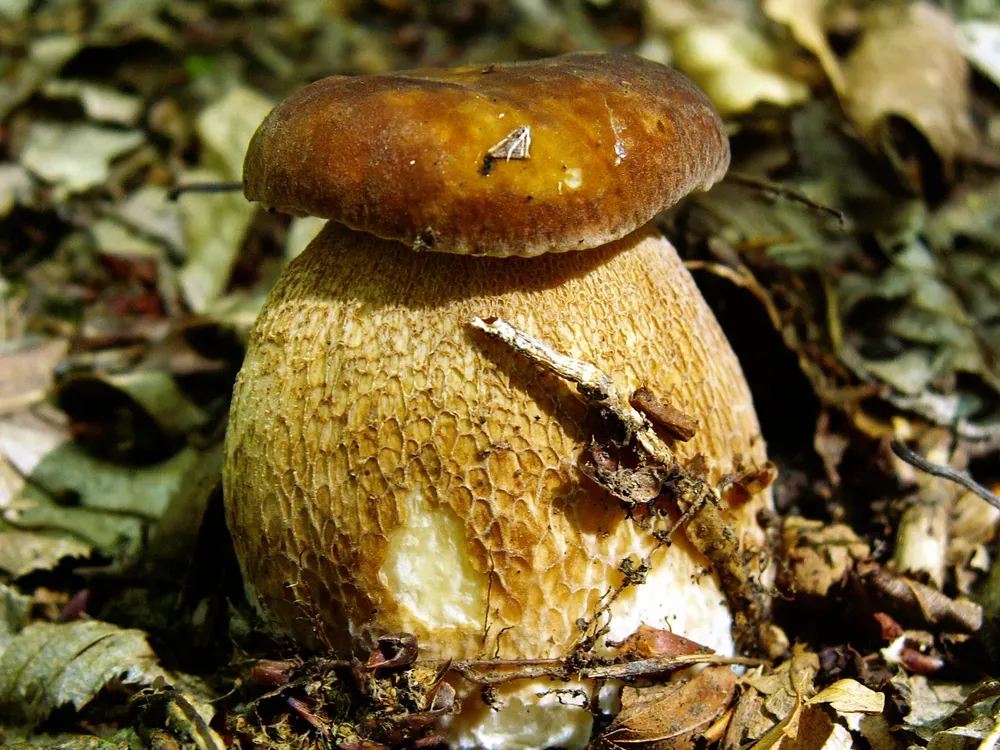
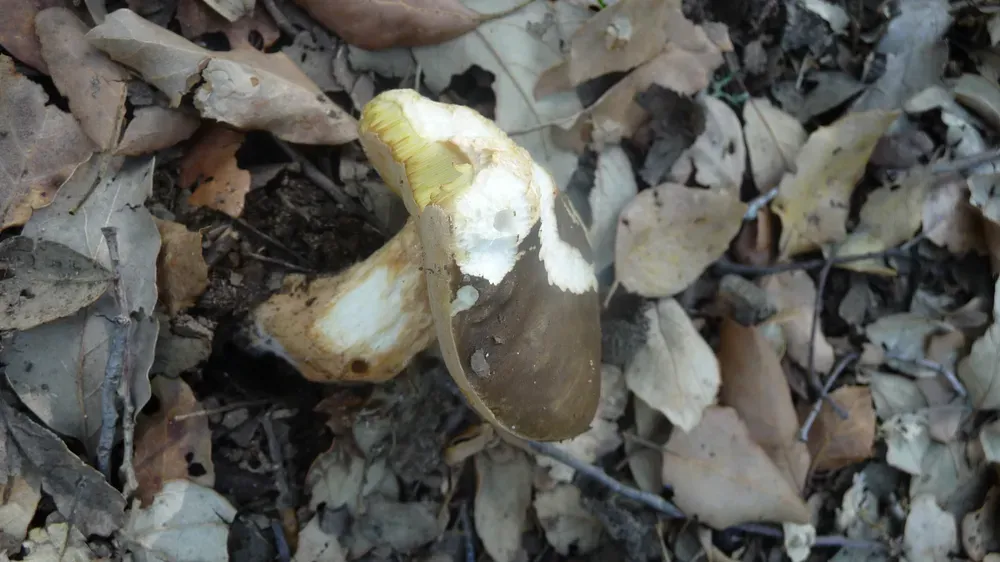
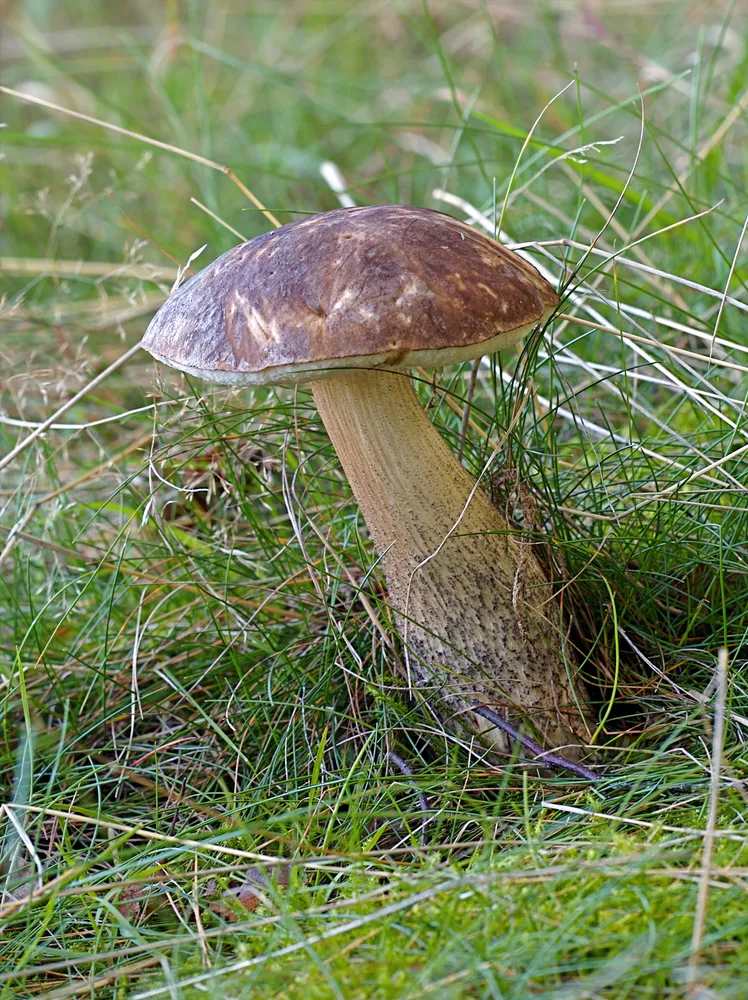
Related reading
Frequently asked questions
Is it safe that it turns blue?
Yes. Bluing when cut is a normal reaction in many boletes (Xerocomellus boletes, Gyroporus cyanescens, lurid boletes). It is not a sign of toxicity, just pigments oxidizing. The blue color disappears with cooking.
Are there dangerous look-alikes?
Among Xerocomellus and related boletes in Ukraine there are almost no dangerous look-alikes. Just avoid mushrooms with RED pores (Rubroboletus) — among them is the devil’s bolete. The sepia bolete has yellow pores — safe.
Where to look in Ukraine?
Broadleaf and mixed woods with oak, hornbeam and beech. Throughout the forest zone and the Forest-Steppe. Single specimens, never abundant. Less common in conifer forests.
When does it fruit?
Summer and fall, peaking in August–September. In very dry years it turns up less often. Like all these boletes, it gets active after heavy rain.
How is it different from the red cracking bolete?
Honestly — in the field it’s very hard to tell them apart. Both have cracked caps, both have a yellow pore surface, both turn blue. Porosporus is darker on average and has an apical pore in its spores (visible only under a microscope). For everyday foraging you don’t need to tell them apart — both are safe and both are of middling quality.
Which trees does it form mycorrhiza with?
Mainly oak, beech and hornbeam. Moderately warm woods. Less common in northern regions. Almost absent from pure conifer forests.
How to cook it?
Clean and slice. Boil for 5–10 min and discard the first water (to make it less watery). Fry with onion as part of a mushroom mix — on its own it’s bland. You can dry it, but the aroma is weak. Pickling — the watery texture doesn’t hold its shape.
Is it worth looking for this species specifically?
For the ordinary forager — no. As a culinary mushroom — middling. As a collector’s find for those studying the genus Xerocomellus — interesting. Most foragers gather all these boletes together without sorting them into species — and that’s a perfectly fine strategy.
Is Sepia bolete edible or poisonous?
Does Sepia bolete have gills or pores?
What does the cap of Sepia bolete look like?
What does the stem of Sepia bolete look like?
Sources
- [1]Вікіпедія (українська)
- [2]Атлас грибів України, Зеров Д.К. (1979)
- [3]MycoBank Database
- [4]Index Fungorum
- [5]GBIF
- [6]iNaturalist Ukraine