Matt boleteXerocomellus pruinatus
Expert-verifiedUpdated October 3, 2026
Passport
- Edibility
- Edible
- Season
- Jun — Oct
- Hymenophore
- Pored
- Cap color
- Brown
- Size
- Medium (5–15 cm)
- Smell
- Pleasant
- Reviewed
- Yes ✓
Quick answers
Where to look?
Deciduous forest, Mixed forest
When does it appear?
Jun — Oct
Active months: June, July, August, September, October.
How to recognize it? Three signs
- Cap color: Brown, Dark brown, Red
- Cap shape: Convex
- Smell: Pleasant
Fruiting season
June – October
Description
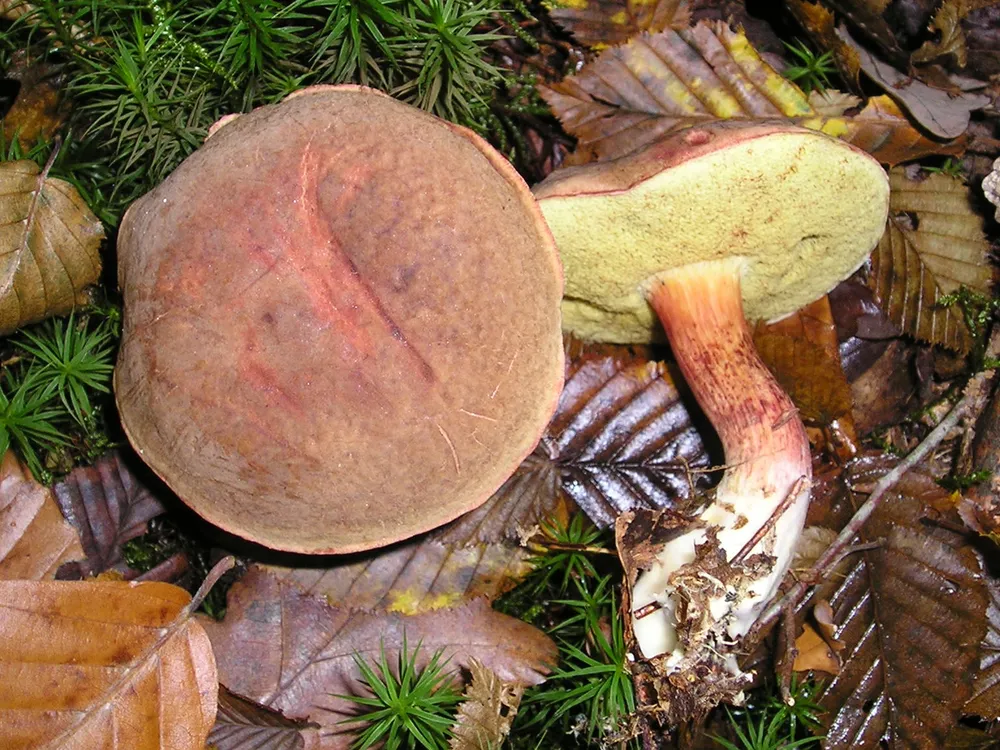
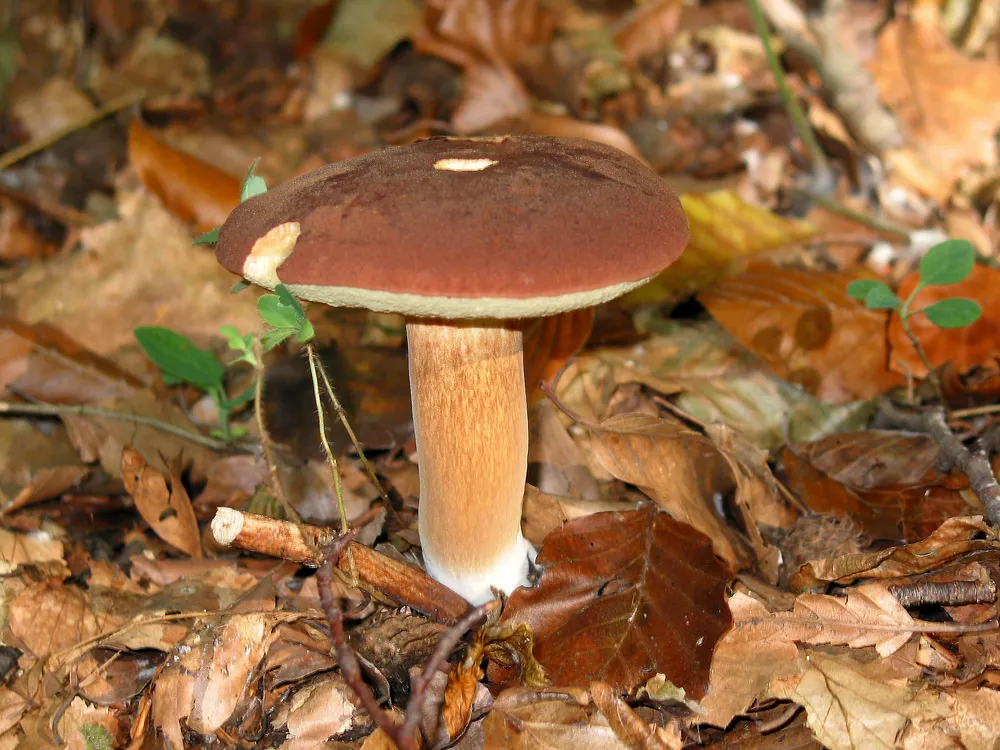
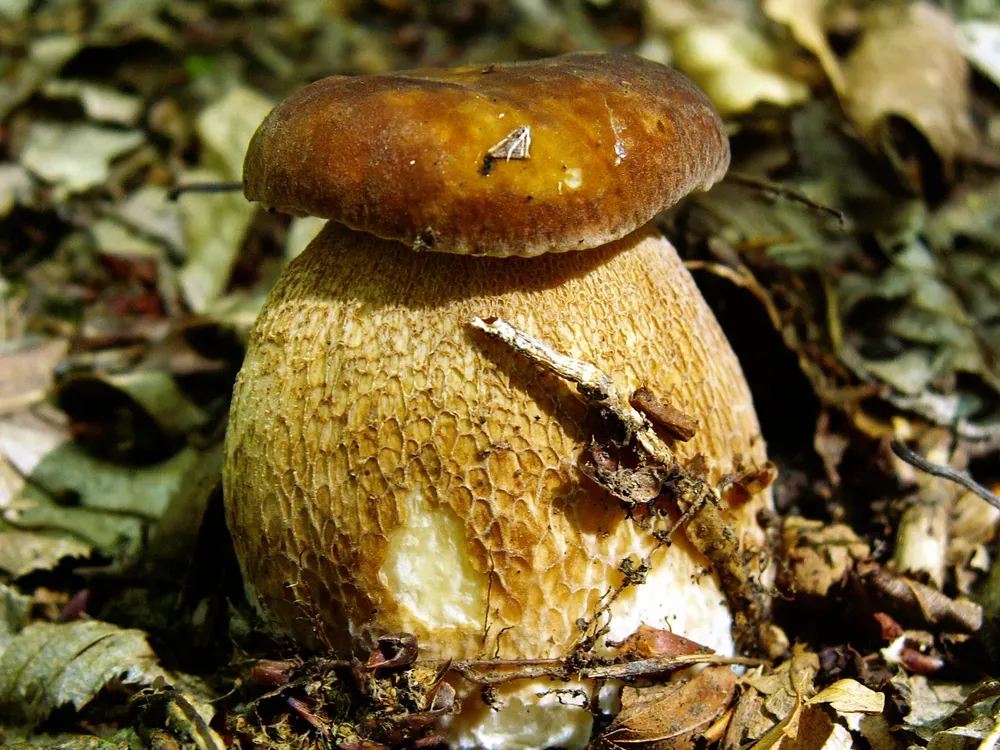
The matt bolete, known to science as Xerocomellus pruinatus, is a handsome bolete and a close relative of the red cracking bolete, from which it differs by its darker velvety cap that looks as if dusted with frost. The species name «pruinatus» (covered with bloom) points to exactly this characteristic grayish waxy bloom on the young cap. It is a mycorrhizal mushroom that partners with broadleaf trees, most often beech and oak, so you'll find it in those kinds of forests.
In Ukraine the matt bolete grows in broadleaf and mixed forests, preferring warmer beech and oak woodlands. Its fruiting season is long — from summer to late autumn, June through October; it appears singly or in small groups among moss and grass on forest edges and in clearings.
The matt bolete is an edible mushroom. Its yellow flesh has a pleasant mild taste and is good for frying, soups and drying. As in other boletes, the flesh turns slightly blue when cut, which is perfectly normal and no sign of toxicity. Young, firm specimens taste best, since with age the flesh, especially in the cap, becomes soft and watery. It's a familiar, if not elite, autumn find for foragers.
Cap
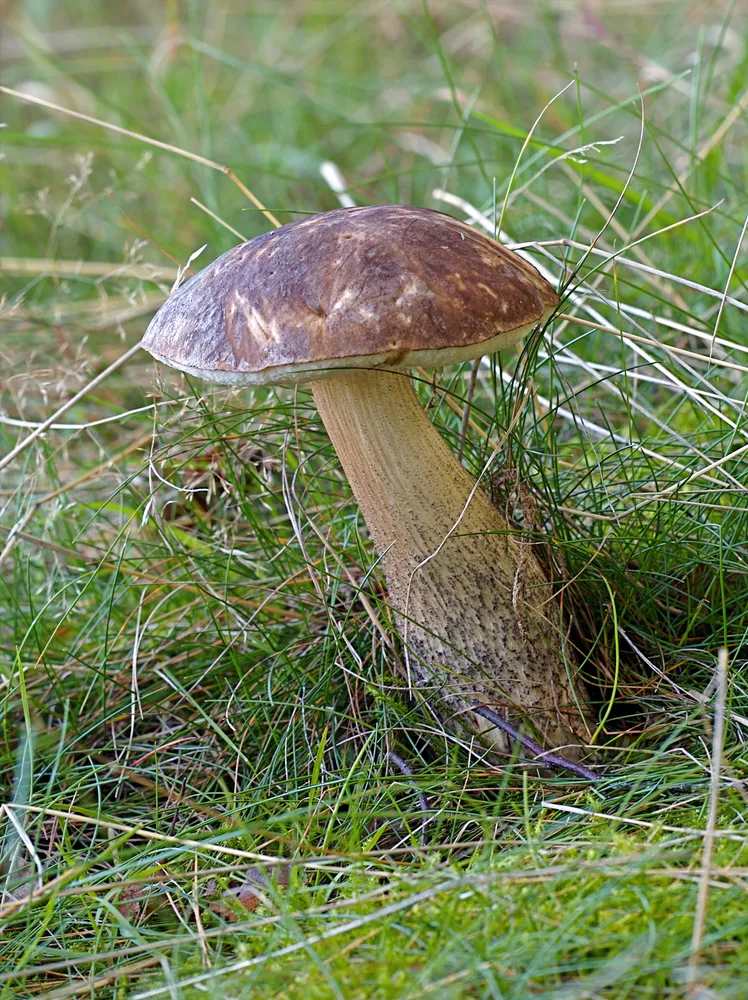
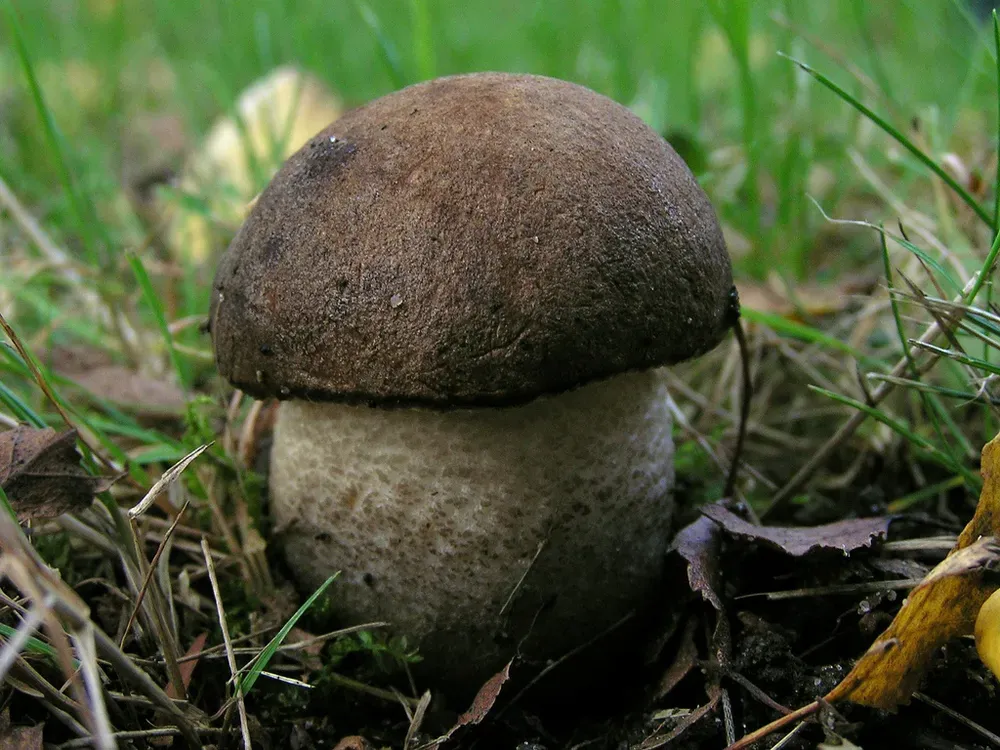
The cap of the matt bolete reaches 3 to 8 centimeters across. When young it is hemispherical, becoming convex and cushion-shaped with age. The surface is dry, velvety and finely fibrous, and in young mushrooms covered with a characteristic grayish waxy bloom, as if dusted with frost. The color is dark — chestnut-brown, reddish-brown or dark chocolate; with age the bloom disappears, and small cracks may appear on the surface, through which pinkish flesh shows.
Hymenophore
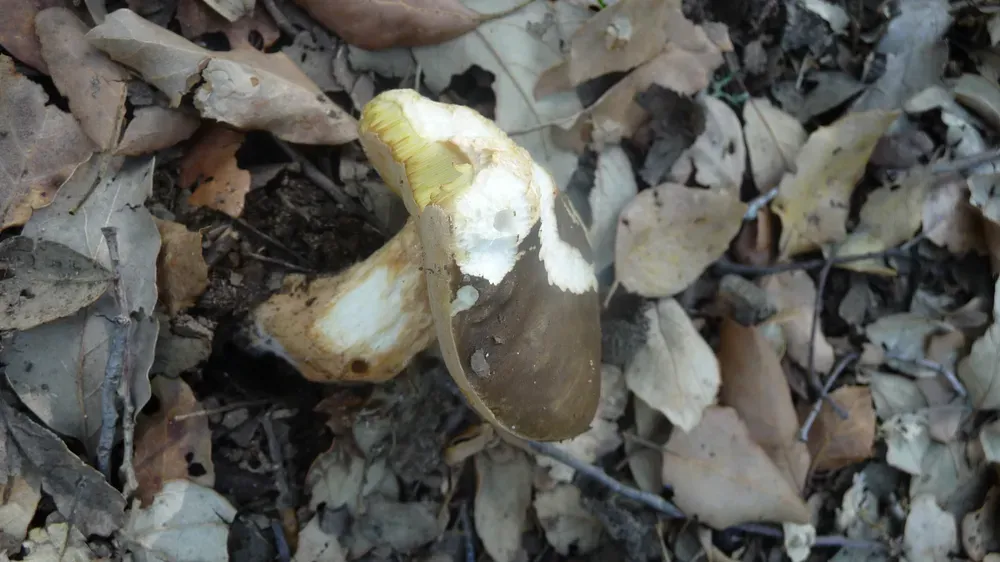
The hymenophore is made of tubes. The tubes are fairly long, with relatively wide angular pores, lemon-yellow or golden-yellow, turning olive-yellow with age. When pressed or damaged the pores turn blue, taking on a blue-green tint. The hymenophore separates easily from the cap flesh. Spore print olive-brown.
Stem
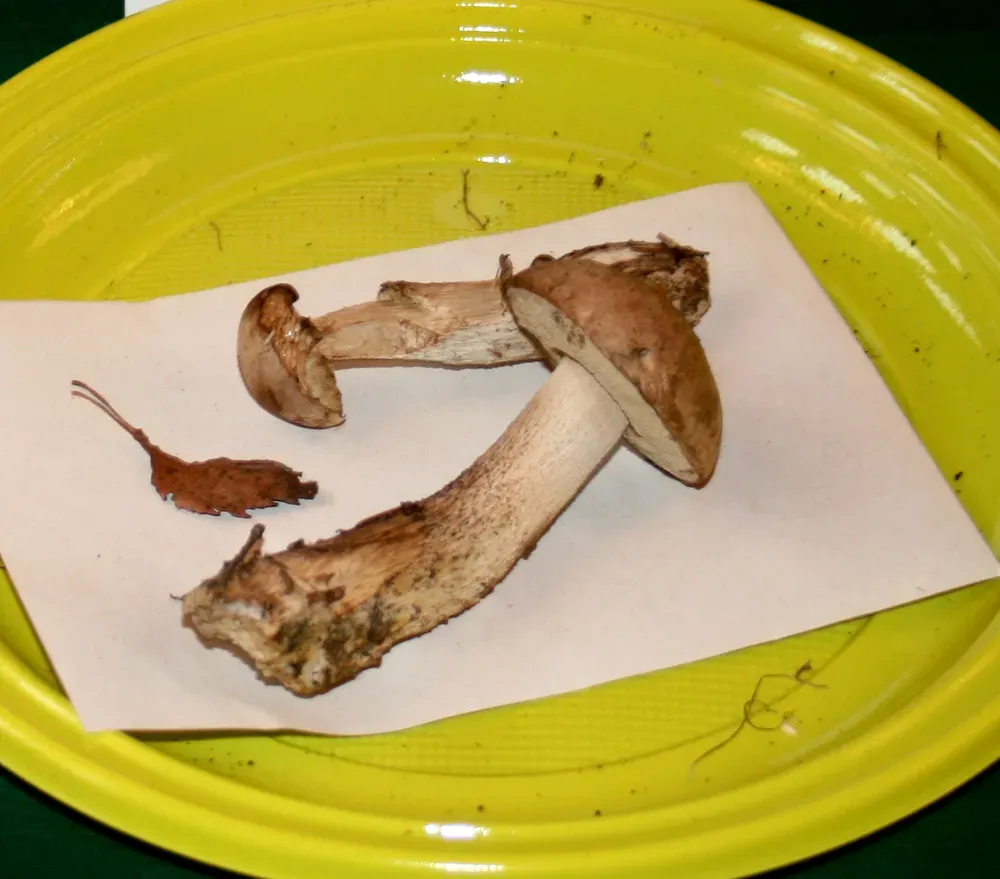
The stem is cylindrical, 4 to 8 centimeters tall, fairly slender and often narrowing toward the base. It is yellowish at the top and reddish-pink or brownish-red lower down, with a fine reddish fibrous pattern. When pressed, the surface may turn blue or brown. There is no volva and no ring. The reddish tones of the stem together with the dark bloomy cap set this species apart.
Flesh
The flesh is pale yellow or lemon, often pinkish under the cap skin and yellowish-red in the stem. When cut and exposed to air it turns noticeably, though not very strongly, blue, taking on a blue-greenish tint, and then fades. The taste is mild and pleasant, without bitterness. Because the flesh tends to go soft, pick young, firm mushrooms for the table.
Smell
The smell is faint, pleasant and typically mushroomy, with no sharp notes. Aroma isn't a defining feature, so for identification rely on the dark velvety bloomy cap, the yellow pores that turn blue, the reddish stem and the association with beech or oak.
›Scientific synonyms (2)
Boletus pruinatus Fr. & Hök (1835), Xerocomus pruinatus (Fr. & Hök) Quél. (1888)
Lookalikes
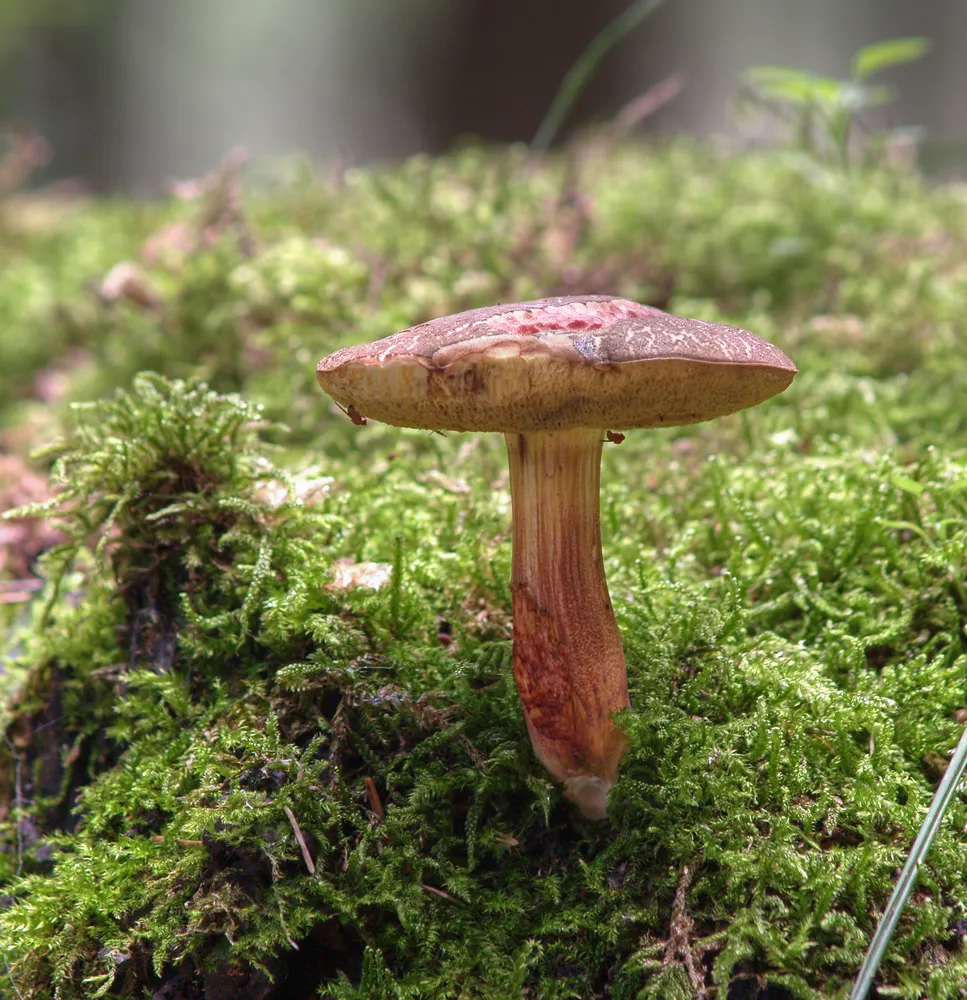
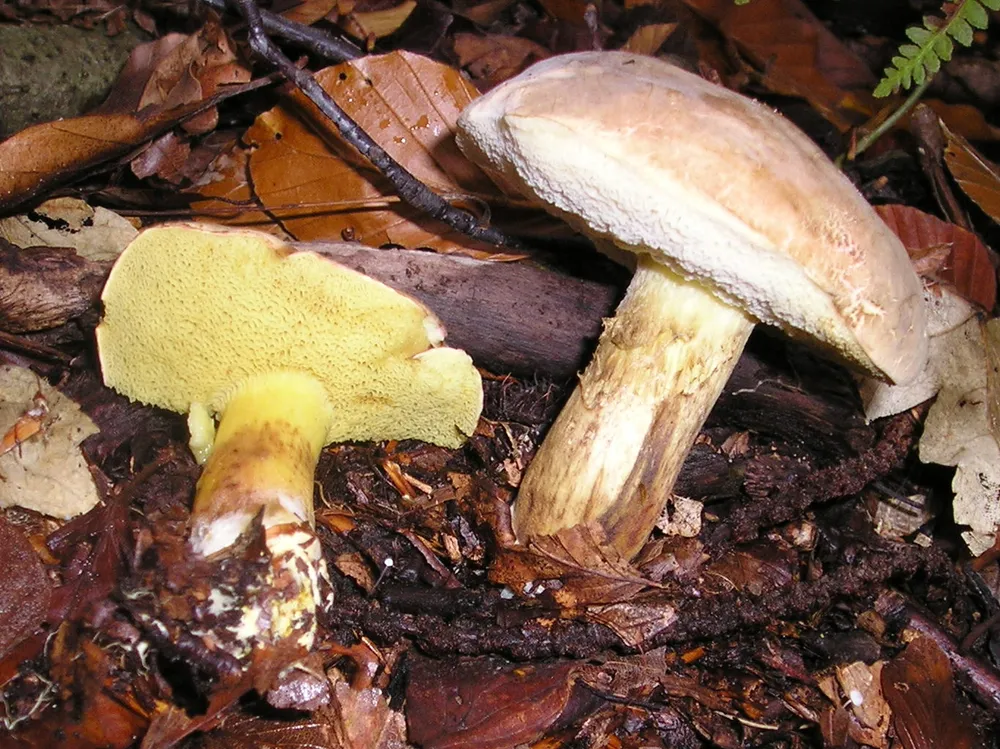
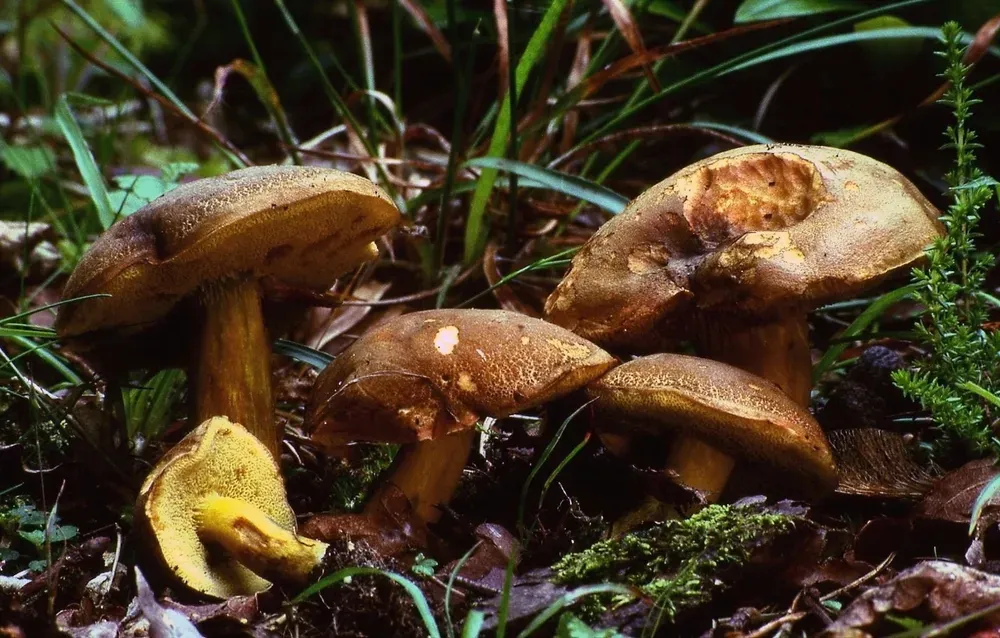
Related species
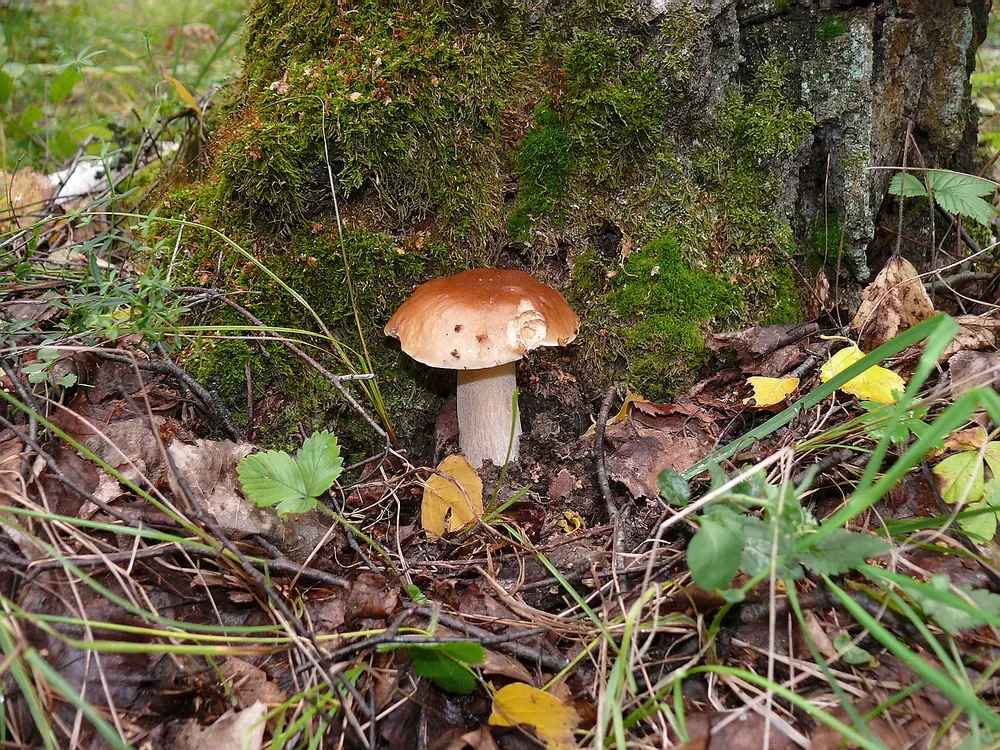
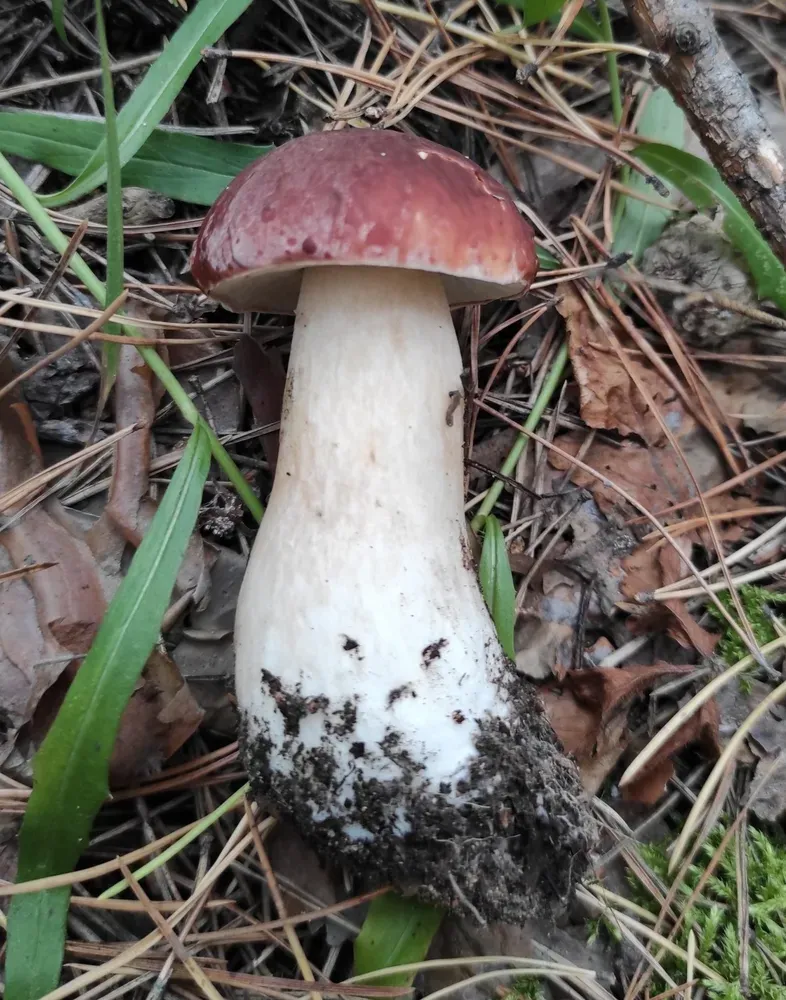
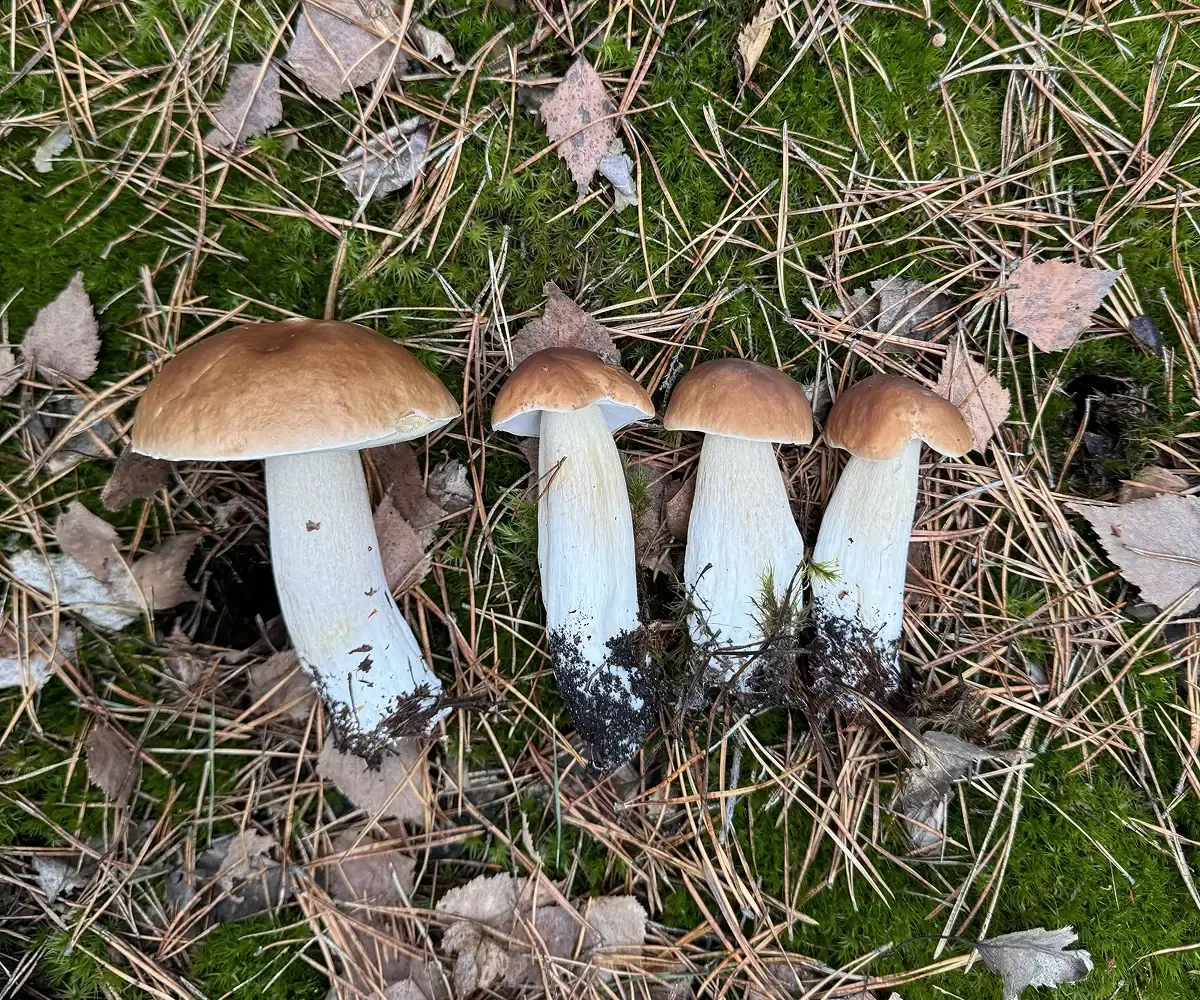
Mushrooms of the same genus and habitat — to study side by side and never mix up.
Frequently asked questions
Is it safe to eat?
Yes, without restrictions. One of the best boletes for cooking. Young mushrooms can be cooked without boiling first, and there's no need to peel the cap skin. Old specimens with soft caps are better skipped.
Why does the flesh turn so strongly blue?
It's a normal oxidation reaction of variegatic acid on contact with air. In the matt bolete it is especially pronounced — the flesh turns dark blue within seconds. It's not poison and not spoilage. In the pan the color disappears and the flesh turns a normal brown. This "engineering" surprise is a normal part of the genus.
Does it have dangerous look-alikes?
None serious. Its closest relatives (other boletes, slippery jacks, the bay bolete) are edible. The one real danger among dark pored mushrooms is the devil's bolete (Rubroboletus satanas) — poisonous, but very rare in Ukraine; it has red pores and a swollen reddish stem with a net. The matt bolete has yellow-olive pores and a thinner stem without a red net.
Where should you look for it?
In broadleaf and mixed forests — beech-hornbeam and oak woods, with some birch mixed in. It loves damp mossy spots, forest edges and shady slopes. In the steppe and southern forest-steppe it is less common — only in floodplain oak woods and parks.
Which regions of Ukraine is it found in?
The Carpathians (especially abundant in the primeval beech forests), Prykarpattia, Polissia, the forest-steppe. In the steppe — in floodplain forests and arboretums.
When should you look for it?
July — November, peaking in August–September. It survives the first frosts. It often appears later than the red cracking bolete.
How do you tell it apart from other dark boletes?
Matt bolete (X. pruinatus) — a dark chestnut cap with a whitish waxy bloom; it turns blue QUICKLY and strongly when cut. Bay bolete (Imleria badia) — a chestnut-brown cap without a waxy bloom; it turns blue more slowly and less strongly. Both are edible and tasty.
How should you cook it?
Just like porcini or the suede bolete. Fry with onion and sour cream. Pickle after boiling for 10 min, with bay leaf. Dry — string them on a thread in the shade, though the flesh may darken from the blue pigment as it dries; this doesn't affect the taste. Freeze — be sure to boil first.
Is Matt bolete edible or poisonous?
Does Matt bolete have gills or pores?
What does the cap of Matt bolete look like?
What does the stem of Matt bolete look like?
Sources
- [1]Вікіпедія (українська)
- [2]Атлас грибів України, Зеров Д.К. (1979)
- [3]MycoBank Database
- [4]Index Fungorum
- [5]GBIF
- [6]iNaturalist Ukraine