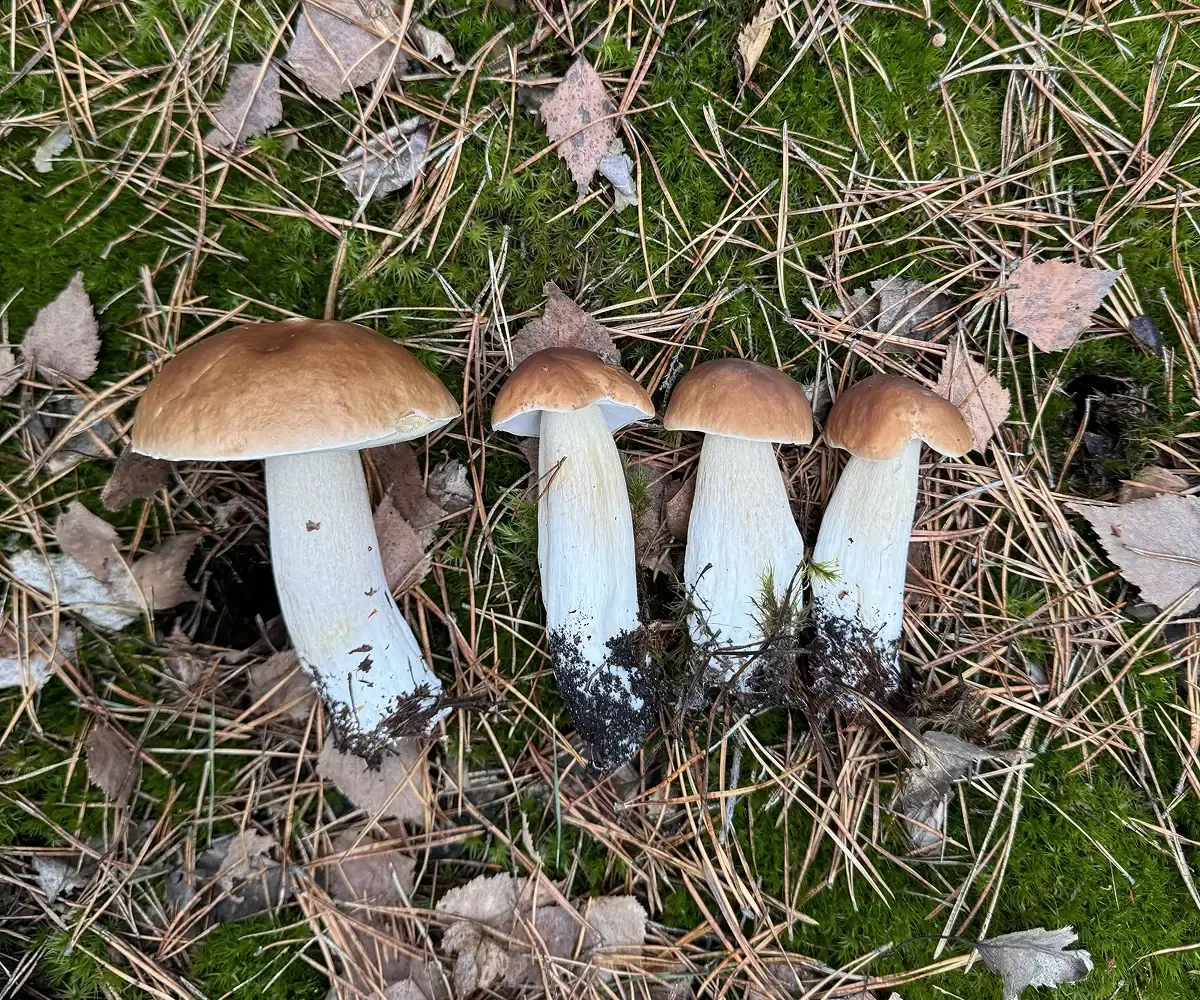
PorciniBoletus edulis
Expert-verifiedReviewed · May 17, 2026 · Updated October 3, 2026
Passport
- Edibility
- Edible
- Season
- May — Oct
- Hymenophore
- Pored
- Cap color
- Brown
- Size
- Large (over 15 cm)
- Smell
- Pleasant, mushroomy
- Reviewed
- Yes ✓
Quick answers
Where to look?
Conifer forest, Mixed forest, Deciduous forest
When does it appear?
May — Oct
Active months: May, June, July, August, September, October.
How to recognize it? Three signs
- Cap color: Brown, Chestnut, Dark brown
- Cap shape: Convex, Flat
- Smell: Pleasant, mushroomy
Fruiting season
May – October
Description
Porcini (Boletus edulis) is one of the most prized edible mushrooms in Eurasia, known by folk names such as borovyk and "the white one". It's widespread in coniferous, deciduous and mixed temperate forests, where it grows mostly under spruce, pine, beech and oak.
Fruiting bodies appear from May to October, with peak fruiting in August–September. The mushroom grows singly or in small groups, preferring well-drained soils under old trees. It forms mycorrhiza with a wide range of tree species.
Prized for its dense, fragrant flesh and outstanding culinary qualities. Porcini are eaten fresh, dried, pickled and frozen. Dried specimens have a rich "forest" aroma that no other species can give.
Cap
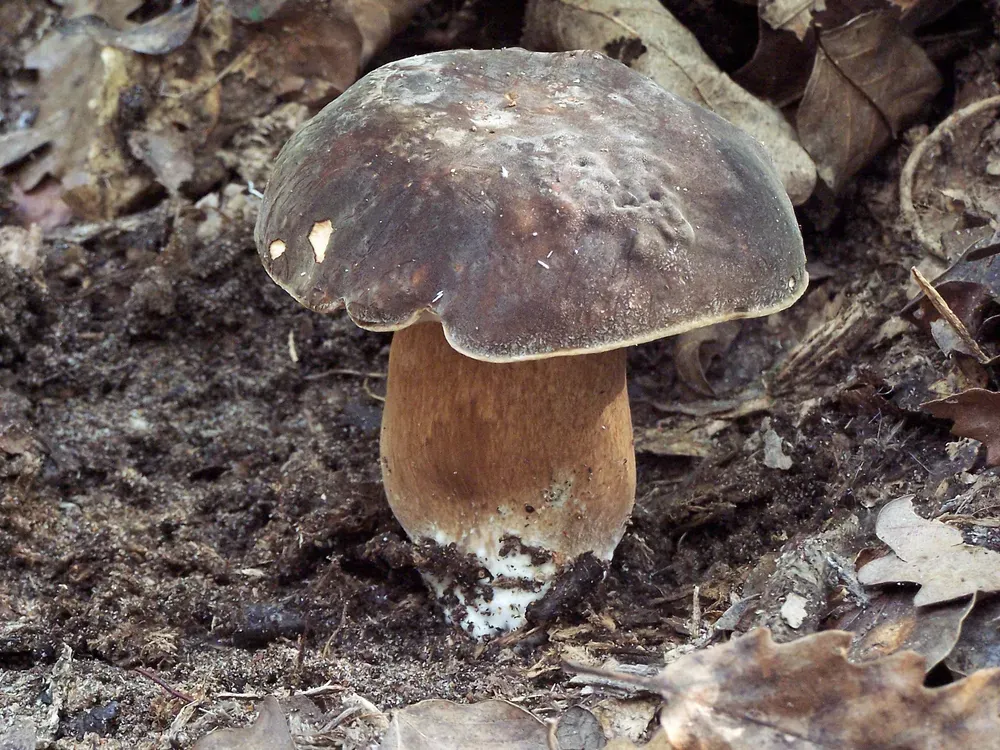
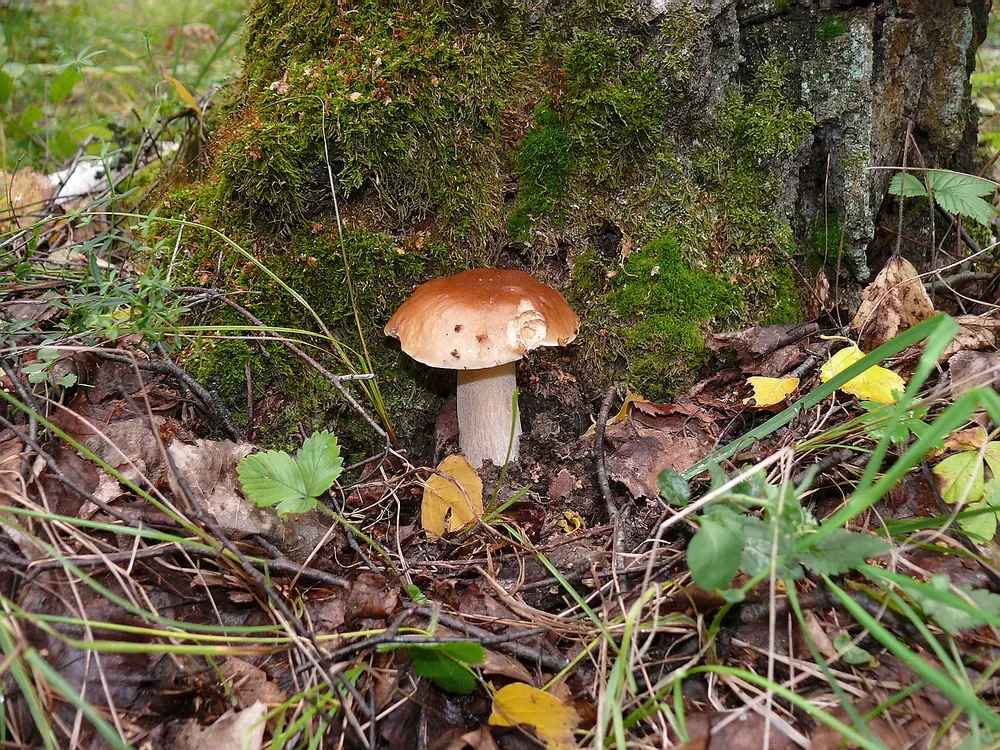
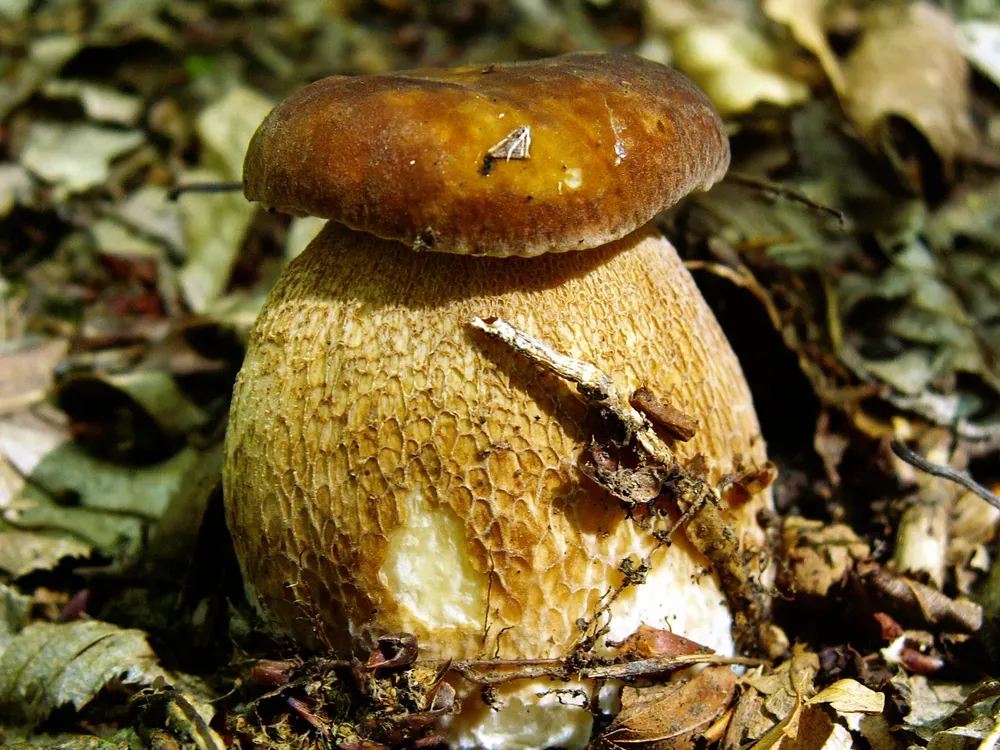
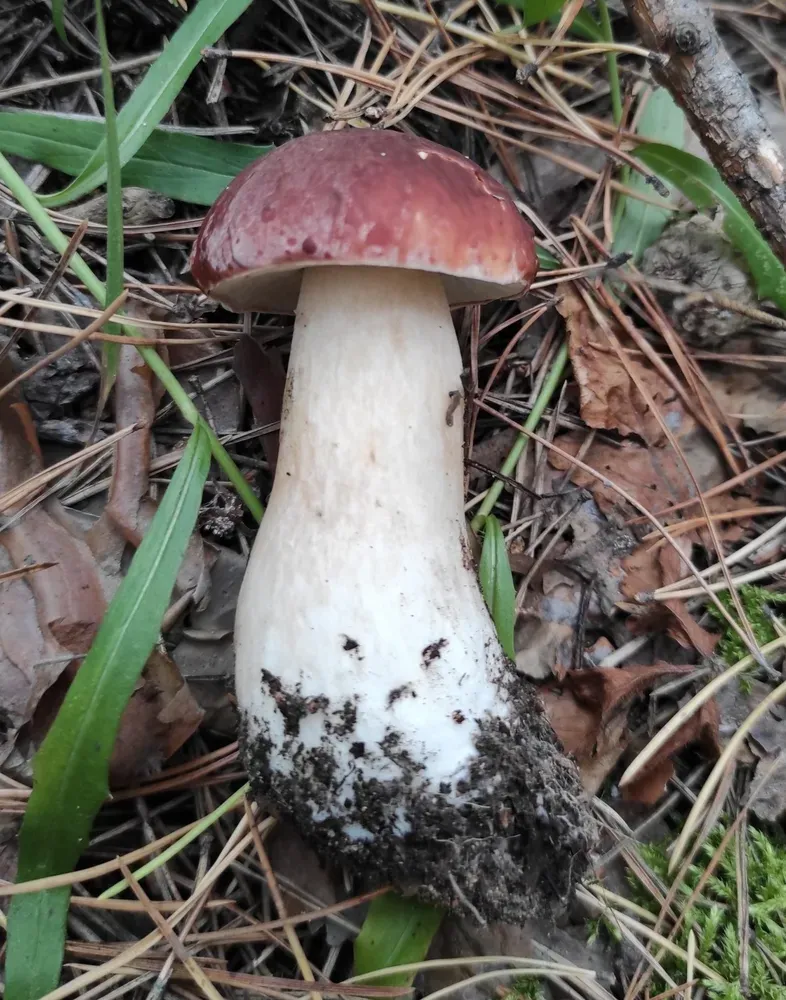
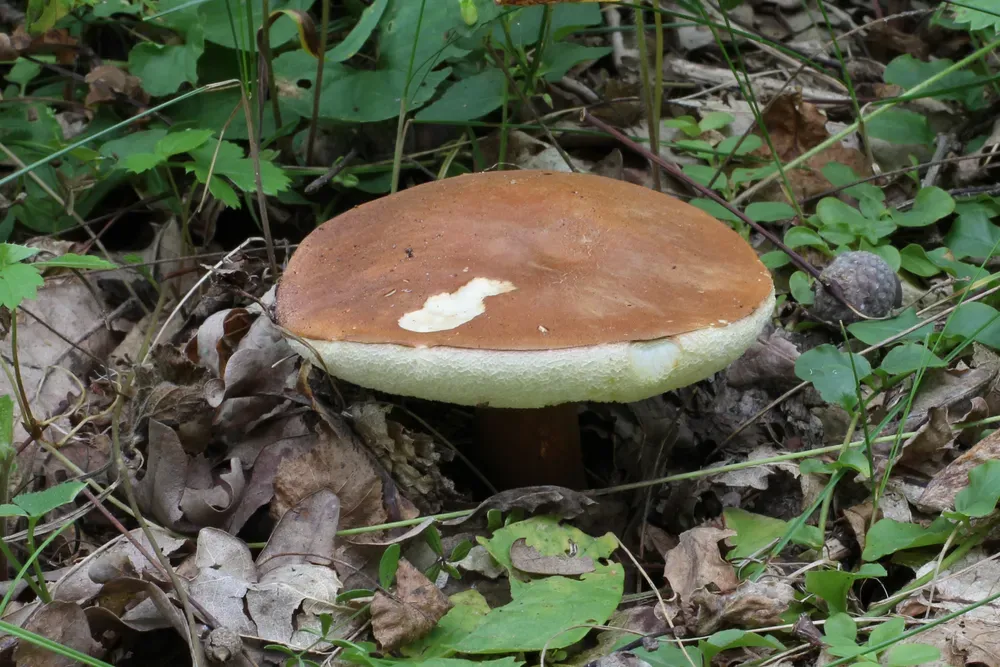
Cap 7–30 cm across, spherical or hemispherical in young mushrooms, becoming cushion-shaped and spread out over time. The color varies from light brown to dark chestnut or reddish brown depending on light and forest type: caps are darker in spruce woods and lighter in pine forests.
The cap surface is dry, smooth or slightly wrinkled, and can be a little sticky in wet weather. The margin is even or slightly wavy, inrolled in young mushrooms. The skin doesn't peel.
Hymenophore
The hymenophore is tubular and separates easily from the cap flesh. In young mushrooms the tubes are white, later turning yellow; in mature ones they're yellow-green or olive. The pores are small, round, uniform in color and don't change color when pressed.
Stem
Stem massive, 5–20 cm tall and 3–10 cm thick, bulbous or club-shaped in young mushrooms, later cylindrical. Color from whitish to light brown. The surface is covered with a characteristic white or cream net pattern, most distinct in the upper part of the stem.
There's no ring and no volva. The base of the stem is often thickened.
Flesh
The flesh is dense, juicy and white, and doesn't change color when cut or damaged — this feature sets porcini apart from a number of poisonous lookalikes. In old fruiting bodies the flesh becomes spongy and yellowish.
The taste is mild, nutty and slightly sweet. The stem flesh is denser and more fibrous than the cap flesh.
Smell
The smell is pleasant, unobtrusive, mushroomy with light nutty notes. With cooking and drying the aroma intensifies and takes on a deep, rich woody, foresty character. It's for dried porcini that the mushroom is so valued in cooking — no other dried mushroom gives such a pronounced taste and smell.
Photos
Photo: author unknown · Our own photo
Lookalikes
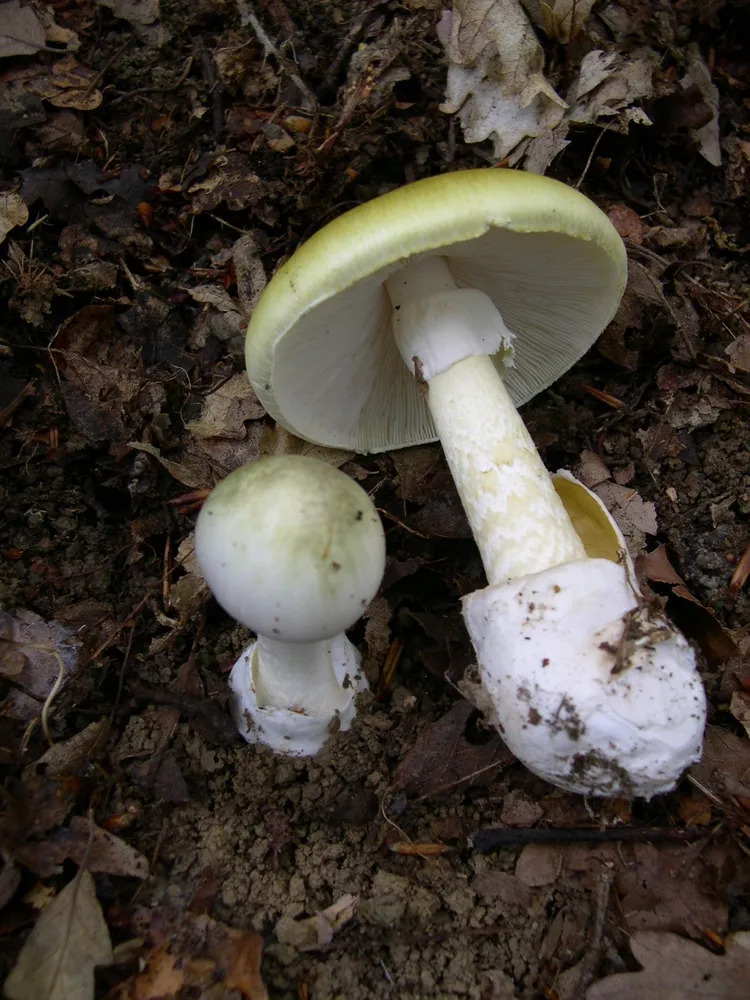
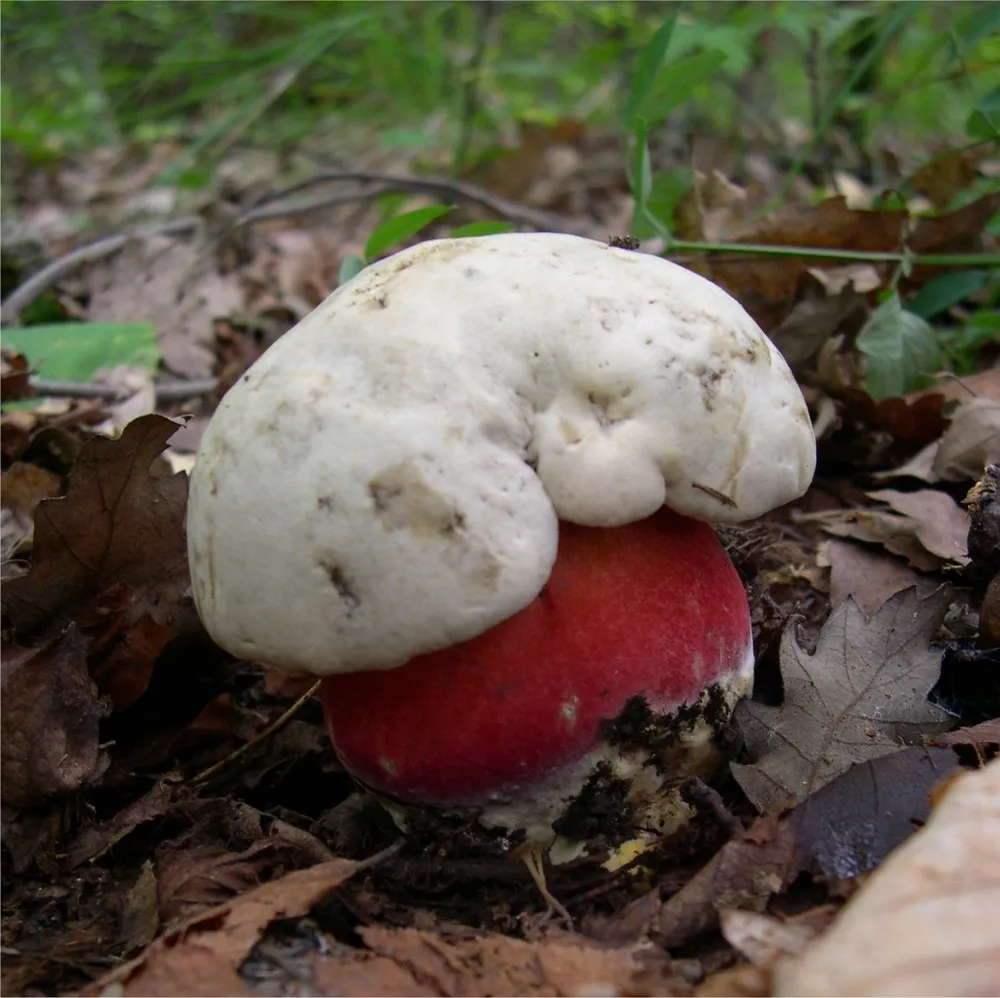
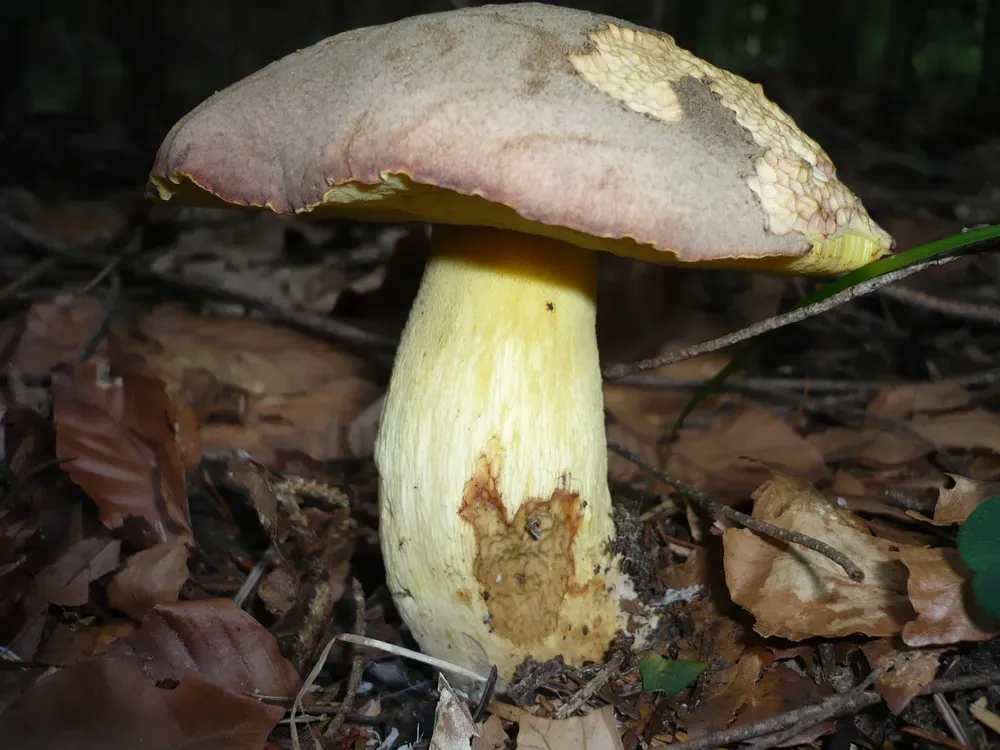
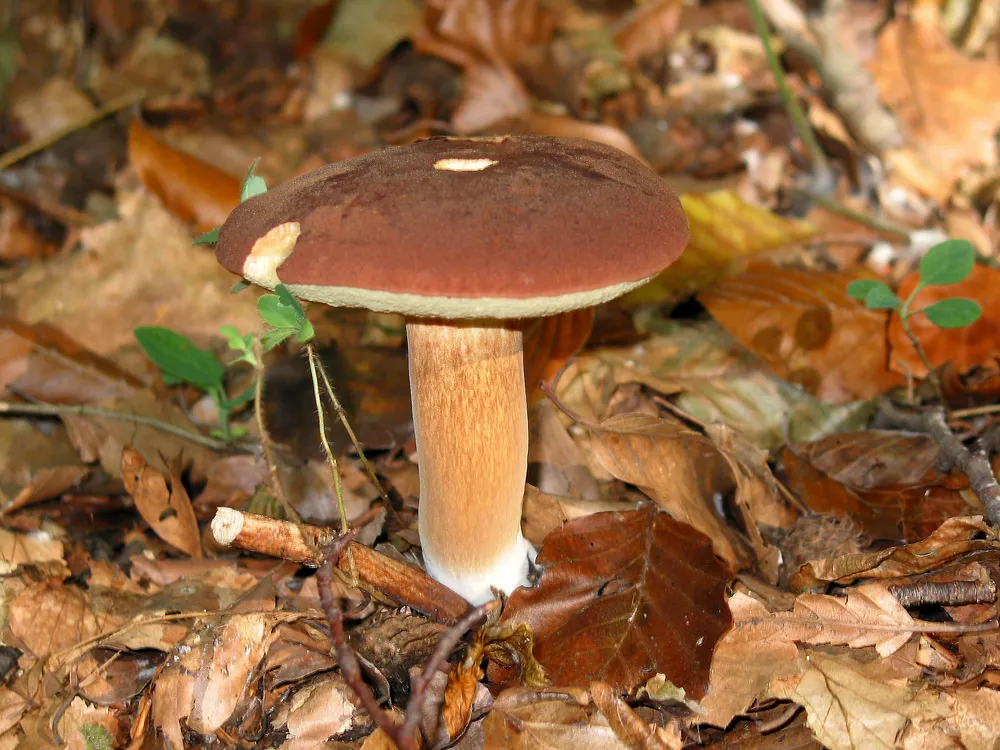
Related species
Mushrooms of the same genus and habitat — to study side by side and never mix up.
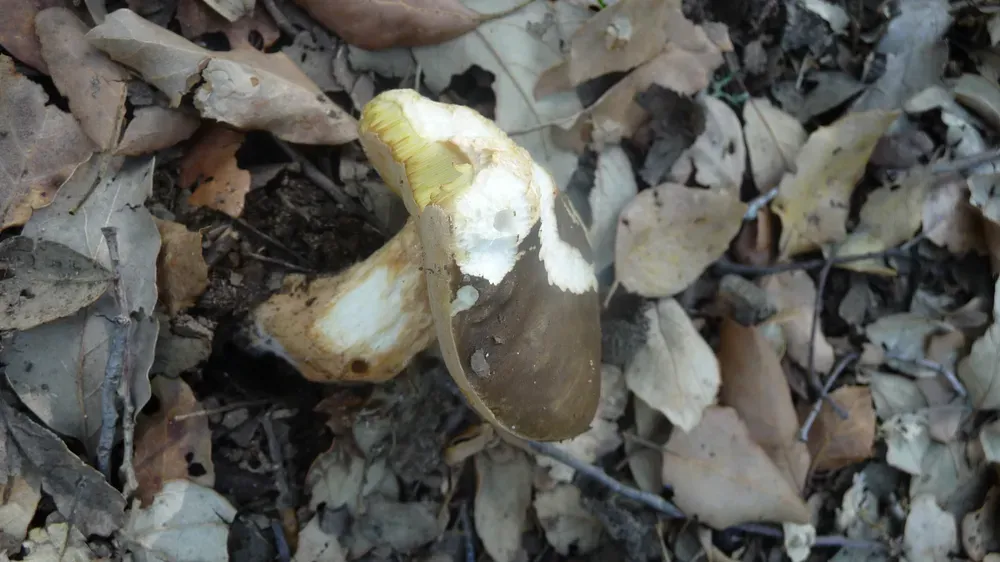
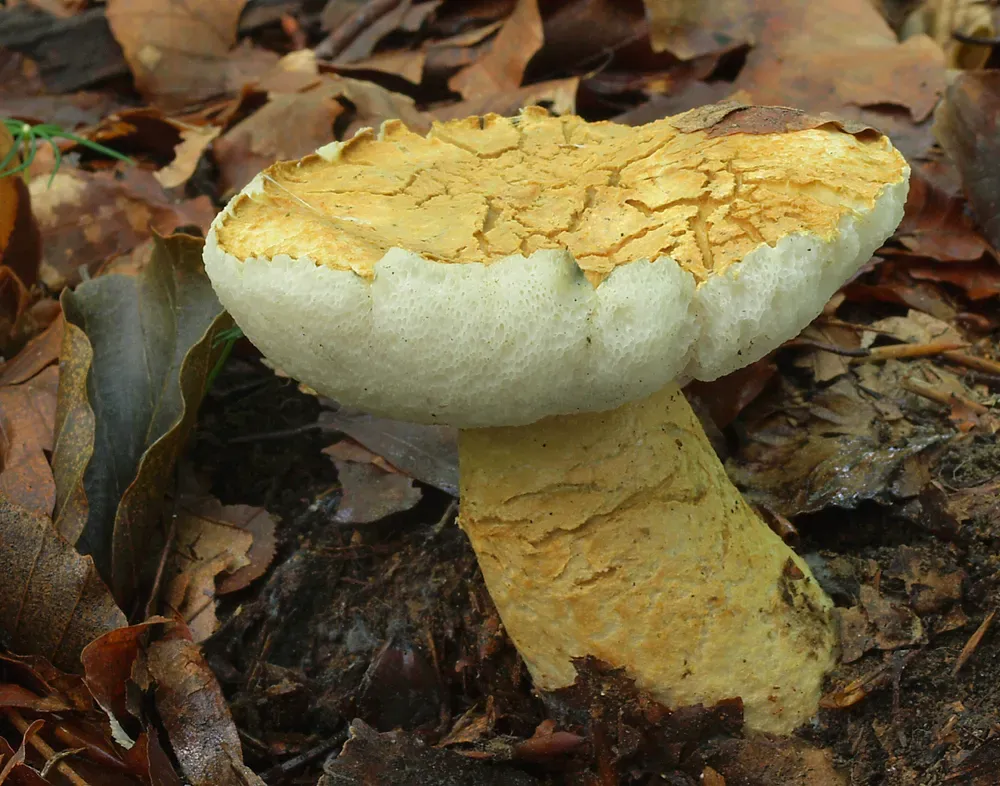
Blushing bolete
Leccinum roseofractum
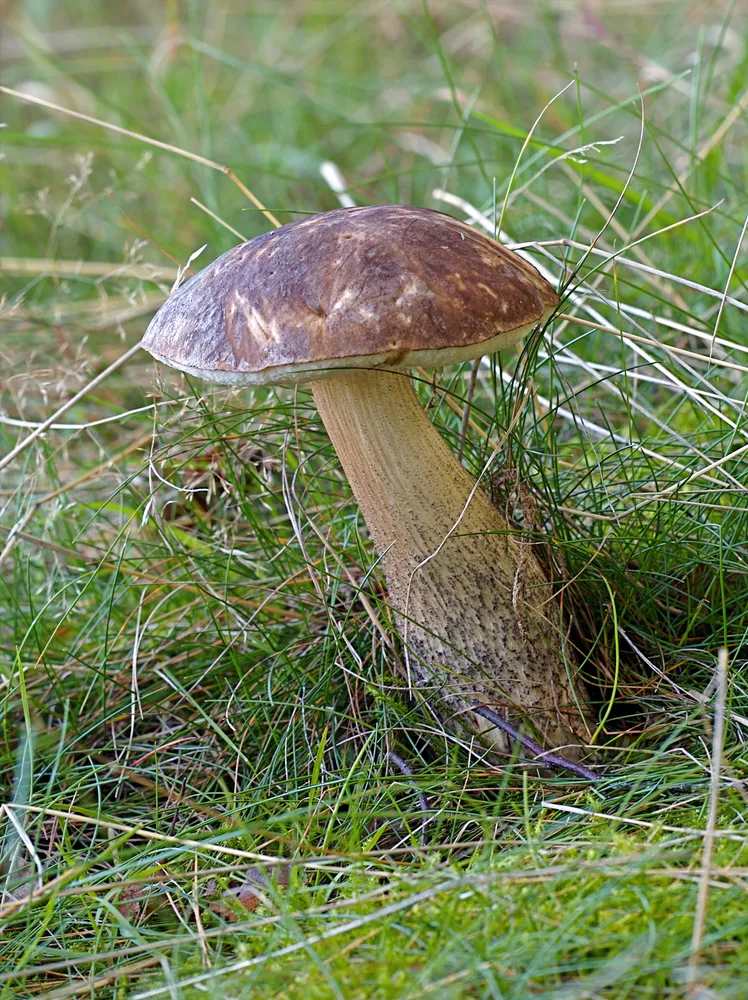
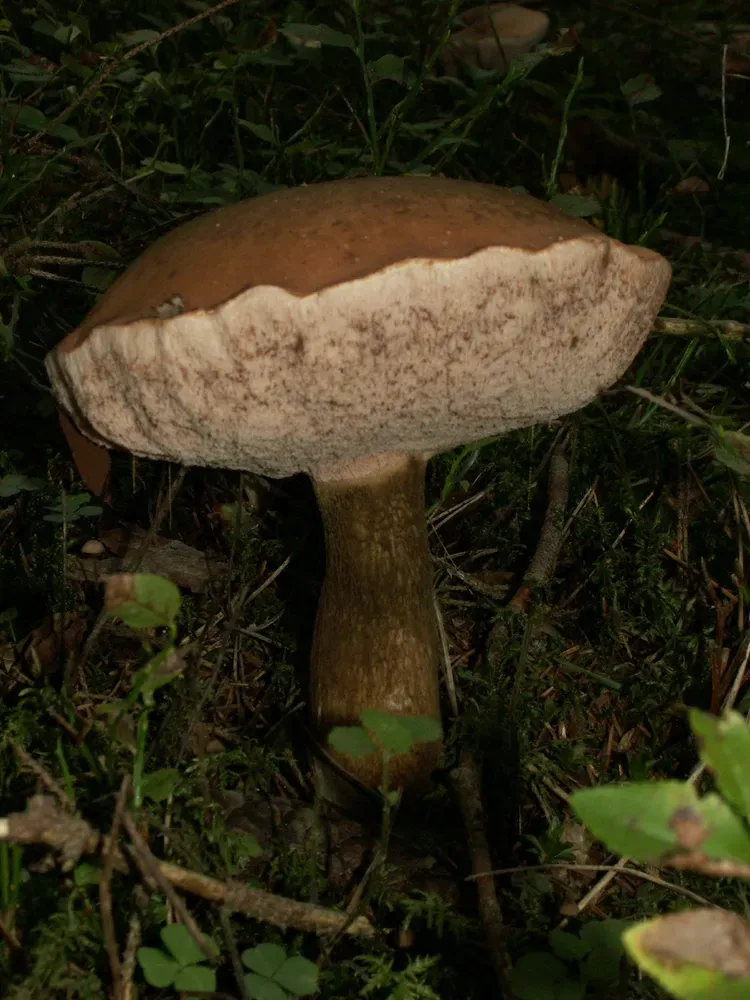
Brown birch bolete
Leccinum scabrum
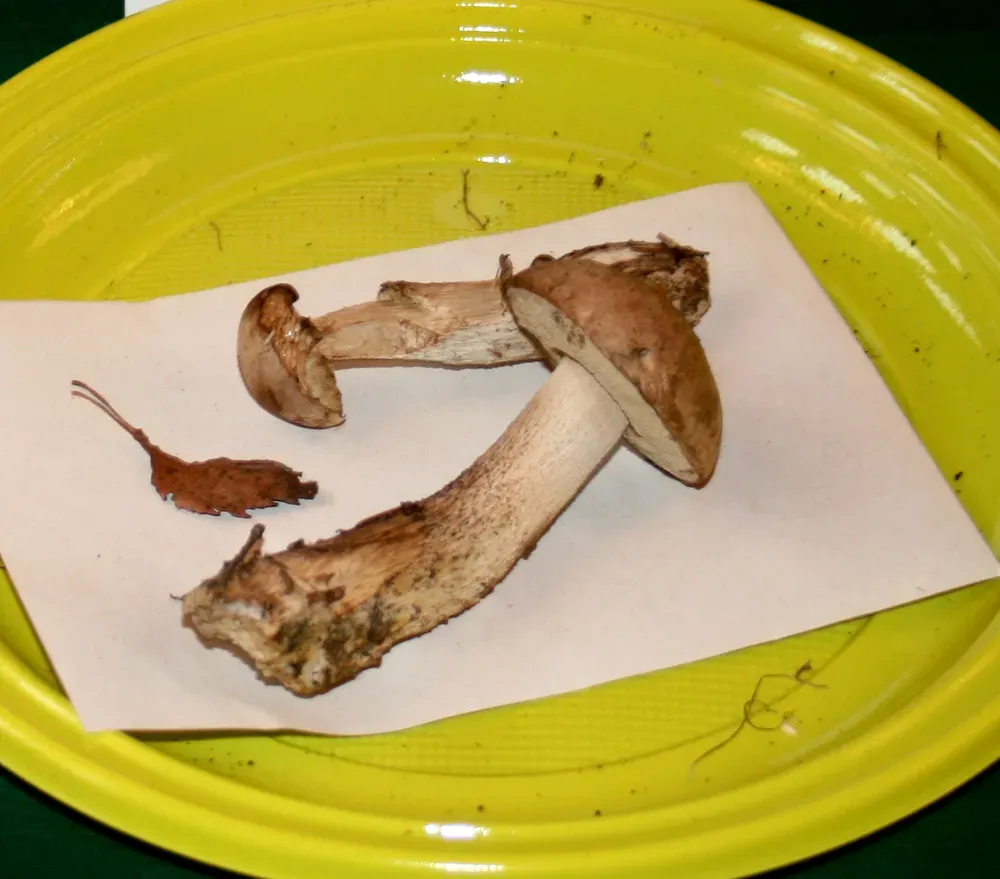
Ghost bolete
Leccinum holopus
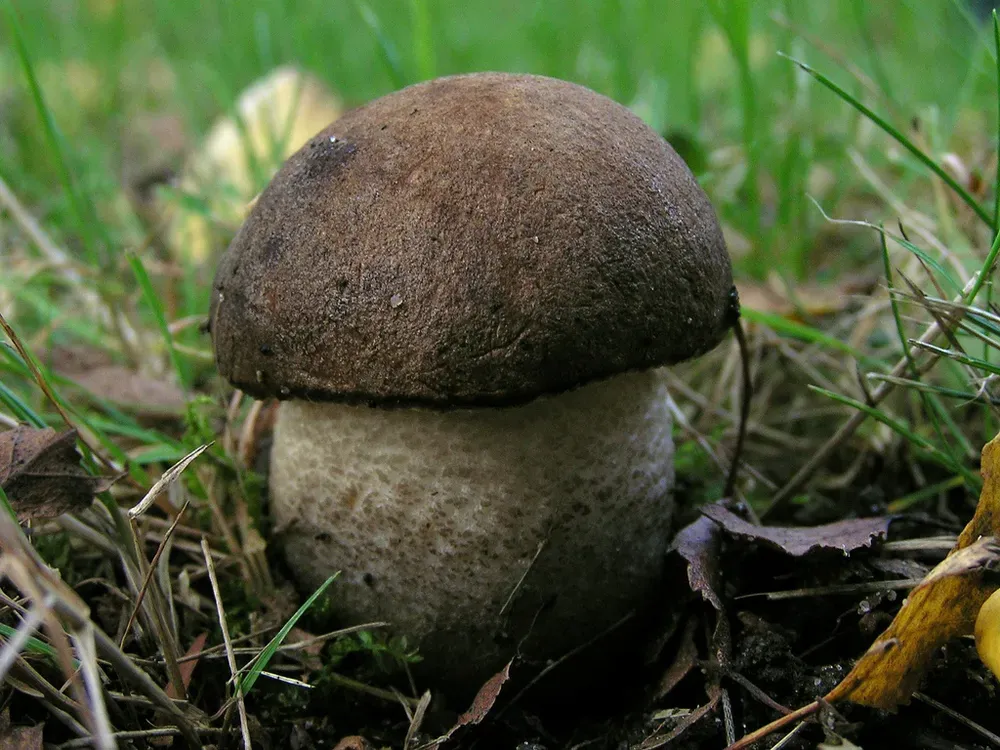
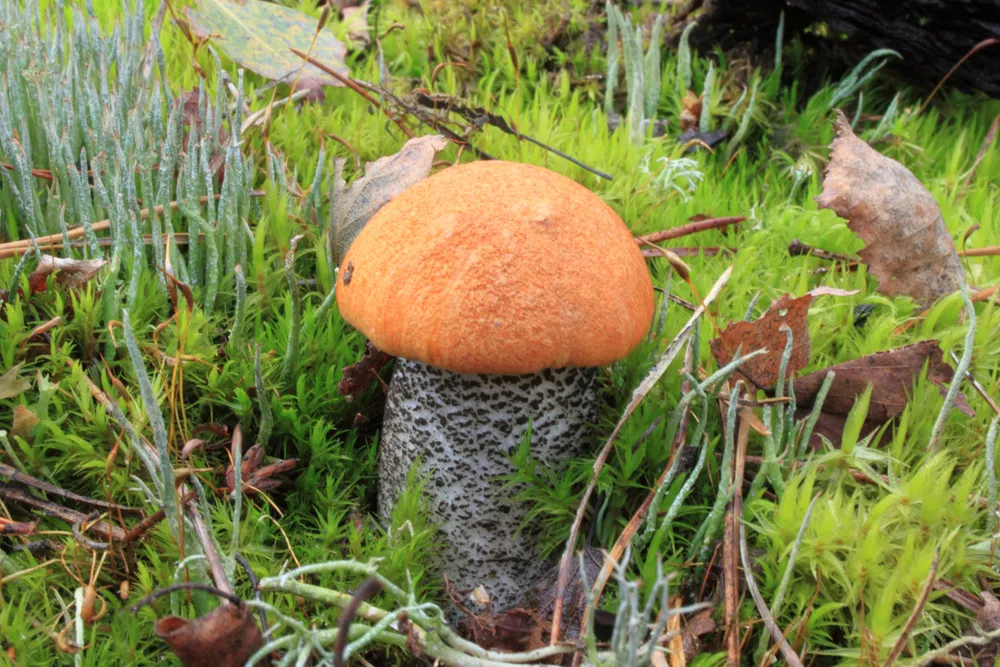
Leccinum melaneum
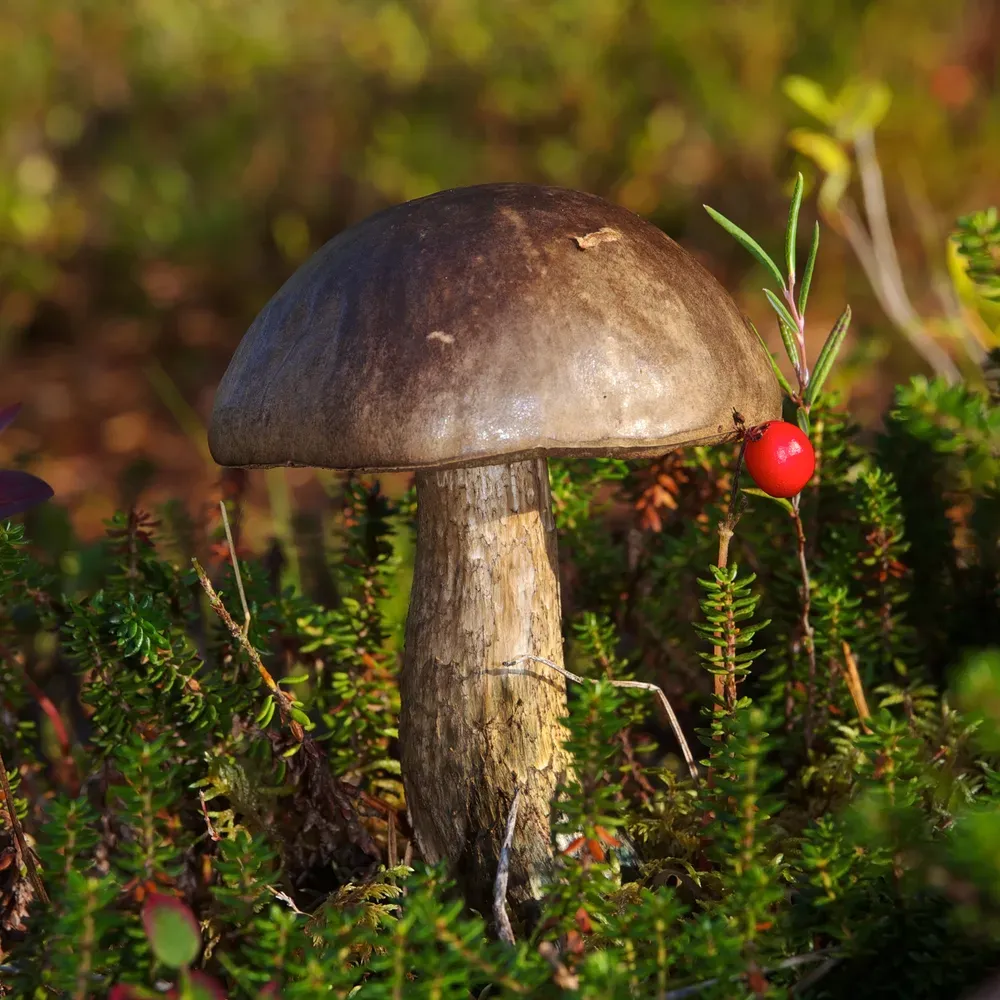
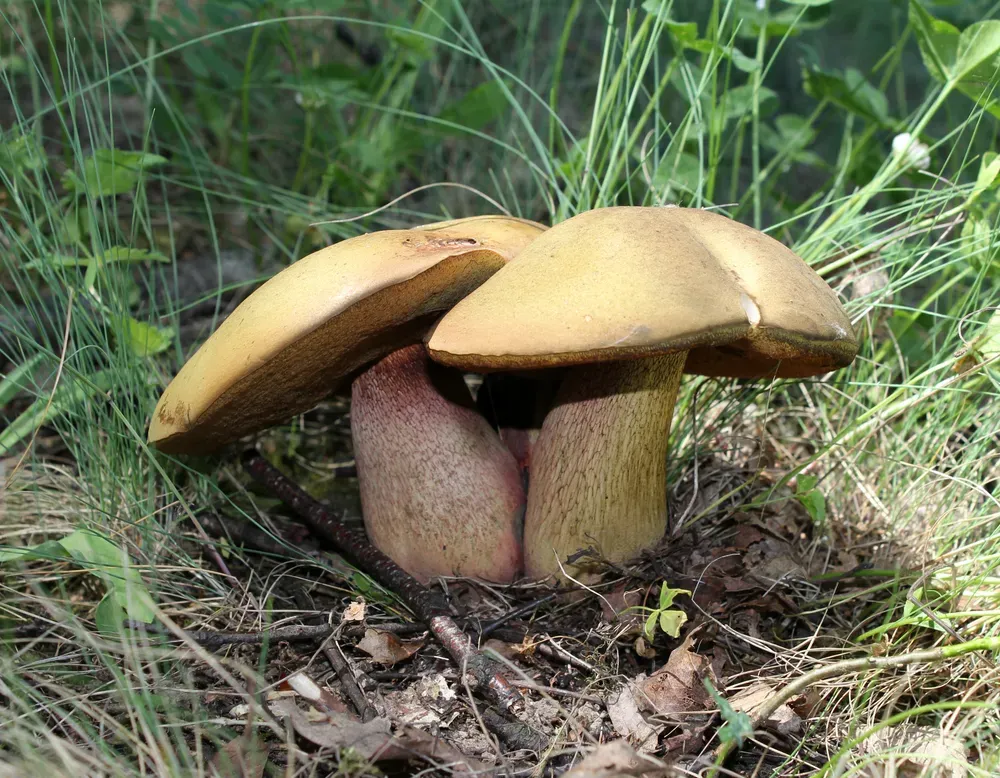
Mottled bolete
Leccinum variicolor
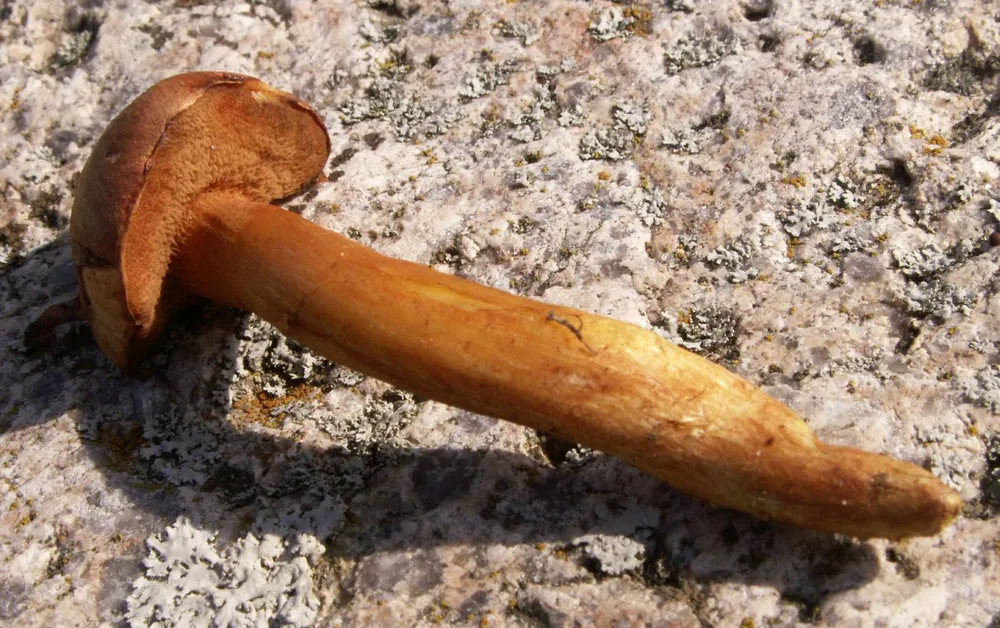
Peppery bolete
Chalciporus piperatus
_Bresinsky_&_Manfr._Binder_533003_2015-06-29.webp)
Saffron bolete
Leccinellum crocipodium
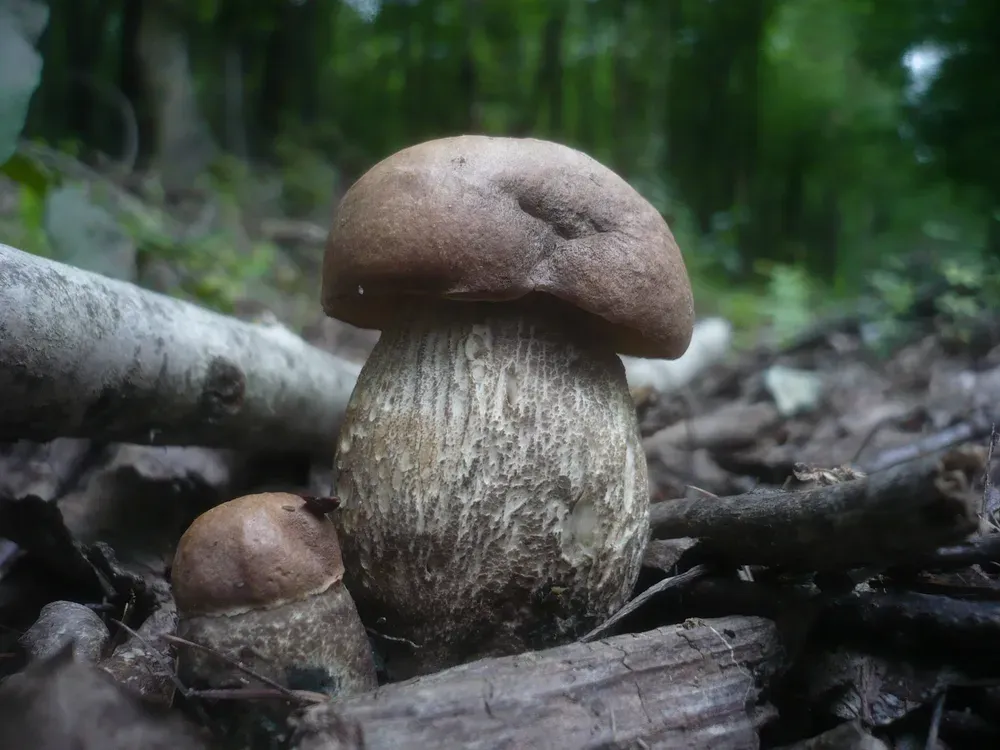
Slate bolete
Leccinum duriusculum
Related reading
 How to identify
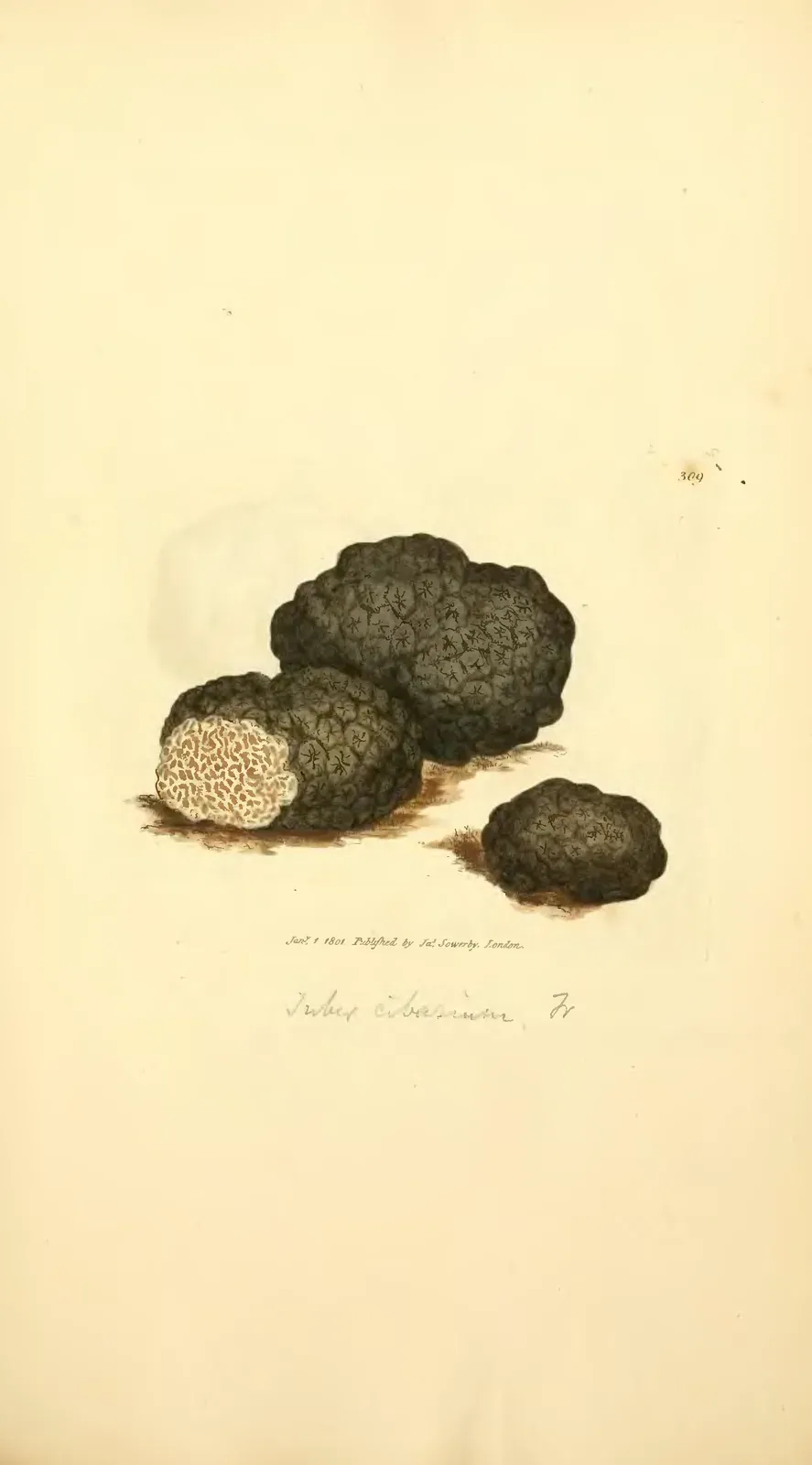
Truffles in Ukraine: do they grow here, and where to look
Truffles aren't just a French delicacy. Several species grow in Ukraine too. Here's which ones, where they occ…
August 24, 2026·2 min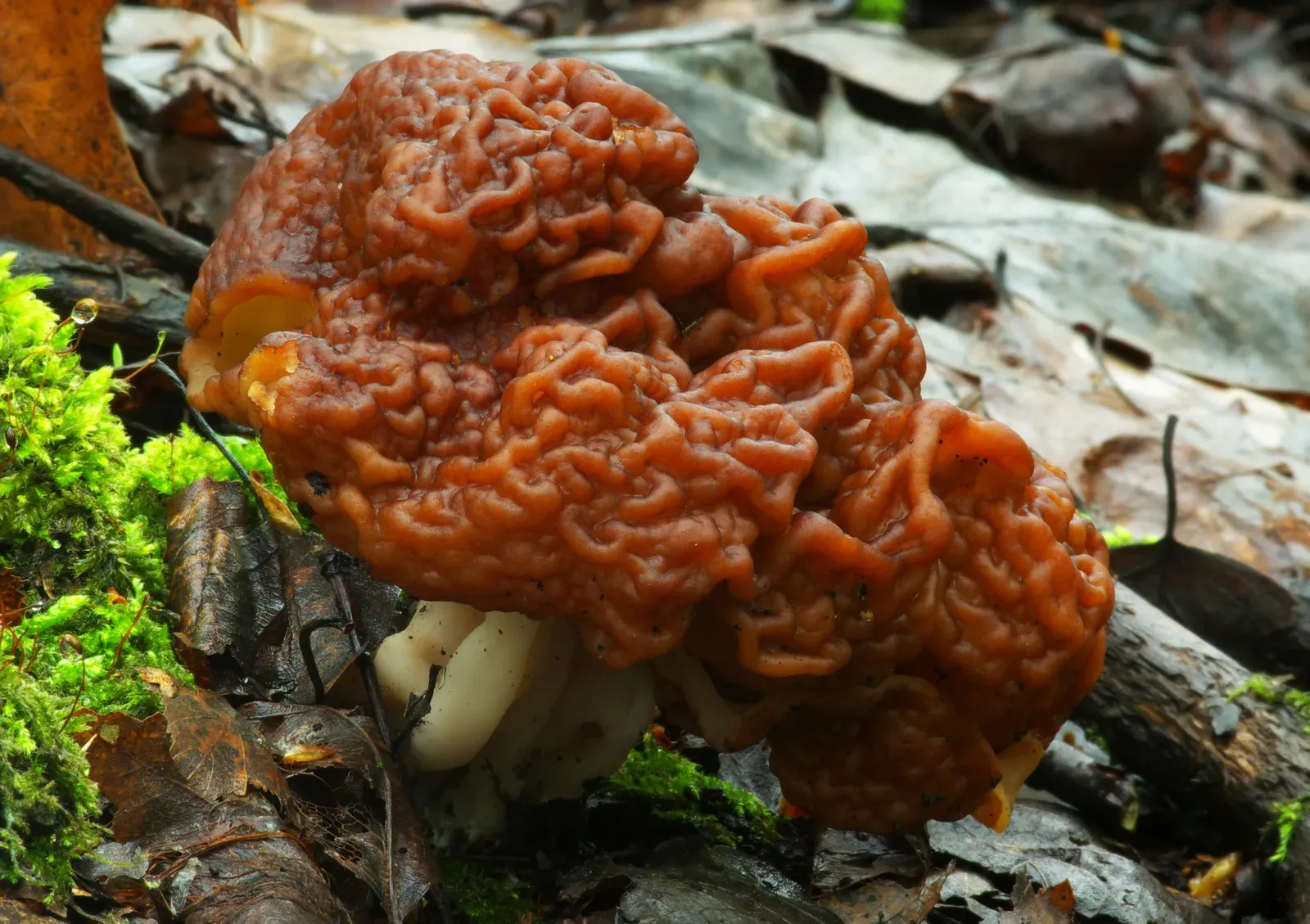 Safety
False morel: why this spring mushroom is dangerous
The false morel looks like a morel, but it contains a poison. Here's how to recognize it, why it's dangerous a…
August 24, 2026·2 min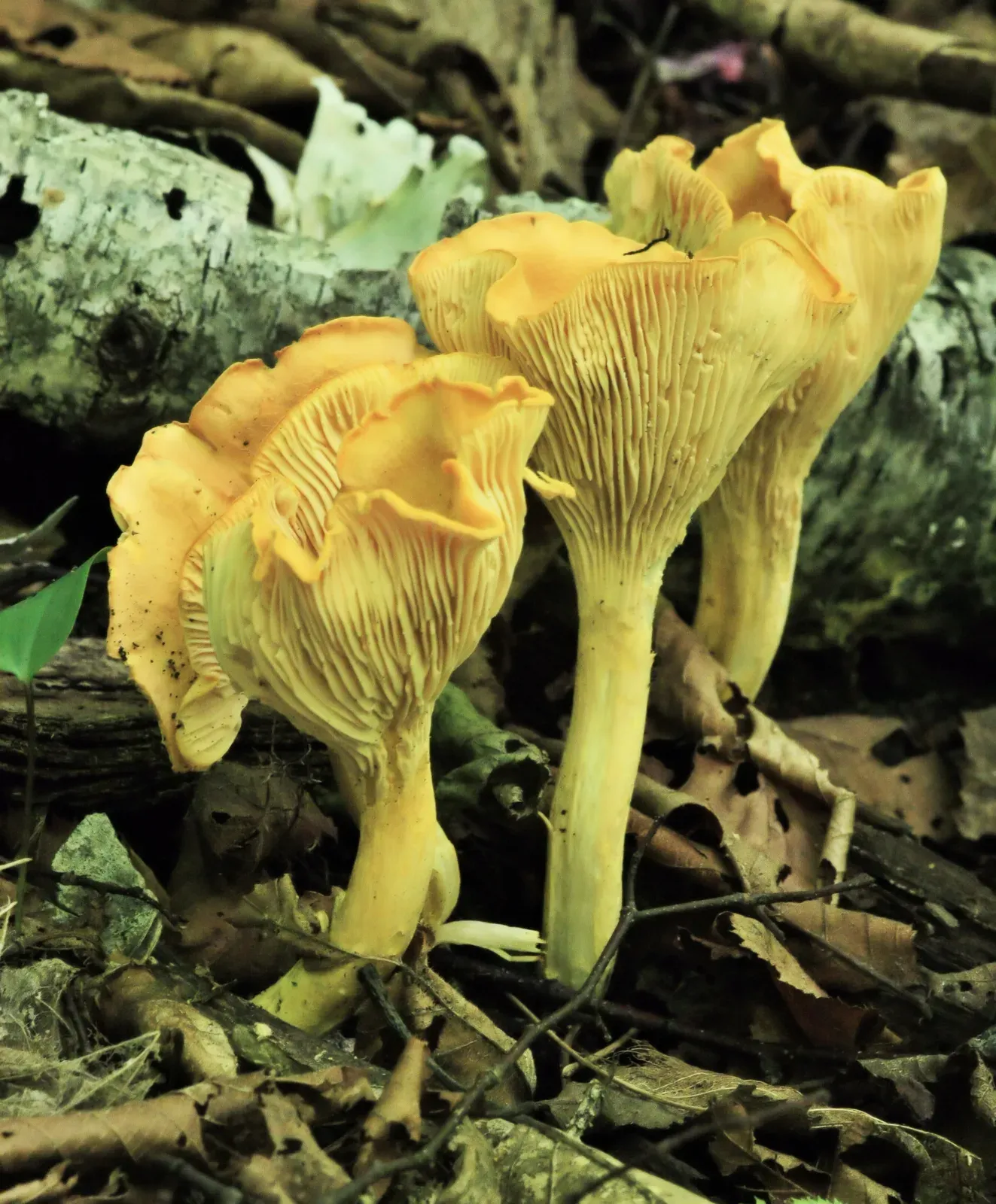 Science & taxonomy
Chanterelles: medicinal properties and health benefits
Chanterelles are credited with plenty of health-giving properties. Here's what really makes them valuable, wha…
August 23, 2026·2 min
Frequently asked questions
Edible?
yes
Does Porcini have gills or pores?
What does the cap of Porcini look like?
What does the stem of Porcini look like?
What do Porcini smell and taste like?
Where does Porcini grow?
Which trees does Porcini grow under?
When should you pick Porcini?
What can Porcini be confused with?
How do you cook Porcini?
Can you dry Porcini?
What is the scientific name of Porcini?
Sources
- [1]Атлас грибів України, Зеров Д.К. (1979)
- [2]MycoBank Database