Cornflower boleteGyroporus cyanescens
Expert-verifiedUpdated October 3, 2026
Passport
- Edibility
- Edible
- Season
- Jun — Oct
- Hymenophore
- Pored
- Cap color
- Cream
- Size
- Medium (5–15 cm)
- Smell
- Pleasant
- Reviewed
- Yes ✓
Quick answers
Where to look?
Mixed forest, Deciduous forest
When does it appear?
Jun — Oct
Active months: June, July, August, September, October.
How to recognize it? Three signs
- Cap color: Cream, Yellow
- Cap shape: Convex
- Smell: Pleasant
Fruiting season
June – October
Description
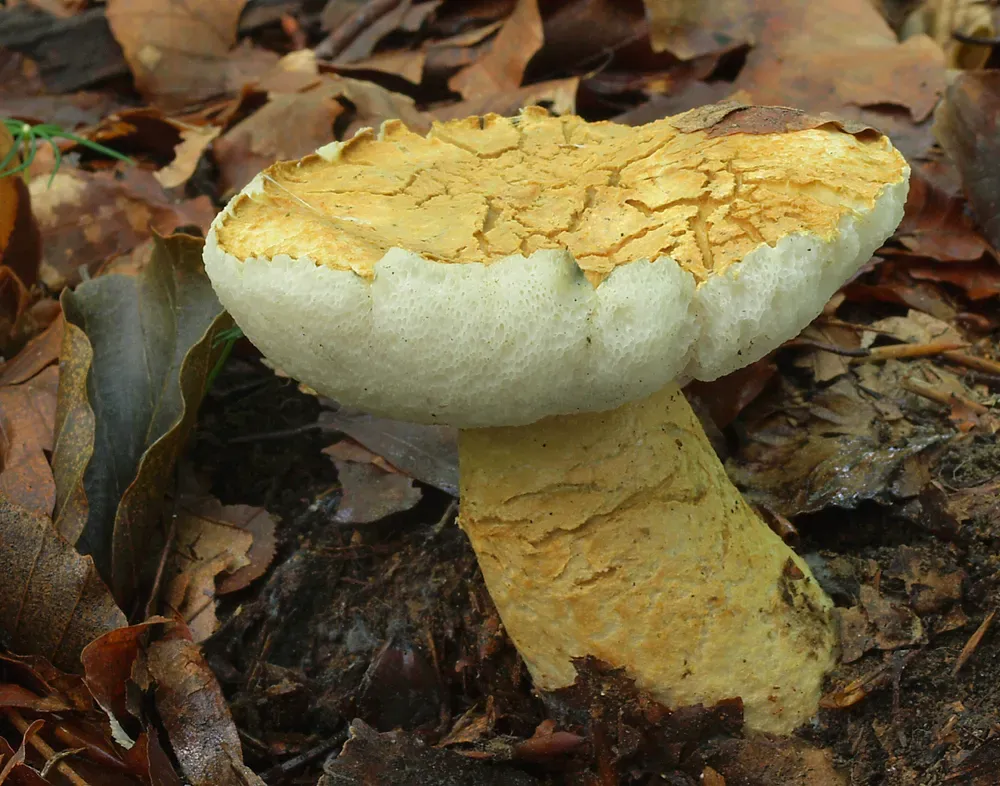
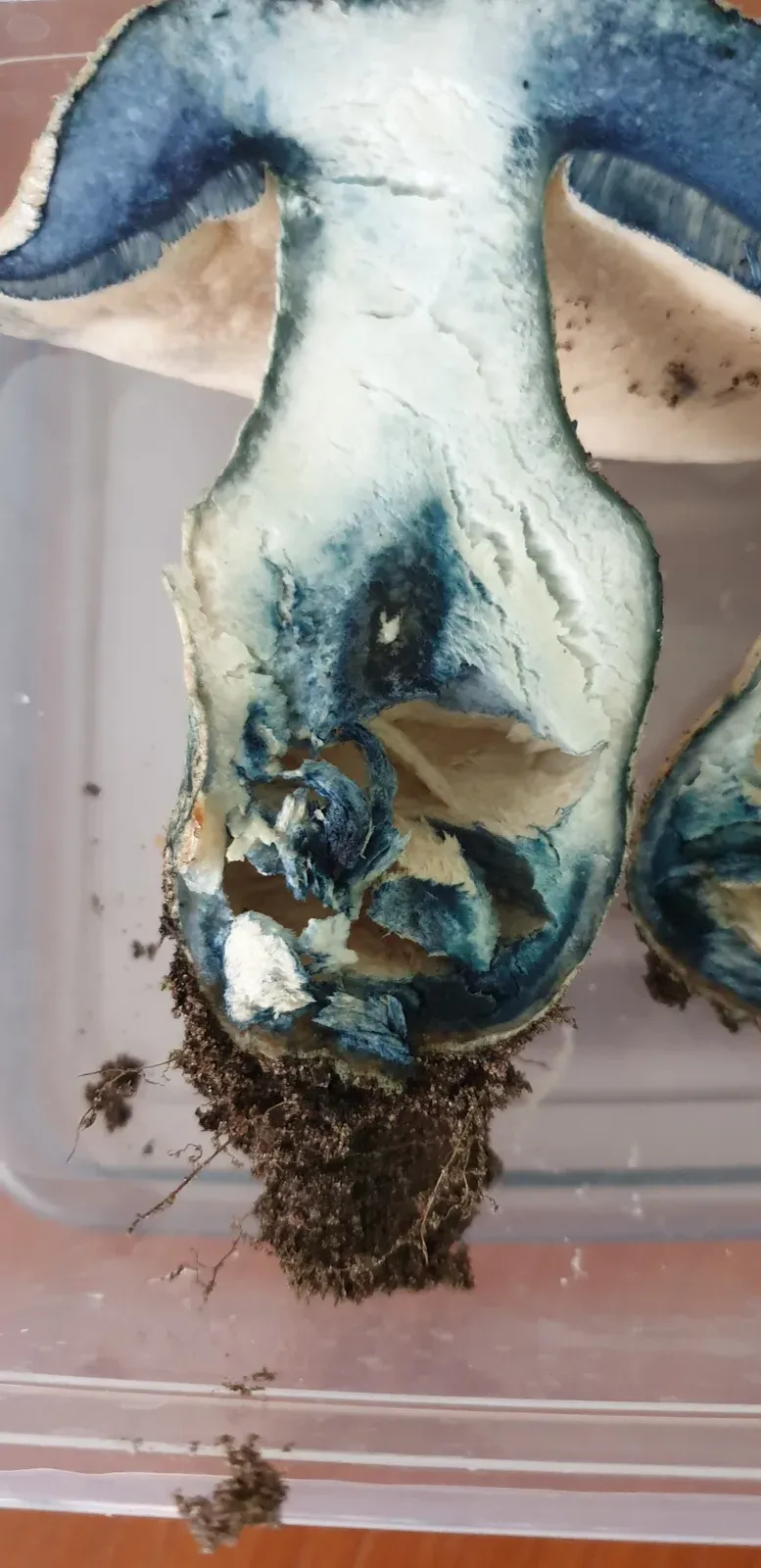
The cornflower bolete (Gyroporus cyanescens) puts on the most spectacular show at a touch of any Ukrainian bolete. Just brush the cap with your finger or press the stem lightly, and within seconds a vivid blue, almost cornflower-colored stain appears. The cut flesh turns blue even faster and more dramatically. That makes this mushroom hard to mistake for anything else.
The cornflower bolete grows in deciduous and mixed woods with birch, less often with oak and beech. It loves sandy, light soils, so in Polissia and the Forest-Steppe of Ukraine it turns up regularly, especially in young birch stands and mixed woods. Its mycorrhizal partner is birch, and the mushroom's whole life cycle is tied to it. Because it is rare, it is listed in the Red Data Book of Ukraine, so picking wild specimens is formally prohibited.
As an edible, the cornflower bolete is top quality: in Europe it is prized on a par with porcini. The flesh is firm with a pleasant nutty flavor; once cooked, the blue disappears and the mushroom takes on an ordinary creamy shade. Good for frying, pickling and drying. Either way, it is a mushroom for experienced foragers, because the bluing flesh scares off many beginners who wrongly associate it with toxicity (a groundless fear — the bluing here is just a pigment reaction, like the yellowing of a white amanita).
Cap
Cap 5–15 cm, hemispherical in young mushrooms, then cushion-shaped, almost flat in old ones. Color cream, pale yellow, ochre-yellow, darkening with age to brownish yellow. Surface matte, slightly felty or finely cracked in dry weather. The cap skin does not peel. Turns blue instantly when pressed.
Hymenophore
Hymenophore tubular, white at first, then yellowish, straw-yellow in mature mushrooms. Pores small and round. When pressed they quickly turn blue, then black — one of the key diagnostic features of the species.
Stem
Stem 3–12 cm tall, 1–3 cm thick, cylindrical or slightly swollen at the base. Same color as the cap or a little paler. Smooth at the top, sometimes with barely visible veins lower down. In young mushrooms the stem is solid; in mature ones it has hollow chambers inside (also a diagnostic feature of the genus Gyroporus). Quickly turns blue when cut or touched.
Flesh
Flesh white or cream, brittle and fragile, chambered in the stem of mature mushrooms. Exposed to air, within 2–5 seconds it turns a vivid blue, cornflower color — the fastest reaction of any bolete. After a few minutes the blue fades to grayish blue.
Smell
Smell faint, pleasantly mushroomy, with a note of fresh hazelnut. Taste mild, with no bitterness or spicy notes.
›Scientific synonyms (5)
Leccinum constrictum (Pers.) Gray 1821, Boletus constrictus Pers. 1801, Suillus cyanescens (Bull.) P.Karst. 1882, Leucoconius cyanescens (Bull.) Beck 1923, Boletus cyanescens Bull. ex Fr.
Lookalikes
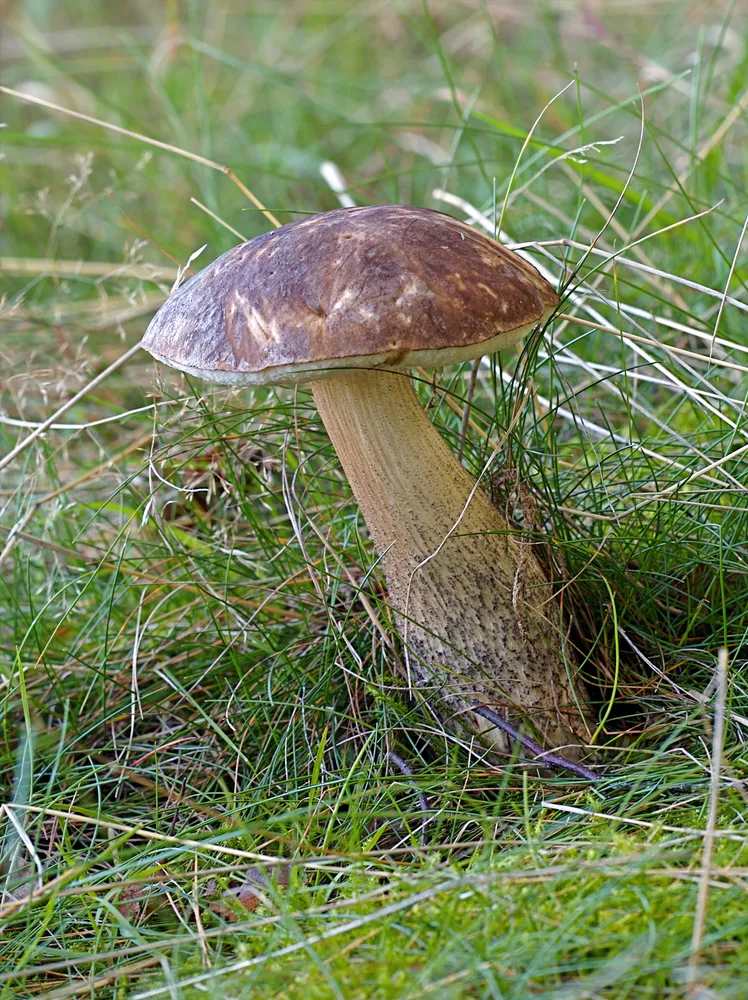
Related species
Mushrooms of the same genus and habitat — to study side by side and never mix up.
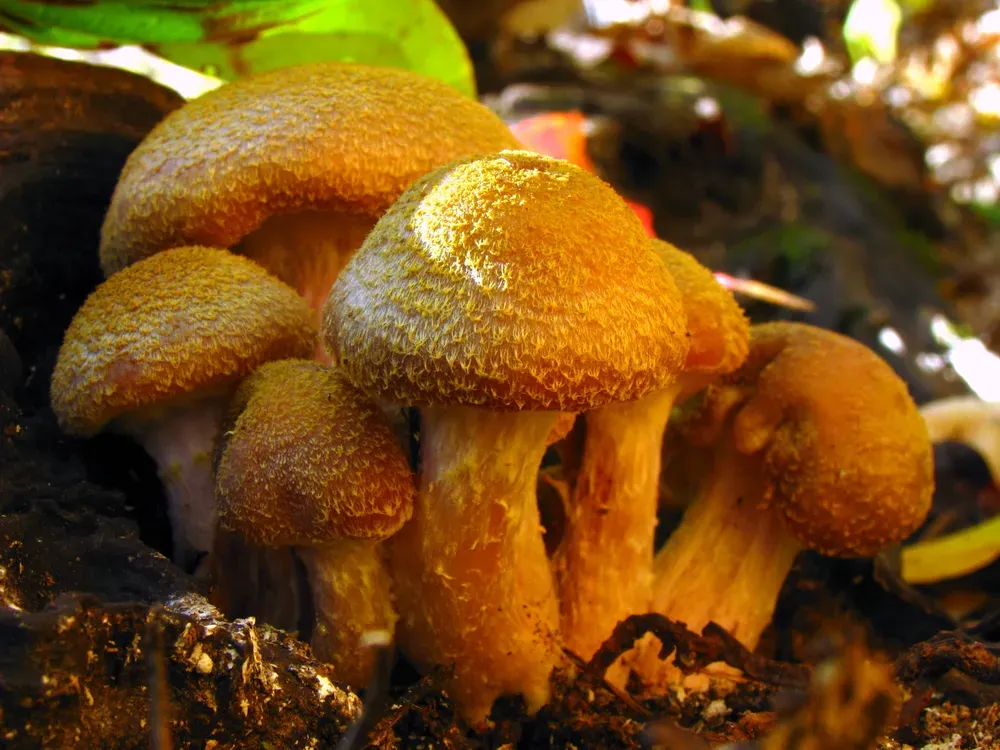
Bulbous honey fungus
Armillaria gallica
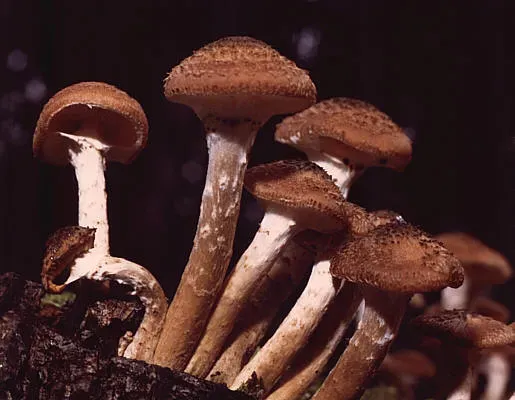
Dark honey fungus
Armillaria ostoyae
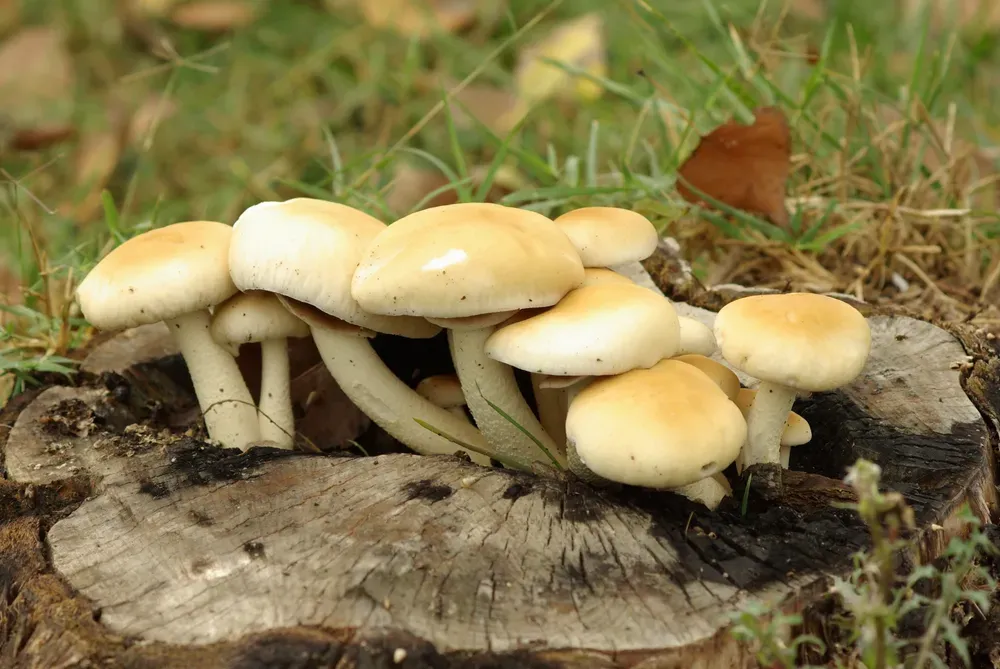
Poplar fieldcap
Cyclocybe aegerita
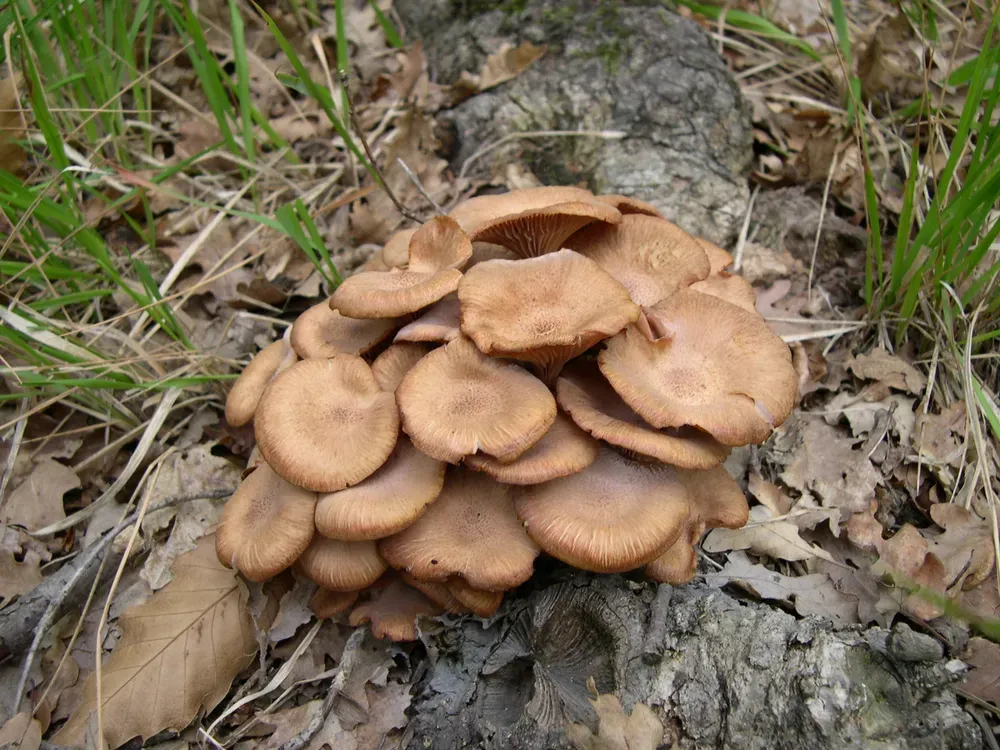
Ringless honey fungus
Desarmillaria tabescens
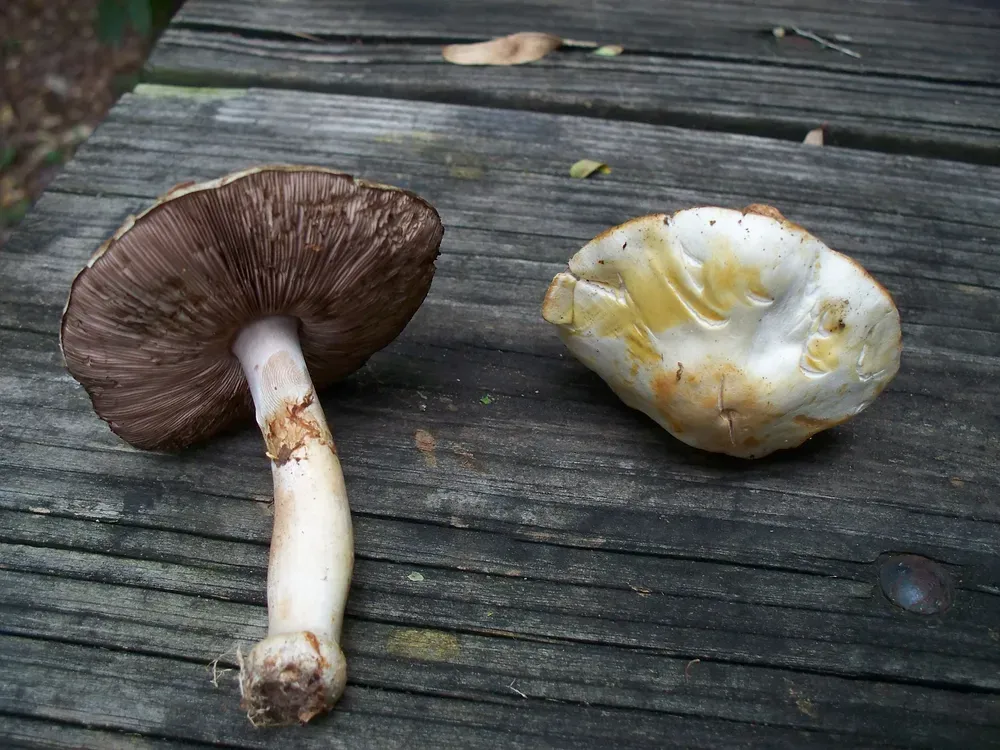
Agaricus abruptibulbus
Agaricus haemorrhoidarius
Agaricus haemorroidarius
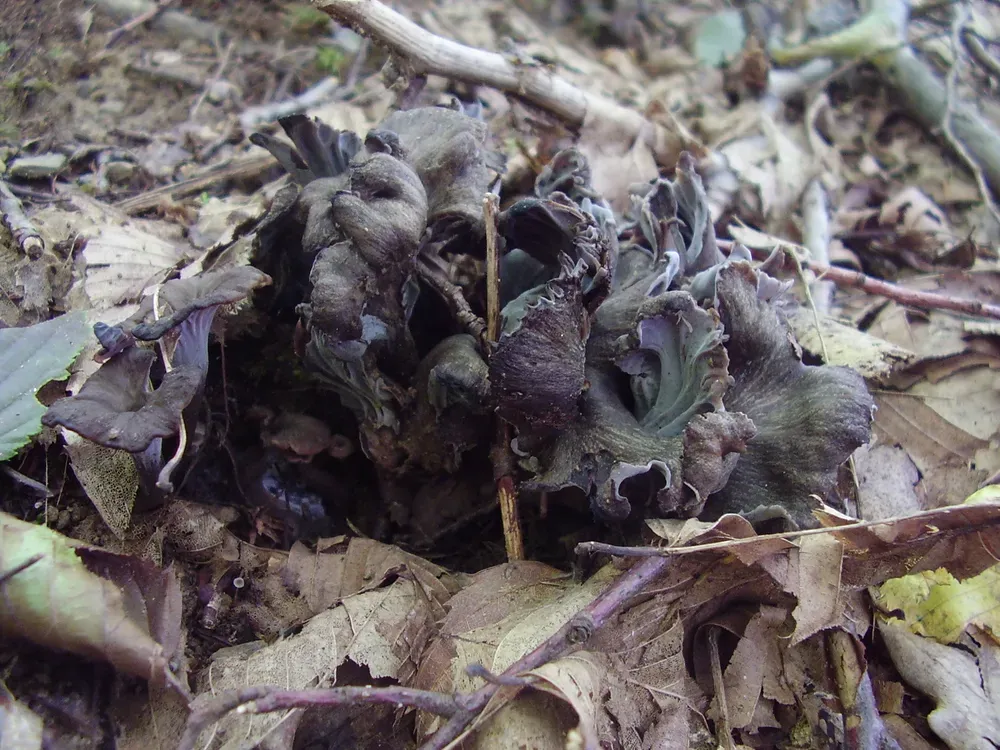
Ashen chanterelle
Cantharellus cinereus
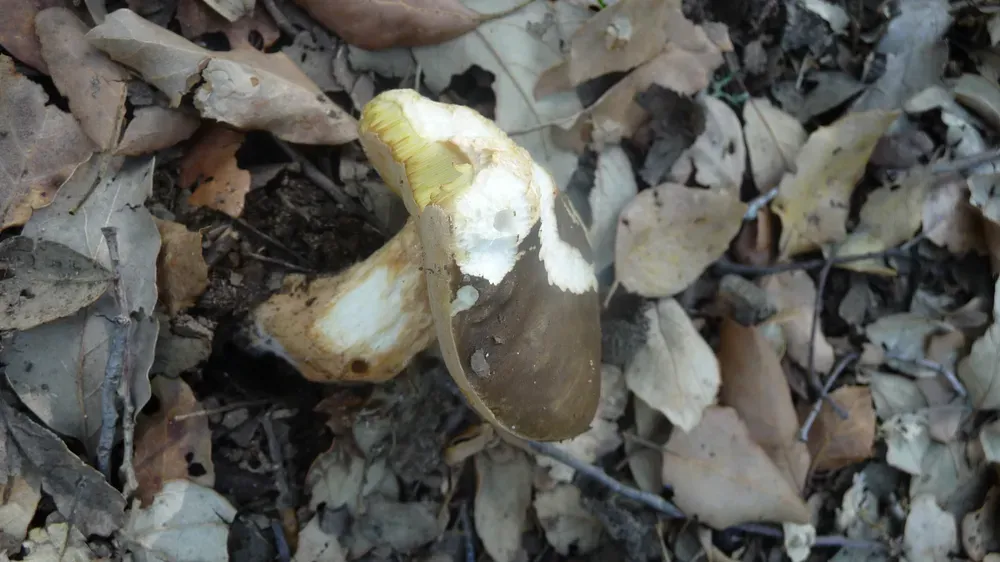
Blushing bolete
Leccinum roseofractum
Related reading
Frequently asked questions
Is it safe to eat a mushroom that turns blue?
Yes, the cornflower bolete is completely safe. The bluing is only a pigment reaction (oxidation of variegatic acid), not a sign of toxicity. Many edible boletes turn blue too (suede bolete, lurid bolete). Going by "turns blue = poisonous" is a common myth. Go by the full set of features, not just one.
Can it be confused with the devil's bolete?
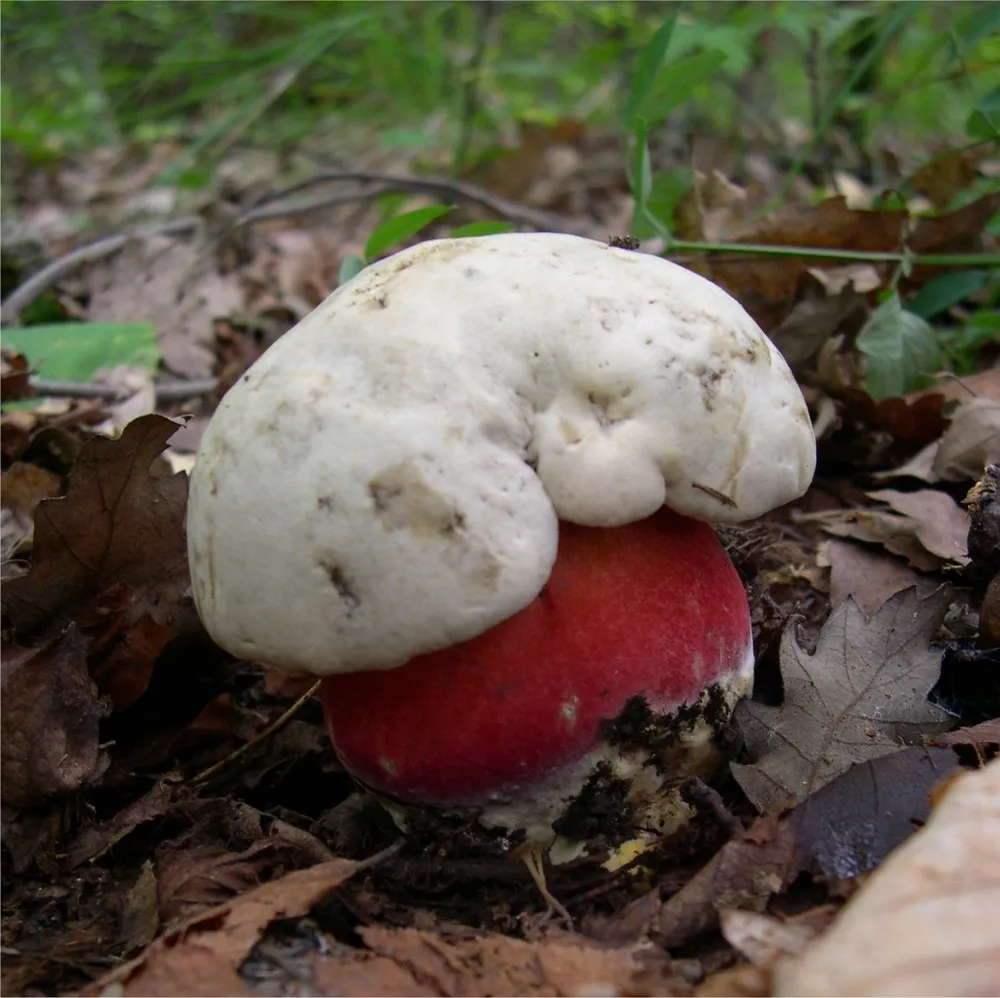
No. The devil's bolete (Rubroboletus satanas) has red-orange pores and a reddish net on the stem. The cornflower bolete has yellowish pores and a stem with no net. The cornflower bolete's cap is creamy yellow; the devil's bolete's is pale gray with a pinkish tinge.
Is it legal to pick it in Ukraine?
No. The species is listed in the Red Data Book of Ukraine. If you find one, leave it in the forest, take a photo and report it via iNaturalist or the Atlas of Fungi of Ukraine. Buying from cultivated sources is allowed (though for the cornflower bolete these are barely developed).
Where to look for it in Ukraine?
Young birch woods and mixed woods with birch on sandy soils. Most often in Polissia (Chernihiv, Kyiv and Zhytomyr regions), less often in the Forest-Steppe. It does not grow in pine forests without birch.
When does it fruit?
From June to the end of October, peaking in August–September. It loves warm, moderately moist spells. In very dry or cold years it may not appear at all.
How is it different from the chestnut bolete?
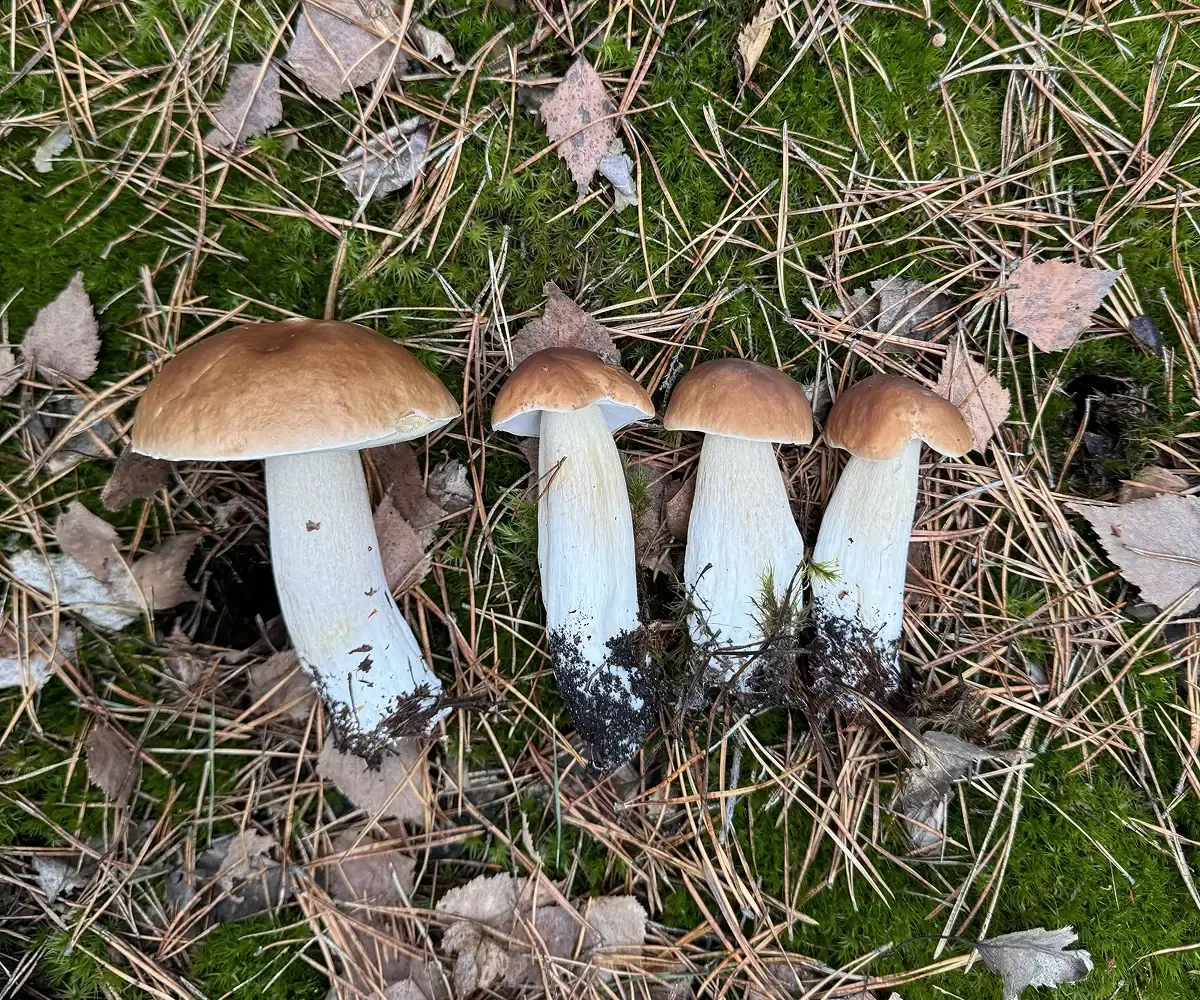
The chestnut bolete (Gyroporus castaneus) has a chestnut-brown cap and stem, and its cut flesh does NOT turn blue (it turns slightly pinkish). The cornflower bolete has a creamy yellow cap and turns vividly blue. The two are relatives, and both are edible.
Which trees does it form mycorrhiza with?
First and foremost with silver birch (Betula pendula) and downy birch. Less often with oak and beech. It is most common in young birch plantations 10–20 years old.
Does the bluing disappear after cooking?
Yes, when heated the blue disappears completely and the mushroom turns an ordinary creamy gray. The flavor stays rich. It is purely cosmetic — the cornflower bolete is delicious in any dish.
Is Cornflower bolete edible or poisonous?
Does Cornflower bolete have gills or pores?
What does the cap of Cornflower bolete look like?
What does the stem of Cornflower bolete look like?
Sources
- [1]Вікіпедія (українська)
- [2]Атлас грибів України, Зеров Д.К. (1979)
- [3]MycoBank Database
- [4]Index Fungorum
- [5]GBIF
- [6]iNaturalist Ukraine