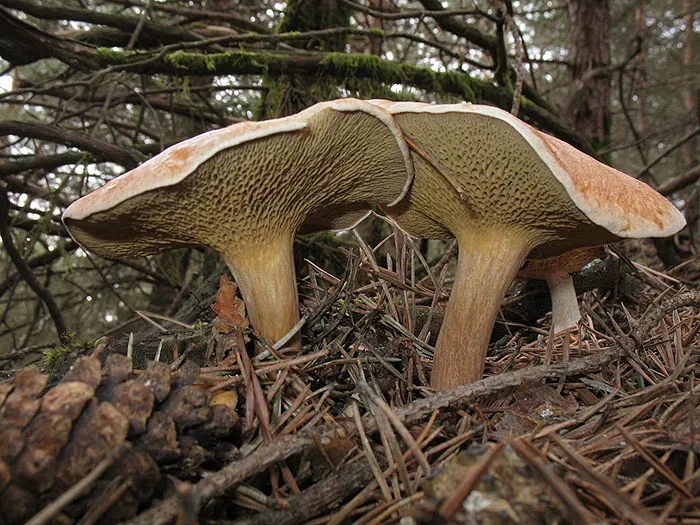
Bovine boleteSuillus bovinus
Expert-verifiedUpdated October 3, 2026
Passport
- Edibility
- Edible
- Season
- Jul — Oct
- Hymenophore
- Pored
- Cap color
- Brown
- Size
- Medium (5–15 cm)
- Smell
- Odorless
- Reviewed
- Yes ✓
Quick answers
Where to look?
Conifer forest, Mixed forest
When does it appear?
Jul — Oct
Active months: July, August, September, October.
How to recognize it? Three signs
- Cap color: Brown, Yellow, Orange
- Cap shape: Convex
- Smell: Odorless
Fruiting season
July – October
Description
The bovine bolete (Suillus bovinus) is a modest relative of the slippery jack that often grows right next to its showier cousins and gets lost against them. It loves young pine plantations on sandy soil, especially where the ground is poor and the pines aren't yet taller than a person. Places like these are worth a visit with a basket in late summer and fall — bovine boletes can be very plentiful there.
This is a symbiotic mushroom that forms mycorrhiza with Scots pine. That's why its range is tied firmly to pine and mixed forests with pine — you won't come across it in broadleaf stands. Across Ukraine the bovine bolete occurs from Polissia to the Forest-Steppe, most abundantly in the pine woods of Volyn, Kyiv and Chernihiv regions.
The bovine bolete's quality is modest — it's a third-category mushroom, with rubbery flesh and a bland taste. But as a "bulk" mushroom for pickling and drying it does the job perfectly well. Experienced foragers advise taking only young specimens with firm caps: old bovine boletes go mushy in the pot and look unappetizing. It's rarely wormy — and that's its big advantage.
Cap
Cap 3–12 cm, hemispherical in young mushrooms, then flat-convex, almost flat when mature. The color is a dirty yellow-brown, ochre, with a pinkish tinge; in wet weather it's noticeably slimy and shiny. The skin doesn't peel, or peels only with difficulty. In dry weather the cap is matte, sometimes with small cracks at the edges.
Hymenophore
The spore surface is made of tubes, but quite distinctive: the pores are large, angular, irregular, with thin radial walls — they look like honeycomb. The color is dirty yellow at first, greenish-olive with age, and brownish-olive in old mushrooms. The tubes are attached to the stem and often run down it.
Stem
Stem 4–8 cm tall, 0.5–1.5 cm thick, cylindrical, often bent and curved — it's rarely straight. The color is the same as the cap or a little lighter. The surface is smooth, with no ring and no net pattern. Near the base it often has a pinkish tinge.
Flesh
The flesh in the cap is yellowish and soft; in the stem it's denser and fibrous. When cut, it doesn't change color or turns slightly pink. In mature mushrooms the texture becomes rubbery, which is why some foragers only take bovine boletes when they're very young.
Smell
The smell is faint, mushroomy, nothing special. The taste is mild, with no bitterness.
›Scientific synonyms (4)
Boletus bovinus L. (1753), Agaricus bovinus (L.) Lam. (1783), Ixocomus bovinus (L.) Quél. (1888), Mariaella bovina (L.) Sutara (1987)
Lookalikes
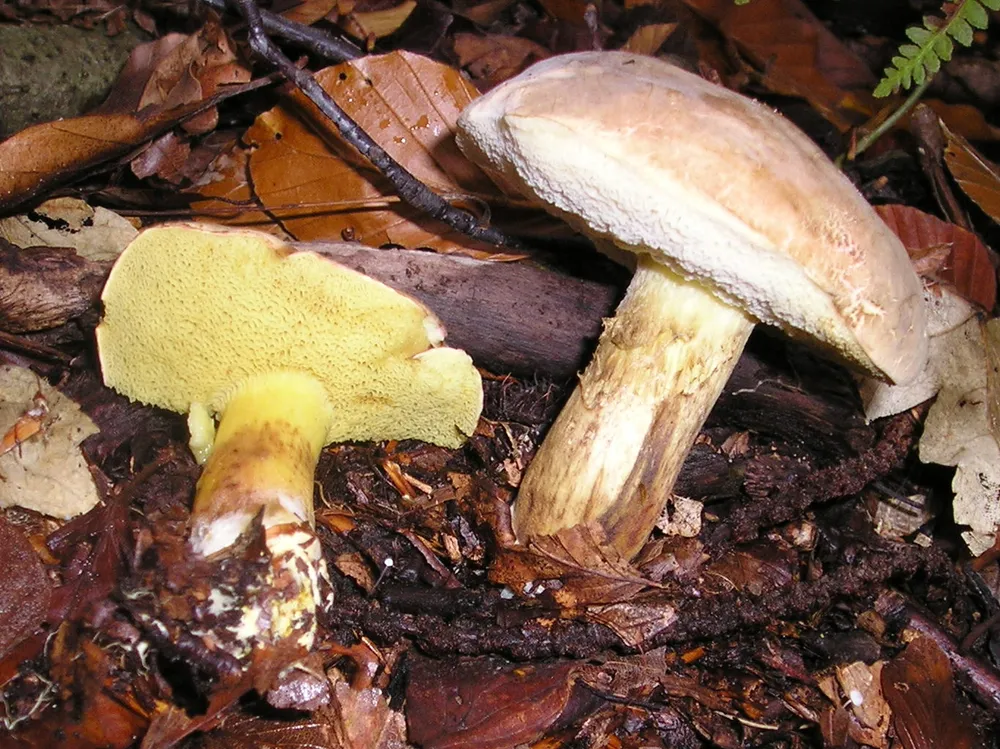
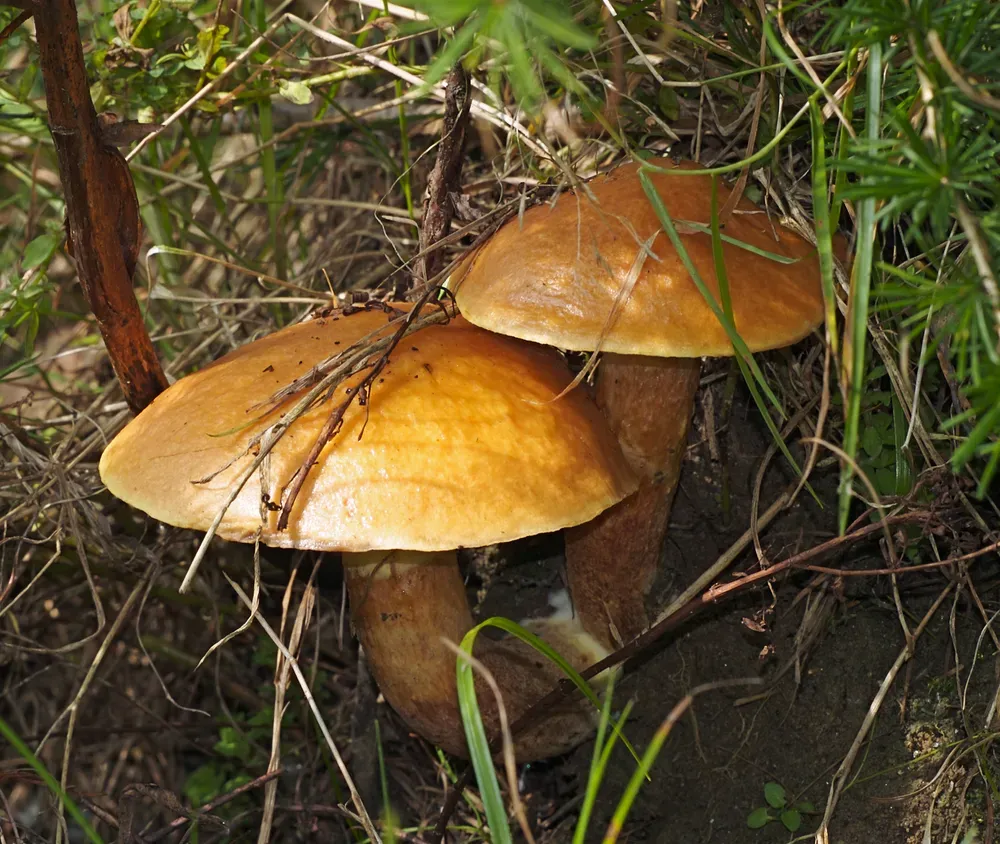
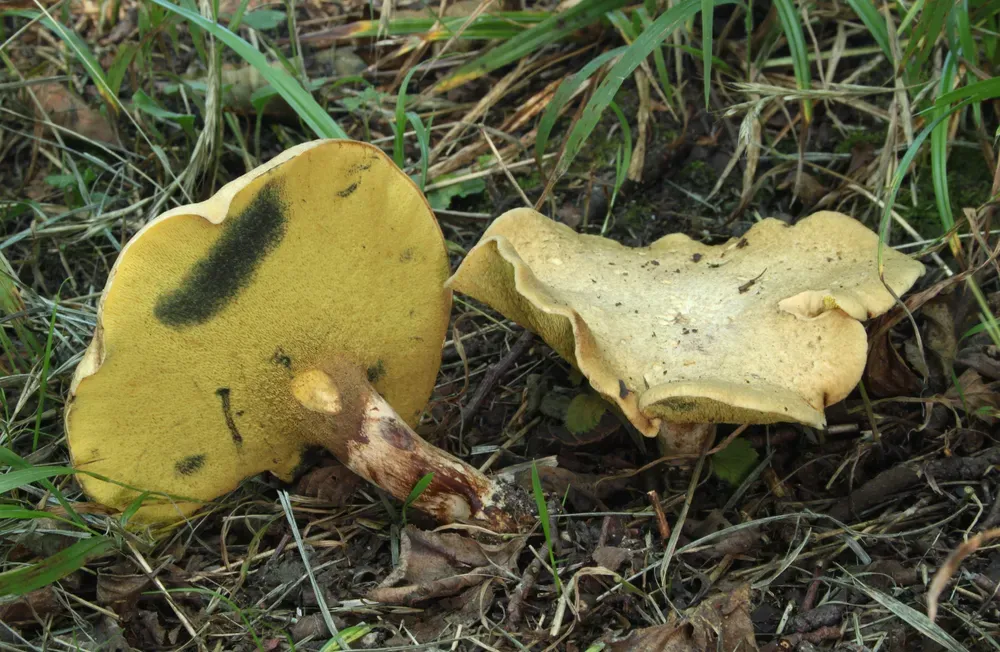
Related species
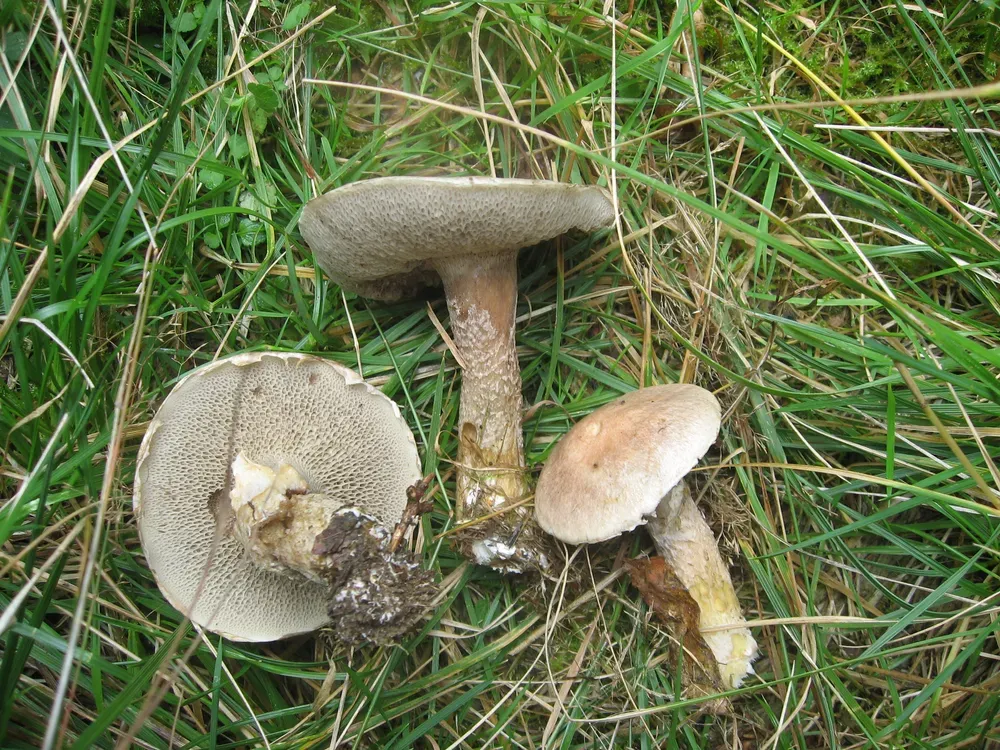
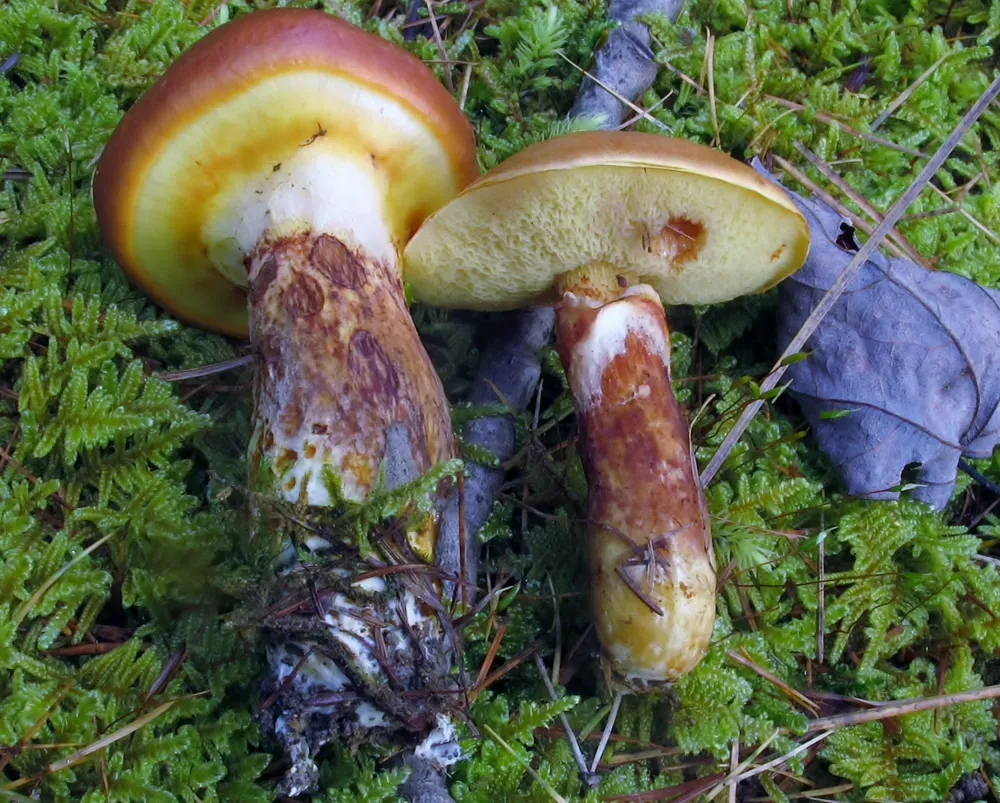
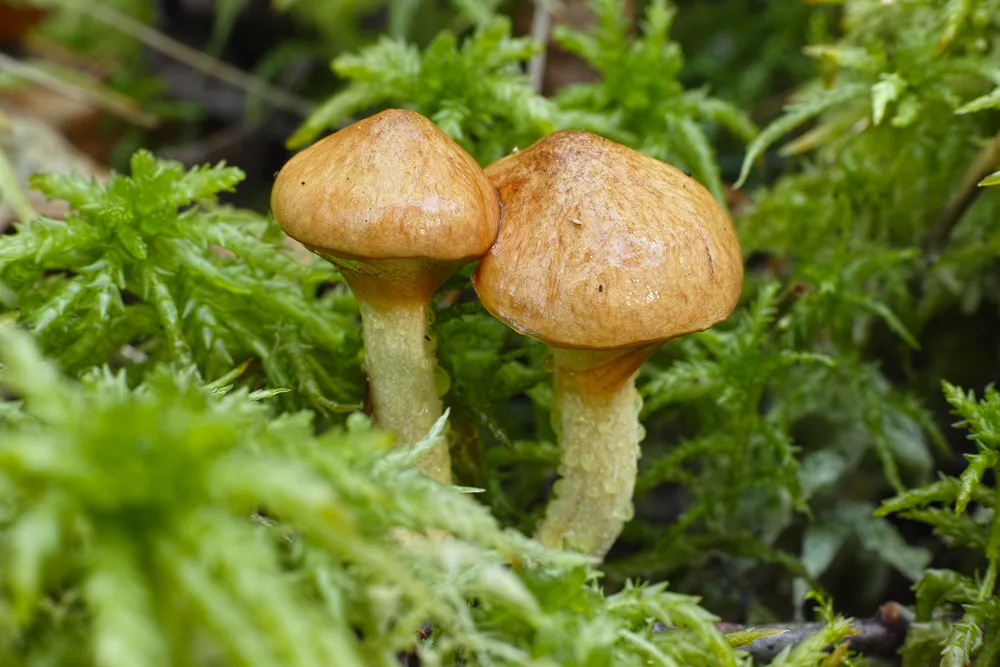
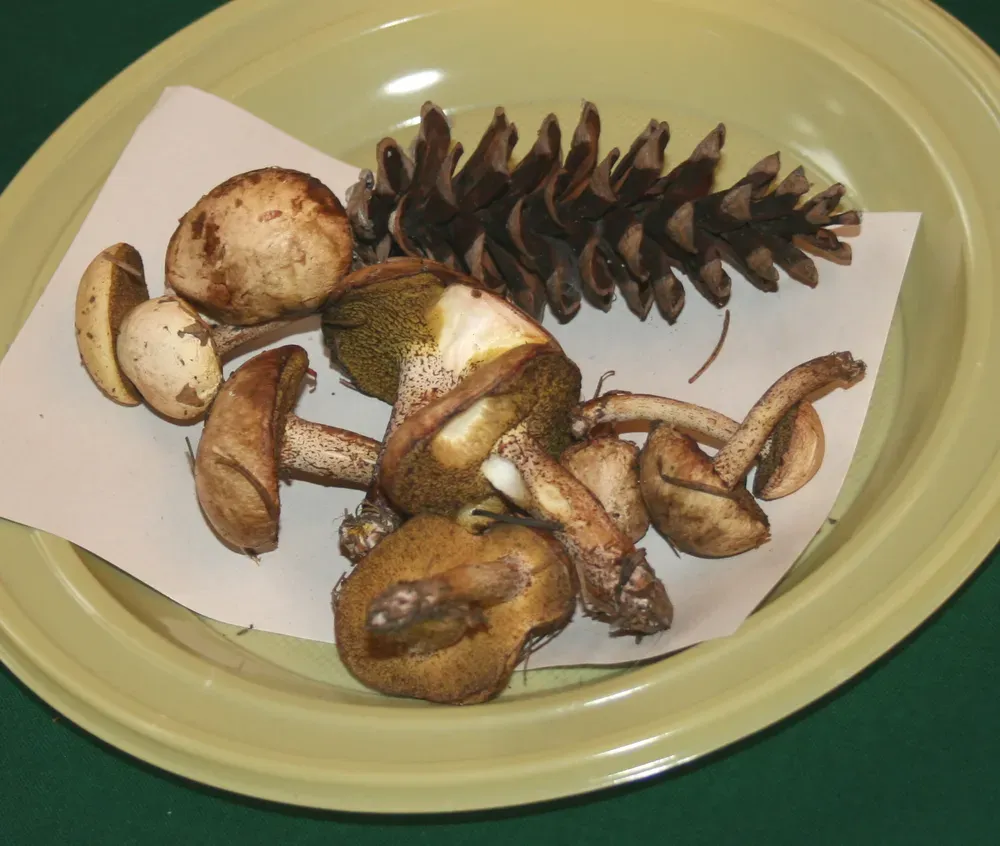
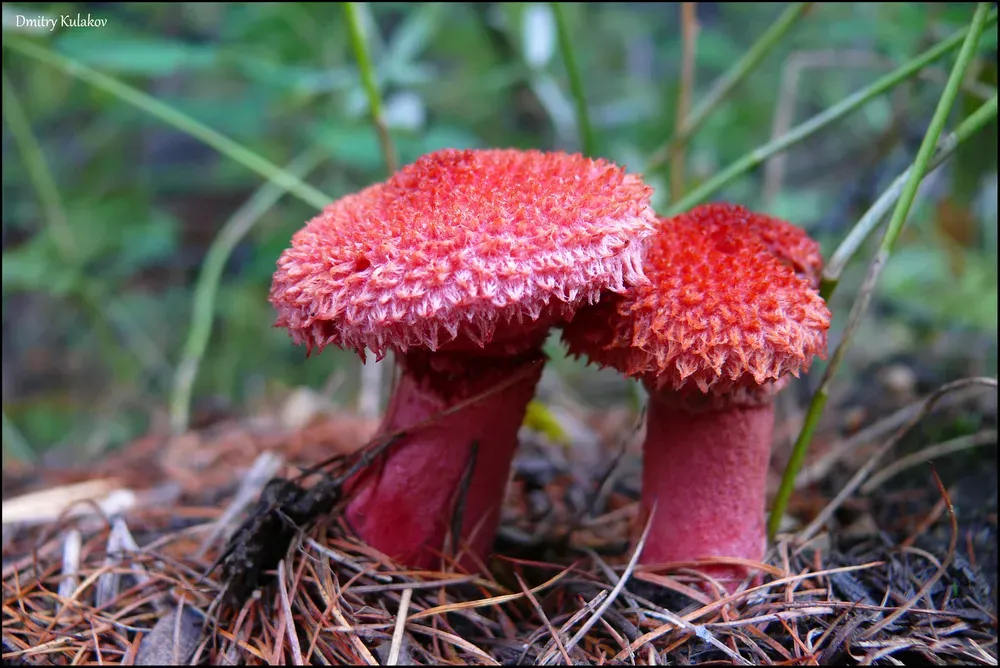
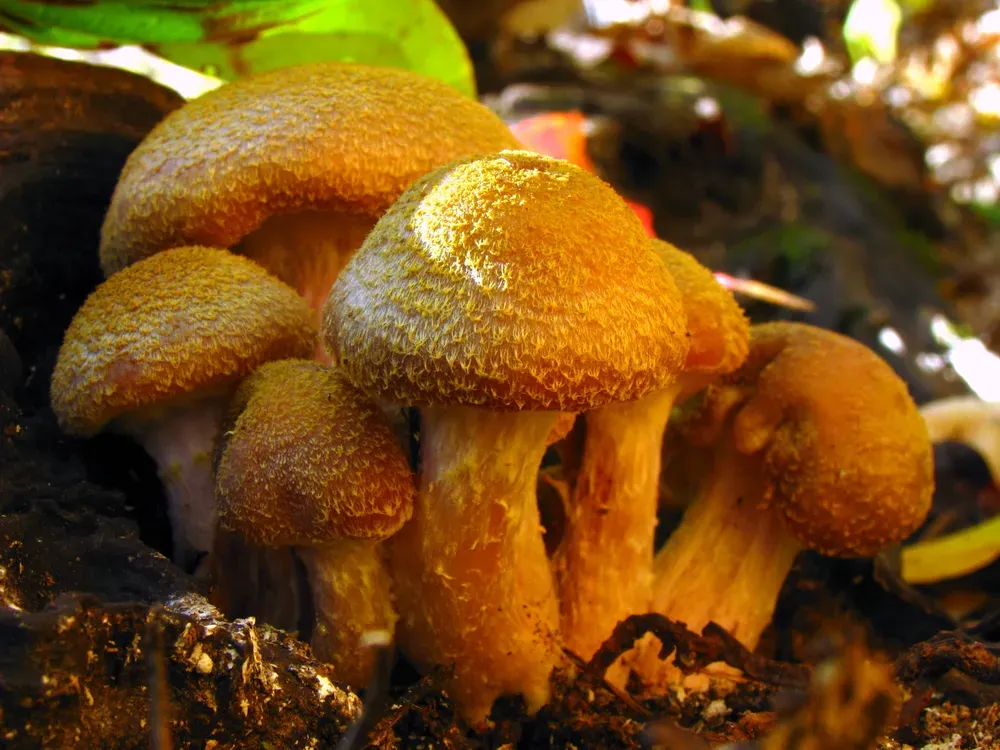
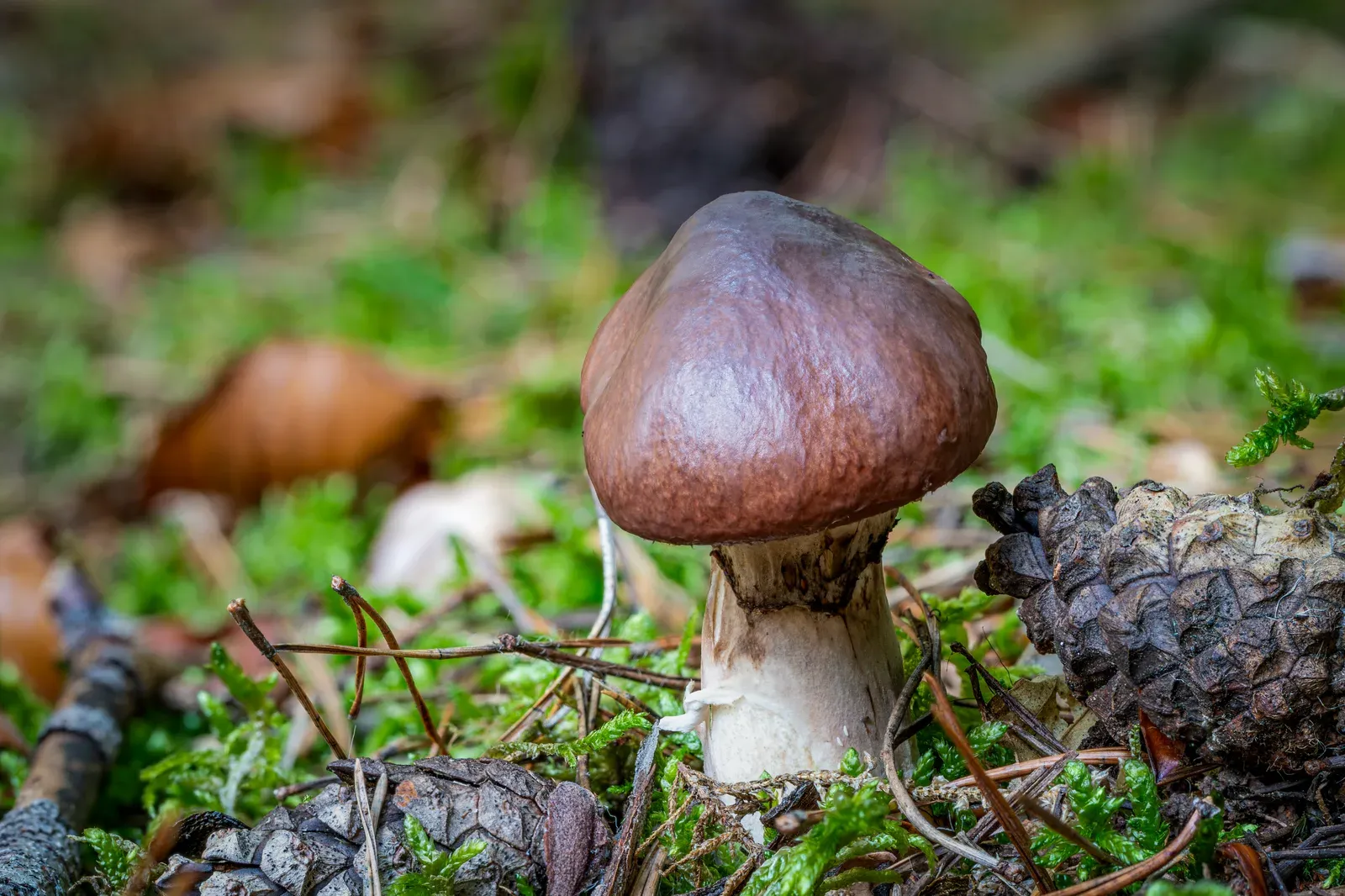
Mushrooms of the same genus and habitat — to study side by side and never mix up.
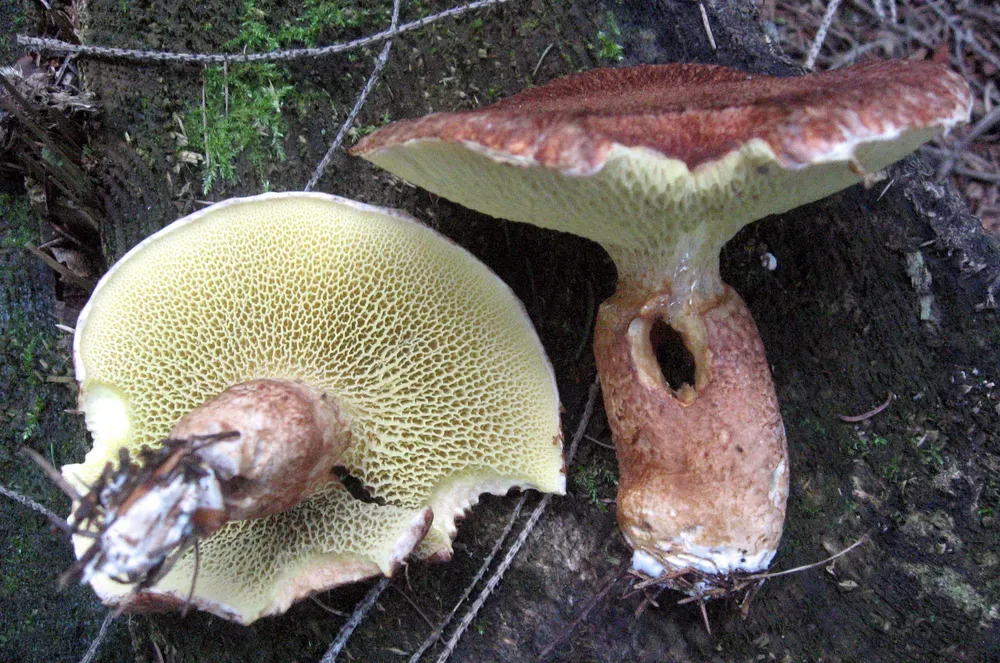
_Kuntze_791558.webp)
Related reading
 Where & when to forage
Slippery jacks in autumn, the season's second wave
Autumn is often the most generous time for slippery jacks. The mushrooms are firm, clean and plentiful right u…
April 8, 2026·3 min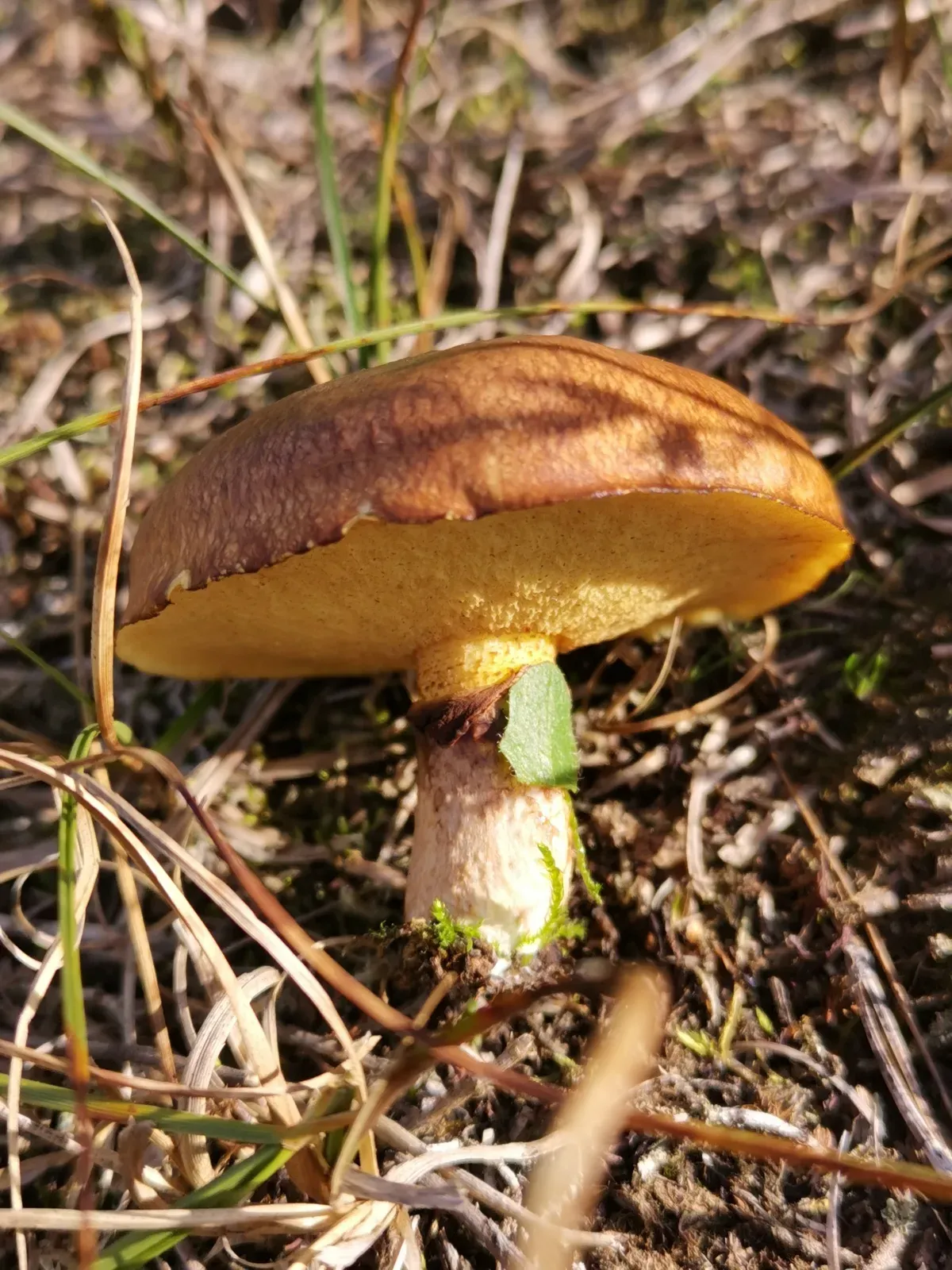 Where & when to forage
Slippery jacks after rain: when to head to the woods
Slippery jacks shoot up within days of a warm rain. Here's how long to wait after rain, how temperature affect…
April 6, 2026·3 min.webp) Safety
SafetyAre any slippery jacks poisonous?
The slippery jack is considered a safe mushroom, yet people often ask about poisonous ones. Here's an honest l…
March 29, 2026·3 min
Frequently asked questions
Can the bovine bolete be confused with a poisonous mushroom?
Among the pored mushrooms of pine forests, the bovine bolete has practically no dangerous lookalikes. All the boletes that grow with pine (slippery jacks, Xerocomus boletes) are edible too. However, if the flesh turns blue when cut, it's a different species — check it more carefully or leave it.
Where can you find the bovine bolete in Ukraine?
In young pine forests and mixed forests with pine, on poor sandy soils. Most abundantly in the pine woods of Polissia: Volyn, Rivne, Kyiv and Chernihiv regions. It doesn't grow in the steppe or in pure broadleaf forests.
In which months does the bovine bolete grow?
The main peak is August and September, but the first mushrooms appear as early as late June — in July after heavy rain. The last finds are in October, until the first frosts.
How is the bovine bolete different from a slippery jack?
The bovine bolete's cap is more of a matte ochre, not as shiny as the slippery jack's; the stem has no ring and no dark spots. The bovine bolete's pores are much larger and angular, like honeycomb — the slippery jack's pores are small and round.
Why do you often find lots of bovine boletes in one spot?
It's a "gregarious" mushroom — the mycorrhiza spreads along the pine's root system, and the fruiting bodies come up in big clusters of 10–30 side by side. Once you've found one family, it's worth carefully searching 10–20 meters around it.
Do you need to peel the skin off a bovine bolete?
Unlike the slippery jack, the bovine bolete's skin isn't sticky and doesn't spoil the broth. You don't have to remove it, but if you want a lighter pickle, you can try peeling young mushrooms.
Can you pickle other pored mushrooms instead of bovine boletes?
Yes. The bovine bolete pairs well with the weeping bolete and the velvet bolete in a mixed pickle — they grow at the same time and in the same places, and have a similar texture.
Does the bovine bolete grow with spruce or larch?
No, the bovine bolete is strictly a pine species. You won't find it in spruce woods or larch plantations — other slippery jacks and Xerocomus boletes grow there.
Is Bovine bolete edible or poisonous?
Does Bovine bolete have gills or pores?
What does the cap of Bovine bolete look like?
What does the stem of Bovine bolete look like?
Sources
- [1]Вікіпедія (українська)
- [2]Атлас грибів України, Зеров Д.К. (1979)
- [3]MycoBank Database
- [4]Index Fungorum
- [5]GBIF
- [6]iNaturalist Ukraine