THIS DATA HAS NOT BEEN VERIFIED BY AN EXPERT. Use at your own risk.
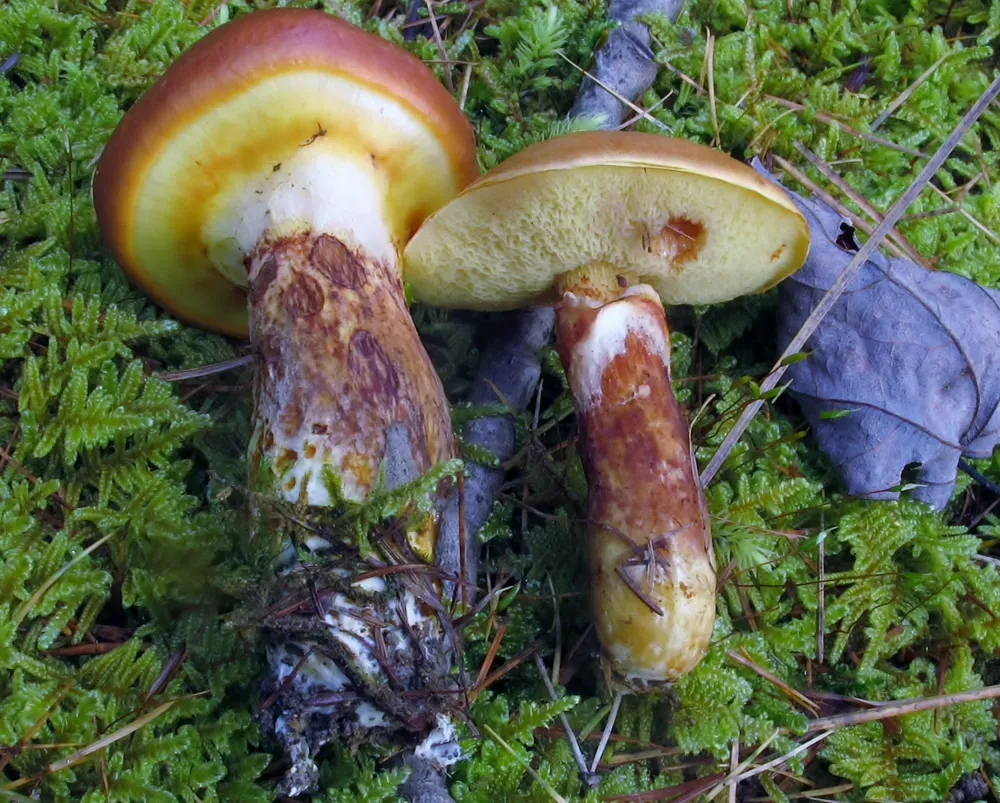
Suillus clintonianus
Under reviewUpdated October 3, 2026
Passport
- Edibility
- Edible
- Season
- Jul — Oct
- Hymenophore
- Pored
- Cap color
- Brown
- Size
- Medium (5–15 cm)
- Smell
- Pleasant
- Reviewed
- Under review
Quick answers
Where to look?
Conifer forest, Mixed forest
When does it appear?
Jul — Oct
Active months: July, August, September, October.
How to recognize it? Three signs
- Cap color: Brown, Dark brown
- Cap shape: Convex
- Smell: Pleasant
Fruiting season
July – October
Description
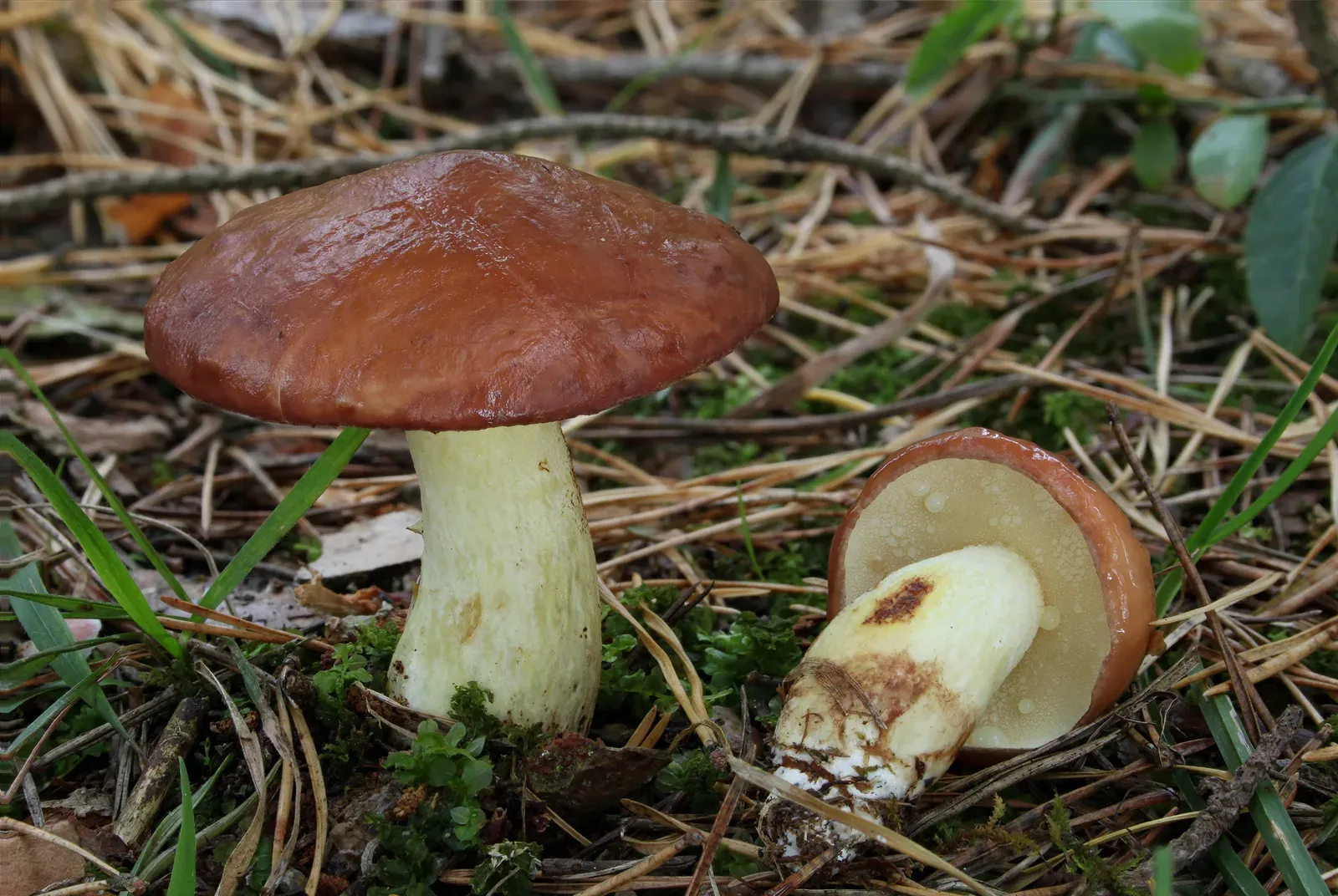
Suillus clintonianus is a handsome edible mushroom with a glossy chestnut cap, and its whole life is bound up with larches. Like all true slippery jacks, it forms mycorrhiza with conifers, but it picks larch as its partner, so look for it wherever these light-needled beauties grow — in shelterbelts, parks, plantations and mixed woods. You'll recognize it easily by its bright, almost lacquered cap of deep reddish brown and the telltale ring on the stem — the trace of a veil that protected the tubes when the mushroom was young.
In Ukraine, Suillus clintonianus turns up wherever people have planted larch — in forestry plantations, arboretums and planted stands all over the country, from Polissia to the Carpathians. It fruits in the second half of summer and in autumn, and it appears most abundantly in September after cool rains, often in large, close-knit groups under a single tree.
In terms of edibility, Suillus clintonianus counts as a good edible mushroom. Its tender yellowish flesh has a pleasant, mild flavor, and the mushroom is great for frying, pickling and soups. As with other slippery jacks, it's worth peeling the slimy skin off the cap before cooking — it makes dishes unpleasantly sticky and can taste bitter. Young, firm specimens are the most prized, since with age the flesh turns spongy and is often infested with larvae.
Cap
The cap of Suillus clintonianus reaches 4 to 12 centimeters across. When young it is neatly hemispherical or cushion-shaped, opening out with maturity to convex and almost flat. The cap surface is smooth, noticeably slimy and glossy in wet weather, as if varnished, and turns sticky and shiny in dry weather. The color is rich and warm — from chestnut brown and reddish brown to a dark chocolate brown, often darker in the center. The skin peels easily off the cap, which is typical of all slippery jacks.
Hymenophore
Under the cap lies a tubular hymenophore with small, round pores. In young mushrooms they are pale yellow or golden yellow, turning a deeper yellow and olive-yellow as they mature. The tubes are attached to the stem or run slightly down it. When pressed or damaged, the pores may slowly turn brown, developing rusty brown spots. In young mushrooms the hymenophore is hidden by a whitish veil, whose remnants later form a ring on the stem.
Stem
The stem of Suillus clintonianus is cylindrical, 4 to 10 centimeters tall, fairly dense and springy. Its defining feature is a prominent ring in the upper part, left behind when the veil tears. Above the ring the stem is pale yellow and often finely netted; below it, brown to ochre-brown, with darker fibers. To the touch the stem is dry or slightly sticky. There is no volva. It's the combination of a slimy chestnut cap, a ring and the link to larch that reliably sets this species apart.
Flesh
The flesh of Suillus clintonianus is tender, firm when young and spongier with age. It is pale yellow or lemon yellow, barely changes on exposure to air or only browns slightly where cut. The flesh tastes pleasant and mild, with no bitterness, and soaks up flavors well during cooking. As with all slippery jacks, the flesh tends to soften quickly, so for the table choose young, firm mushrooms.
Smell
The smell of Suillus clintonianus is faint, pleasant and typically mushroomy, with no sharp or sour notes. The aroma is not a defining feature of the species, so when identifying it, rely first and foremost on the slimy chestnut cap, the ring on the stem and its growing next to larch.
›Scientific synonyms (1)
Boletus clintonianus
Lookalikes
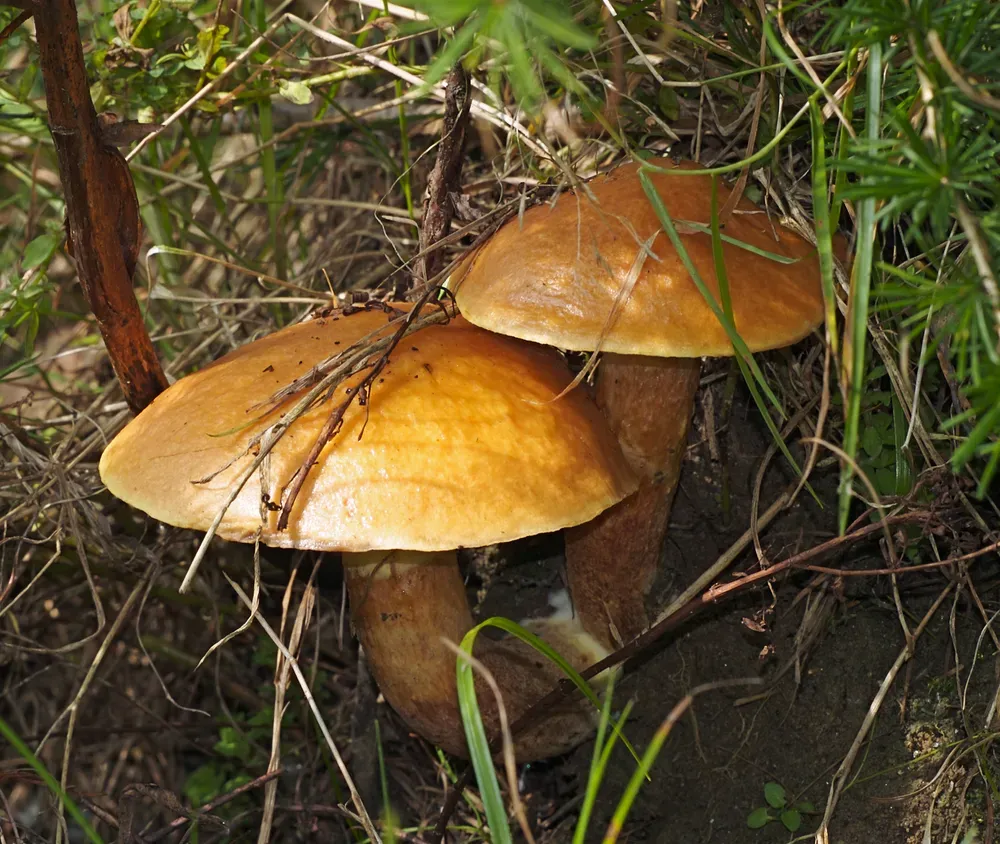
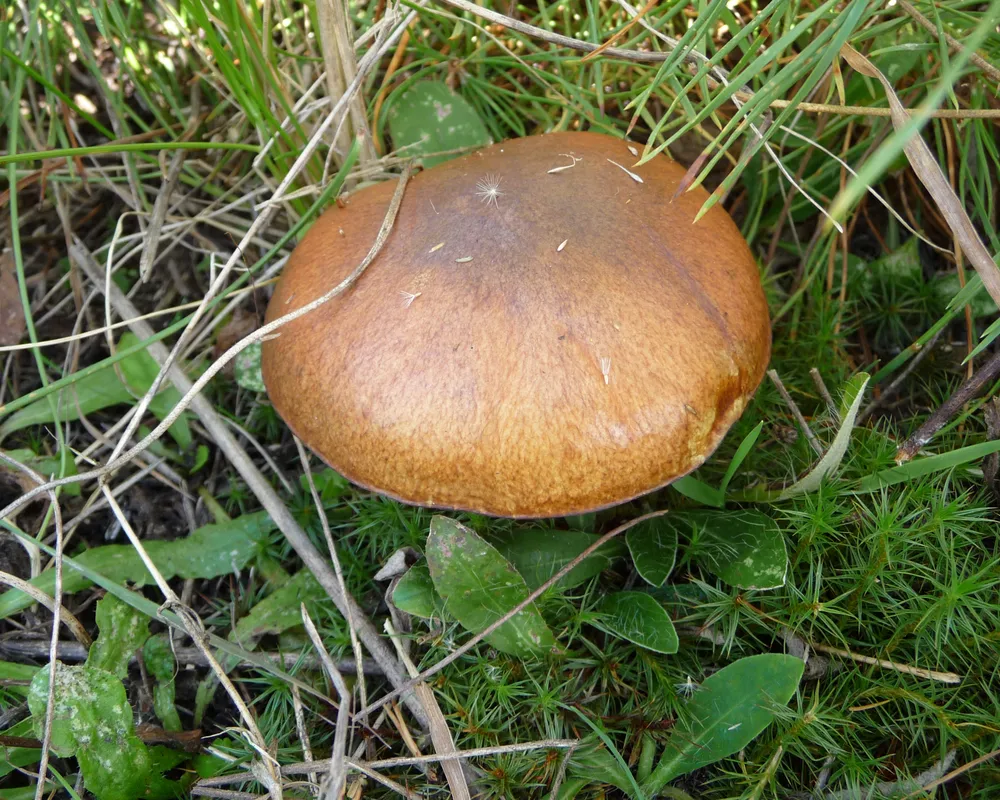
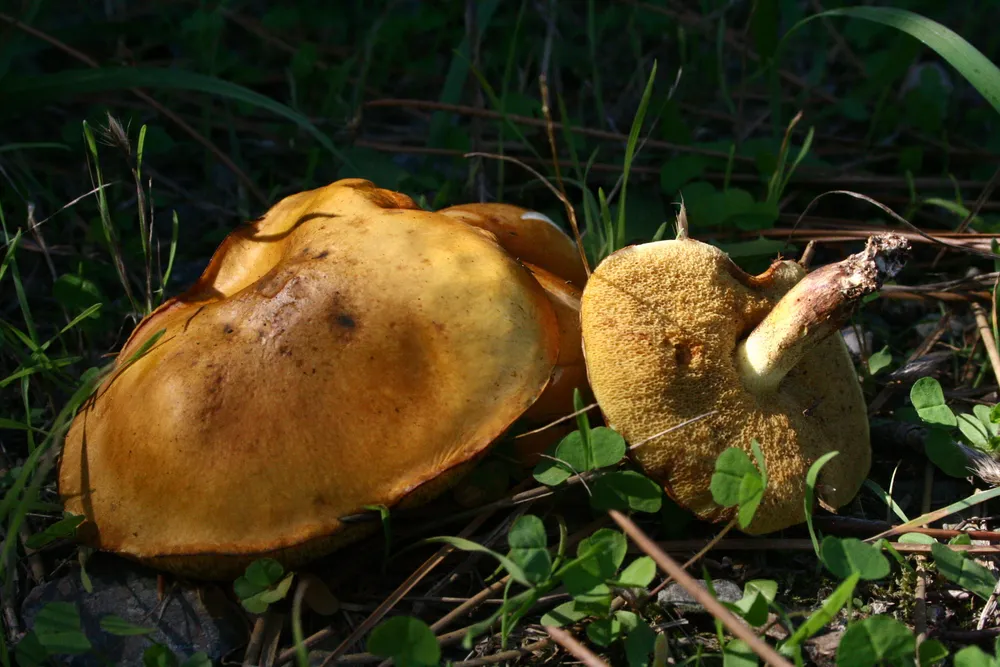
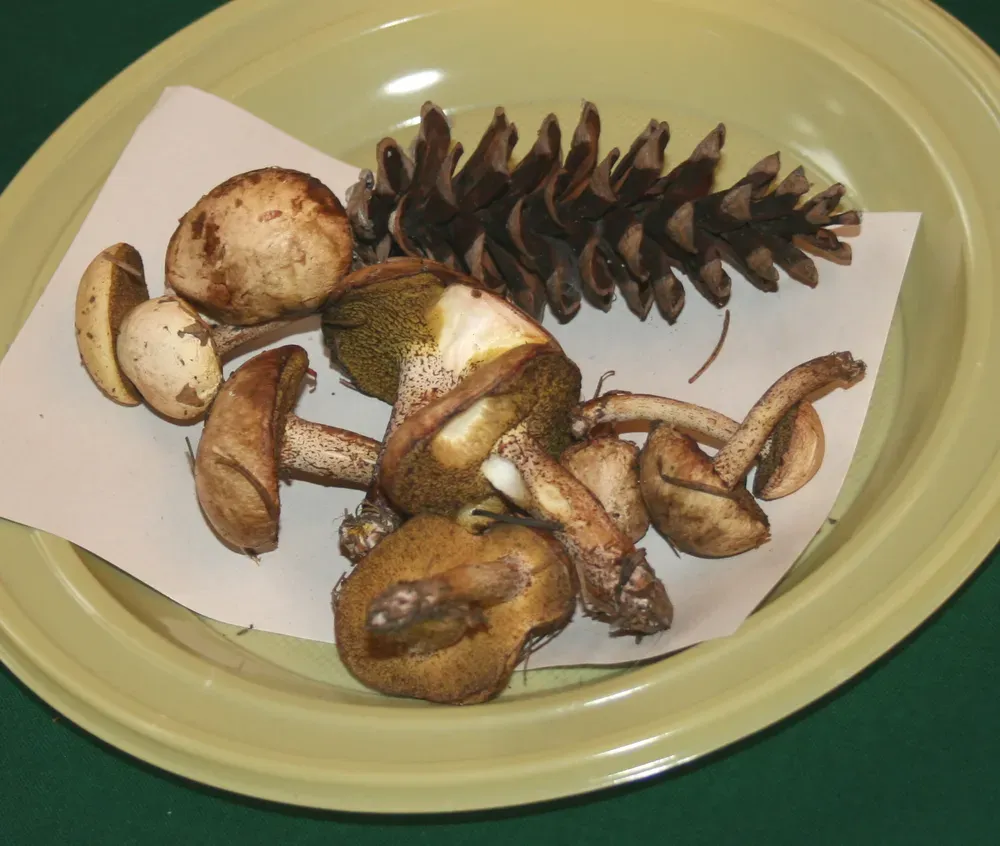
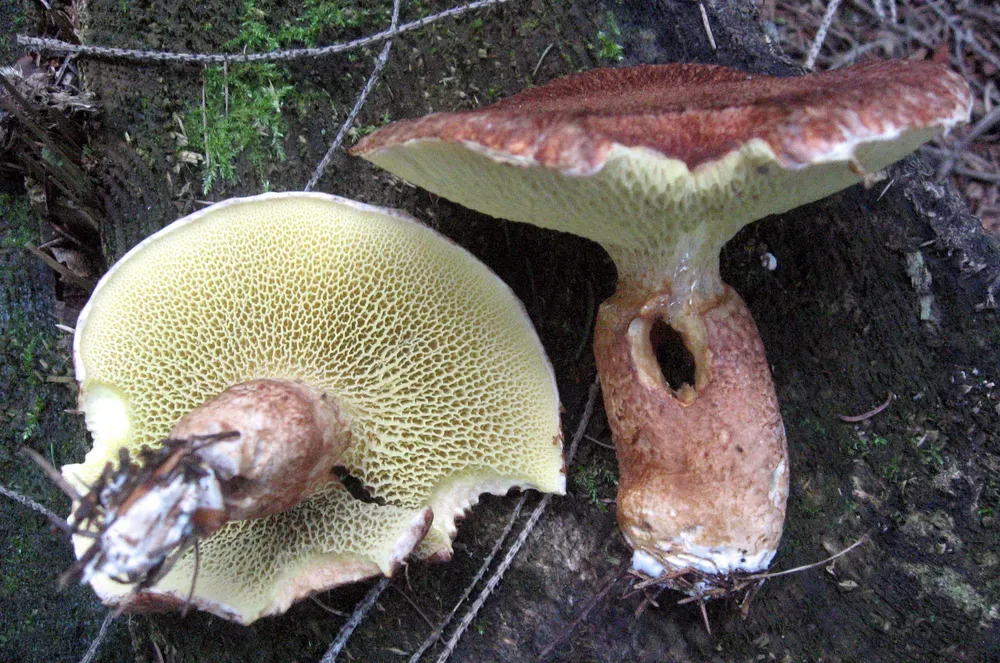
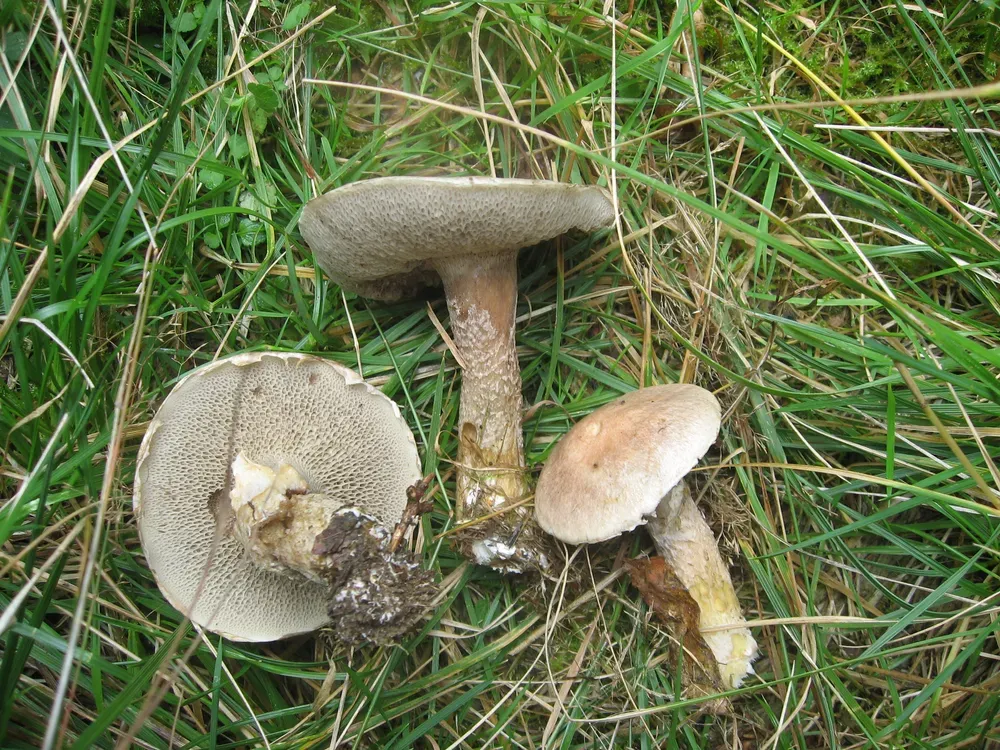
Related species
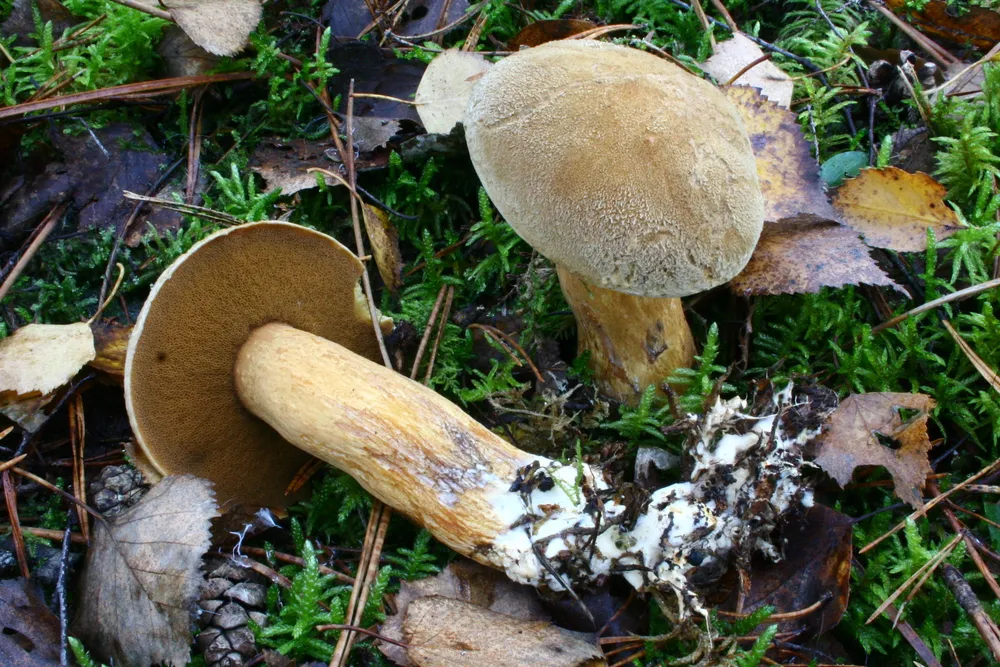
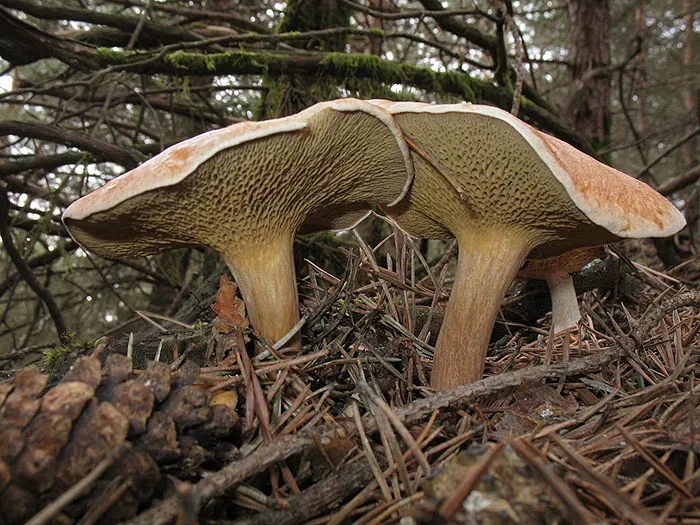
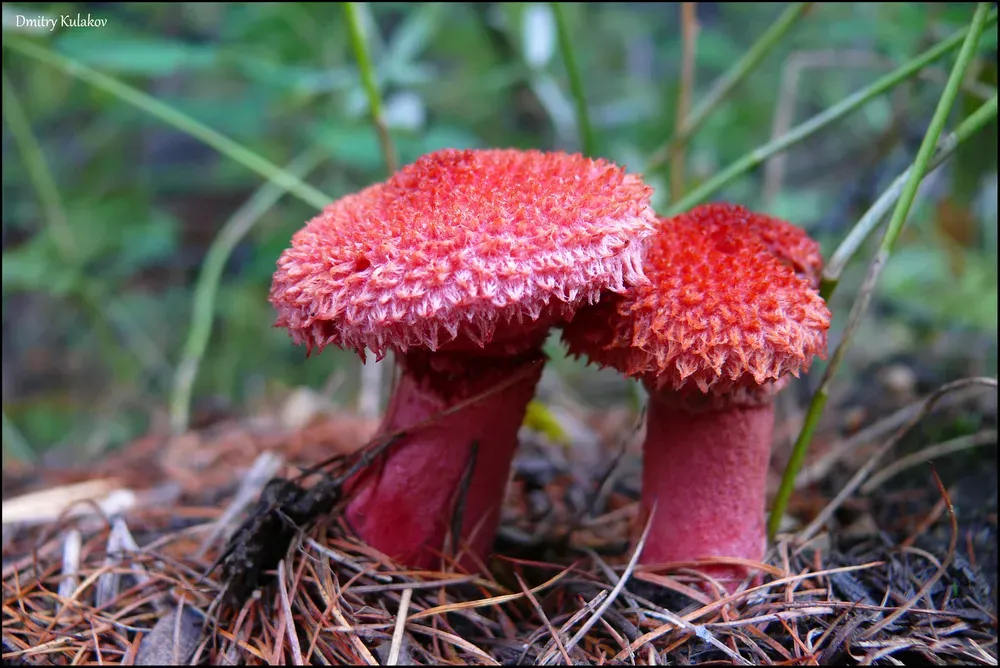
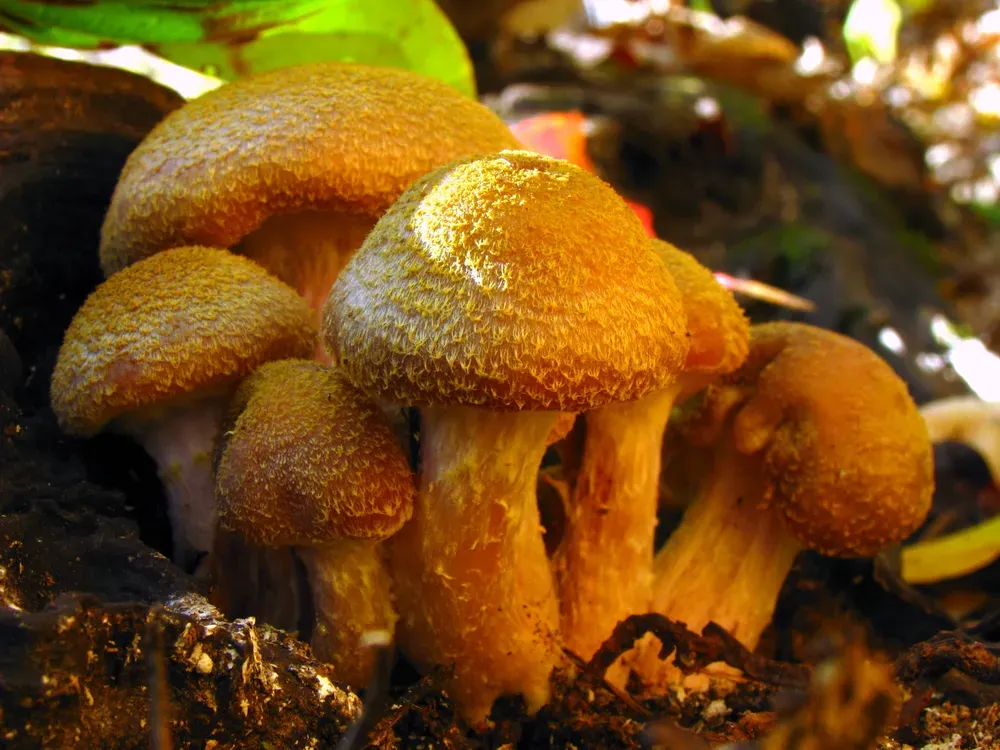
Mushrooms of the same genus and habitat — to study side by side and never mix up.
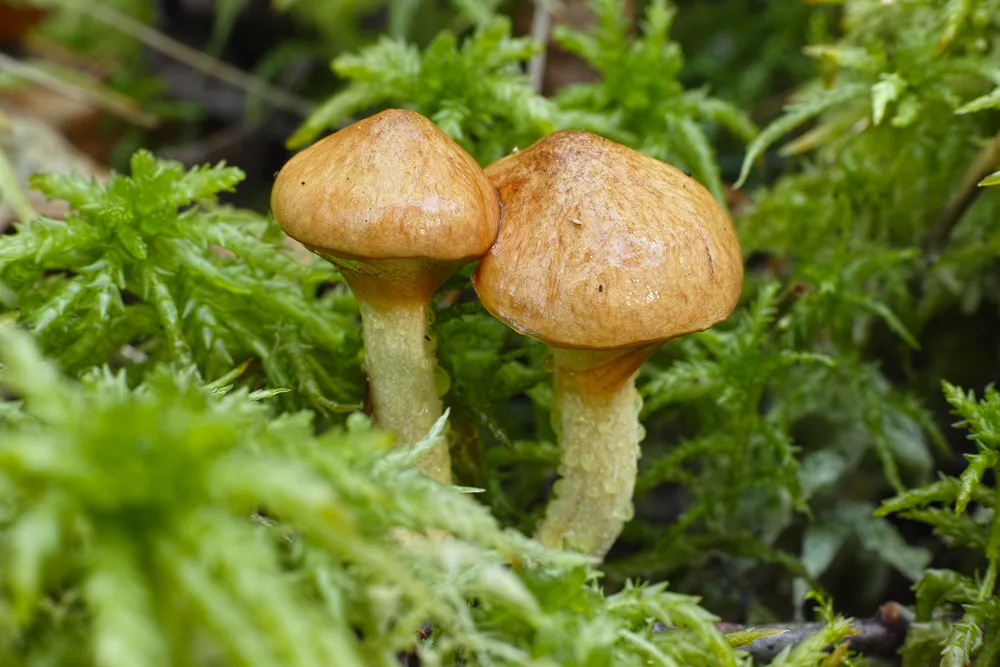
_Kuntze_791558.webp)
Related reading
Frequently asked questions
Is Suillus clintonianus edible or poisonous?
Does Suillus clintonianus have gills or pores?
What does the cap of Suillus clintonianus look like?
What does the stem of Suillus clintonianus look like?
What do Suillus clintonianus smell and taste like?
Where does Suillus clintonianus grow?
Which trees does Suillus clintonianus grow under?
When should you pick Suillus clintonianus?
What can Suillus clintonianus be confused with?
How do you cook Suillus clintonianus?
Can you dry Suillus clintonianus?
What is the scientific name of Suillus clintonianus?
Sources
- [1]Вікіпедія (українська)
- [2]Атлас грибів України, Зеров Д.К. (1979)
- [3]MycoBank Database
- [4]Index Fungorum
- [5]GBIF
- [6]iNaturalist Ukraine