THIS DATA HAS NOT BEEN VERIFIED BY AN EXPERT. Use at your own risk.
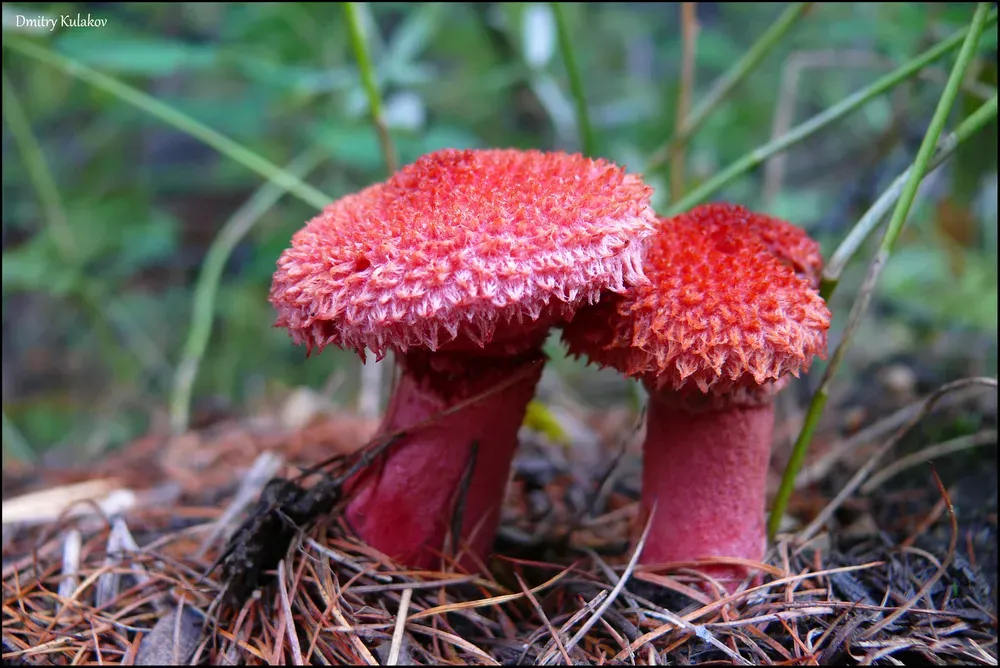
Suillus asiaticus
Under reviewUpdated October 3, 2026
Passport
- Edibility
- Edible
- Season
- Jul — Sep
- Hymenophore
- Pored
- Cap color
- Red
- Size
- Medium (5–15 cm)
- Smell
- Pleasant
- Reviewed
- Under review
Quick answers
Where to look?
Conifer forest, Mixed forest
When does it appear?
Jul — Sep
Active months: July, August, September.
How to recognize it? Three signs
- Cap color: Red, Pink, Brown
- Cap shape: Convex, Flat
- Smell: Pleasant
Fruiting season
July – September
Description
Suillus asiaticus (formerly Boletinus asiaticus) is a bright larch mushroom from the slippery jack family, a close relative of Suillus spectabilis. Like all larch boletes and slippery jacks, it forms mycorrhiza exclusively with larch, so it only turns up where these trees grow. The species comes from Eastern Siberia and the mountain regions of Asia, and has expanded its range along with larch plantings; it stands out for its reddish-crimson fibrous-scaly cap and slimy veil.
In Ukraine, Suillus asiaticus is rare and is found mainly in mountain and foothill larch plantings, particularly in the Carpathians, as well as wherever larch has been introduced. It fruits in summer and autumn — July through September; it appears in groups under larches among moss and grass.
Suillus asiaticus is an edible mushroom, though its culinary value is modest: the flesh is soft and watery, as in many larch-loving Suillus. Pick young, firm specimens; it can be fried or boiled, often after peeling the sticky skin off the cap. As a rare and picturesque find, it's valued more by foragers themselves than by cooks.
Cap
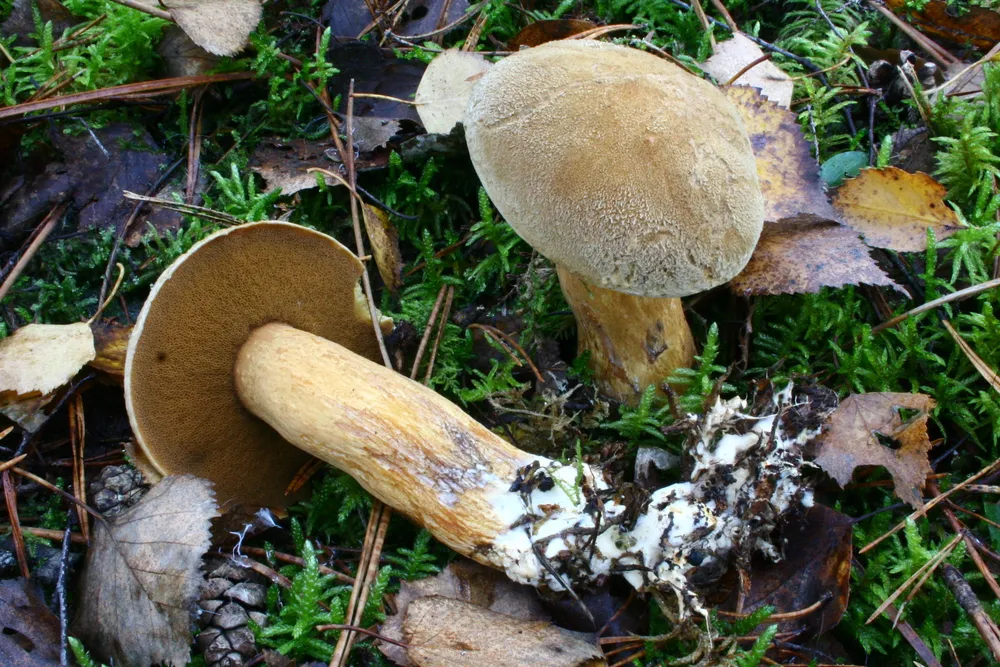
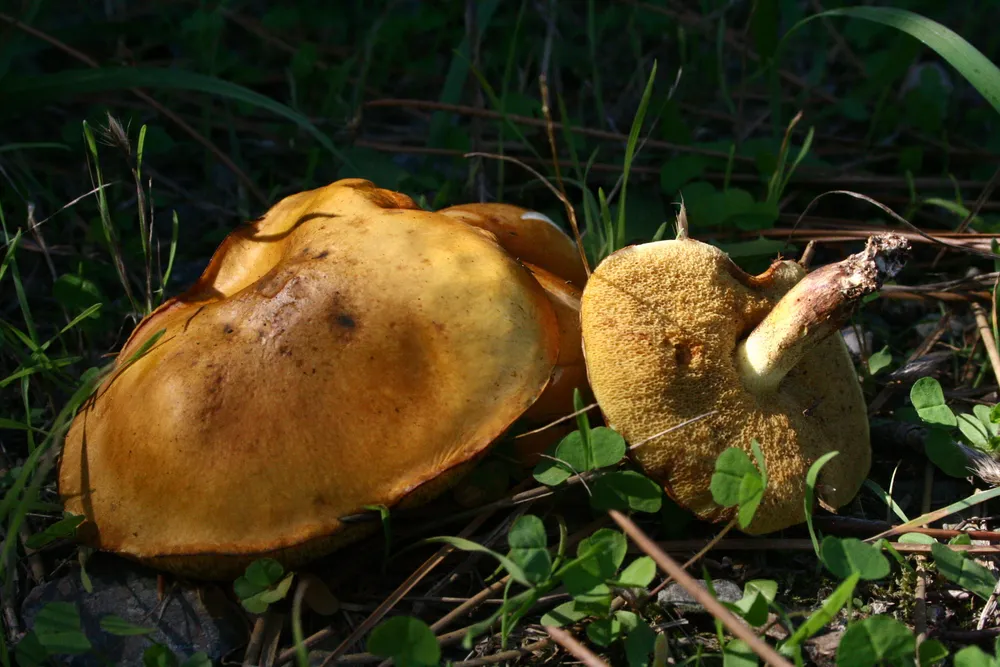
The cap of Suillus asiaticus is 4 to 10 centimeters across. When young it is convex to hemispherical; with age it opens out flat. The surface is fibrous-scaly, sticky and slimy in wet weather, with veil remnants along the edge. The color is vivid — reddish-crimson, pinkish-red or brownish-red, with darker flattened fibrous scales. Its bright crimson color sets this species apart from the yellowish-brown slippery jacks.
Hymenophore
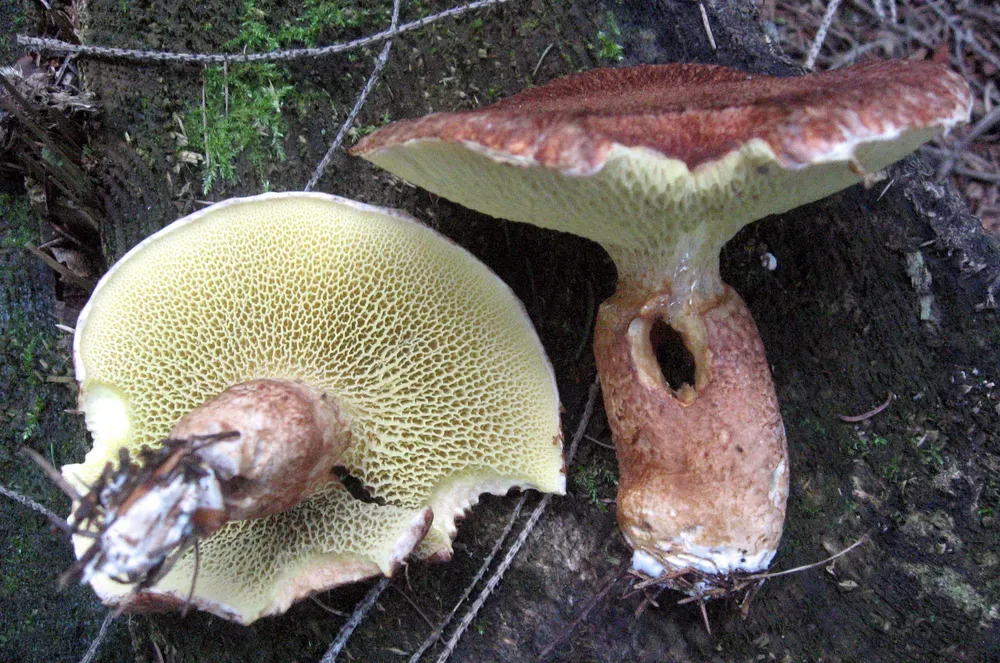
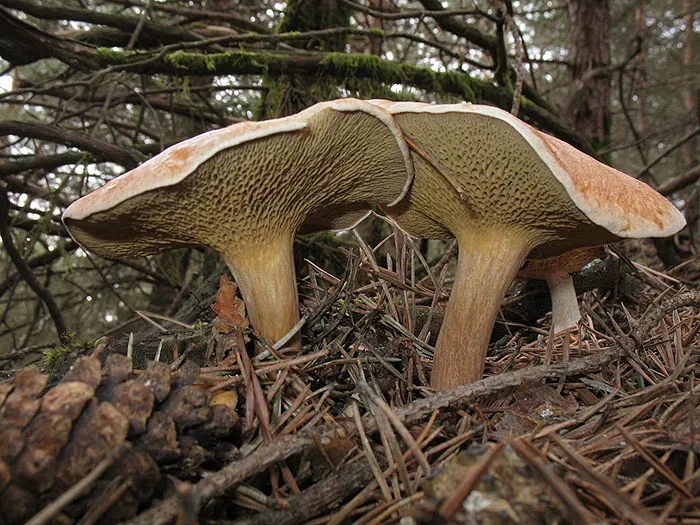
The spore-bearing surface is made of tubes. The tubes run noticeably down the stem (decurrent), with wide, angular, radially arranged pores resembling honeycomb, as in other larch boletes. They are yellow or golden-yellow, turning olive-yellow with age; they may brown slightly when damaged. Large, angular, decurrent pores are a hallmark of the genus. The spore print is olive-brown.
Stem
The stem is cylindrical, 4 to 8 centimeters tall, yellowish-reddish, with a noticeable slimy or fibrous ring near the top — a remnant of the veil. Above the ring the stem is light yellow; below it, it matches the cap, with reddish fibers. There is no volva. The combination of a bright scaly cap, decurrent yellow pores, a ring and association with larch reliably identifies this species.
Flesh
The flesh is yellowish or pale yellow, fairly soft and watery, and may turn slightly pink or brown when cut. The taste is mild, with no bitterness. Because of its watery texture, choose young, firm specimens for the table; its culinary value is modest, like that of other larch-loving Suillus.
Smell
The smell is faint, pleasant and typically mushroomy, with no sharp notes. Scent isn't a defining feature, so for identification rely on the bright reddish-crimson scaly cap, large decurrent yellow pores, the ring on the stem and its constant association with larch.
›Scientific synonyms (2)
Boletinus asiaticus Singer (1938), Boletinus paluster var. asiaticus
Lookalikes
_Kuntze_791558.webp)
Related species
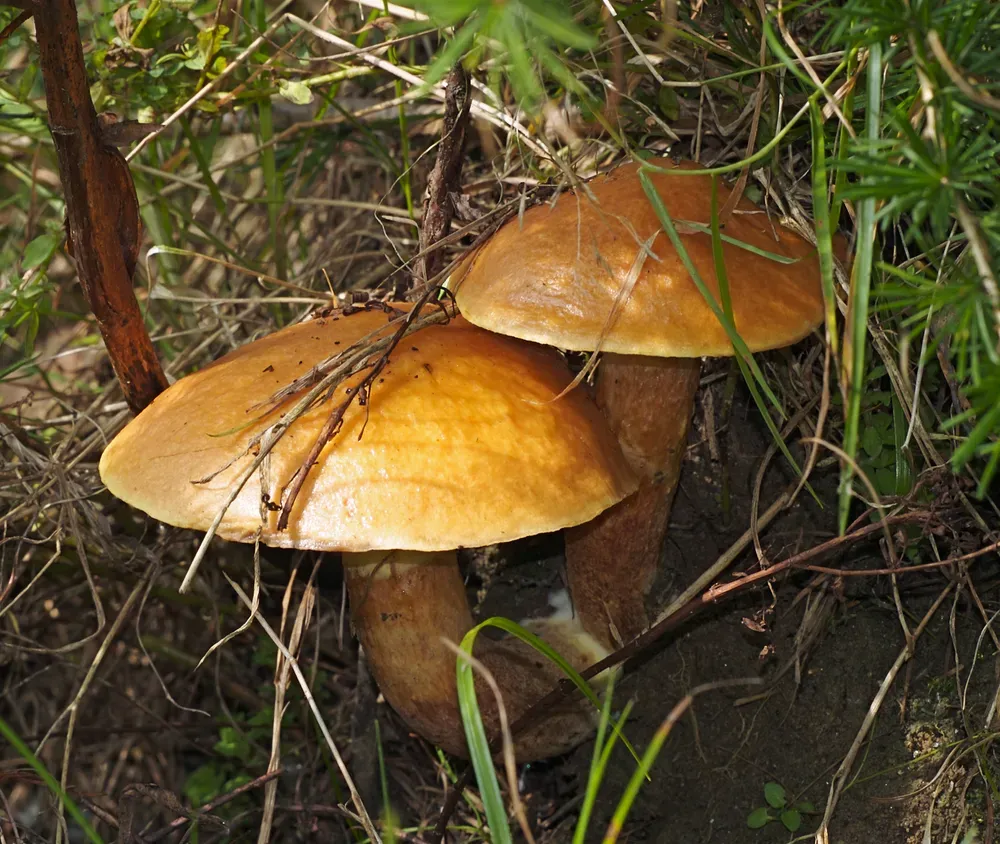
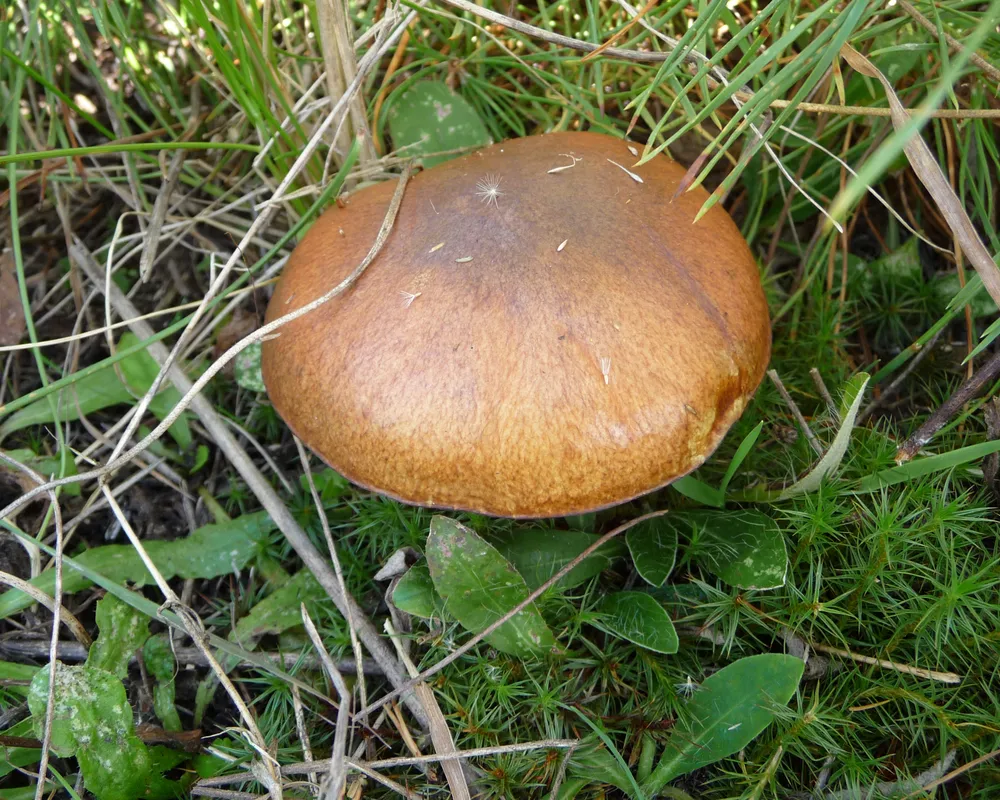
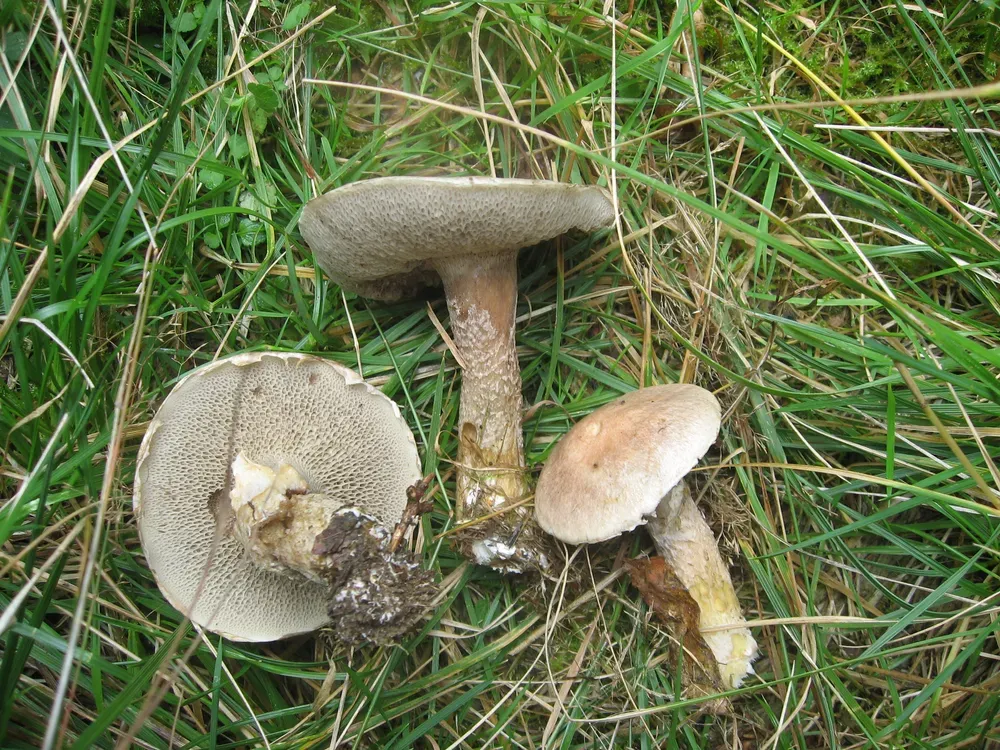
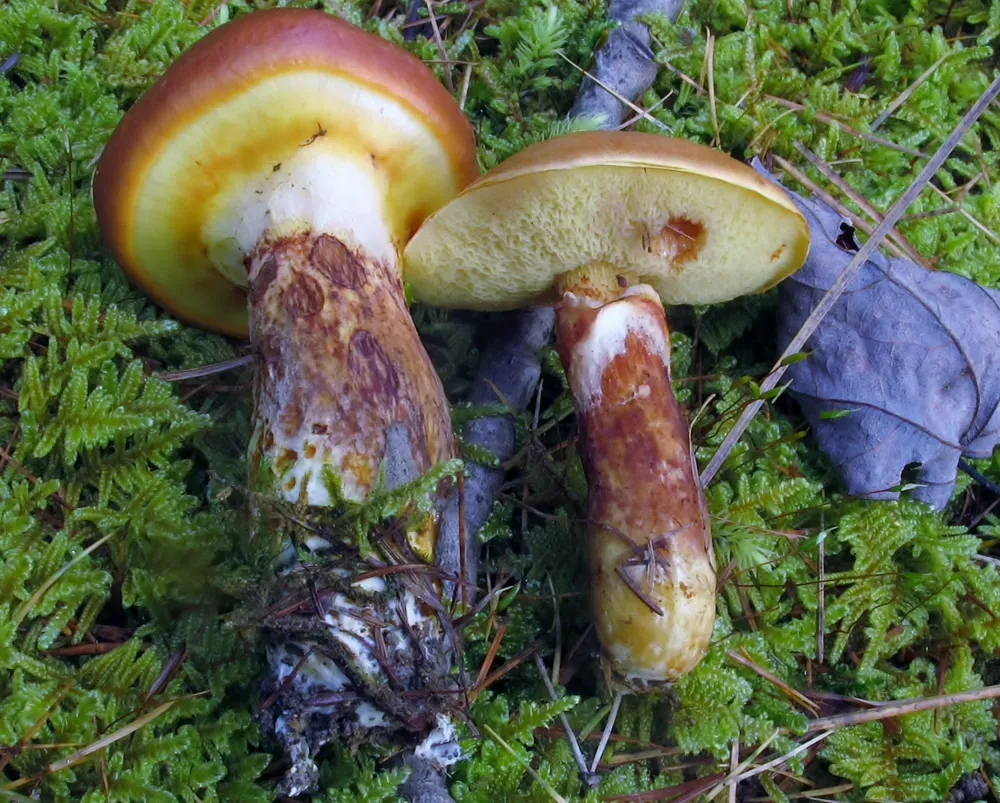
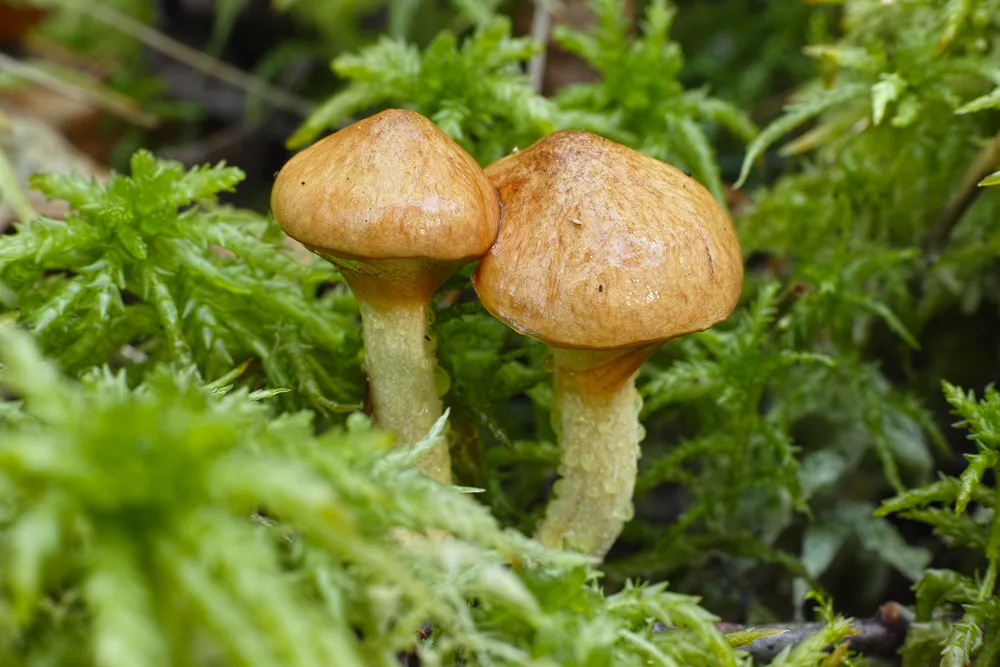
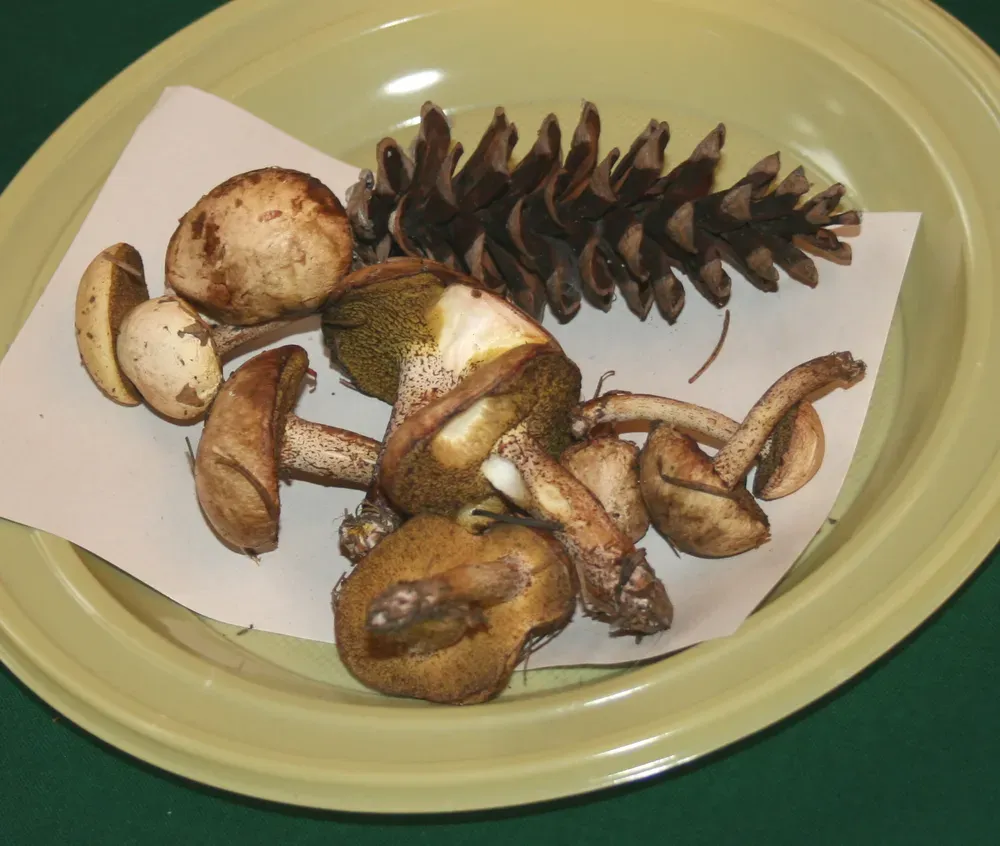
Mushrooms of the same genus and habitat — to study side by side and never mix up.
Frequently asked questions
Is Suillus asiaticus edible or poisonous?
Does Suillus asiaticus have gills or pores?
What does the cap of Suillus asiaticus look like?
What does the stem of Suillus asiaticus look like?
What do Suillus asiaticus smell and taste like?
Where does Suillus asiaticus grow?
Which trees does Suillus asiaticus grow under?
When should you pick Suillus asiaticus?
What can Suillus asiaticus be confused with?
How do you cook Suillus asiaticus?
Can you dry Suillus asiaticus?
What is the scientific name of Suillus asiaticus?
Sources
- [1]Вікіпедія (українська)
- [2]Атлас грибів України, Зеров Д.К. (1979)
- [3]MycoBank Database
- [4]Index Fungorum
- [5]GBIF
- [6]iNaturalist Ukraine