THIS DATA HAS NOT BEEN VERIFIED BY AN EXPERT. Use at your own risk.
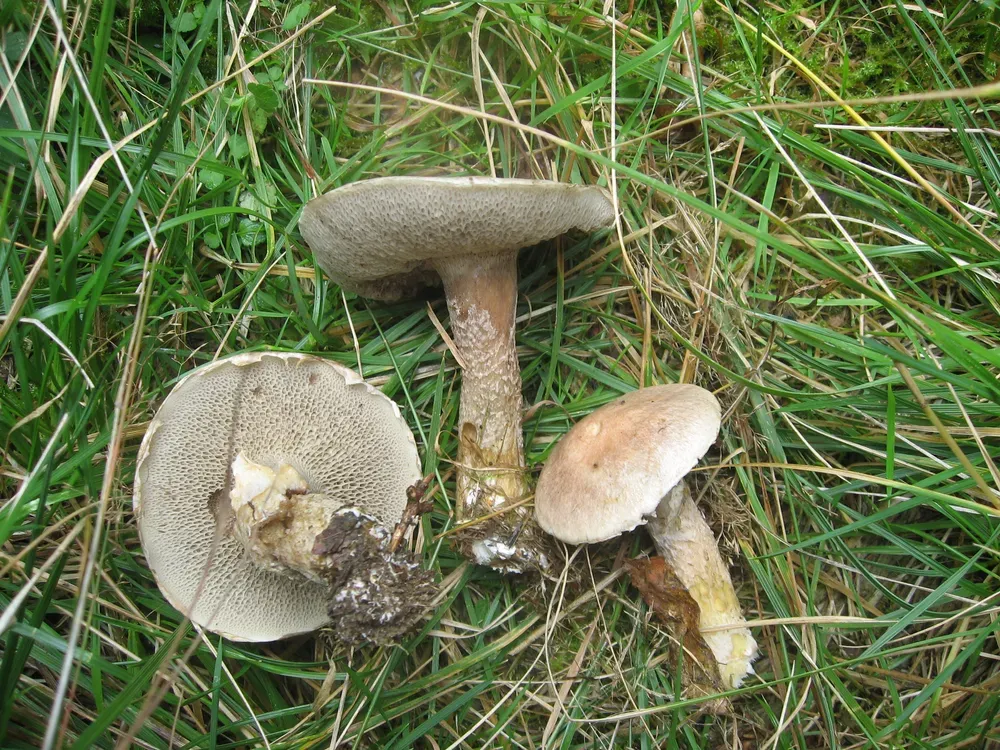
Sticky boleteSuillus viscidus
Under reviewUpdated October 3, 2026
Passport
- Edibility
- Edible
- Season
- Aug — Oct
- Hymenophore
- Pored
- Cap color
- Grey
- Size
- Medium (5–15 cm)
- Smell
- Pleasant
- Reviewed
- Under review
Quick answers
Where to look?
Conifer forest, Mixed forest
When does it appear?
Aug — Oct
Active months: August, September, October.
How to recognize it? Three signs
- Cap color: Grey, Olive, Brown
- Cap shape: Convex
- Smell: Pleasant
Fruiting season
August – October
Description
The sticky bolete, also known as the bluing larch bolete or gray bolete, and to science as Suillus viscidus, stands out clearly among the golden-brown Suillus crowd with its understated gray outfit. It's another faithful companion of larch: it forms mycorrhiza exclusively with these trees, so it turns up in the same places as Suillus clintonianus, in shelterbelts, parks and conifer plantations. It got its folk name "bluing" because its flesh slowly takes on a blue-green tint when cut.
In Ukraine, the sticky bolete is found wherever larch has been planted, throughout the country, from Polissia forestry districts to Carpathian plantations. Its fruiting season is shifted somewhat toward fall: it appears most actively from August to October, often fruiting right up to the first frosts, when other Suillus species have already faded out.
In terms of edibility, the sticky bolete is an edible mushroom, but its flavor is considered rather mediocre: its grayish, watery flesh falls short of its golden relatives. Some foragers note that in some people it can cause a mild laxative effect, so eat it in moderation and well cooked, and always peel the slimy skin off the cap first. It's perfectly fine as an addition to your basket, but it rarely becomes the main prize.
Cap
The cap of the sticky bolete reaches 4 to 10 centimeters across. When young it is convex and hemispherical, and with age it opens out to cushion-shaped and flat. The cap surface is very slimy and sticky, especially in wet weather, which is how the mushroom got its name. The coloring is subdued and variable, from dirty gray and gray-brown to olive-gray and pale clay, often with darker streaks or spots. The slimy skin peels off easily, revealing a paler surface.
Hymenophore
Under the cap is a layer of tubes with relatively large, angular and irregular pores, larger than in other Suillus species. They are dirty gray, grayish white or olive-tinged, which again sets this species apart from its golden-pored relatives. When pressed or damaged, the pores slowly take on a blue-green or brownish tint. In young mushrooms the pore surface is covered by a veil, the remains of which form a ring on the stem.
Stem
The stem of the sticky bolete is cylindrical, 4 to 8 centimeters tall, grayish white or pale gray. Near the top it has a noticeable slimy ring left by the veil; above it the surface is paler, and below it is covered with small grayish glandular dots. When touched, the stem may also slowly take on a bluish-green tint. There is no volva. The combination of gray tones, the ring and the link to larch reliably identifies this species.
Flesh
The flesh of the sticky bolete is whitish or grayish, fairly soft and watery, especially in mature mushrooms. Its characteristic trait, reflected in its folk name, is a slow color change in the air: when cut, the flesh gradually takes on a blue-green and sometimes pinkish-brown tint. The taste is mild, with no noticeable bitterness, but overall rather bland. Because of the watery texture and mediocre flavor, mostly young, firm specimens are chosen for the table.
Smell
The smell of the sticky bolete is weak and nondescript, typically mushroomy, with no sharp or unpleasant notes. Aroma is not a defining feature, so for identification rely on the gray slimy cap, the large grayish pores, the ring on the stem and growth next to larch.
›Scientific synonyms (3)
Suillus aeruginascens, Boletus aeruginascens, Ixocomus viscidus
Lookalikes
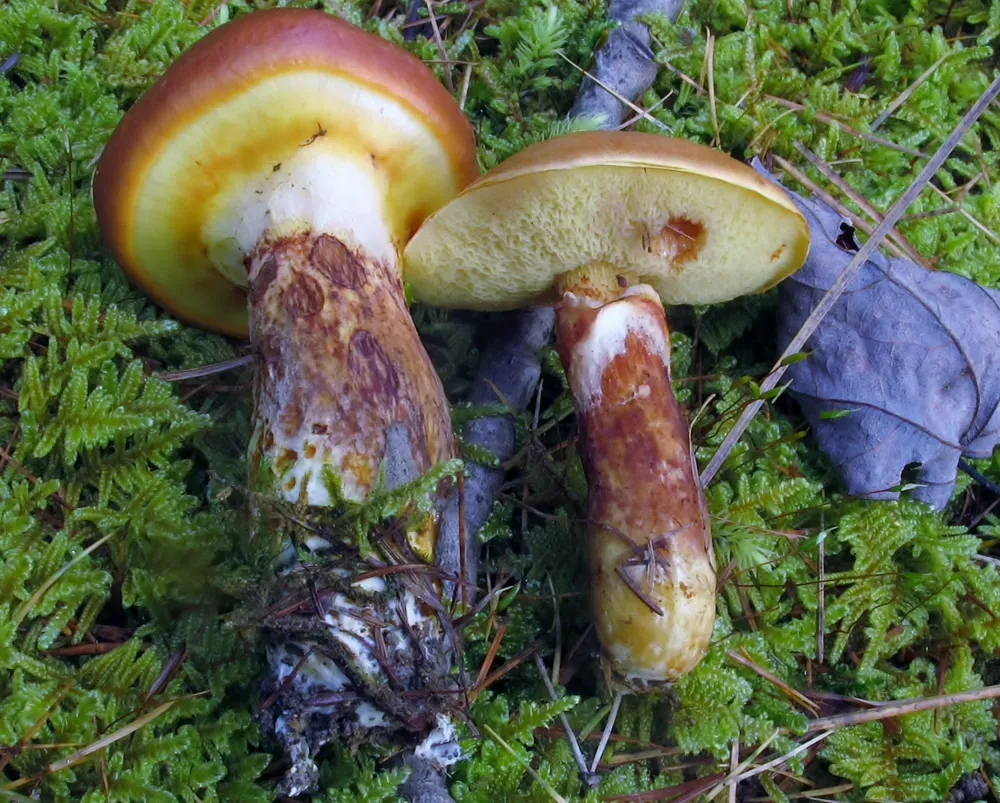
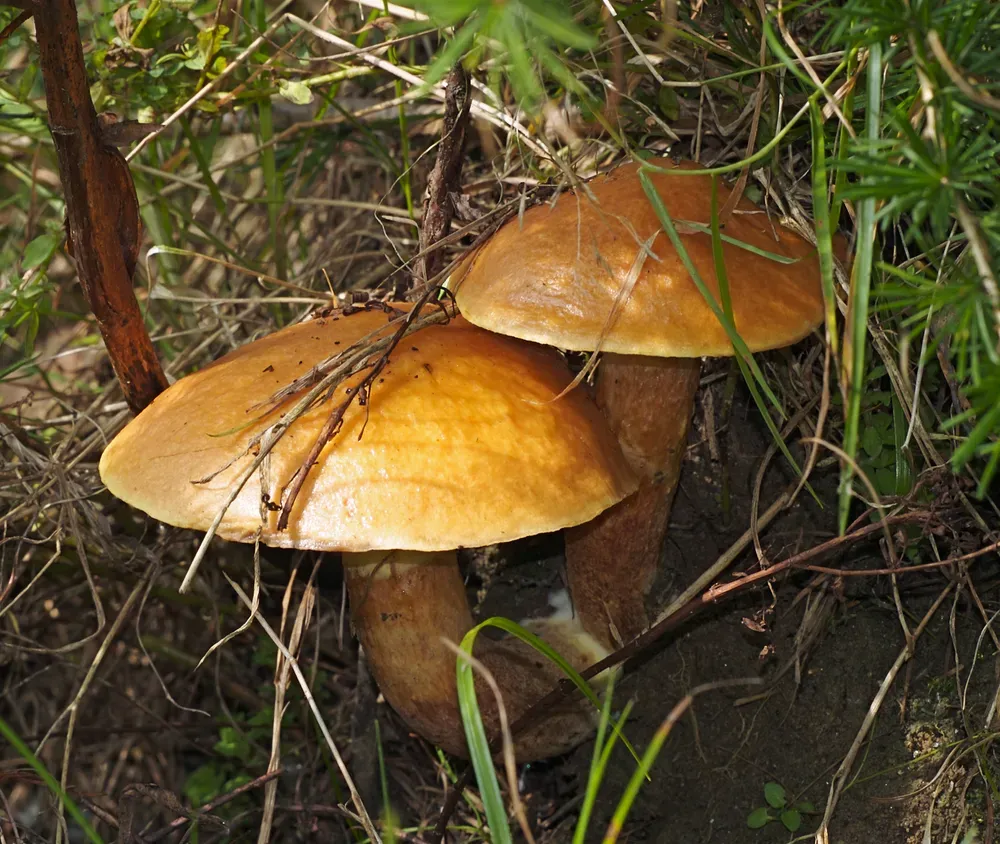
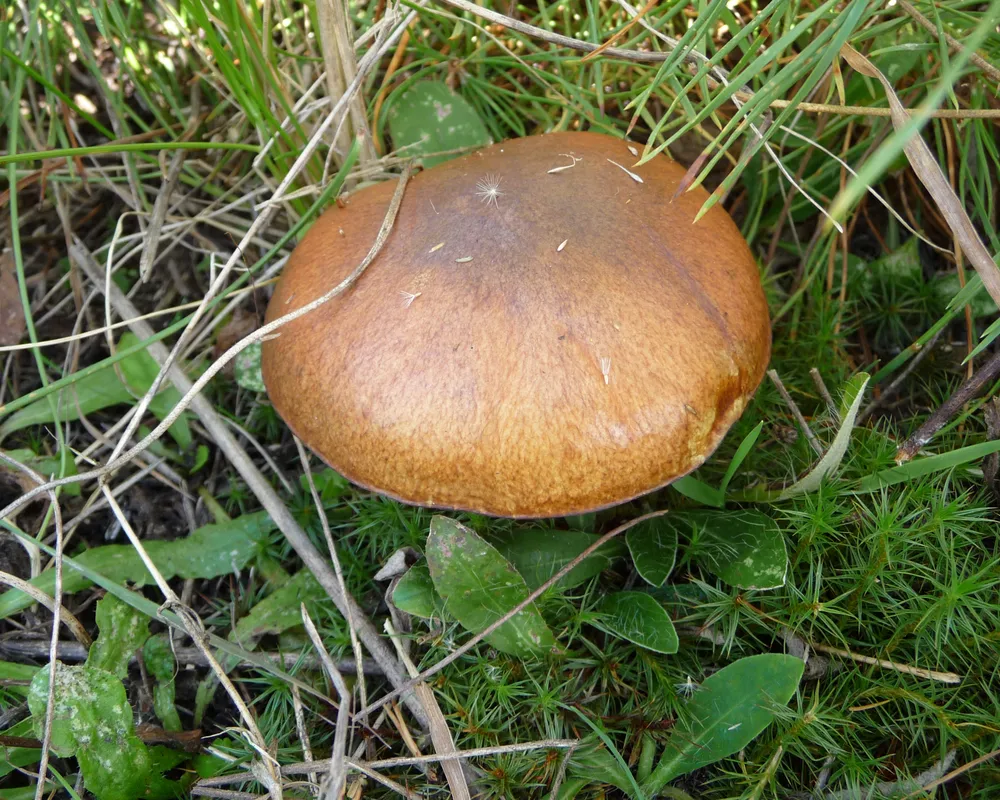
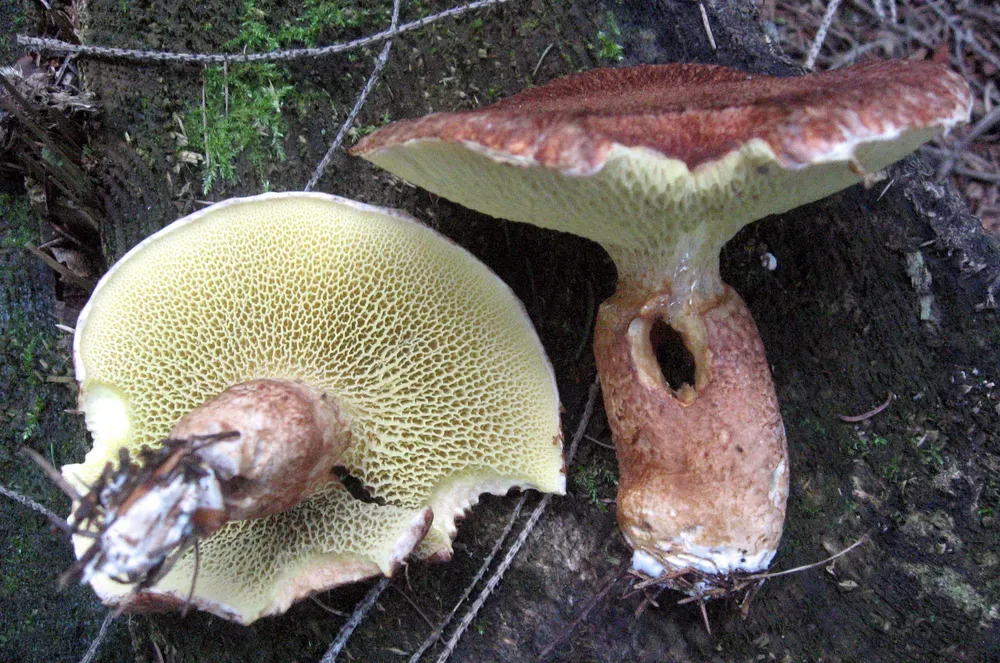
Related species
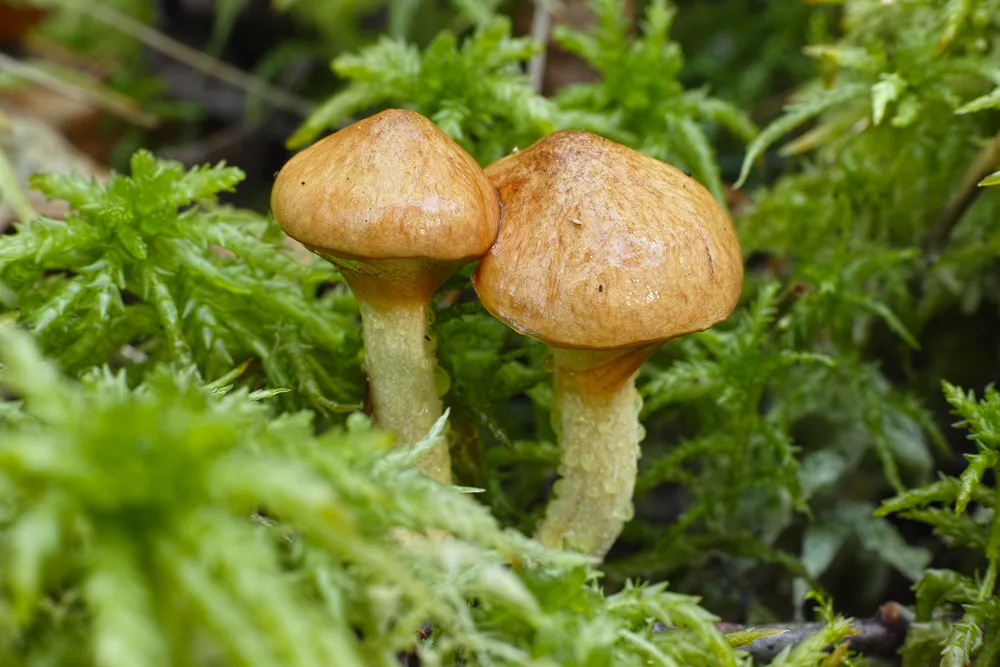
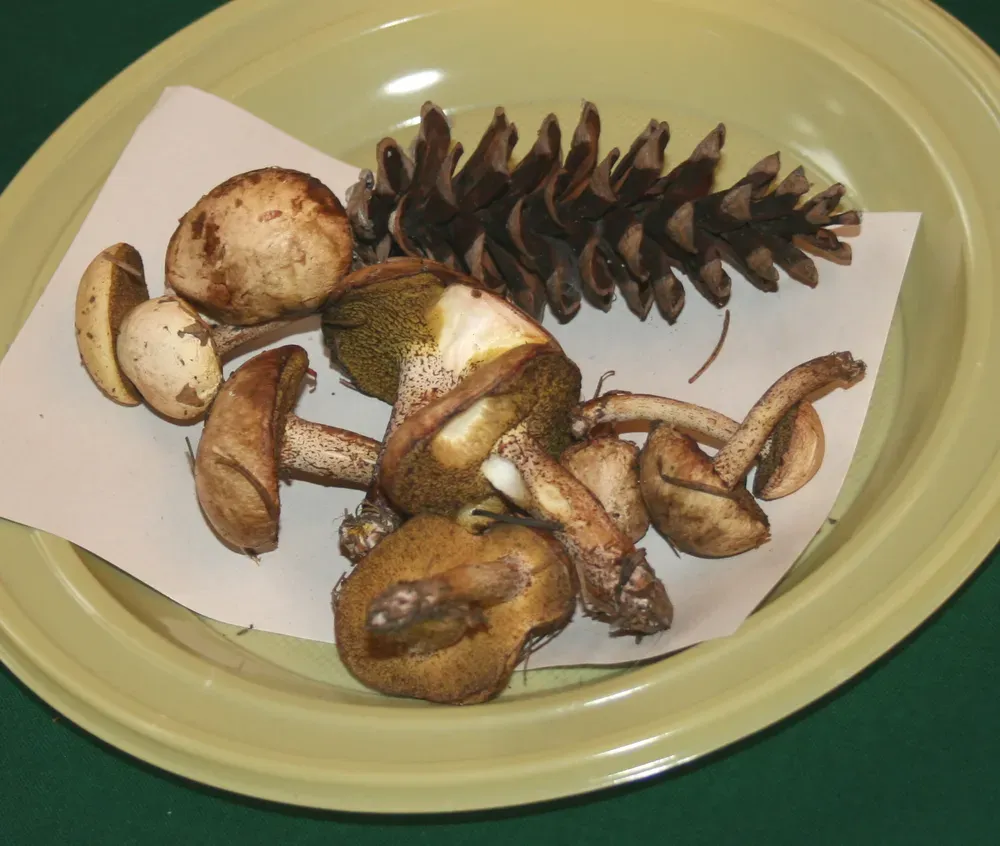
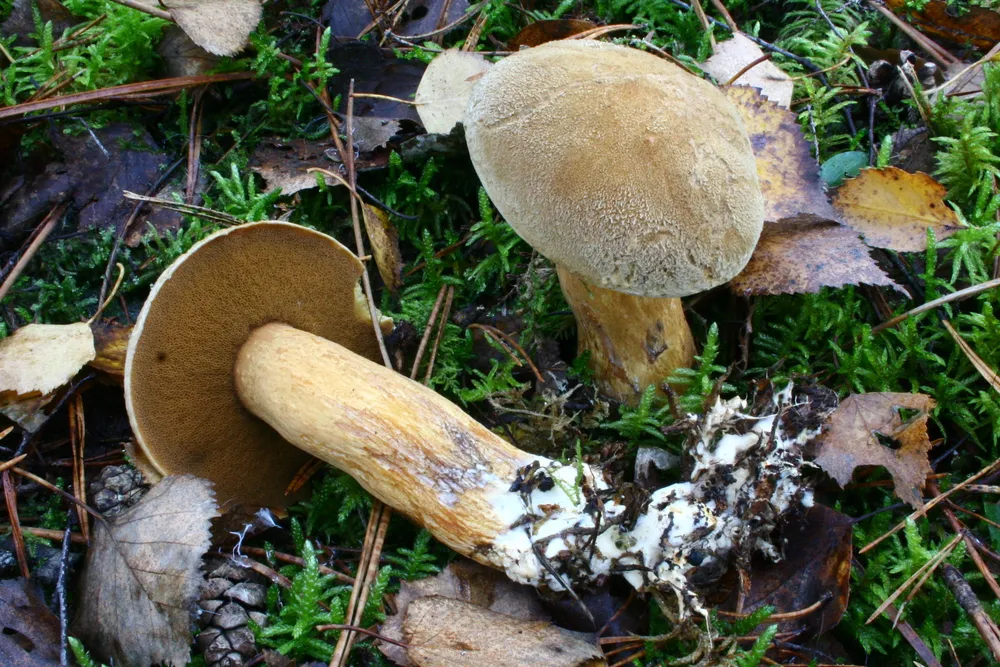
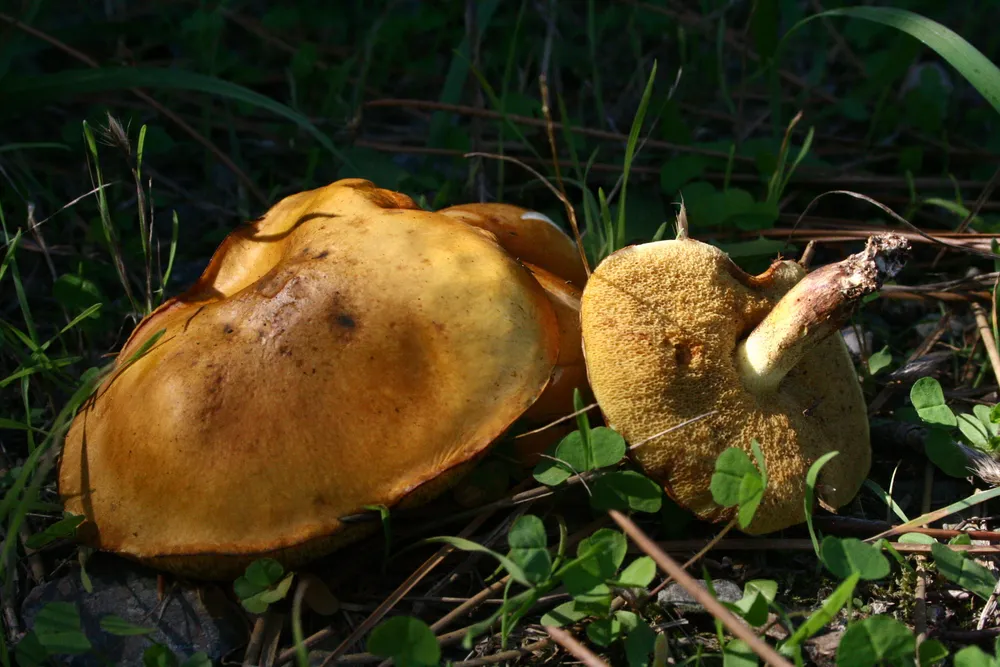
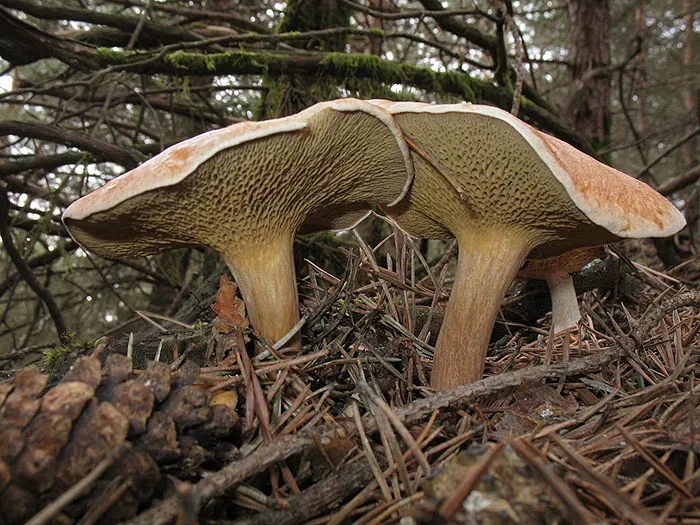
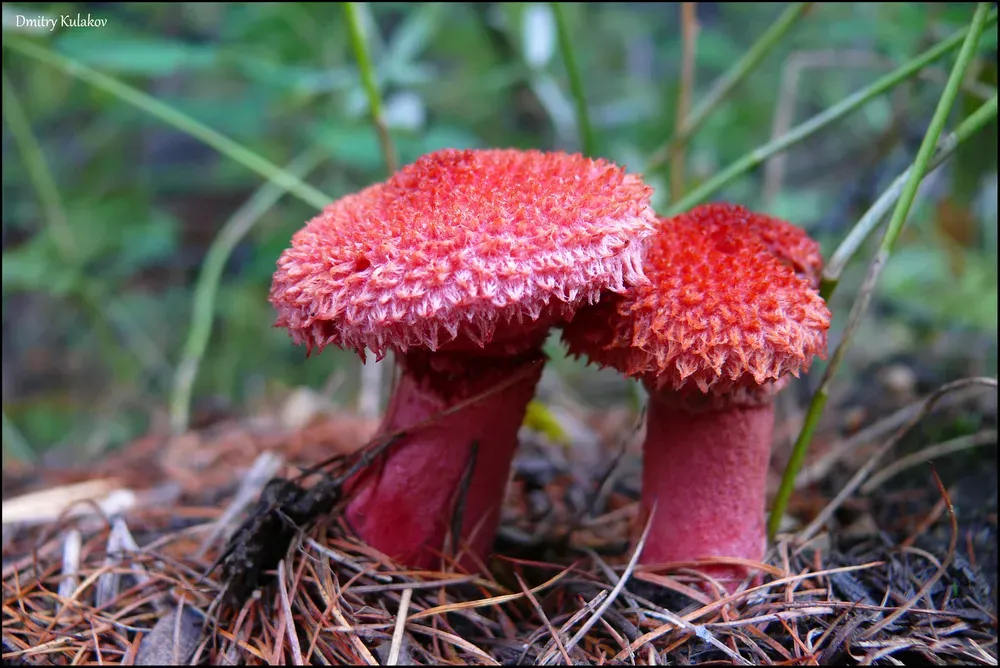
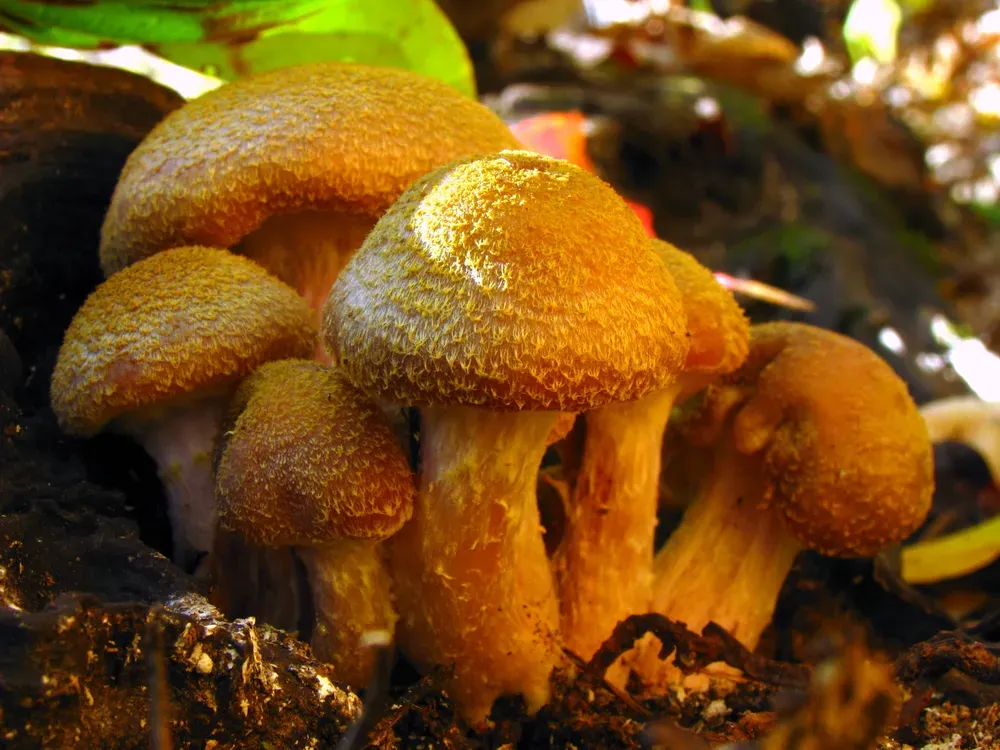
Mushrooms of the same genus and habitat — to study side by side and never mix up.
_Kuntze_791558.webp)
Related reading
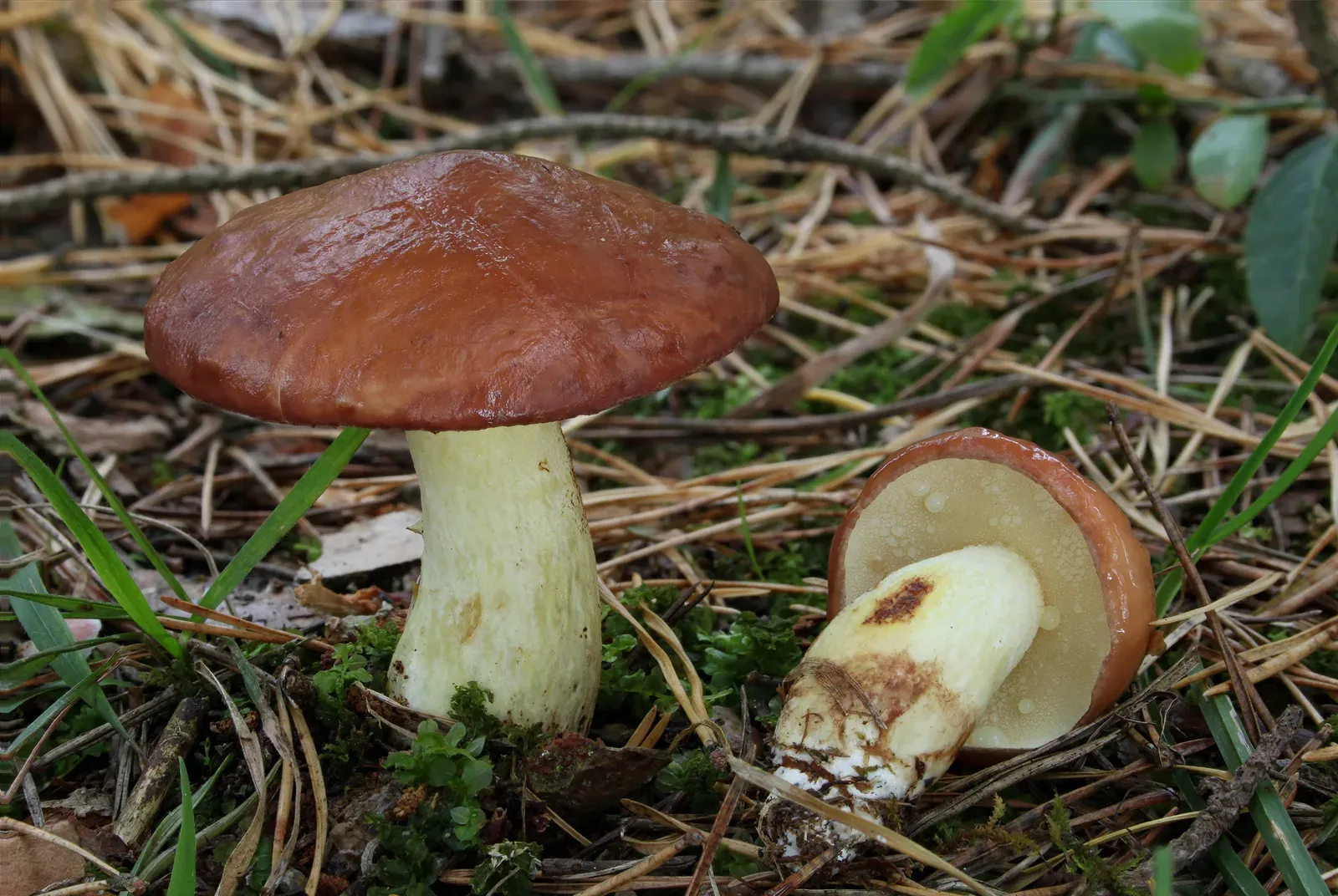 Where & when to forage
When does slippery jack season start?
Slippery jacks come out early and grow in flushes through almost the whole warm half of the year. Here's when…
April 4, 2026·3 min_Kuntze_791555_crop.webp) How to identify
How to identifySuillus spectabilis, a rare relative of the slippery jack
A slippery jack that shed its slimy coat and dressed in red scales. Here's how to recognize Suillus spectabili…
March 23, 2026·3 min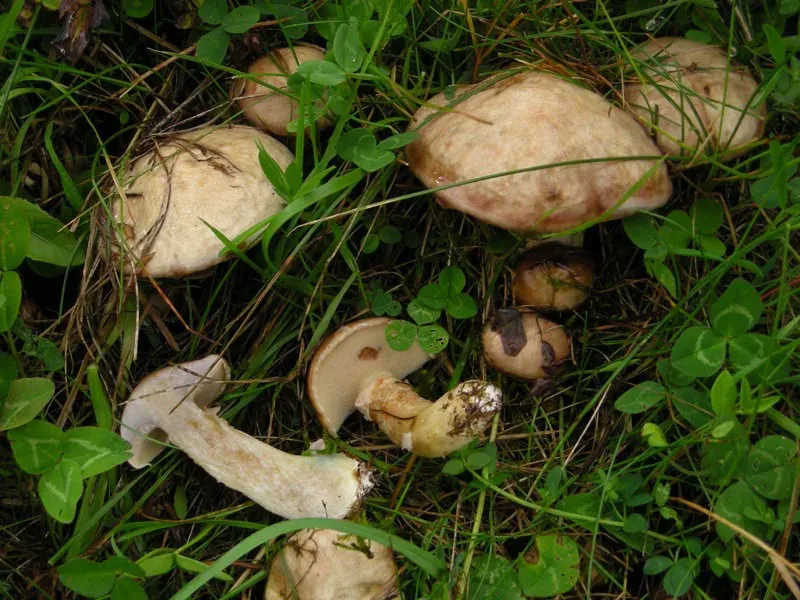 How to identify
Grey larch bolete, the slimy grey mushroom under larches
A slippery jack with a gray, very slimy cap that also sticks to larch. Here's how to recognize the sticky bole…
March 21, 2026·3 min
Frequently asked questions
Is Sticky bolete edible or poisonous?
Does Sticky bolete have gills or pores?
What does the cap of Sticky bolete look like?
What does the stem of Sticky bolete look like?
What do Sticky bolete smell and taste like?
Where does Sticky bolete grow?
Which trees does Sticky bolete grow under?
When should you pick Sticky bolete?
What can Sticky bolete be confused with?
How do you cook Sticky bolete?
Can you dry Sticky bolete?
What is the scientific name of Sticky bolete?
Sources
- [1]Вікіпедія (українська)
- [2]Атлас грибів України, Зеров Д.К. (1979)
- [3]MycoBank Database
- [4]Index Fungorum
- [5]GBIF
- [6]iNaturalist Ukraine