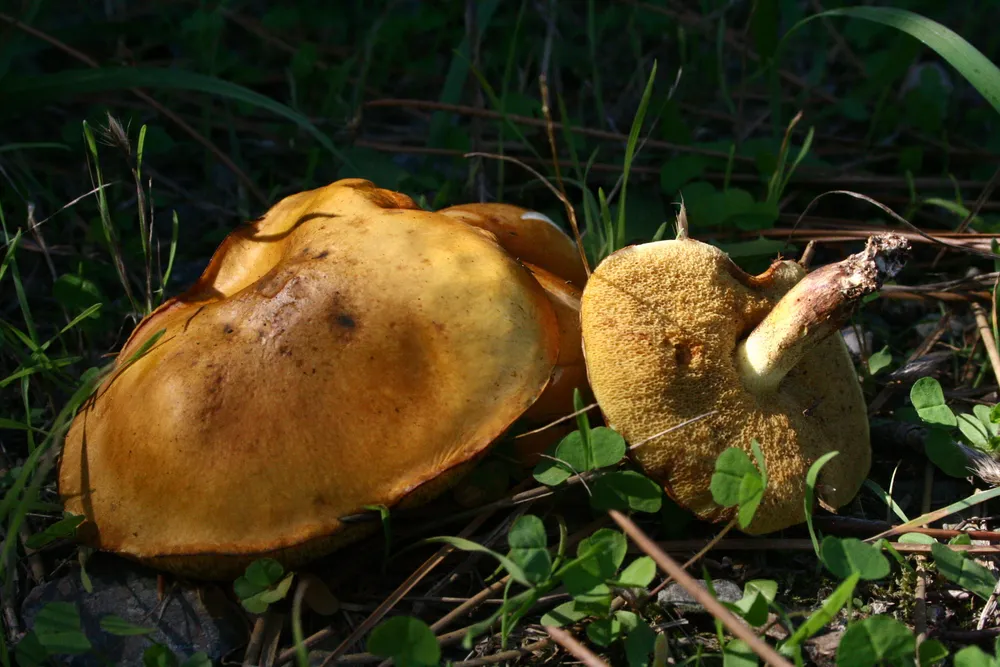
Weeping boleteSuillus granulatus
Expert-verifiedUpdated October 3, 2026
Passport
- Edibility
- Edible
- Season
- May — Nov
- Hymenophore
- Pored
- Cap color
- Yellow
- Size
- Medium (5–15 cm)
- Smell
- Pleasant
- Reviewed
- Yes ✓
Quick answers
Where to look?
Conifer forest
When does it appear?
May — Nov
Active months: May, June, July, August, September, October, November.
How to recognize it? Three signs
- Cap color: Yellow, Brown, Orange
- Cap shape: Convex
- Smell: Pleasant
Fruiting season
May – November
Description
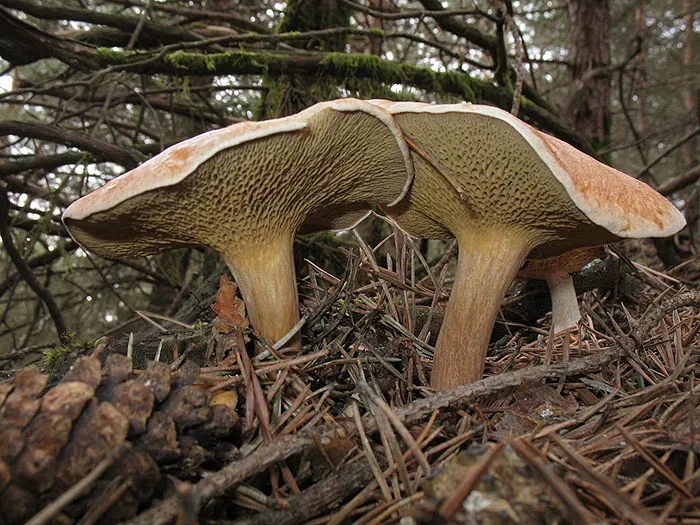
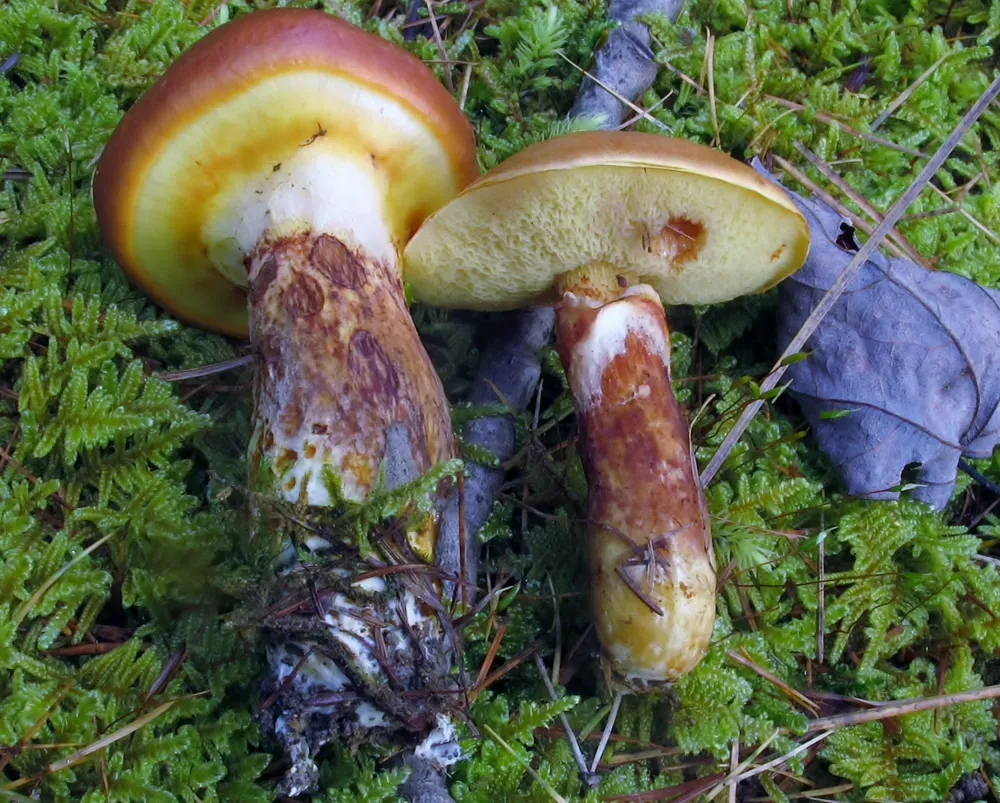
Weeping bolete (Suillus granulatus) is the earliest of Ukraine's slippery jacks. Its yellow-chestnut slimy caps appear as early as May-June, when most other mushrooms are still asleep. The name "granulatus" comes from the characteristic tiny whitish or yellowish droplets of "milky" juice that bead on young tubes and the stem and, as they dry, turn into granular brown dots. This is the most reliable diagnostic feature of the species.
Edible without restrictions, and tasty. One of the favorite mushrooms of the summer basket. Unlike the slippery jack, it has no ring on the stem — it's a younger relative whose partial veil is only rudimentary. You absolutely must peel the cap skin — it's very slimy, turns rubbery when cooked, and gives some people mild diarrhea. Good for frying, pickling, drying and freezing. Very good in mushroom soups.
In Ukraine it's widespread throughout the pine zone: Polissia, the Carpathians, the Carpathian foothills, the forest-steppe, and the northern steppe in pine plantations. A mycorrhizal partner of young pines (Pinus sylvestris) — it grows especially abundantly in young pine stands 5-20 years old, along forest edges, shelterbelts and abandoned sandy plots. Season: May — November, peaking in June and August-September. It often grows in huge groups of 50+ fruiting bodies — a "flush" of weeping boletes after warm rains in a young pine wood is a genre of summer foraging all its own.
Cap
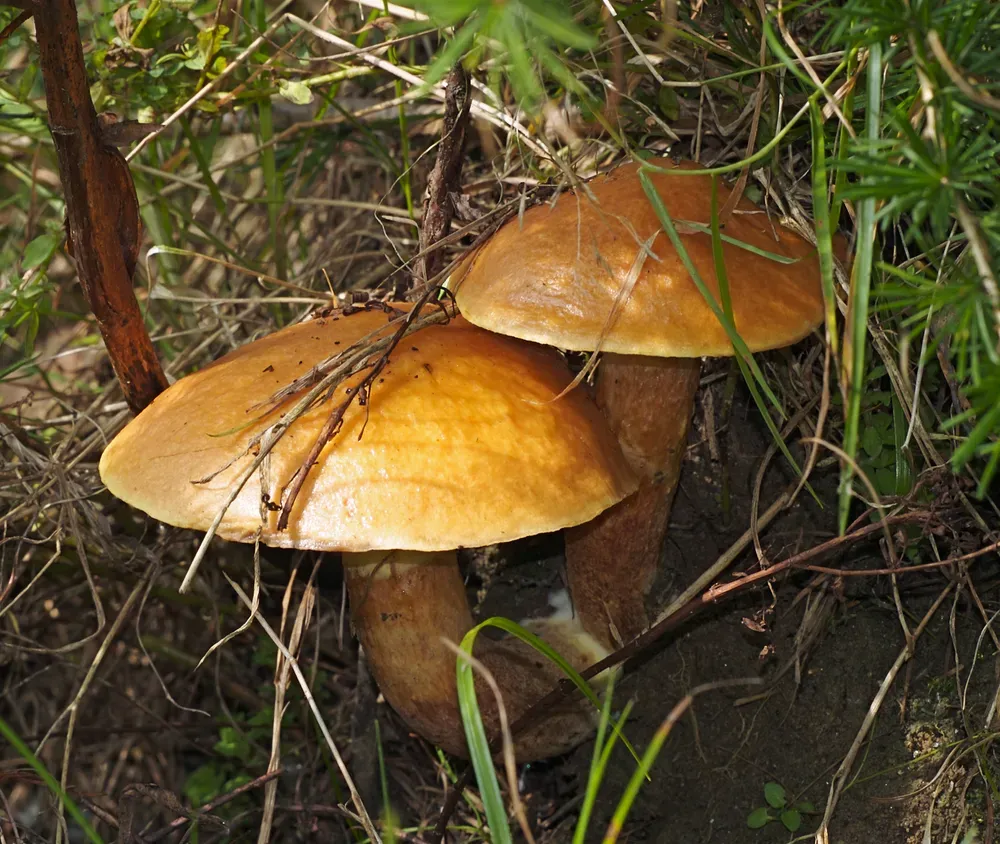
Cap 3-10 cm across, hemispherical with an inrolled edge when young, becoming convex-flat with time. The color is yellow-chestnut, honey-brown, reddish-brown, darker when young, fading to ocher-yellow with age. The surface is very slimy in wet weather, smooth, shiny. Glossy in dry weather. The skin peels easily from young mushrooms, with more difficulty from old ones.
Hymenophore
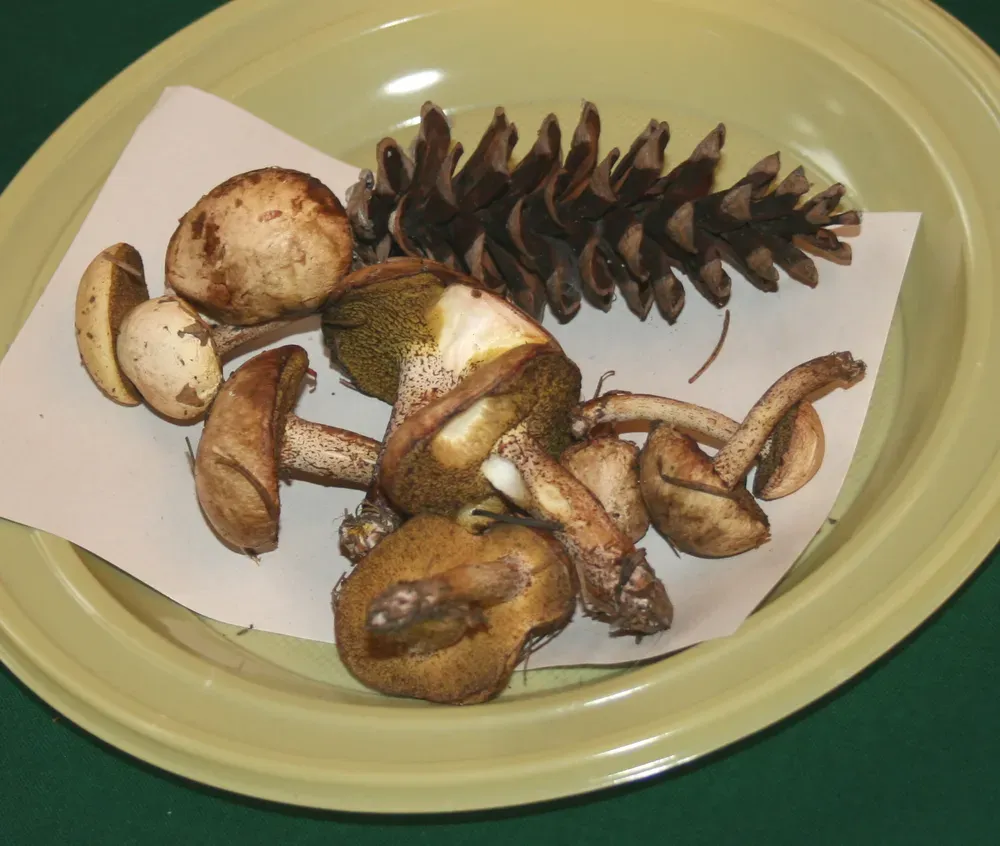
Pores and tubes — the tubes are attached to the stem or slightly decurrent. In young mushrooms they're pale yellow, with characteristic tiny whitish droplets of milky juice. Over time the droplets dry, leaving granular brown dots on the tubes. With age the tubes turn yellow-olive. The pores are small, the same color as the tubes. Spore print ocher-brown.
Stem
Stem 4-8 cm tall, 1-2 cm thick, cylindrical, even, without a ring. The color is yellowish, and in the upper part with characteristic tiny yellow-brown granular dots — dried droplets of milky juice. This is the main diagnostic feature of the species.
Flesh
Flesh firm when young, softening with age, creamy yellow. When cut it doesn't change color — unlike the velvet bolete. The smell and taste are mild and pleasant, with a slightly fruity note.
Smell
Pleasant and mushroomy with a light fruity note — especially in young ones.
›Scientific synonyms (1)
Boletus granulatus L. (1753)
Lookalikes
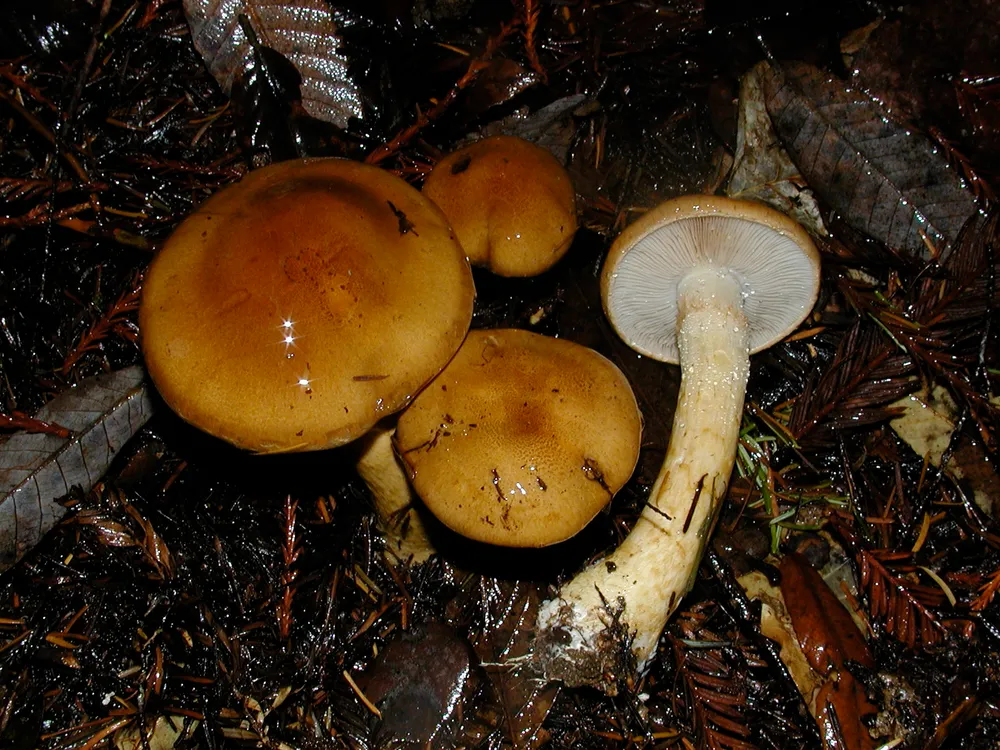
Related species
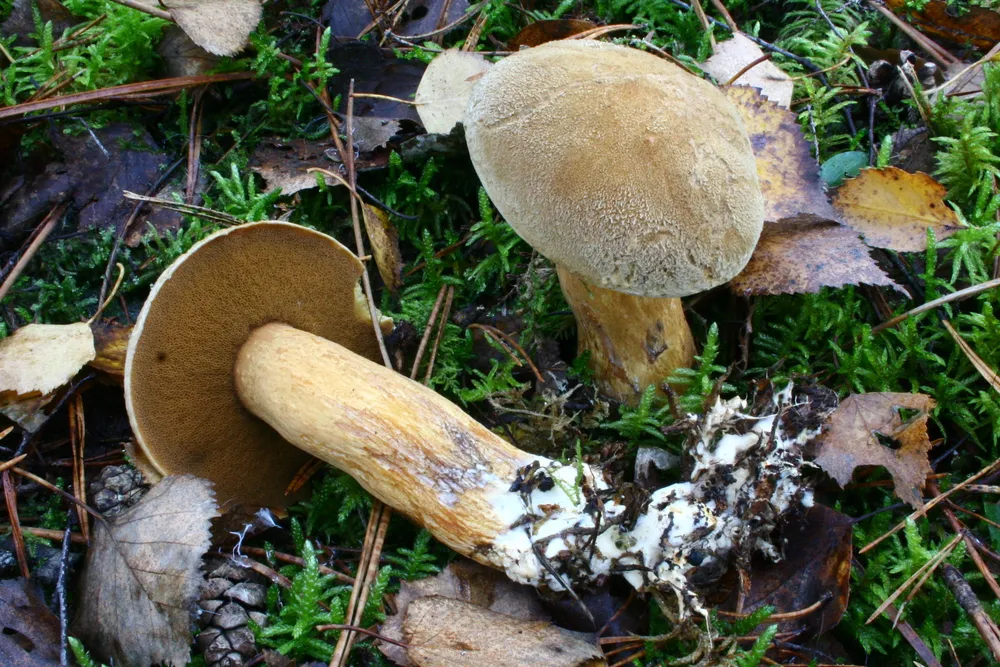
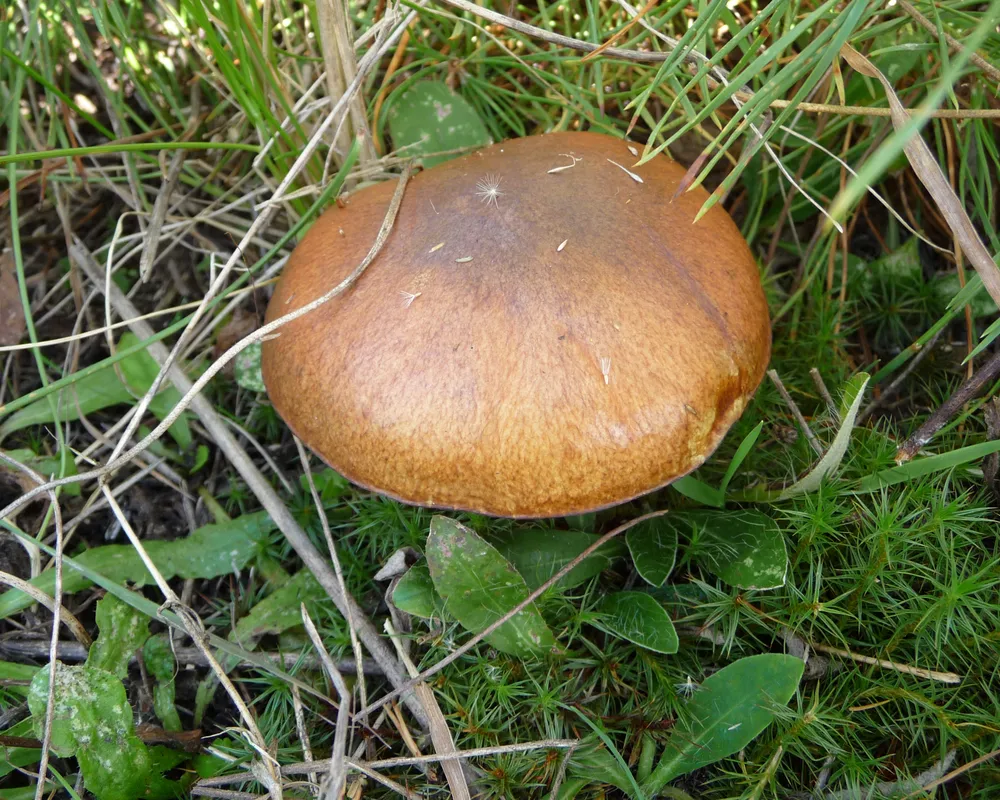
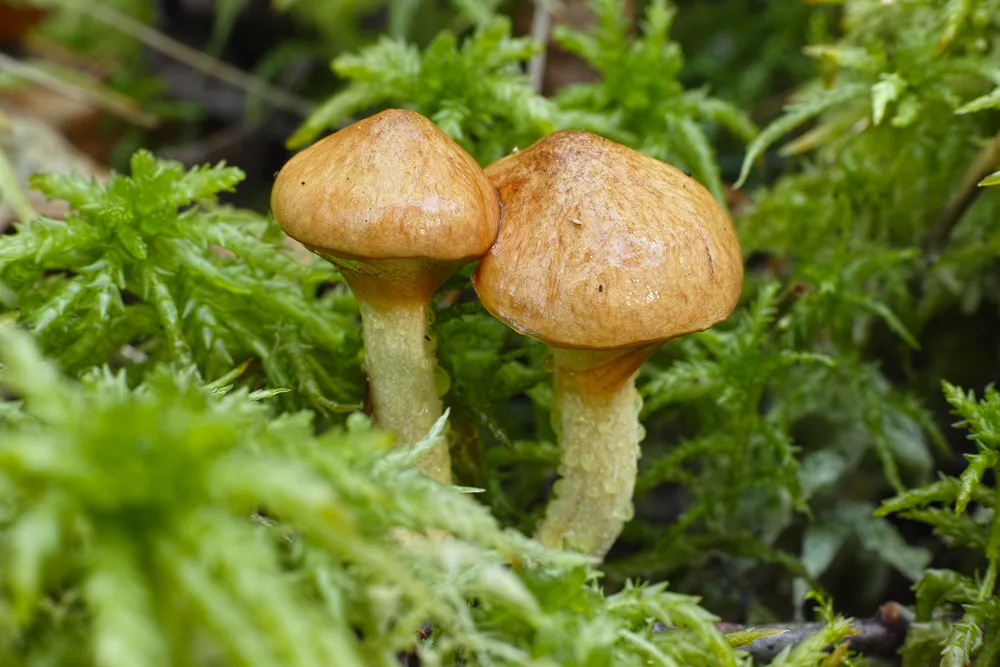
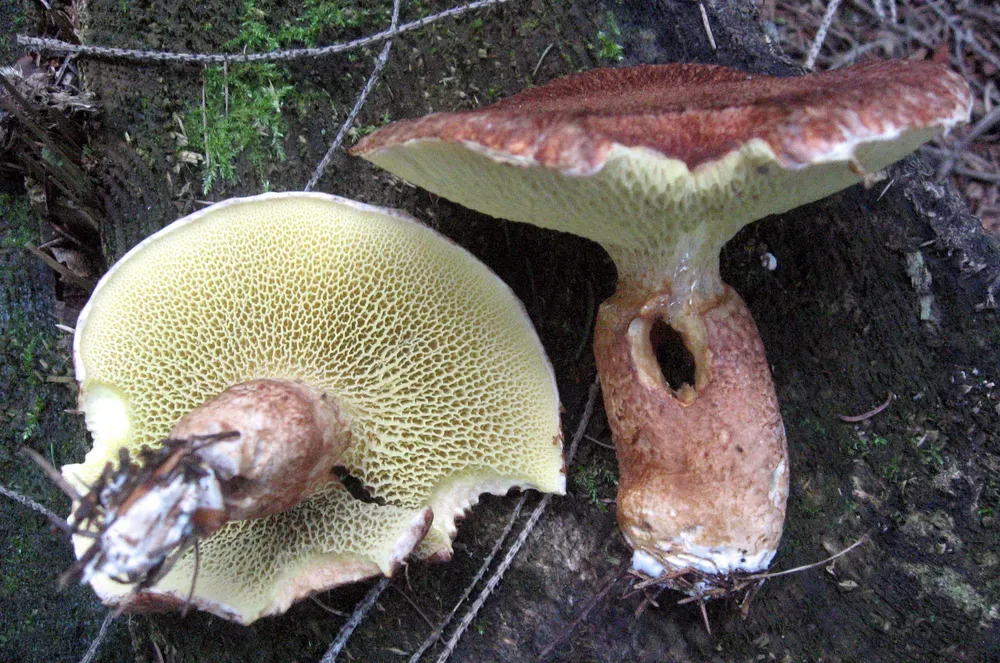
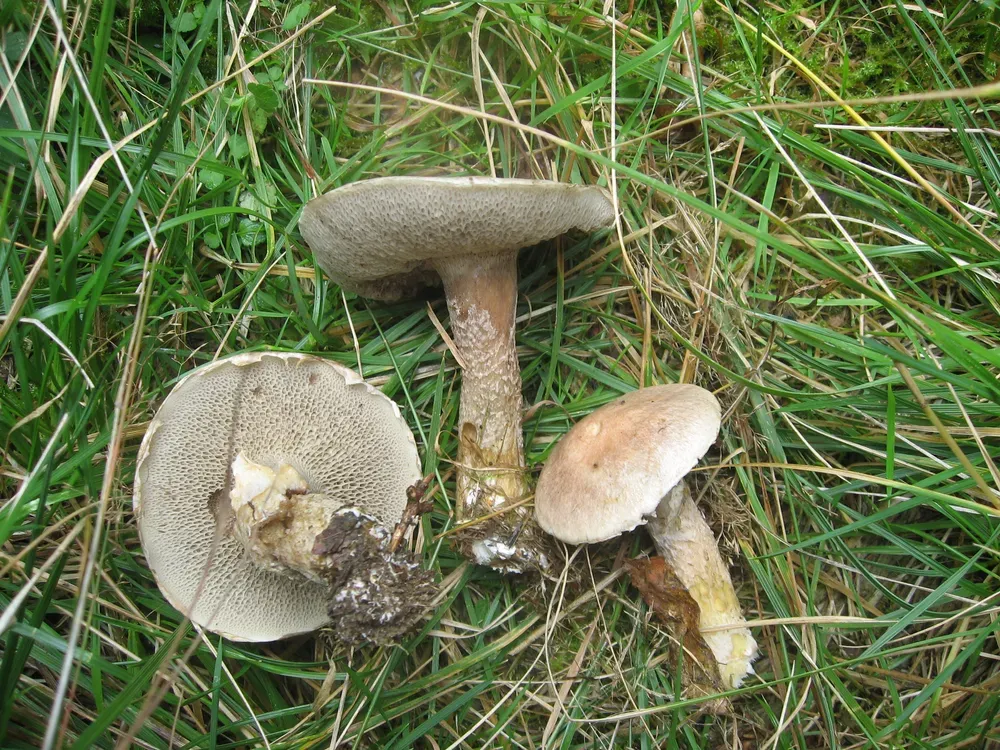
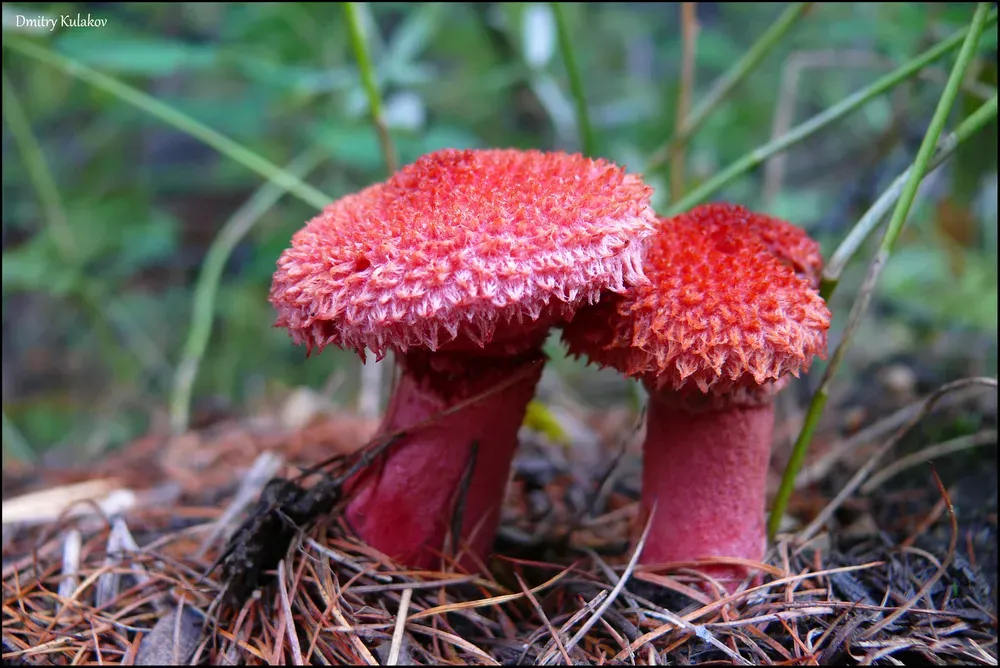
Mushrooms of the same genus and habitat — to study side by side and never mix up.
_Kuntze_791558.webp)
Related reading
 Where & when to forage
Slippery jacks in June: young pinewoods after rain
June is one of the best times for slippery jacks. Here's when they appear, why they love young pines so much,…
June 2, 2026·4 min_Kuntze_27971.webp) Recipes & cooking
Recipes & cookingHow to cook and preserve slippery jacks
Slippery jacks are fried, pickled and dried, and each method has its own tricks. Here's how to cook slippery j…
April 12, 2026·4 min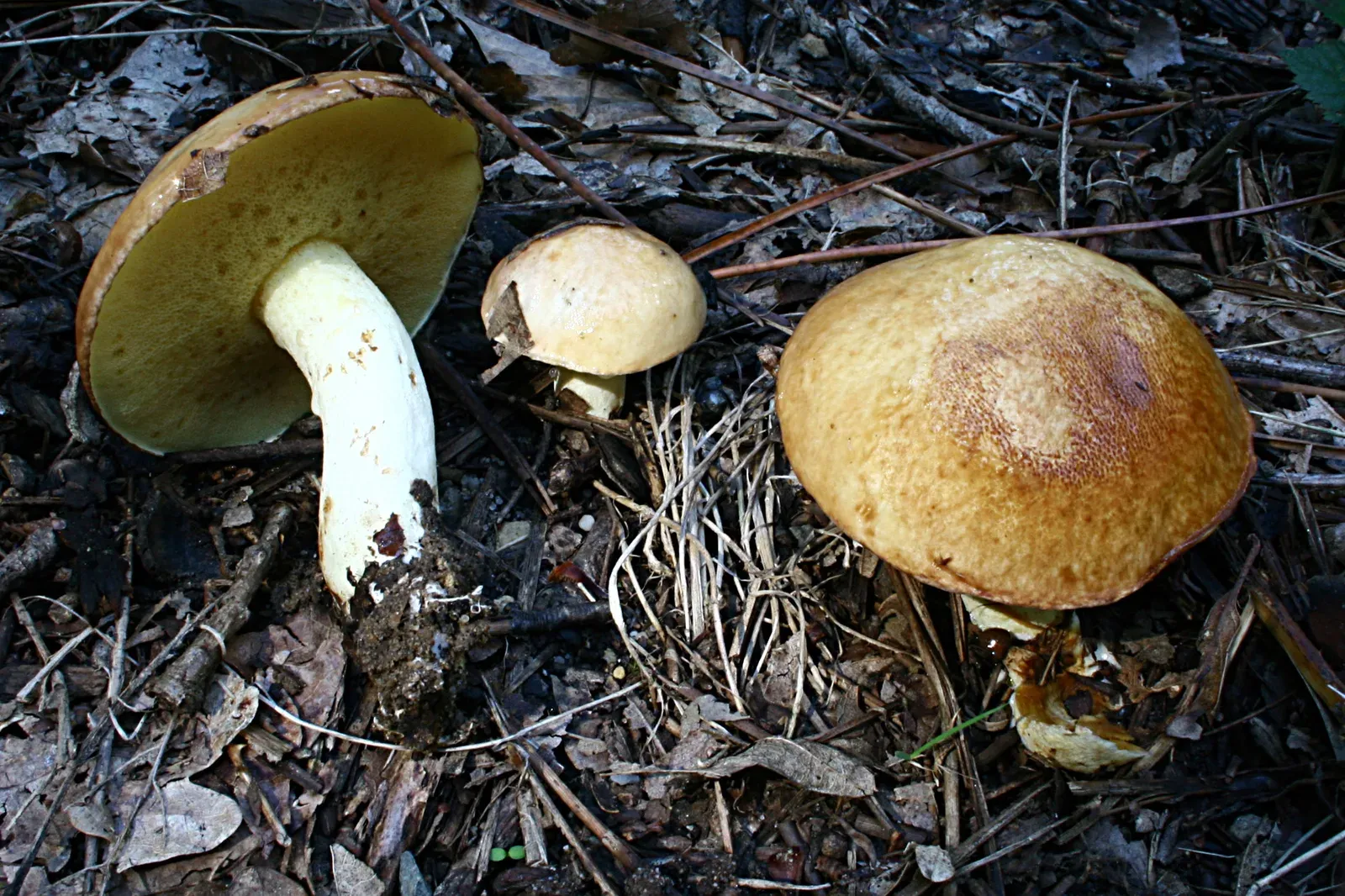 Recipes & cooking
How to clean slippery jacks fast, without sticky hands
Slimy skin turns cleaning slippery jacks into torture if you don't know a few tricks. Here's how to clean them…
April 10, 2026·4 min
Frequently asked questions
Is it safe to eat?
Yes, without restrictions. Always peel off the slimy cap skin — that's the rule. If you don't, some people get mild diarrhea, plus the dish turns slimy. Young mushrooms can be cooked without boiling first.
Does it have dangerous lookalikes?
No serious ones. All true slippery jacks (genus Suillus) in our flora are edible. You could mix it up with a young slippery jack (Suillus luteus) — also edible, except that one has a dark ring on the stem. Or with the velvet bolete (Suillus variegatus) — also edible, with a drier skin and flesh that turns blue. The mistake isn't critical.
Can you eat it raw or undercooked?
No. All Suillus need thorough cooking (frying ≥15 min, boiling ≥10 min, pickling with acidification). Raw or undercooked flesh can cause stomach discomfort. This is a general rule for all boletes.
Where should you look for it?
In young pine plantations (5-20 years old) — along forest edges, shelterbelts, in abandoned sand pits, on embankment slopes. It likes sparse stands with sunlit sandy soil. It also turns up in old pine forests, but less often. A mycorrhizal partner of Scots pine.
Which regions of Ukraine is it found in?
Throughout the pine zone: Polissia (especially abundant), the Carpathians and the Carpathian foothills, the forest-steppe in pine plantations, the northern steppe in planted pine woods and shelterbelts. One of the most common slippery jacks in the country.
When should you look for it?
May — November, peaking in June (the summer wave) and August-September (the main peak). The earliest of the slippery jacks — it often appears in May after the first warm rains, when most other boletes aren't fruiting yet. In a warm year it fruits until November.
How do you tell it from the slippery jack?
Two key differences. (1) Ring on the stem: the slippery jack has a prominent dark purple ring (a remnant of the veil), the weeping bolete has none, just tiny dots. (2) Granular dots on the tubes: the weeping bolete has them, the slippery jack doesn't. If there's no ring and there are juice droplets, it's a weeping bolete.
How do you cook it?
Peel the cap skin. Rinse. For frying — slice and fry with onion for 15-20 min. For pickling — boil for 10 min with bay leaf and pepper, then cover with marinade. For drying — it's worse than porcini and boletes because the flesh is soft, but it's possible. For freezing — always boil before freezing, otherwise after thawing you'll get a sticky mush.
Is Weeping bolete edible or poisonous?
Does Weeping bolete have gills or pores?
What does the cap of Weeping bolete look like?
What does the stem of Weeping bolete look like?
Sources
- [1]Вікіпедія (українська)
- [2]Атлас грибів України, Зеров Д.К. (1979)
- [3]MycoBank Database
- [4]Index Fungorum
- [5]GBIF
- [6]iNaturalist Ukraine