_Kuntze_791558.webp)
Suillus spectabilis
Expert-verifiedUpdated August 15, 2026
Passport
- Edibility
- Edible
- Season
- Aug — Oct
- Hymenophore
- Pored
- Cap color
- Red
- Size
- Medium (5–15 cm)
- Smell
- Pleasant
- Reviewed
- Yes ✓
Quick answers
Where to look?
Conifer forest, Mixed forest
When does it appear?
Aug — Oct
Active months: August, September, October.
How to recognize it? Three signs
- Cap color: Red, Brown, Dark brown
- Cap shape: Convex
- Smell: Pleasant
Fruiting season
August – October
Description
Suillus spectabilis (synonym — Boletinus spectabilis) is a rare larch-loving bolete found only where larch (Larix) grows. Unlike the bright larch bolete (S. grevillei), this species has a dark reddish cap that resembles a plump rosehip. It is one of three Ukrainian species with a mycorrhizal bond exclusively to larch.
In Ukraine it is found mainly in the Carpathians, where larch grows naturally, and also in larch plantations in Polissia and the Forest-Steppe and in park plantings. It does not grow in pine and spruce forests without larch. It likes moist microhabitats — boggy forest edges and peaty glades within the forest. The season is short: August — October.
Edibility — good. The flesh is yellowish; when cut it slowly turns red, then darkens. Young mushrooms are of good culinary quality: fried, stewed, pickled. Old ones become watery and soft. Before cooking, it is worth peeling off the slimy cap skin — in wet weather it is very sticky. It pickles well, but the jar darkens. You can dry it, but its high moisture content makes drying difficult.
Cap
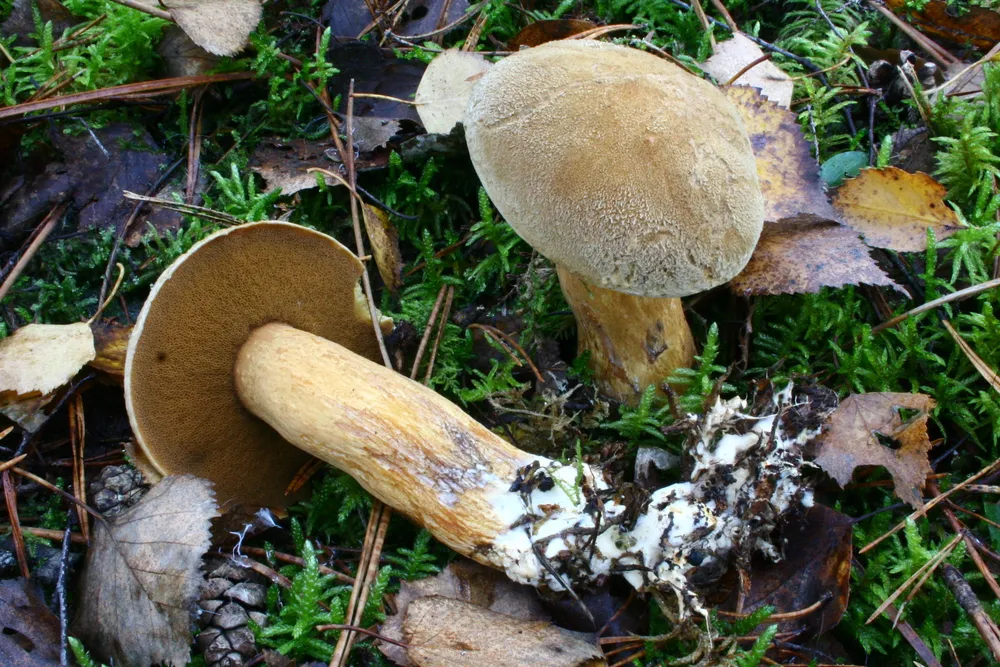
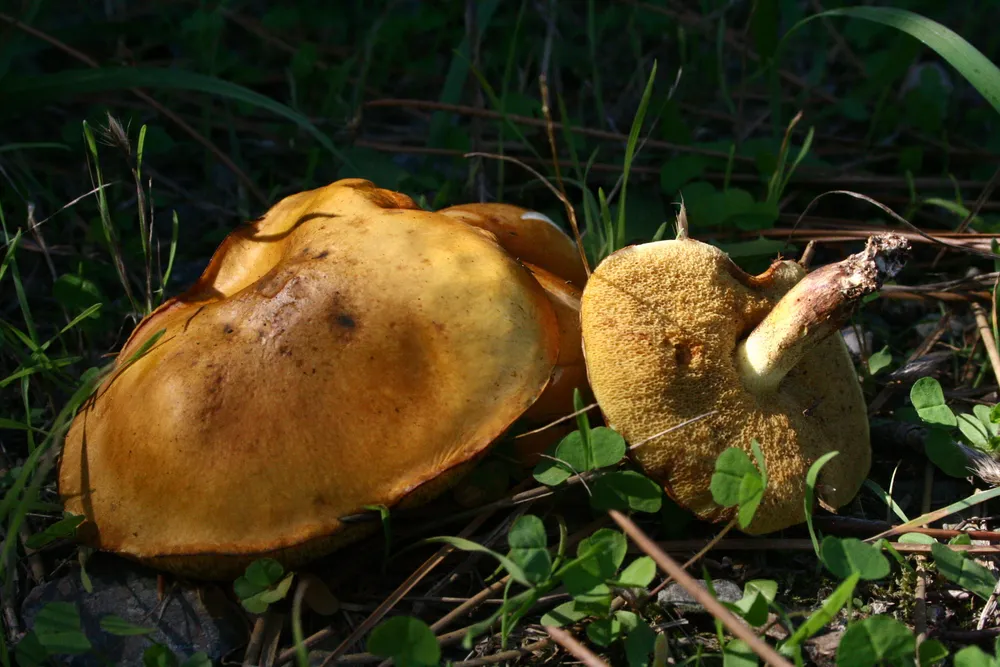
Cap 5–12 cm, hemispherical in young mushrooms, then cushion-shaped. Color reddish brown, dark raspberry, with a characteristic "fibrous" surface pattern — as if made of fine fabric. The surface is sticky in wet weather, matte in dry. Mature ones often have a thicker, darker center.
Hymenophore
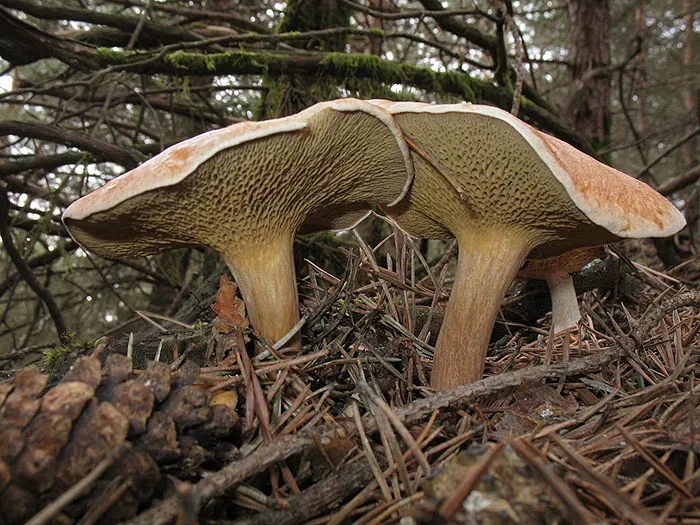
Hymenophore tubular, running down the stem (a characteristic feature of the genus Boletinus). Color yellowish, olive-brown in mature ones. Pores large, angular, sometimes arranged radially.
Stem
Stem 4–10 cm tall, 1–2.5 cm thick, cylindrical. Color reddish brown to dark brown, darker than the cap. In the upper part, a characteristic coarse net of thick veins. Ring membranous, white with pinkish tones, quickly disappearing.
Flesh
Flesh yellowish, soft, watery. When cut it slowly turns red, then darkens to brown. Firmer and fibrous in the stem.
Smell
Smell faint, pleasantly mushroomy with a slightly resinous note (from the larch). Taste mild, not bitter.
Lookalikes
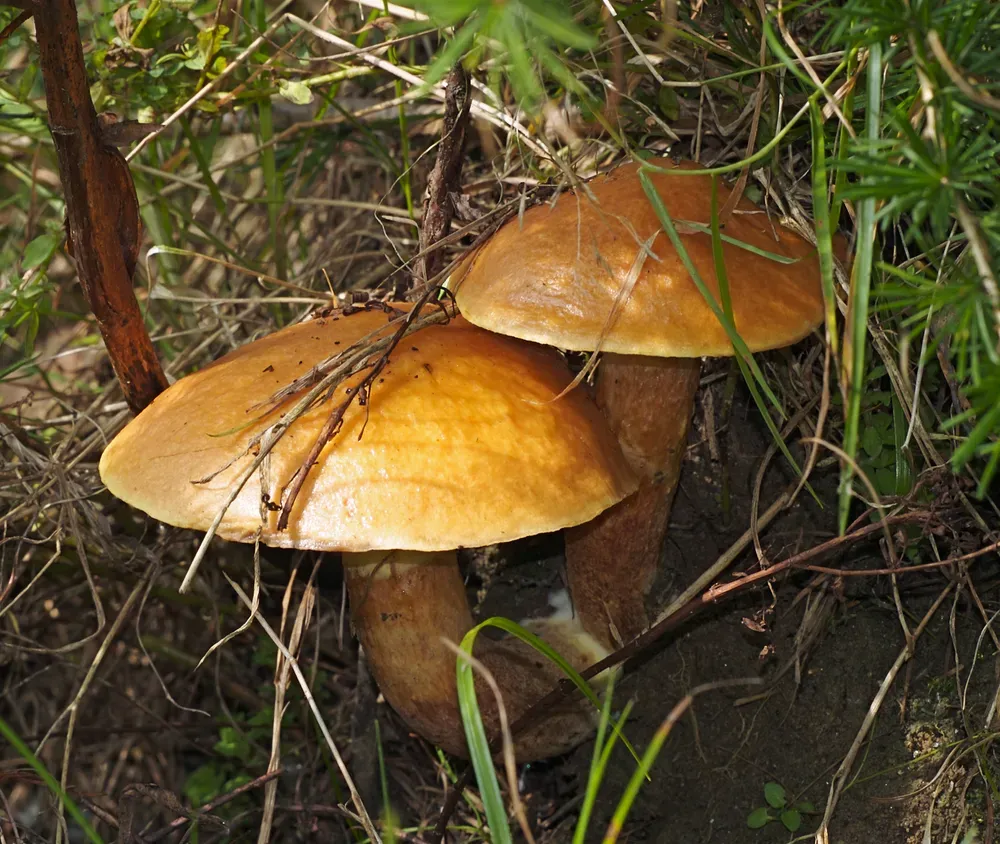
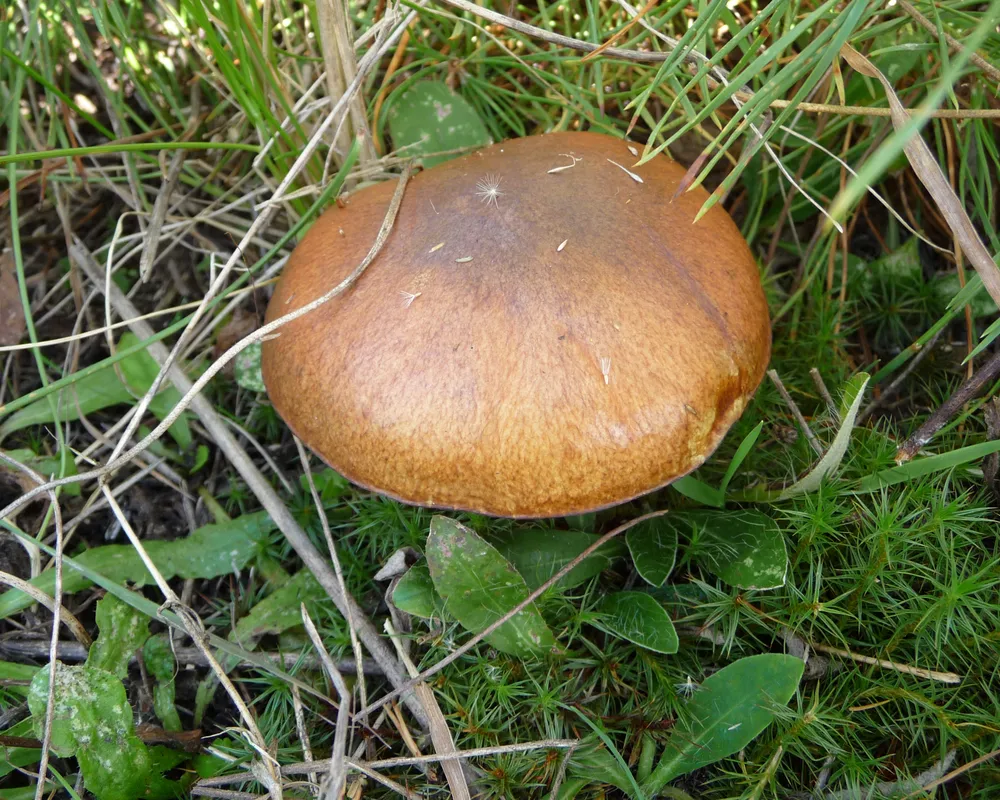
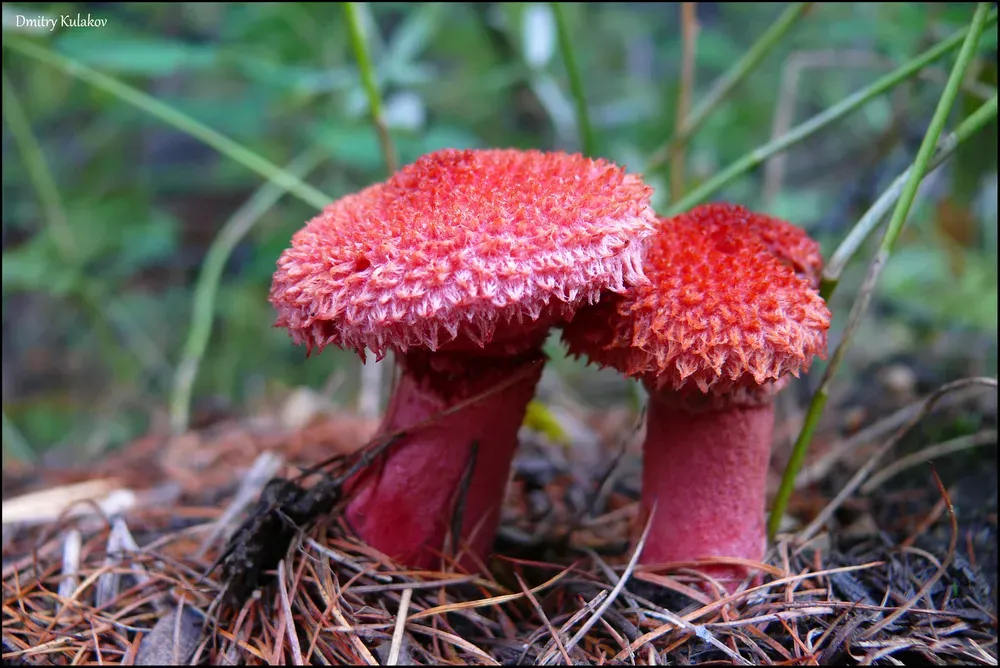
Related species
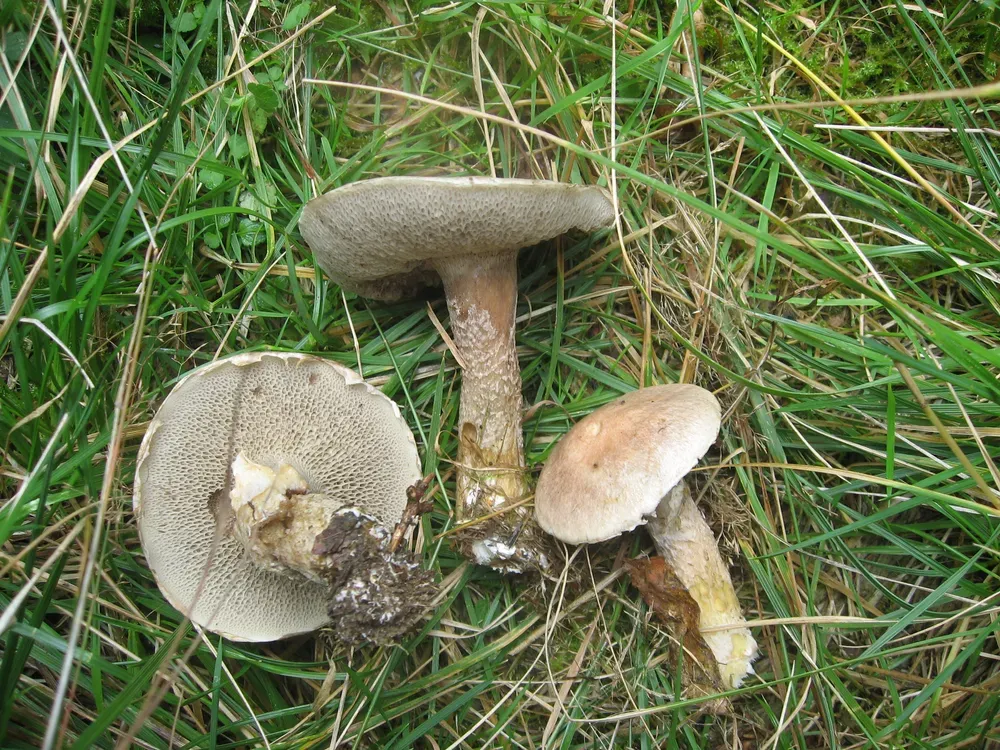
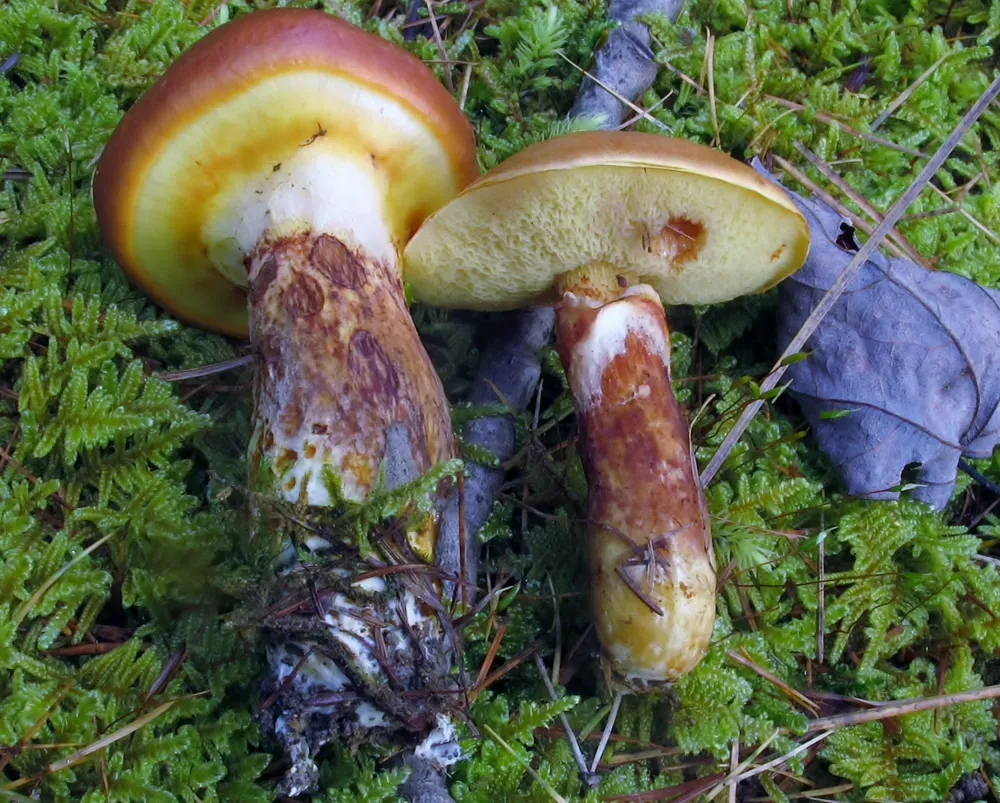
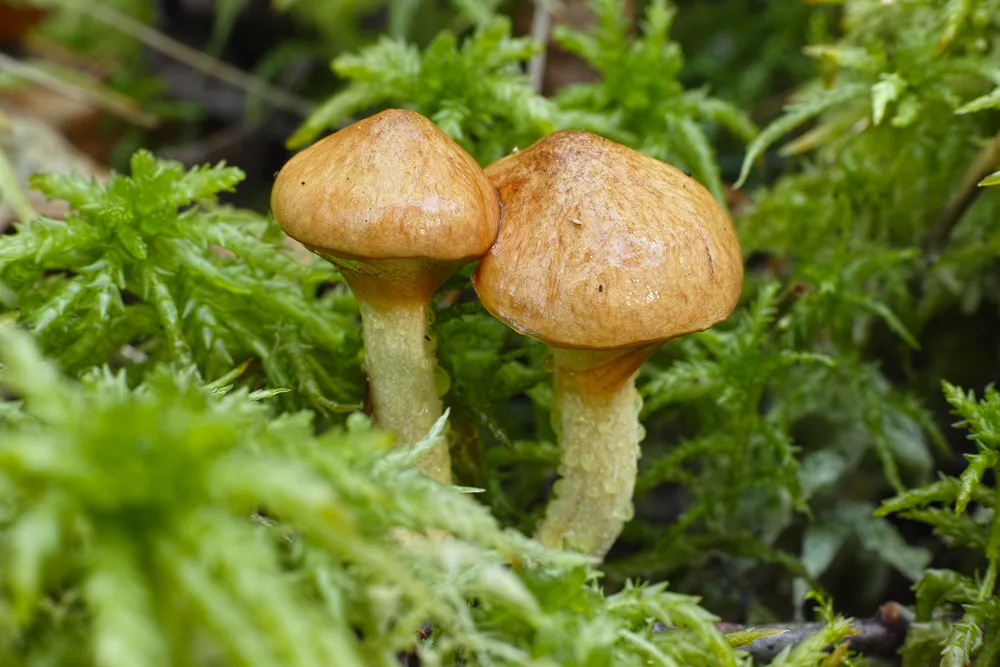
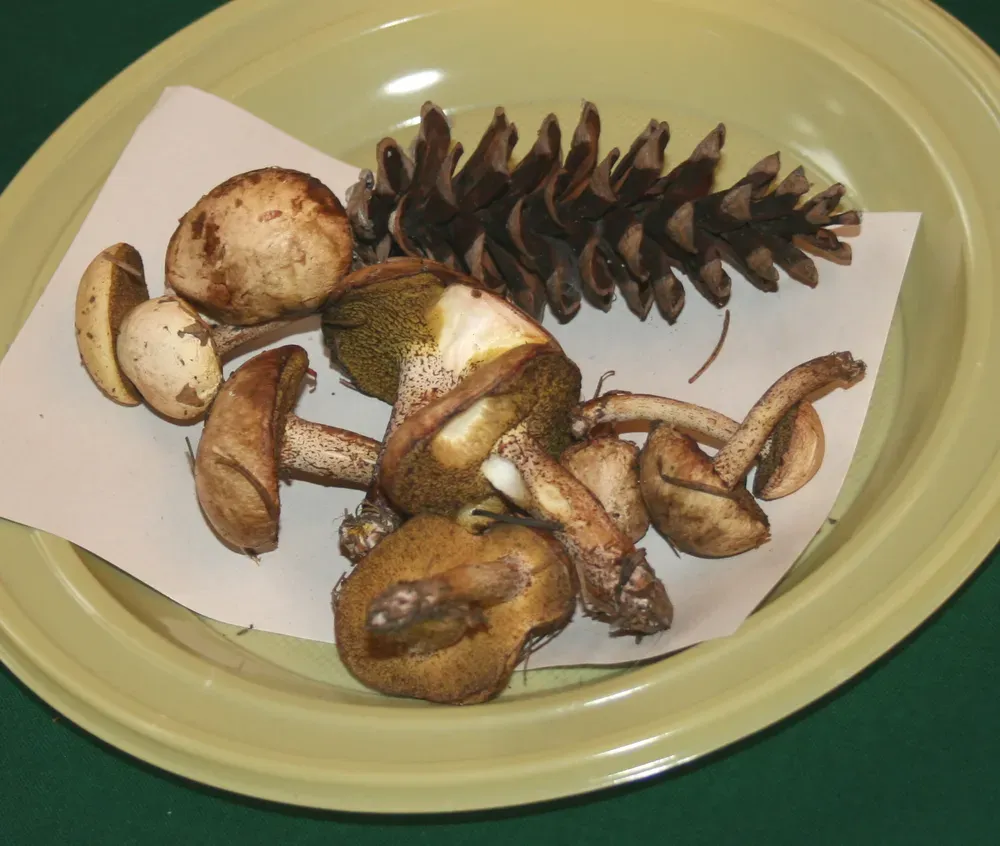
Mushrooms of the same genus and habitat — to study side by side and never mix up.
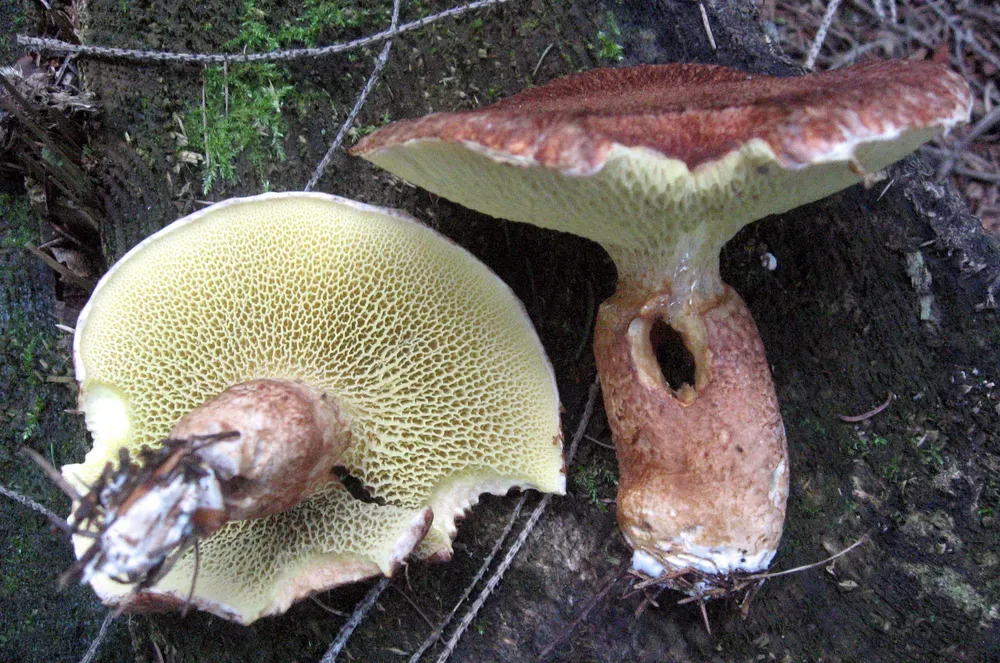
Related reading
_Kuntze_791555_crop.webp)
Frequently asked questions
Can it be confused with a poisonous mushroom?
Among pored larch mushrooms there are no dangerous lookalikes. All three species (Suillus grevillei, S. tridentinus, S. spectabilis) are edible. Avoid only mushrooms with RED pores (Rubroboletus) — they grow in deciduous forests, not with larch.
Where to look in Ukraine?
Only under larch (Larix). In the Carpathians, natural larch forests at 1000–1500 m. In plantations — Polissia, the Forest-Steppe, park avenues with larches. NOT found in pine and spruce forests without larch.
When does it fruit?
August — October, peaking in September. A short season — 6–8 weeks. It likes moderately humid, cool weather. It disappears after the first hard frosts.
How is it different from the larch bolete?
The larch bolete (Suillus grevillei) has a bright yellow or lemon cap. Suillus spectabilis is dark reddish brown. The flesh of the larch bolete turns faintly pink, while in spectabilis it reddens and darkens more strongly. Both grow with larch, both are edible.
Why does it depend on larch?
Like all species of the genus Suillus, it forms a mandatory (obligate) ectomycorrhiza with a specific conifer. For spectabilis, the mycorrhizal partner is larch alone. Without larch the mushroom cannot exist — even spore dispersal won't succeed without a partner for the mycelium to grow with.
How to cook it?
Peel off the slimy cap skin (especially when wet). Young ones are worth boiling for 10 min and draining the water. Then fry with onion, stew with potatoes, or pickle. Old soft ones are good only for soup or sauce. It pickles well, but the jar turns dark.
Why is it called "spectabilis"?
The Latin "spectabilis" means "notable", "striking", "worth seeing" — for the rich reddish color of the cap, which sharply sets this species apart from the golden larch bolete and makes it recognizable from a distance.
Is it rare in Ukraine?
Yes, moderately rare — because of larch's limited range. In the wild it is most common in the Carpathians. In plantations in Polissia and the Forest-Steppe it fruits where larch has been growing for enough years (15+). In a newly planted park you may wait in vain.
Is Suillus spectabilis edible or poisonous?
Does Suillus spectabilis have gills or pores?
What does the cap of Suillus spectabilis look like?
What does the stem of Suillus spectabilis look like?
Sources
- [1]Вікіпедія (українська)
- [2]Mushrooms Demystified, David Arora
- [3]Mushrooms (Roger Phillips), Roger Phillips
- [4]Визначник грибів України, Зерова М.Я. та ін. (1979)
- [5]iNaturalist Ukraine
- [6]Species Fungorum
- [7]Index Fungorum
- [8]GBIF
- [9]MycoBank Database
- [10]Атлас грибів України, Зеров Д.К. (1979)