Bay boleteBoletus badius
Expert-verifiedUpdated October 3, 2026
Passport
- Edibility
- Edible
- Season
- Jul — Nov
- Hymenophore
- Pored
- Cap color
- Brown
- Size
- Medium (5–15 cm)
- Smell
- Pleasant
- Reviewed
- Yes ✓
Quick answers
Where to look?
Conifer forest, Mixed forest, Deciduous forest
When does it appear?
Jul — Nov
Active months: July, August, September, October, November.
How to recognize it? Three signs
- Cap color: Brown, Dark brown
- Cap shape: Convex
- Smell: Pleasant
Fruiting season
July – November
Description
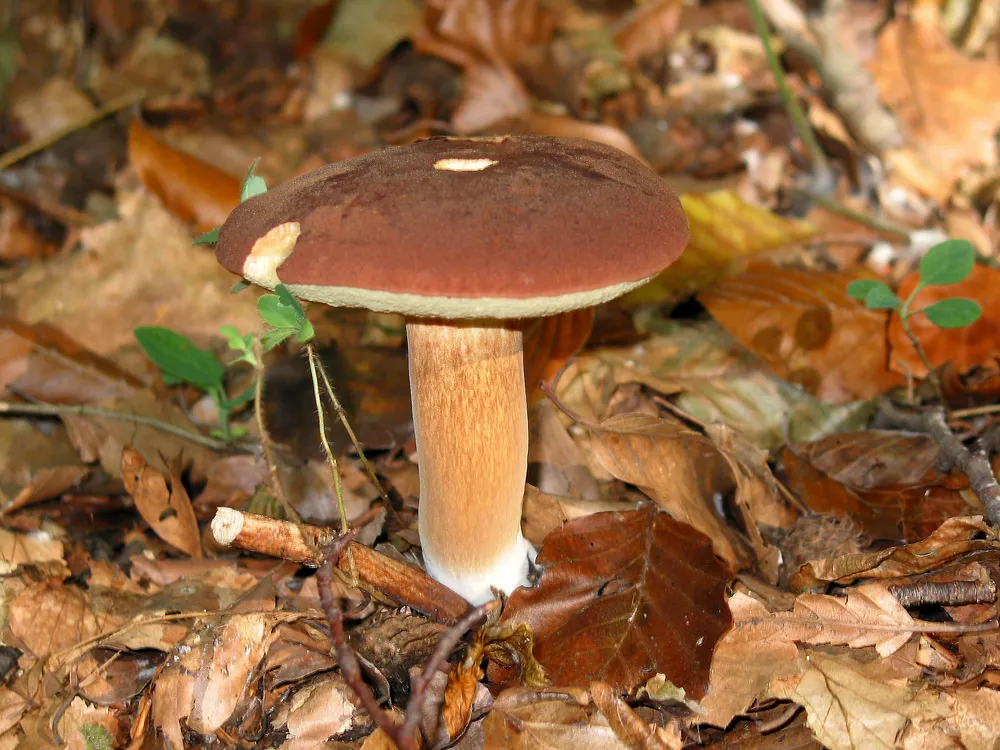
The bay bolete (Imleria badia, in some literature Boletus badius or Xerocomus badius) is one of the most popular culinary mushrooms in the Ukrainian basket, alongside porcini and Xerocomus boletes. Its Ukrainian name, "Polish mushroom," comes from an old tradition of exporting it from Polish lands to the rest of Europe in the 15th-16th centuries, where it competed with porcini thanks to its firm, meaty texture and rich flavor. In English it is called the "bay bolete" for the chestnut color of its cap.
Edible and very tasty. The flesh is meaty and aromatic, with a pronounced mushroom flavor that really opens up when dried. When cut, it bruises faintly blue: a normal reaction for this species, not a sign of poison. In the kitchen it ranks alongside porcini: fry it, pickle it, dry it, freeze it, put it in soup. It's especially good dried, because it makes an intense mushroom broth almost like porcini. Young mushrooms with unopened caps are the best.
In Ukraine it is widespread throughout the forest zone: the Carpathians, Prykarpattia, Polissia, and the forest-steppe. It forms mycorrhiza with pine, spruce, beech, and oak, a wide range of trees. Season: July to November, peaking in August-September. It often grows in groups of 3-15 fruiting bodies, especially abundantly in the mossy coniferous and mixed forests of Polissia and the Carpathians. One of the "reliable" mushrooms: even in a relatively dry summer it fruits well, especially in Polissia.
Cap
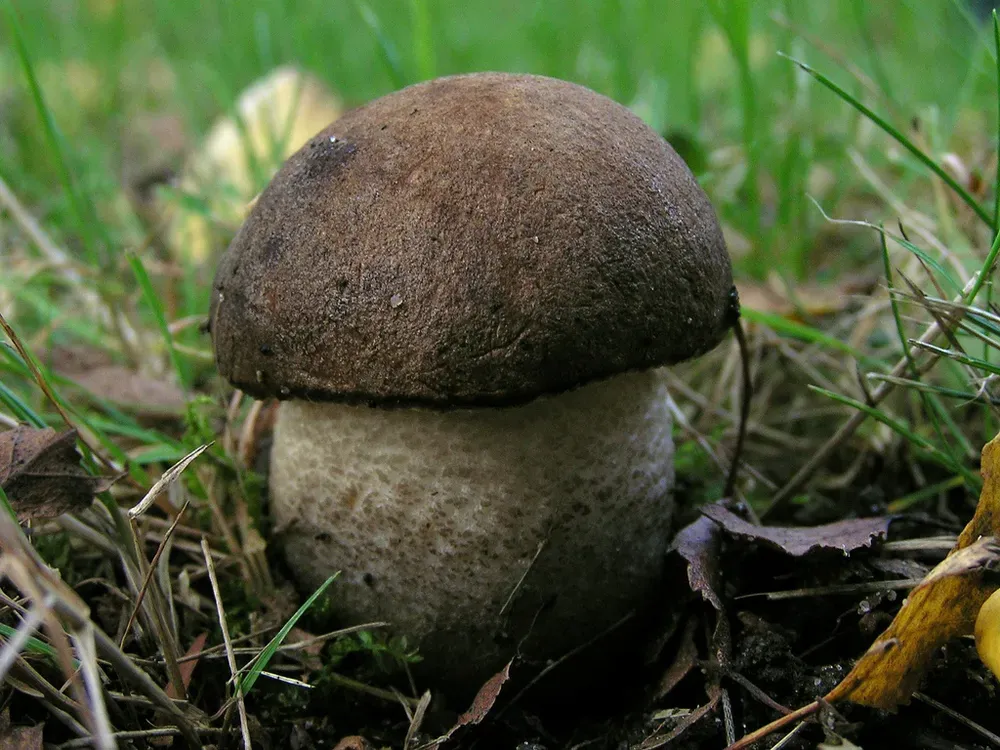
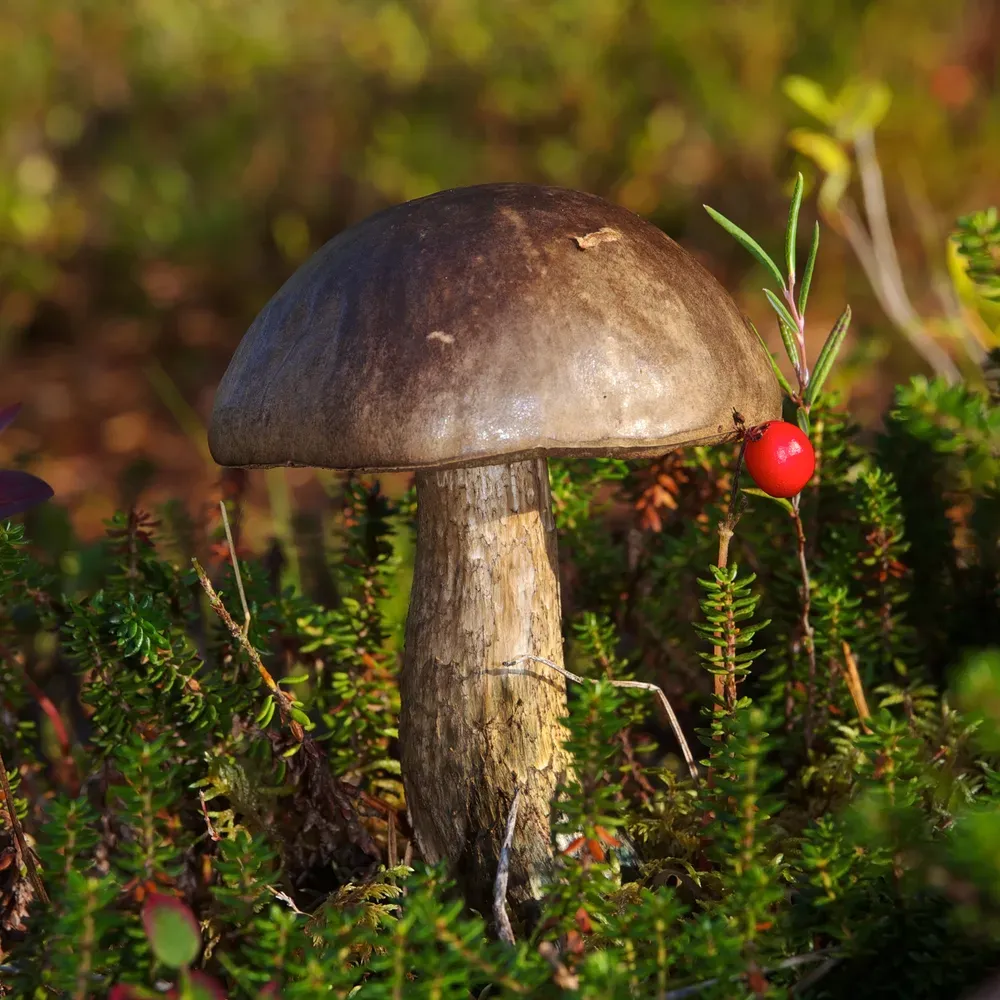
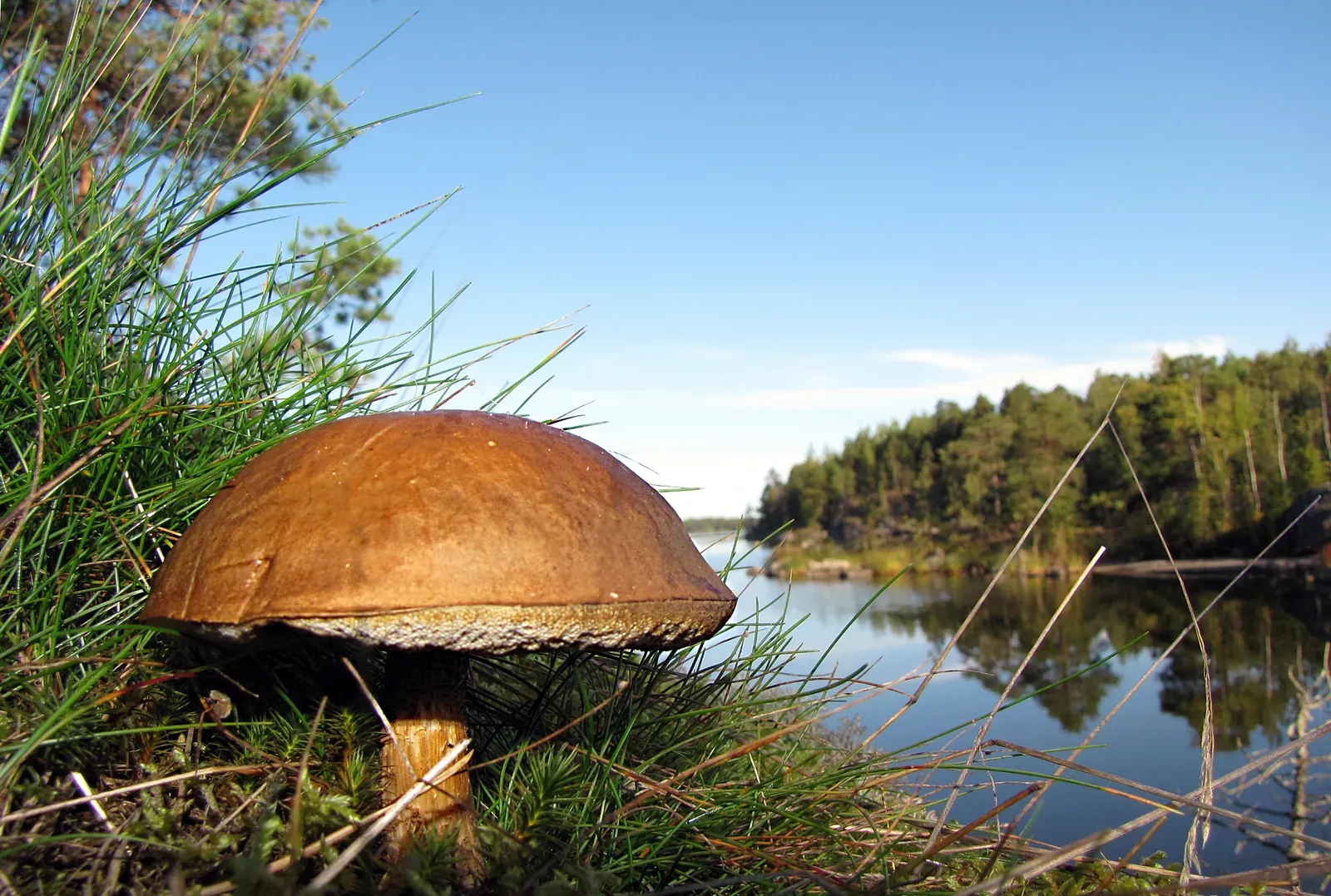
Cap 5-15 cm across, hemispherical with an inrolled margin when young, later becoming convex-flat. Color chestnut-brown, dark chestnut, honey-brown: the rich color of autumn chestnuts. Darker when young, paler with age. Surface smooth, noticeably slimy in wet weather (like a slippery jack's), dry and matte in dry weather. The cap skin doesn't peel.
Hymenophore
Tubular hymenophore: the tubes are attached to the stem or slightly notched. Color yellowish when young, turning yellow-olive with age. The pores bruise faintly blue when pressed, a characteristic feature of the species. Spore print olive-brown.
Stem
Stem 5-10 cm tall, 1.5-3 cm thick, thick, meaty, cylindrical, often thickened toward the base. Color yellow-brown to yellow-ochre, reddish toward the base, with fine lengthwise brownish fibers (not a net like porcini's; this is the key difference). When cut, it bruises faintly blue.
Flesh
Flesh firm, meaty, white to pale yellow. When cut, it bruises blue slowly and faintly (within 1-2 min, not very noticeably), then fades. Smell and taste pleasant and mushroomy, with a hint of fresh nuts.
Smell
Pleasant, rich, mushroomy, with a hint of nuts and damp forest.
›Scientific synonyms (9)
Imleria badia (Fr.) Vizzini (2014), Boletus castaneus β badius Fr. (1818), Boletus castaneus var. badius (Fr.) Fr. (1828), Boletus badius (Fr.) Fr. (1832), Rostkovites badia (Fr.) P.Karst. (1881), Viscipellis badia (Fr.) Quél. (1886), Ixocomus badius (Fr.) Quél. (1888), Suillus badius (Fr.) Kuntze (1898), Xerocomus badius (Fr.) E.-J.Gilbert (1931)
Lookalikes
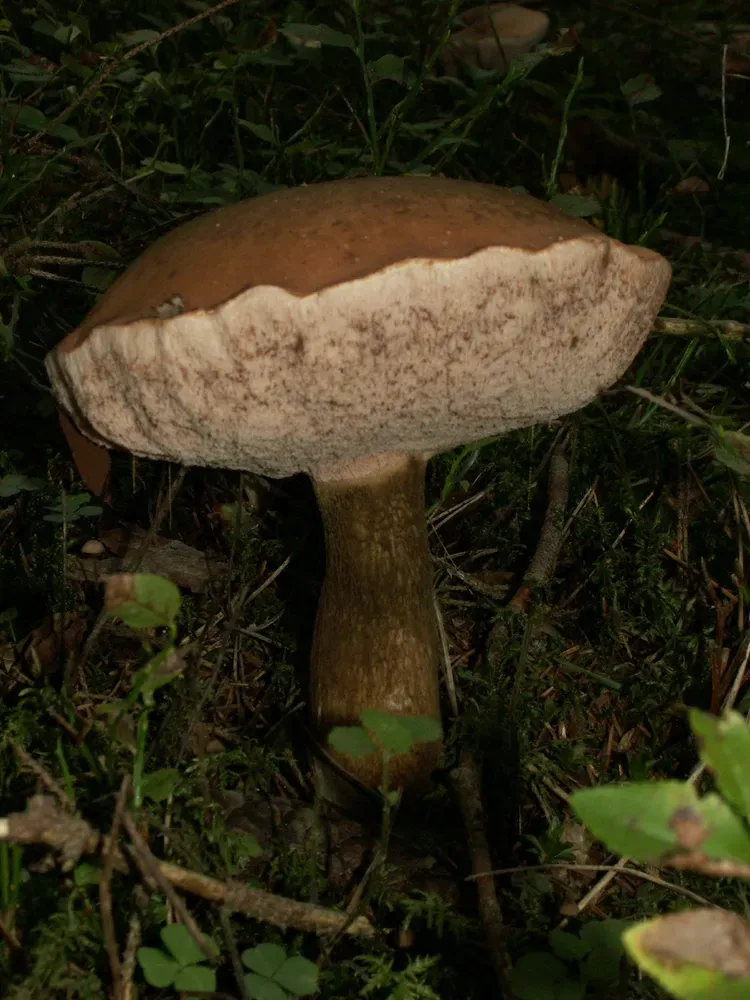
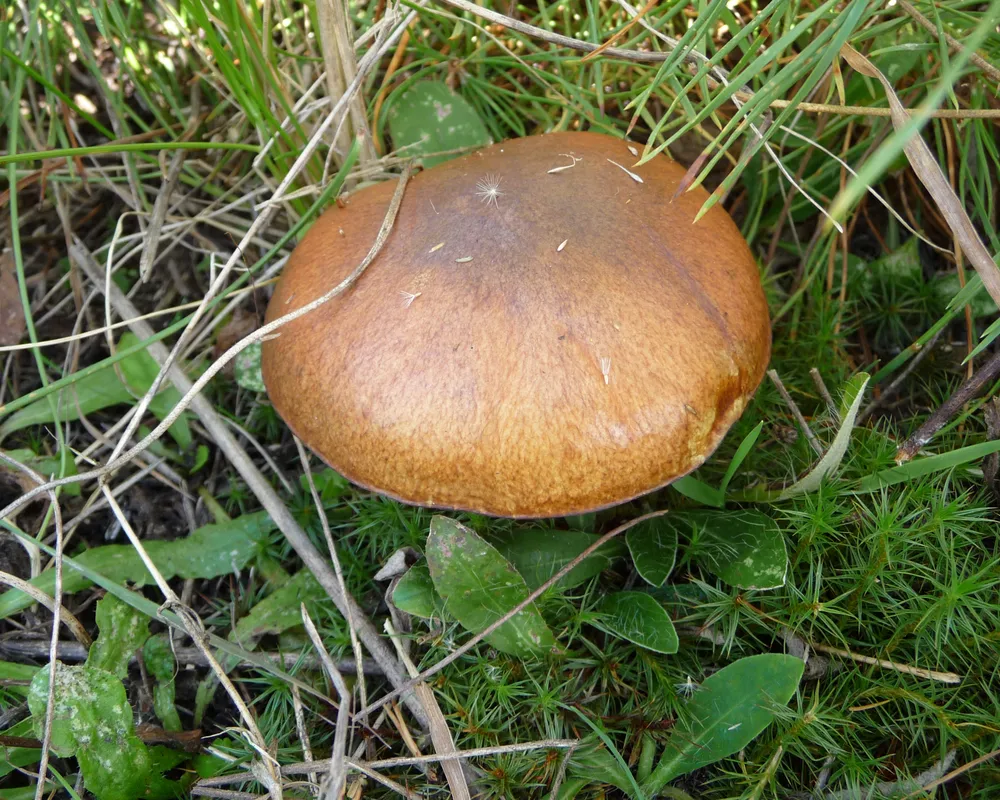
Related species
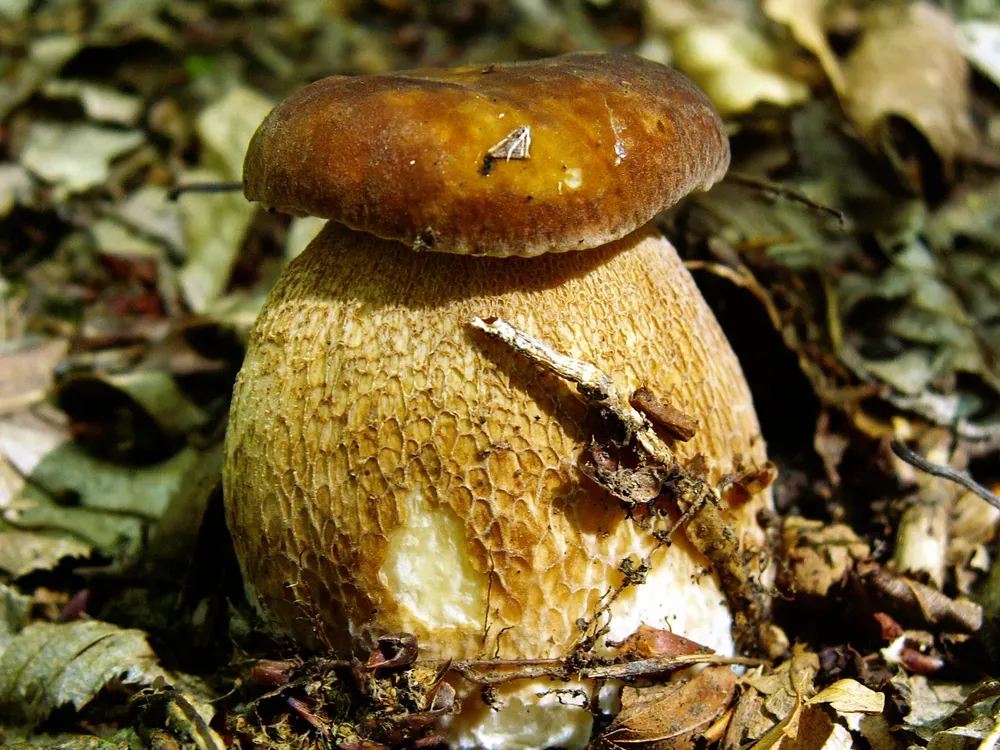
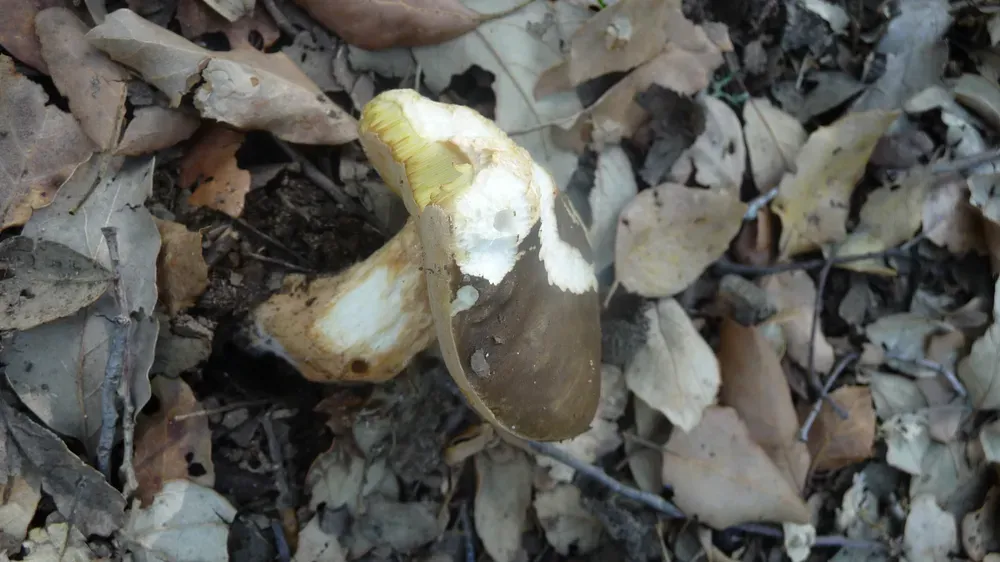
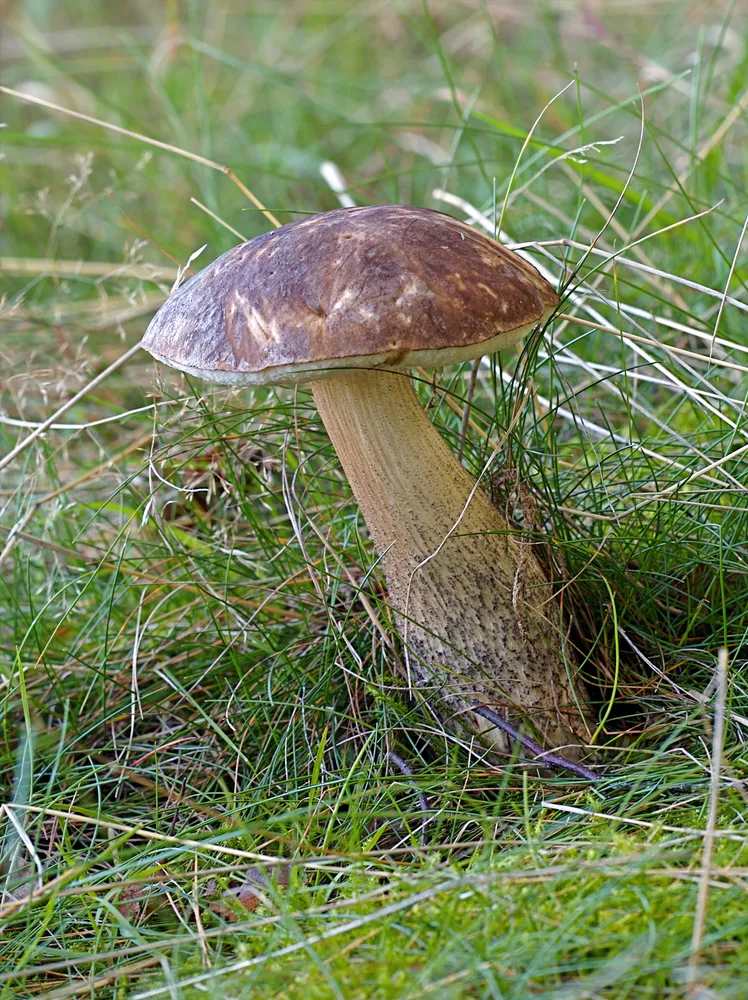
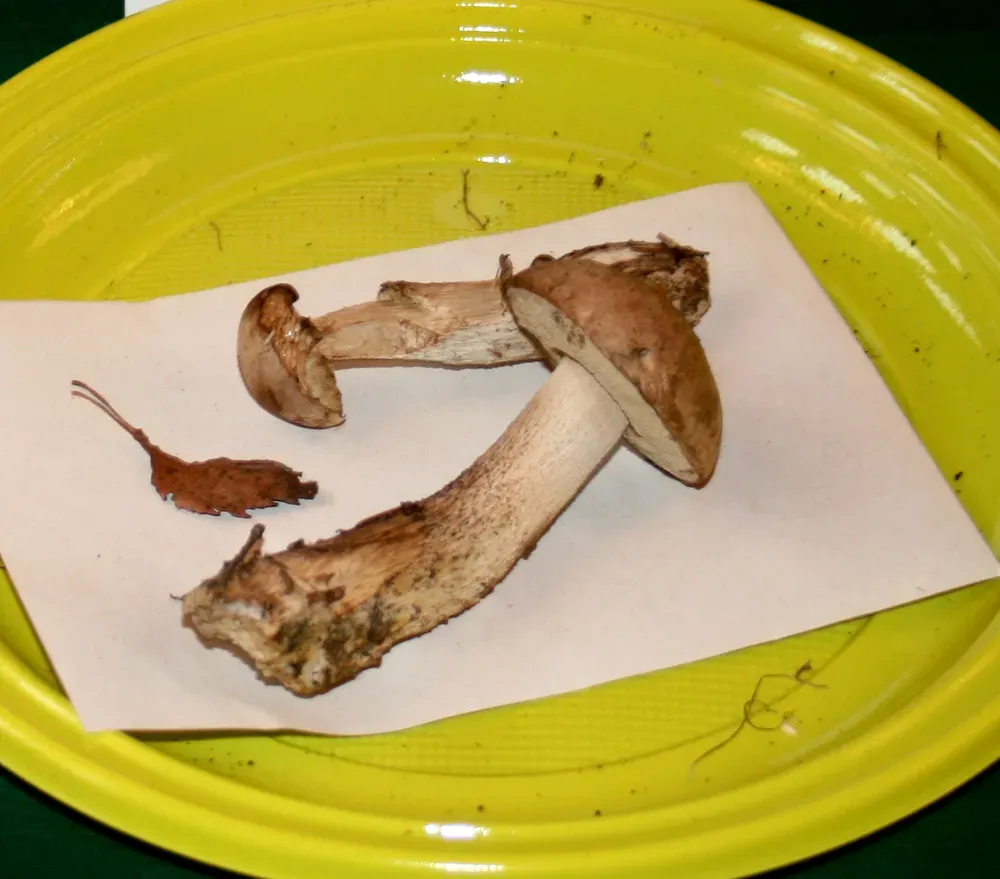
Mushrooms of the same genus and habitat — to study side by side and never mix up.
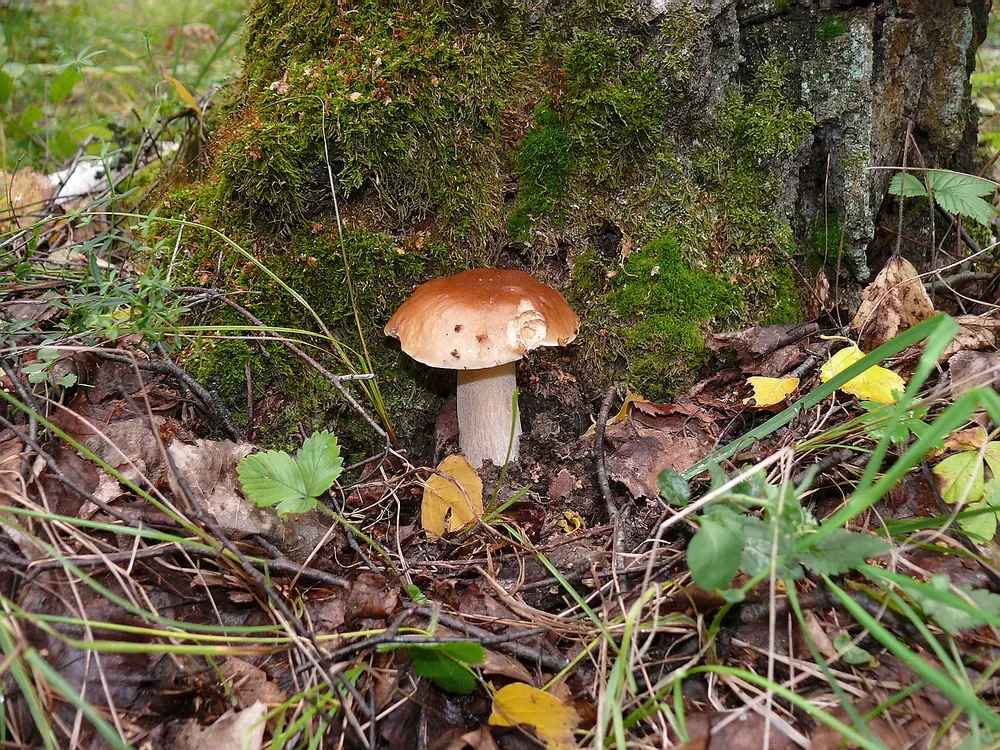
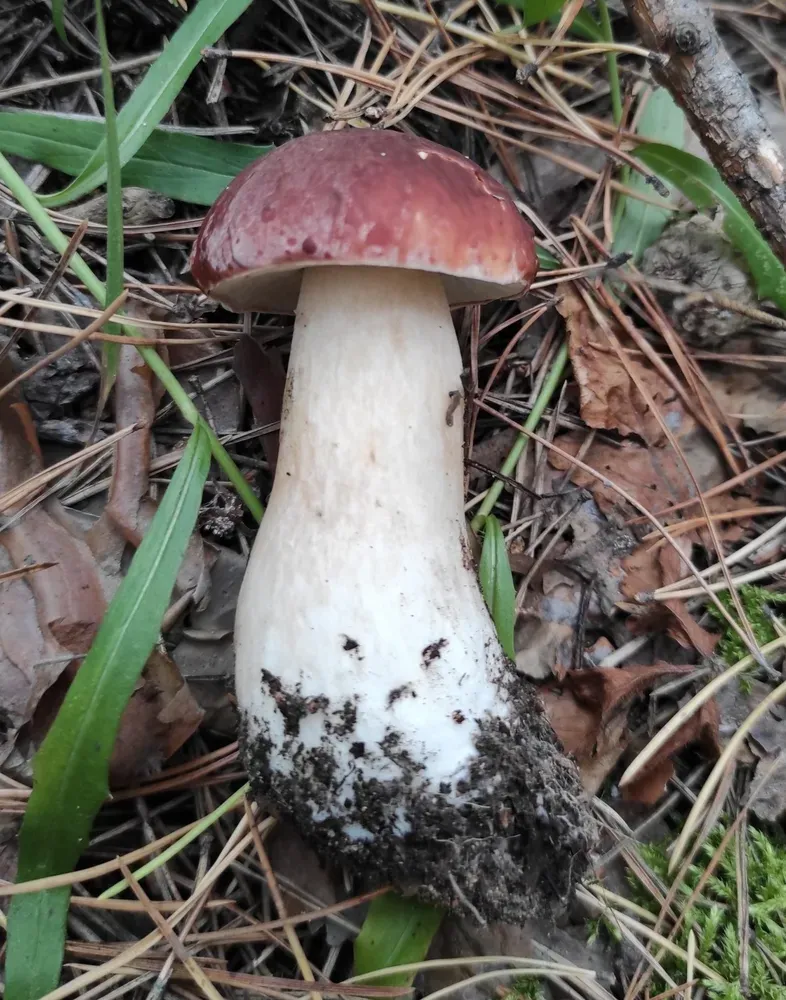
Related reading
 Science & taxonomy
Bay bolete: health benefits and nutritional value
The bay bolete is a match for porcini in both flavor and nutrition. Here's why the bay bolete is good for you,…
August 20, 2026·2 min Where & when to forage
How long a bay bolete takes to grow, and when it appears
The bay bolete is firm and fleshy, so it doesn't rush its growth. Here's how many days it takes to grow, how l…
August 15, 2026·2 min Where & when to forage
When does mushroom season end in Ukraine?
The mushroom season doesn't stop abruptly — it fades in waves right up to the frosts. Here's when the mushroom…
August 9, 2026·2 min
Frequently asked questions
Is it safe to eat?
Yes, without restrictions. One of the safest and tastiest boletes. Young mushrooms can be cooked without boiling first. No need to peel the cap skin. Skip old specimens with soft caps and wormy tubes.
Why does the flesh turn blue? Isn't that poison?
It's a normal oxidation reaction of the pigment variegatic acid on contact with air. Not poison, not spoilage. Faint bluing occurs in many edible mushrooms: Xerocomus boletes (the yellow-brown one, the matt bolete, the red cracking bolete) and the velvet bolete. In the bay bolete the reaction is weaker than in the matt bolete, barely noticeable within 1-2 min. In the pan the color disappears and the flesh turns a normal brown. It doesn't affect the taste.
Does it have dangerous lookalikes?
Serious ones? None. All the dark-brown boletes of our flora are edible (Xerocomus boletes, slippery jacks, porcini). The main hazard is the bitter bolete (Tylopilus felleus): not poisonous, but very bitter, and it ruins a dish. The key difference: the bitter bolete has pink pores (not yellow like the bay bolete's) and a pronounced dark net on the stem. Or, in theory, a young devil's bolete: rare, with red pores and a swollen stem.
Where should you look for it?
In all forest types: pine woods, spruce forests, beech forests, oak woods, mixed forests. Especially abundant in mossy coniferous forests with sparse grass. It forms mycorrhiza with a very wide range of trees.
Which regions of Ukraine is it found in?
Throughout the forest and forest-steppe zones: Polissia (especially abundant in the pine and mixed forests of the Rivne, Volyn, Zhytomyr, Chernihiv, and Sumy regions), the Carpathians (abundant in spruce and beech forests), Prykarpattia, and the forest-steppe. In the steppe, in planted forests.
When should you look for it?
July to November, peaking in August-September. It tolerates the first light frosts and often fruits when the summer mushrooms are already gone. One of the most reliable "autumn" mushrooms.
How do you tell it from porcini?
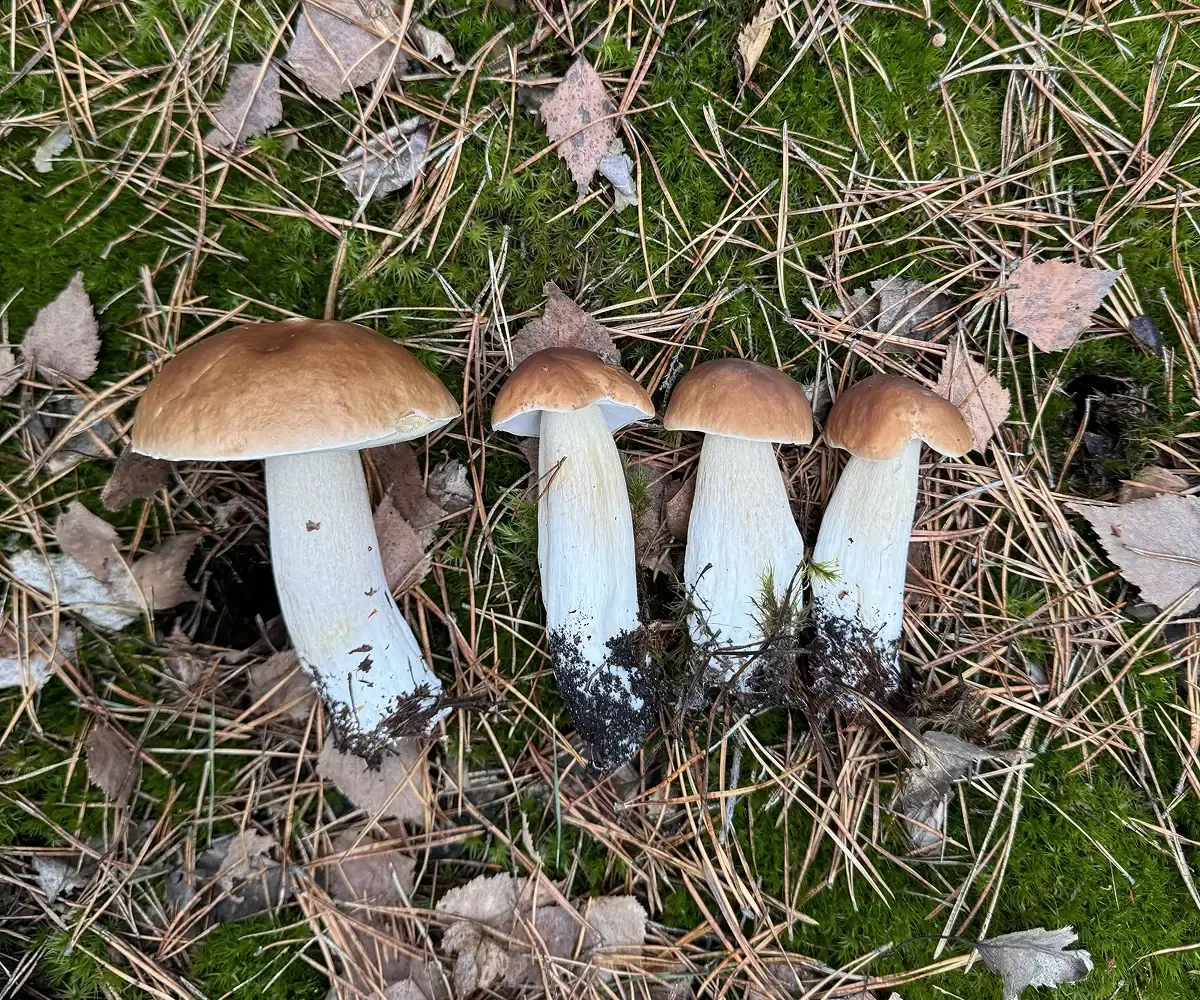
Two features. (1) The net on the stem: porcini — a pronounced white, cream, or brownish net (like a fishing net). Bay bolete — fine lengthwise brownish fibers with no net. (2) The flesh when cut: porcini — stays white. Bay bolete — bruises faintly blue. Both are edible and tasty, so a mistake isn't critical: the bay bolete is simply a slightly humbler version of porcini.
How do you cook it?
Just like porcini: every way you can think of. Fry it with onions and sour cream. Pickle it after a short 10-min boil with bay leaf and black pepper. Dry it: string young caps on a thread in the shade, and you'll get an intense seasoning for broths. Freeze it: boil for 10 min first. In soup, it makes the best mushroom broth of all forest mushrooms after porcini.
Is Bay bolete edible or poisonous?
Does Bay bolete have gills or pores?
What does the cap of Bay bolete look like?
What does the stem of Bay bolete look like?
Sources
- [1]Вікіпедія (українська)
- [2]Атлас грибів України, Зеров Д.К. (1979)
- [3]MycoBank Database
- [4]Index Fungorum
- [5]GBIF
- [6]iNaturalist Ukraine