Suede boleteXerocomus subtomentosus
Expert-verifiedUpdated October 3, 2026
Passport
- Edibility
- Edible
- Season
- Jun — Nov
- Hymenophore
- Pored
- Cap color
- Yellow
- Size
- Medium (5–15 cm)
- Smell
- Pleasant
- Reviewed
- Yes ✓
Quick answers
Where to look?
Deciduous forest, Mixed forest, Conifer forest
When does it appear?
Jun — Nov
Active months: June, July, August, September, October, November.
How to recognize it? Three signs
- Cap color: Yellow, Olive, Brown
- Cap shape: Convex
- Smell: Pleasant
Fruiting season
June – November
Description
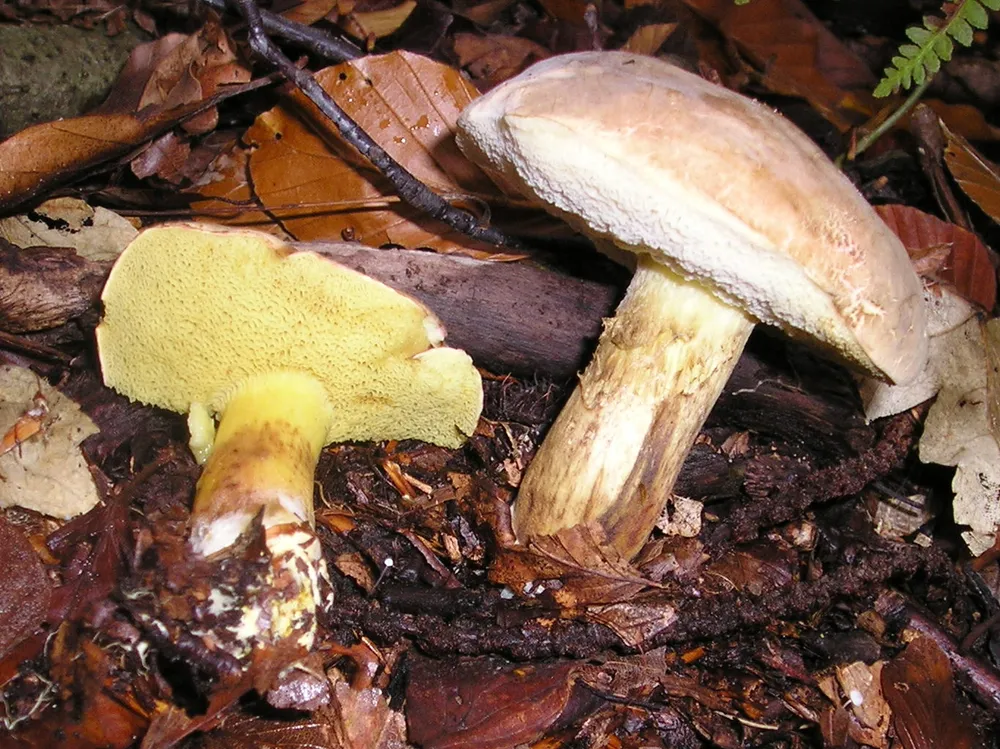
The suede bolete (Xerocomus subtomentosus) is one of the most common and most recognizable pored mushrooms in Ukraine's forests. A classic "bolete" with a characteristic olive-green or yellow-green velvety cap, yellow pores that turn blue when pressed, and a yellow-ocher stem with fine reddish scales forming a net. In folk naming it is often mixed up with other boletes — the cracking one, the reddish one — but everyone who's been in the forest in autumn knows the "green" one.
Edible and quite tasty. The flesh is meaty, with a scent of ripe apple, and when cooked it gives a light blue tint in the pan — an oxidation reaction of the pigment, not poison. Good for frying, pickling, drying and freezing. One of the "everyday" mushrooms of the basket — not as showy as porcini, but it reliably turns up in any season that isn't dry. It goes very well with porcini in soups.
In Ukraine it is widespread throughout the forest and forest-steppe zones: the Carpathians, Polissia, the forest-steppe, and parks and shelterbelts in the steppe. It forms mycorrhiza with a wide range of trees — oak, beech, hornbeam, birch, pine and spruce. Season: June — November, with peaks in June (the summer flush) and August–October (the main one). It often grows in groups of 3-10 fruiting bodies, especially on mossy forest edges and in clearings.
Cap
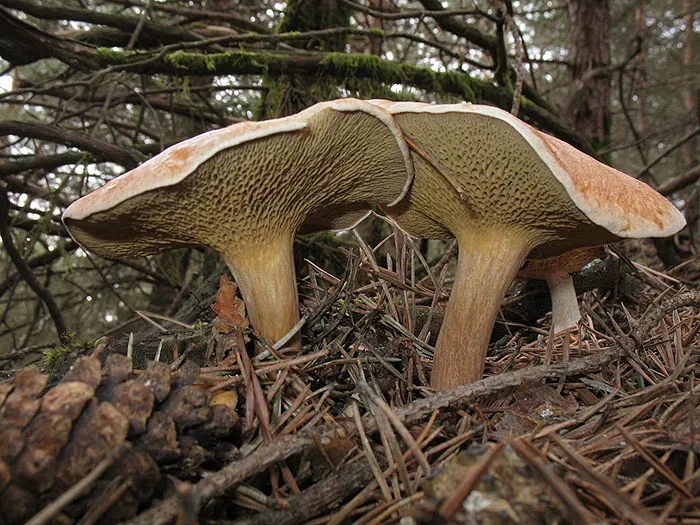
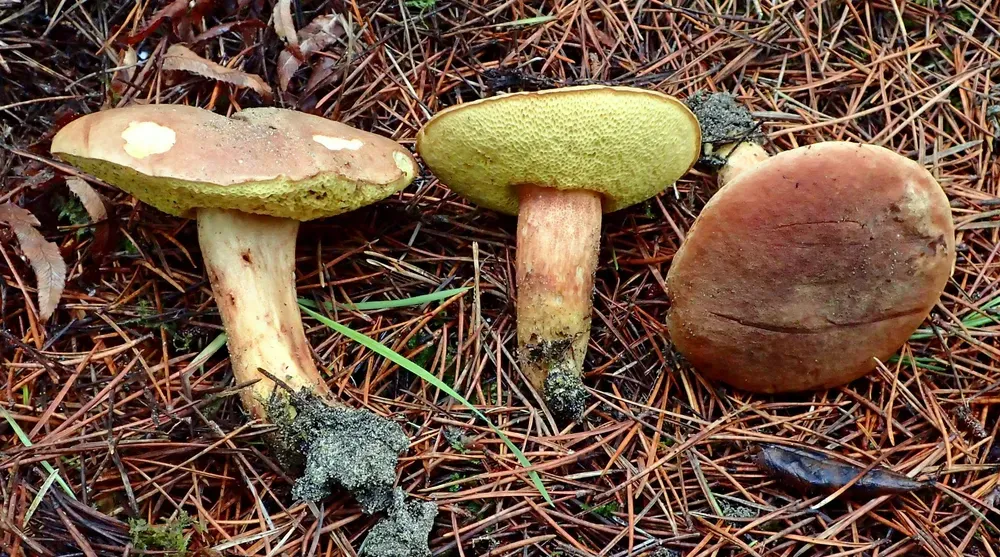
Cap 4-12 cm across, hemispherical in young mushrooms, later becoming convex to flat. Color olive-green, yellow-green, ocher-green, brighter when young, paling with age. The surface is velvety and dryish, slightly sticky in damp weather; in old mushrooms it often cracks, with white cracks between the polygons of skin.
Hymenophore
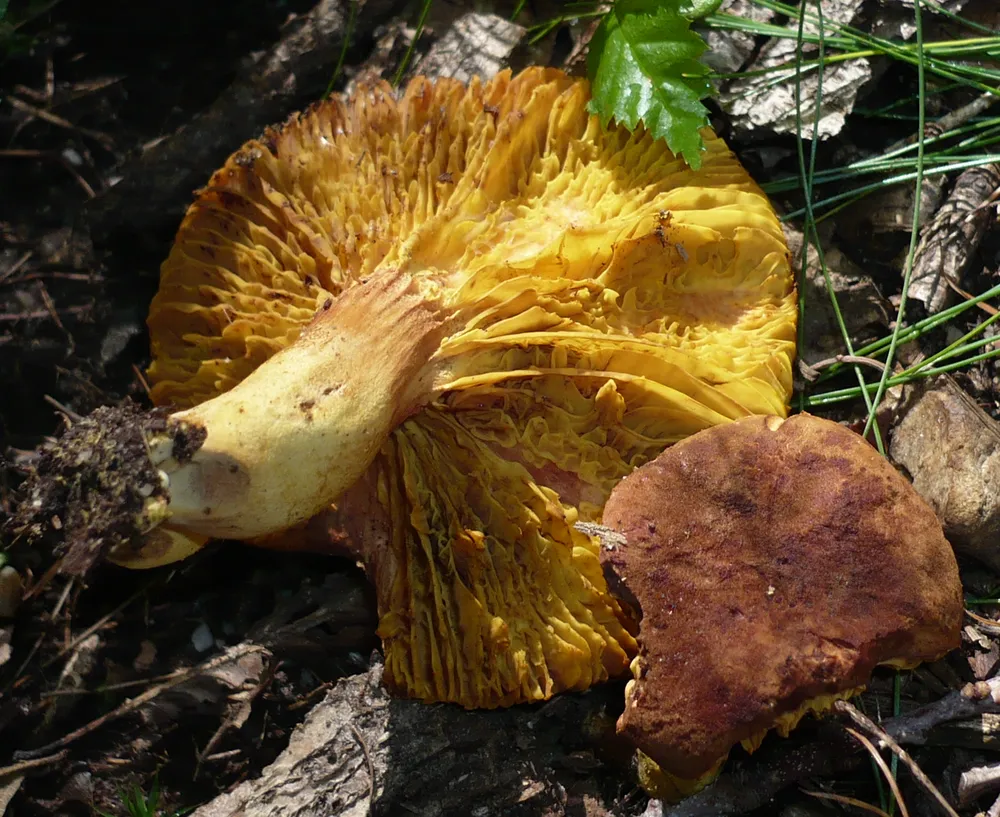
The hymenophore is made of tubes attached to the stem. Color bright yellow when young, turning yellow-olive with age. The pores are small and angular, and turn blue when pressed — a characteristic reaction. Spore print olive-brown.
Stem
Stem 5-10 cm tall, 1-2 cm thick, cylindrical, often slightly narrowing toward the base. Color yellow-ocher with fine lengthwise reddish-brown scales forming a net — a characteristic feature of the species among the boletes. No ring.
Flesh
The flesh is meaty, pale yellow, rusty in the lower part of the stem. When cut, it slowly turns blue (within 1-2 minutes), then fades. The smell is faintly mushroomy, with a note of ripe apple. The taste is mild and pleasant.
Smell
Faint, pleasant and mushroomy, with a fruity (apple) note.
›Scientific synonyms (1)
Boletus subtomentosus
Lookalikes
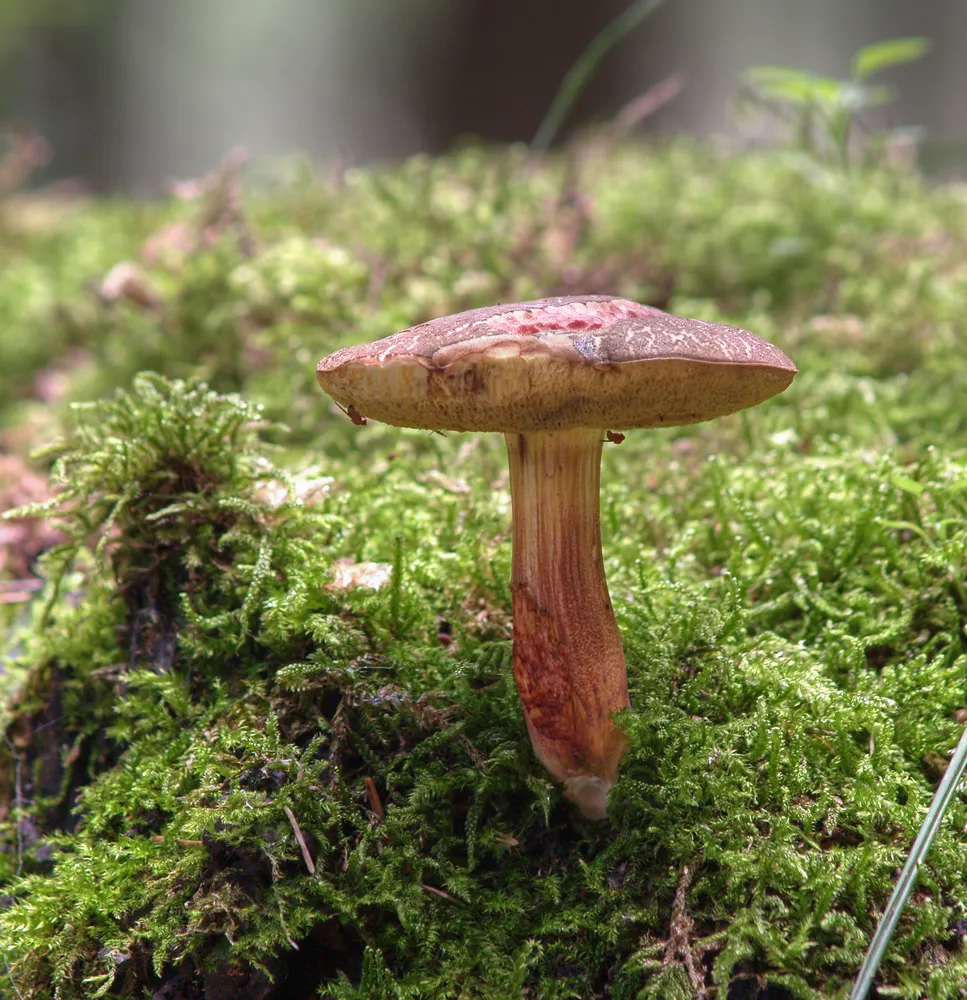
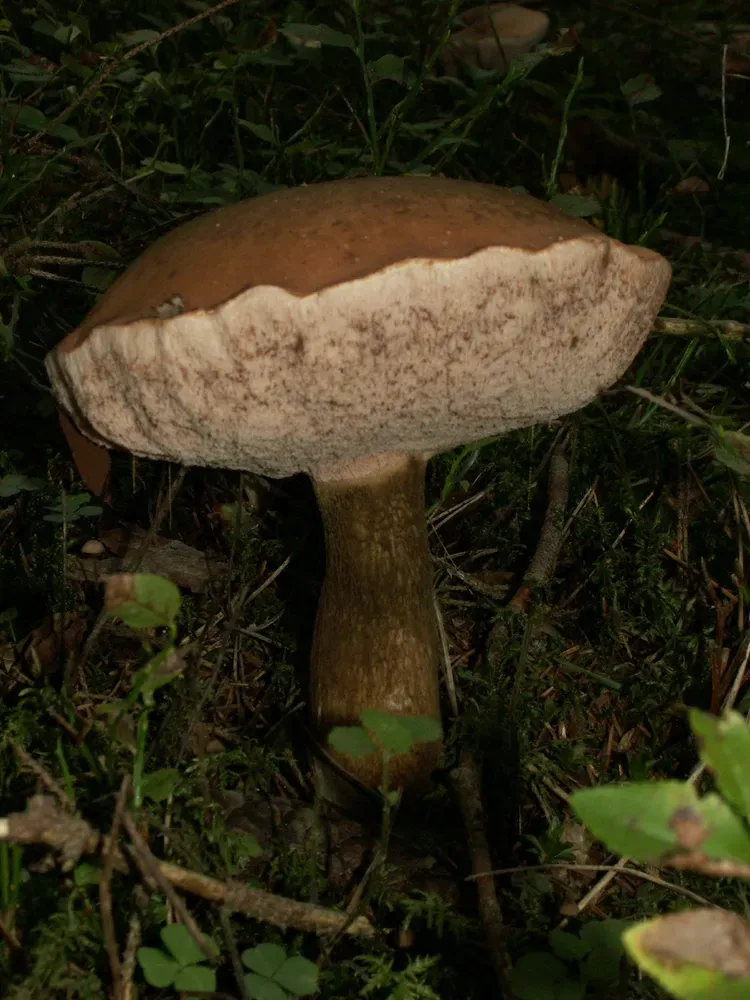
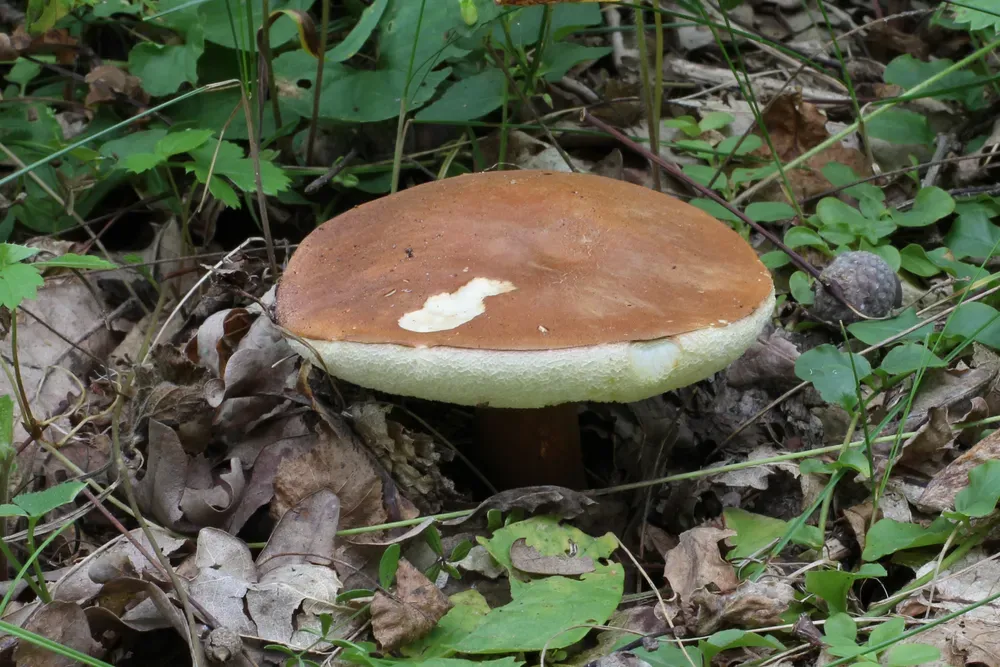
Related species
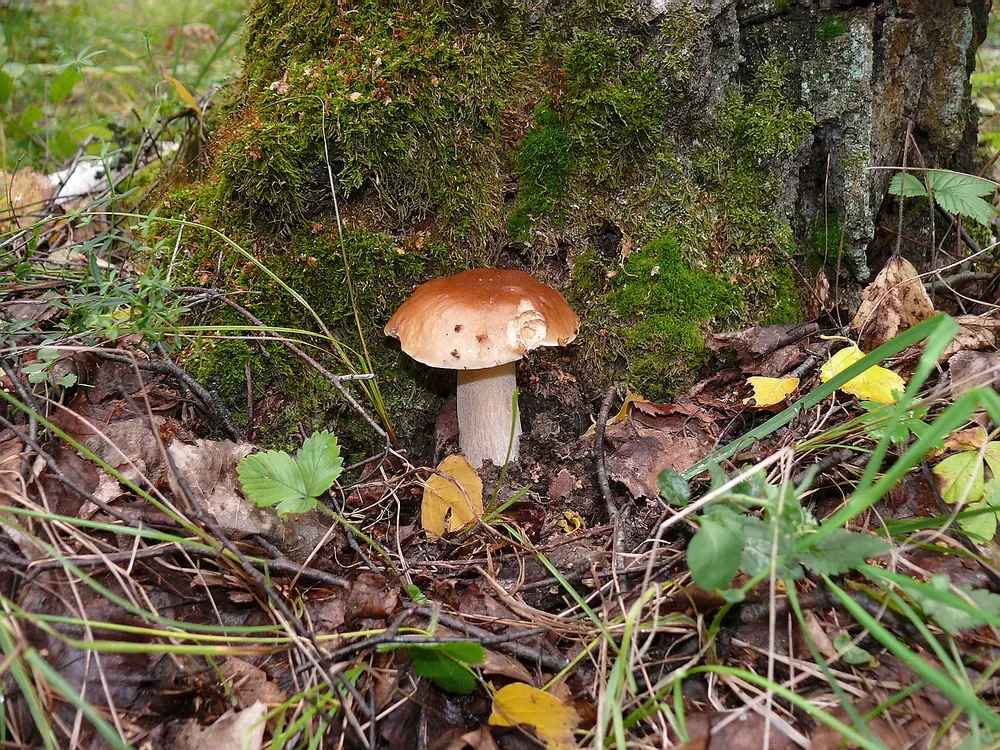
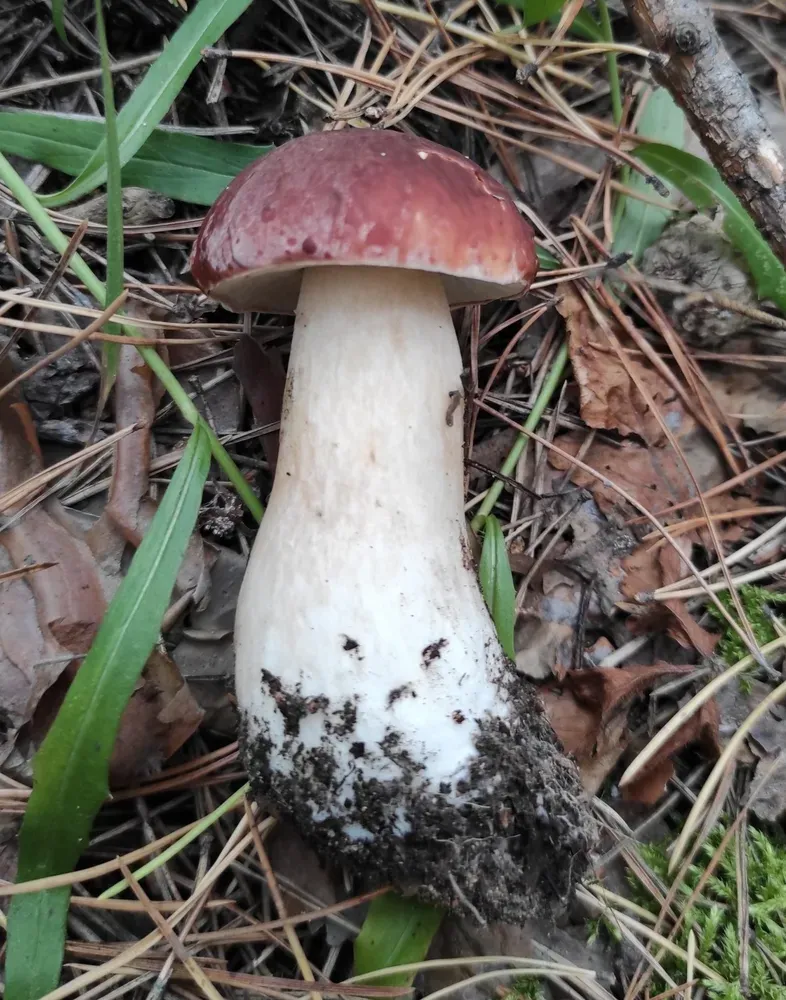
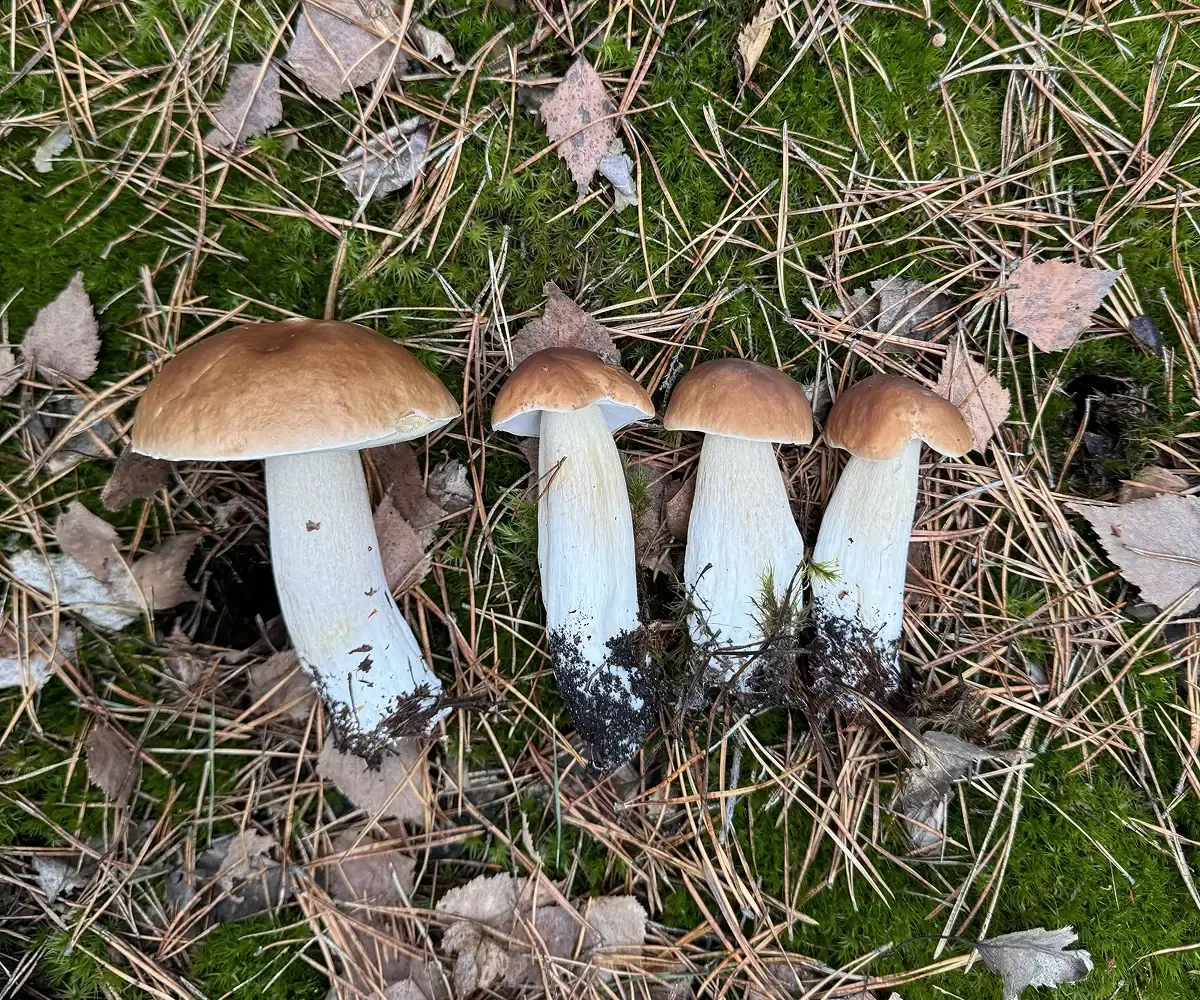
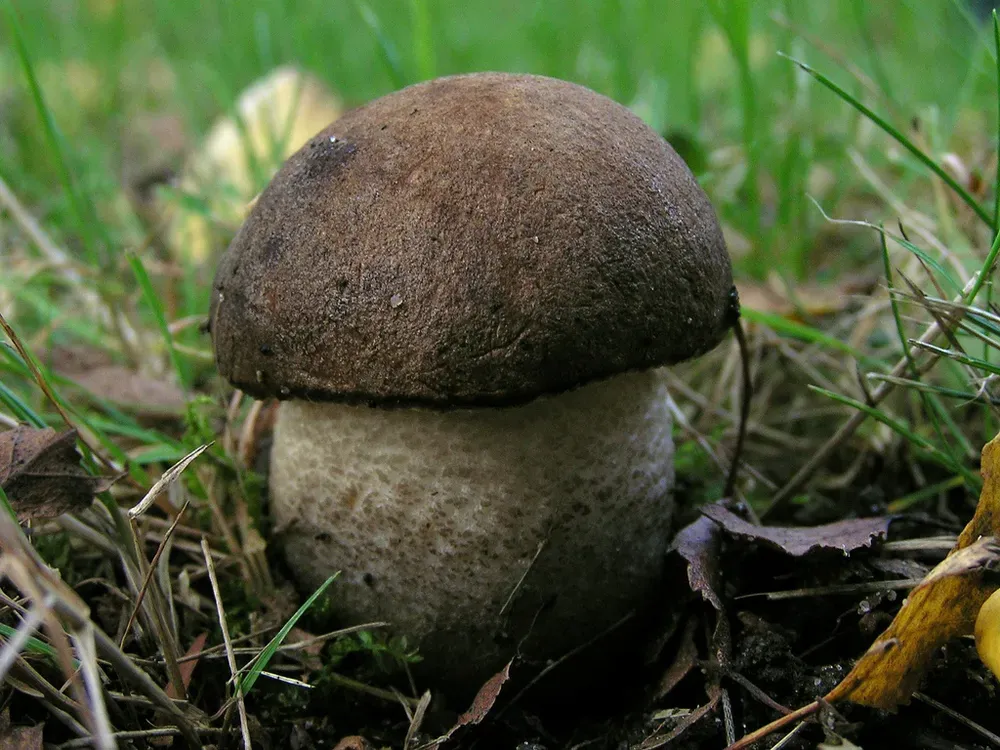
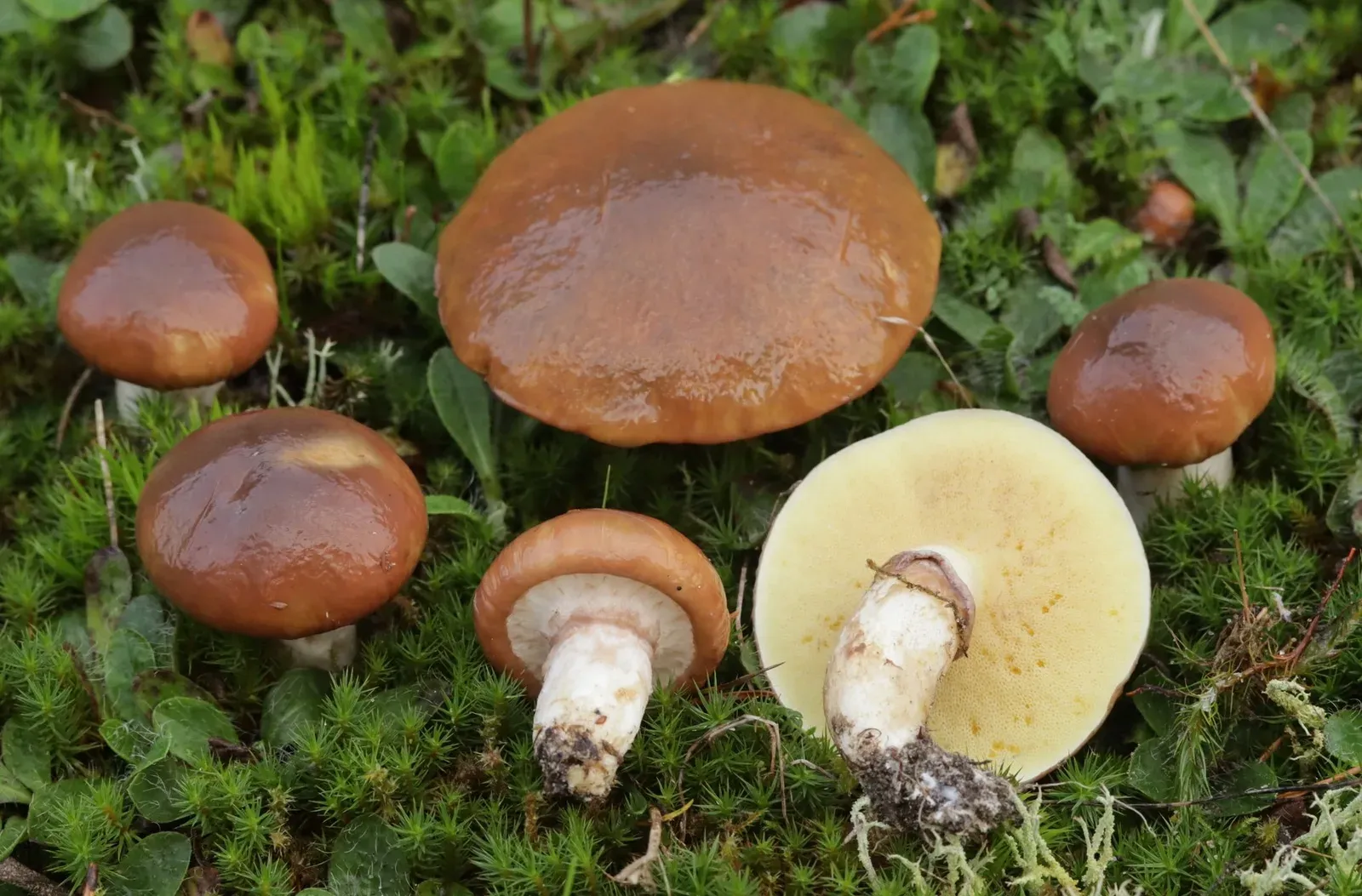
Mushrooms of the same genus and habitat — to study side by side and never mix up.
Related reading
 Where & when to forage
Which mushrooms love warm weather
Most favorite summer mushrooms love warmth. Here's which species wake up with the heat, what weather suits the…
June 2, 2026·3 min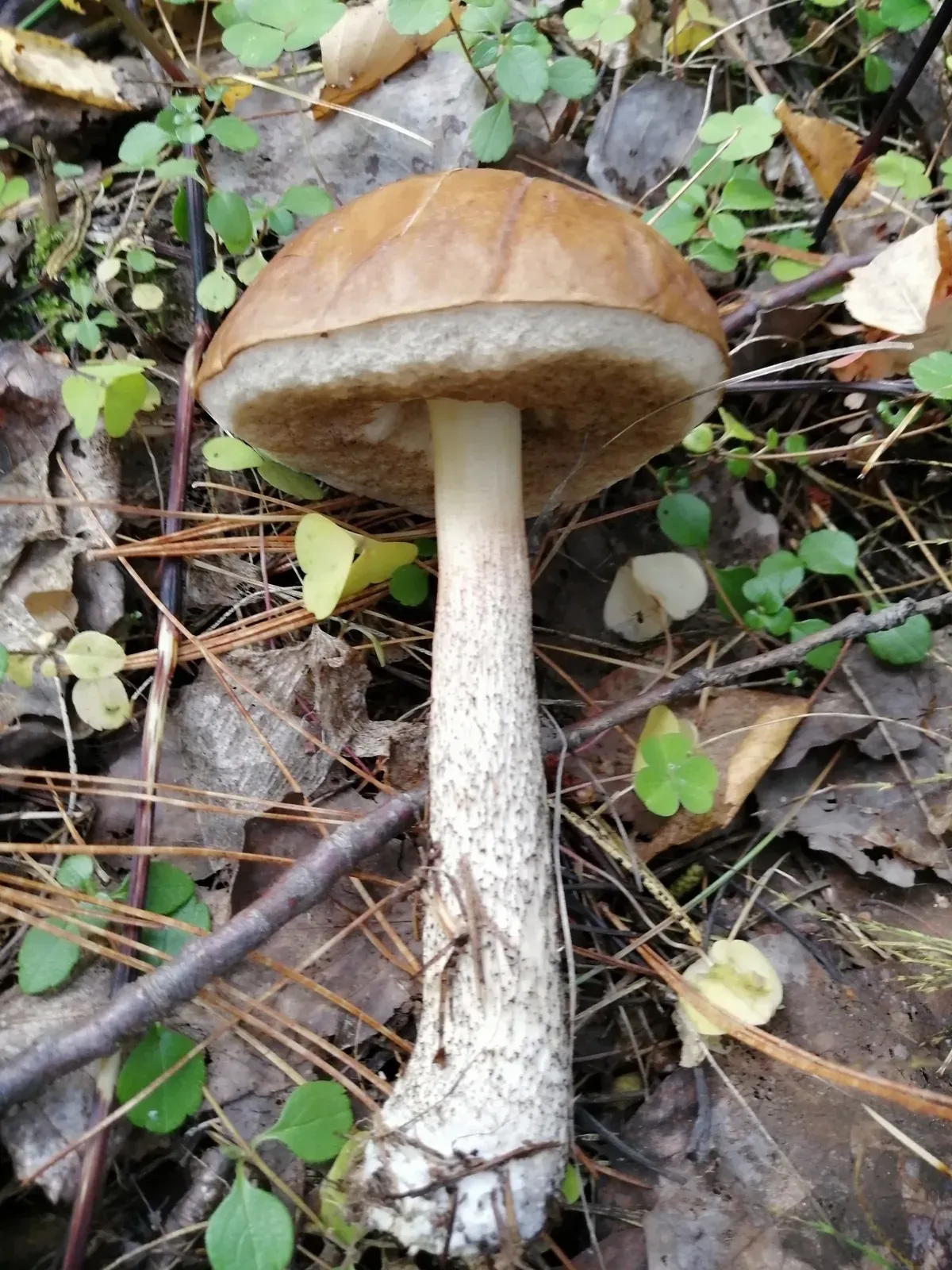 Where & when to forage
Soil moisture vs. rainfall: why the rain gauge isn't everything
Foragers are used to watching the rain, but it's really soil moisture that decides. We explain how they differ…
June 2, 2026·4 min.webp) Where & when to forage
Where & when to forageDamp spots in June: mushrooms by rivers, bogs, and ditches
When everything around is dry, damp spots save the day. Here’s why mushrooms grow near water even in the heat,…
June 2, 2026·3 min
Frequently asked questions
Is it safe to eat?
Yes, without restrictions. Young mushrooms can be cooked without boiling first. Old specimens with soft caps and maggoty tubes — skip them. There's no need to peel the cap skin.
Why does the flesh turn blue when cut?
It's a normal oxidation reaction of the pigment variegatic acid. It's not a sign of poison. Slight bluing occurs in most boletes, in velvet boletes (Suillus variegatus), the bay bolete and some Boletus species. It doesn't affect taste or safety.
Can it be confused with dangerous mushrooms?
None serious. All boletes in our flora are edible. You could confuse it with the bitter bolete (Tylopilus felleus) — not poisonous, but very bitter, and it ruins a dish. The key difference: the bitter bolete has pink pores (not yellow, as in this bolete), and on the stem a pronounced dark net. Or with a young devil's bolete (Rubroboletus satanas) — but that one is rare in our forests and has red pores.
Where should you look for it?
In all types of forest — broadleaf, mixed and conifer. It loves forest edges, clearings and mossy spots under oak, birch, pine and spruce. It forms mycorrhiza with a very wide range of trees, so it turns up practically anywhere there's forest.
Which regions of Ukraine is it found in?
All over the country: the Carpathians, Prykarpattia, Polissia, the forest-steppe, even the northern steppe in planted shelterbelts and parks. One of the most cosmopolitan mushrooms.
When should you look for it?
June — November, with peaks in June (the summer flush after rain) and August–October (the main one). One of the longest seasons among pored mushrooms. It survives the first light frosts.
How do you tell it apart from other boletes?
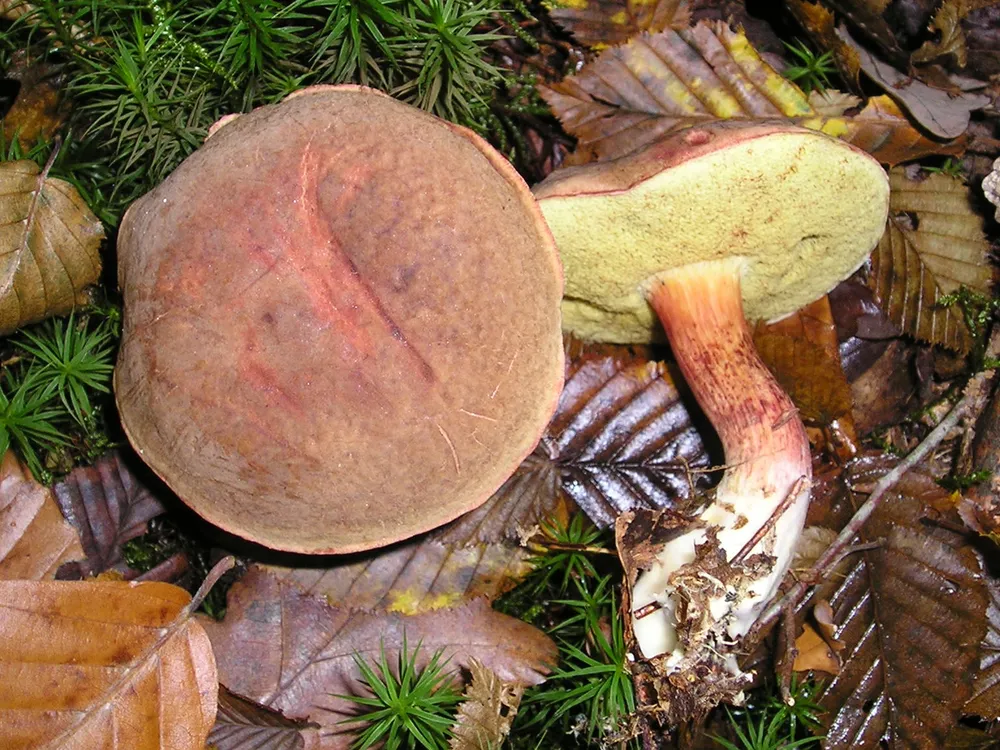
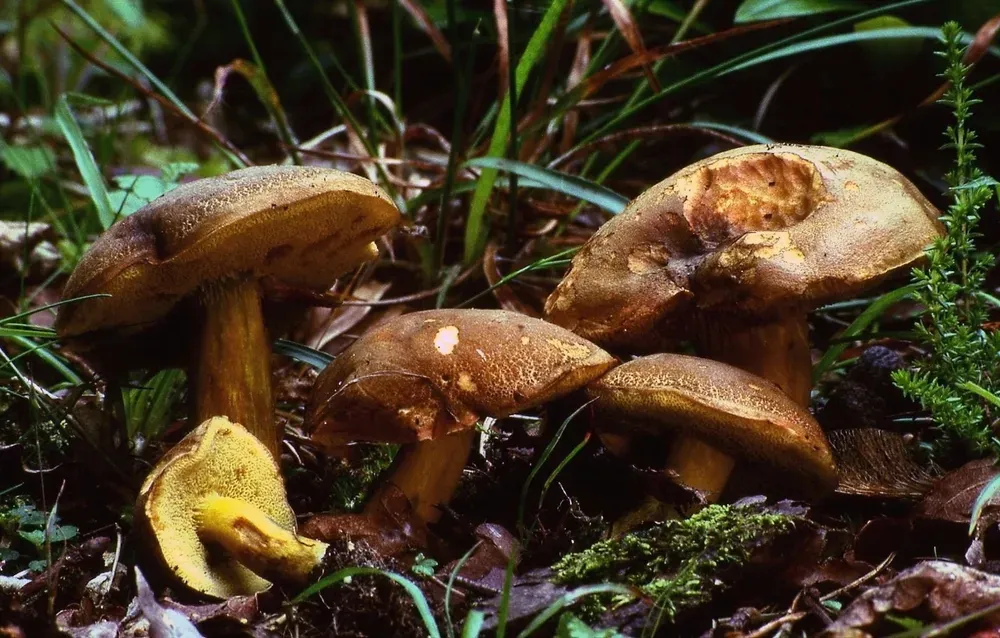
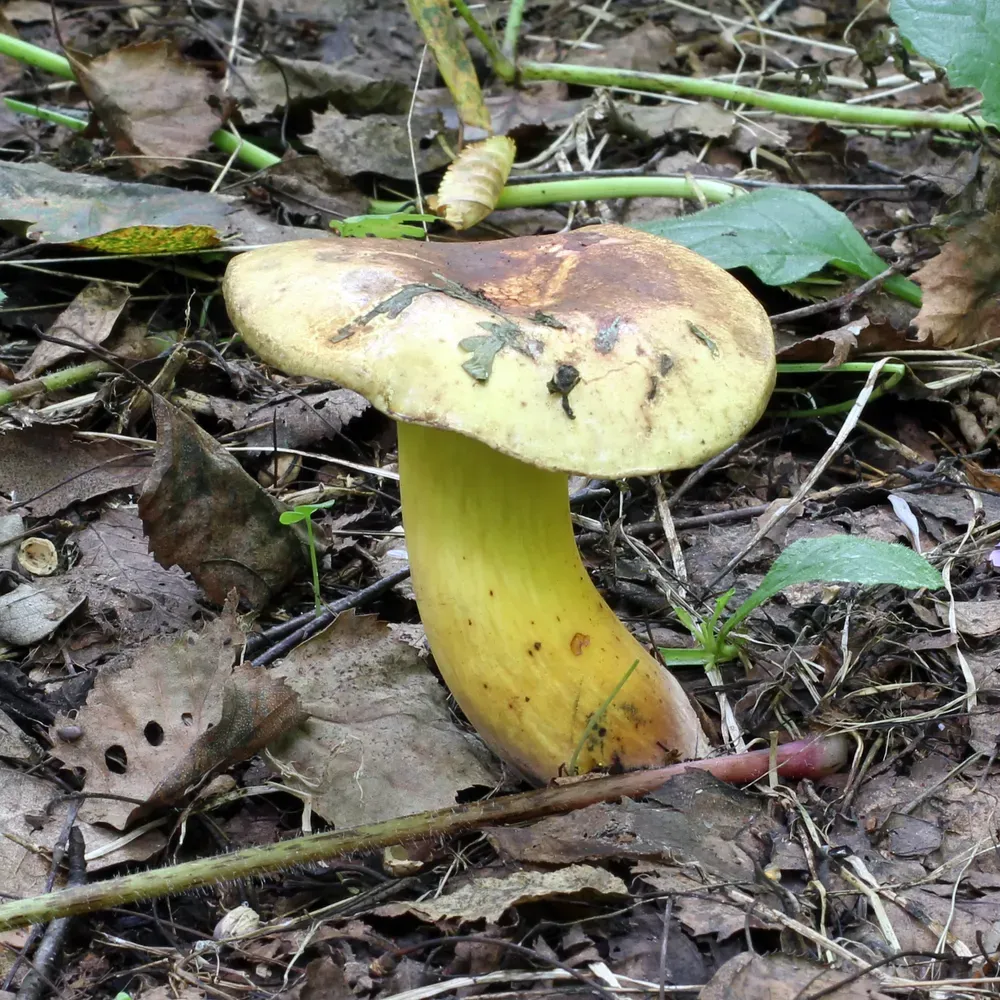
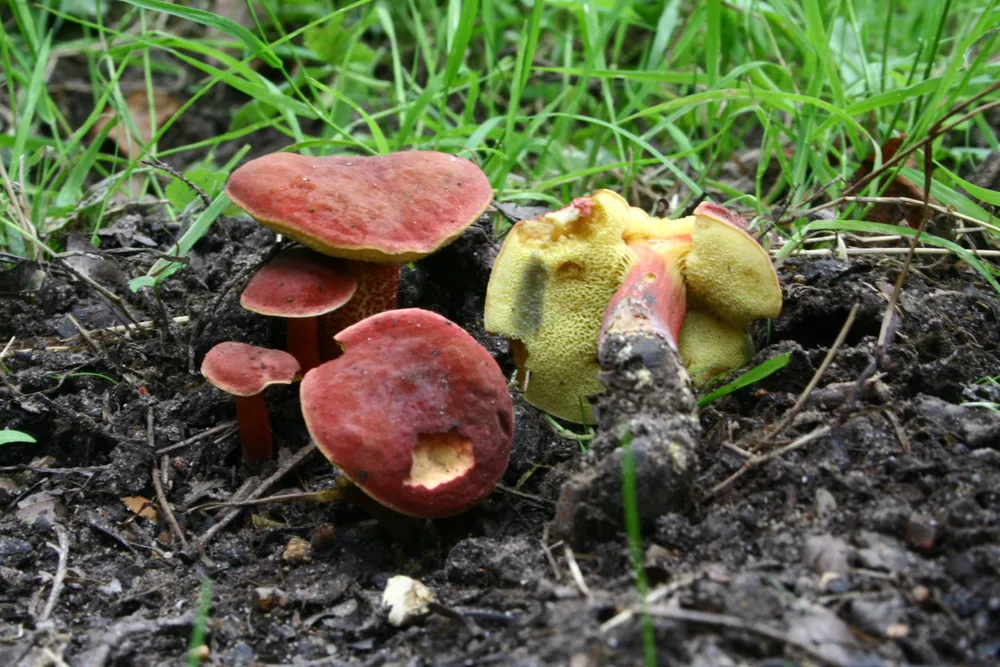
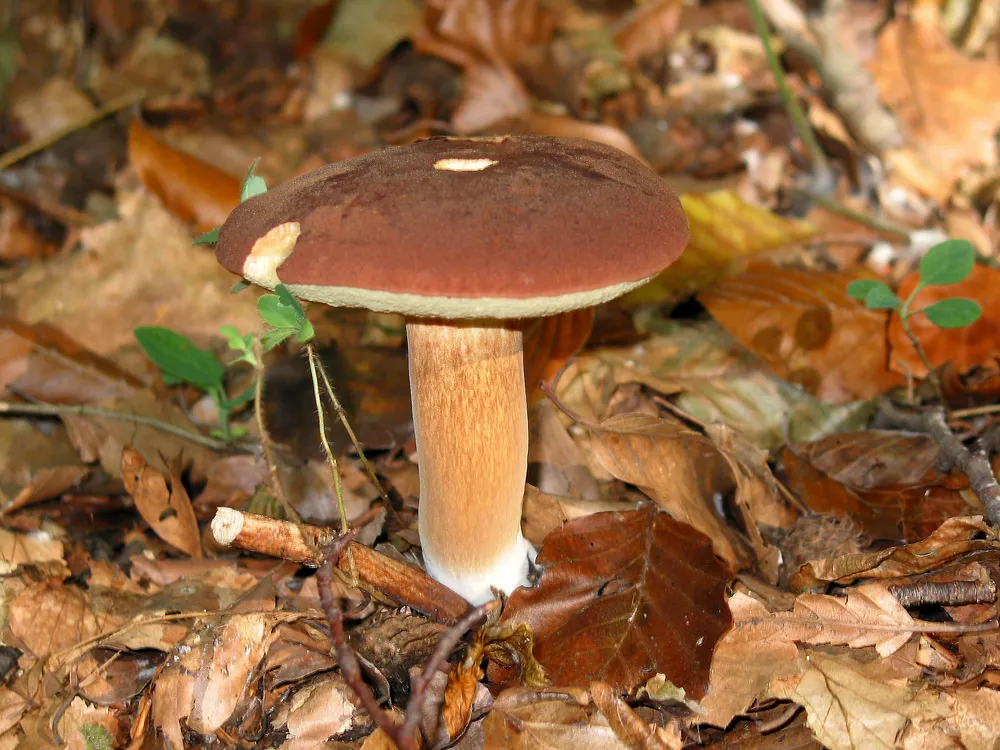
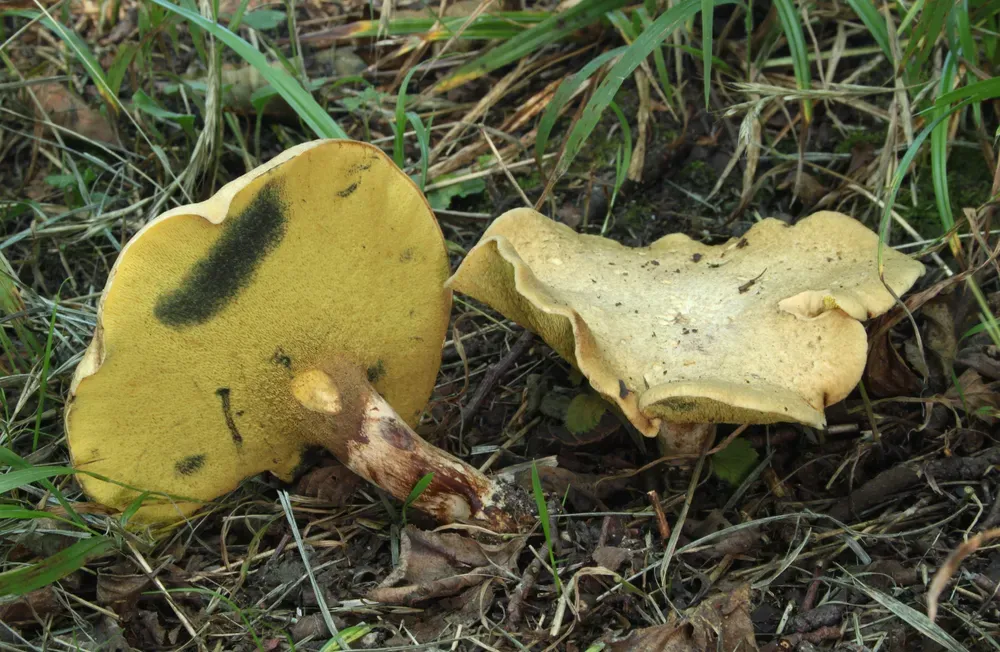
Suede bolete (X. subtomentosus) — an olive-green velvety cap and a yellow-ocher stem with a rusty net. Red cracking bolete (X. chrysenteron) — a brownish-red cap with distinct cracks and a red layer under the skin. Ruby bolete (Boletus rubellus) — a red-raspberry cap and a reddish stem. Matt bolete (B. pruinatus) — a dark chestnut-to-blackish cap that feels "dusty" to the touch. All four are edible, so a mix-up is not critical.
How should you cook it?
Fry with onion — the favorite option; the flesh is tender and aromatic. Pickle with bay leaf and pepper after boiling for 10 min. Dry — not as good as porcini, but it turns out fine — string them on a thread in the shade. Freeze — be sure to boil first. In soup it gives the broth a light blue tint — that's normal.
Is Suede bolete edible or poisonous?
Does Suede bolete have gills or pores?
What does the cap of Suede bolete look like?
What does the stem of Suede bolete look like?
Sources
- [1]Вікіпедія (українська)
- [2]Атлас грибів України, Зеров Д.К. (1979)
- [3]MycoBank Database
- [4]Index Fungorum
- [5]GBIF
- [6]iNaturalist Ukraine