THIS DATA HAS NOT BEEN VERIFIED BY AN EXPERT. Use at your own risk.
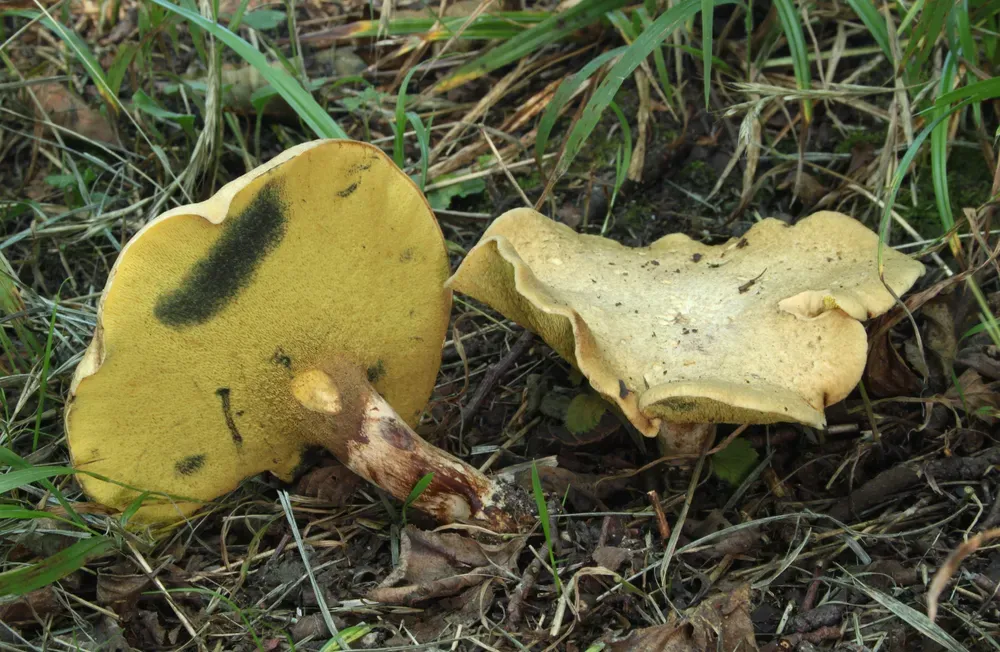
Alder boleteGyrodon lividus
Under reviewUpdated October 3, 2026
Passport
- Edibility
- Conditionally edible
- Season
- Jul — Oct
- Hymenophore
- Pored
- Cap color
- Brown
- Size
- Medium (5–15 cm)
- Smell
- Pleasant
- Reviewed
- Under review
Quick answers
Where to look?
Deciduous forest, Mixed forest
When does it appear?
Jul — Oct
Active months: July, August, September, October.
How to recognize it? Three signs
- Cap color: Brown, Yellow, Olive
- Cap shape: Convex, Flat
- Smell: Pleasant
Fruiting season
July – October
Description
The alder bolete, known to science as Gyrodon lividus, is a small bolete whose life is inseparably tied to alder. It forms mycorrhiza exclusively with these trees, so it faithfully follows them along damp riverbanks and streams, in alder woods and on boggy forest edges. It looks modest: a clay-brown, sticky cap on a short stem, and under the cap not the tubes of the familiar slippery jacks but a finely porous yellow spore-bearing surface that turns sharply blue when touched.
In Ukraine, the alder bolete turns up wherever alder grows — on river floodplains, in damp lowlands and at the edges of bogs throughout the country. Its fruiting season falls in summer and autumn, from July to October; the mushroom appears singly or in tight groups at the base of alders, often right from among the roots.
In terms of edibility, the alder bolete is a conditionally edible mushroom. Opinions about it differ: some sources consider it edible, others of little value or inedible because of its soft, watery flesh that spoils quickly and turns mushy. Only young, firm specimens are eaten, and only after boiling; its taste is mediocre, so it is rarely anyone's main prize. Because of its modest culinary value and narrow tie to alder, many foragers simply walk past it.
Cap
The cap of the alder bolete reaches 4 to 10 centimeters across. When young it is convex with an inrolled margin; with age it flattens out, often with a wavy margin. The surface is smooth, sticky or slimy in wet weather and matte when dry. The color is clay-brown, yellowish ochre or light brown, darkening with age; when damaged, the surface may take on a darker tint. The flesh is thin, so the cap breaks easily.
Hymenophore
The spore-bearing surface is made of tubes, but an unusual one: the tubes are very short, and the pores are small, angular and irregular, often elongated and interconnected, running noticeably down the stem. They are bright yellow or golden yellow, and when pressed or damaged the pores quickly turn blue, taking on a blue-green or blue-gray tint. This sudden bluing is one of the species' most distinctive features.
Stem
The stem is short and thin relative to the cap, 3 to 7 centimeters tall, often off-center or curved, and narrowing toward the base. At first it matches the cap — yellowish brown — and darkens to reddish brown with age. The surface is smooth. There is no ring and no volva. When cut, the stem flesh can also turn blue.
Flesh
The flesh is soft, watery and pale yellow; when cut and exposed to air it turns blue, taking on a bluish-green tint. The taste is mild, bland and without bitterness. Because its watery texture quickly turns mushy, the mushroom has mediocre food value; only young, firm fruiting bodies are chosen for the table, and they must always be boiled.
Smell
The smell is faint, bland and typically mushroomy, with no sharp notes. Aroma is not a defining feature, so for identification rely on the small yellow pores that turn blue, the sticky clay-colored cap and the constant link with alder in damp places.
›Scientific synonyms (3)
Uloporus lividus (Bull.) Quél. (1886), Boletus lividus Bull. (1791), Gyrodon sistotremoides (Fr.) Opat. (1836)
Lookalikes
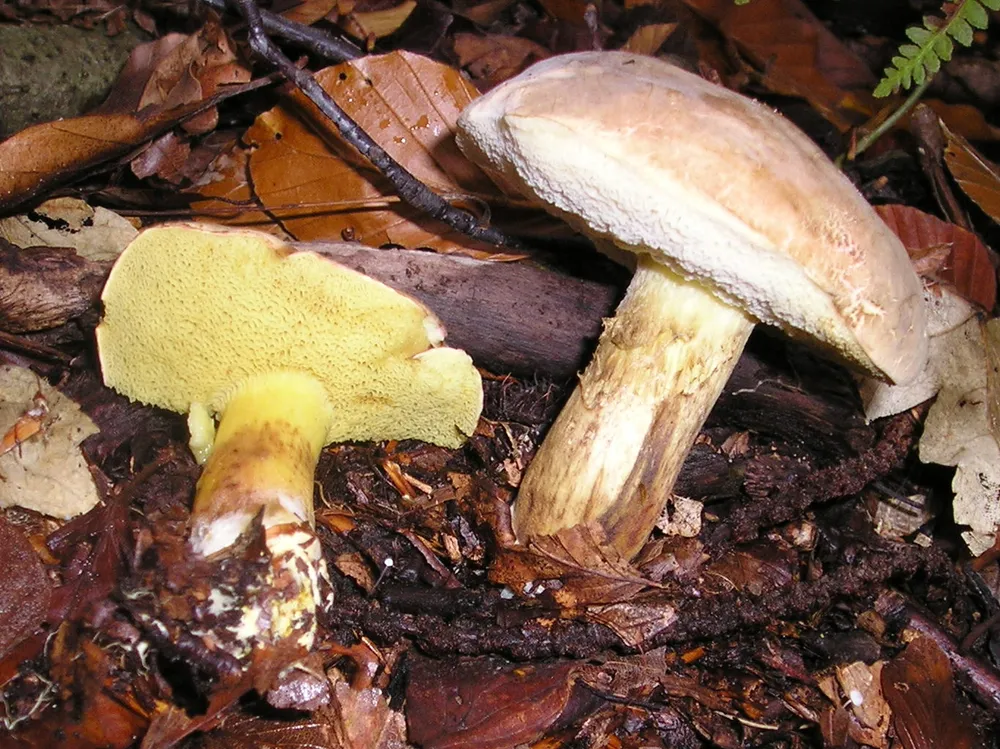
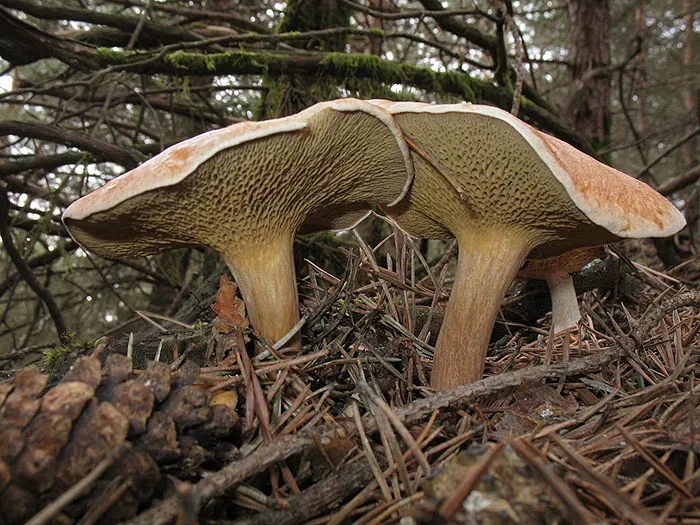
Related species
Mushrooms of the same genus and habitat — to study side by side and never mix up.
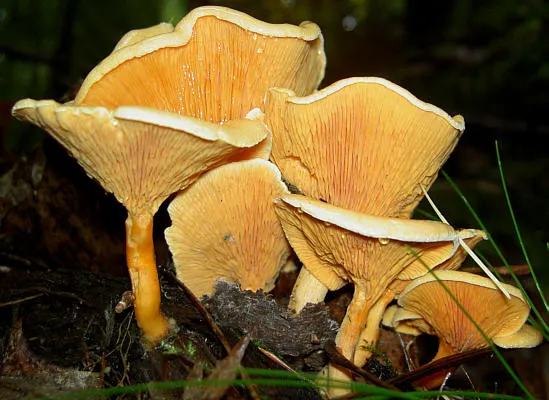
False chanterelle
Лисичка несправжня
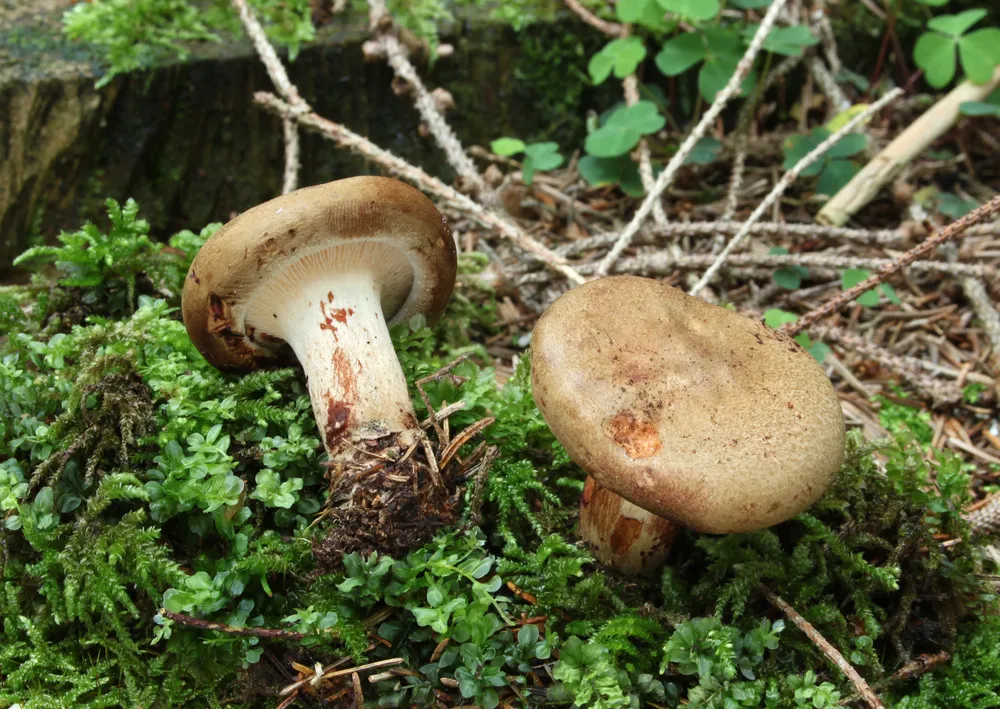
Brown rollrim
Paxillus involutus
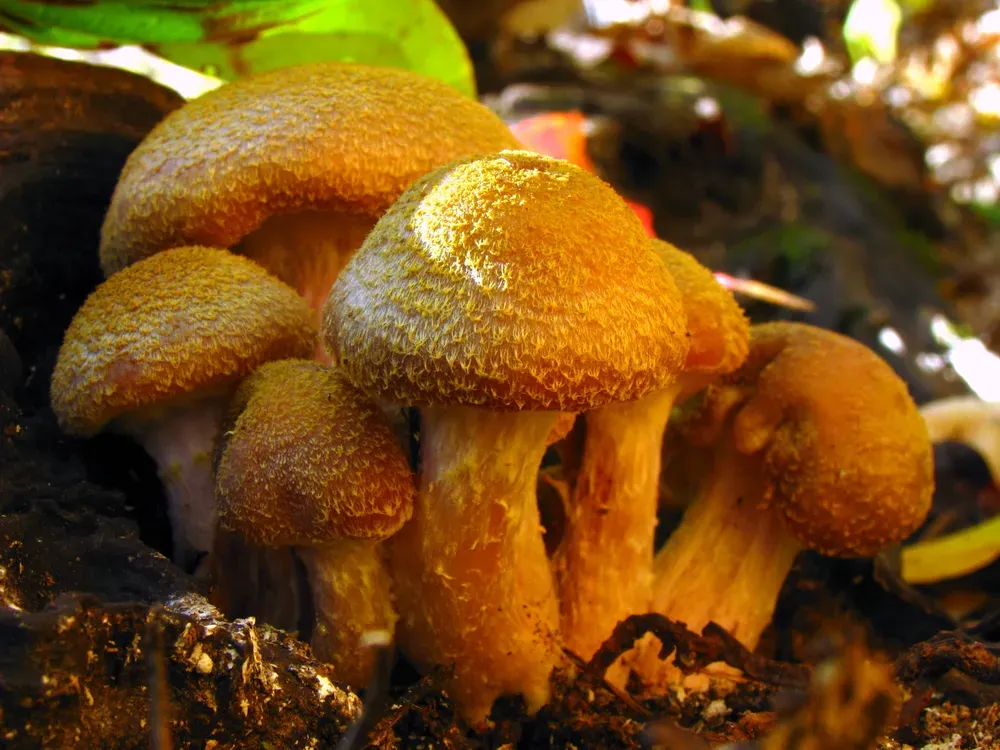
Bulbous honey fungus
Armillaria gallica
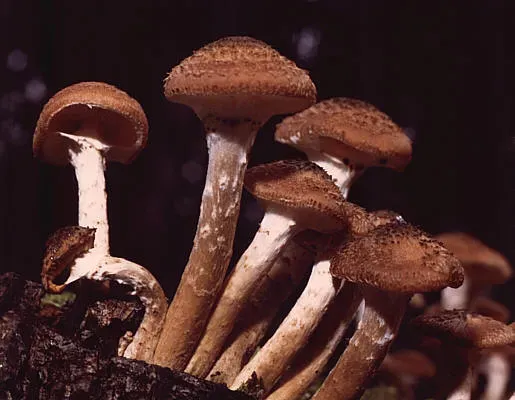
Dark honey fungus
Armillaria ostoyae
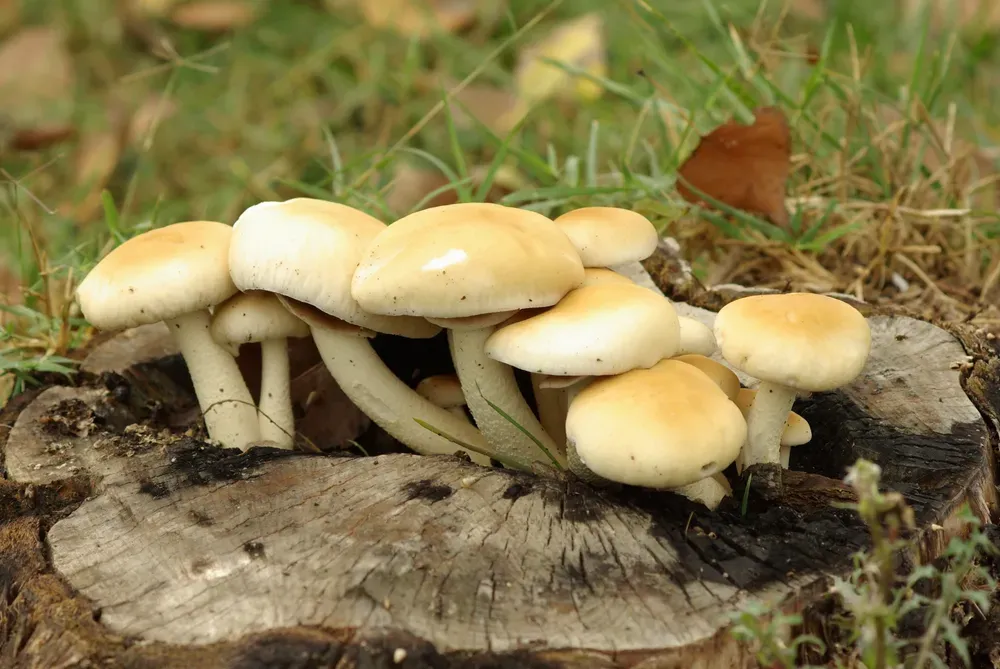
Poplar fieldcap
Cyclocybe aegerita
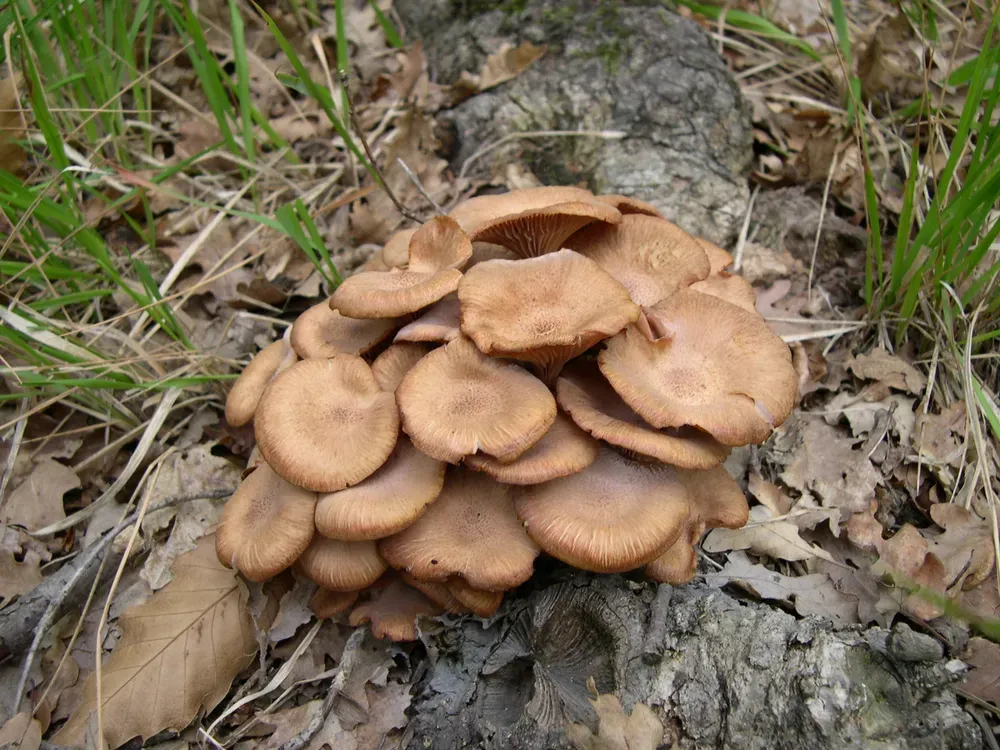
Ringless honey fungus
Desarmillaria tabescens
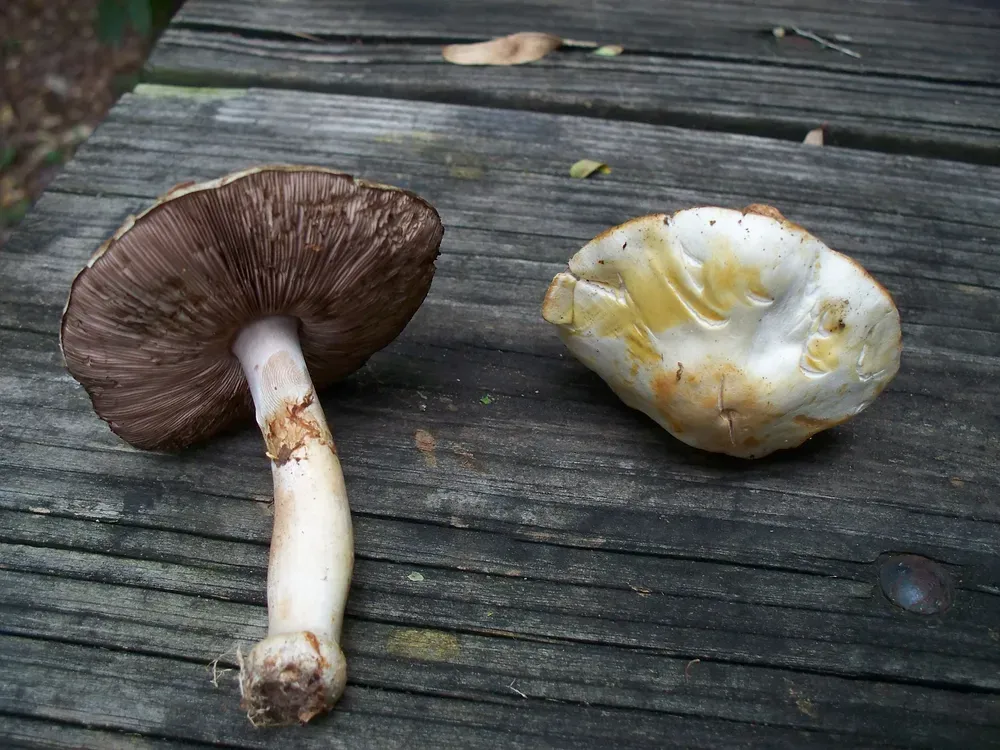
Agaricus abruptibulbus
Agaricus haemorrhoidarius
Agaricus haemorroidarius
Related reading
.webp)
Frequently asked questions
Is Alder bolete edible or poisonous?
Does Alder bolete have gills or pores?
What does the cap of Alder bolete look like?
What does the stem of Alder bolete look like?
What do Alder bolete smell and taste like?
Where does Alder bolete grow?
Which trees does Alder bolete grow under?
When should you pick Alder bolete?
What can Alder bolete be confused with?
How do you cook Alder bolete?
Can you dry Alder bolete?
What is the scientific name of Alder bolete?
Sources
- [1]Вікіпедія (українська)
- [2]Атлас грибів України, Зеров Д.К. (1979)
- [3]MycoBank Database
- [4]Index Fungorum
- [5]GBIF
- [6]iNaturalist Ukraine