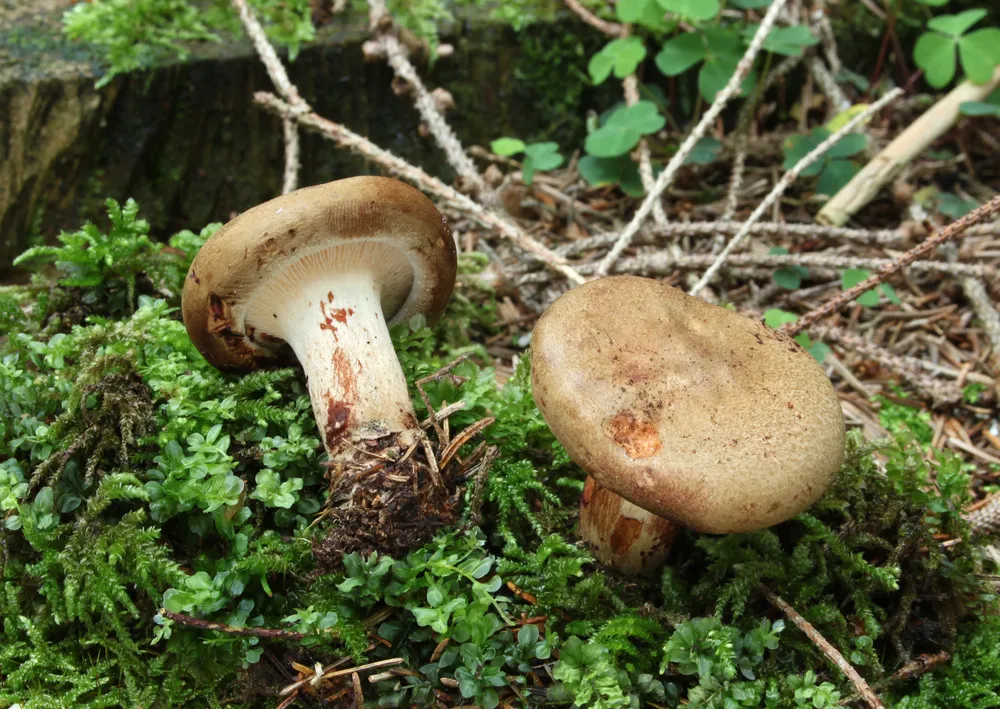
Brown rollrimPaxillus involutus
Expert-verifiedUpdated October 3, 2026
Passport
- Edibility
- Poisonous
- Season
- Jun — Oct
- Hymenophore
- Gilled
- Cap color
- Brown
- Size
- Medium (5–15 cm)
- Smell
- Earthy
- Reviewed
- Yes ✓
POISONOUS
Eating it causes poisoning. Do not pick it unless you have identified it with certainty.
The brown rollrim antigen binds cumulatively to red blood cells; over time it causes autoimmune hemolytic anemia (Paxillus syndrome). Avoid completely.
If you suspect poisoning, call an ambulance immediately: 112 (the European emergency number) or your local emergency number
Quick answers
Where to look?
Deciduous forest, Mixed forest, Conifer forest
When does it appear?
Jun — Oct
Active months: June, July, August, September, October.
How to recognize it? Three signs
- Cap color: Brown, Olive
- Cap shape: Concave, Funnel-shaped
- Smell: Earthy
Fruiting season
June – October
Description
The brown rollrim (Paxillus involutus) is a mushroom that for decades was considered conditionally edible, but since the 1990s it has been classified as poisonous. The toxins build up gradually and cause autoimmune hemolytic anemia — sometimes fatal after years of eating it.
Widespread in broadleaf and mixed woods, an aggressive mycorrhizal partner with a wide range of host trees. Easy to recognize by its olive-brown cap with an inrolled margin and gills that run down the stem.
Poisonous. Do not eat in any form. Cooking does not neutralize the toxins.
Cap
Cap 5–15 cm across, convex in young mushrooms, then depressed or funnel-shaped. Surface smooth, hairy-felty in young ones, almost bare in mature ones, olive brown or yellowish brown, sticky in wet weather. The margin stays rolled under for a long time — a characteristic feature.
Hymenophore
Gills crowded, thin, ocher-yellow or olive, easily separating from the flesh when pressed, browning when damaged. They run down the stem. This tendency to brown when pressed is a useful identification feature.
Stem
Stem 3–8 cm tall, 1–2 cm thick, firm, solid, cylindrical or tapering downward, the same color as the cap or slightly paler. No ring and no volva.
Flesh
Flesh yellowish cream or brownish, firm in young ones, looser in mature ones. Browns when damaged. Has a slightly acrid or sourish taste. Does not exude milk.
Smell
Smell sourish, pleasant, like fruit or vinegar, especially in mature mushrooms. It was precisely this neutral and even pleasant smell that helped the mushroom be considered edible for so long.
Related species
Mushrooms of the same genus and habitat — to study side by side and never mix up.
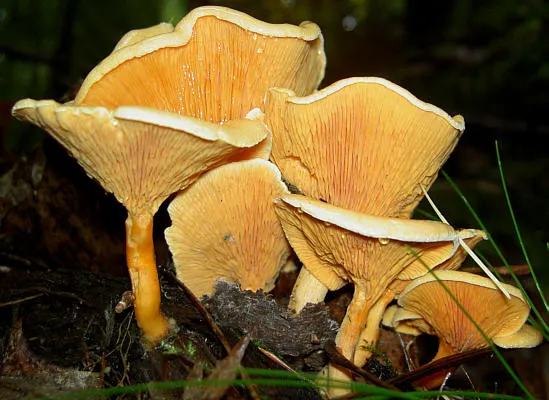
False chanterelle
Лисичка несправжня
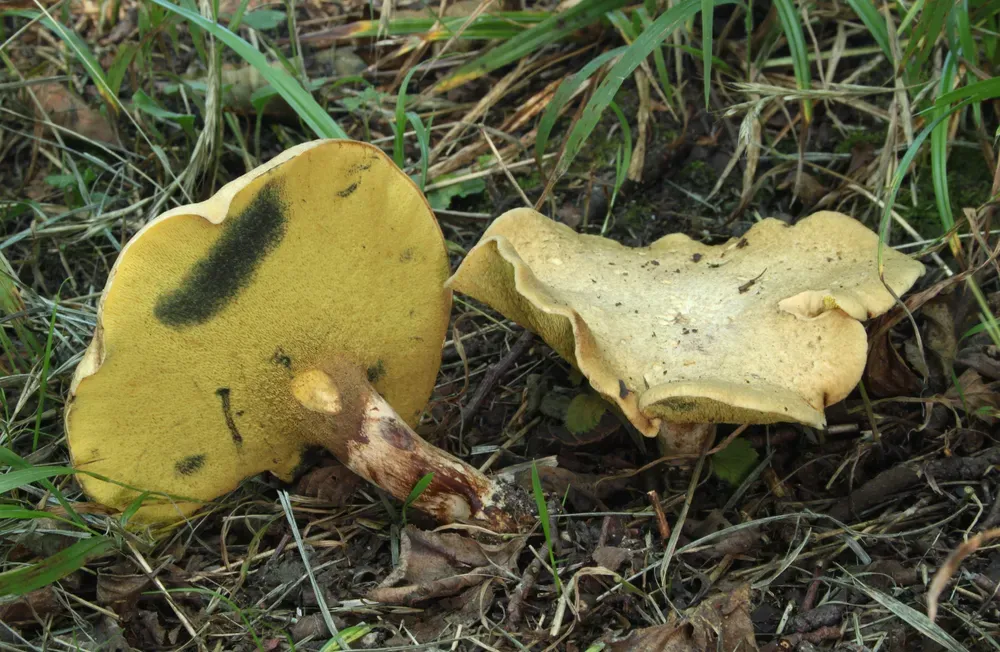
Alder bolete
Gyrodon lividus
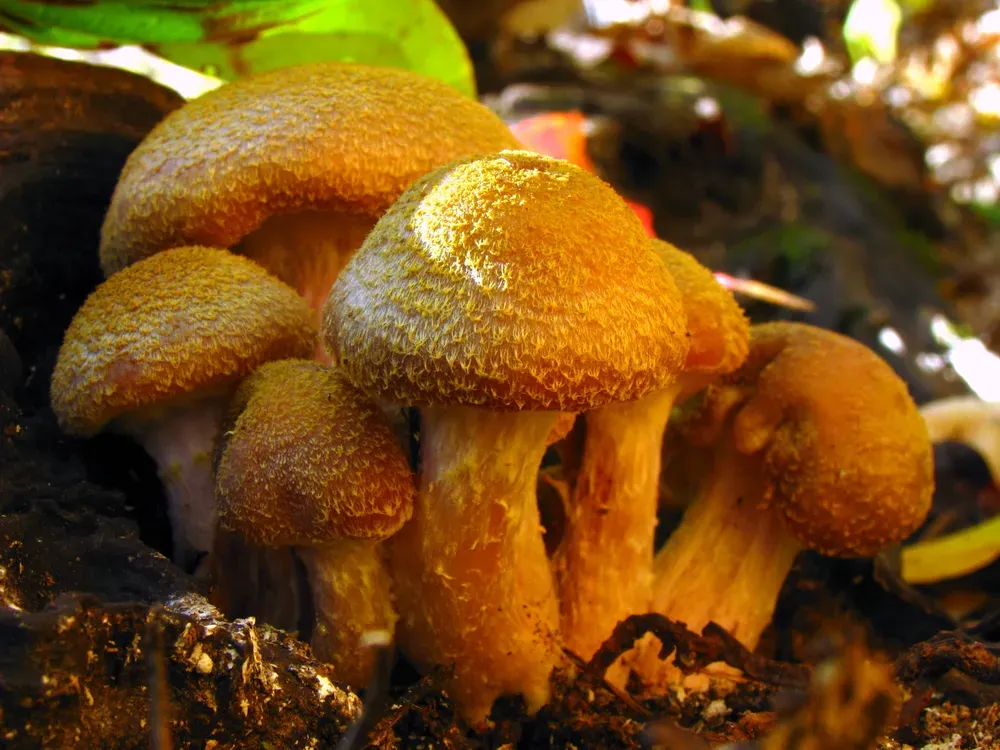
Bulbous honey fungus
Armillaria gallica
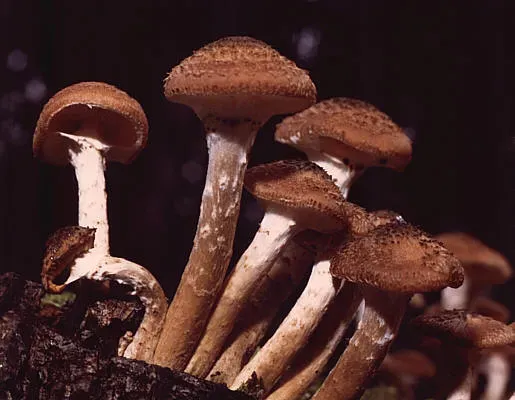
Dark honey fungus
Armillaria ostoyae
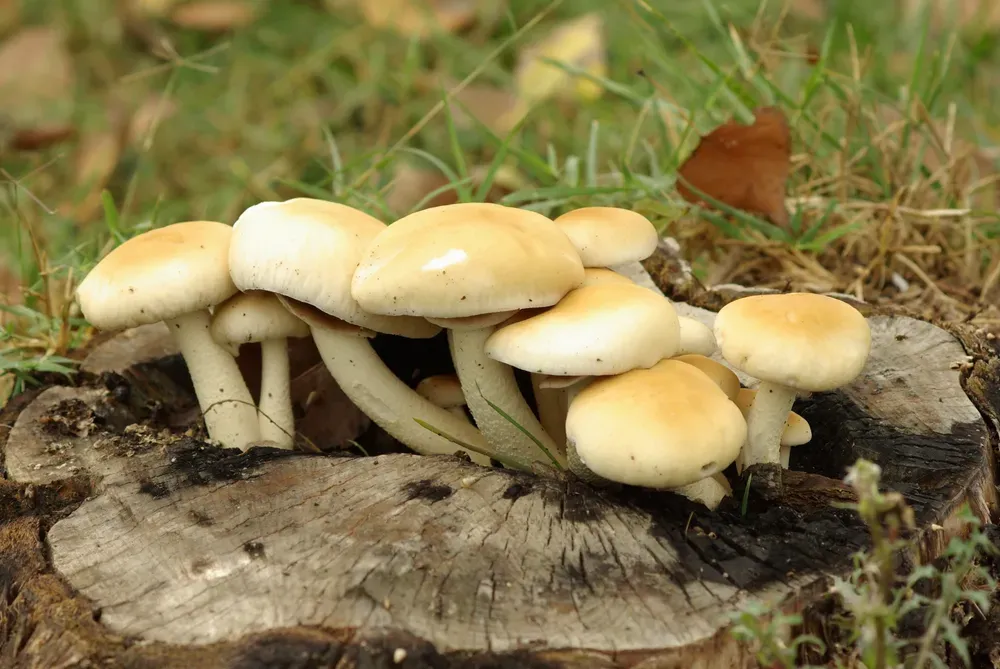
Poplar fieldcap
Cyclocybe aegerita
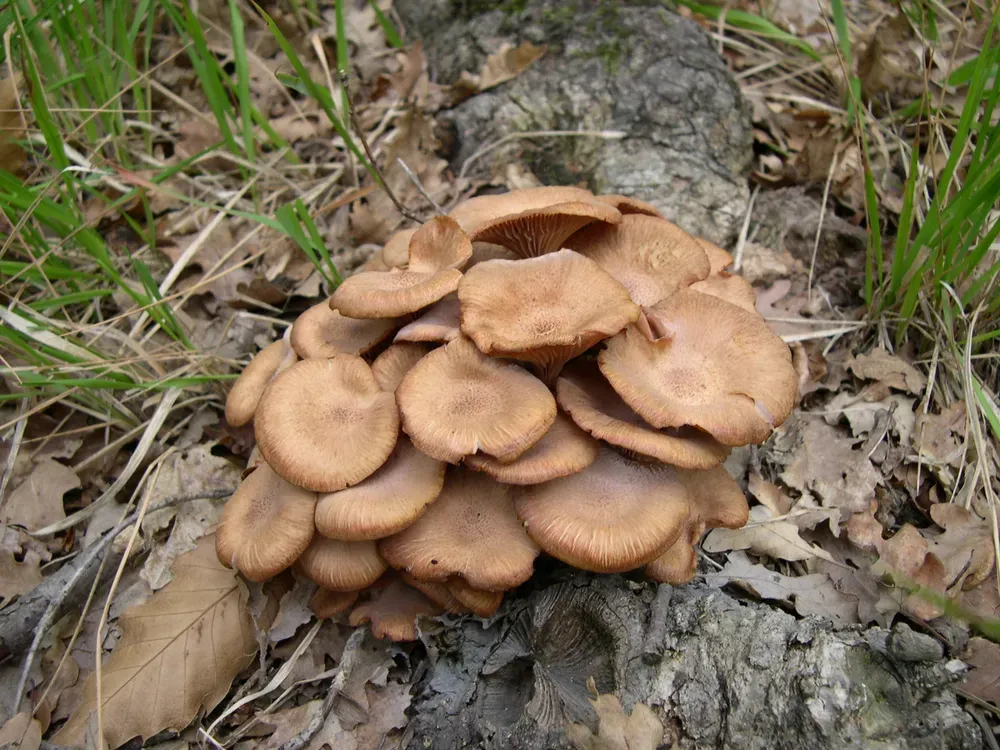
Ringless honey fungus
Desarmillaria tabescens
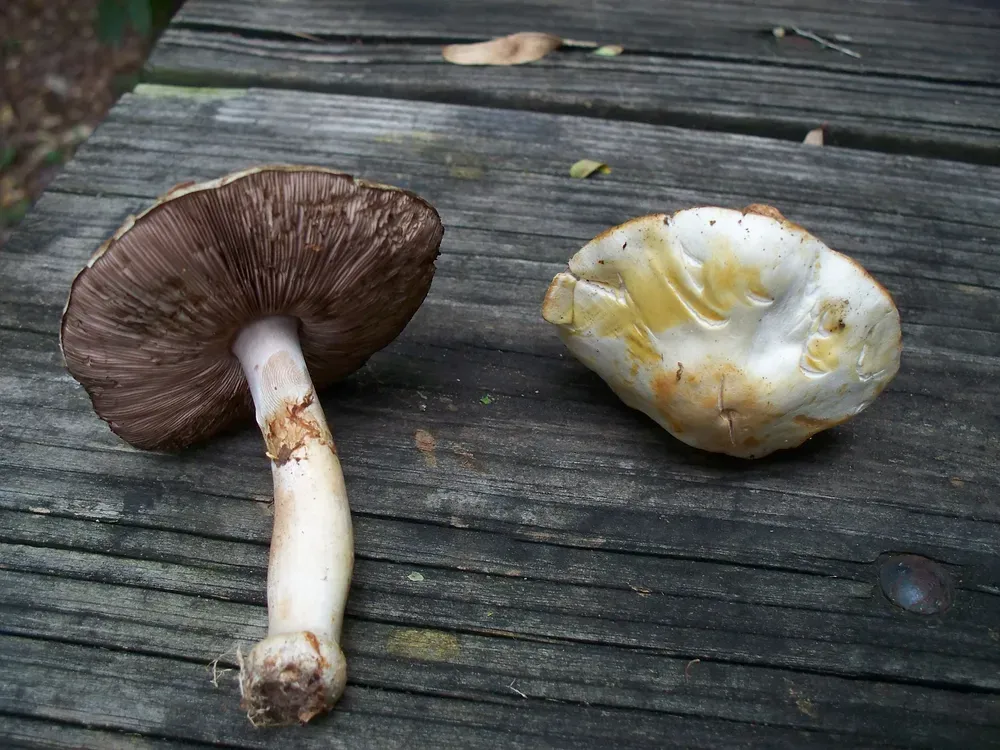
Agaricus abruptibulbus
Agaricus haemorrhoidarius
Agaricus haemorroidarius
Related reading
 Safety
Poisonous mushrooms of Ukraine: photos, names, and key signs
To forage safely, you need to know “the enemy by sight.” Here are the main poisonous mushrooms of Ukraine, the…
August 13, 2026·4 min.webp) Safety
SafetyMyths about spotting poisonous mushrooms
A silver spoon, an onion that darkens, mushrooms that snails eat: these are all folk “tests” that have cost pe…
August 12, 2026·4 min.webp) Safety
SafetyBrown roll-rim: why a once-edible mushroom is now considered poisonous
Brown rollrim used to be salted by the bucketful, and now it's on the list of poisonous mushrooms. Here's what…
June 7, 2026·3 min
Frequently asked questions
Is Brown rollrim edible or poisonous?
Does Brown rollrim have gills or pores?
What does the cap of Brown rollrim look like?
What does the stem of Brown rollrim look like?
What do Brown rollrim smell and taste like?
Where does Brown rollrim grow?
Which trees does Brown rollrim grow under?
When should you pick Brown rollrim?
Why is Brown rollrim dangerous?
What is the scientific name of Brown rollrim?
Sources
- [1]Атлас грибів України, Зеров Д.К. (1979)
- [2]GBIF