Ugly milk capLactarius turpis
Expert-verifiedUpdated October 3, 2026
Passport
- Edibility
- Inedible
- Season
- Aug — Nov
- Hymenophore
- Gilled
- Cap color
- Olive
- Size
- Large (over 15 cm)
- Smell
- Odorless
- Reviewed
- Yes ✓
Quick answers
Where to look?
Deciduous forest, Mixed forest
When does it appear?
Aug — Nov
Active months: August, September, October, November.
How to recognize it? Three signs
- Cap color: Olive, Black, Dark brown
- Cap shape: Funnel-shaped
- Smell: Odorless
Fruiting season
August – November
Description
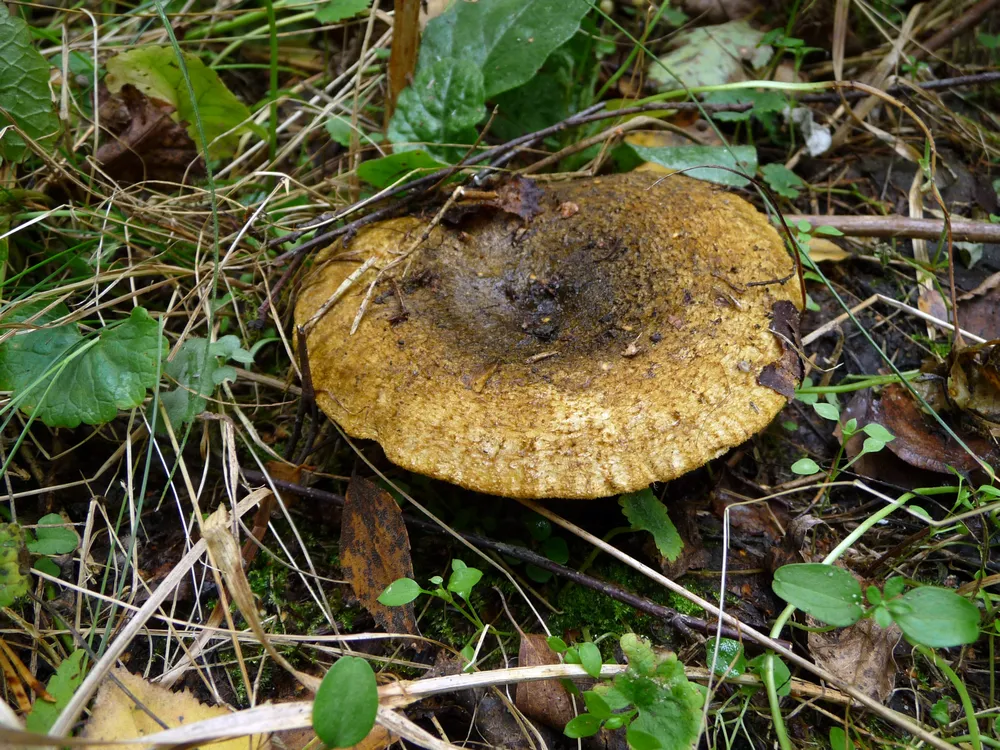
The Ugly milk cap (Lactarius turpis, known in Ukrainian folk speech as “chornushka”, “dunka”, “varushka”) is a massive dark olive to almost black milk cap with an inrolled, fuzzy margin and burning white milk. In Eastern and Northern Europe it was traditionally salted in large quantities — prized for its firm flesh and rich, “milk-cap” flavor after pickling. Old Russian and Ukrainian atlases listed it as conditionally edible.
But since the 1990s, researchers have found necatorin in the fruiting bodies of L. turpis — a substance with proven mutagenic (genotoxic) activity in lab tests on bacteria and mammalian cells. In light of this, modern European and North American field guides move it into the category of inedible, not recommended for regular eating. In Finland and Sweden it has been officially removed from the list of culinary mushrooms. The Ugly milk cap does not cause acute poisoning (people ate it in bulk for centuries with no immediate effects), but chronic exposure to mutagens is a serious risk you are better off not taking.
In Ukraine it grows throughout the forest zone and is very common in damp birch and mixed woods of Polissia, the Carpathians and the Carpathian foothills. The season runs August–November; it fruits abundantly and late, often until the first frosts.
Cap
Cap 6–15 (up to 20) cm — a large, fleshy milk cap. At first convex with an inrolled, fuzzy margin, then flattened and finally funnel-shaped with a sunken center. Color dark olive, olive-black or brownish-black; young caps have a yellow-green tinge, old ones are almost black. In wet weather the surface is very sticky and slimy; in dry weather it is shiny, with darker concentric zones. The cap margin is densely downy in young specimens.
Hymenophore
Gills. The gills are crowded, narrow, adnate or slightly decurrent. Color pale yellow to cream, taking on a dark olive tinge with age. When damaged they darken to brown or black — a characteristic reaction. They exude white milk. Spore print cream.
Stem
Stem 3–8 cm tall, 1–3 cm thick, cylindrical or thickening toward the base, solid when young, often hollow in mature specimens. Paler than the cap — olive-yellow to dingy olive, often with characteristic dark “scrobicules” (sunken pits). The surface is also sticky in wet weather; no ring and no volva.
Flesh
Flesh whitish to yellowish, firm, slowly darkening to gray-brown when cut. When damaged it exudes plenty of white milk that does not change color in the air but leaves dark stains on the mushroom’s tissue. The reaction with alkali (KOH) is violet-black, which is also a diagnostic feature.
Smell
Smell faint, neutral, slightly resinous. Old specimens can smell dirty and earthy. The taste of the raw flesh and milk is extremely acrid, bitter and hot. Do not taste it raw.
›Scientific synonyms (3)
Agaricus turpis Weinm., Galorrheus turpis (Weinm.) P. Kumm., Lactifluus turpis (Weinm.) Kuntze
Lookalikes
Related species
Mushrooms of the same genus and habitat — to study side by side and never mix up.
Lactarius resimus

Coconut milk cap
Lactarius glyciosmus
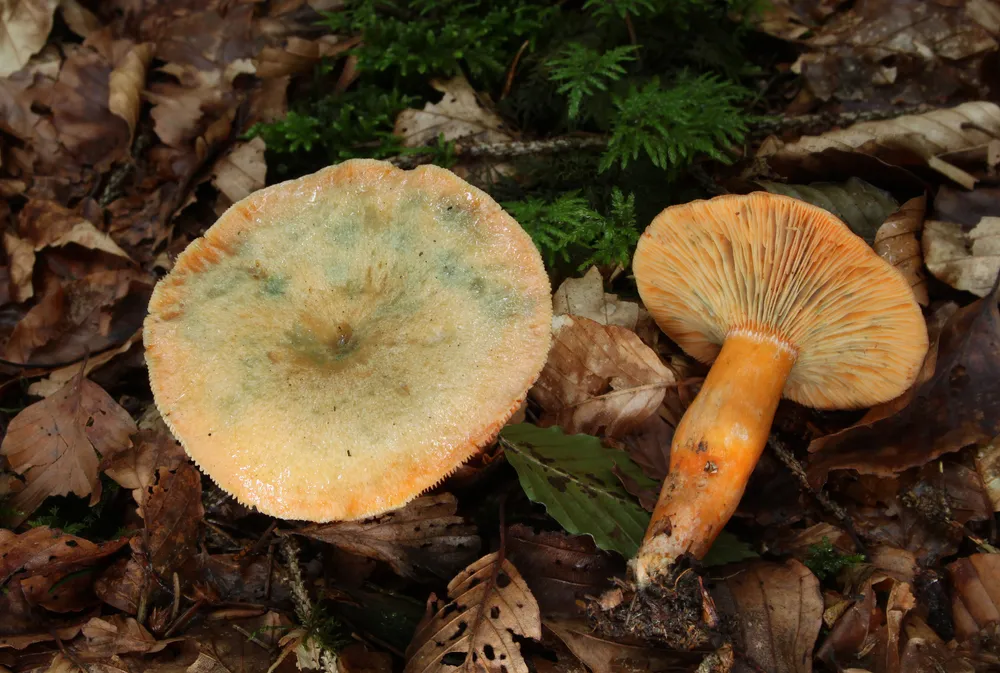
False saffron milk cap
Lactarius deterrimus
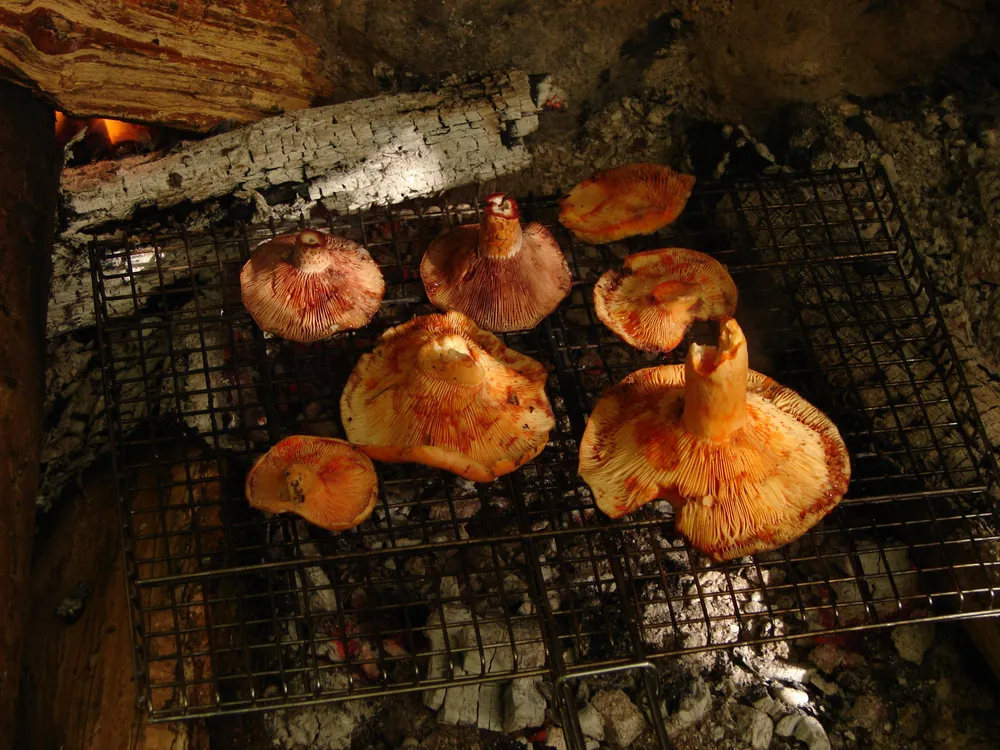
Lactarius salmonicolor
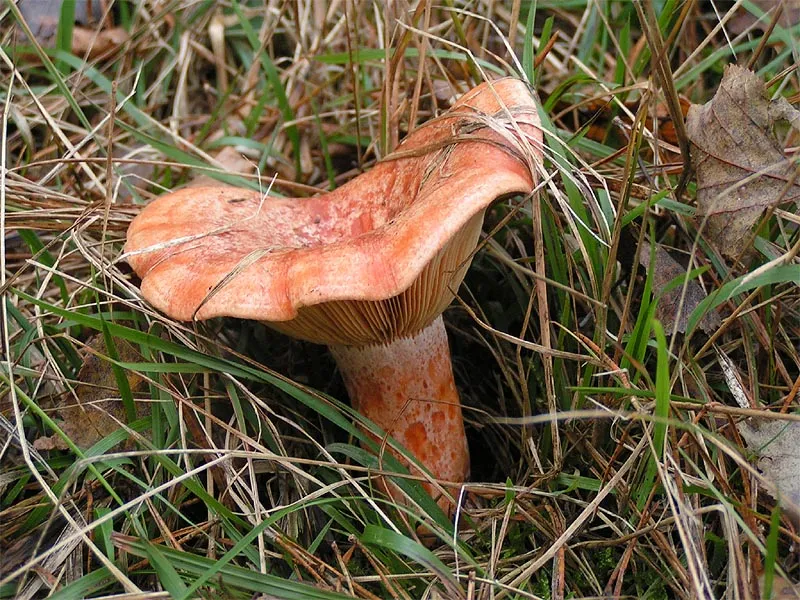
Saffron milk cap
Lactarius deliciosus
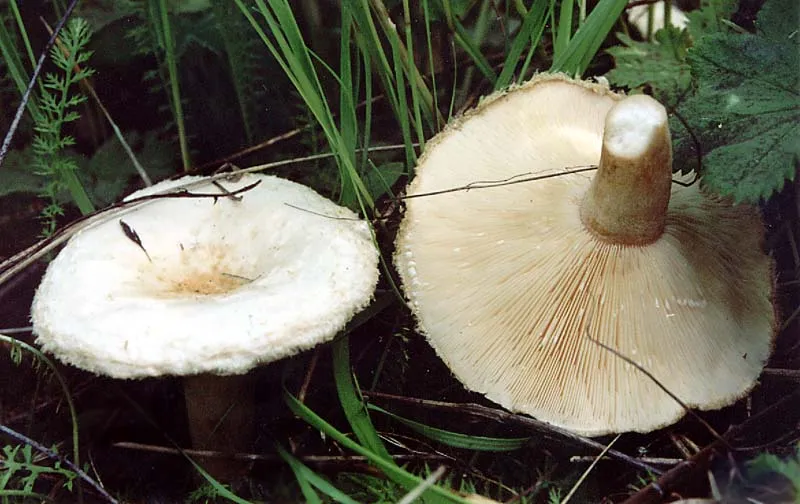
Bearded milk cap
Lactarius pubescens
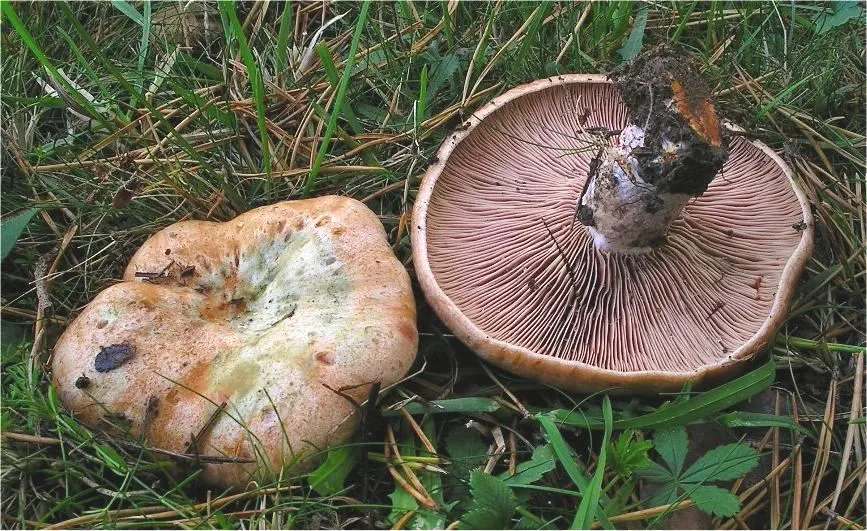
Bloody milk cap
Lactarius sanguifluus
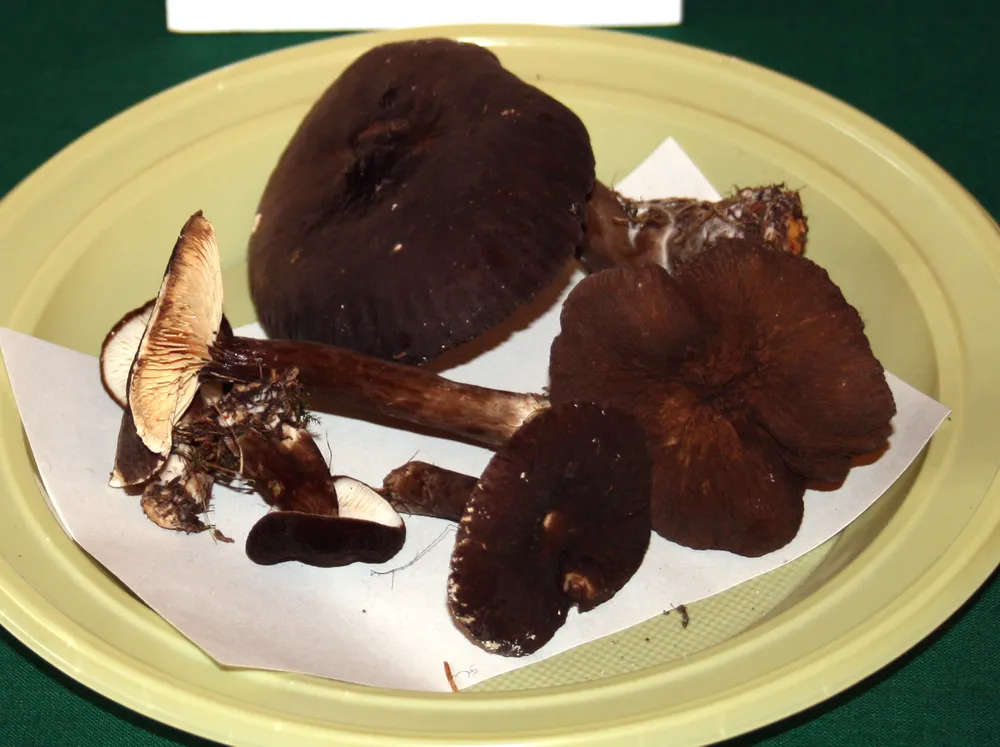
Chocolate milky
Lactarius lignyotus
Frequently asked questions
Can you eat it?
Modern European and North American field guides agree: not recommended. Necatorin — a substance with proven mutagenic activity — has been found in the fruiting bodies. Although it does not cause acute poisoning, eating it regularly is a chronic risk. In Finland and Sweden it has been officially removed from the list of culinary mushrooms.
But villagers have been salting it for a hundred years, haven’t they?
Yes, the tradition of salting the Ugly milk cap goes back centuries in Ukraine, Belarus, Russia and the Nordic countries. There were no mass acute poisonings, which is why the tradition stuck. But “not acute” does not mean “safe”: necatorin acts at the cellular level, the effect is cumulative, and modern research data appeared only in the 1990s. The old field guides simply didn’t know about it.
And if you’ve already salted some — what then?
Don’t make it a regular part of your diet. Eating a small portion once won’t do anything critical, and there will be no acute symptoms. But making the Ugly milk cap your main mushroom of the season and eating it every week is a bad idea. Better alternatives: Saffron milk cap, Lactarius resimus, Woolly milk cap.
Where does it grow?
Only under birch — it is an obligate mycorrhizal partner of birch. It grows in damp birch and birch-pine woods, along forest edges, in mossy patches and on peaty soils. You won’t find it in pure conifer or broadleaf forests without birch.
Which regions of Ukraine?
Throughout the forest zone wherever there are birches — especially common in Polissia (Chernihiv, Kyiv, Zhytomyr, Volyn and Rivne regions), the Carpathians, the Carpathian foothills and the northern forest-steppe. In the steppe it appears only in planted birch stands. One of the most abundant autumn milk caps in Ukraine.
When should you look for it?
August–November. One of the latest milk caps — fruiting peaks in October, and it holds on until the first hard frosts. In a warm autumn it can keep coming until mid-November, when few other mushrooms are left.
How do you recognize it?
Very recognizable: large size, a dark olive to almost black cap that is very sticky in wet weather, a fuzzy inrolled margin in young specimens, burning white milk, and growth under birch. The reaction with potassium hydroxide (KOH) on the cap is violet-black. It is hard to confuse with anything else.
What is it confused with?
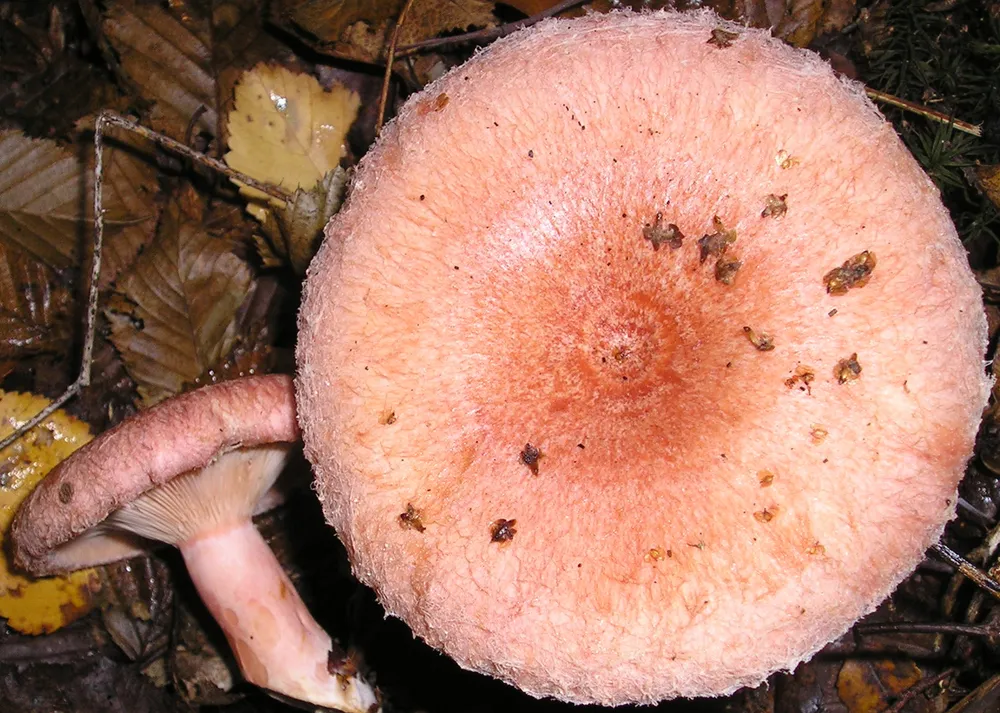
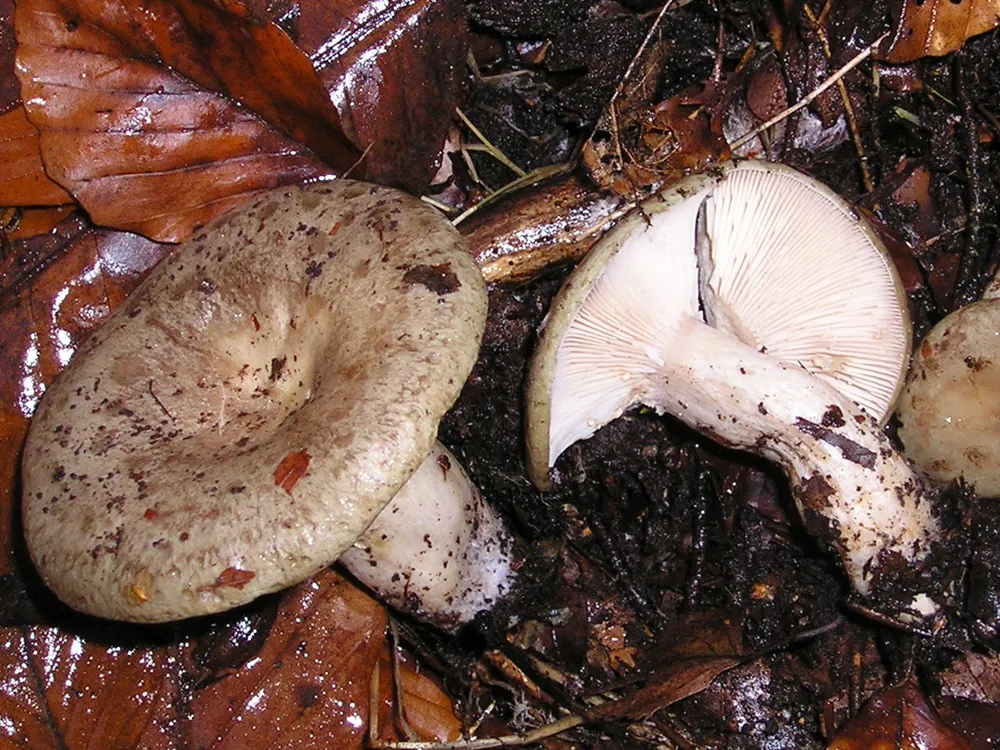
With Lactarius picinus — that one is dark chestnut with no olive tinge and grows under spruce. With L. fuliginosus — that one is not sticky and has white milk that turns yellow. With the Woolly milk cap — that one is pink, not dark. A dark slimy cap under birch + a fuzzy margin = Ugly milk cap.
Is Ugly milk cap edible or poisonous?
Does Ugly milk cap have gills or pores?
What does the cap of Ugly milk cap look like?
What does the stem of Ugly milk cap look like?
Sources
- [1]Вікіпедія (українська)
- [2]Атлас грибів України, Зеров Д.К. (1979)
- [3]MycoBank Database
- [4]Index Fungorum
- [5]GBIF
- [6]iNaturalist Ukraine