
Coconut milk capLactarius glyciosmus
Expert-verifiedUpdated October 3, 2026
Passport
- Edibility
- Conditionally edible
- Season
- Aug — Nov
- Hymenophore
- Gilled
- Cap color
- Violet
- Size
- Small (up to 5 cm)
- Smell
- Pleasant
- Reviewed
- Yes ✓
Quick answers
Where to look?
Deciduous forest, Mixed forest
When does it appear?
Aug — Nov
Active months: August, September, October, November.
How to recognize it? Three signs
- Cap color: Violet, Grey, Brown
- Cap shape: Depressed
- Smell: Pleasant
Fruiting season
August – November
Description
The Coconut milk cap is a small grayish-lilac milk cap with a truly unique trait: the smell of fresh coconut. Just break the cap — and you'll notice a distinct coconut aroma, like shredded coconut. No other milk cap in Ukraine has this smell, so identification is practically unmistakable.
This is a conditionally edible mushroom, although many guides call it “low quality” because of its small fruiting bodies and not very distinctive taste. Its milk is mildly pungent (not acrid, but slightly bitter), so in theory it can be eaten after brief boiling. But because of its small size and the coconut aroma in salted mushrooms (which not everyone likes), it's usually not worth gathering in quantity — easier to walk past it. Some foragers add it to salted saffron milk caps as an aromatic addition.
In Ukraine it grows throughout the forest zone wherever there are birches. It's especially abundant in Polissia, the Carpathians and Prykarpattia. It loves damp birch woods, mossy “carpets” and forest edges. The season runs August–November; fruiting is modest — a few mushrooms per patch, rarely found in groups.
Cap
Cap 2-5 (rarely up to 7) cm, convex at first with a small bump in the center, then flattened and finally with a depressed center. Color grayish-lilac, lilac-brown to flesh-gray, fading with age. Surface dry, finely fibrous or mealy, with no distinct zones. Cap margin even, slightly inrolled in young specimens.
Hymenophore
Gills. The gills are crowded, narrow, adnate or slightly decurrent. Color pale cream with a pinkish or ochre tint, darkening with age. When damaged they exude a little white milk. Spore print cream.
Stem
Stem 3-6 cm tall, 0.4-0.8 cm thick, slender, cylindrical, hollow in mature specimens. Paler than the cap — light lilac or flesh-colored. Surface smooth, with no ring and no volva.
Flesh
Flesh delicate, thin, whitish with a lilac tint, watery in the stem. When damaged it exudes a little white milk that doesn't change color in the air. The cut flesh doesn't darken either.
Smell
A distinct smell of fresh coconut — this is the main diagnostic feature. It's especially noticeable as the mushroom dries or when you break the cap. The raw flesh tastes faintly bitterish, not acrid, but unpleasant.
›Scientific synonyms (3)
Agaricus glyciosmus Fr., Galorrheus glyciosmus (Fr.) P. Kumm., Lactifluus glyciosmus (Fr.) Kuntze
Lookalikes
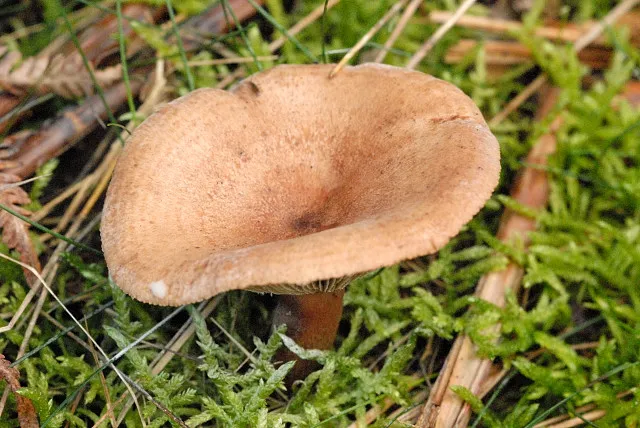
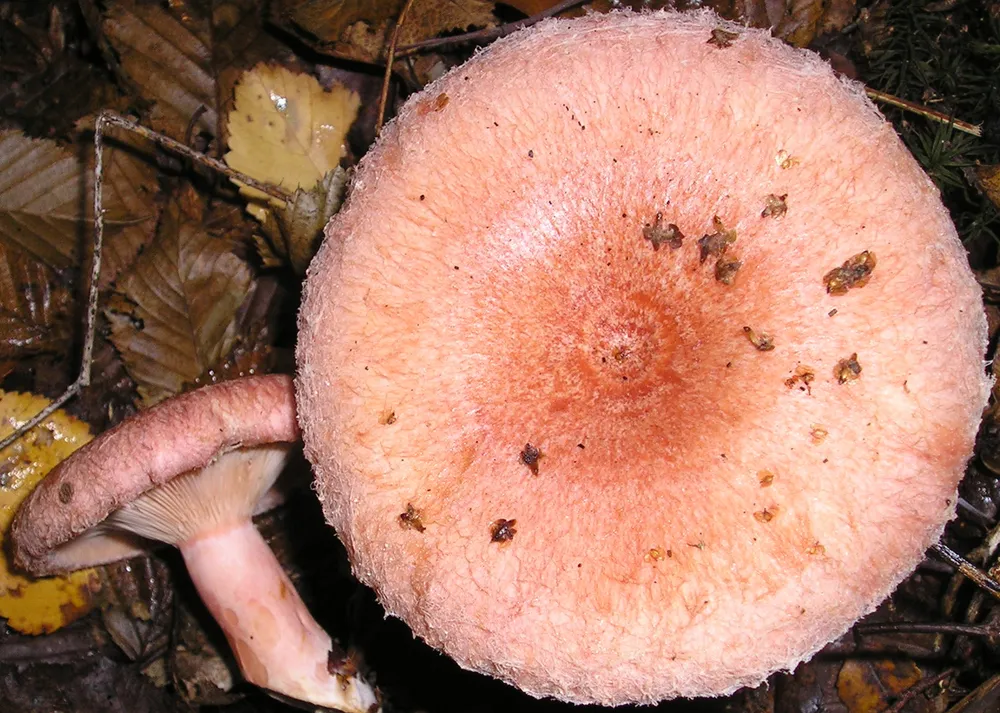
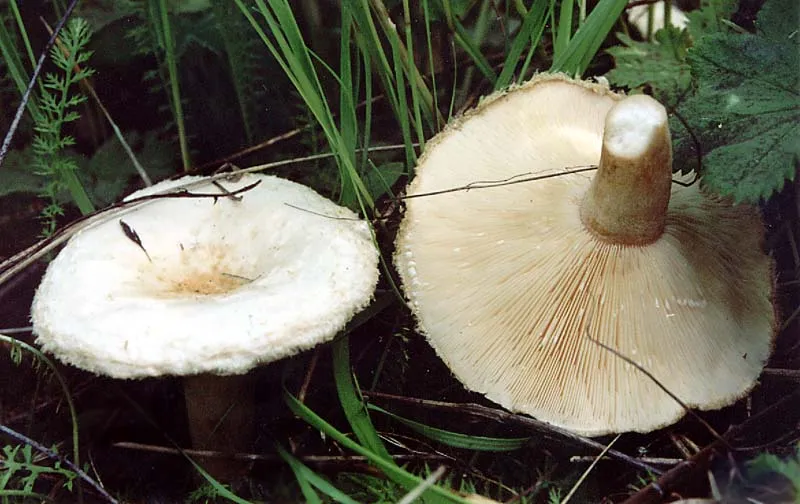
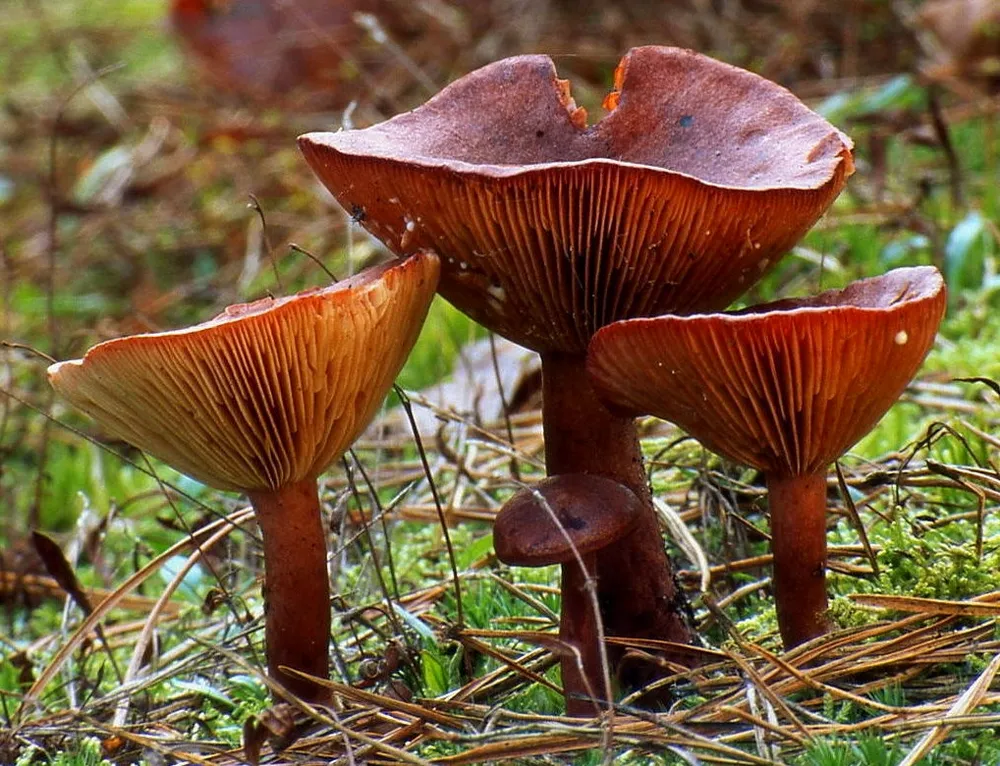
Related species
Mushrooms of the same genus and habitat — to study side by side and never mix up.
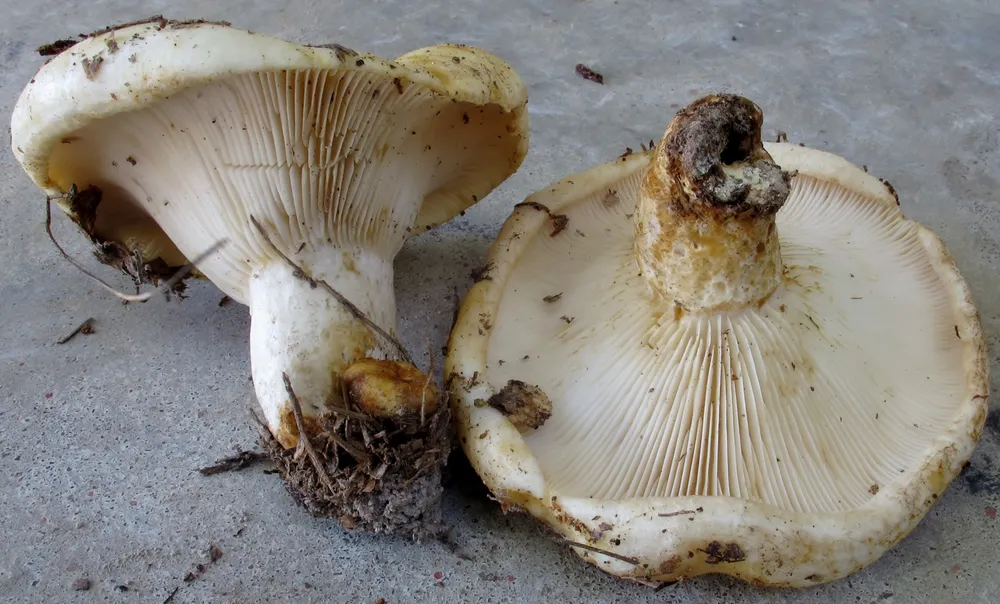
Lactarius resimus
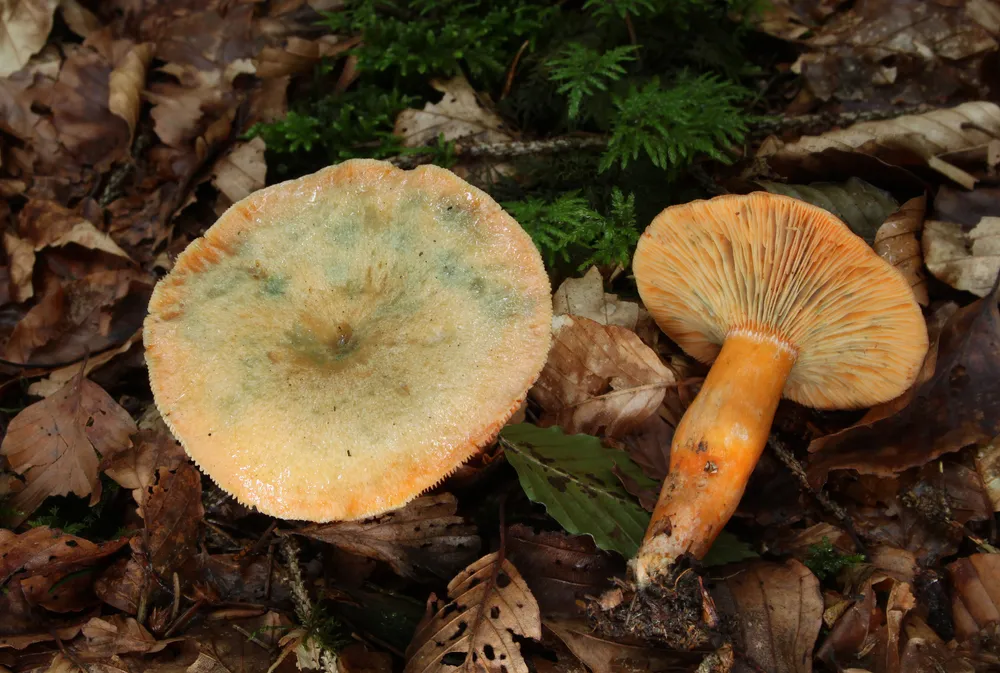
False saffron milk cap
Lactarius deterrimus
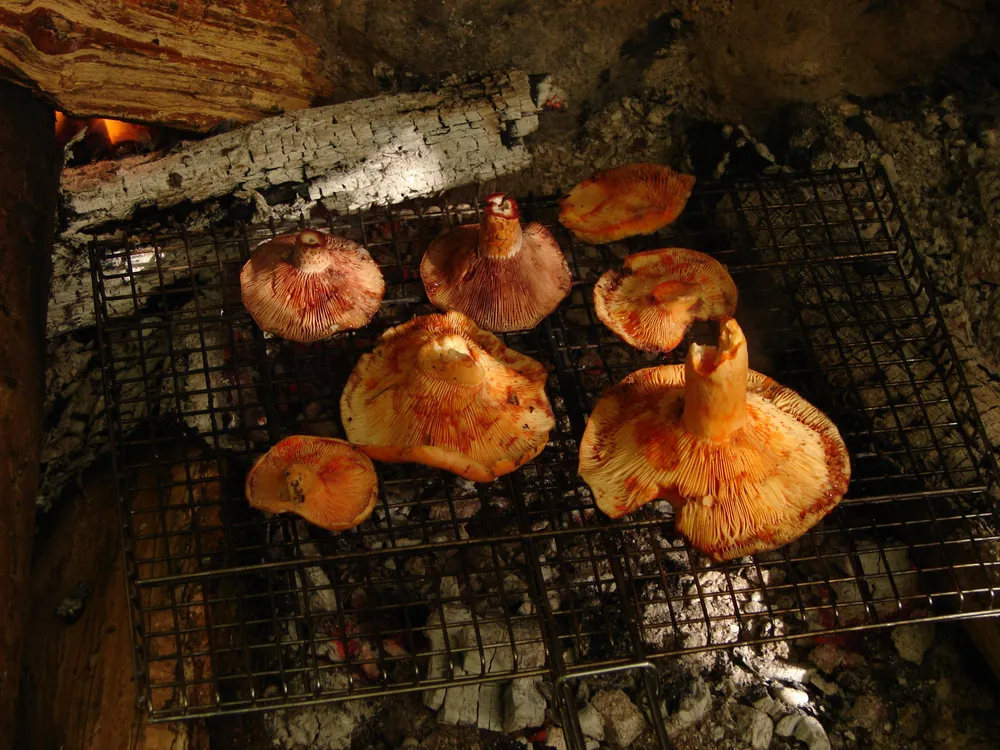
Lactarius salmonicolor
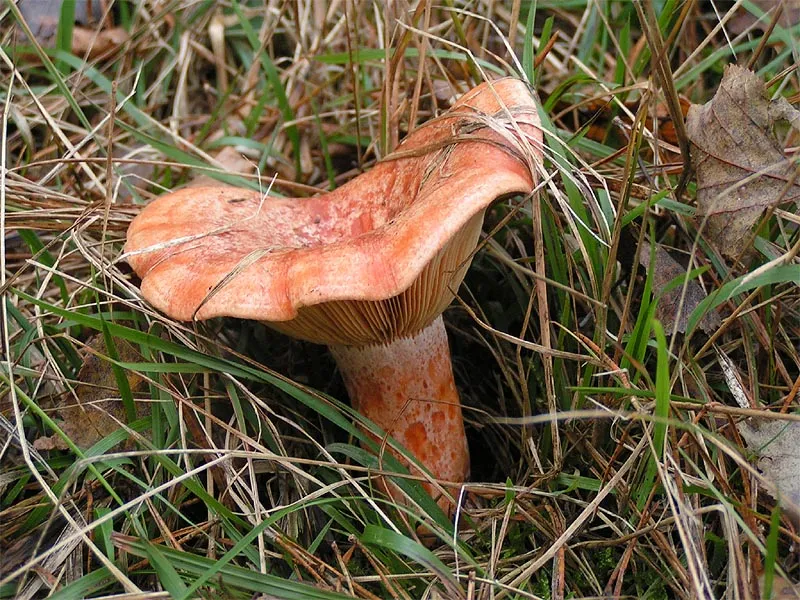
Saffron milk cap
Lactarius deliciosus
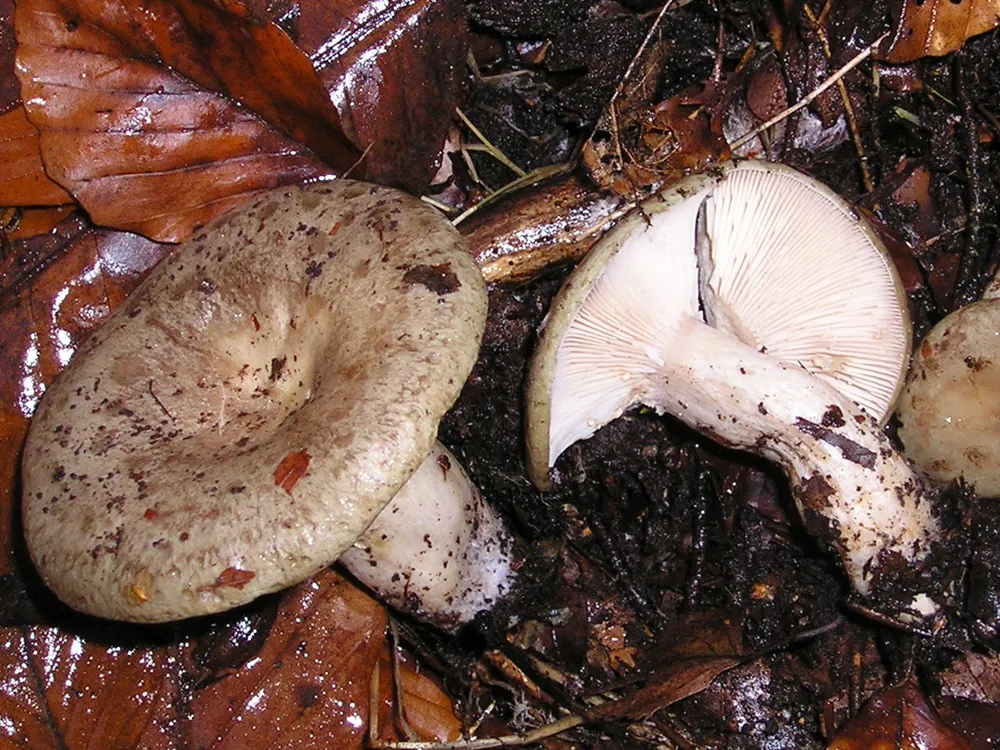
Beech milk cap
Lactarius blennius
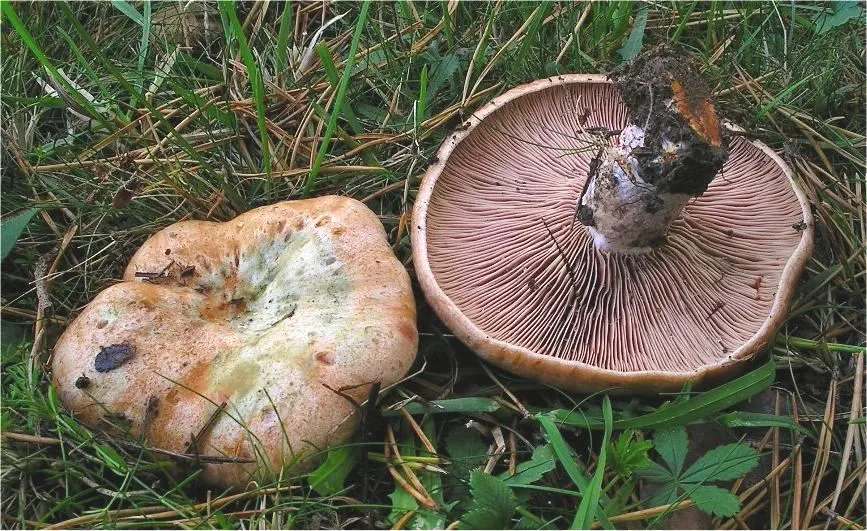
Bloody milk cap
Lactarius sanguifluus
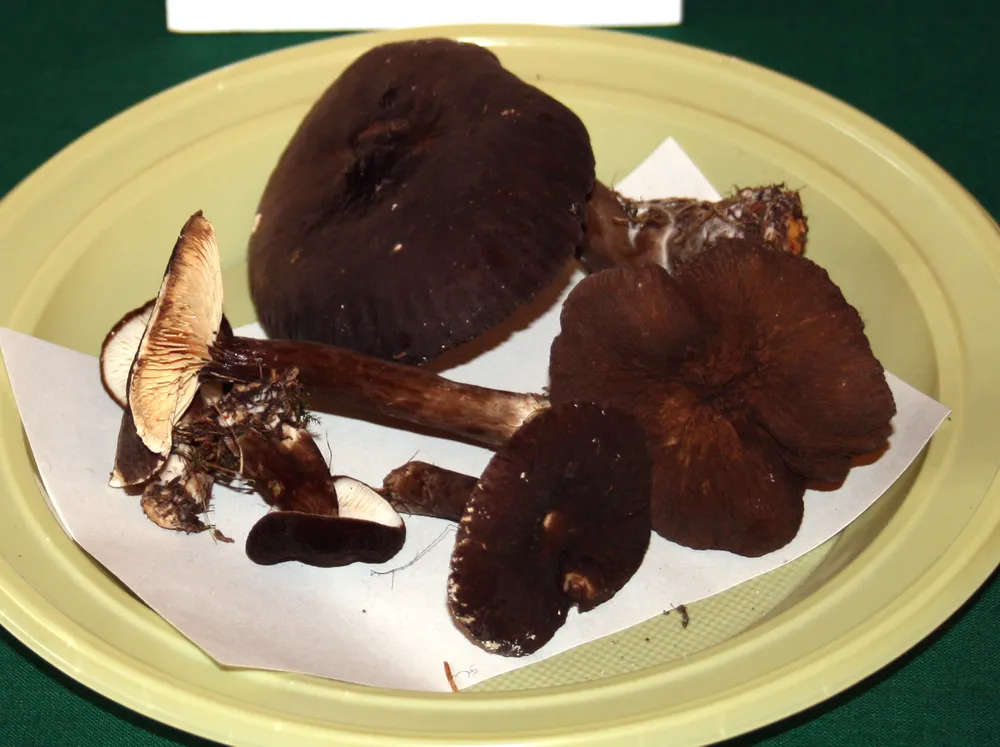
Chocolate milky
Lactarius lignyotus
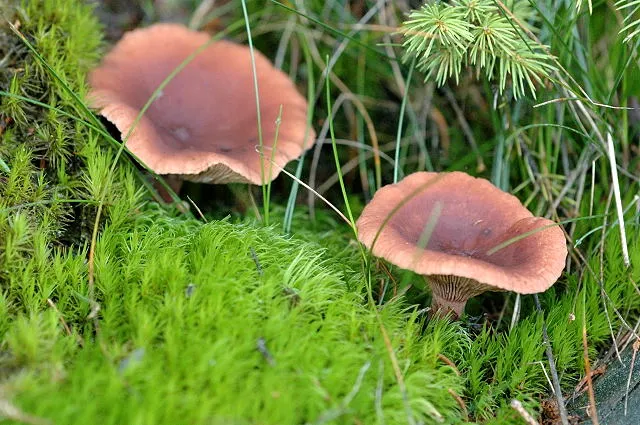
Curry milk cap
Lactarius camphoratus
Frequently asked questions
Can you eat it?
Yes, after brief boiling (10-15 minutes, discarding the water) — it's fine for salting or as an aromatic addition to other mushrooms. On its own it's small, so people don't gather it in quantity. Raw, it's inedible — it causes mild gastroenteritis because of its mildly pungent milk.
Could the coconut smell be a sign of poison?
No. The coconut smell of L. glyciosmus is a natural, harmless feature of the species. It comes from a volatile sesquiterpene that forms as the mushroom dries. What's more, it's the best diagnostic feature of this mushroom, because there are no other similar coconut-scented milk caps in Ukraine.
Where does it grow?
Only under birches — it's an obligate mycorrhizal partner of birch. It grows in birch woods and mixed forests with birch, on forest edges, in mossy patches, on damp soils. It's especially abundant in Polissia and the Carpathians. Without birch it doesn't occur.
Which regions of Ukraine?
Polissia, the Carpathians, Prykarpattia, the western forest-steppe — anywhere birches grow. Numbers vary: in a wet year there can be plenty, in a dry one it barely appears. In the steppe and Crimea it's rare, only in planted birch stands.
When should you look for it?
August–November. Peak — September–October. One of the latest autumn milk caps, holding out until the first frosts. You'll often find it when few other mushrooms are left.
What is it confused with?
With the Fenugreek milk cap (Lactarius helvus) — it's larger, with a distinct smell of dry grass or chicory rather than coconut. With the Grey milk cap (L. vietus) — it's larger, with brittle gray-green milk that turns black in the air. The coconut smell is an unmistakable marker of L. glyciosmus.
Does it have dangerous look-alikes?
There are no serious poisonous look-alikes. The biggest risk is confusing it with L. helvus (the Fenugreek milk cap), which is mildly poisonous (the toxin is thought to be a sesquiterpene, not muscarine) and can cause gastroenteritis. The smell settles it: coconut → glyciosmus, chicory/grass → helvus. If the smell is neutral — it's not glyciosmus either.
How do you identify L. glyciosmus for sure?
Three features together: 1) a small gray-lilac cap without zones; 2) a distinct coconut smell; 3) growing under birch. If all three match — that's it. The coconut smell comes through better if you hold the mushroom in your palm for a few minutes or let it dry a little.
Is Coconut milk cap edible or poisonous?
Does Coconut milk cap have gills or pores?
What does the cap of Coconut milk cap look like?
What does the stem of Coconut milk cap look like?
Sources
- [1]Вікіпедія (українська)
- [2]Атлас грибів України, Зеров Д.К. (1979)
- [3]MycoBank Database
- [4]Index Fungorum
- [5]GBIF
- [6]iNaturalist Ukraine