Beech milk capLactarius blennius
Expert-verifiedUpdated October 3, 2026
Passport
- Edibility
- Conditionally edible
- Season
- Aug — Oct
- Hymenophore
- Gilled
- Cap color
- Olive
- Size
- Medium (5–15 cm)
- Smell
- Odorless
- Reviewed
- Yes ✓
Quick answers
Where to look?
Deciduous forest, Mixed forest
When does it appear?
Aug — Oct
Active months: August, September, October.
How to recognize it? Three signs
- Cap color: Olive, Grey, Brown
- Cap shape: Depressed
- Smell: Odorless
Fruiting season
August – October
Description
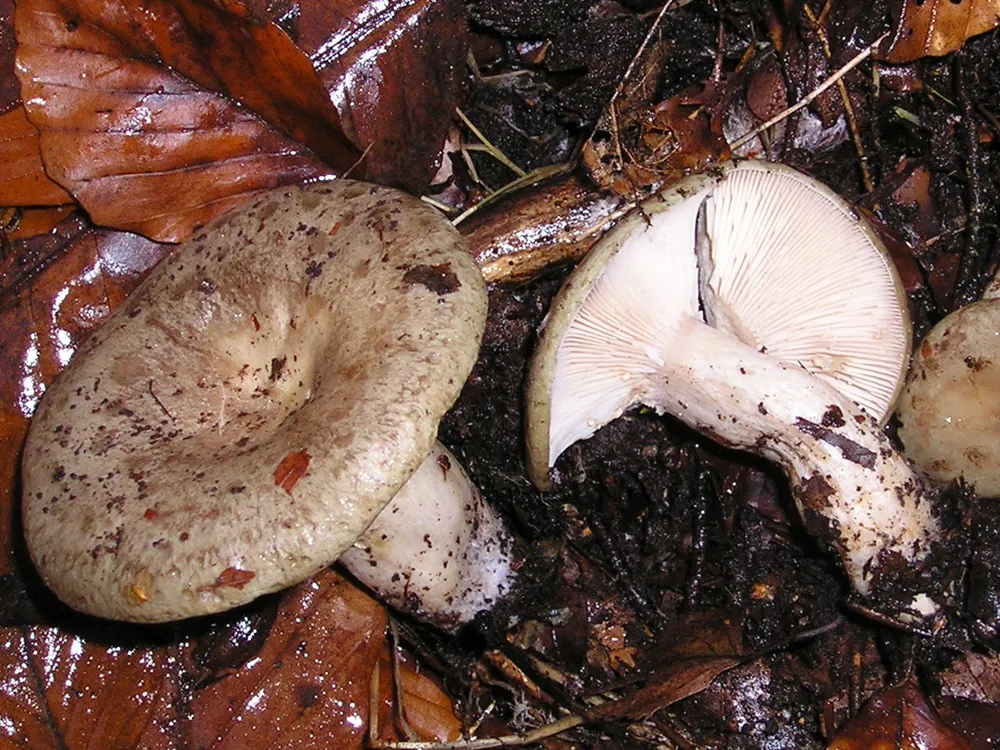
The Beech milk cap is an olive-gray milk cap with a distinctive slimy cap that turns sticky in wet weather, and it is almost always found under beech. Old Russian atlases often called it the “dry beech milk cap” — and it got the name “dry” not for a lack of stickiness (it is in fact sticky), but for its firm, non-watery flesh.
It is a conditionally edible mushroom with burning white milk, like most of the “milk-cap-like” Lactarius species. Raw, it is inedible — it causes gastroenteritis. After soaking for 1–2 days or boiling for 20 minutes and discarding the water, it is suitable for salting. In the kitchen it is considered mediocre: firm, but without a distinct flavor, with a slight moldy note that not everyone likes. Modern European field guides often recommend simply walking past it.
In Ukraine it grows mainly in the Carpathians, the Carpathian foothills and the western forest-steppe — wherever there are old beech forests. It is almost never found in lowland Polissia or the steppe. The season runs August–October; it fruits often and in conspicuous groups under beeches and in mossy beech-wood patches.
Cap
Cap 4–10 cm, at first convex with an inrolled margin, then flattened with a sunken center. Color grayish-olive or olive-brown, with darker concentric zones or spots. The surface is very sticky and slimy in wet weather — the most characteristic feature. In dry weather it is shiny and smooth. The cap margin is even, slightly inrolled in young specimens.
Hymenophore
Gills. The gills are crowded, narrow, adnate or slightly decurrent. Color whitish to cream-gray; when damaged they exude white milk, and the damaged spots turn gray or green. Spore print cream.
Stem
Stem 3–6 cm tall, 1–1.5 cm thick, cylindrical or slightly tapering toward the base, hollow in mature specimens. Paler than the cap — gray-olive or cream-gray. The surface is also slightly sticky in wet weather; no ring and no volva.
Flesh
Flesh whitish to grayish-green, firm, not watery. When damaged it exudes plenty of white milk that slowly turns gray or green in the air and leaves dark gray stains on the gills. The cut flesh itself also slowly turns gray.
Smell
Smell faint, neutral, slightly resinous. Old specimens may develop a moldy smell. The taste of the raw flesh and milk is extremely acrid, hot and peppery. Do not taste it raw.
Lookalikes
Related species
Mushrooms of the same genus and habitat — to study side by side and never mix up.
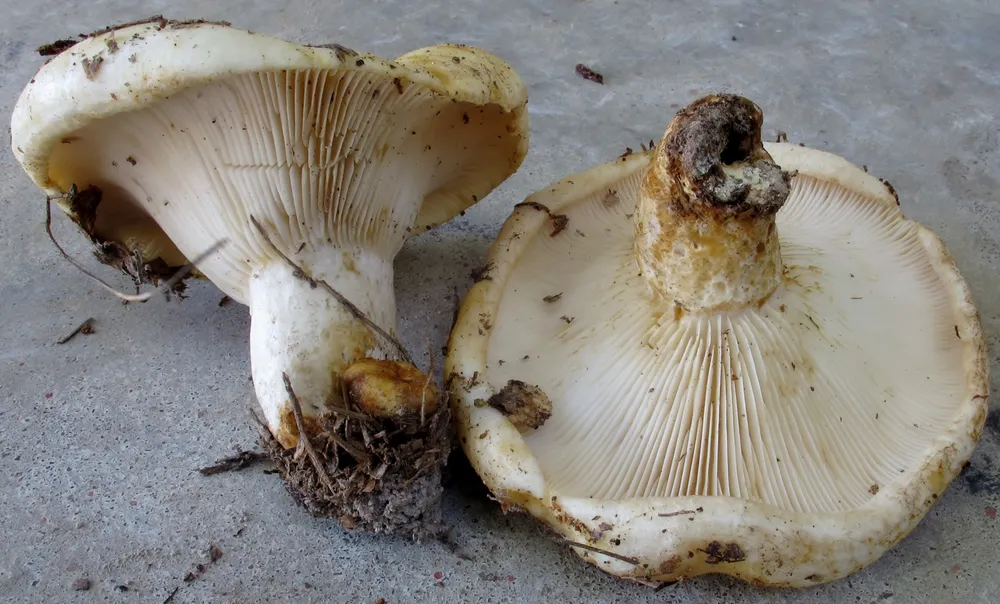
Lactarius resimus

Coconut milk cap
Lactarius glyciosmus
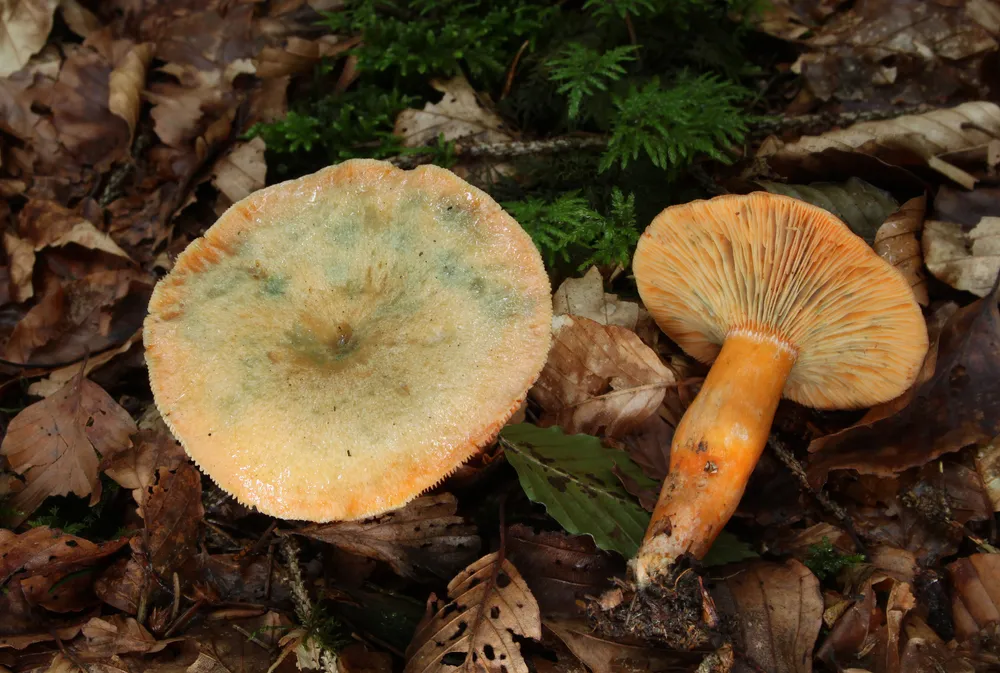
False saffron milk cap
Lactarius deterrimus
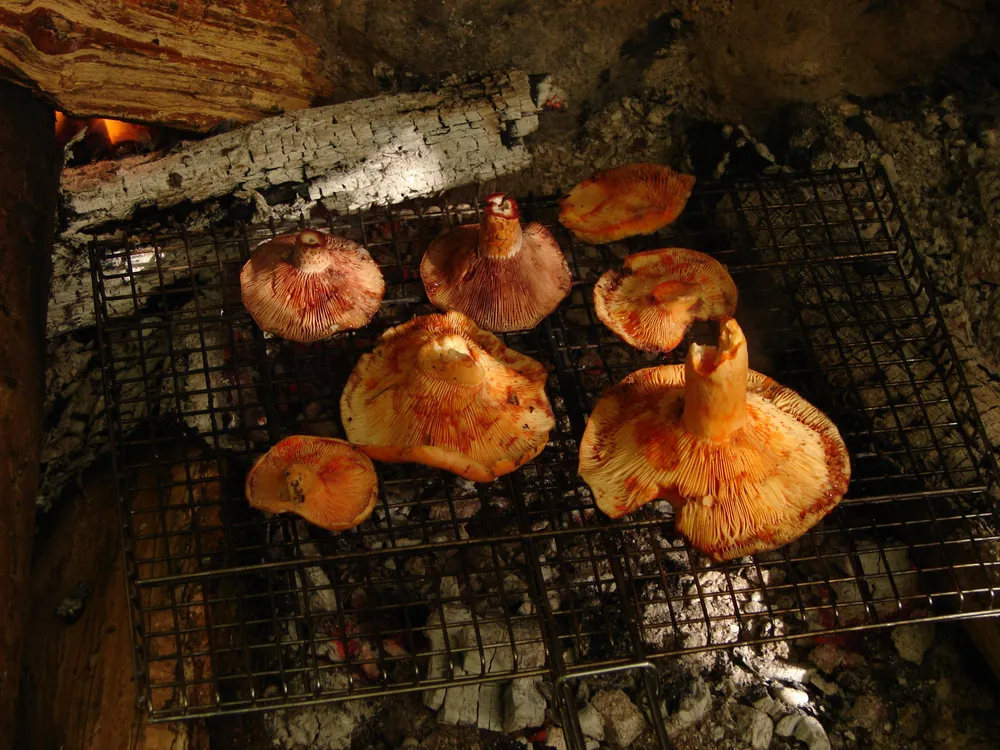
Lactarius salmonicolor
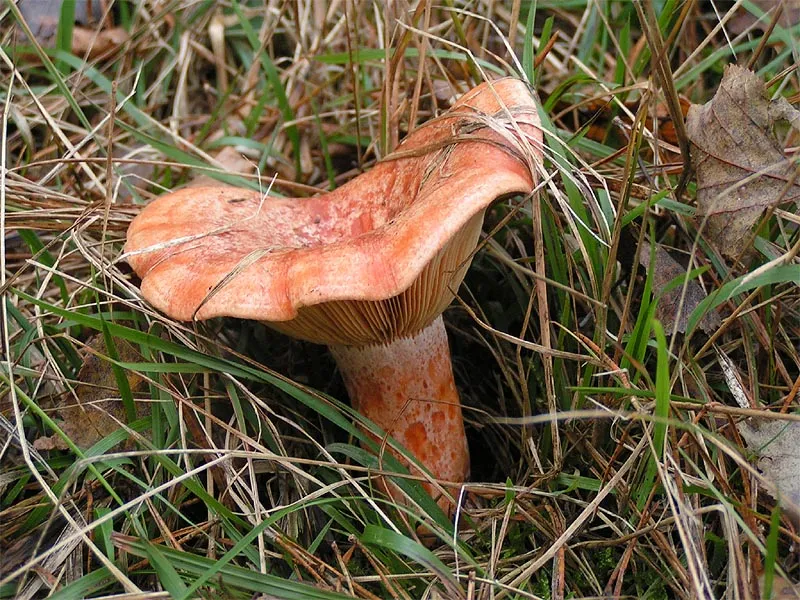
Saffron milk cap
Lactarius deliciosus
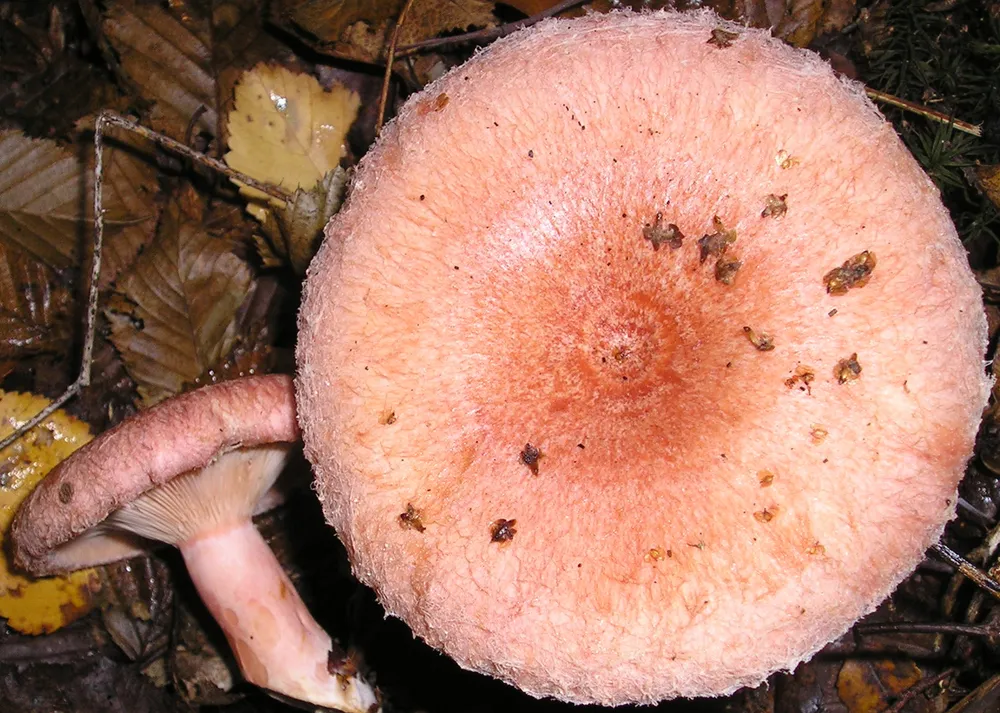
Woolly milk cap
Lactarius torminosus
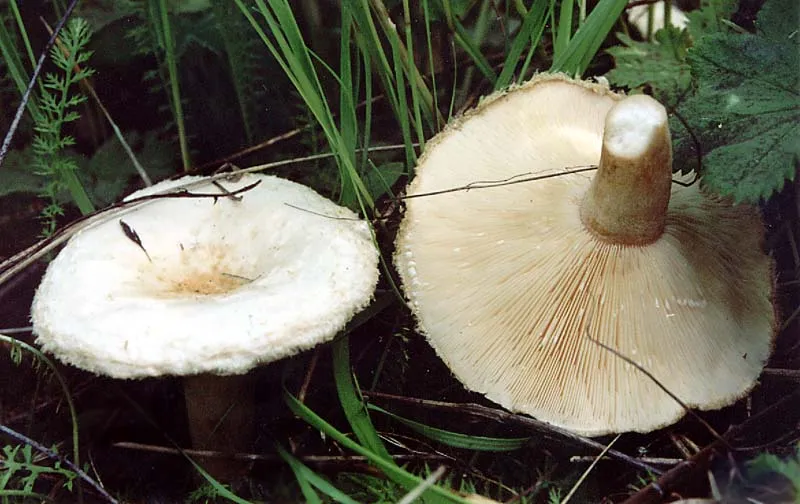
Bearded milk cap
Lactarius pubescens
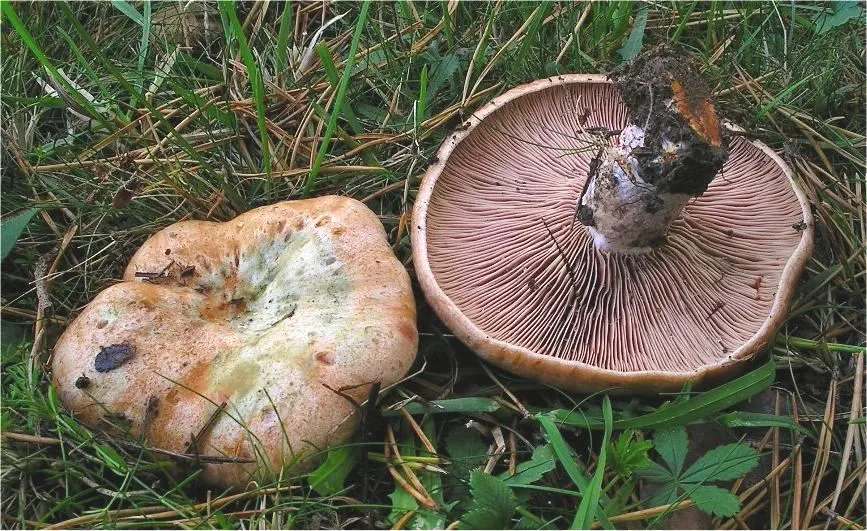
Bloody milk cap
Lactarius sanguifluus
Frequently asked questions
Can you eat it?
Yes, but only after preparation: soak for 1–2 days, changing the water, then boil for 15–20 minutes and discard the water, then salt for 40 days. In the kitchen this species is mediocre — firm, but with an uninteresting flavor. Many modern field guides advise not collecting it, since there are better alternatives (Saffron milk cap, Lactarius resimus).
What happens if you eat it raw?
After 2–6 hours, gastroenteritis develops: nausea, abdominal pain, diarrhea. It passes within a day or two without serious consequences. There is no antidote; treatment is symptomatic: drink plenty of water. There is no serious kidney or liver damage.
Where does it grow?
Exclusively under beech — it is an obligate mycorrhizal partner of the European beech (Fagus sylvatica). It grows in old beech and beech-spruce forests, often in large groups under a single tree. It does not occur without beech — that is its key diagnostic feature.
Which regions of Ukraine?
The Carpathians (Zakarpattia, Lviv, Ivano-Frankivsk and Chernivtsi regions), the Carpathian foothills, the western forest-steppe. Rare in lowland Polissia and almost never found in the steppe. The mountain beech forests of the Carpathians are its main range.
When should you look for it?
August–October. Fruiting peaks in September. In a wet summer it can start at the end of July. It holds on until the first hard frosts.
How do you recognize it?
Three features together: 1) a gray-olive sticky cap; 2) white, burning milk that turns gray in the air; 3) growth under beech. If all of these come together, it is definitely L. blennius. In beech forests there are practically no other milk caps with a sticky gray-olive cap.
What is it confused with?
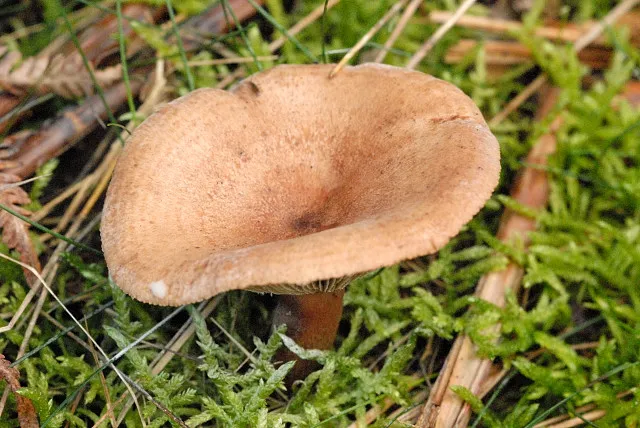
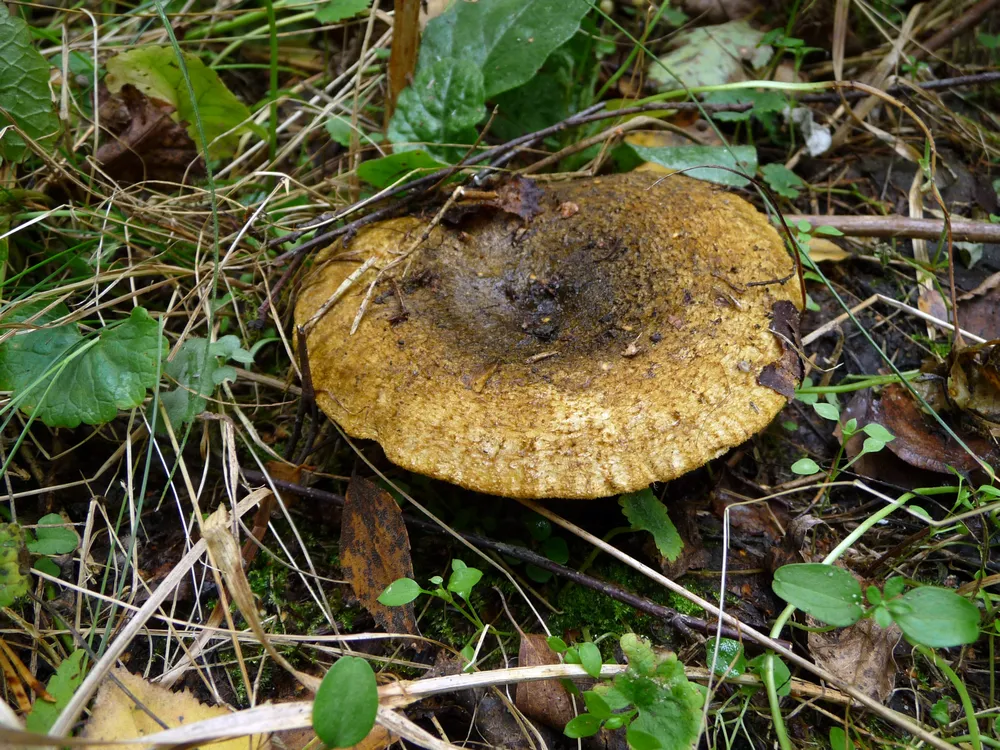
With the Fenugreek milk cap (Lactarius helvus) — that one is larger, with a pronounced chicory smell, and grows in pine forests, not beech woods. With L. picinus — that one is dark chestnut with no olive tinge. Beech association + a sticky olive cap — definitely L. blennius.
Are any of its lookalikes poisonous?
There are no deadly poisonous ones. The biggest risk is confusing it with L. helvus (suspected of containing muscarine, it causes more prolonged gastroenteritis), but that one has a sharp smell of dry hay and grows under pines. Beech + olive + slime = L. blennius — potentially conditionally edible, only for salting after preparation.
Is Beech milk cap edible or poisonous?
Does Beech milk cap have gills or pores?
What does the cap of Beech milk cap look like?
What does the stem of Beech milk cap look like?
Sources
- [1]Вікіпедія (українська)
- [2]Атлас грибів України, Зеров Д.К. (1979)
- [3]MycoBank Database
- [4]Index Fungorum
- [5]GBIF
- [6]iNaturalist Ukraine