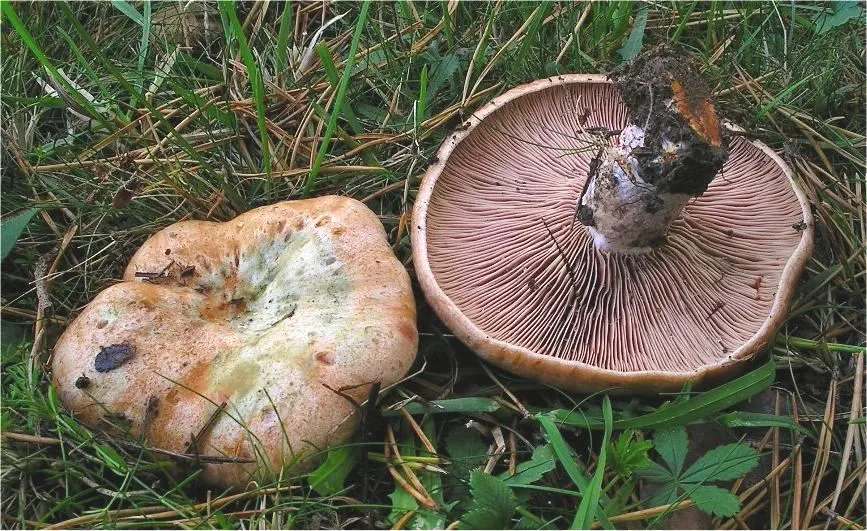
Bloody milk capLactarius sanguifluus
Expert-verifiedUpdated October 3, 2026
Passport
- Edibility
- Edible
- Season
- Aug — Oct
- Hymenophore
- Gilled
- Cap color
- Orange
- Size
- Medium (5–15 cm)
- Smell
- Pleasant
- Reviewed
- Yes ✓
Quick answers
Where to look?
Conifer forest, Mixed forest
When does it appear?
Aug — Oct
Active months: August, September, October.
How to recognize it? Three signs
- Cap color: Orange, Red, Pink
- Cap shape: Funnel-shaped
- Smell: Pleasant
Fruiting season
August – October
Description
The Bloody milk cap is a close relative of the Saffron milk cap and belongs to the same botanical group of “true saffron milk caps” (section Deliciosi). What sets it apart is that when you cut it, its milk isn't orange but dark red, the color of dried blood — and that's exactly how it got its name. It's a delicacy edible mushroom, and in southern European cuisines (Catalonia, Provence) it's a true favorite of the autumn season.
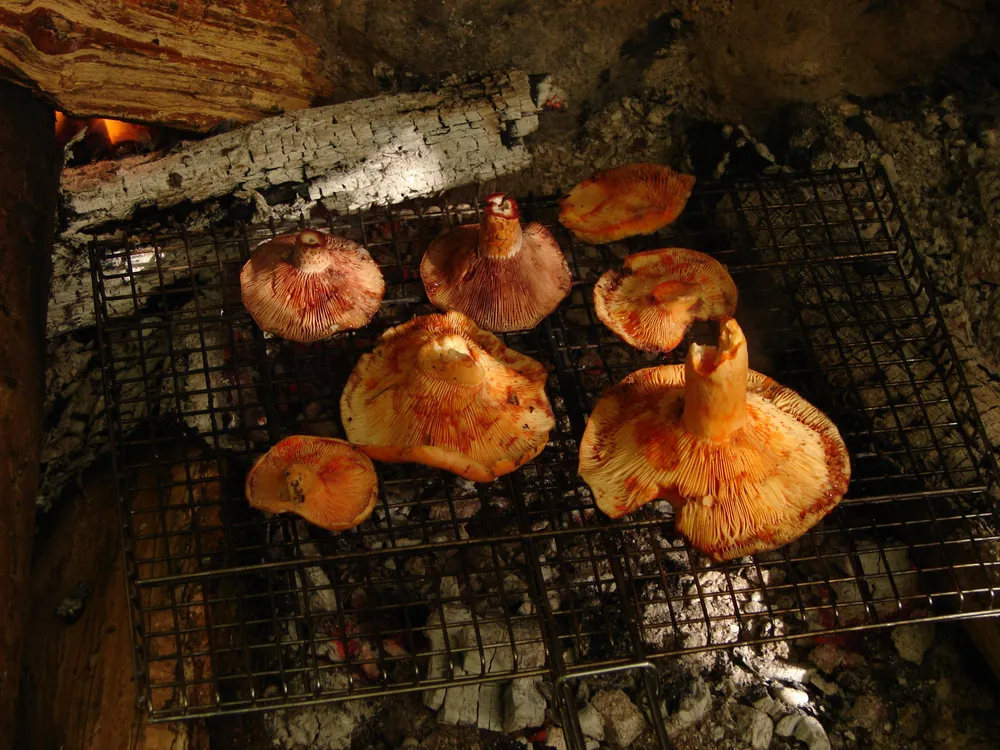
In the kitchen it's a classic saffron milk cap: salted, pickled, fried, stewed. Once cooked, the milk leaves no unpleasant aftertaste, and the flesh is firm and fragrant. Unlike the common Saffron milk cap, its cut flesh takes on a distinct wine-red tint that holds up in marinades and gives the finished product a deep burgundy color.
In Ukraine it grows mainly in the Carpathians, Prykarpattia and the western forest-steppe — in pine and pine-fir forests of mountain and foothill areas. On the plains it's less common. The season runs August–October, and like all saffron milk caps it fruits in groups. You don't come across it often, so every find is a joy.
Cap
Cap 4-10 cm, convex at first with an inrolled margin, then flattened and finally funnel-shaped with a depressed center. Color pale orange-pink to flesh-orange, often with greenish or bluish stains where damaged. Concentric zones are often visible, as in the common Saffron milk cap. Surface dry, smooth, slightly sticky in wet weather.
Hymenophore
Gills. The gills are crowded, narrow, adnate or slightly decurrent. Color pale orange to flesh-colored; when damaged they exude dark wine-red milk, and with age the gills turn green where touched. Spore print cream to pale ochre.
Stem
Stem 3-6 cm tall, 1-2 cm thick, cylindrical or slightly tapering downward, often hollow in mature specimens. Color pale orange with a pinkish tint, often with the characteristic small darker “pits” — just like the Saffron milk cap. Turns blue or green where damaged.
Flesh
Flesh yellowish-white; when cut it quickly takes on a wine-red or dark burgundy tint. The milk is thick, dark red, the color of dried blood, with no noticeable bitterness. Exposed to air, the flesh may eventually turn green or blue where touched.
Smell
Smell faint, pleasant, fruity-resinous — a typical saffron milk cap smell. Taste mild, with a light resinous note, no bitterness or acridity — unlike the “ordinary” milk caps, you can carefully touch it to your tongue raw.
›Scientific synonyms (2)
Hypophyllum sanguifluum Paulet, Lactifluus sanguifluus (Paulet) Kuntze
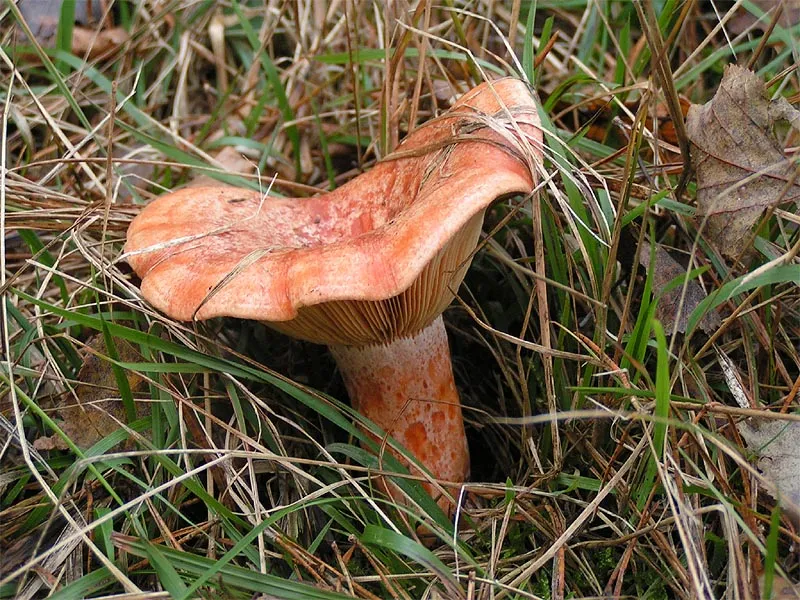
Lookalikes
Related species
Mushrooms of the same genus and habitat — to study side by side and never mix up.
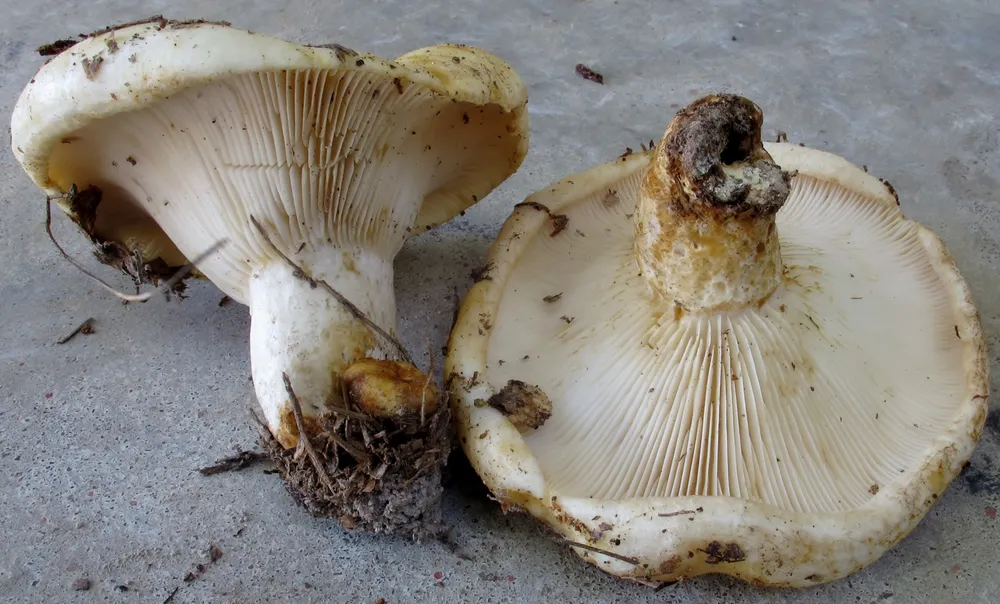
Lactarius resimus

Coconut milk cap
Lactarius glyciosmus
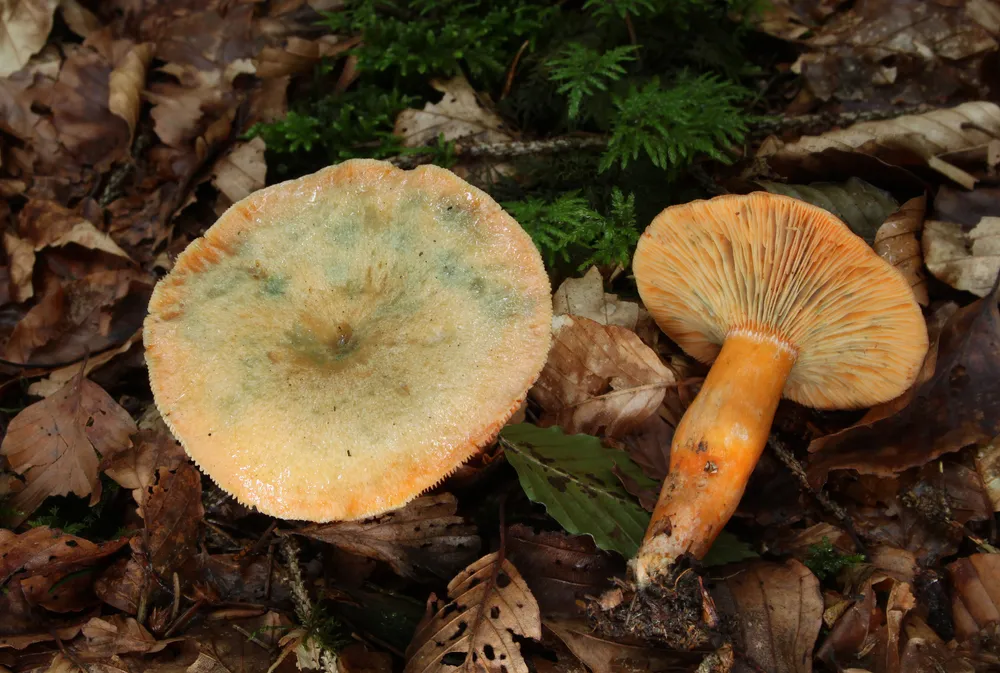
False saffron milk cap
Lactarius deterrimus
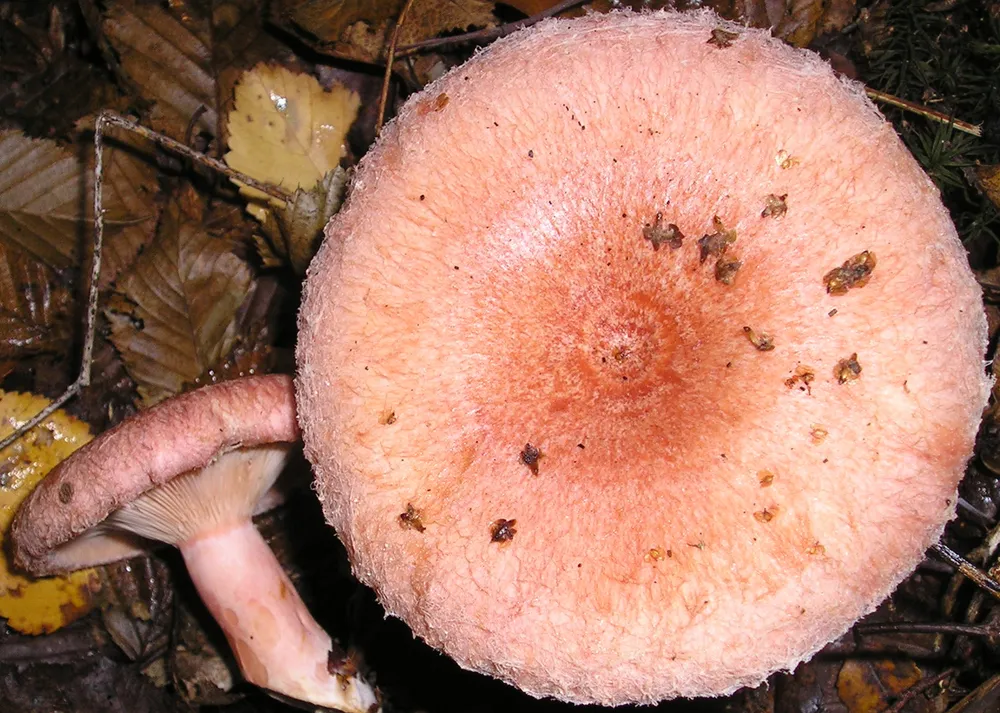
Woolly milk cap
Lactarius torminosus
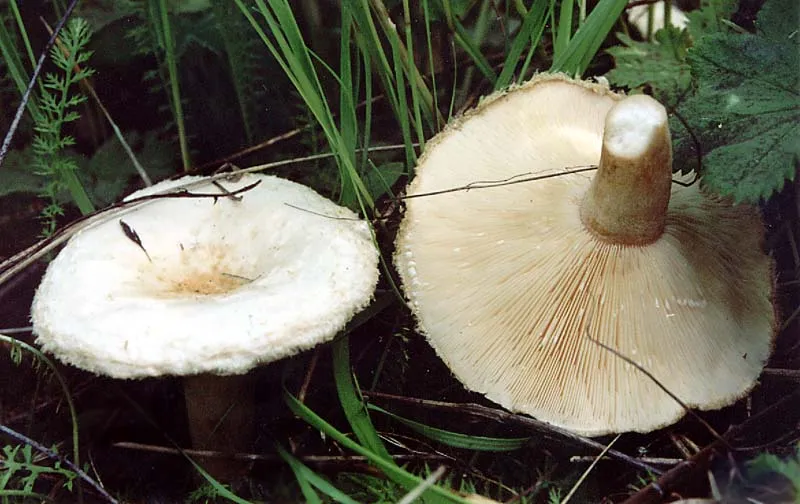
Bearded milk cap
Lactarius pubescens
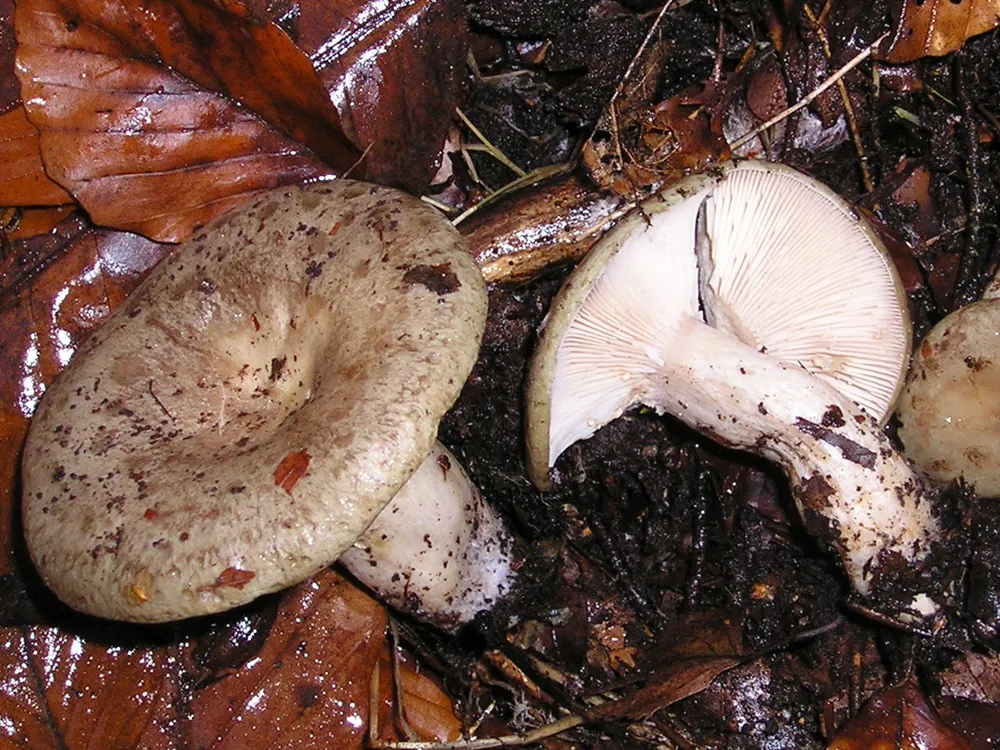
Beech milk cap
Lactarius blennius
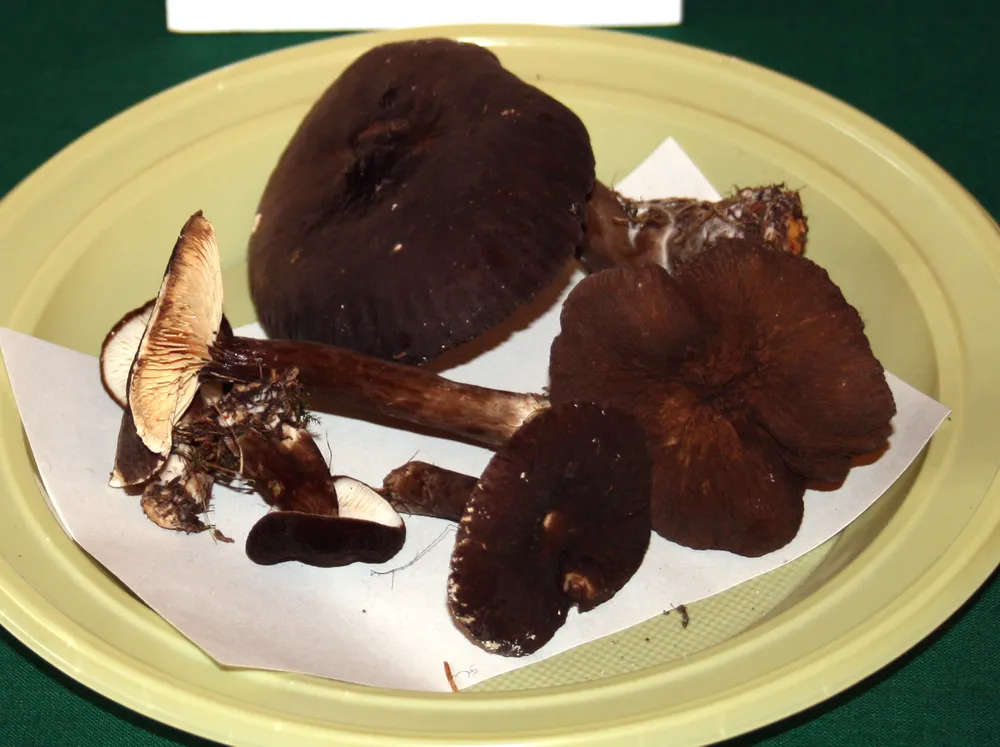
Chocolate milky
Lactarius lignyotus
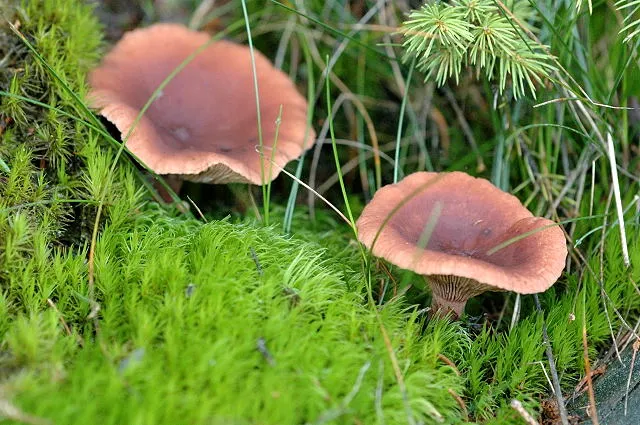
Curry milk cap
Lactarius camphoratus
Frequently asked questions
Can you eat it?
Yes, it's a delicacy edible mushroom. Unlike the “classic” milk caps with acrid milk, its milk is mild and needs no special processing. Salt it, pickle it, fry it, stew it — just like the common Saffron milk cap. For people with sensitive stomachs, one trial dish is enough to make sure it agrees with you.
Why is its milk red?
It's a natural feature of the species — the milk contains azulene (an azulene pigment), which oxidizes in the air and gives a distinct wine-red color. In a closely related species, the Saffron milk cap (Lactarius deliciosus), the pigment is different, so the milk is orange. The red color does not mean danger.
Where should you look for it?
In pine and pine-fir forests, mostly in mountain and foothill areas. It loves open, sparse stands, forest edges, sunny glades and mossy “carpets”. In Ukraine — the Carpathians, Prykarpattia, and less often the western forest-steppe.
Which regions of Ukraine?
The Carpathians (Zakarpattia, Lviv, Ivano-Frankivsk and Chernivtsi regions), Prykarpattia, the western forest-steppe. On the Polissia lowlands it's rare, and in the steppe it's practically absent. Mountain pine forests are its main habitat.
When should you look for it?
August–October. Peak fruiting is from the second half of September to early October, after cold autumn rains. In the Carpathians the season can last until mid-October, until the frosts hit.
How do you tell it from the Saffron milk cap?
The milk is the key diagnostic. The Saffron milk cap (Lactarius deliciosus) has orange, carrot-colored milk. The Bloody milk cap has dark wine-red milk, the color of dried blood. Cut the stem, wait 10 seconds: carrot = deliciosus, blood = sanguifluus.
What else is it confused with?
With Lactarius semisanguifluus — its milk is orange at first, then turns red after 10-30 minutes. With Lactarius vinosus — also red milk, but the cap is dark wine-colored. All three species are true saffron milk caps, all edible and tasty.
What about dangerous look-alikes?
There are no serious poisonous look-alikes in Ukraine. Milk caps with white acrid milk (Woolly milk cap, Rufous milk cap, Lactarius resimus) are easy to tell apart — their milk is white. If the milk is orange, red or wine-tinted when cut, you're dealing with the safe saffron milk cap group.
Is Bloody milk cap edible or poisonous?
Does Bloody milk cap have gills or pores?
What does the cap of Bloody milk cap look like?
What does the stem of Bloody milk cap look like?
Sources
- [1]Вікіпедія (українська)
- [2]Атлас грибів України, Зеров Д.К. (1979)
- [3]MycoBank Database
- [4]Index Fungorum
- [5]GBIF
- [6]iNaturalist Ukraine