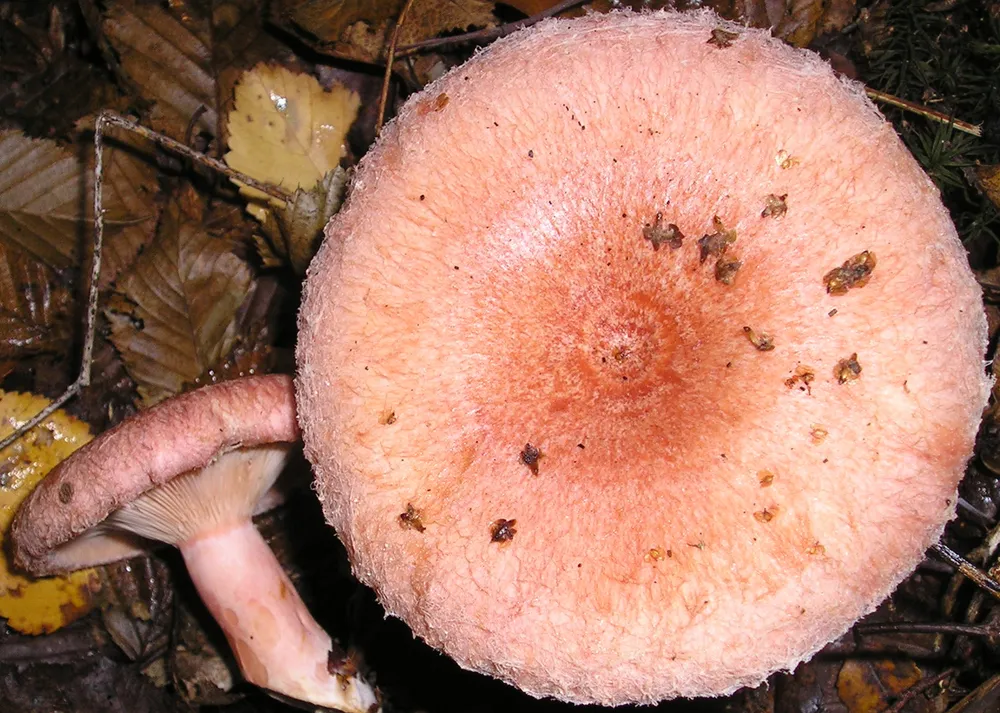
Woolly milk capLactarius torminosus
Expert-verifiedUpdated October 3, 2026
Passport
- Edibility
- Conditionally edible
- Season
- Aug — Oct
- Hymenophore
- Gilled
- Cap color
- Pink
- Size
- Medium (5–15 cm)
- Smell
- Pleasant
- Reviewed
- Yes ✓
Quick answers
Where to look?
Deciduous forest, Mixed forest
When does it appear?
Aug — Oct
Active months: August, September, October.
How to recognize it? Three signs
- Cap color: Pink, Red, Orange
- Cap shape: Funnel-shaped
- Smell: Pleasant
Fruiting season
August – October
Description
The Woolly milk cap is a classic salting mushroom of Eastern Slavic cuisine. It's easy to recognize: a pink or brick-red cap with concentric zones and a downy margin, and when cut it releases acrid white milk. It owes its name to the fluffy cap edge that looks like wool.
This is a conditionally edible mushroom that must be prepared before eating. The milk is sharp and acrid; raw, it can cause blisters on the tongue and severe gastroenteritis. The classic method: boil for 15-20 minutes and discard the water, then salt or pickle for 40 days. Only then does the Woolly milk cap become tasty — firm, aromatic, with its distinctive “salty” flavor.
In Ukraine it grows in Polissia and the Forest-Steppe, always near birches — it's their mycorrhizal partner. In birch woods and mixed forests with birch, the Woolly milk cap can form real clusters. The season is August–October, peaking in September.
Cap
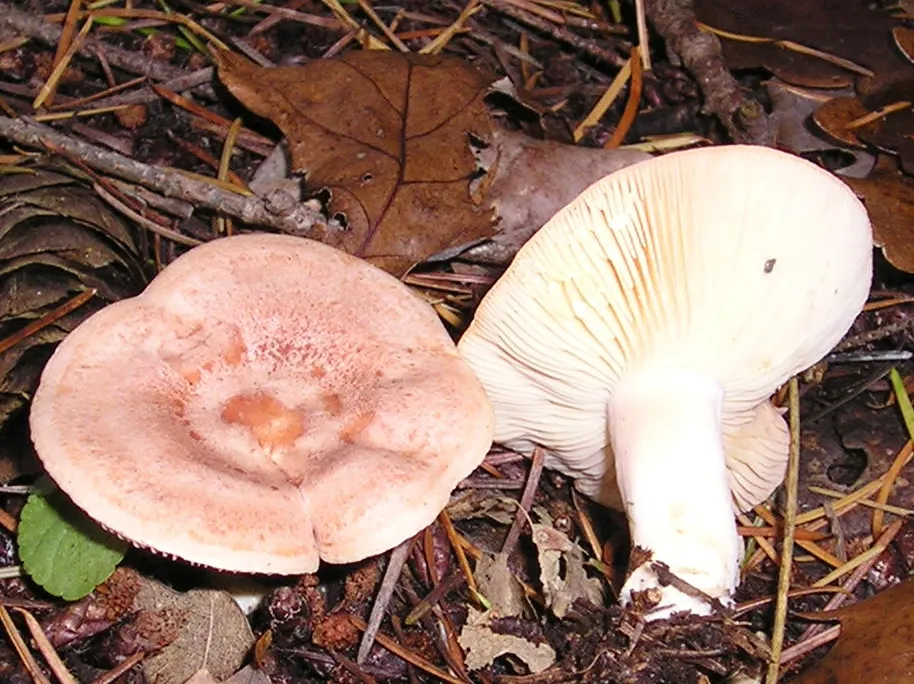
Cap 4-12 cm, convex with a depressed center at first, then funnel-shaped. Pink, brick-pink to brick-red, with distinct darker concentric zones. The margin is inrolled, with a characteristic fluffy (downy) edge — hence the name “woolly.”
Hymenophore
Gilled hymenophore. Gills crowded, narrow, adnate or slightly decurrent down the stem. Whitish or with a pinkish tint, turning cream with age. Spore print creamy-white.
Stem
Stem 4-6 cm tall, 1-2 cm thick, cylindrical, hollow inside. Same color as the cap or slightly paler. Surface smooth, with no ring and no volva.
Flesh
The flesh is white and firm, releasing abundant white milk when damaged. The milk doesn't change color in the air. When cut, the flesh itself doesn't darken or turn yellow either.
Smell
Faint mushroomy smell, slightly resinous. Raw flesh tastes acrid, sharp, with peppery notes. Don't taste it raw — it causes blisters on the tongue.
›Scientific synonyms (5)
Agaricus torminosus Schaeff. (1774), Lactarius necator (Bull.) Pers. (1800), Galorrheus torminosus (Schaeff.) P.Kumm. (1871), Lactifluus torminosus (Schaeff.) Kuntze (1891), Lactarius torminosus var. sublateritius Kühner & Romagn. (1954)
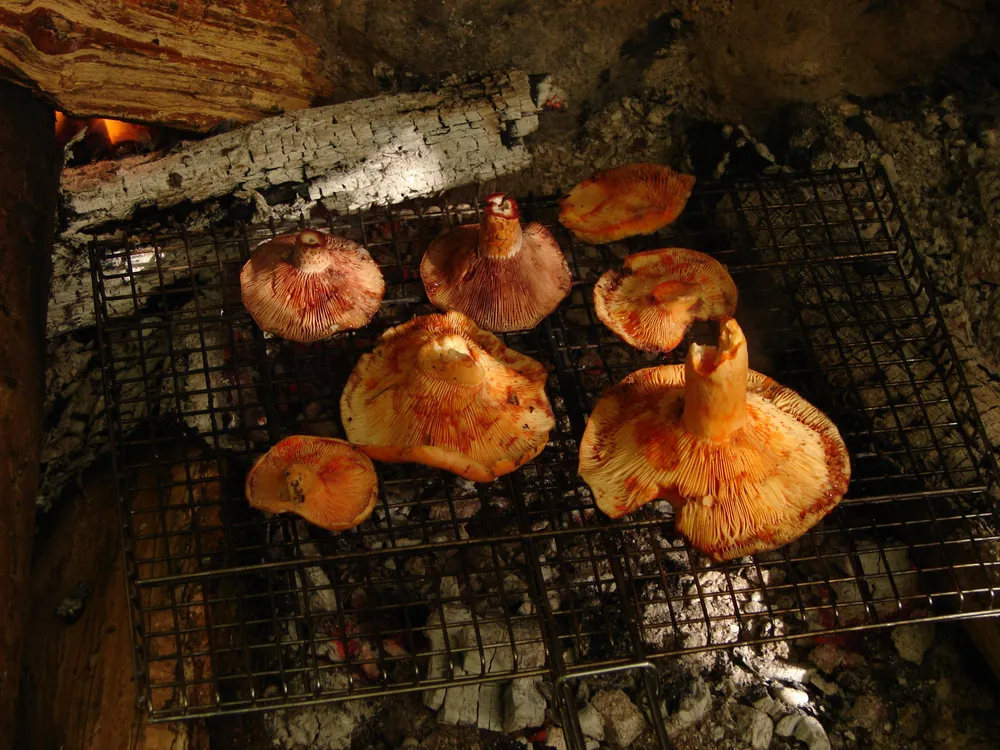
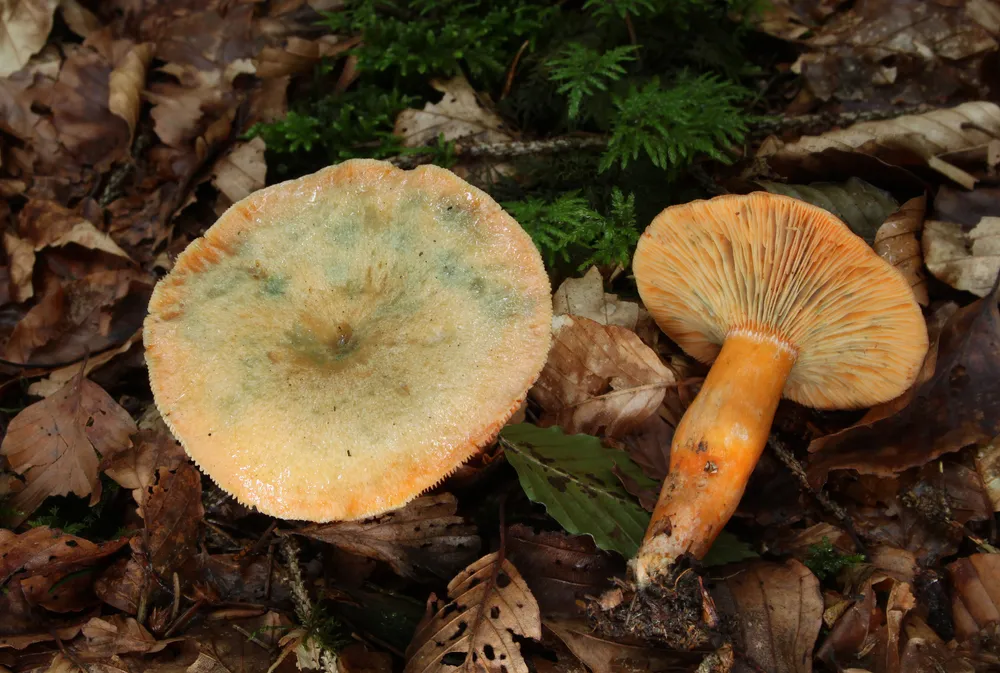
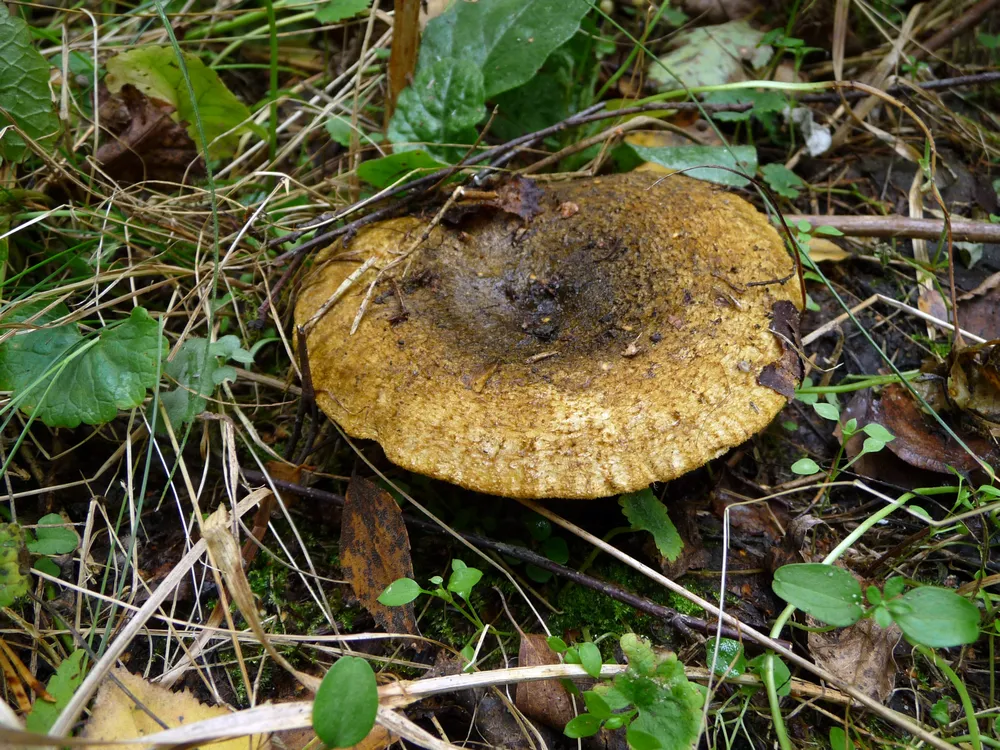
Lookalikes
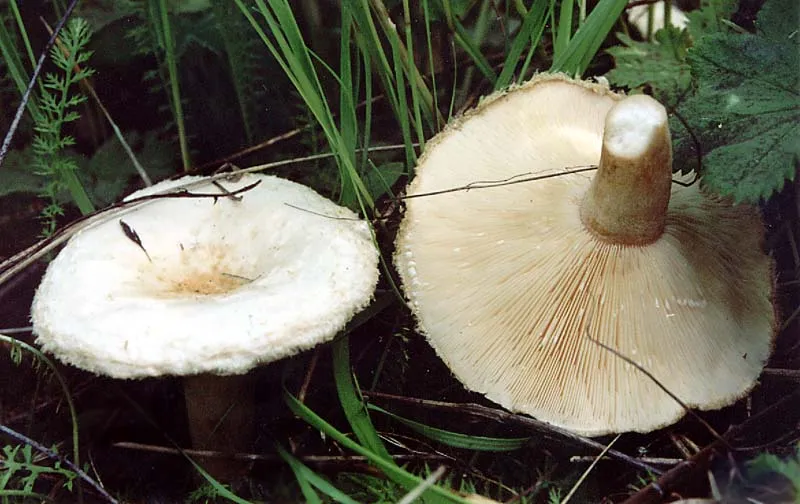
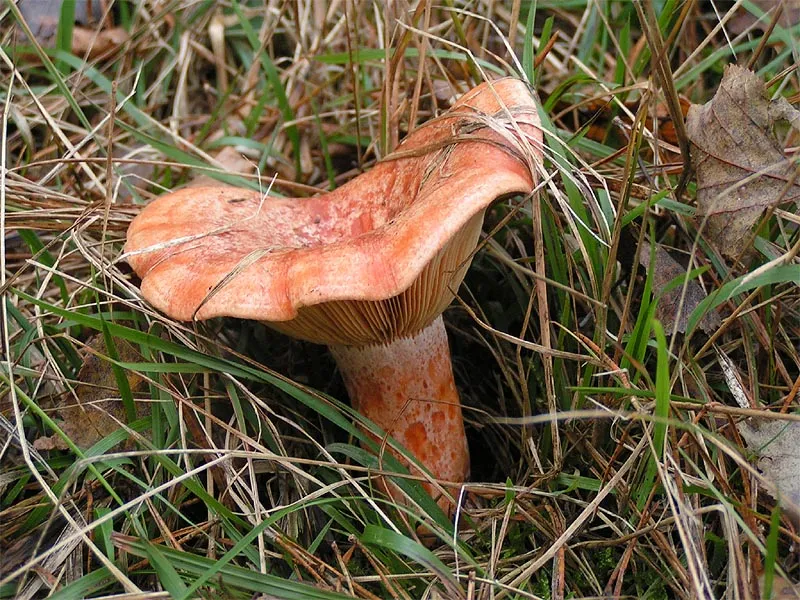
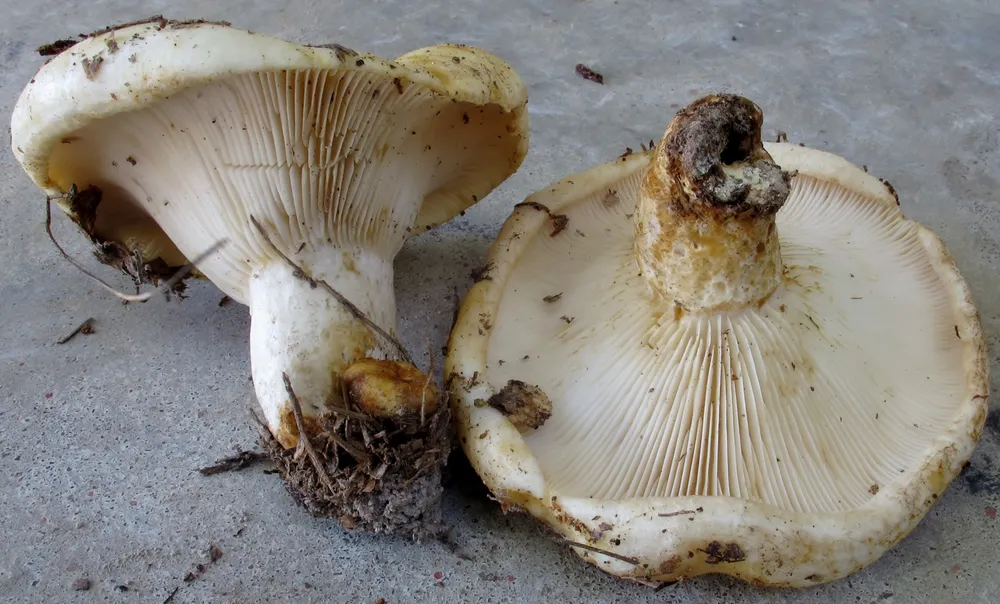

Related species
Mushrooms of the same genus and habitat — to study side by side and never mix up.
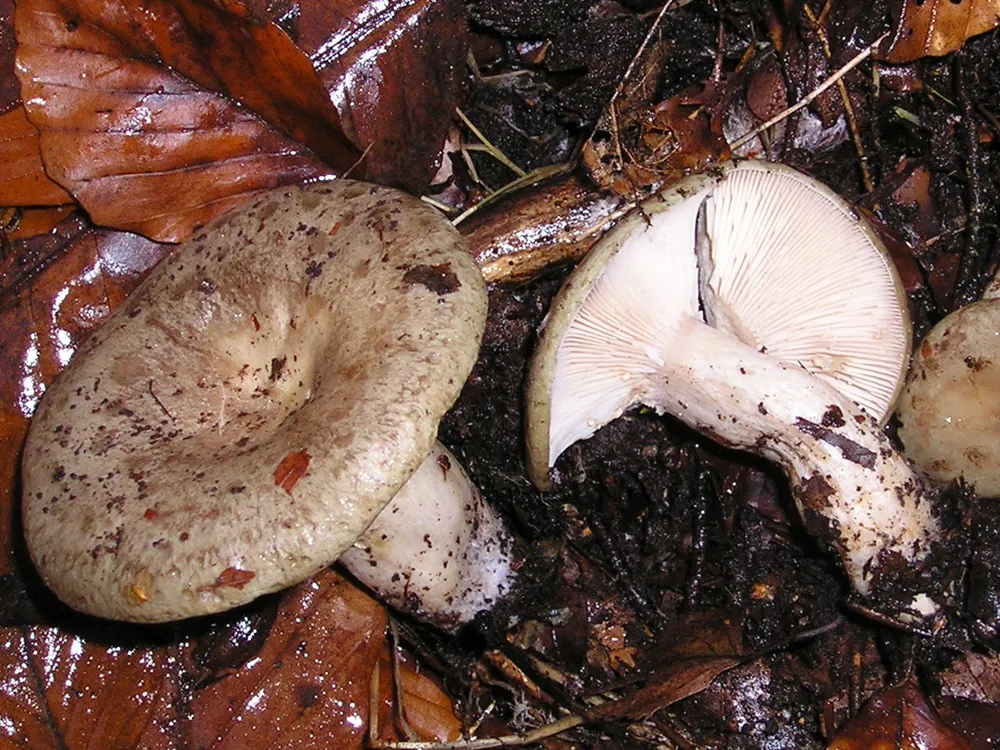
Beech milk cap
Lactarius blennius
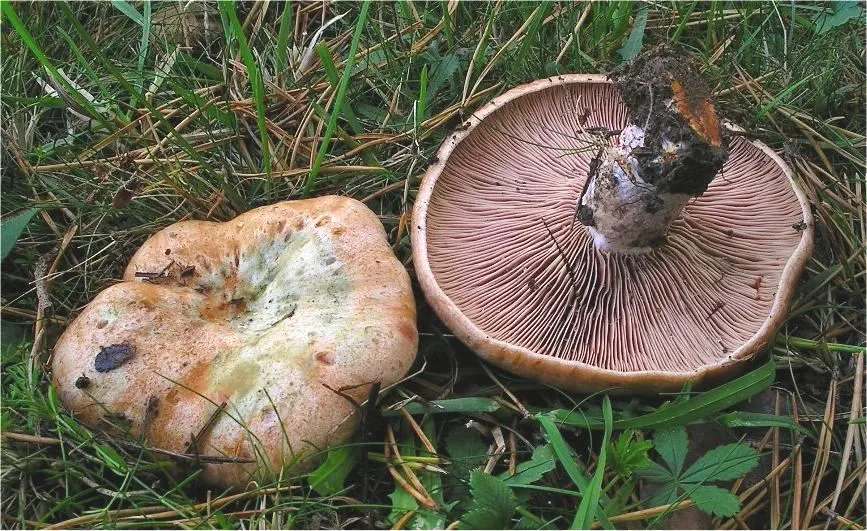
Bloody milk cap
Lactarius sanguifluus
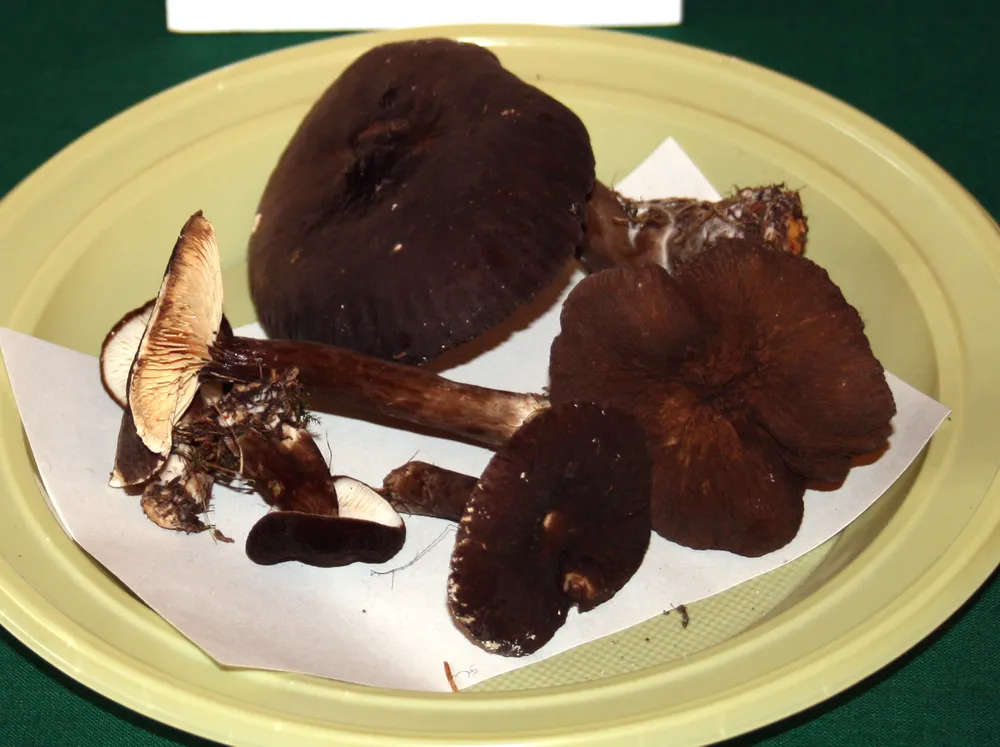
Chocolate milky
Lactarius lignyotus
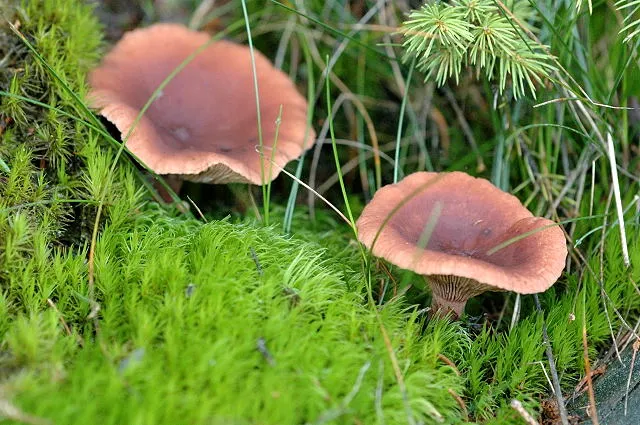
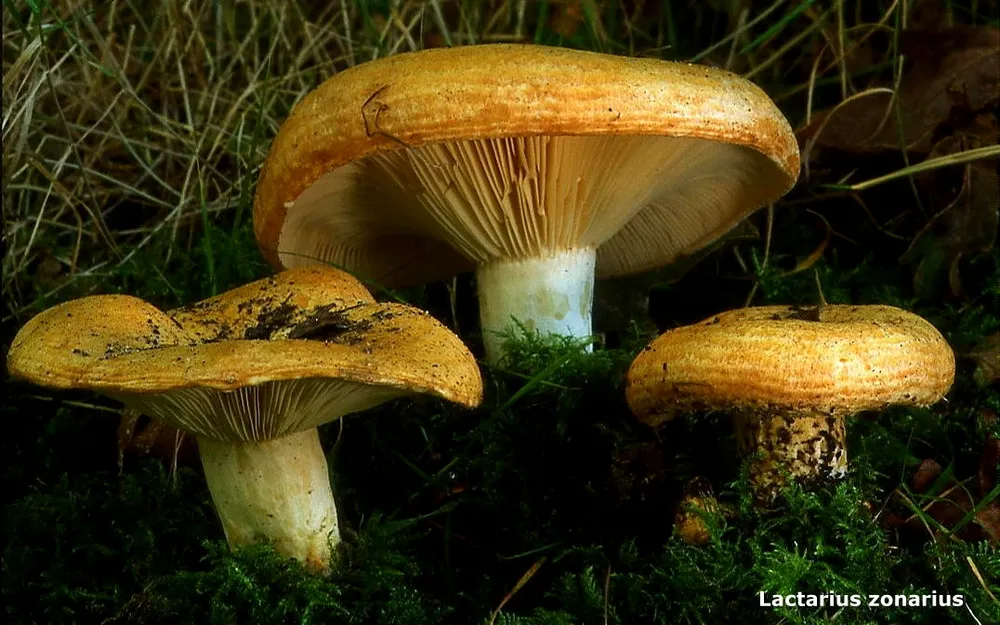
Curry milk cap
Lactarius camphoratus
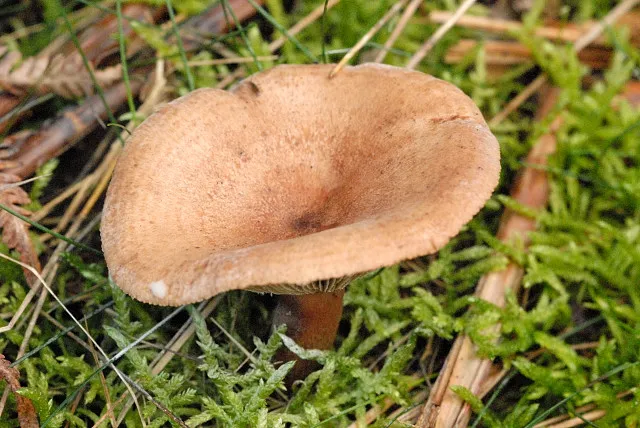
Fenugreek milk cap
Lactarius helvus
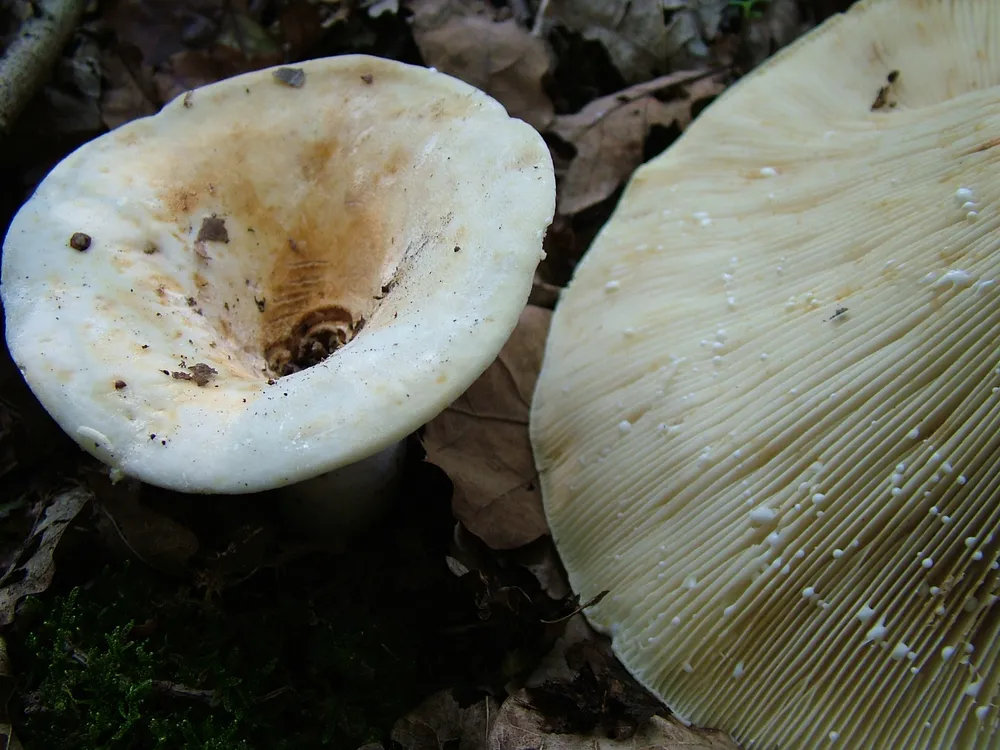
Fleecy milk cap
Lactarius vellereus
Lactarius insulsus
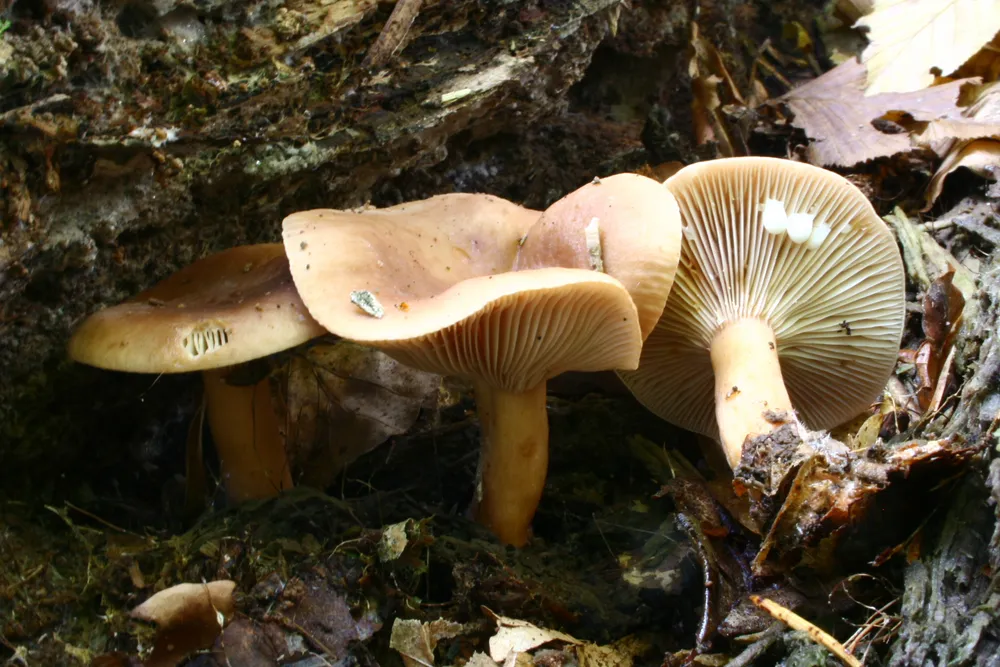
Mild milk cap
Lactarius subdulcis
Related reading
 How to identify
Saffron milk cap: when it appears, where to look, and how to tell it apart
The saffron milk cap is one of the tastiest mushrooms for salting, and you can salt it almost raw. Here's when…
August 5, 2026·3 min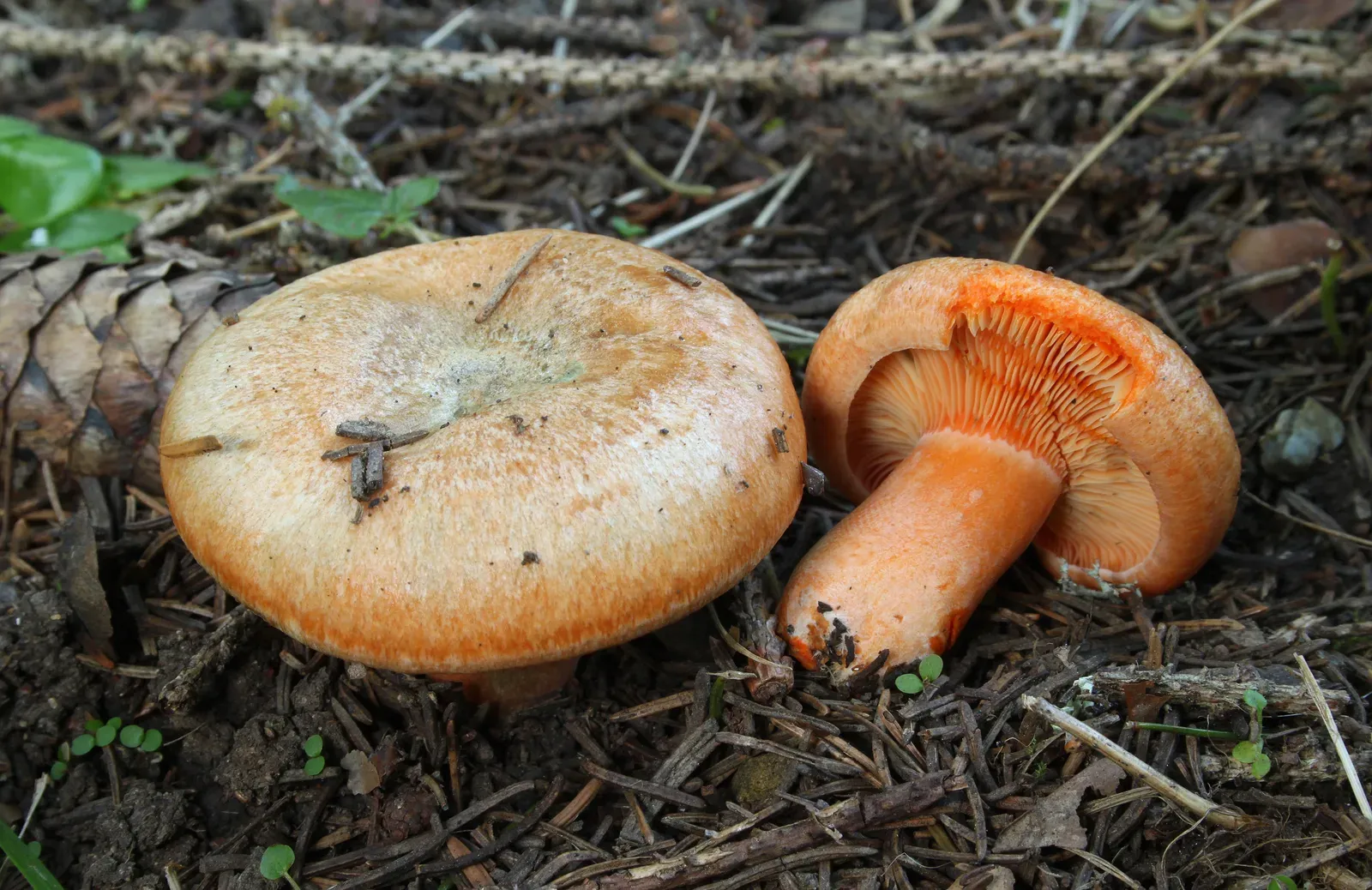 Safety
Saffron milk cap lookalikes: woolly milk cap, milk caps, and other Lactarius
The saffron milk cap gets confused with other Lactarius species — the woolly milk cap, milk caps and bitter re…
July 20, 2026·2 min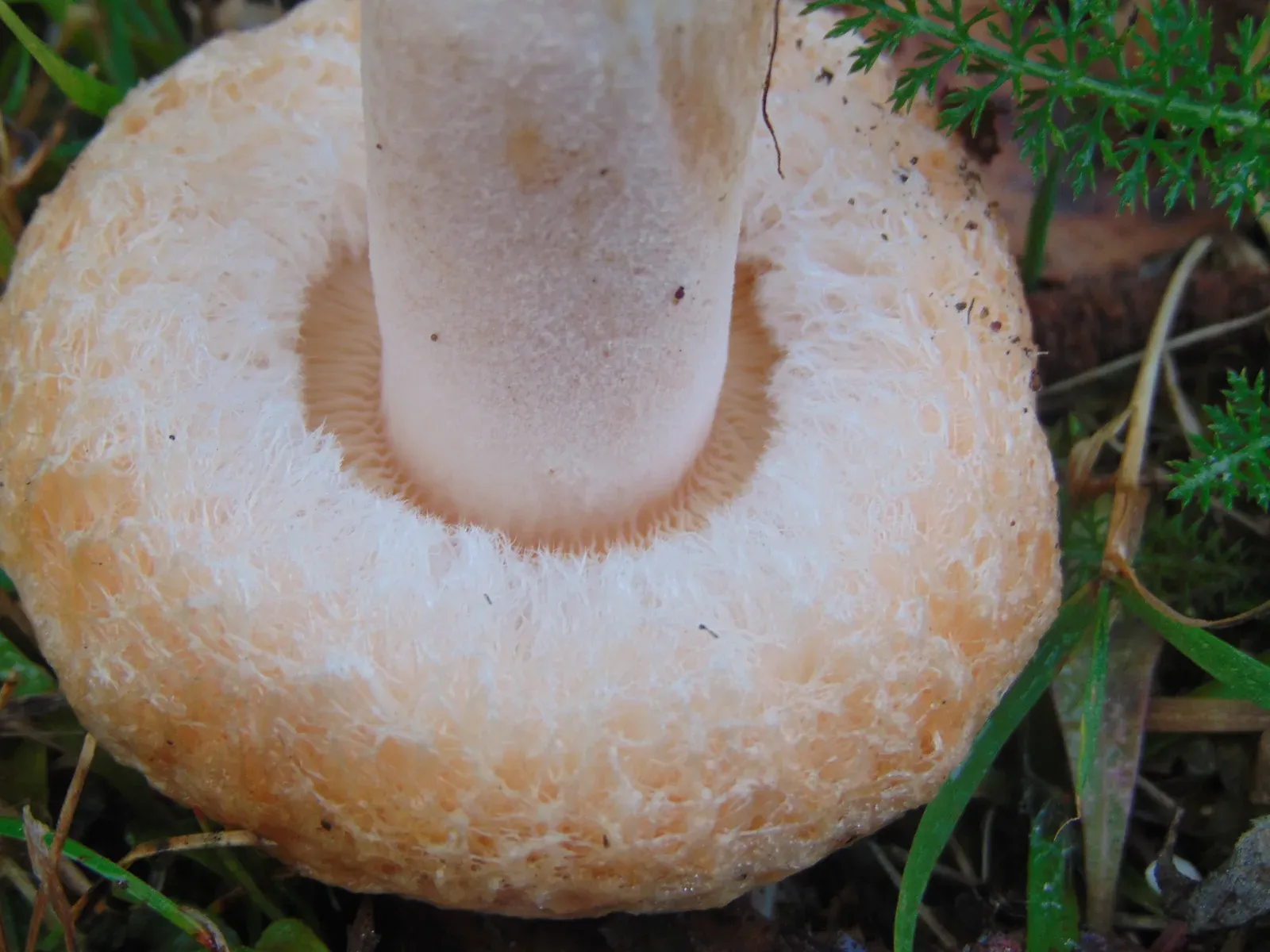 How to identify
Woolly milk caps (white and pink): are they edible, and how to recognize them
The woolly milk cap is a fluffy cousin of the classic milk caps, with a pink or white cap and acrid milky late…
July 16, 2026·2 min
Frequently asked questions
Can you eat it?
Yes, after mandatory processing: boil for 15-20 minutes and discard the water, then salt or pickle for 40 days. Without processing, the raw mushroom is very pungent and can cause gastroenteritis — nausea, stomach pain, diarrhea.
What if you just boil and fry it?
Better not. The Woolly milk cap is made for salting — that's how it tastes good. Simply boiled or fried, it stays bitter with an off taste, and the risk of gastroenteritis isn't fully eliminated. The classic way is salted and properly cured.
Where should you look for it?
Only near birches. It's an obligate mycorrhizal partner of birch. It grows in birch groves, mixed forests with birch and along forest edges. It loves damp spots, mossy “carpets” and clearings with young saplings.
Which regions of Ukraine does it grow in?
Polissia and the Forest-Steppe are its main zones. The richest harvests are in the Chernihiv, Kyiv, Zhytomyr, Volyn and Rivne regions. In the steppe and Crimea it's rare, found only in planted birch stands.
When should you look for it?
August–October. Peak fruiting is from late August to mid-September, especially after rain. In a warm, long autumn it can keep fruiting until the first serious frosts.
Can it appear in July?
The odd one turns up in late July, but the Woolly milk cap really gets going in August. If you see something similar in a birch wood in July, take a closer look — it may be another pink milk cap (Lactarius).
What is it confused with?
With the Saffron milk cap (Lactarius deliciosus) — it also has concentric zones, but its milk is orange (not white) and its taste isn't acrid. The milk is the most important clue: white and acrid = Woolly milk cap, orange and mild = Saffron milk cap. Plus, the Saffron milk cap grows under pines, the Woolly milk cap under birches.
How do you tell it from the Bearded milk cap?
The Woolly milk cap is pinkish-red with distinct zones. The Bearded milk cap (L. pubescens) is white or creamy-white, without pronounced zones, with a softer tint. Both grow under birches, both are conditionally edible, both are salted — in the kitchen they're almost interchangeable.
Is Woolly milk cap edible or poisonous?
Does Woolly milk cap have gills or pores?
What does the cap of Woolly milk cap look like?
What does the stem of Woolly milk cap look like?
Sources
- [1]Вікіпедія (українська)
- [2]Атлас грибів України, Зеров Д.К. (1979)
- [3]MycoBank Database
- [4]Index Fungorum
- [5]GBIF
- [6]iNaturalist Ukraine