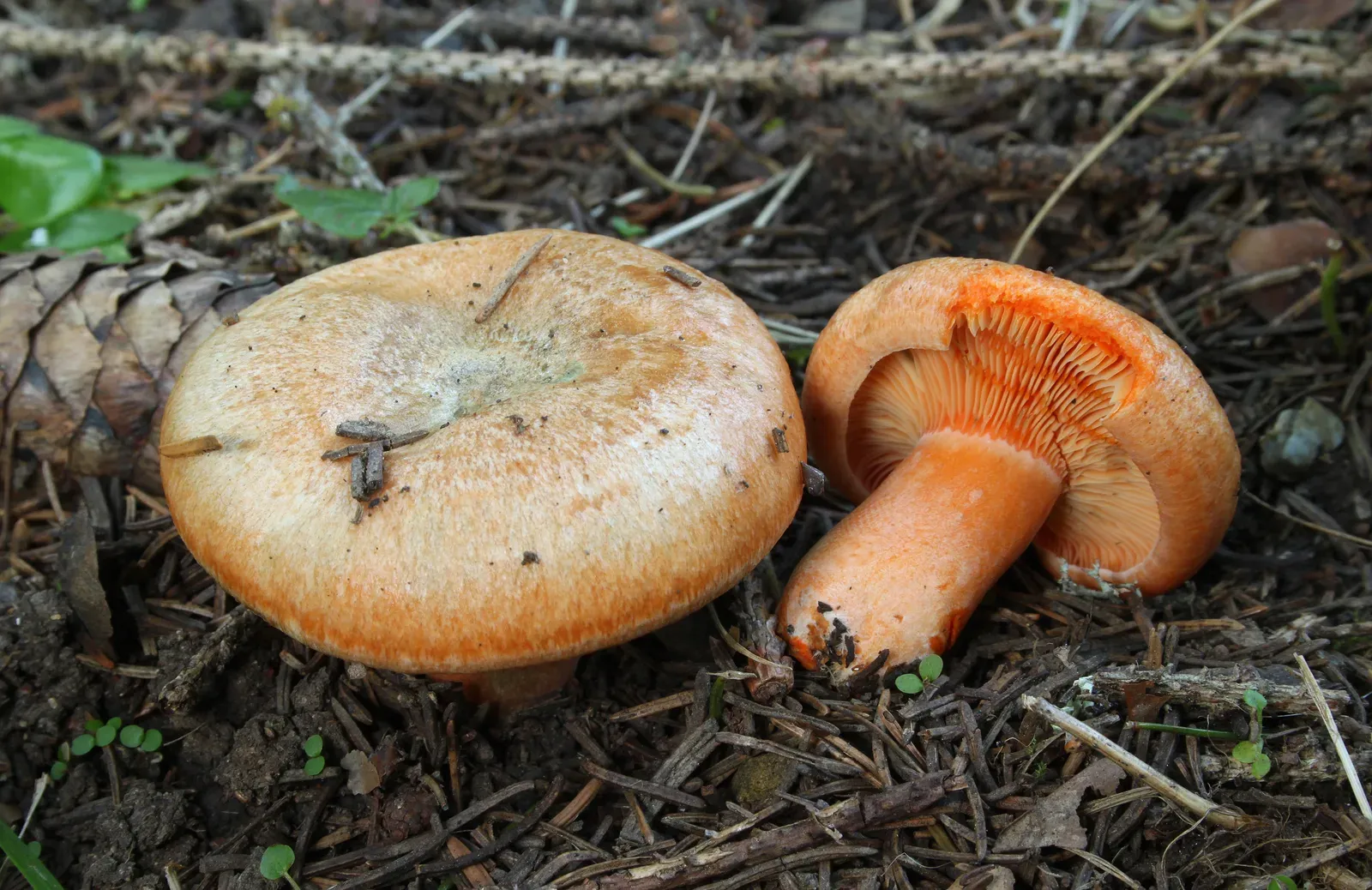
The saffron milk cap is one of the most eye-catching mushrooms thanks to its bright orange cap and orange milk. It has no deadly poisonous lookalikes, but among its relatives, the Lactarius milk caps, there are plenty of bitter species that are easy to mix up. A dish ruined by bitterness is the worst that can happen — and even that you can avoid.
Let’s look at what the saffron milk cap gets confused with and how to recognize the real thing.
The key sign of a true saffron milk cap
The key to identification is the milk:
- In the saffron milk cap it is orange and in the air it turns green.
- In all its bitter lookalikes the milk is white and acrid.
This is the most reliable difference. Read about the kinds of saffron milk caps and when to pick them in our separate articles.
Saffron milk cap and woolly milk cap
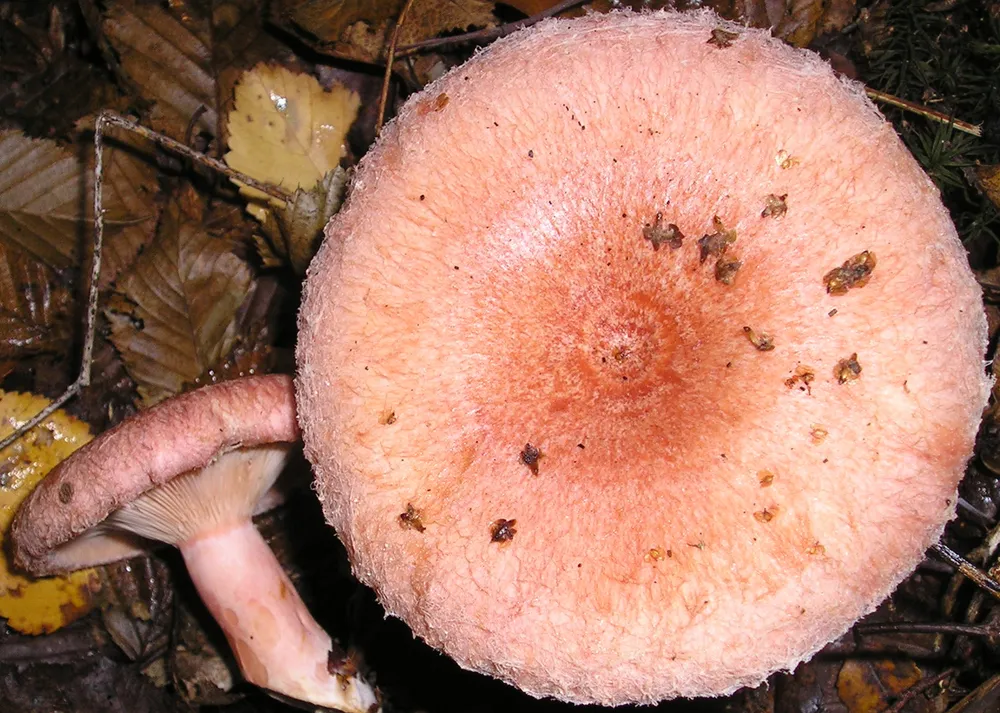
The woolly milk cap gets confused with the saffron milk cap because of its pinkish cap.
- The woolly milk cap has a fluffy, hairy cap margin and white, acrid milk.
- The saffron milk cap is smooth, with orange milk.
The woolly milk cap is conditionally edible (only after soaking), so the mistake isn’t dangerous, but it spoils the flavor.
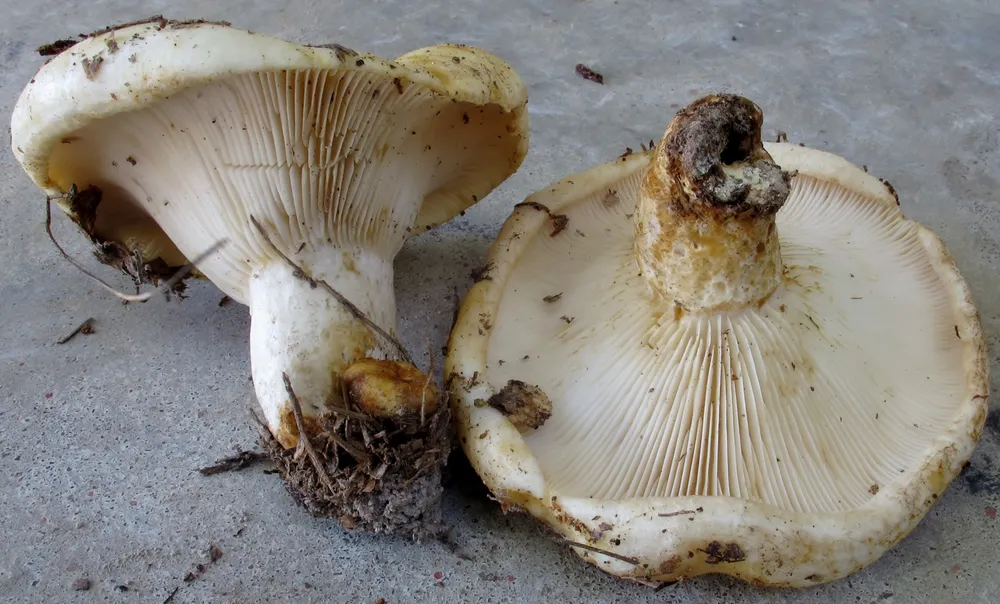
Saffron milk cap and milk caps
- Milk caps have white, acrid milk and a whitish or dark cap with no orange tones.
- The saffron milk cap is orange, with orange milk.
Both are used for salting, but milk caps need long soaking, while saffron milk caps are salted even raw. Read about milk caps in a separate article.
Other Lactarius species
Among the Lactarius there are small bitter species with similar coloring. All of them are given away by their white, acrid milk and the lack of greening. If the milk isn’t orange, it’s not a saffron milk cap.
The main rule
- Break the mushroom and look at the milk: orange that turns green means a saffron milk cap; white and acrid means a lookalike.
- Taste with care: sharp bitterness gives away an unusable Lactarius.
- There’s no deadly danger, but bitter lookalikes spoil a dish — sort them out by their milk.
Sources
- “Key to the Fungi of Ukraine” (Kyiv, Naukova Dumka publishing house).
- Lactarius deliciosus, Lactarius torminosus in GBIF, the Global Biodiversity Information Facility.
- Lactarius in MycoBank, the international fungal nomenclature database.
- Lactarius deliciosus on Wikipedia.
Frequently asked questions
Does the saffron milk cap have poisonous lookalikes?
No deadly poisonous ones. It gets confused with other Lactarius species — the woolly milk cap, milk caps and bitter relatives, which only spoil a dish with their bitterness.
How do you recognize a true saffron milk cap?
By its orange milk that turns green in the air, and its bright orange cap with concentric zones.
How do you tell a saffron milk cap from a woolly milk cap?
The woolly milk cap has a fluffy, hairy cap margin and white, acrid milk, while the saffron milk cap has a smooth cap and orange milk.
How do you tell a saffron milk cap from a milk cap?
A milk cap has white, acrid milk and a whitish or dark cap, while the saffron milk cap is orange with orange milk. Milk caps need soaking; saffron milk caps don’t.
What if the mushroom’s milk is white, not orange?
Then it’s not a saffron milk cap but another Lactarius — a woolly milk cap, a milk cap or a bitter relative. Mushrooms like these are either soaked or left alone.
Can you get poisoned by a saffron milk cap lookalike?
There won’t be severe poisoning, but bitter Lactarius eaten without processing can cause an upset stomach and will ruin the dish.
Why does saffron milk cap milk turn green?
It’s a natural reaction of the orange milk to air, typical of true saffron milk caps. Greenish patches on the cap are normal too.
How can you quickly check whether it’s a saffron milk cap?
Break the cap or stem: orange milk that turns green means a saffron milk cap; white, acrid milk means a lookalike.
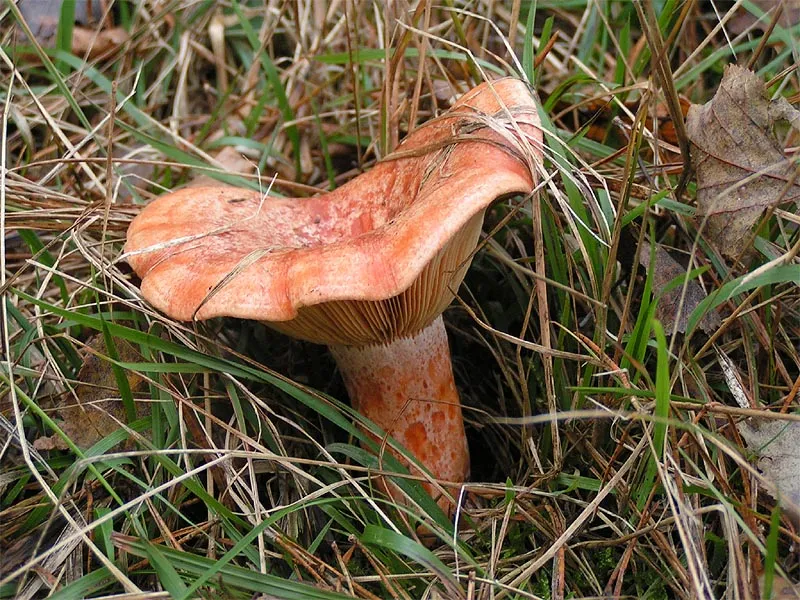
Mushrooms in this article
Related articles
 Recipes & cooking
How to store fresh mushrooms, and for how long
Fresh mushrooms spoil faster than you might think. Here's how long they keep in the fridge, how to store them…
August 21, 2026·4 min How to identify
Truffles in Ukraine: do they grow here, and where to look
Truffles aren't just a French delicacy. Several species grow in Ukraine too. Here's which ones, where they occ…
August 24, 2026·2 min Safety
False morel: why this spring mushroom is dangerous
The false morel looks like a morel, but it contains a poison. Here's how to recognize it, why it's dangerous a…
August 24, 2026·2 min