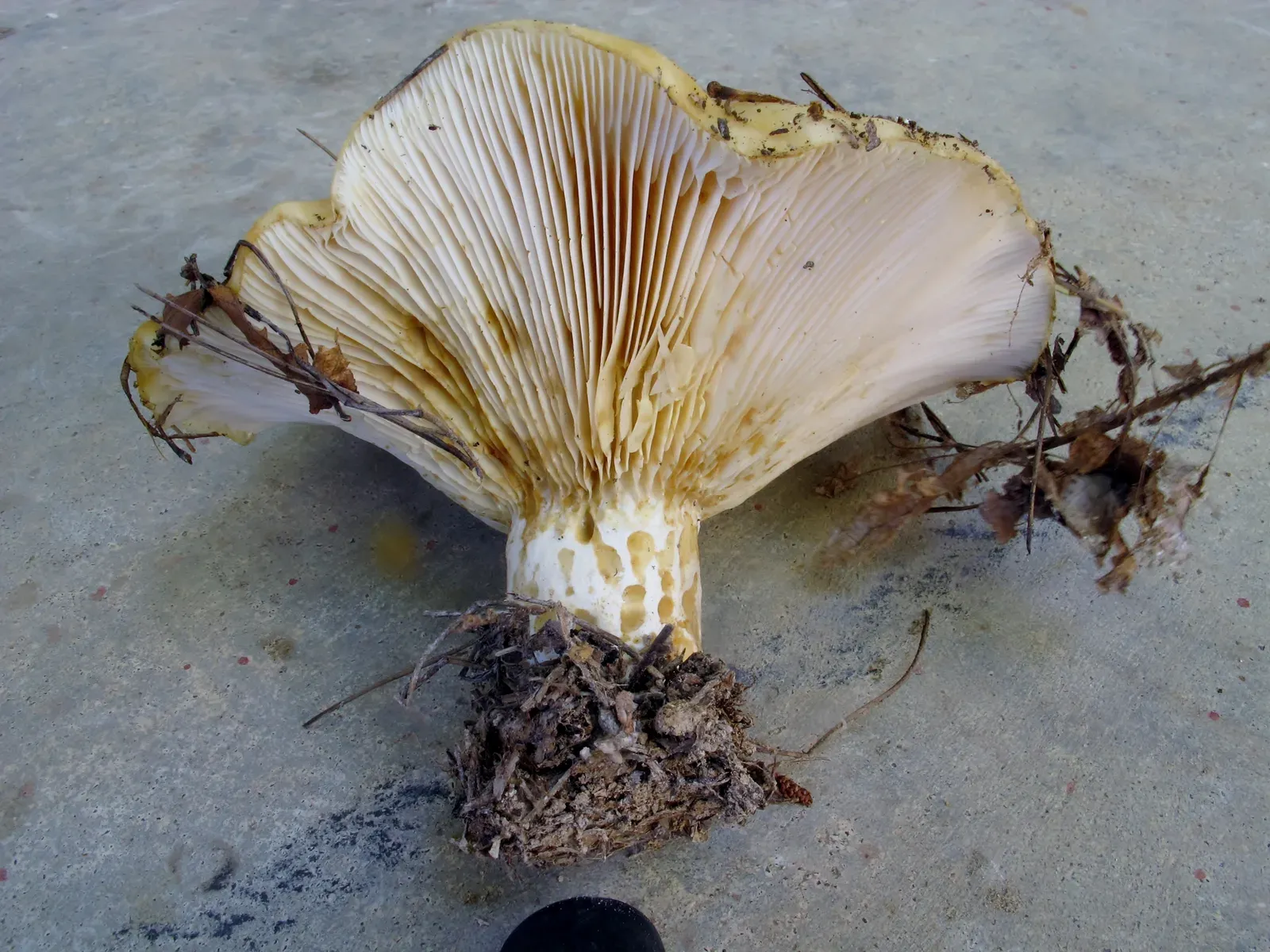
Milk caps stand a little apart from other mushrooms. People hardly ever fry or dry them — these are classic salting mushrooms that truly come into their own when brined. That's why foragers go after them on purpose, knowing where to look and when to start.
Let's look at when the milk cap season starts in Ukraine, which trees they hide under, and how not to walk right past them.
When to pick milk caps
The milk cap season kicks off in August, once the summer heat eases, and lasts all autumn — until October, when steady frosts set in. The peak falls in late August and September.
Like most mushrooms, milk caps depend on the weather: they need rain and cool nights. After a good August rain followed by a cool spell, milk caps come up all at once. Check the mushroom radar so you don't waste time on dry weather.
Where to look for milk caps
Milk caps form mycorrhiza with trees, so they are tied to particular kinds of forest.
- Lactarius resimus (the true white milk cap) loves birch — look for it in birch and mixed forests, often in groups, under fallen leaves.
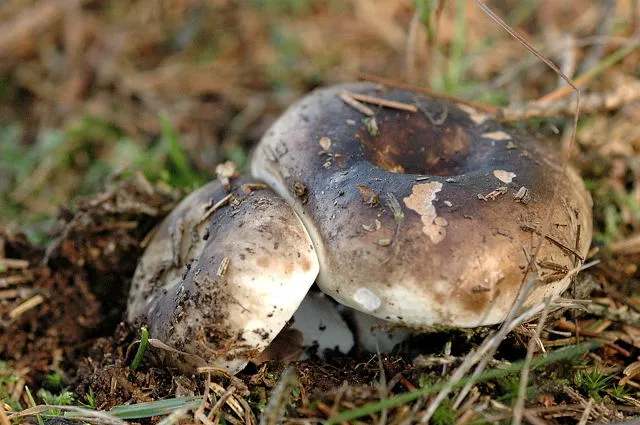
- Ugly milk cap also sticks to birches and turns up in mixed forests and along forest edges.
- Damp, shady spots. Milk caps love moisture — hollows, the edges of clearings, spots under dense canopy.
The tricky thing about milk caps is that they often hide under leaves and moss, with just the cap peeking out. Experienced foragers spot them by the telltale bumps in the leaf litter and check suspicious spots by hand.
How to recognize a milk cap
Milk caps are gilled mushrooms with a few distinctive features.
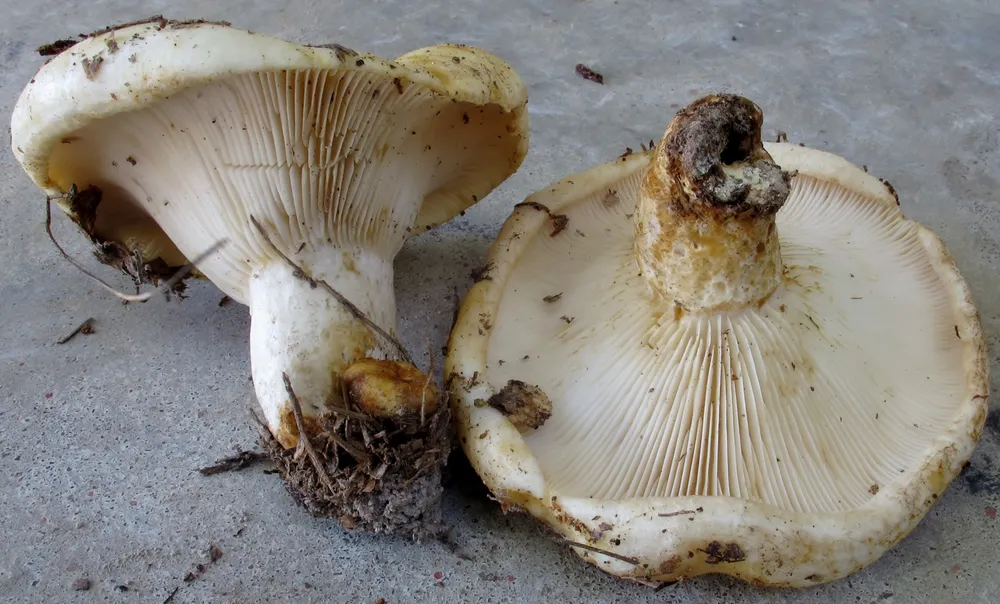
- Cap funnel-shaped, with a sunken center and an inrolled margin; in Lactarius resimus it often has faint concentric zones and a fringe along the edge.
- Milky juice. The key feature — when broken, the flesh releases an acrid whitish juice. It's precisely because of this bitterness that milk caps must be soaked before salting.
- Gills often run down the stem.
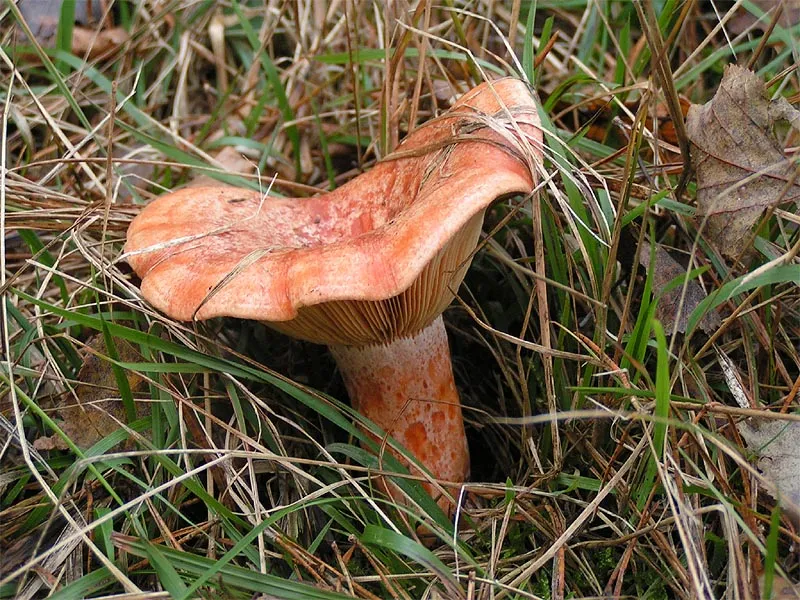
Because of the acrid juice, milk caps are not eaten fresh: they are soaked for several days, changing the water, and only then salted. The classic partner for milk caps is the saffron milk cap; we cover both in the article saffron milk caps and milk caps: mushrooms for salting.
What to watch out for
- Don't confuse them with porcini. Because the Ukrainian names sound alike, beginners sometimes go looking for a «white milk cap» when they actually mean porcini. These are completely different mushrooms — we've written about the difference between milk caps and porcini separately.
- Taste for bitterness carefully. Acrid milky juice is a normal feature of milk caps, and that's exactly why they need soaking.
- Pick young ones. Old milk caps are often wormy and soggy; firm young specimens are best for salting.
We have a separate article about the ugly milk cap with its dense dark cap — it's one of the best mushrooms for brining.
Sources
- «Key to the Fungi of Ukraine» (Kyiv, Naukova Dumka publishing house).
- Lactarius resimus in GBIF, the Global Biodiversity Information Facility.
- Lactarius in MycoBank, the international fungal nomenclature database.
- Milk-cap on Wikipedia.
Frequently asked questions
When should you pick milk caps?
The milk cap season starts in August and lasts until October, when steady frosts set in. The peak is late August and September.
Where do milk caps grow?
Mostly in birch and mixed forests, since milk caps form mycorrhiza with birch. They love damp, shady spots and often hide under fallen leaves.
Which trees should you look under for milk caps?
Birches first and foremost. Lactarius resimus and the ugly milk cap stick to birches and also turn up in mixed forests and along forest edges.
How do you recognize a milk cap?
By the funnel-shaped cap with an inrolled margin and, above all, by the acrid whitish milky juice that oozes out when it's broken. Because of it, milk caps are soaked before salting.
Why do milk caps need soaking?
Their milky juice is bitter and acrid. To get rid of the bitterness, milk caps are soaked in water for several days, changing it regularly, and only then salted.
Can you fry milk caps?
Milk caps are salting mushrooms; they aren't cooked fresh because of their bitterness. After soaking they are most often salted, less often pickled.
Are milk caps and porcini the same thing?
No. The «white milk cap» is a gilled mushroom for salting, while porcini is a pored bolete. People mix them up only because the Ukrainian names sound alike.
How do you find milk caps hiding under leaves?
Look for the telltale bumps in the leaf litter and check suspicious spots by hand — milk caps often barely peek out from under leaves and moss.
Mushrooms in this article
Related articles
 Recipes & cooking
How to store fresh mushrooms, and for how long
Fresh mushrooms spoil faster than you might think. Here's how long they keep in the fridge, how to store them…
August 21, 2026·4 min How to identify
Truffles in Ukraine: do they grow here, and where to look
Truffles aren't just a French delicacy. Several species grow in Ukraine too. Here's which ones, where they occ…
August 24, 2026·2 min Recipes & cooking
How long to boil mushrooms
Boiling time depends on the type of mushroom and on what you're cooking next. Here's a clear cheat sheet: how…
August 22, 2026·4 min