Lactarius resimus
Expert-verifiedUpdated October 3, 2026
Passport
- Edibility
- Conditionally edible
- Season
- Jul — Sep
- Hymenophore
- Gilled
- Cap color
- White
- Size
- Large (over 15 cm)
- Smell
- Fruity
- Reviewed
- Yes ✓
Quick answers
Where to look?
Deciduous forest, Mixed forest
When does it appear?
Jul — Sep
Active months: July, August, September.
How to recognize it? Three signs
- Cap color: White, Cream
- Cap shape: Funnel-shaped, Concave
- Smell: Fruity
Fruiting season
July – September
Description
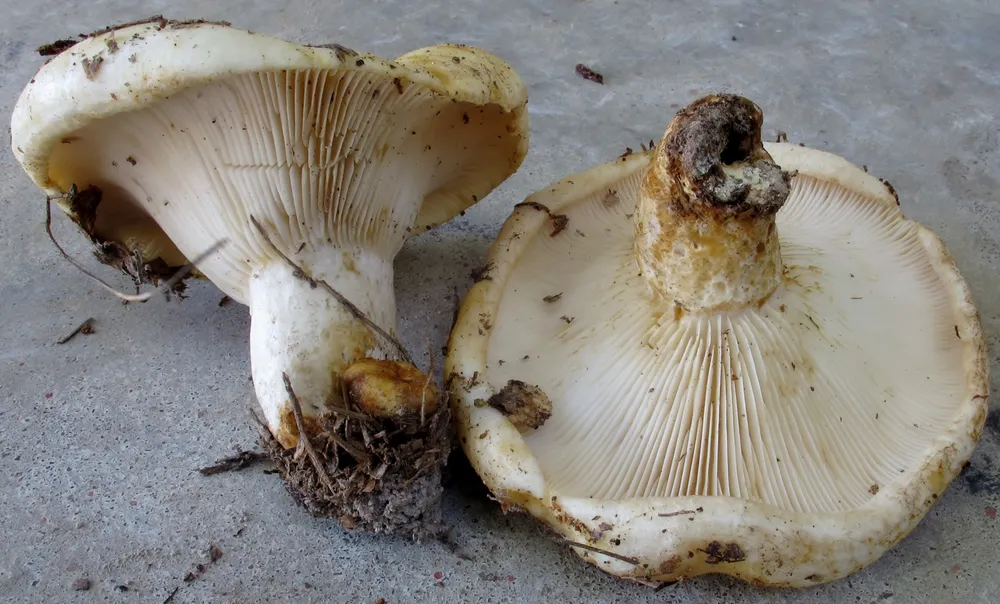
Lactarius resimus is a prized conditionally edible mushroom, especially popular in the Slavic culinary tradition for salting. It grows in birch and birch-spruce forests, forming mycorrhiza with elm.
Its hallmark is the thick white milk that oozes when the flesh is damaged. The mushroom is conditionally edible: fresh, it is acrid and bitter, and fit to eat only after prolonged soaking (2–3 days, changing the water) or salting.
The gold standard for cold salting: fermented milk caps take on a crunchy texture and a piquant, tangy, sour-milk flavor.
Cap
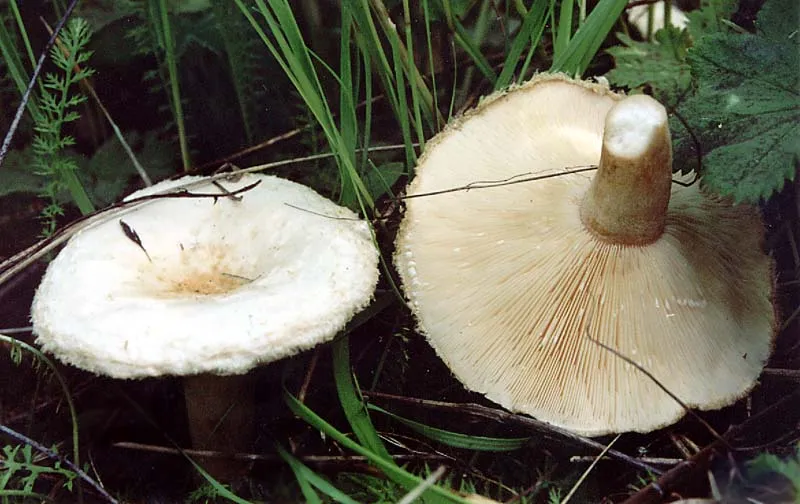
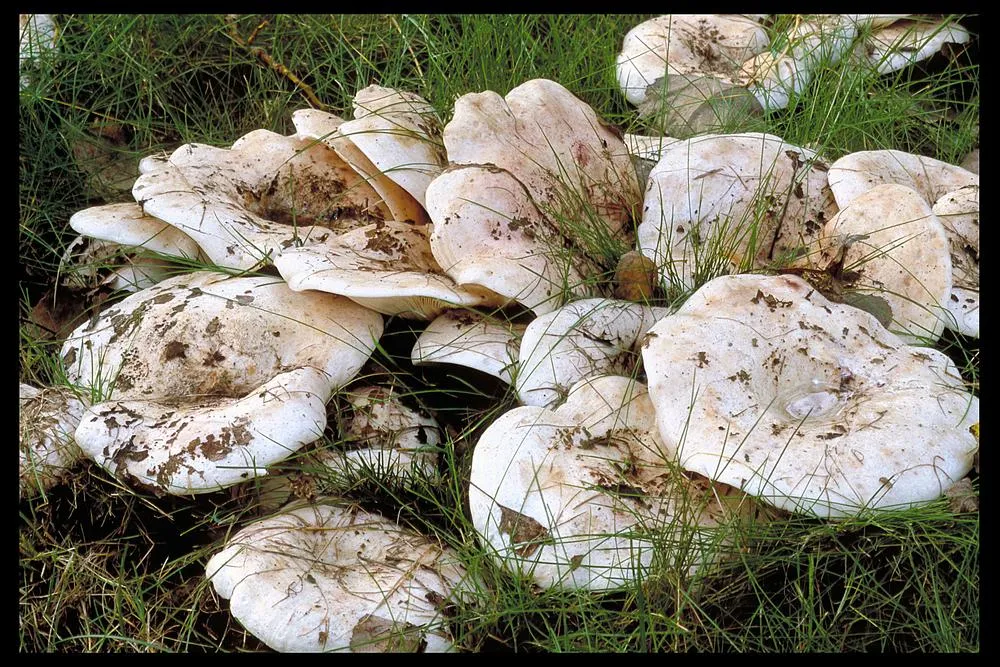
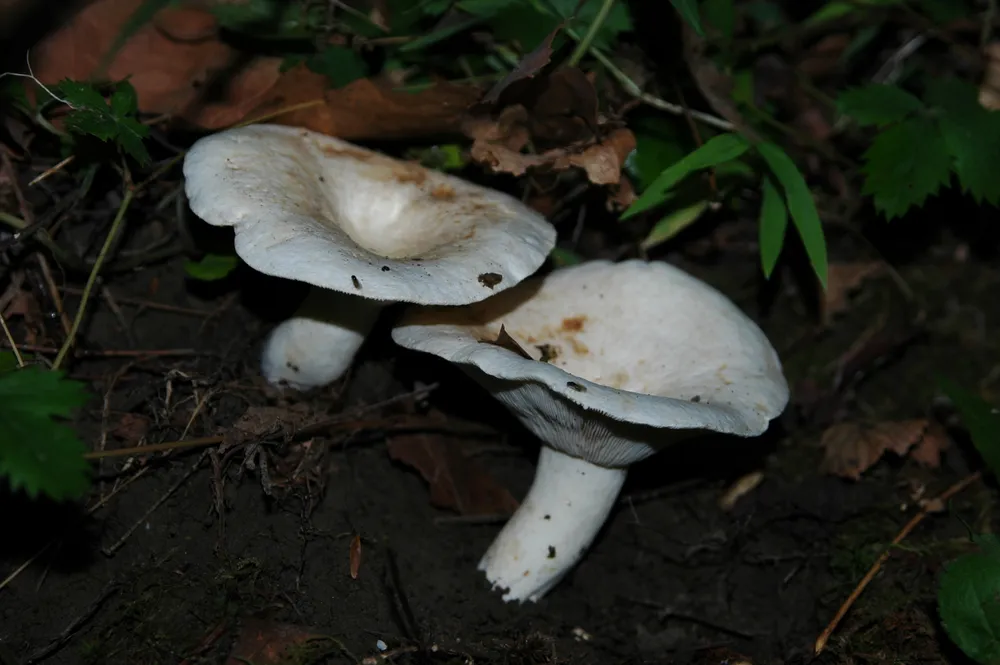
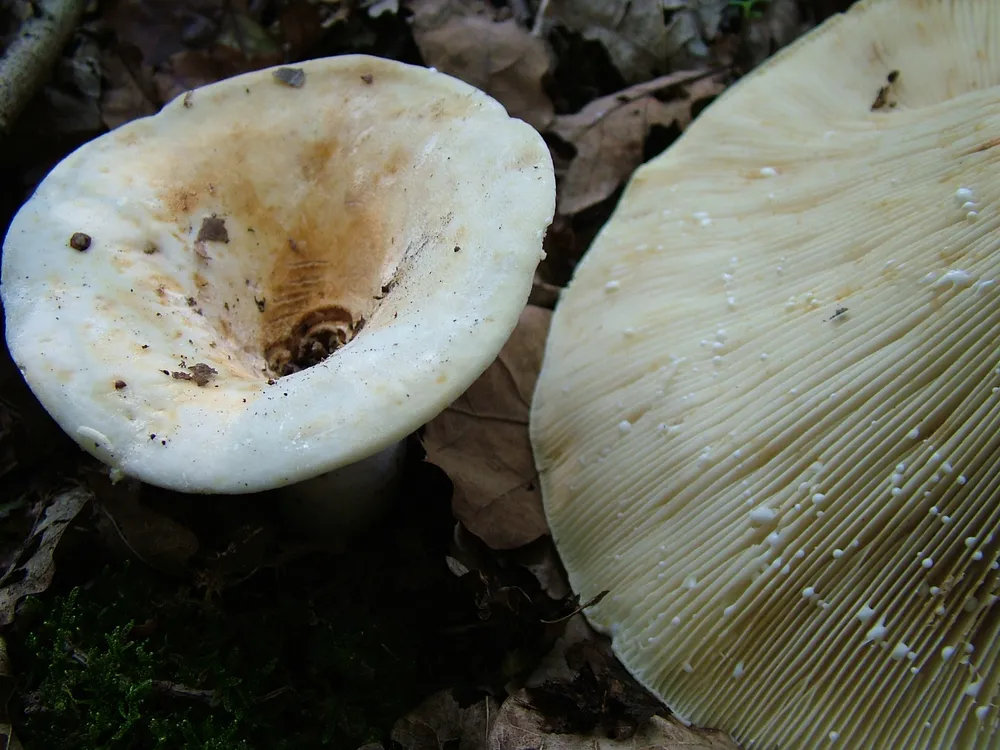
Cap 8–20 cm across, convex or flat in young mushrooms, then funnel-shaped. The surface is smooth or slightly sticky, white or creamy white, and may have yellowish concentric zones. The margin is inrolled and fluffy, fringed with white hairs — a hallmark of the species.
Hymenophore
Gills crowded, narrow, decurrent, white or cream. When damaged they release abundant white milk that doesn't change color in the air (unlike some related species). The bitter milk is the reason soaking is a must.
Stem
Stem 3–7 cm tall, 2–4 cm thick, firm, solid (hollow in old mushrooms), cylindrical or narrowing toward the base. White or slightly yellowish in color, smooth. No ring and no volva.
Flesh
Flesh firm, brittle, white. When damaged it releases plenty of white, hot milk with a very acrid taste. After proper soaking or salting, the acridity disappears completely.
Smell
Smell fresh, pleasant, slightly fruity or with notes of fresh flour. The characteristic “milk cap” aroma, familiar to anyone who has ever salted them — unobtrusive and pleasant even when raw.
Lookalikes
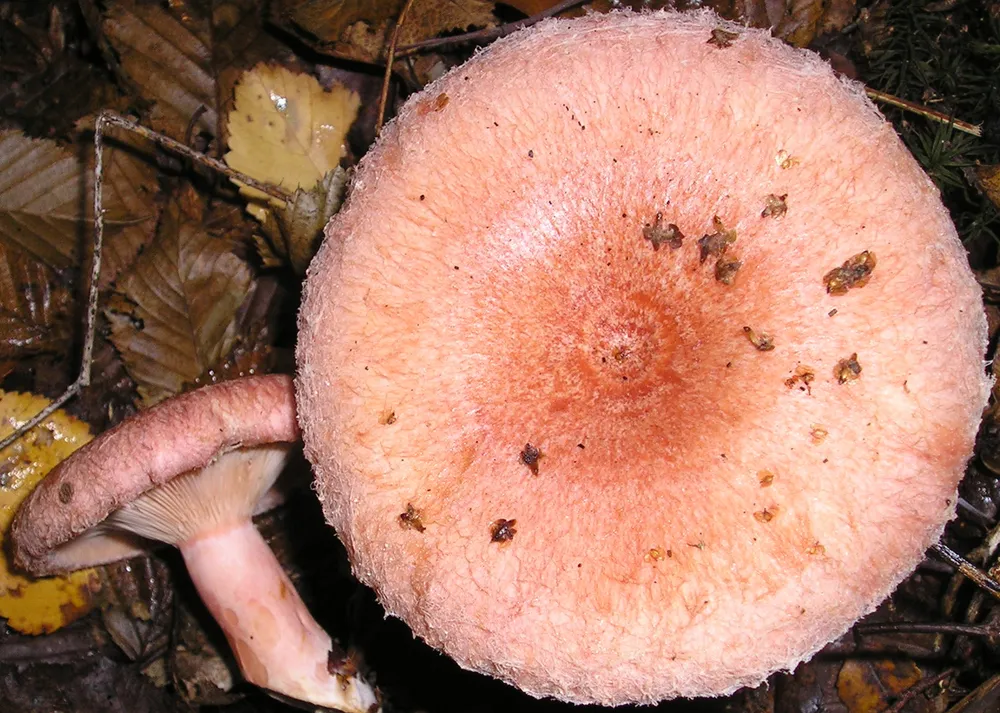
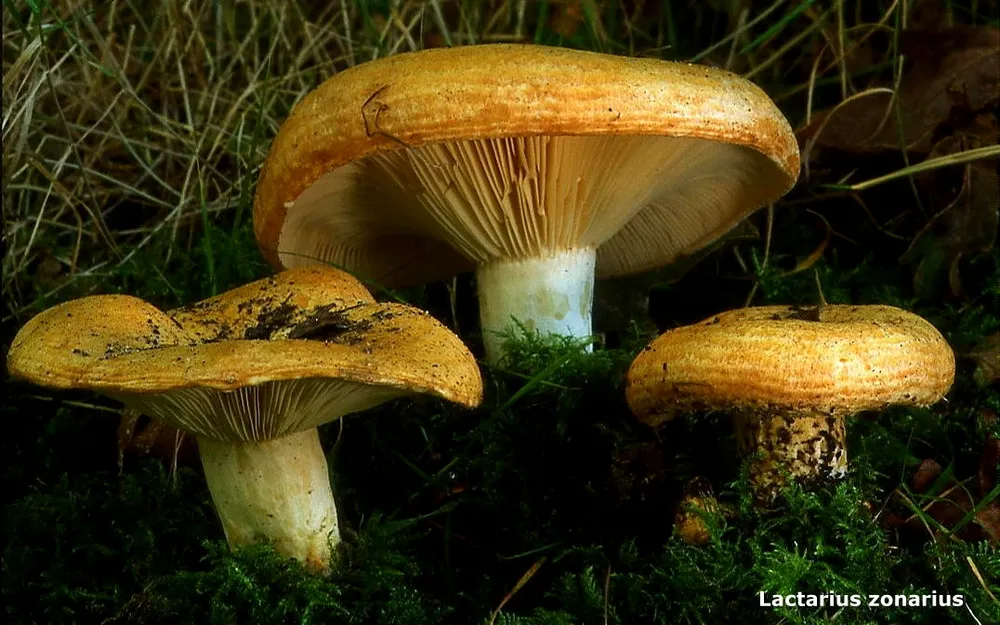
Related species
Mushrooms of the same genus and habitat — to study side by side and never mix up.

Coconut milk cap
Lactarius glyciosmus
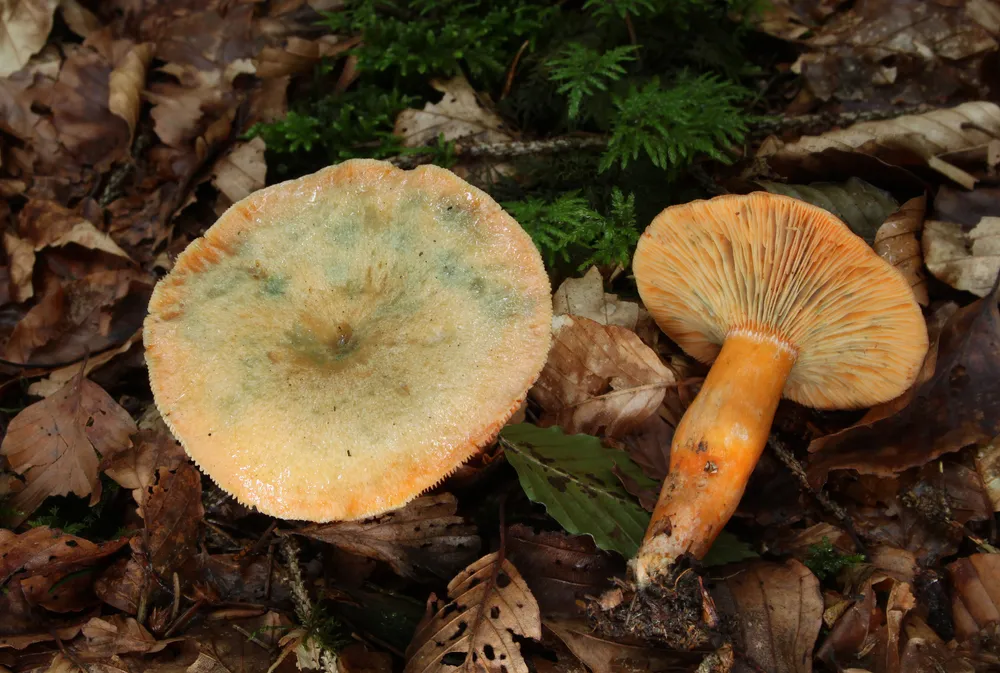
False saffron milk cap
Lactarius deterrimus
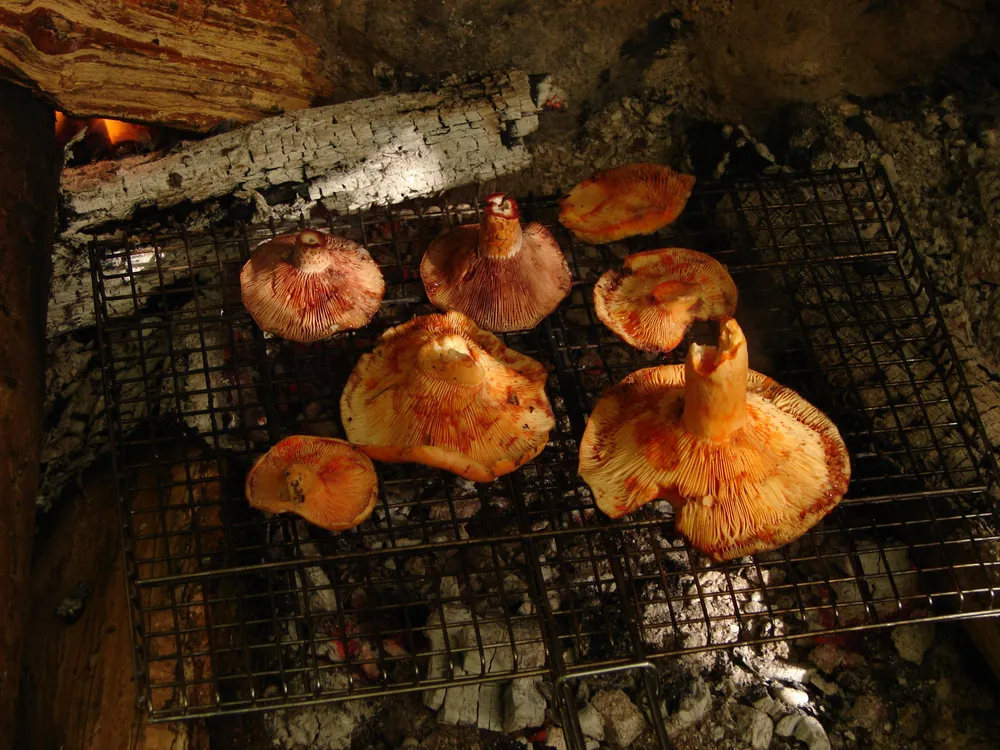
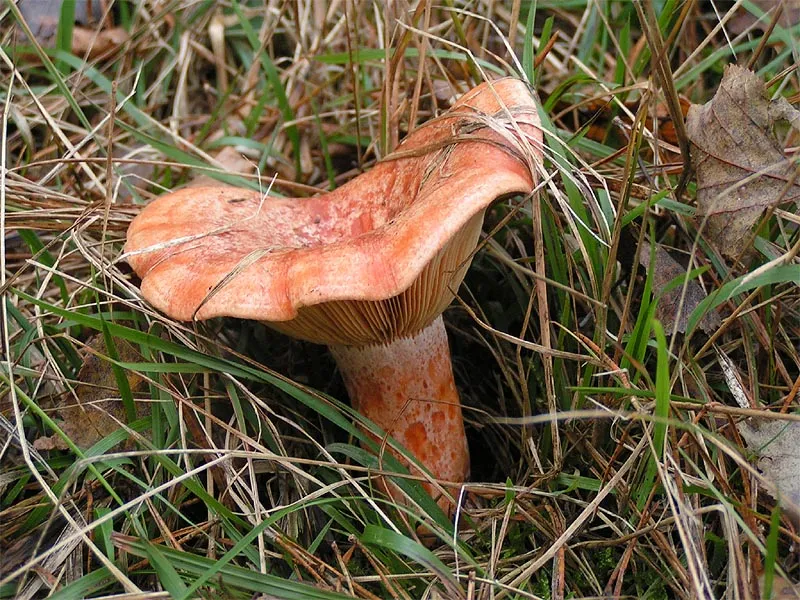
Lactarius salmonicolor
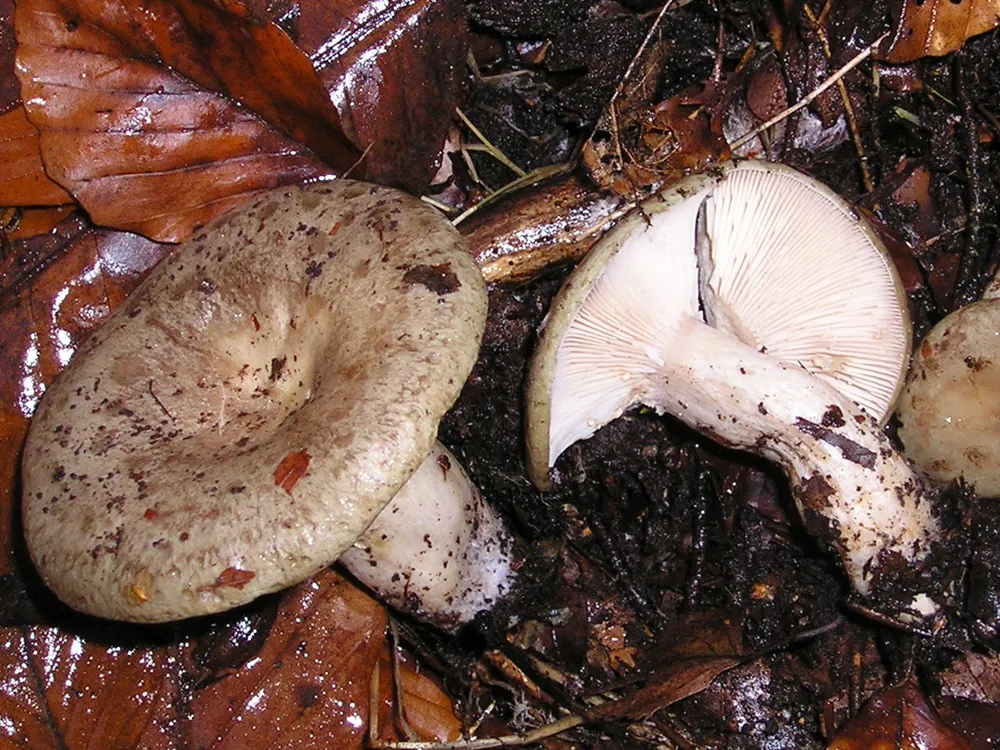
Beech milk cap
Lactarius blennius
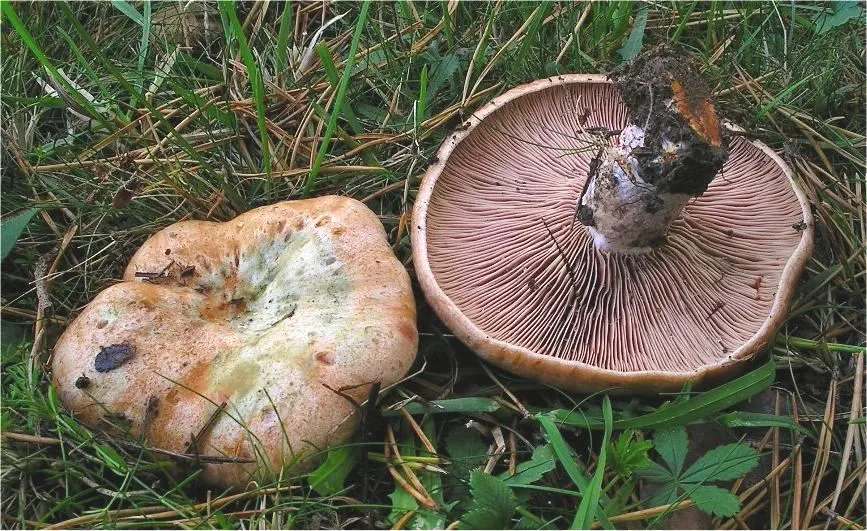
Bloody milk cap
Lactarius sanguifluus
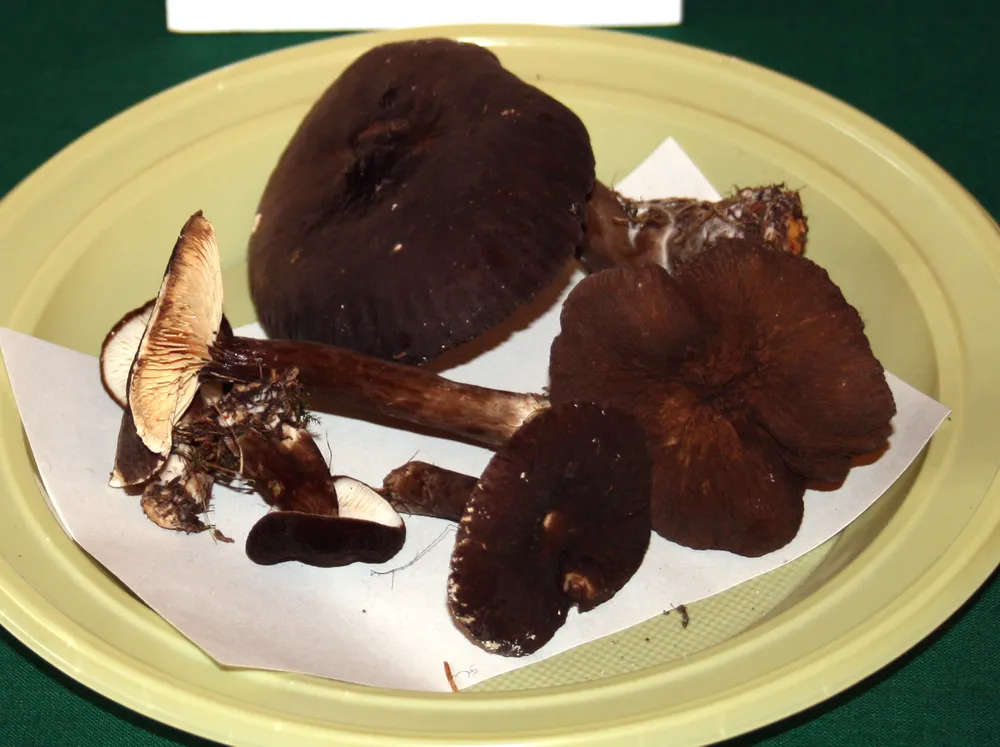
Chocolate milky
Lactarius lignyotus
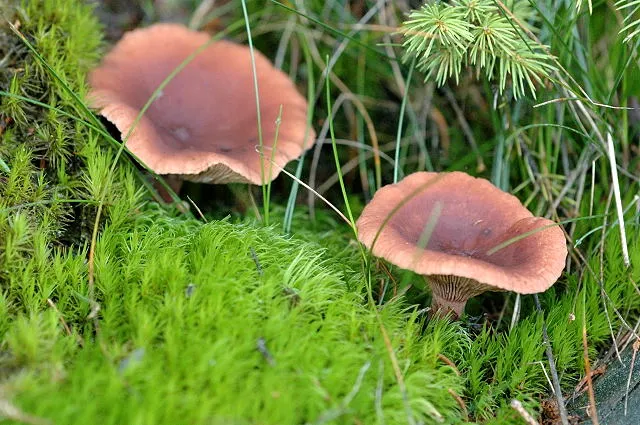
Curry milk cap
Lactarius camphoratus
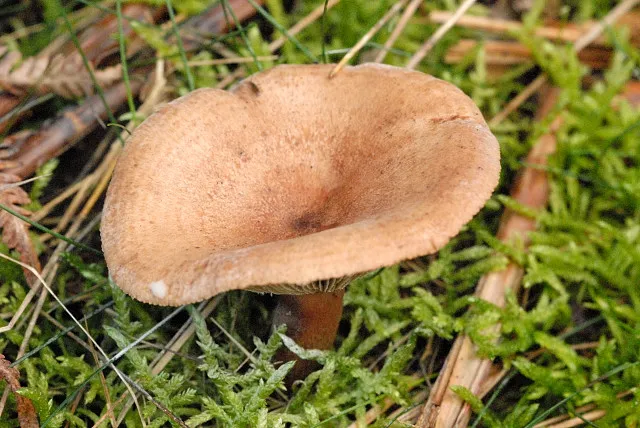
Fenugreek milk cap
Lactarius helvus
Related reading
 How to identify
Saffron milk cap: when it appears, where to look, and how to tell it apart
The saffron milk cap is one of the tastiest mushrooms for salting, and you can salt it almost raw. Here's when…
August 5, 2026·3 min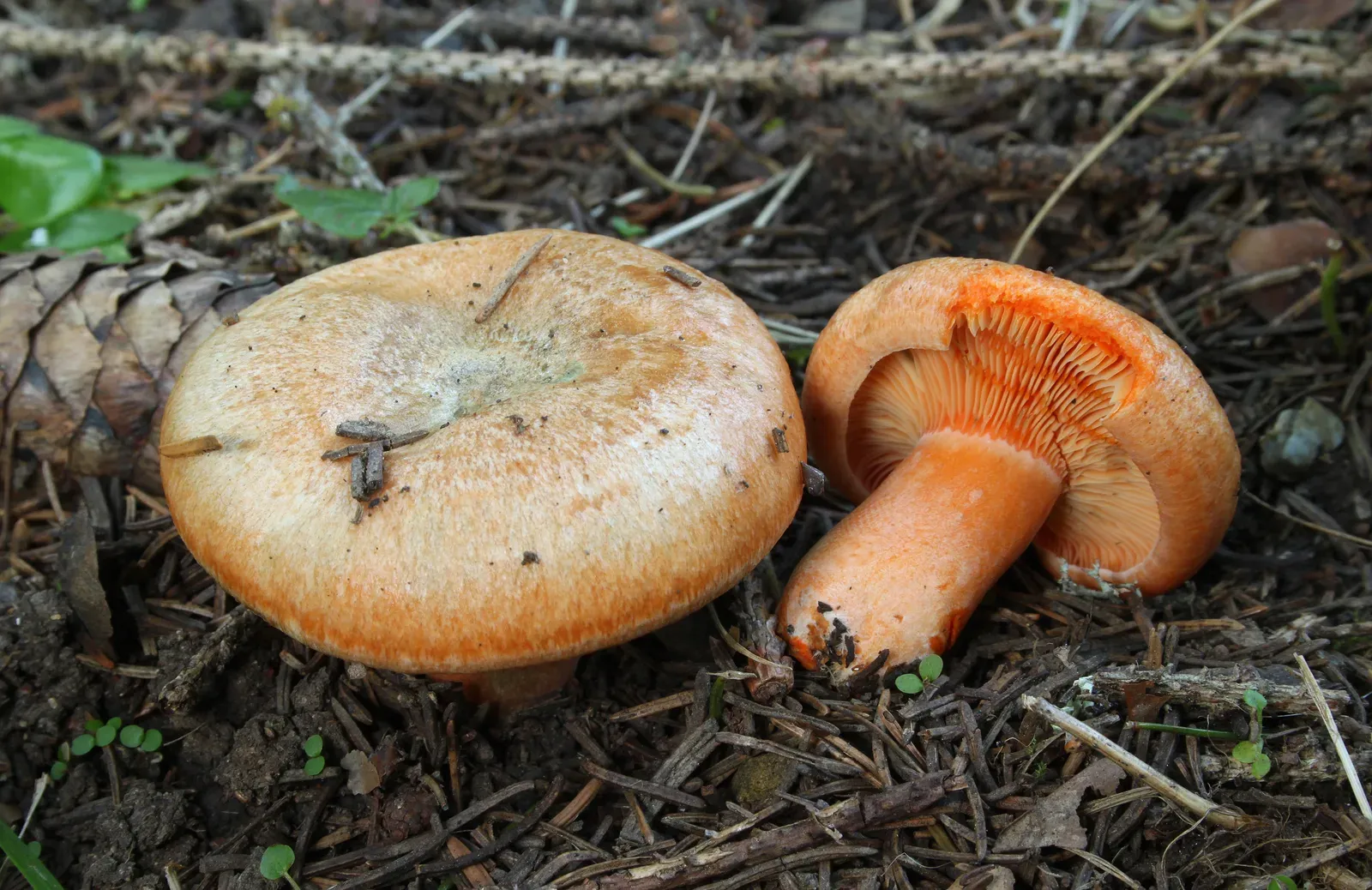 Safety
Saffron milk cap lookalikes: woolly milk cap, milk caps, and other Lactarius
The saffron milk cap gets confused with other Lactarius species — the woolly milk cap, milk caps and bitter re…
July 20, 2026·2 min Where & when to forage
What mushrooms to pick in September in Ukraine
September is the forager's golden season: honey fungus comes up en masse, porcini and bay boletes give a secon…
July 13, 2026·3 min
Frequently asked questions
Is Lactarius resimus edible or poisonous?
Does Lactarius resimus have gills or pores?
What does the cap of Lactarius resimus look like?
What does the stem of Lactarius resimus look like?
What do Lactarius resimus smell and taste like?
Where does Lactarius resimus grow?
Which trees does Lactarius resimus grow under?
When should you pick Lactarius resimus?
What can Lactarius resimus be confused with?
How do you cook Lactarius resimus?
Can you dry Lactarius resimus?
What is the scientific name of Lactarius resimus?
Sources
- [1]Атлас грибів України, Зеров Д.К. (1979)
- [2]GBIF