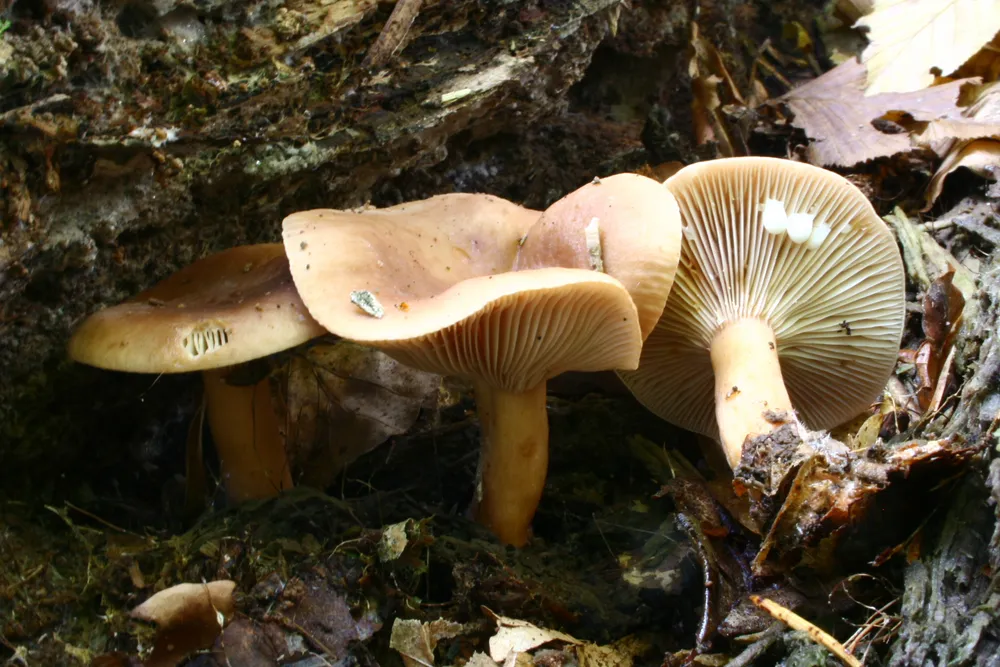
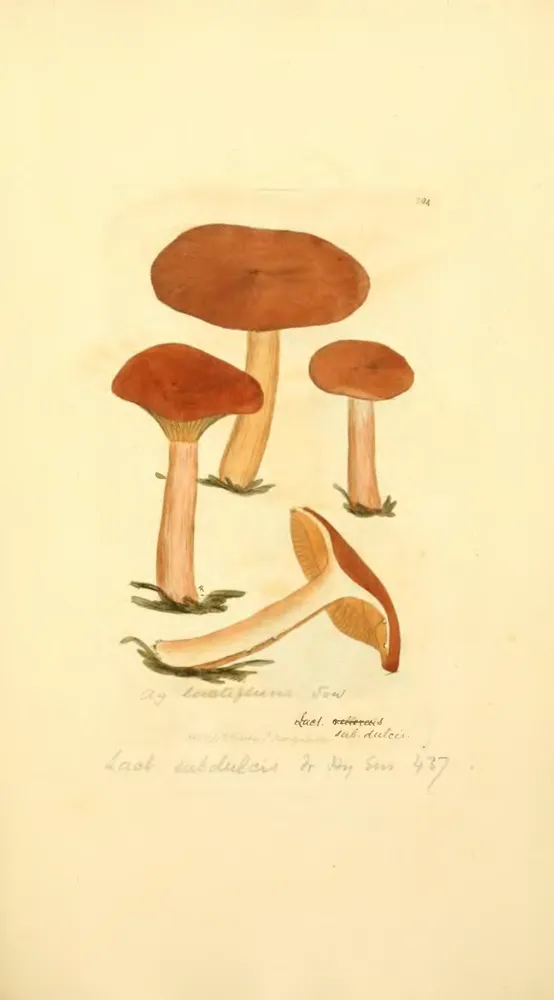
Mild milk capLactarius subdulcis
Expert-verifiedUpdated October 3, 2026
Passport
- Edibility
- Edible
- Season
- Jul — Oct
- Hymenophore
- Gilled
- Cap color
- Red
- Size
- Small (up to 5 cm)
- Smell
- Pleasant
- Reviewed
- Yes ✓
Quick answers
Where to look?
Deciduous forest, Mixed forest
When does it appear?
Jul — Oct
Active months: July, August, September, October.
How to recognize it? Three signs
- Cap color: Red, Brown, Orange
- Cap shape: Umbonate
- Smell: Pleasant
Fruiting season
July – October
Description
The mild milk cap is a small reddish-brown milk cap with a smooth matte cap and gentle, even sweetish milk, which is unusual for this group. Unlike the “regular” milk caps with their burning white milk, L. subdulcis has bland milk with a faintly sweet or slightly bitterish note — hence the scientific name subdulcis (“somewhat sweet,” almost sweet).
This is an edible mushroom that needs no special treatment — you can fry it, stew it, or add it to soups without boiling it first. In the kitchen it's considered mediocre: the flavor is unremarkable, and the flesh is thin and brittle, so in a dish it often “dissolves” among other mushrooms. In the folk cooking of the Carpathians and Polissia, people gather it to mix in with more aromatic species rather than as a main dish.
In Ukraine it grows throughout the forest zone, especially in the beech and beech-fir forests of the Carpathians and Prykarpattia, and more rarely in Polissia. The season is July–October; it fruits in small groups, often on moss or in the litter under old beeches. It's especially plentiful in a wet summer.
Cap
Cap 2-5 (rarely up to 7) cm, convex at first with a small bump in the center, then flattened and finally with a depressed center. Often with a noticeable umbo in the center, which sets it apart from other small milk caps. Color reddish-brown, flesh-brick, fading with age. Surface dry, smooth, matte, without zones.
Hymenophore
Gilled hymenophore. Gills crowded, narrow, adnate or slightly decurrent. Color pale cream to flesh-pink, darkening with age. When damaged, they release watery white milk. Spore print cream.
Stem
Stem 3-6 cm tall, 0.4-0.8 cm thick, slender, cylindrical or slightly tapering toward the base, hollow in mature specimens. Same color as the cap or a little lighter. Surface smooth, no ring and no volva.
Flesh
Flesh thin, tender, brittle, reddish-brown, does not change color when cut. The milk is whitish, clear and watery, sparse, and does not change color or turn yellow on exposure to air.
Smell
Smell faint, mushroomy; in some specimens slightly pleasant with a fruity note. Taste of the raw flesh and milk — mild, faintly sweetish, with no burning and no bitterness (sometimes with a faintly bitterish aftertaste in mature specimens). This is the most characteristic feature of the species.
›Scientific synonyms (4)
Agaricus lactifluus var. subdulcis Pers., Agaricus subdulcis Pers., Galorrheus subdulcis (Pers.) P. Kumm., Lactifluus subdulcis (Pers.) Kuntze
Lookalikes
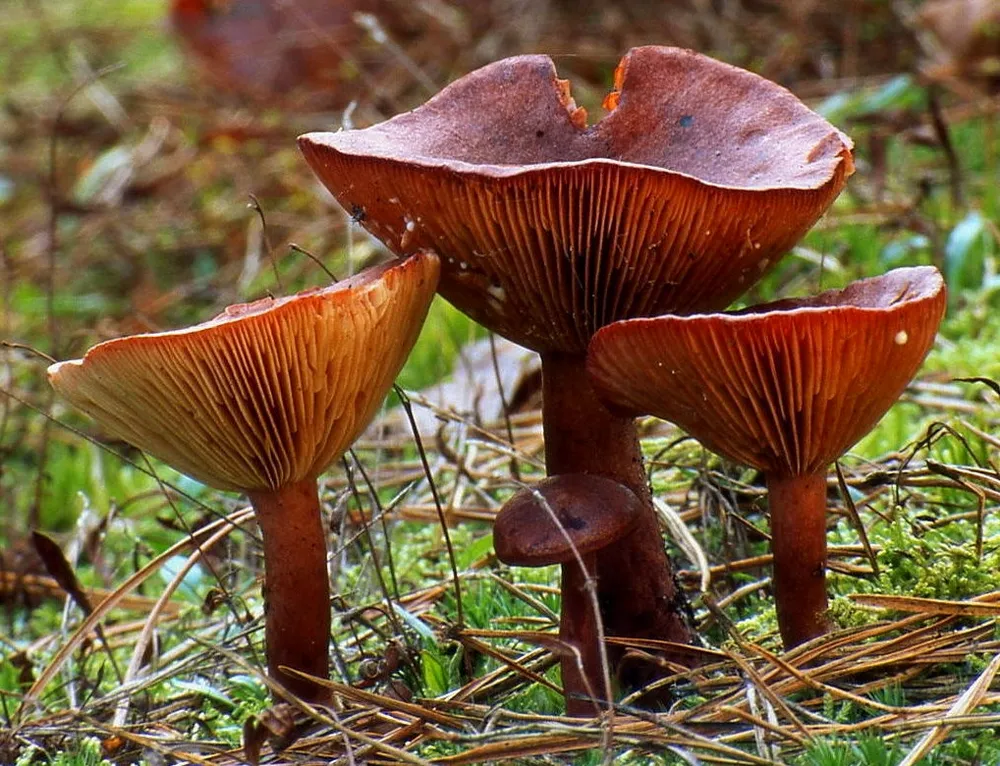
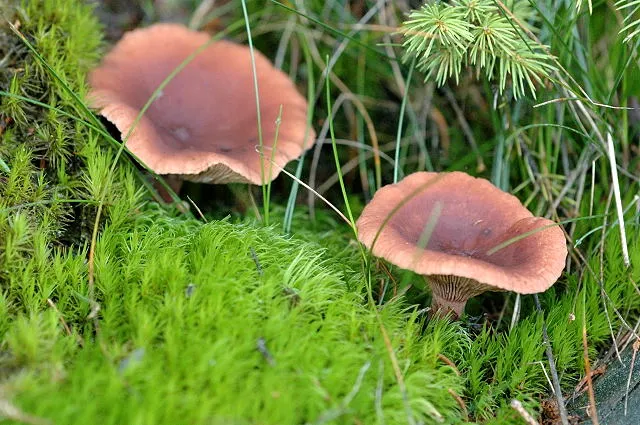
Related species
Mushrooms of the same genus and habitat — to study side by side and never mix up.
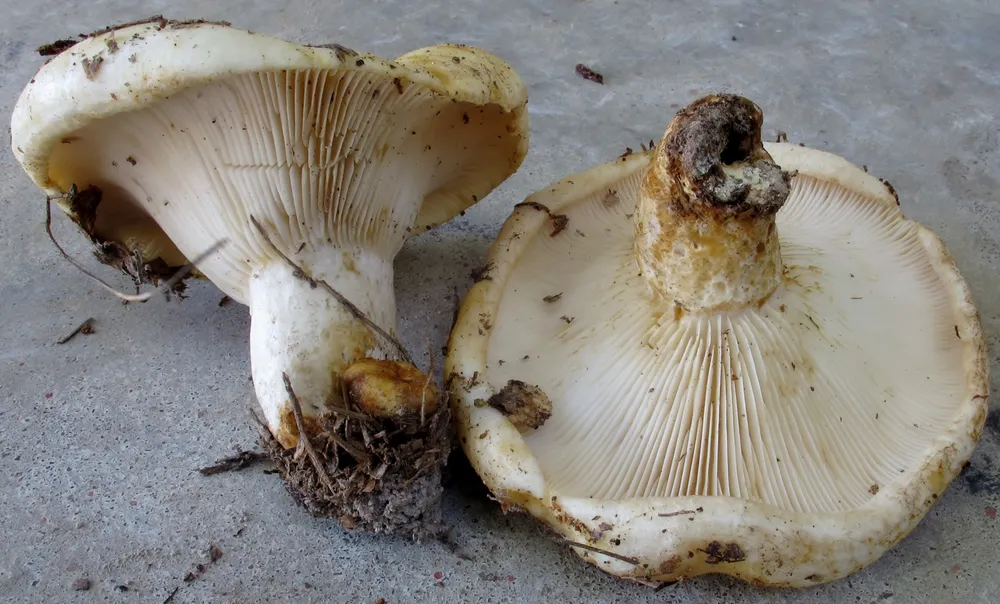
Lactarius resimus

Coconut milk cap
Lactarius glyciosmus
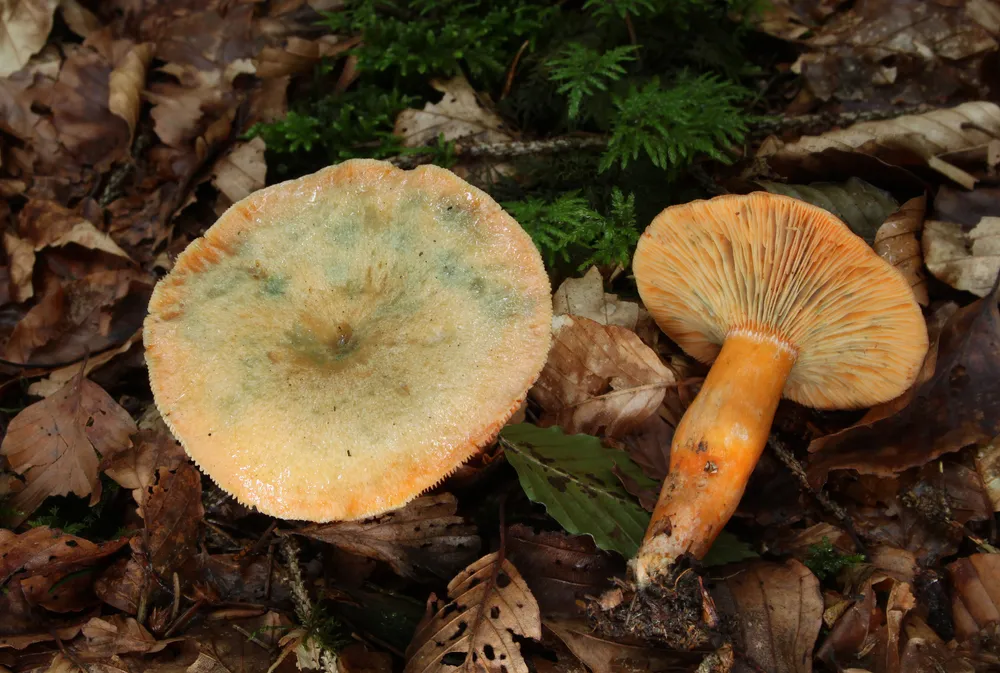
False saffron milk cap
Lactarius deterrimus
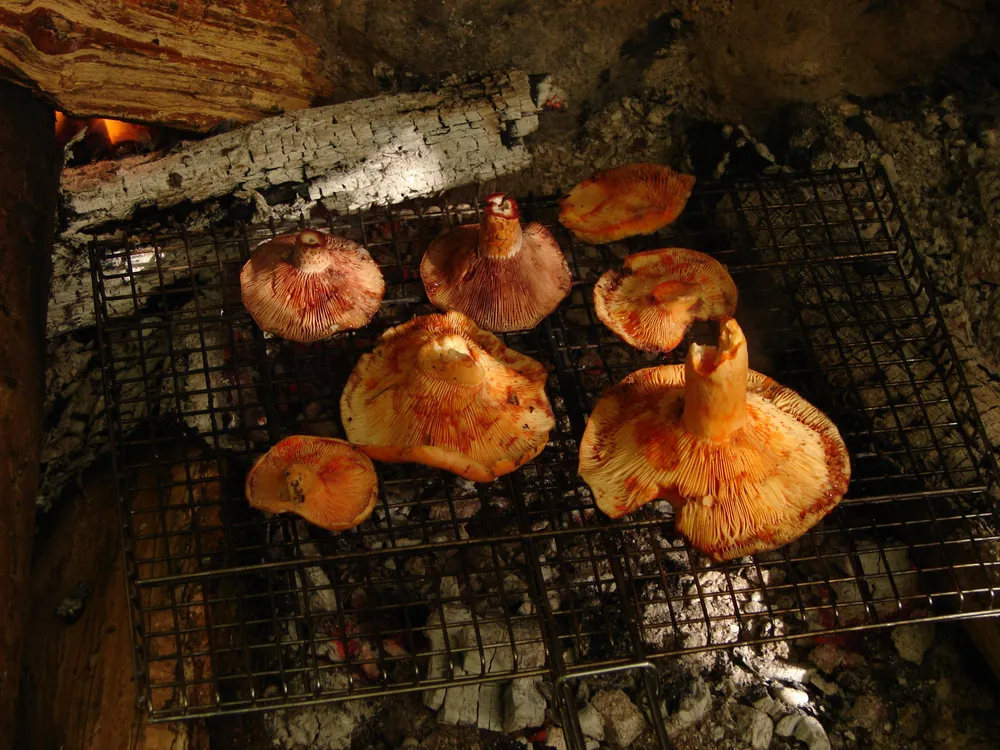
Lactarius salmonicolor
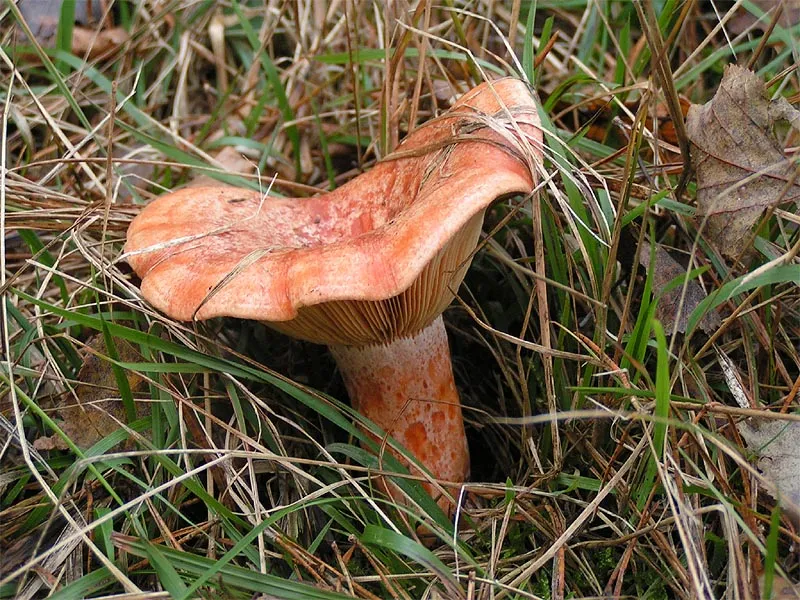
Saffron milk cap
Lactarius deliciosus
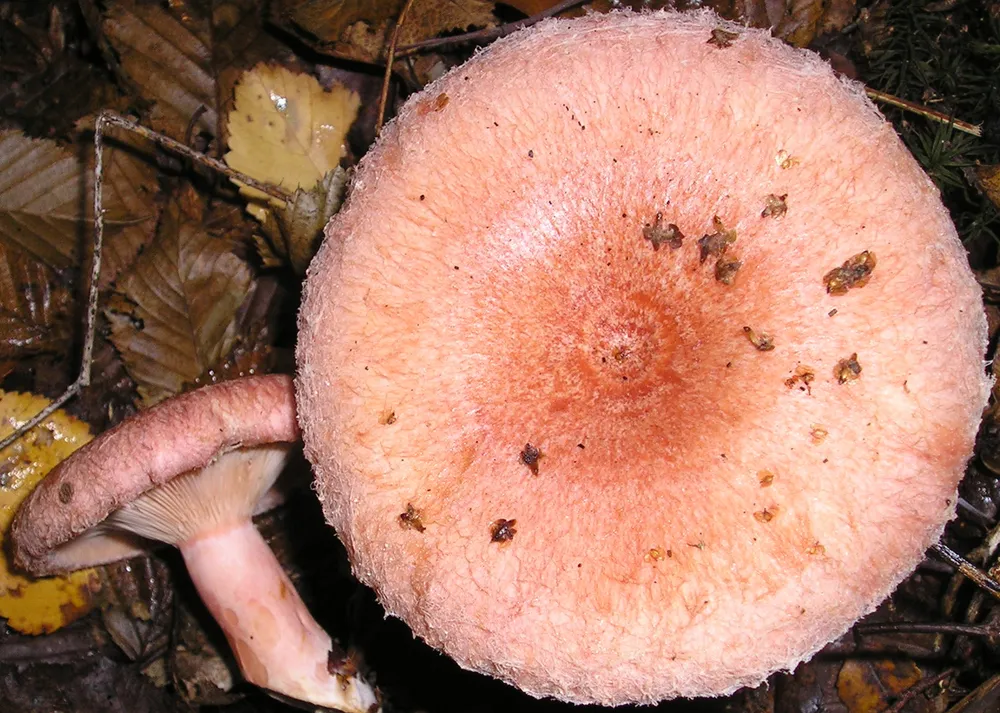
Woolly milk cap
Lactarius torminosus
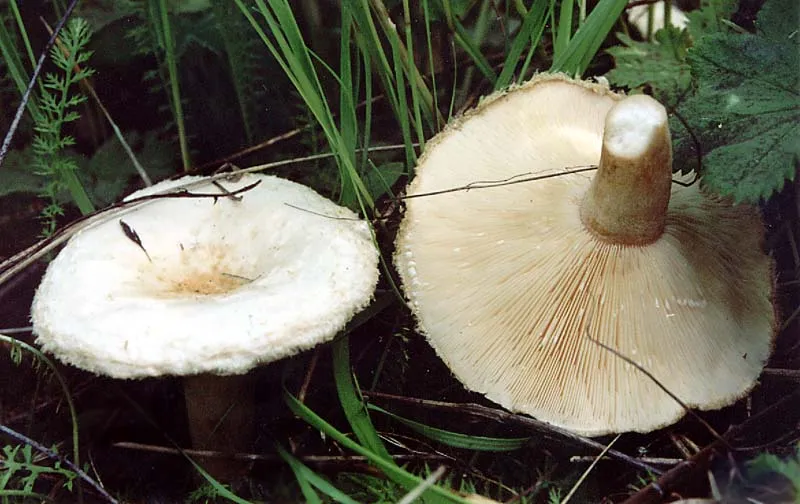
Bearded milk cap
Lactarius pubescens
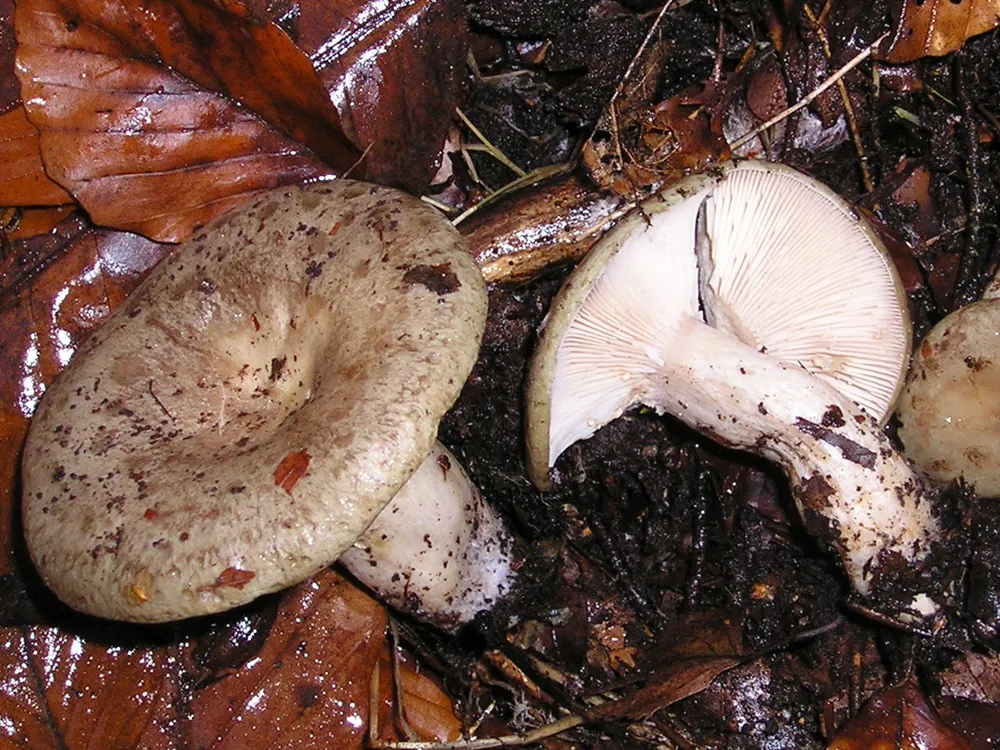
Beech milk cap
Lactarius blennius
Frequently asked questions
Can you eat it without any treatment?
Yes — unlike the “classic” milk caps with burning milk, this species is edible without soaking. You can fry it, stew it, or add it to soups. It's not very interesting in the kitchen — the flavor is unremarkable, so people gather it mainly to mix in with other mushrooms.
Why do some field guides call it inedible?
Because of its small size and unremarkable flavor — it has almost no culinary value. On top of that, mature specimens can develop a bitterish aftertaste that spoils the impression. So sources disagree on how to classify it: some say “edible,” others “inedible” (because of the taste, not toxicity).
Where does it grow?
Mainly in beech and beech-fir forests, more rarely under oak, hornbeam, and birch. It likes mossy “carpets,” forest edges, and well-lit clearings. In Ukraine — the Carpathians and Prykarpattia, more rarely the western forest-steppe and Polissia.
Which trees does it form mycorrhiza with?
Mainly beech — it's an obligate partner of European beech. To a lesser extent with other broadleaf trees (oak, hornbeam, birch, hazel) and with spruce in mixed forests. It doesn't occur in purely coniferous forests.
When should you look for it?
July–October. Peak fruiting is August–September after rain. One of the most “summery” milk caps — it starts as early as July, unlike many others that only appear from August.
How do you recognize it?
Three features together: 1) a small reddish cap with a bump; 2) mild, non-burning milk; 3) growth under beech or in beech forests. If you touch your tongue to the cut and feel no sharp pepper — it's almost certainly subdulcis or a close relative.
What is it confused with?
With the rufous milk cap (L. rufus) — its milk is very burning, and it grows under pines. With the oakbug milk cap (L. quietus) — it's a bit larger, with a distinct “oily” smell, and grows under oaks. With the curry milk cap (L. camphoratus) — it has a strong chicory smell. Smell + taste of the milk are the keys.
Are the lookalikes dangerous?
There are no seriously poisonous lookalikes in this group. As always with milk caps, the main check is the taste of the milk on your tongue (mild = safe to taste, burning = only for salting after treatment) and the color of the milk (white = fine, colored = the separate group of saffron milk caps).
Is Mild milk cap edible or poisonous?
Does Mild milk cap have gills or pores?
What does the cap of Mild milk cap look like?
What does the stem of Mild milk cap look like?
Sources
- [1]Вікіпедія (українська)
- [2]Атлас грибів України, Зеров Д.К. (1979)
- [3]MycoBank Database
- [4]Index Fungorum
- [5]GBIF
- [6]iNaturalist Ukraine