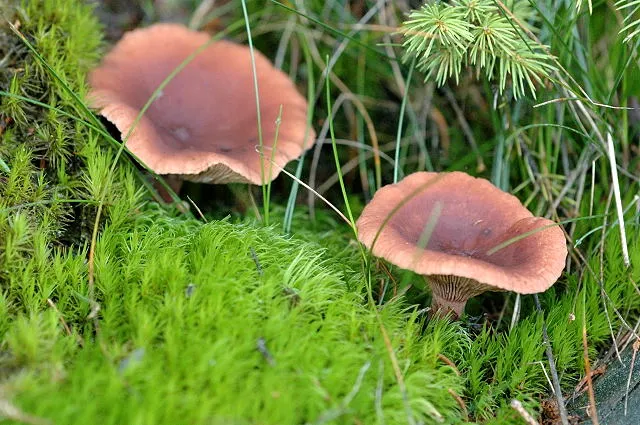
Curry milk capLactarius camphoratus
Expert-verifiedUpdated October 3, 2026
Passport
- Edibility
- Inedible
- Season
- Jul — Oct
- Hymenophore
- Gilled
- Cap color
- Red
- Size
- Small (up to 5 cm)
- Smell
- Pleasant
- Reviewed
- Yes ✓
Quick answers
Where to look?
Conifer forest, Mixed forest
When does it appear?
Jul — Oct
Active months: July, August, September, October.
How to recognize it? Three signs
- Cap color: Red, Brown, Dark brown
- Cap shape: Umbonate
- Smell: Pleasant
Fruiting season
July – October
Description
The Curry milk cap is a small burgundy-chestnut milk cap with a truly unique trait: a strong smell of dried chicory, burnt sugar or caramel that appears as it dries. Fresh, the smell is faint, but dried fruiting bodies smell so intense that in some countries they're used as a seasoning — added to soups, stews and marinades for “smoky” notes.
As a mushroom to eat on its own, the Curry milk cap isn't interesting: small, thin, with no distinct flavor once cooked. That's why all modern field guides list it as inedible or “of no culinary value”. But as a dried seasoning it's a different story: ground into powder, it replaces a stock cube in vegetarian cooking, because it adds a deep mushroom-caramel umami.
In Ukraine it grows throughout the forest zone in damp conifer and mixed forests, especially in Polissia, the Carpathians and Prykarpattia. It loves mossy “carpets”, boggy patches and hollows around the roots of old trees. The season runs July–October; it fruits often, but in small groups.
Cap
Cap 2-5 cm, convex at first with a small bump in the center, then flattened with a depressed center, sometimes with a barely visible umbo in mature specimens. Color chestnut-brown, burgundy-brown, dark red, fading with age to rusty brown. Surface dry, finely wrinkled, slightly sticky in wet weather.
Hymenophore
Gills. The gills are crowded, narrow, adnate or slightly decurrent. Same color as the cap or a little lighter — reddish brown. When damaged they exude watery white milk. Spore print cream.
Stem
Stem 3-6 cm tall, 0.3-0.7 cm thick, slender, cylindrical, often tapering downward, hollow in mature specimens. Same color as the cap — chestnut or slightly lighter. Surface smooth, with no ring and no volva.
Flesh
Flesh thin, delicate, reddish brown, does not change color when cut. The milk is watery, translucent white, sparse, and does not turn yellow as it dries. Dried, the mushroom barely shrivels.
Smell
A distinct smell of dried chicory, burnt sugar or caramel — it appears mostly as the mushroom dries. Fresh, the smell is faint. This is the most characteristic diagnostic feature of the species. The flesh tastes mild, faintly sweetish, not acrid.
›Scientific synonyms (1)
Elasmomyces camphoratus Singer & A.H. Sm.
Lookalikes
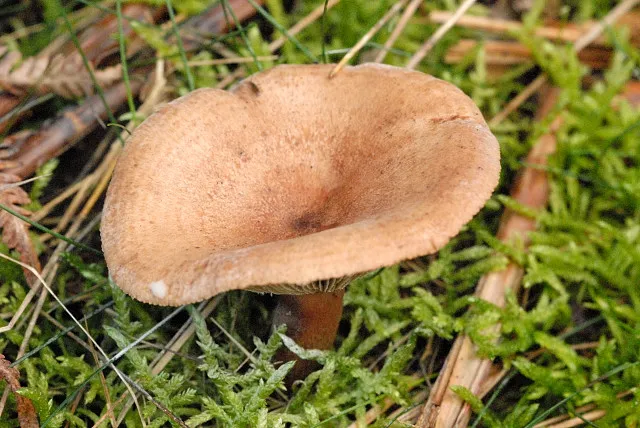
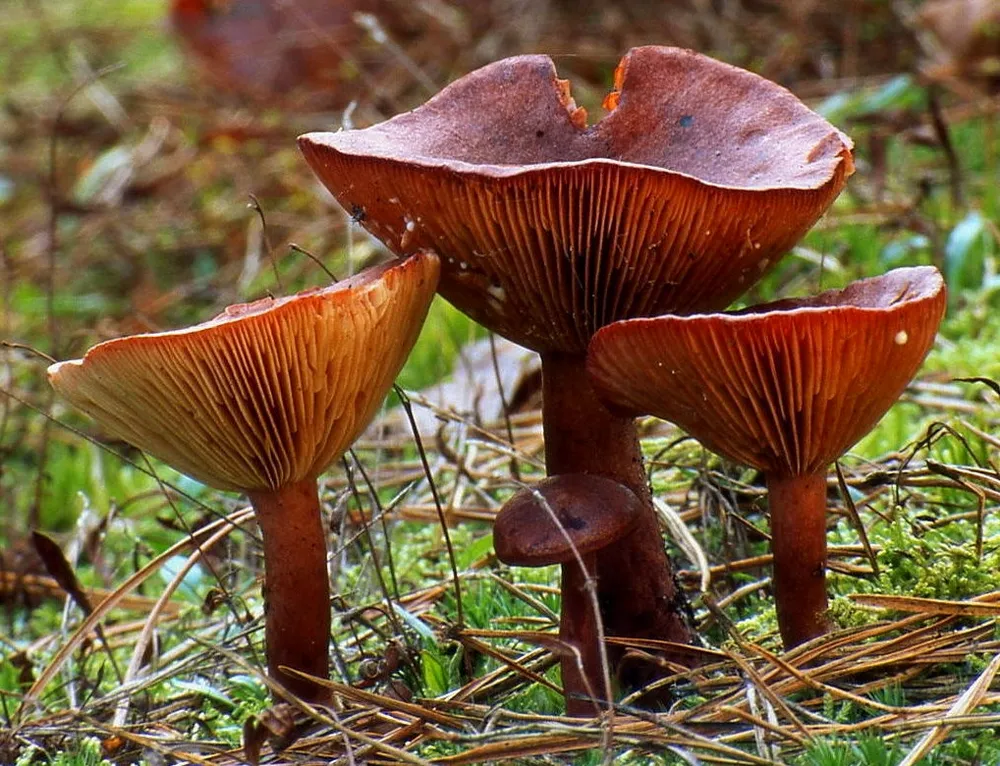
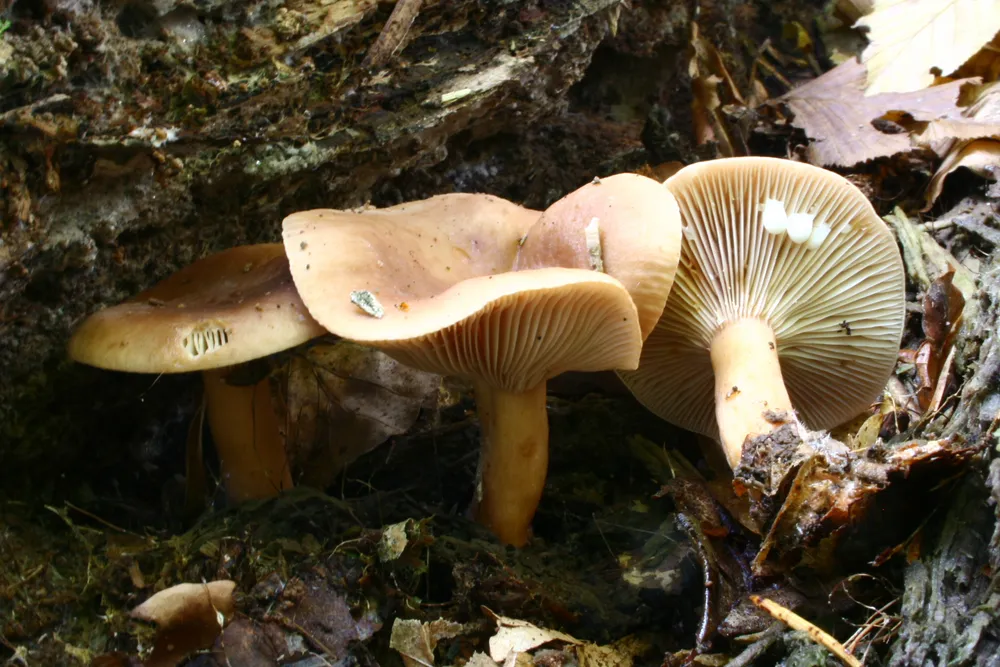
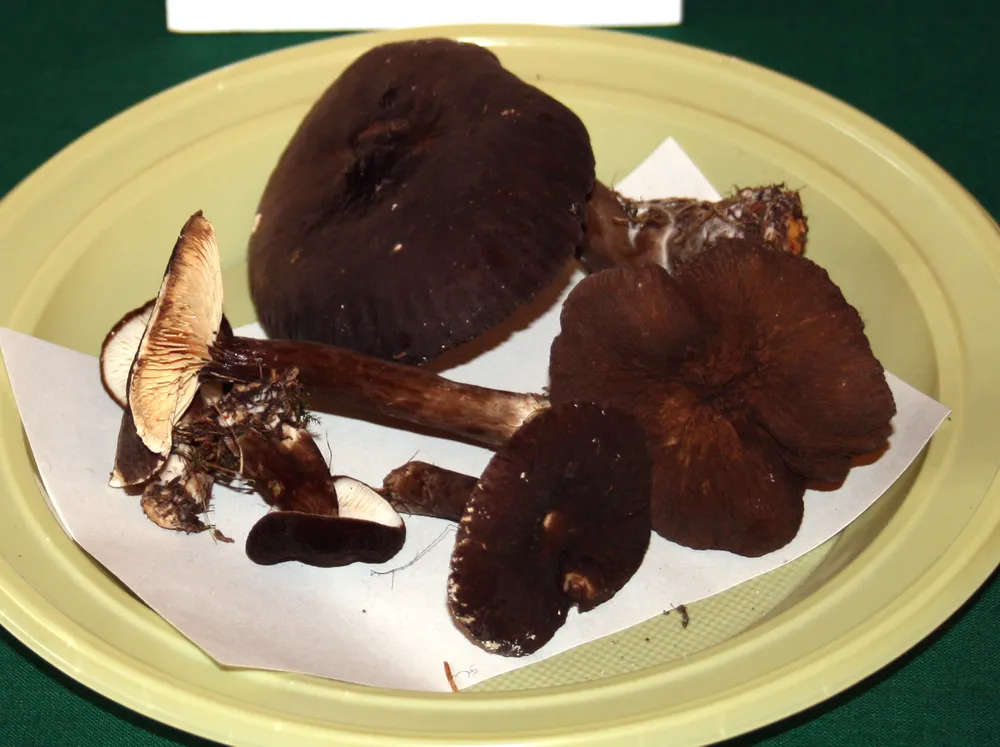
Related species
Mushrooms of the same genus and habitat — to study side by side and never mix up.
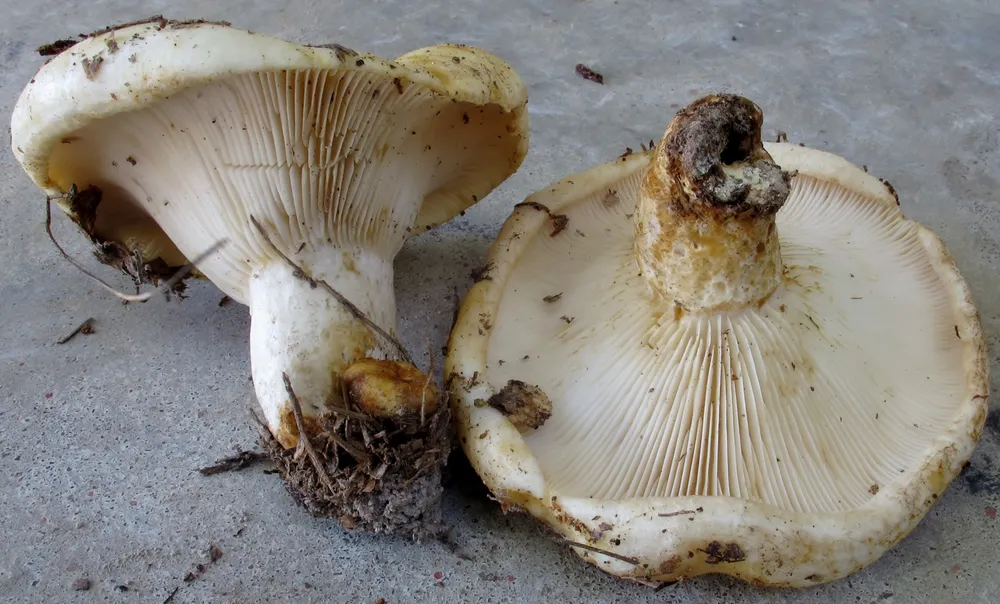
Lactarius resimus

Coconut milk cap
Lactarius glyciosmus
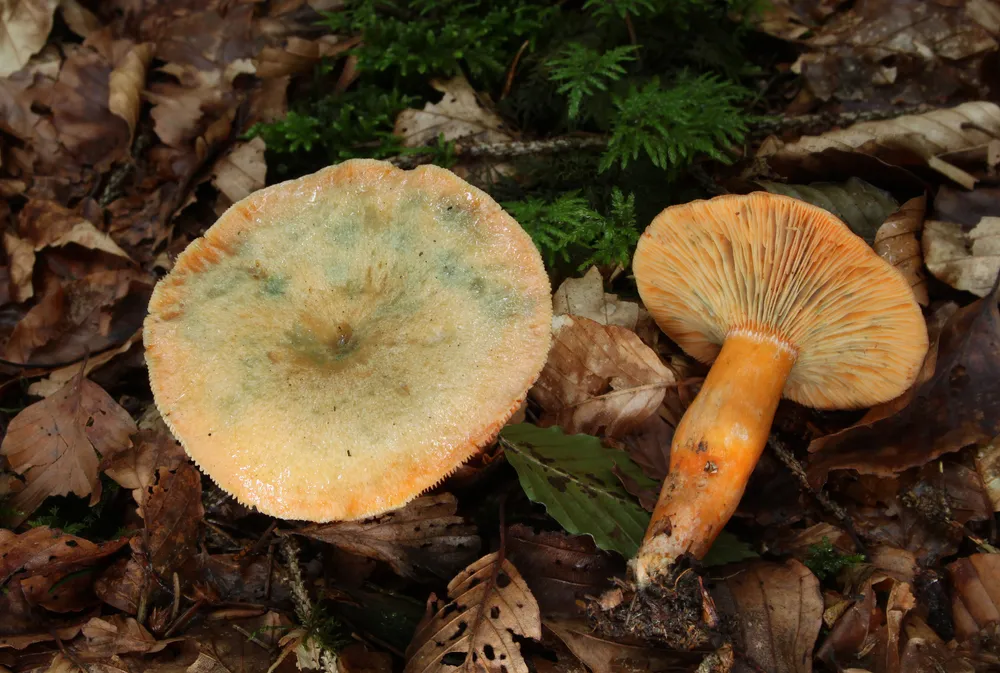
False saffron milk cap
Lactarius deterrimus
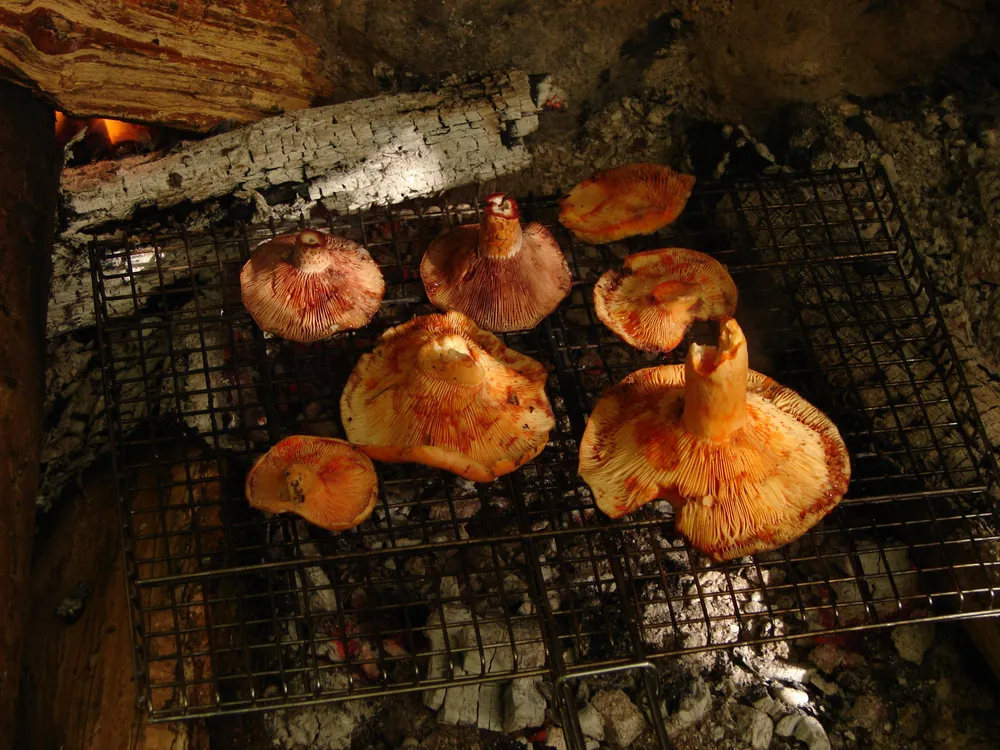
Lactarius salmonicolor
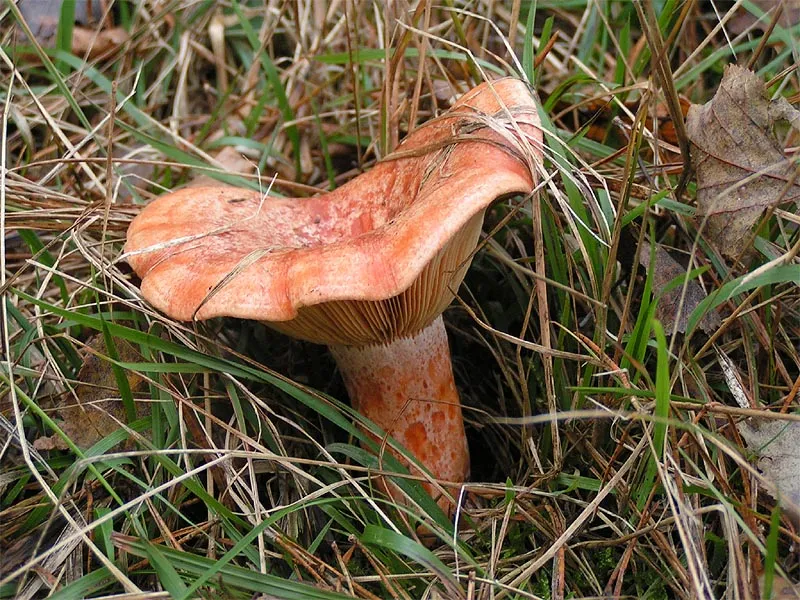
Saffron milk cap
Lactarius deliciosus
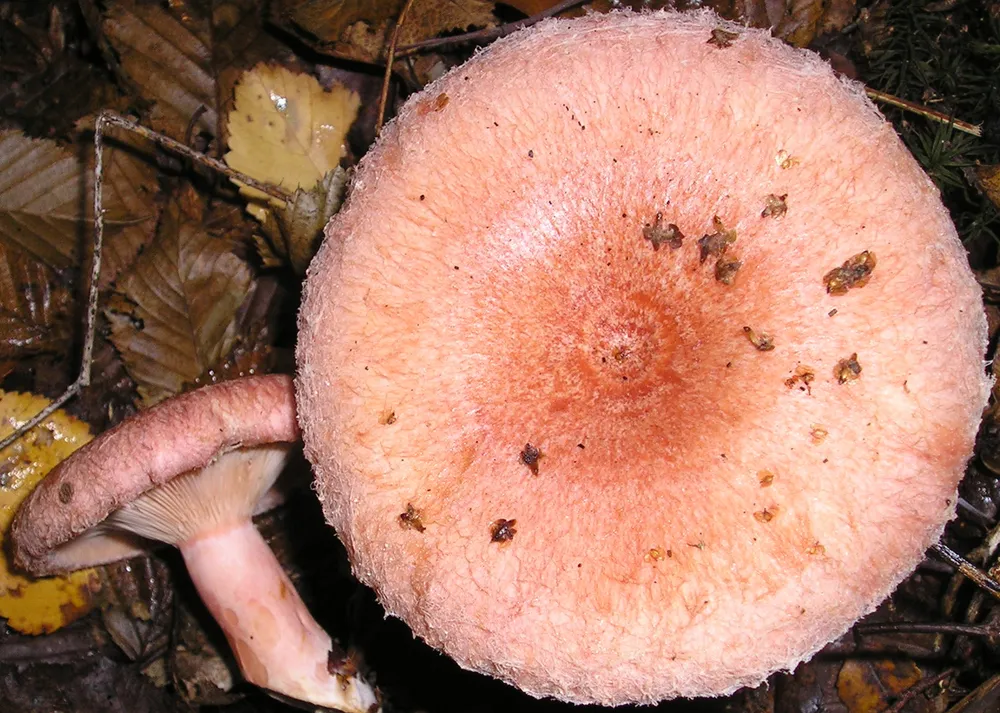
Woolly milk cap
Lactarius torminosus
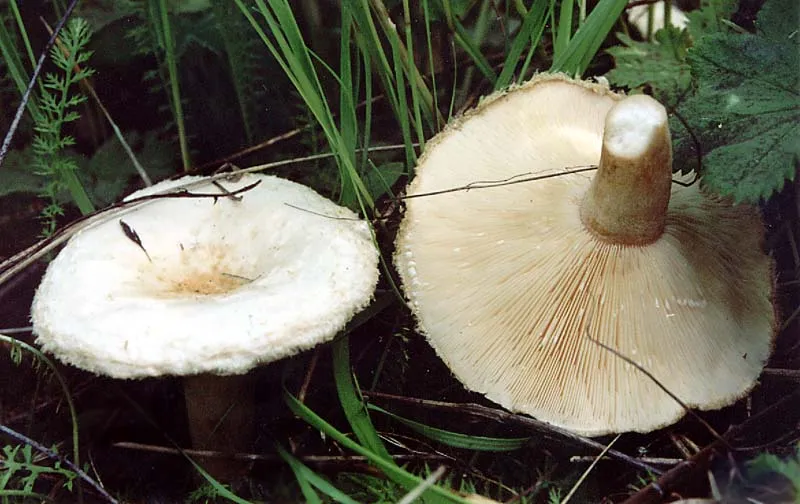
Bearded milk cap
Lactarius pubescens
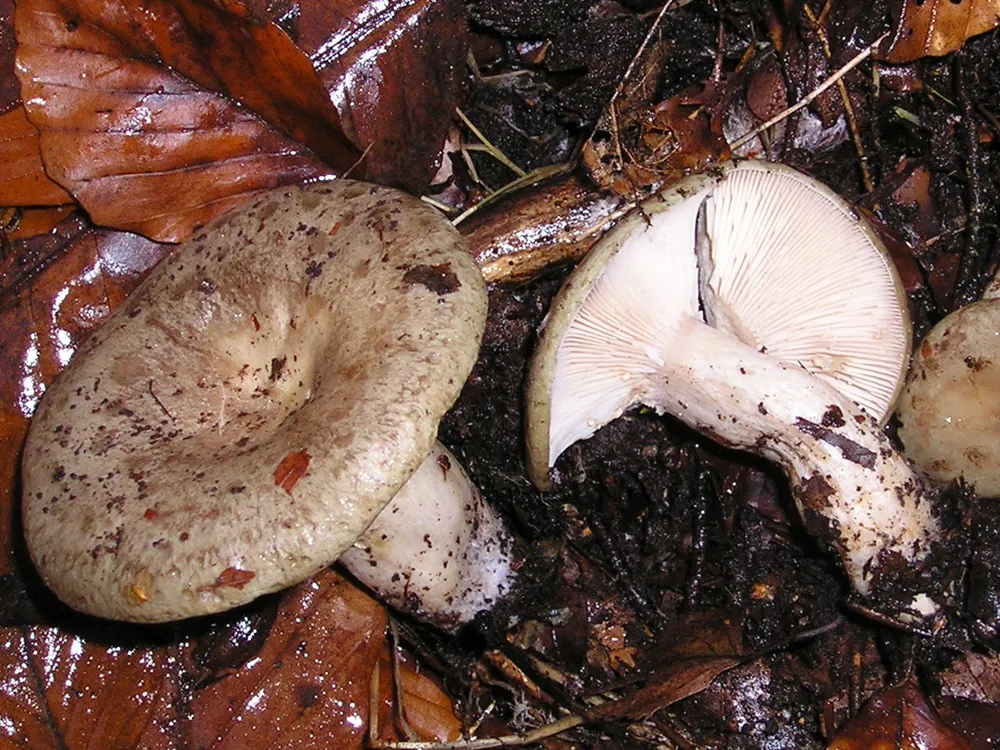
Beech milk cap
Lactarius blennius
Frequently asked questions
Can you eat it?
Not as a dish on its own, since it's small and its flavor is unremarkable. But dried and ground into powder, it's a wonderful mushroom seasoning: it gives soups, stews and sauces a deep “caramel-mushroom” aroma. In this form it's safe, and in the UK it's even gathered and sold as a seasoning.
Is it toxic raw?
No, it contains no serious toxins. Still, don't taste it raw — like any milk cap, it can cause mild stomach upset. But it contains no poisonous substances that damage the kidneys or liver.
Where does it grow?
In damp conifer and mixed forests, mostly under spruce, fir and pine, less often under birch. It loves mossy “carpets”, boggy patches, hollows around the roots of old trees, and forest edges. In Ukraine — Polissia, the Carpathians, Prykarpattia, and less often the forest-steppe.
Which trees does it form mycorrhiza with?
Mainly conifers — spruce, fir, pine. It can also form mycorrhiza with birch, especially in mixed stands. In purely broadleaf forests it's almost never found.
When should you look for it?
July–October. Peak fruiting is August–September, after rain. It's one of the most abundant small milk caps of a wet summer and early autumn.
How do you recognize it?
Three features together: 1) a small chestnut-burgundy cap with a bump; 2) a strong smell of chicory or caramel as it dries; 3) growing in damp conifer stands or mossy patches. Dry a few fruiting bodies in the sun — and the smell will fully come through.
What is it confused with?
With Lactarius serifluus — it's smaller, with no camphor smell, and with creamy-white (not watery) milk. With the Oakbug milk cap (L. quietus) — it grows under oaks and has a different, faintly oily smell. The camphor smell is an unmistakable marker.
Does it have dangerous look-alikes?
There are no serious poisonous look-alikes. But there is a dangerous close relative — Lactarius helvus (the Fenugreek milk cap, known as “inedible”), which is much larger, also smells “grassy” as it dries, but causes prolonged gastroenteritis. Size settles it: helvus — 6-15 cm, Curry milk cap — 2-5 cm.
Is Curry milk cap edible or poisonous?
Does Curry milk cap have gills or pores?
What does the cap of Curry milk cap look like?
What does the stem of Curry milk cap look like?
Sources
- [1]Вікіпедія (українська)
- [2]Атлас грибів України, Зеров Д.К. (1979)
- [3]MycoBank Database
- [4]Index Fungorum
- [5]GBIF
- [6]iNaturalist Ukraine