Chocolate milkyLactarius lignyotus
Expert-verifiedUpdated October 3, 2026
Passport
- Edibility
- Edible
- Season
- Jul — Oct
- Hymenophore
- Gilled
- Cap color
- Black
- Size
- Small (up to 5 cm)
- Smell
- Odorless
- Reviewed
- Yes ✓
Quick answers
Where to look?
Conifer forest, Mixed forest
When does it appear?
Jul — Oct
Active months: July, August, September, October.
How to recognize it? Three signs
- Cap color: Black, Dark brown, Brown
- Cap shape: Umbonate
- Smell: Odorless
Fruiting season
July – October
Description
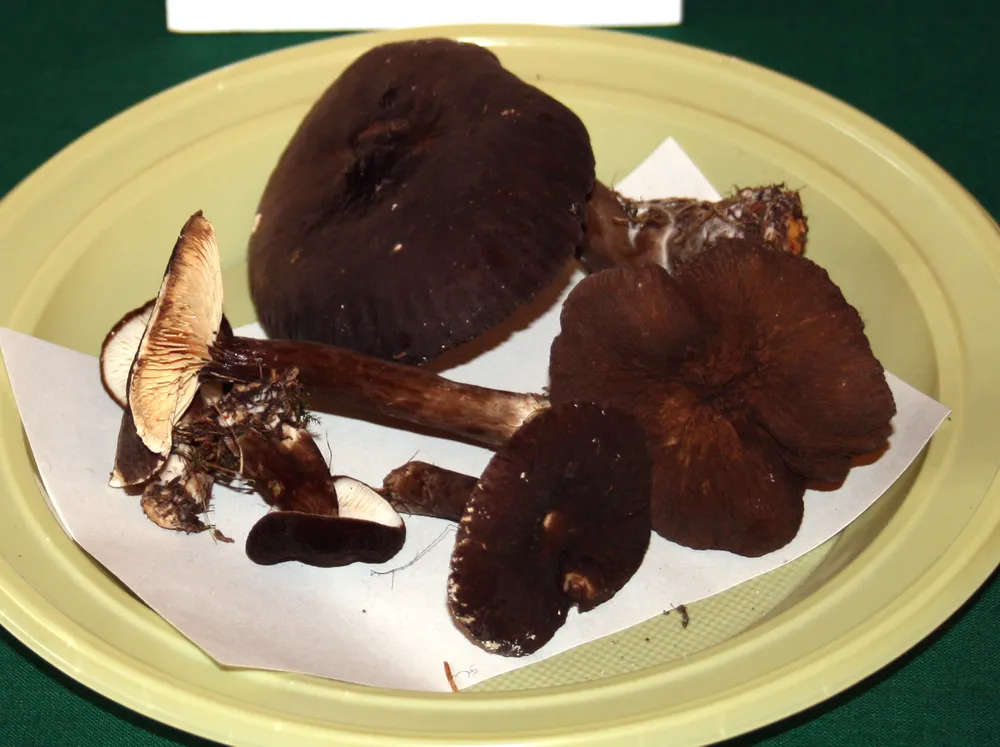
The chocolate milky (Lactarius lignyotus) is a strikingly dark milk cap, with a velvety black cap like a charred log from a campfire. Of all Ukraine's milk caps, it's the most «high-contrast» species: a black cap with fine radial grooves and bright white or cream gills that show from below like a white «wreath». It's practically impossible to confuse with anything else.
This is an edible mushroom that needs no special preparation — the flesh and milk are mild, with no heat. In the kitchen it's considered mediocre: small and thin, with tender flesh but no distinctive flavor. In the folk cooking of the Carpathians and the Carpathian foothills it's occasionally gathered as an aromatic addition to soups or juliennes. The milk darkens in air to pink or reddish-brown — a normal reaction that helps with identification.
In Ukraine it grows mostly in damp conifer and mixed forests of the Carpathians, the Carpathian foothills and Polissia — under spruce and fir. It loves moss «carpets», hollows at the roots of old trees, and open patches under the canopy. Season: July–October; it fruits in small groups or singly. Not very common, but easy to recognize.
Cap
Cap 3-7 cm, convex with a bump in the center at first, then flattening out with a distinct umbo. Color deep black, velvety sooty, almost black in young specimens, browner in old ones. The surface is dry, finely velvety, with characteristic fine radial grooves or wrinkles. The cap margin is often wavy.
Hymenophore
Gilled hymenophore. The gills are moderately crowded, attached or slightly decurrent. Color white or creamy white; against the black cap they're visible even from a distance — this is the most striking identification feature. Where damaged, the gills turn pink. They exude white milk. Spore print cream.
Stem
Stem 4-8 cm tall, 0.5-1 cm thick, slender, cylindrical, often characteristically elongated toward the base (like a «ballerina's leg»), hollow in mature specimens. Same color as the cap — blackish-brown, often with distinct lengthwise wrinkles or «ribs». The surface is finely velvety; no ring and no volva.
Flesh
Flesh whitish to cream, thin, tender. When damaged it exudes white milk that gradually turns pink in air and takes on a reddish-brown tint. When cut, the flesh itself also turns pink where it touches the milk.
Smell
Smell faint, mushroomy, neutral. The raw flesh and milk taste mild, with no heat and no bitterness, faintly sweetish. Mature specimens may have a faint bitterish aftertaste.
›Scientific synonyms (2)
Lactariella lignyota (Fr.) J.Schröt. (1889), Lactifluus lignyotus (Fr.) Kuntze (1891)
Lookalikes
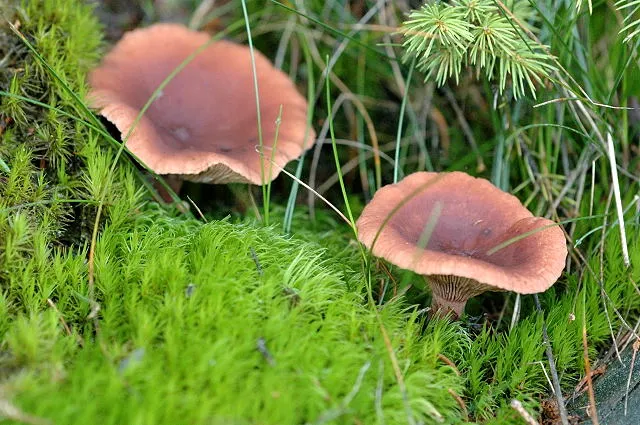
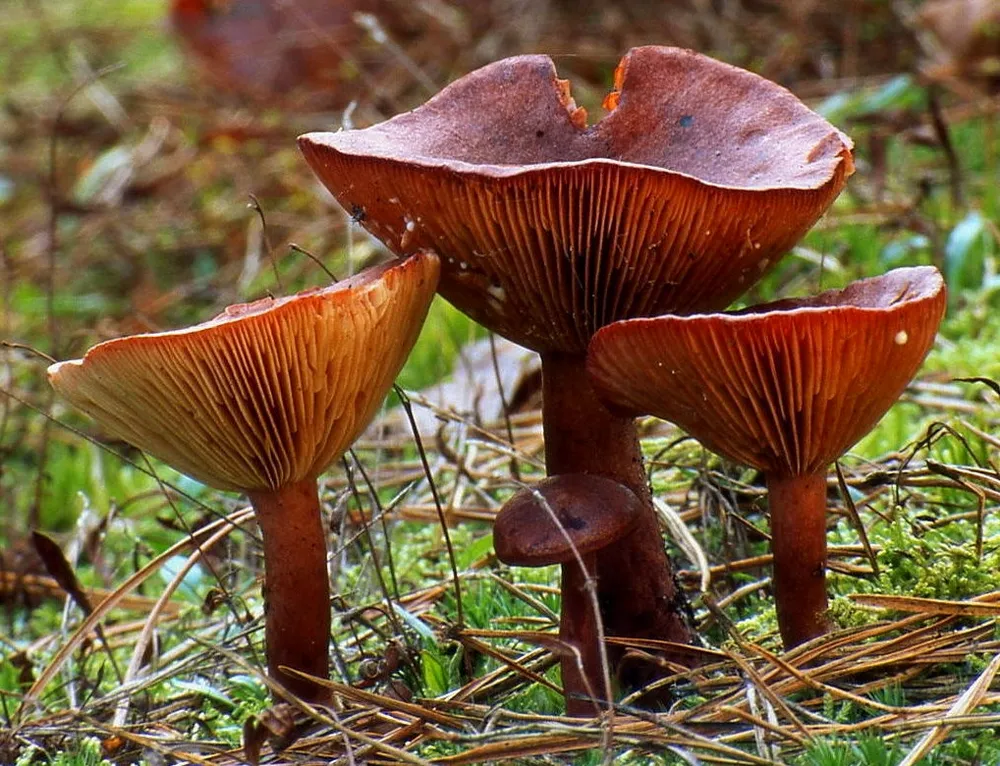
Related species
Mushrooms of the same genus and habitat — to study side by side and never mix up.
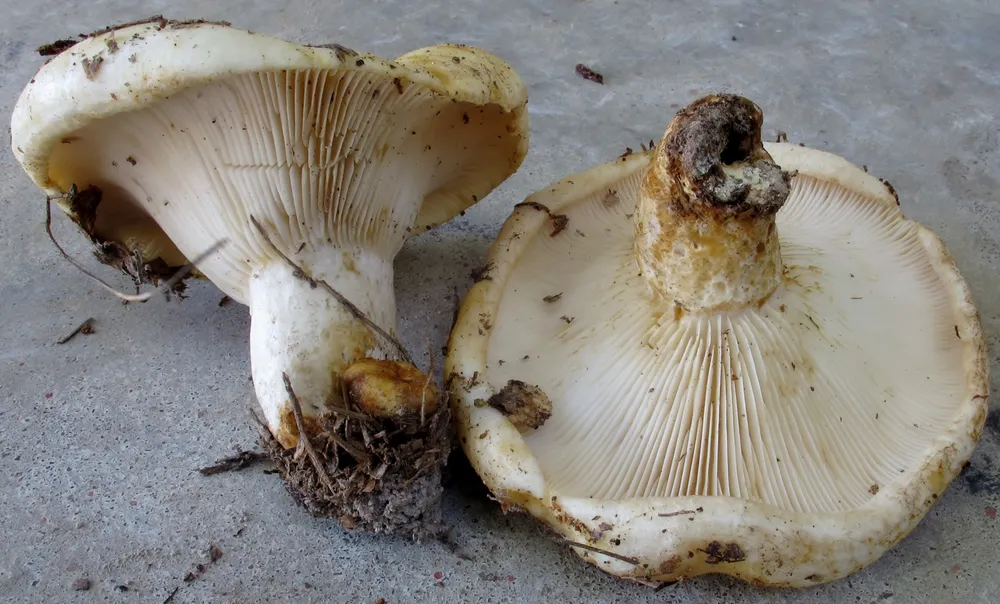
Lactarius resimus

Coconut milk cap
Lactarius glyciosmus
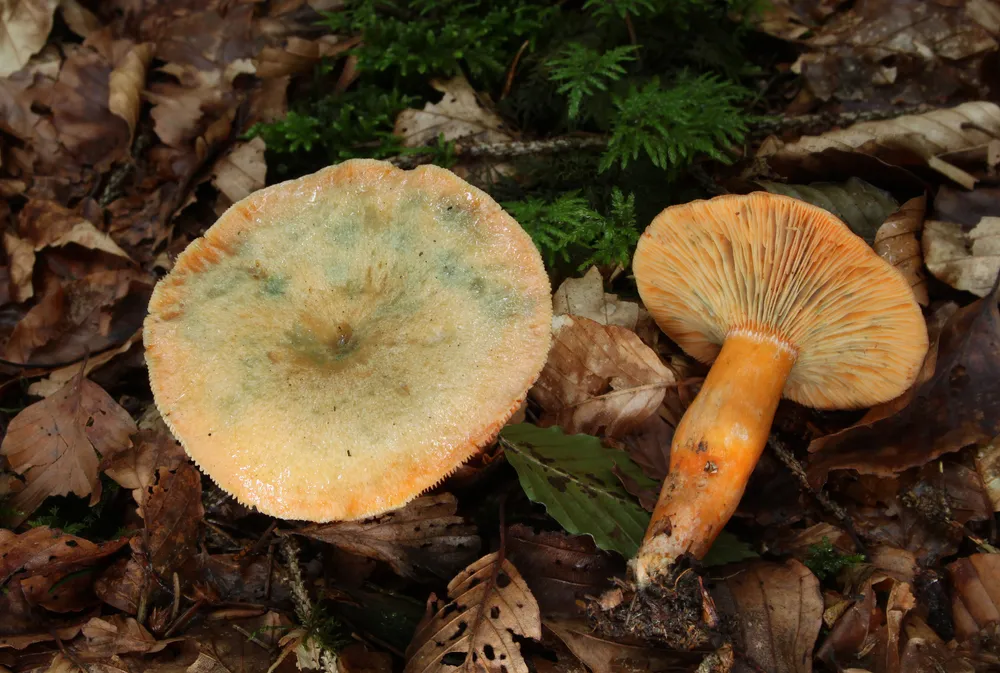
False saffron milk cap
Lactarius deterrimus
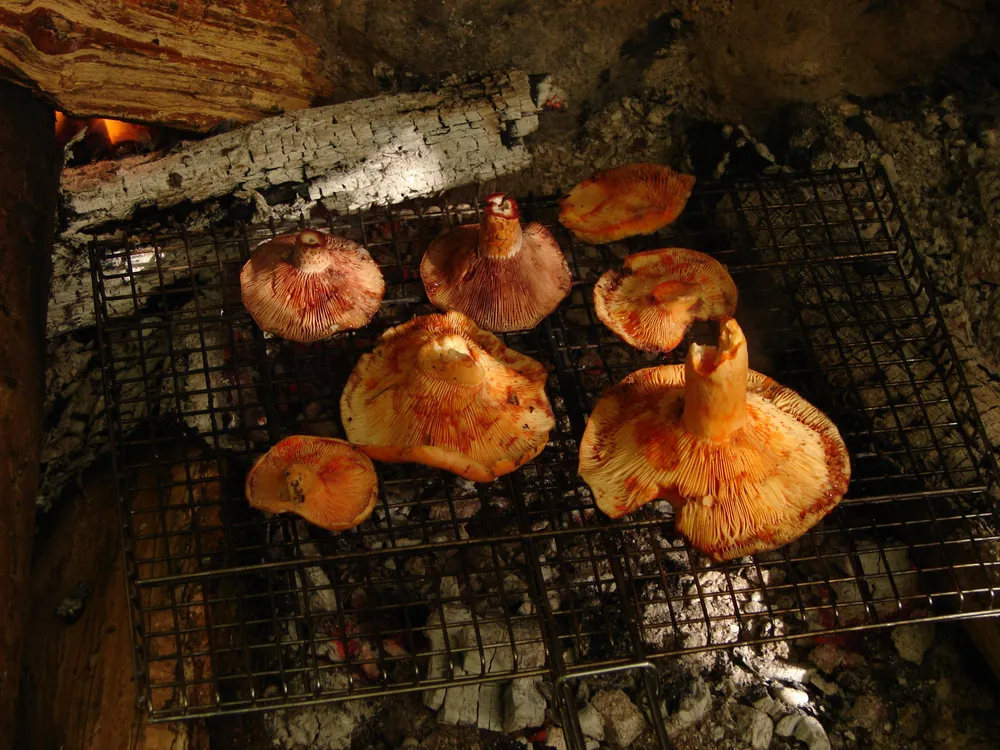
Lactarius salmonicolor
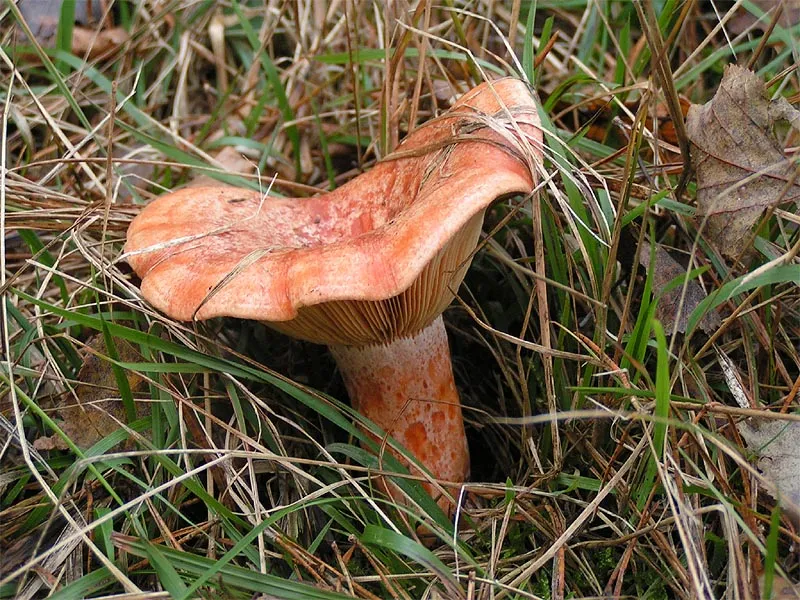
Saffron milk cap
Lactarius deliciosus
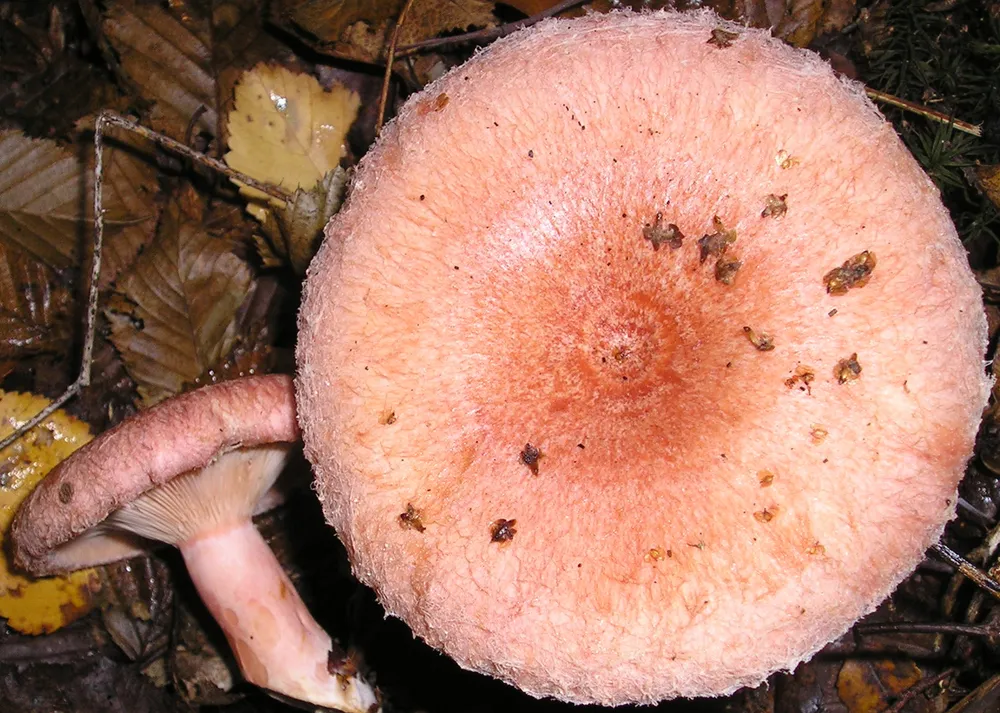
Woolly milk cap
Lactarius torminosus
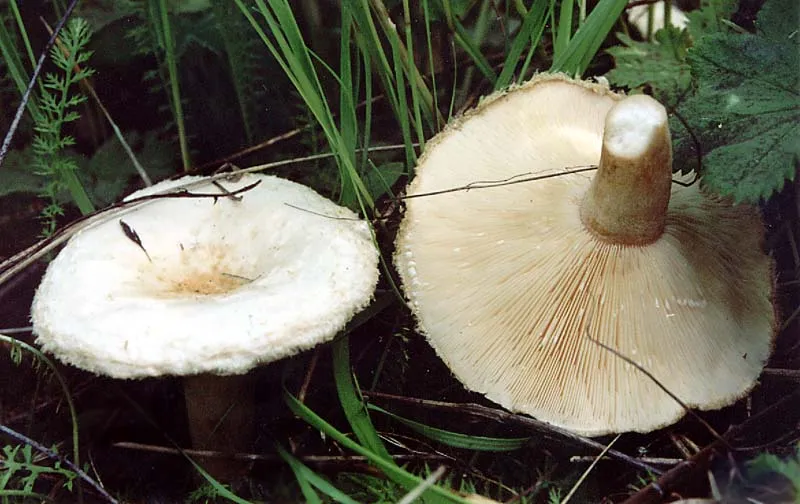
Bearded milk cap
Lactarius pubescens
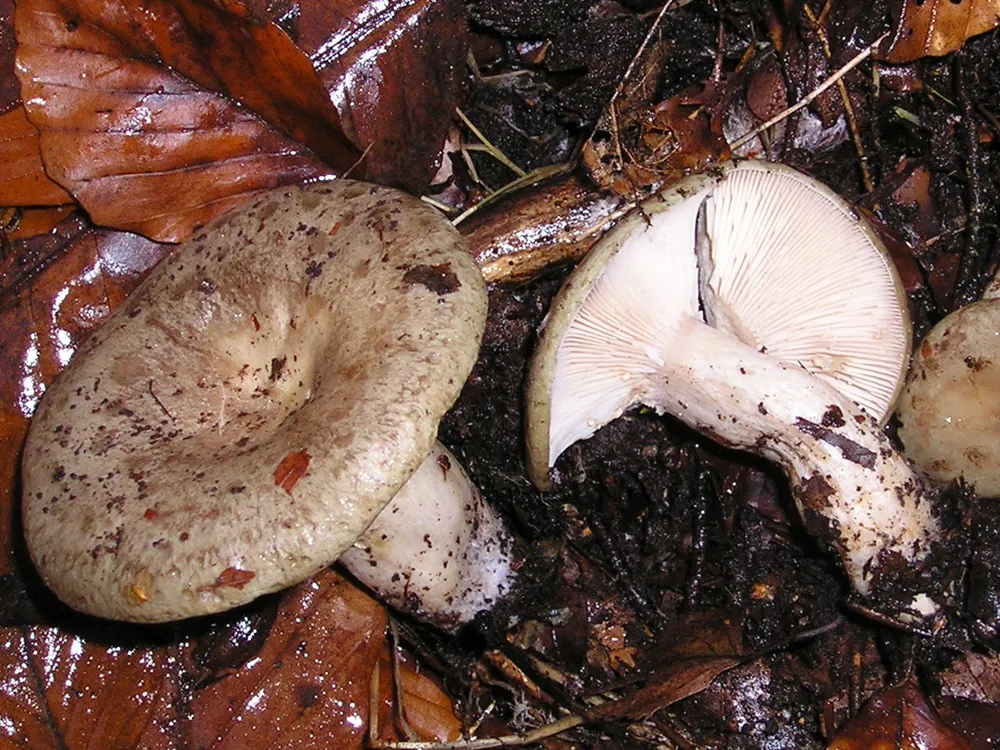
Beech milk cap
Lactarius blennius
Frequently asked questions
Can you eat it without preparation?
Yes, this is an edible mushroom that needs no soaking or boiling. You can fry it, stew it or add it to soups straight away. In the kitchen it's mediocre — small, thin, without a distinctive flavor — but it's not bad as an aromatic addition.
So why does the milk turn pink?
It's a natural oxidation reaction of the species' pigments in air. It's not a sign of spoilage or toxicity — on the contrary, it's a characteristic identification feature of L. lignyotus. In a finished dish this reaction isn't noticeable.
Where does it grow?
In damp conifer and mixed forests, mostly under spruce and fir. It loves moss «carpets», hollows at the roots of old trees, and open patches under the canopy. It doesn't occur in purely broadleaf forests.
Which regions of Ukraine?
Mostly the Carpathians (Zakarpattia, Lviv, Ivano-Frankivsk and Chernivtsi regions), the Carpathian foothills, northern Polissia. It doesn't occur in the forest-steppe or steppe — it needs mountain conifer or northern forests.
When should you look for it?
July–October. Peak fruiting is August–September after prolonged rain. In a wet summer it may start at the end of June. It holds on until the first serious frosts.
How do you recognize it?
Three features together: 1) a black velvety cap with radial grooves; 2) bright white gills contrasting with the black cap; 3) milk that turns pink in air. It's practically impossible to confuse with anything — this is the most distinctive black milk cap.
What is it confused with?
With the sooty milk cap (Lactarius fuliginosus) — that one is dark chestnut, not pure black, and has no radial grooves. With Lactarius picinus (L. picinus) — also dark, but without the contrasting white gills. White gills under a black cap + milk that turns pink = L. lignyotus.
Are there dangerous lookalikes?
There are no serious poisonous lookalikes. Inky caps (Coprinus) are dark too, but are built completely differently (they quickly dissolve into a black liquid). If you see a black velvety cap with white gills and white milk that turns pink, it's safe to try.
Is Chocolate milky edible or poisonous?
Does Chocolate milky have gills or pores?
What does the cap of Chocolate milky look like?
What does the stem of Chocolate milky look like?
Sources
- [1]Вікіпедія (українська)
- [2]Атлас грибів України, Зеров Д.К. (1979)
- [3]MycoBank Database
- [4]Index Fungorum
- [5]GBIF
- [6]iNaturalist Ukraine