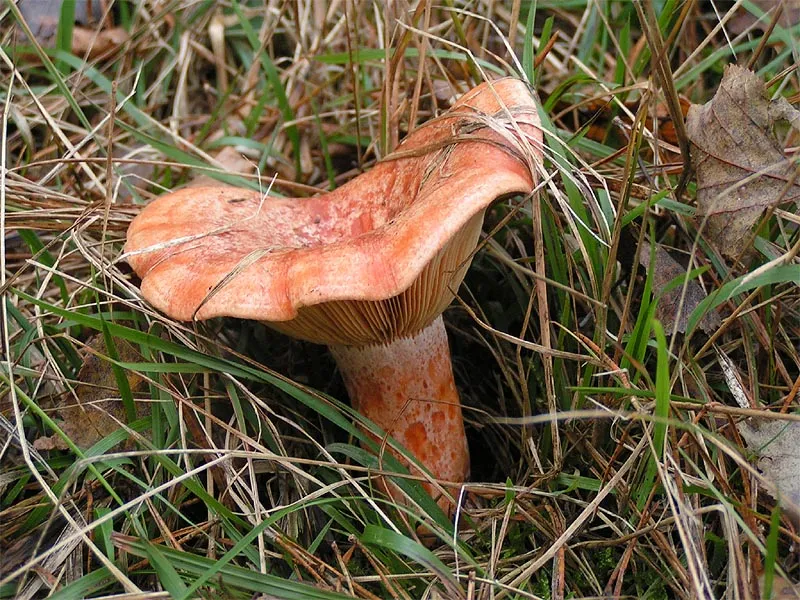
Saffron milk capLactarius deliciosus
Expert-verifiedUpdated October 3, 2026
Passport
- Edibility
- Edible
- Season
- Jul — Oct
- Hymenophore
- Gilled
- Cap color
- Orange
- Size
- Medium (5–15 cm)
- Smell
- Resinous
- Reviewed
- Yes ✓
Quick answers
Where to look?
Conifer forest
When does it appear?
Jul — Oct
Active months: July, August, September, October.
How to recognize it? Three signs
- Cap color: Orange, Rusty
- Cap shape: Concave, Funnel-shaped
- Smell: Resinous, Fruity
Fruiting season
July – October
Description
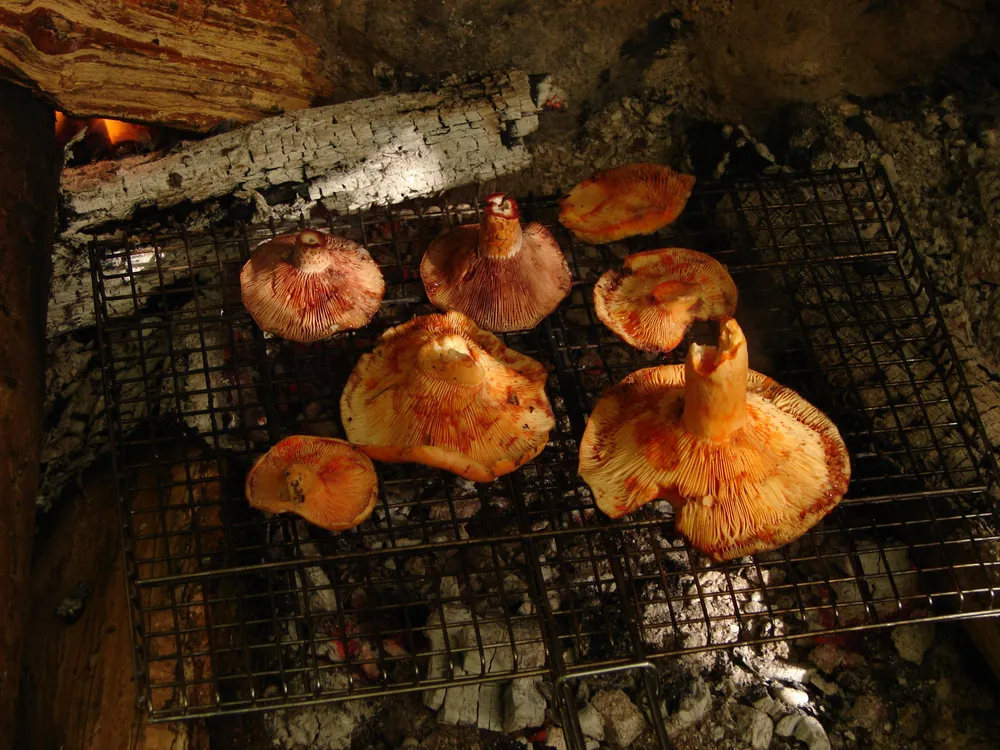
The saffron milk cap (Lactarius deliciosus) is first among the milk caps for flavor, an edible mushroom of the highest category in the culinary traditions of Russia, Ukraine and Scandinavia. It forms mycorrhiza with pine and spruce.
Easy to recognize thanks to the bright orange color of its cap, gills and milk, which turns green on exposure to air. Fruits in August–October, often in large numbers.
Edible without pre-treatment. Traditionally salted without soaking — by a quick dry or hot method. Pickled saffron milk caps are a delicacy in Finnish and Swedish cuisine.
Cap
Cap 4–15 cm across, convex at first, then funnel-shaped. Surface smooth or slightly sticky, bright orange or brick-rusty, with darker concentric zones. Turns greenish when damaged.
Hymenophore
Gills crowded, narrow, decurrent, bright orange, turning green when damaged. They release an orange milk that stays unchanged or slowly turns green — this is the key identification feature.
Stem
Stem 3–8 cm tall, 1–2.5 cm thick, cylindrical, solid (in young ones), hollow in mature ones. Surface orange, smooth, turning green when damaged. Often has small pits. No ring.
Flesh
Flesh firm, orange-yellow or orange, slowly turning green on exposure to air when damaged. Releases an orange milk whose taste is mild or slightly acrid depending on where it grows. The mushroom tastes pleasant, slightly resinous.
Smell
Smell pleasant, fruity-resinous, with light notes of conifer forest. The aroma survives salting and pickling, giving the food a distinctive woodland character.
Lookalikes
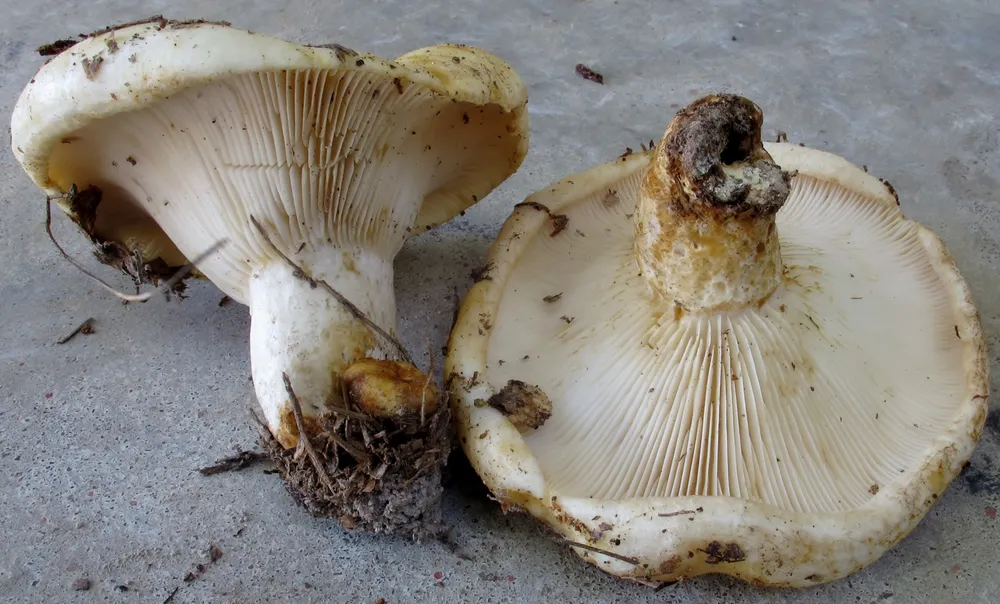
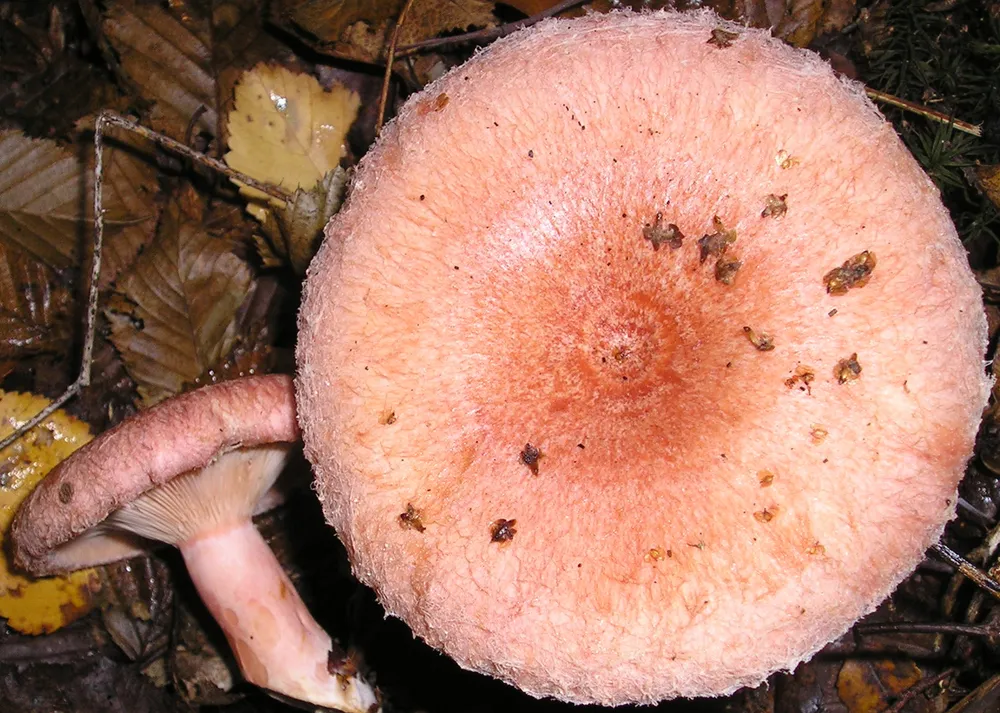
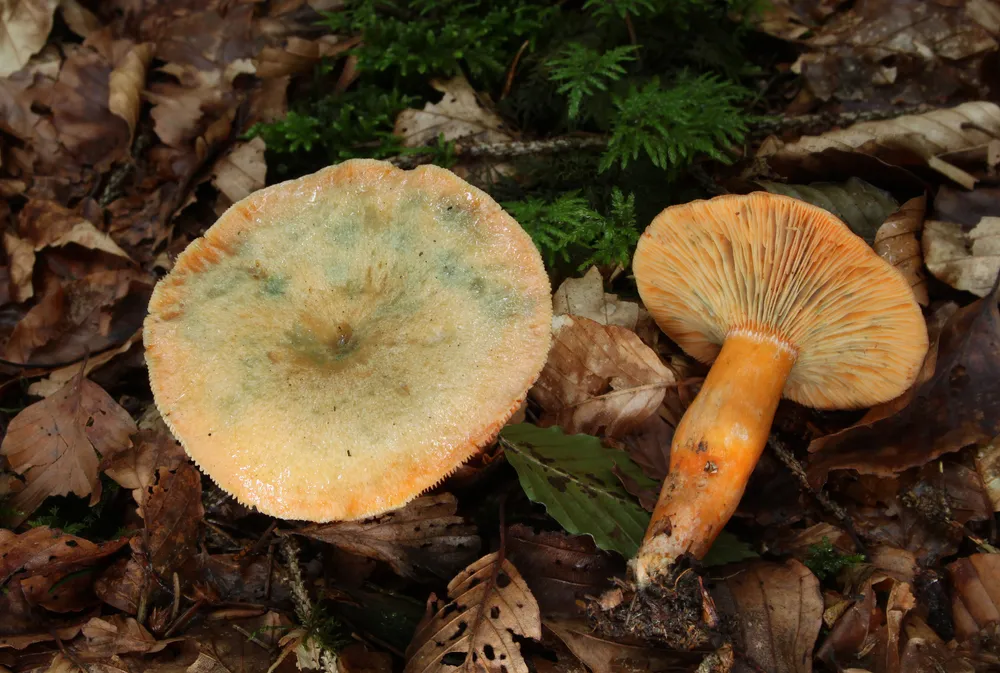
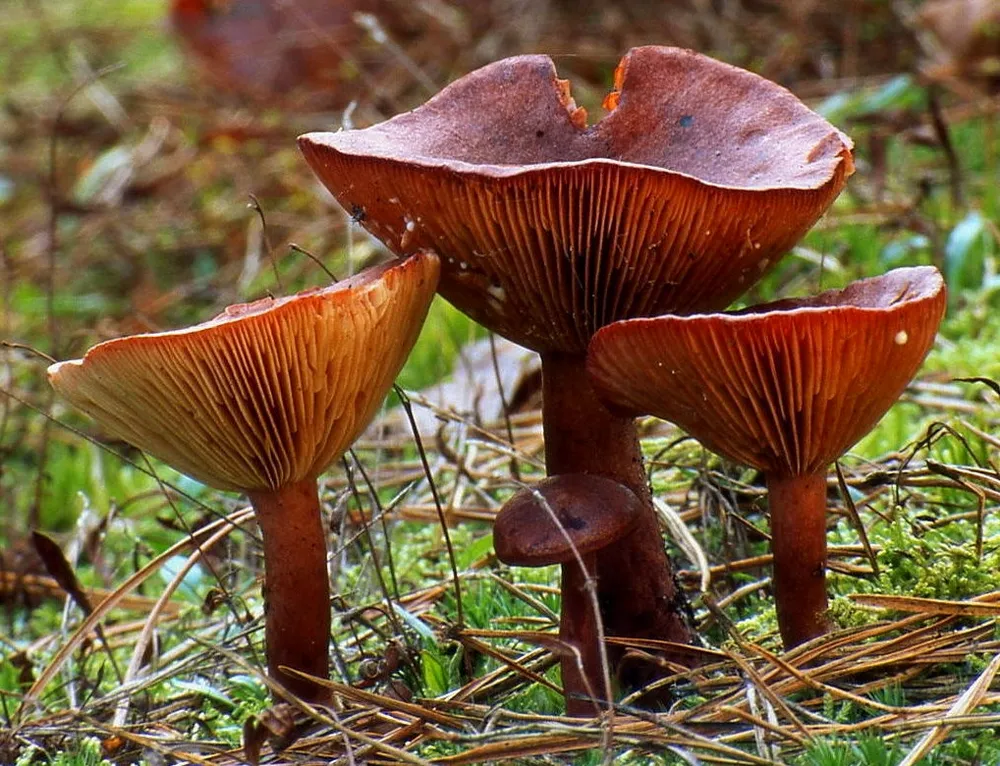
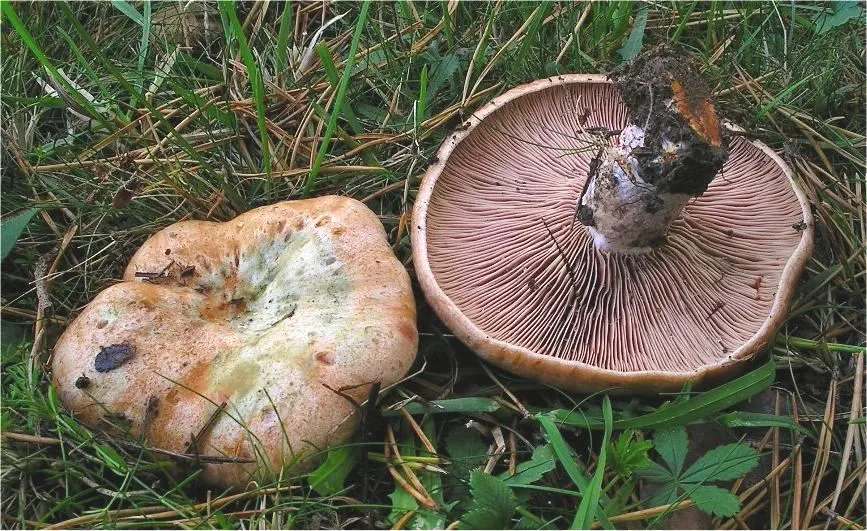
Related species
Mushrooms of the same genus and habitat — to study side by side and never mix up.

Coconut milk cap
Lactarius glyciosmus
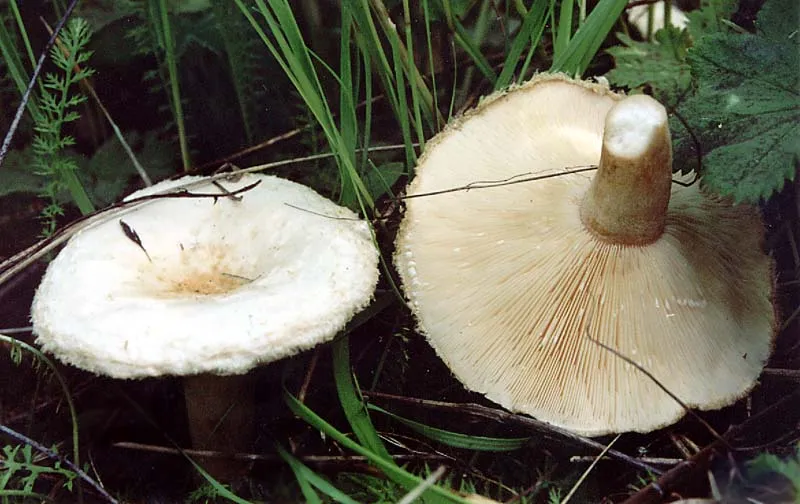
Bearded milk cap
Lactarius pubescens
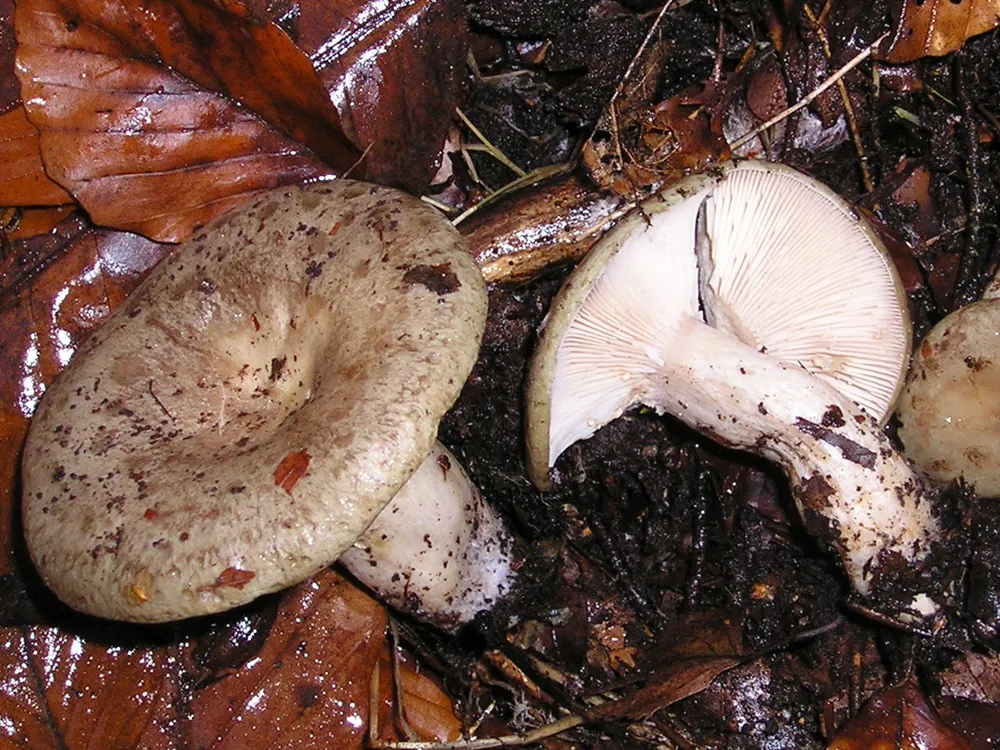
Beech milk cap
Lactarius blennius
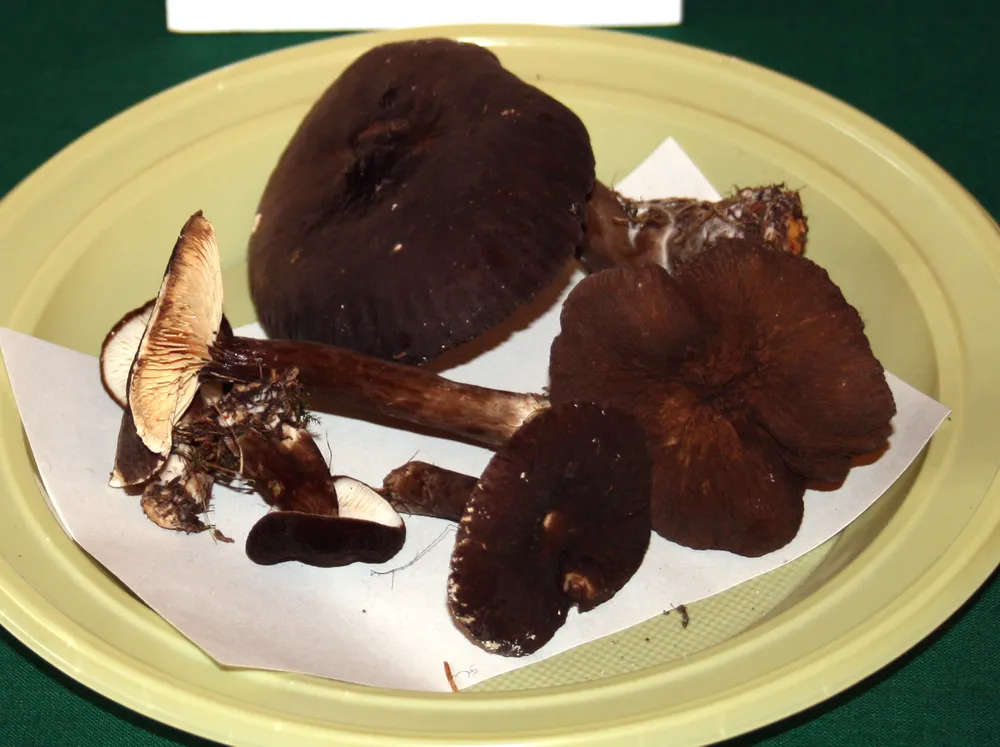
Chocolate milky
Lactarius lignyotus
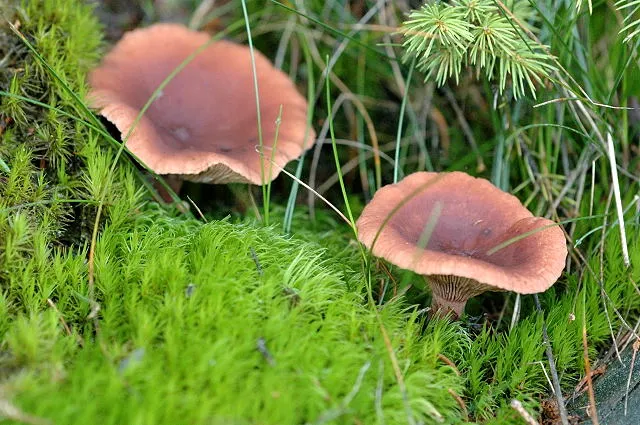
Curry milk cap
Lactarius camphoratus
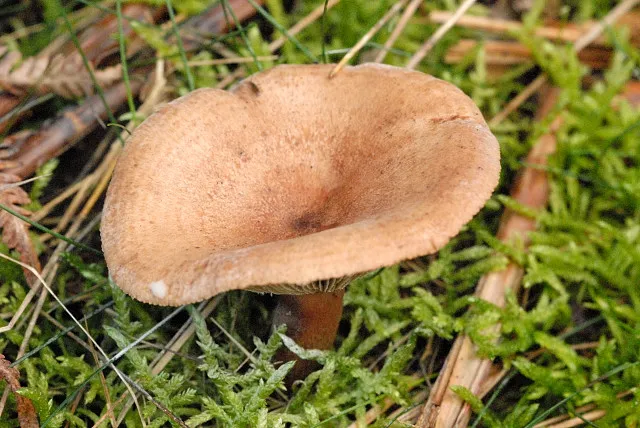
Fenugreek milk cap
Lactarius helvus
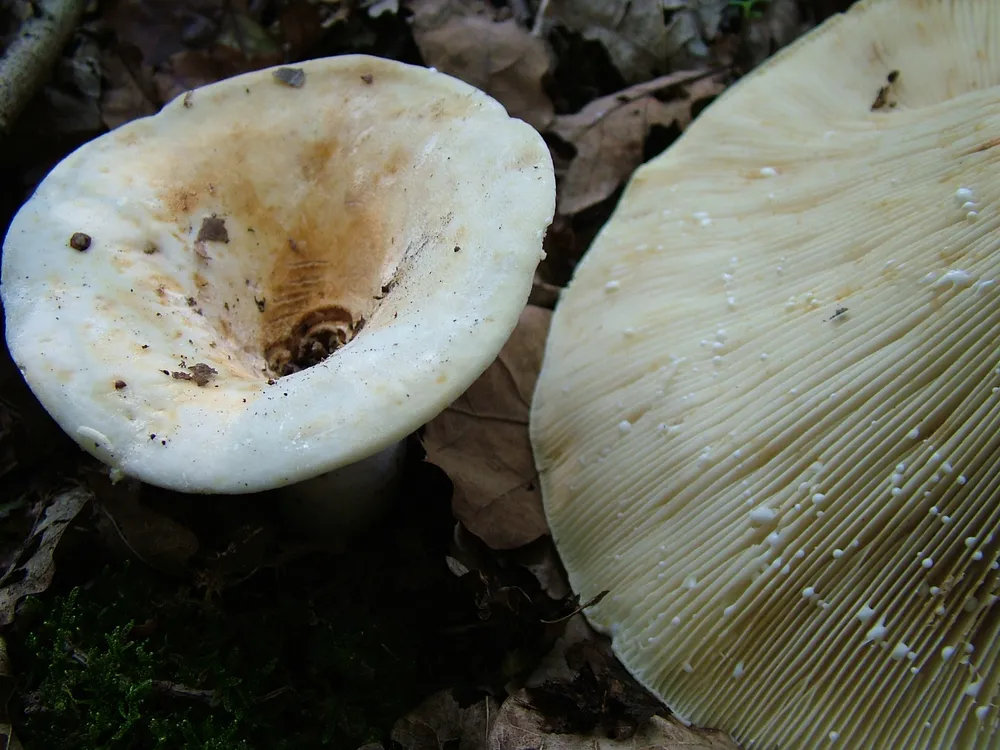
Fleecy milk cap
Lactarius vellereus
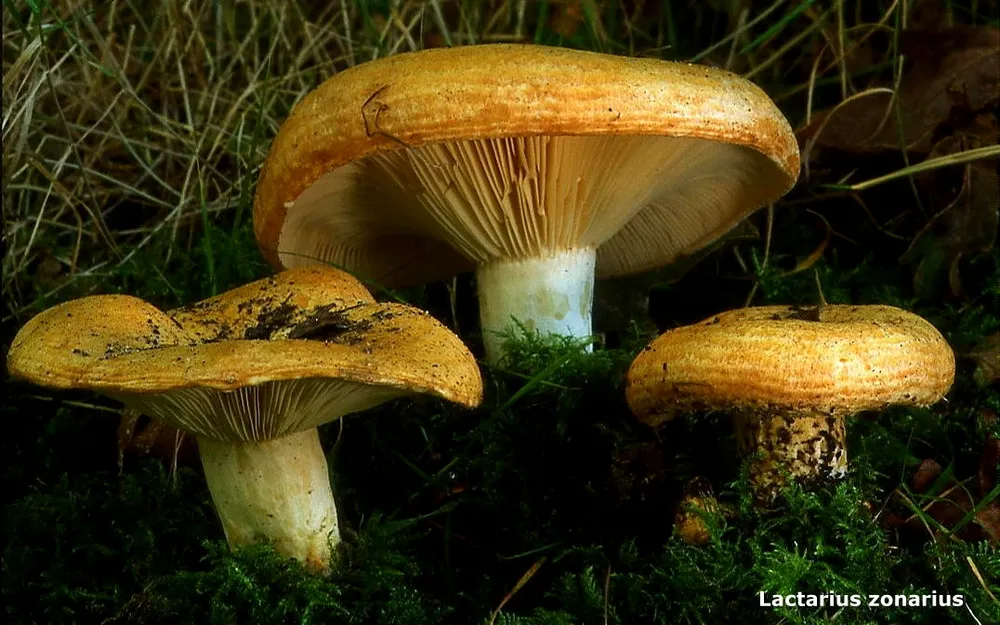
Lactarius insulsus
Related reading
 Where & when to forage
Mushrooms of the Carpathians: what, when, and where to pick
The Carpathians are one of Ukraine's richest mushroom regions, with porcini, saffron milk caps and chanterelle…
August 9, 2026·3 min.webp) Where & when to forage
Where & when to forageMushrooms of Polissia: Ukraine's richest foraging region
Polissia, with its pine forests and damp woodlands, is mushroom country number one. Here's which mushrooms gro…
August 9, 2026·3 min How to identify
Saffron milk cap: when it appears, where to look, and how to tell it apart
The saffron milk cap is one of the tastiest mushrooms for salting, and you can salt it almost raw. Here's when…
August 5, 2026·3 min
Frequently asked questions
Is Saffron milk cap edible or poisonous?
Does Saffron milk cap have gills or pores?
What does the cap of Saffron milk cap look like?
What does the stem of Saffron milk cap look like?
What do Saffron milk cap smell and taste like?
Where does Saffron milk cap grow?
Which trees does Saffron milk cap grow under?
When should you pick Saffron milk cap?
What can Saffron milk cap be confused with?
How do you cook Saffron milk cap?
Can you dry Saffron milk cap?
What is the scientific name of Saffron milk cap?
Sources
- [1]Атлас грибів України, Зеров Д.К. (1979)
- [2]GBIF