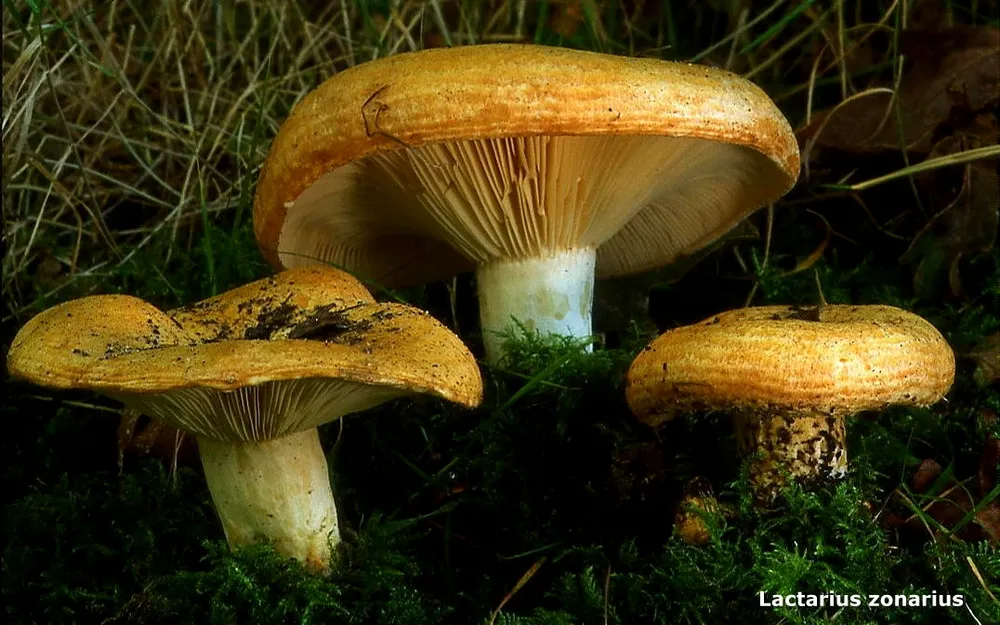
Lactarius insulsus
Expert-verifiedUpdated June 13, 2026
Passport
- Edibility
- Conditionally edible
- Season
- Aug — Oct
- Hymenophore
- Gilled
- Cap color
- Cream
- Size
- Medium (5–15 cm)
- Smell
- Odorless
- Reviewed
- Yes ✓
Quick answers
Where to look?
Deciduous forest, Mixed forest
When does it appear?
Aug — Oct
Active months: August, September, October.
How to recognize it? Three signs
- Cap color: Cream, Yellow, Orange
- Cap shape: Funnel-shaped
- Smell: Odorless
Fruiting season
August – October
Description
Lactarius insulsus (in modern nomenclature more often Lactarius zonarius) is a cream-colored milk cap with distinct concentric zones on the cap, growing in characteristic patches of several dozen fruiting bodies side by side. Its Ukrainian name means “the group one,” and it earned it for exactly this habit — once you find one, look around: there are almost certainly more nearby.
This is a conditionally edible mushroom for salting, like most milk caps with hot white milk. Raw, it is inedible — it causes severe gastroenteritis. After soaking for 1-2 days or boiling for 20 minutes and pouring off the water, it becomes fit for salting. Salted, it has a firm, crunchy texture and a characteristic “milk cap” flavor, which is why it is often sold at markets as “gruzd.”
In Ukraine it grows mainly in the forest-steppe and Prykarpattia (the Carpathian foothills), less often in Polissia. It favors limestone soils and turns up in old oak, oak-hornbeam and beech forests. The season runs August–October, peaking in the second half of September after long spells of rain.
Cap
Cap 5-12 cm, convex at first with an inrolled margin, later funnel-shaped. Cream to cream-ochre, with clear concentric darker zones of ochre or light brown. The surface is dry or slightly sticky in wet weather, with fine down near the margin in young specimens.
Hymenophore
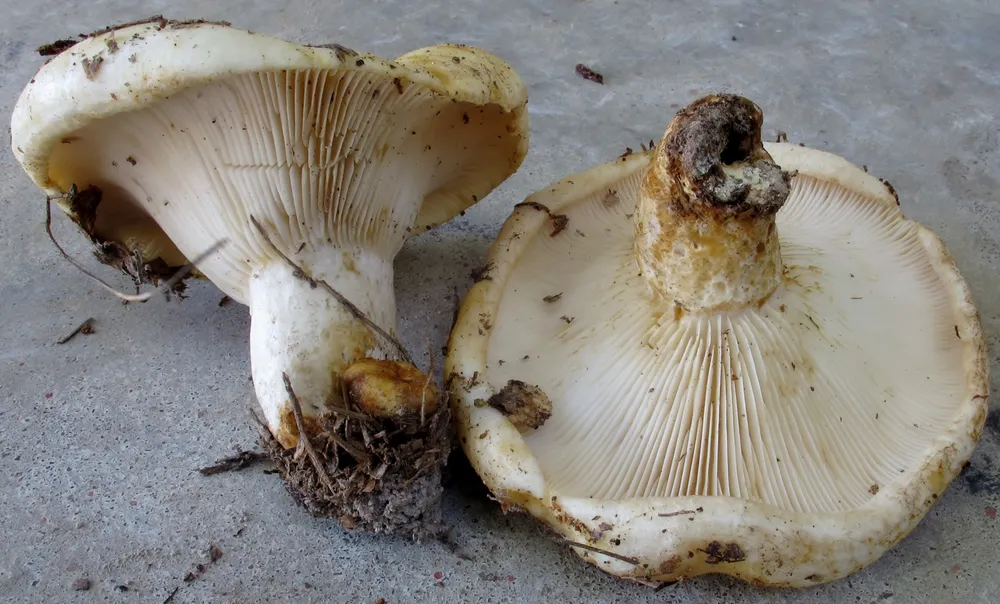
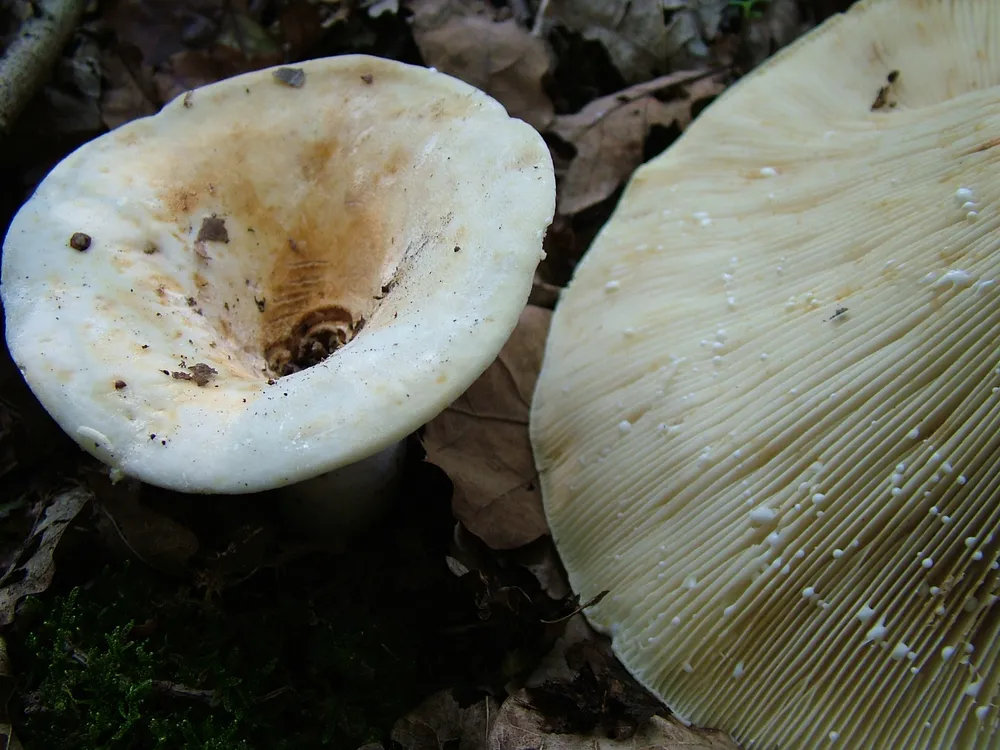
Gilled hymenophore. Gills crowded, narrow, adnate or slightly decurrent. Whitish, becoming cream to pale ochre with age. When damaged, they release white milk. Spore print cream to pale ochre.
Stem
Stem 3-6 cm tall, 1-2 cm thick, cylindrical or slightly tapering toward the base, firm in young specimens, often hollow in mature ones. Whitish to cream, often with small ochre “pits” (scrobiculae) — a characteristic feature of some milk caps.
Flesh
Flesh white, firm, brittle. When damaged, it releases plenty of white milk that does not change color in the air. The cut flesh does not darken or turn yellow either.
Smell
Smell faint, mushroomy, with no distinctive notes. The raw flesh and milk taste very hot, sharp, peppery. Don’t taste it raw — it will raise blisters on your tongue.
Lookalikes
Related species
Mushrooms of the same genus and habitat — to study side by side and never mix up.

Coconut milk cap
Lactarius glyciosmus
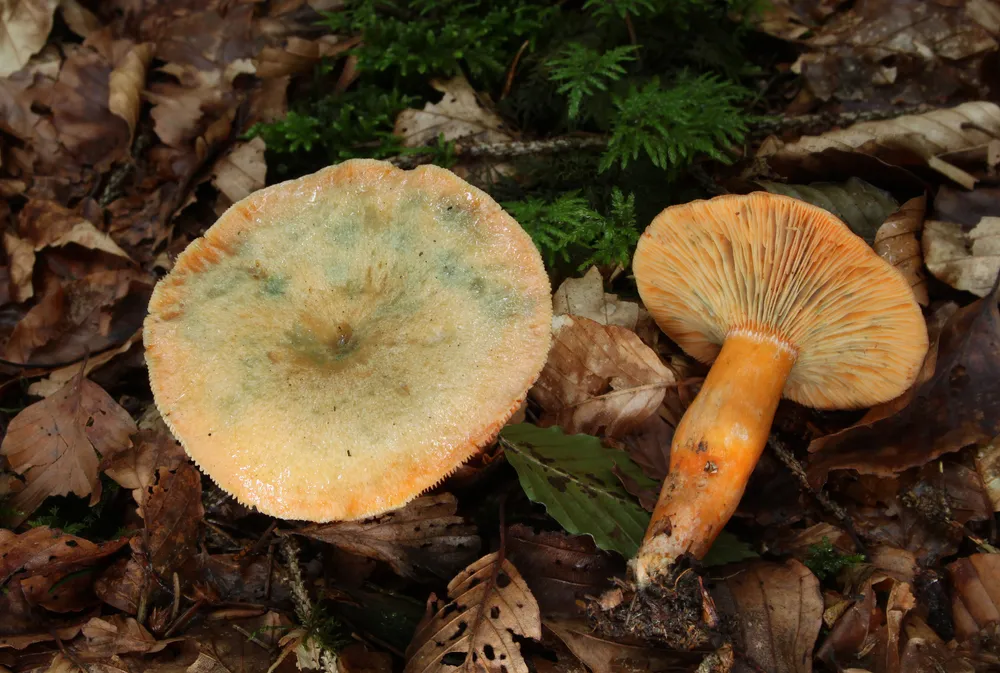
False saffron milk cap
Lactarius deterrimus
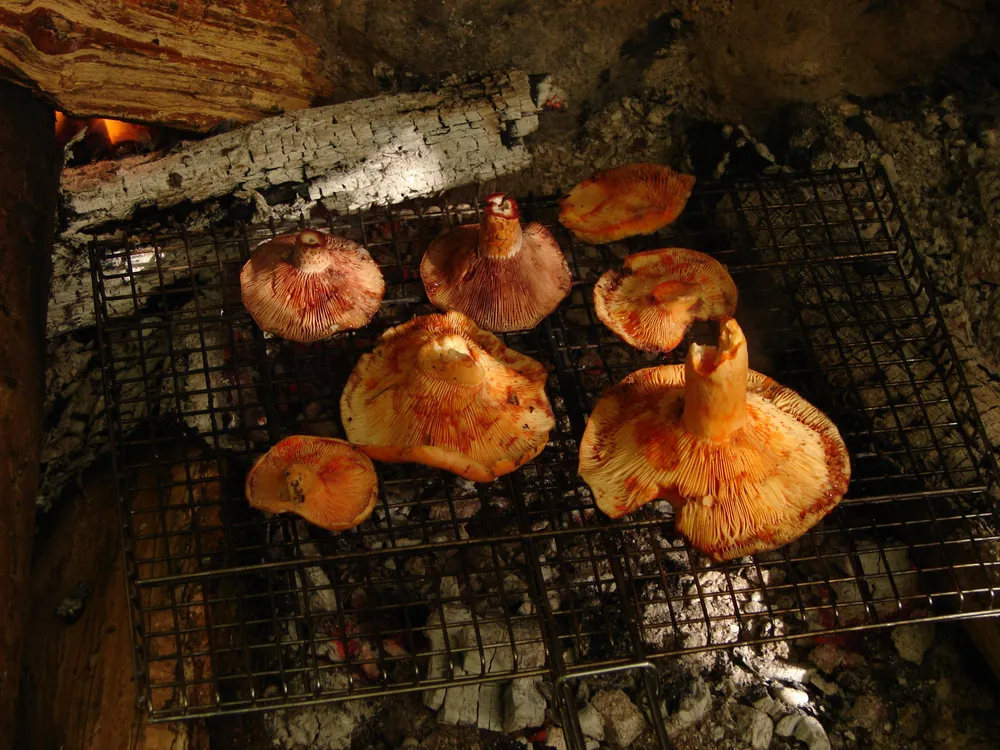
Lactarius salmonicolor
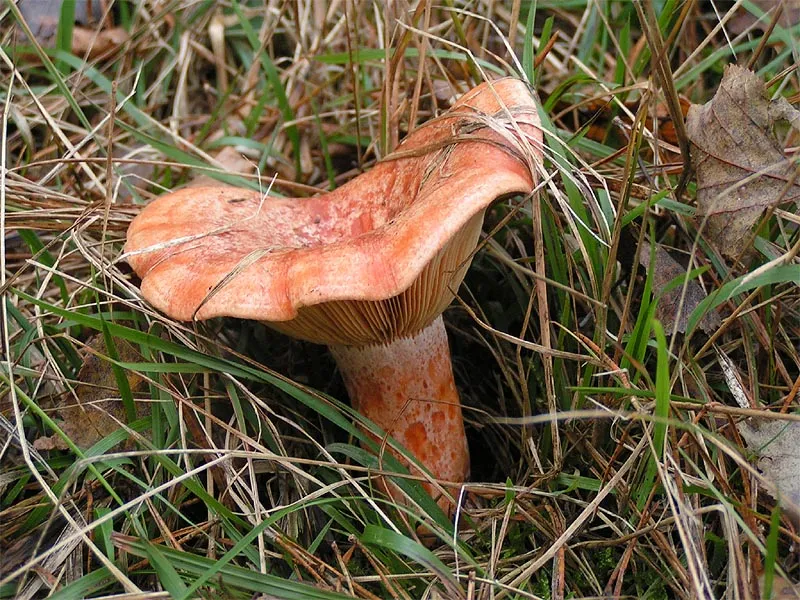
Saffron milk cap
Lactarius deliciosus
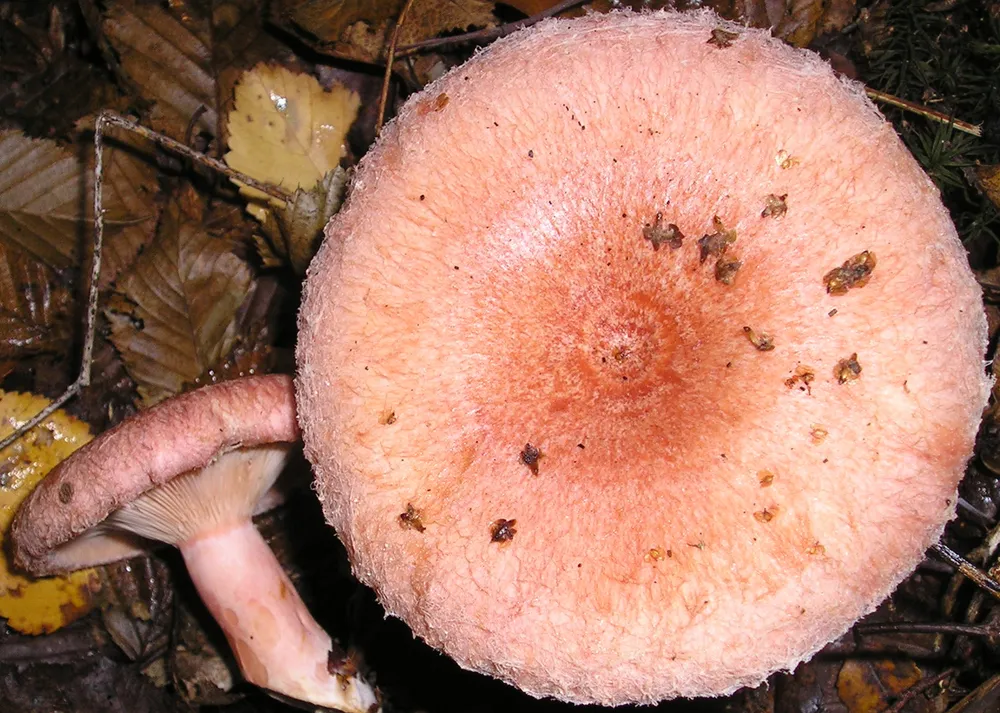
Woolly milk cap
Lactarius torminosus
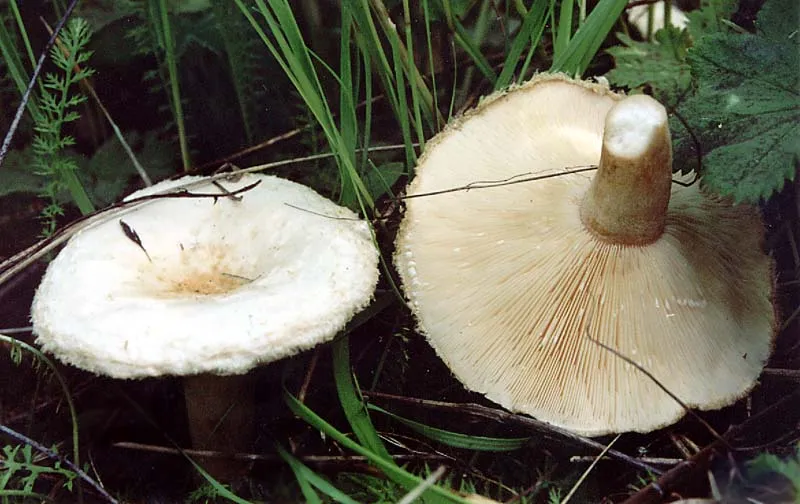
Bearded milk cap
Lactarius pubescens
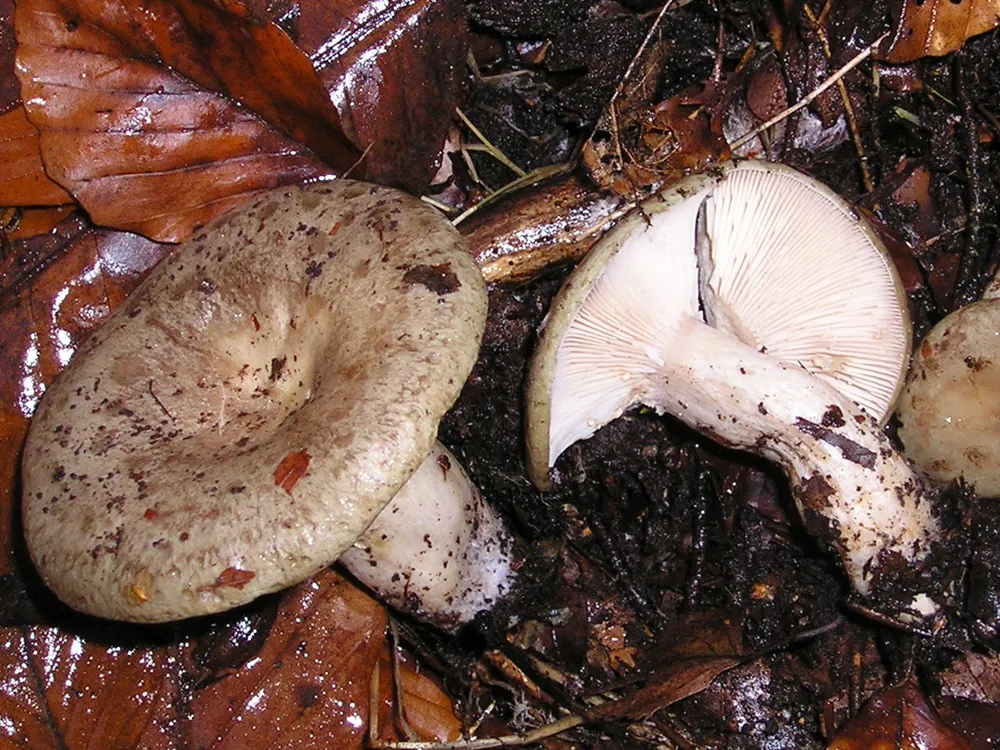
Beech milk cap
Lactarius blennius
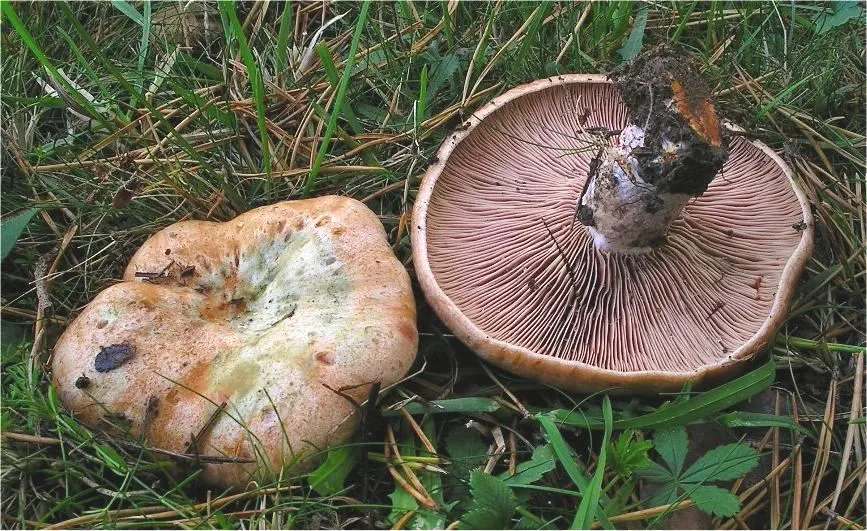
Bloody milk cap
Lactarius sanguifluus
Frequently asked questions
Can you eat it?
Yes, but only after processing: soak for 1-2 days, changing the water, then boil for 15-20 minutes and pour off the water, then salt for 40 days. Raw or poorly processed, it causes gastroenteritis — nausea, abdominal pain, diarrhea. It passes within a day or two without serious consequences, but it’s unpleasant.
Why is it sold as “gruzd”?
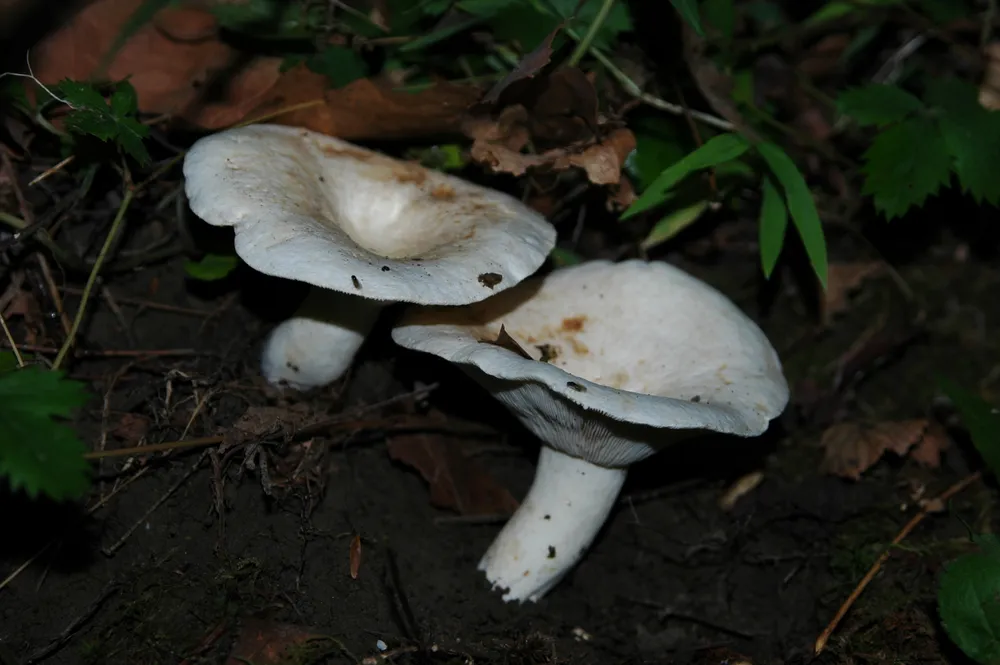
At markets, all large whitish milk caps with hot white milk are often called “gruzd” — a folk umbrella name. The true Lactarius resimus has a white, unzoned cap and a densely downy margin. Lactarius insulsus looks similar but has distinct zones on the cap. In the kitchen, once salted, the two are very much alike.
Where does it grow?
In old oak, oak-hornbeam and beech forests, mostly on limestone soils. It likes open stands, forest edges and small clearings. In Ukraine — the forest-steppe, Prykarpattia, less often Polissia. It forms mycorrhiza with oak, hornbeam and beech.
Why is it called “the group one”?
Because the fruiting bodies appear in characteristic clusters — 10-30 at a time in a small area, often in rings (“fairy rings”) or strips. Once you find one, be sure to search the area within a 5-10 m radius — there are almost certainly more.
When should you look for it?
August–October. Fruiting peaks from late August through the second half of September, after long spells of rain. In a dry summer it may not appear at all.
What is it confused with?
With Lactarius resimus — its cap is white and unzoned with a densely downy margin, and the two are often salted together. With the fleecy milk cap (Lactarius vellereus) — it is larger, with an unzoned, downy cap; with the peppery milk cap (L. piperatus) — also unzoned, but with abundant milk.
Are its lookalikes dangerous?
It has no deadly poisonous lookalikes. The biggest risk is mixing it up with the fenugreek milk cap (L. helvus), but that one has a strong spicy smell of dry hay. The general rule: all milk caps with hot white milk are potentially conditionally edible — that is, only for salting after processing, never for frying.
How do you identify Lactarius zonarius for sure?
Three keys: 1) a cream cap with distinct concentric ochre zones; 2) white, very hot milk that doesn’t change color; 3) a stem often marked with ochre “pits.” Plus group fruiting under oak and beech on limestone. All of these together — that’s the one.
Is Lactarius insulsus edible or poisonous?
Does Lactarius insulsus have gills or pores?
What does the cap of Lactarius insulsus look like?
What does the stem of Lactarius insulsus look like?
Sources
- [1]Вікіпедія (українська)
- [2]Атлас грибів України, Зеров Д.К. (1979)
- [3]MycoBank Database
- [4]Index Fungorum
- [5]GBIF
- [6]iNaturalist Ukraine