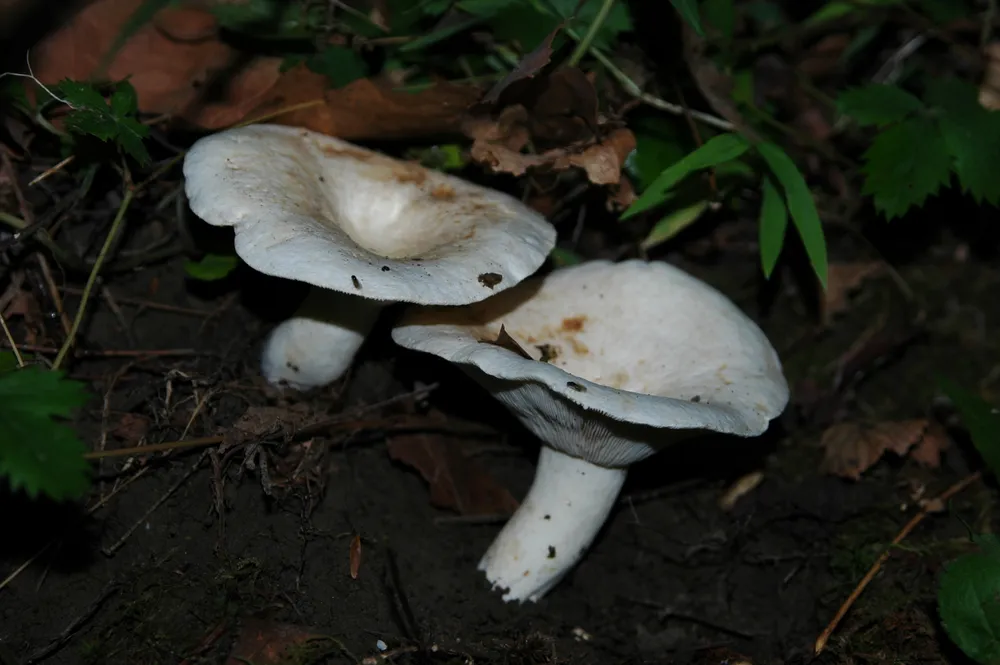
Peppery milk capLactarius piperatus
Expert-verifiedUpdated August 15, 2026
Passport
- Edibility
- Conditionally edible
- Season
- Jul — Oct
- Hymenophore
- Gilled
- Cap color
- White
- Size
- Large (over 15 cm)
- Smell
- Odorless
- Reviewed
- Yes ✓
Quick answers
Where to look?
Deciduous forest, Mixed forest
When does it appear?
Jul — Oct
Active months: July, August, September, October.
How to recognize it? Three signs
- Cap color: White, Cream
- Cap shape: Funnel-shaped
- Smell: Odorless
Fruiting season
July – October
Description
The peppery milk cap is a large white milk cap with plenty of burning white milk that grows in broadleaf and mixed forests all over Ukraine. It got the name “peppery” for good reason: just touch your tongue to the cut and you'll feel a sharp sensation of hot black pepper. The milk is so concentrated in irritants that in Scandinavia it was once dried and used as a pepper substitute.
In the kitchen this is a classic conditionally edible mushroom for salting: large, fleshy, springy. Raw or simply boiled it is inedible — it causes severe gastroenteritis because of that same burning milk. The classic method: soak for 1-2 days, changing the water, or boil for 15-20 minutes and discard the water, then salt. In some countries (especially Poland and the Baltics) people dry the burning pieces and grind them into a powder as a seasoning — to be used in very small amounts.
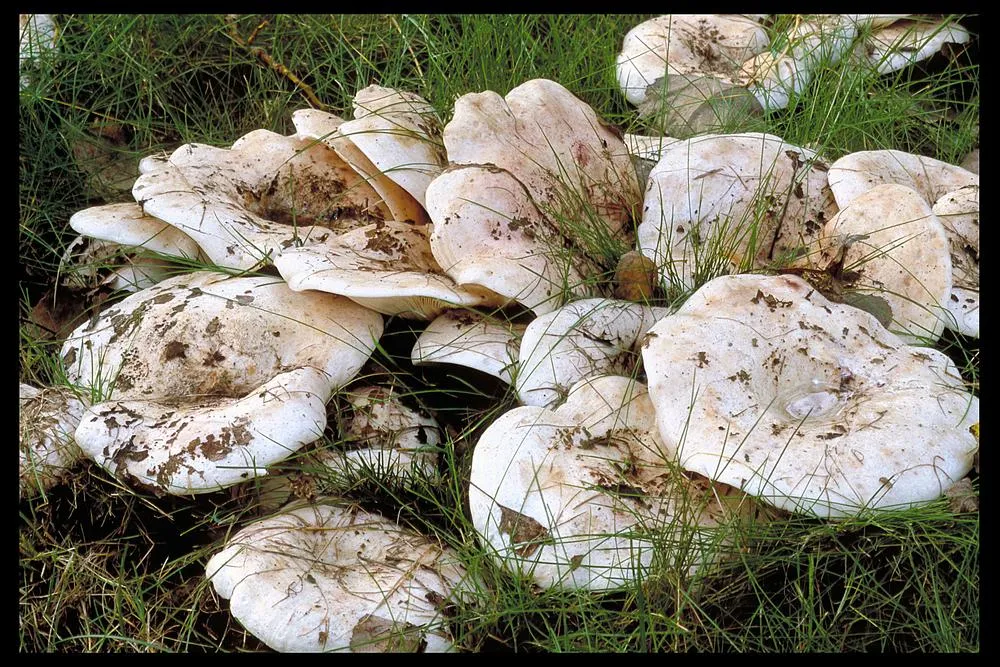
In Ukraine it is widespread throughout the forest and forest-steppe zones, especially in oak and oak-hornbeam forests. It's common, but grows singly or in small groups, unlike Lactarius resimus, which grows in big “troops.” The season is July–October, peaking in August–September after rain.
Cap
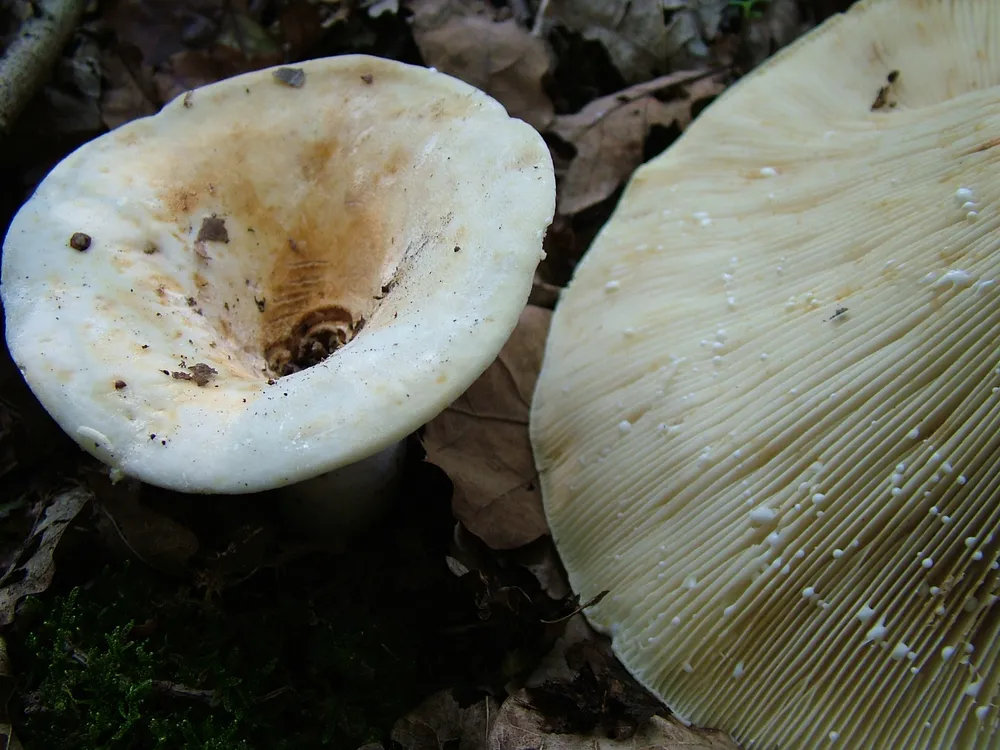
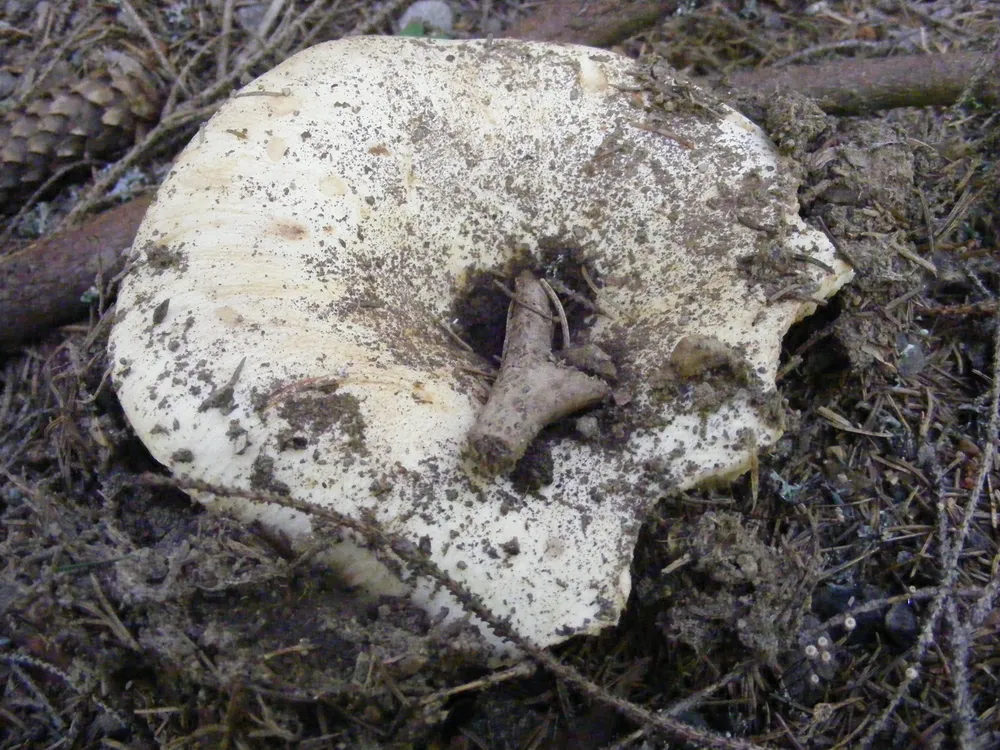
Cap 5-15 cm, convex at first with an inrolled margin, then flattened and finally funnel-shaped with a depressed center. Color white, creamy white, in mature specimens with a faint yellowish or ochre tint, especially in the center. Surface smooth, dry, matte, without zones, without a downy margin — this sets it apart from the “gruzd” group (Lactarius resimus, woolly milk cap, L. controversus).
Hymenophore
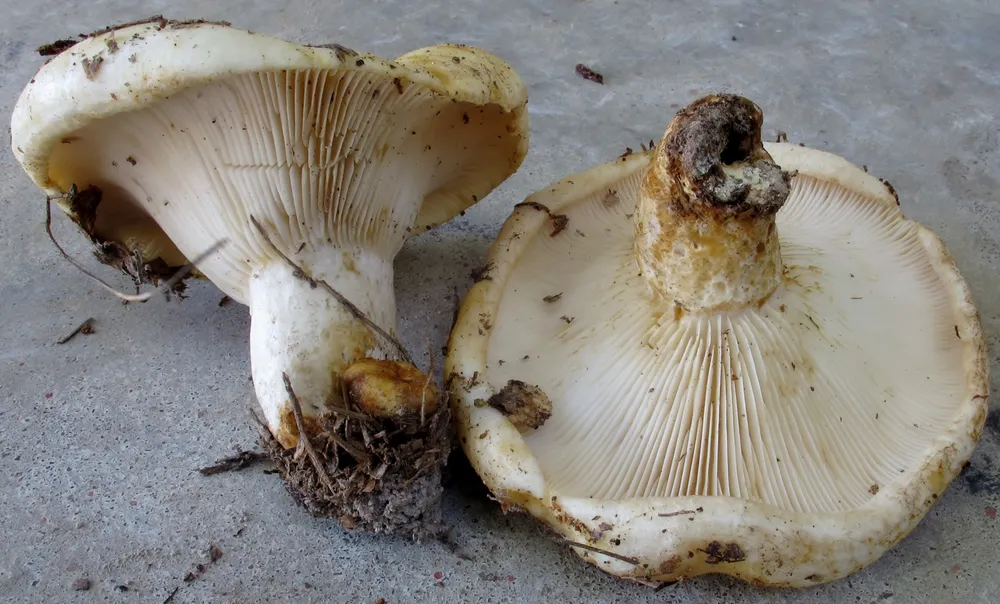
Gilled hymenophore with the most characteristic feature of the species — very crowded, thin, narrow gills that run down the stem. No other milk cap has gills this crowded. Color creamy white, graying where damaged. They release plenty of white milk. Spore print white.
Stem
Stem 4-8 cm tall, 1.5-2.5 cm thick, cylindrical or slightly tapering toward the base, firm, sometimes with small cavities in mature specimens. Color white. Surface smooth, dry, no ring and no volva.
Flesh
Flesh white, very dense, fleshy, brittle. When damaged it abundantly releases white milk (there's a lot of it — a characteristic feature). The milk slowly turns yellow in the air after 1-2 hours; the reaction with alkali (KOH) is orange-yellow.
Smell
Smell faint, mushroomy, slightly resinous. Taste of the raw flesh and milk — extremely burning, sharp, purely peppery, without bitterness — one of the hottest among the milk caps. Touch your tongue to the cut and you'll feel a sharp “black pepper” sensation.
Lookalikes
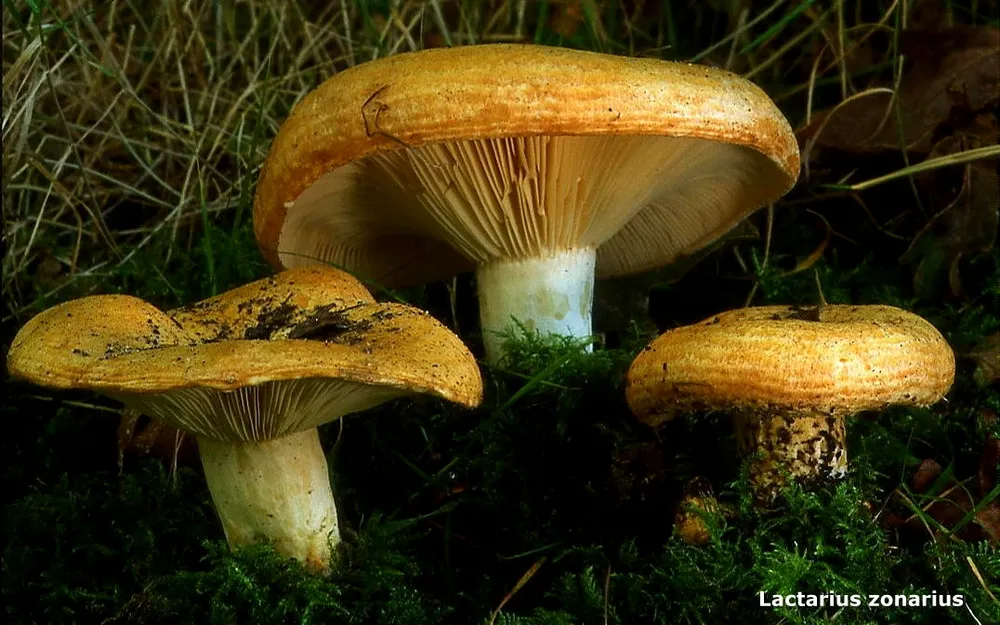
Related species
Mushrooms of the same genus and habitat — to study side by side and never mix up.

Coconut milk cap
Lactarius glyciosmus
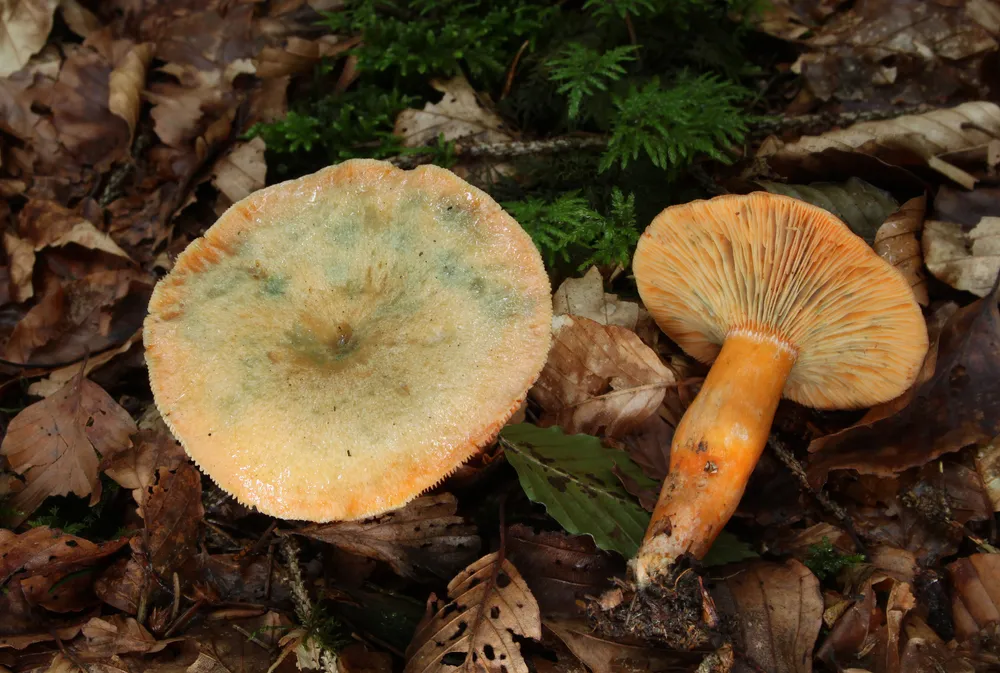
False saffron milk cap
Lactarius deterrimus
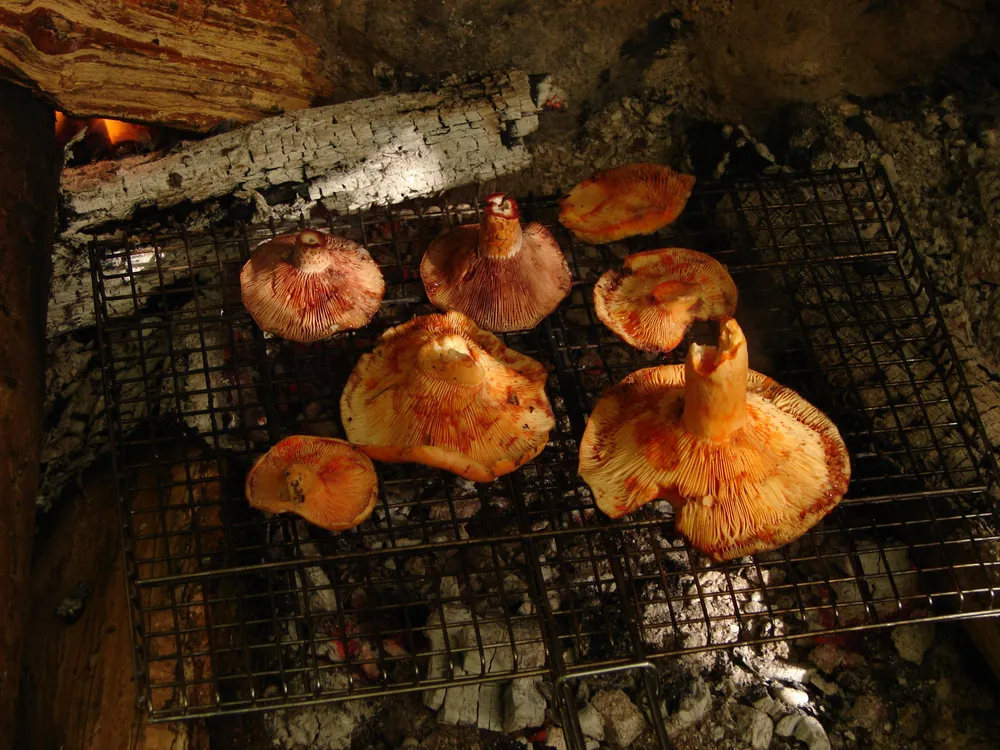
Lactarius salmonicolor
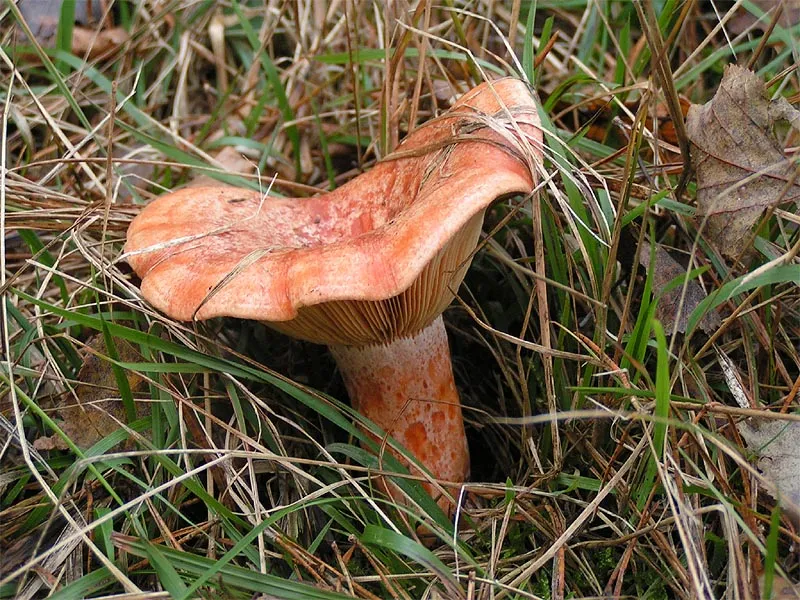
Saffron milk cap
Lactarius deliciosus
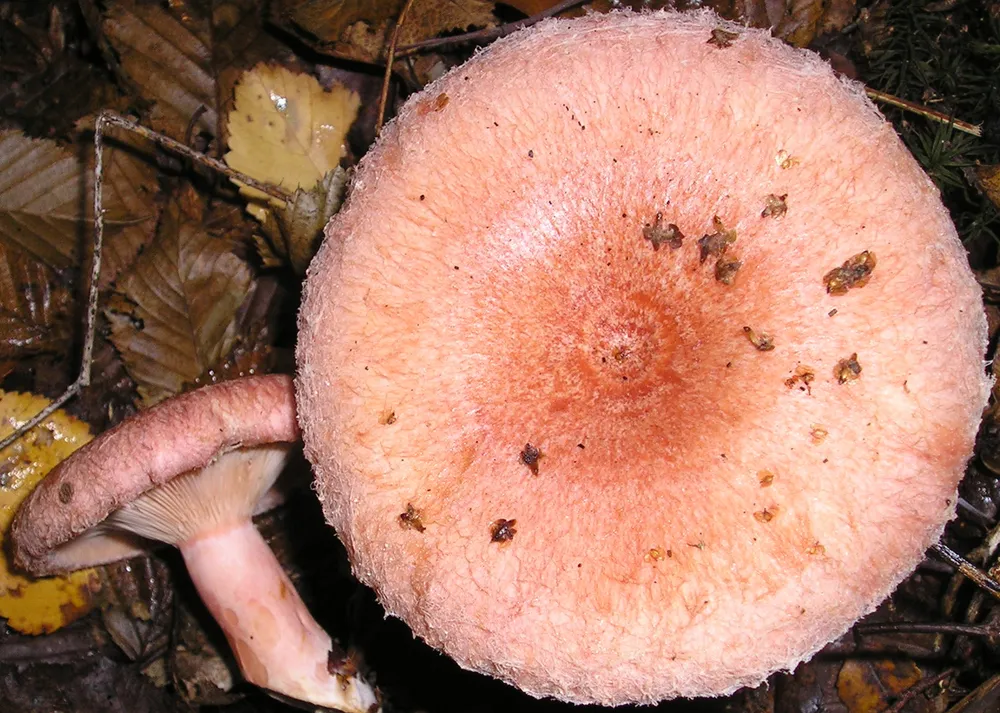
Woolly milk cap
Lactarius torminosus
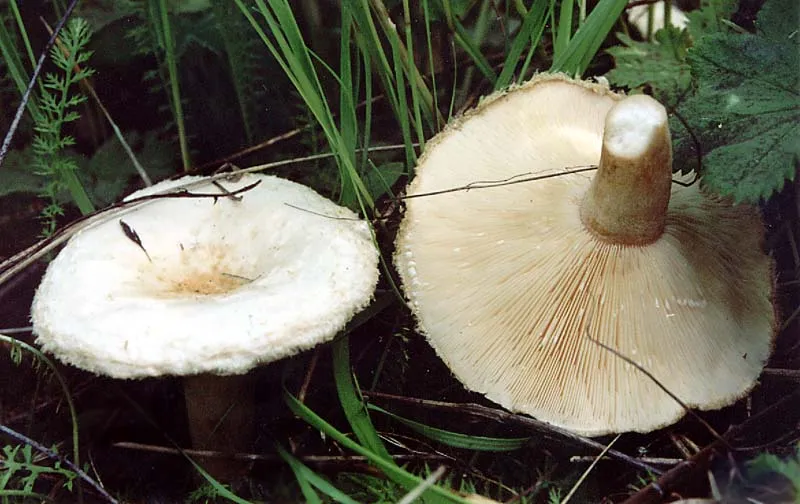
Bearded milk cap
Lactarius pubescens
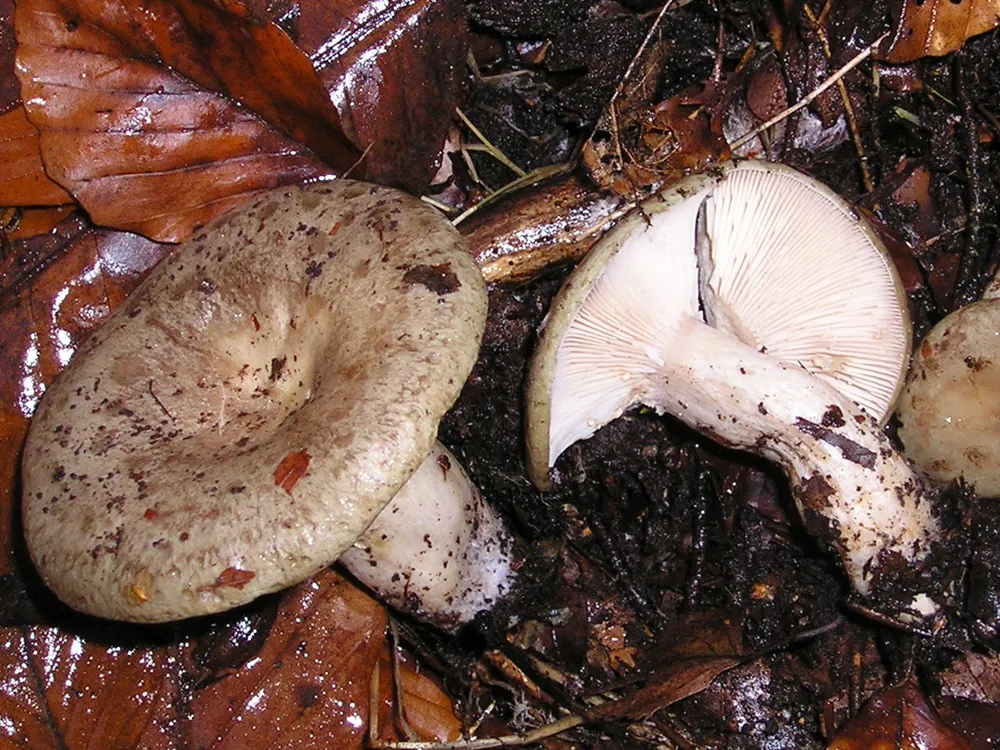
Beech milk cap
Lactarius blennius
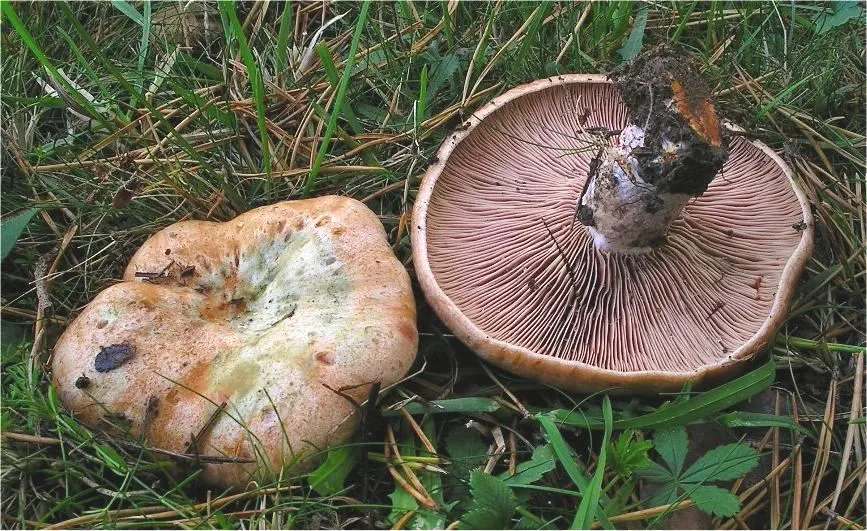
Bloody milk cap
Lactarius sanguifluus
Frequently asked questions
Can you eat it?
Yes, after treatment: soak for 1-2 days, changing the water, then boil for 15-20 minutes and discard the water, then salt for 40 days. Salted, it's springy with a rich flavor. Raw or simply boiled, it causes severe gastroenteritis because of its harsh irritants.
Is it true that it was used as a seasoning?
Yes, in Scandinavia and the Baltics people historically dried the burning pieces and ground them into a powder as a substitute for black pepper. This is a folk tradition, not a modern recommendation. It was used in very small doses. Modern field guides don't recommend it — there are better (and safer) alternatives.
Where does it grow?
In broadleaf and mixed forests, mainly under oak and hornbeam, more rarely under beech, hazel, and birch. It likes old forest stands, forest edges, and well-lit clearings. It doesn't occur in purely coniferous forests.
Which regions of Ukraine?
Throughout the forest and forest-steppe zones. Especially plentiful in the oak forests of Polissia, the forest-steppe, and Prykarpattia. In the steppe — in planted oak and ash stands. In the Carpathians — in mixed forests with oak and hornbeam.
When should you look for it?
July–October. Peak fruiting is August–September, especially after prolonged rain. In a wet summer it can appear in large numbers from the end of July.
How do you recognize it without mistakes?
Three features together: 1) a large, white, smooth cap without zones or downiness; 2) very crowded, thin gills (noticeably more crowded than in any other milk cap); 3) plenty of very burning white milk. If all three match — it's L. piperatus.
What is it confused with?
With the fleecy milk cap (L. vellereus) — its cap surface is thickly downy (“felted”), and its gills are distant, cream-colored, not as crowded. With Lactarius resimus — it has a fluffy cap margin and grows under birch. With L. controversus — it has pink gills and spots on the cap and grows under poplar.
Are the lookalikes dangerous?
Among milk caps in Ukraine there are no seriously poisonous lookalikes. As always with white mushrooms in a broadleaf forest, the main check is the milk at the cut (present = milk cap, absent = something else) and the gills under the cap (the destroying angel has no milk and has a volva at the base of the stem).
Is Peppery milk cap edible or poisonous?
Does Peppery milk cap have gills or pores?
What does the cap of Peppery milk cap look like?
What does the stem of Peppery milk cap look like?
Sources
- [1]Вікіпедія (українська)
- [2]Атлас грибів України, Зеров Д.К. (1979)
- [3]MycoBank Database
- [4]Index Fungorum
- [5]GBIF
- [6]iNaturalist Ukraine