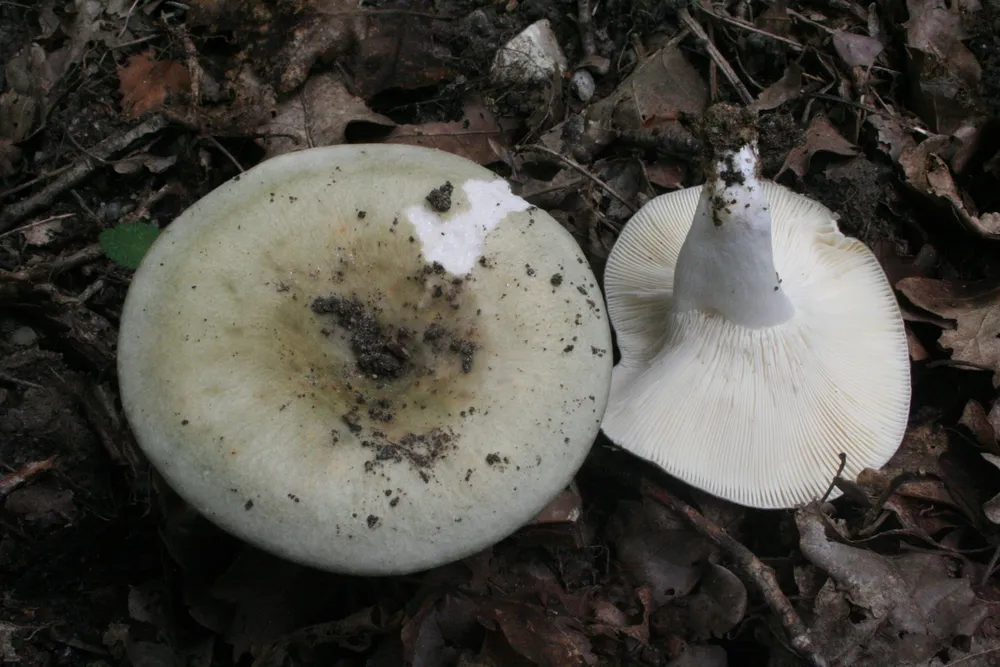
Greasy green brittlegillRussula heterophylla
Expert-verifiedUpdated June 13, 2026
Passport
- Edibility
- Edible
- Season
- Jul — Oct
- Hymenophore
- Gilled
- Cap color
- Olive
- Size
- Medium (5–15 cm)
- Smell
- Pleasant
- Reviewed
- Yes ✓
Quick answers
Where to look?
Deciduous forest, Mixed forest
When does it appear?
Jul — Oct
Active months: July, August, September, October.
How to recognize it? Three signs
- Cap color: Olive, Brown
- Cap shape: Depressed
- Smell: Pleasant
Fruiting season
July – October
Description
The greasy green brittlegill (Russula heterophylla) — a tasty edible brittlegill of beech and oak forests with a characteristic green-olive or green-brown cap and flesh that turns slightly pink when damaged. The Latin epithet heterophylla means "with varied gills", from the Greek heteros — "different" and phyllon — "leaf": the species shows slight forking of the gills near the stem — a diagnostic trait.
Cap 5-12 cm across, convex when young, flattening with age with a slightly depressed center, green-olive, olive-gray, gray-brown, deeper in the center. The cap skin is smooth, peels easily to 2/3 of the cap.
An excellent edible mushroom of good culinary quality — the flesh is tender, with a mild nutty taste and no bitterness. Cook it like porcini: fry, stew, pickle, dry. No preliminary boiling required. Foragers rate it on a par with R. vesca as a "gourmet's mushroom".
Diagnostic features of Russula heterophylla: Green-olive to gray-brown cap Gills forked near the stem Flesh turns faintly pink when damaged Spore print white Taste mild, sweetish (tongue test) Smell faint, pleasant, fruity Grows in oak, beech and hornbeam forests FeSO₄ test: bright pink to orange-red
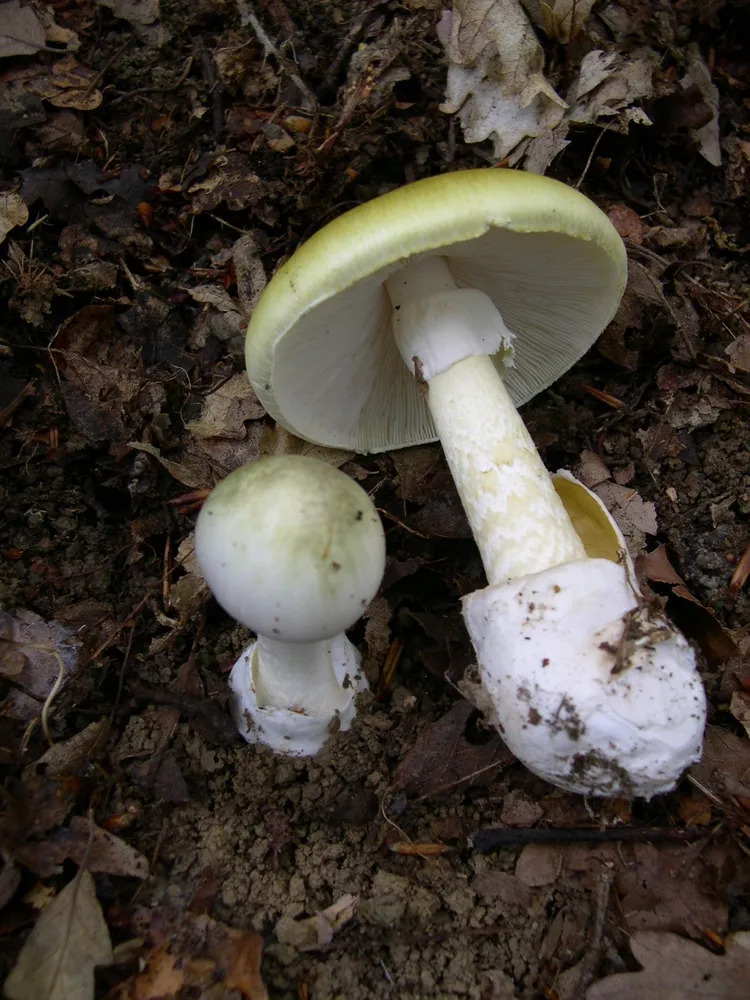
The main risk is confusing it with a young death cap (Amanita phalloides) because of the green palette. As always — dig up the stem base: no volva/ring — it's a brittlegill.
In Ukraine Russula heterophylla is common in deciduous forests: the Carpathians, Prykarpattia, Polissia, the forest-steppe. A mycorrhizal partner of oak, beech, hornbeam and birch. Season July — October.
Cap
Cap 5-12 cm across, when young convex with an inrolled margin, with age becoming flattened with a slightly depressed center. The cap skin is smooth, slimy in wet weather, dry and matte in dry weather, peels easily 2/3 of the way to the center. Color green-olive, olive-gray, gray-brown, deeper in the center to dark green. Mature caps have fine radial grooves at the margin.
Hymenophore
Gilled hymenophore — gills adnate or free from the stem, moderately crowded, thin, with characteristic forking near the stem — a diagnostic trait. Color pure white to creamy white. Spore print white.
Stem
Stem 4-8 cm tall, 1.5-2.5 cm thick, firm, cylindrical, hollow in old specimens. Color white to cream, with faint gray-cream patches in old specimens. Surface smooth with fine lengthwise wrinkles. No ring, no volva.
Flesh
Flesh firm, brittle, white, turns faintly pink when damaged — a reaction typical of the species. Smell faint, pleasant, fruity-mushroomy, taste mild, sweetish and nutty, not bitter (tongue test).
Smell
Faint, pleasant, fruity-mushroomy, neutral-sweetish.
Lookalikes
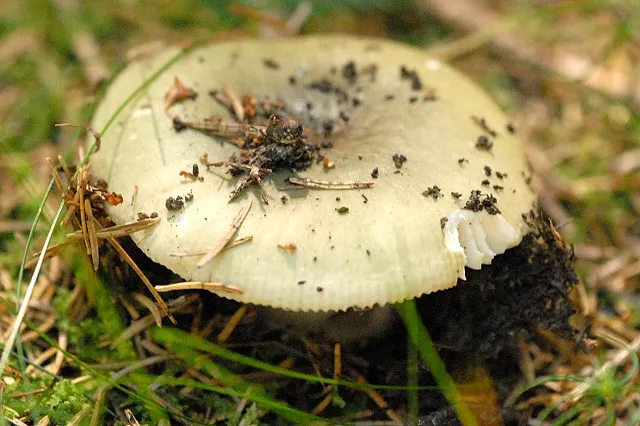
Related species
Mushrooms of the same genus and habitat — to study side by side and never mix up.
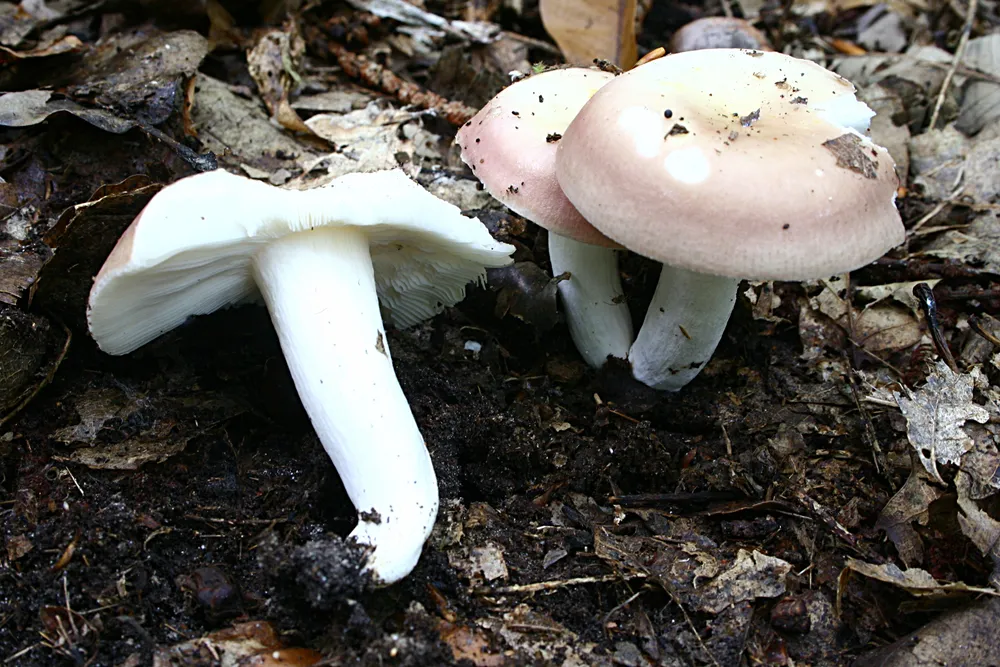
Bare-toothed russula
Russula vesca
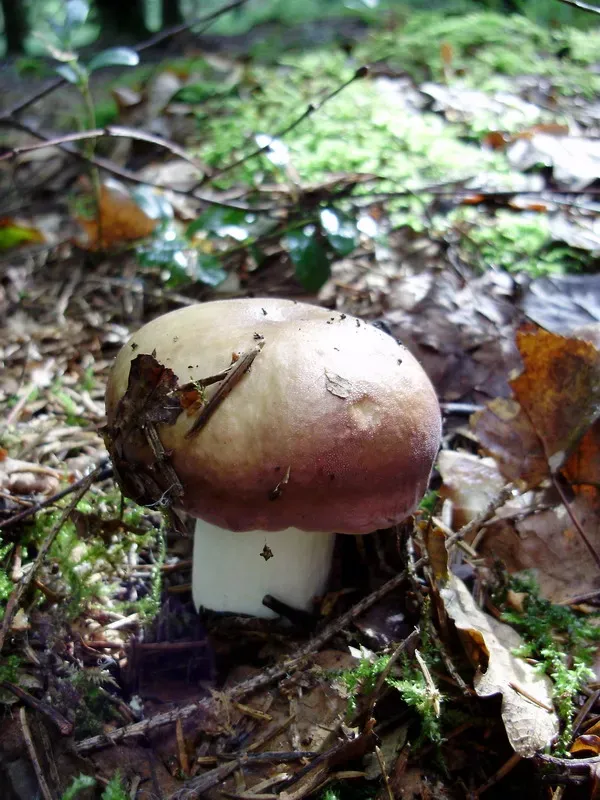
Copper brittlegill
Russula decolorans
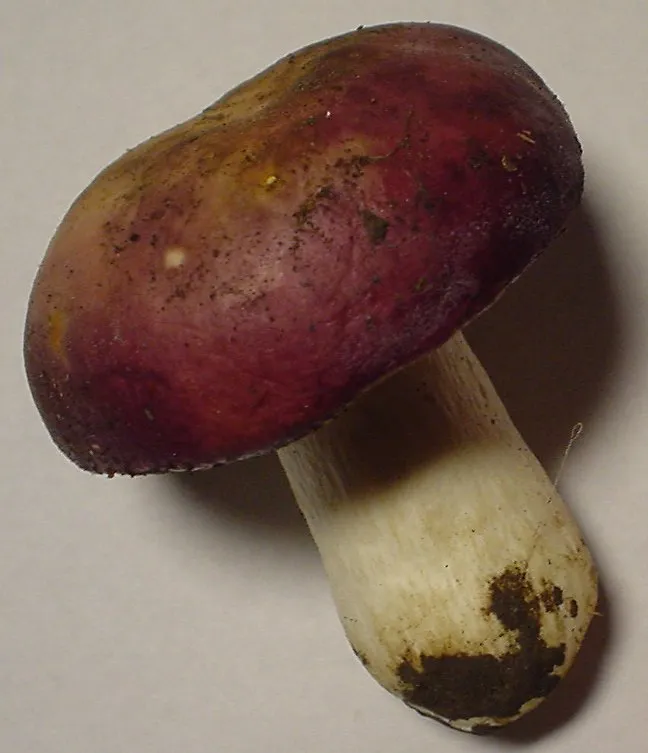
Crab brittlegill
Russula xerampelina
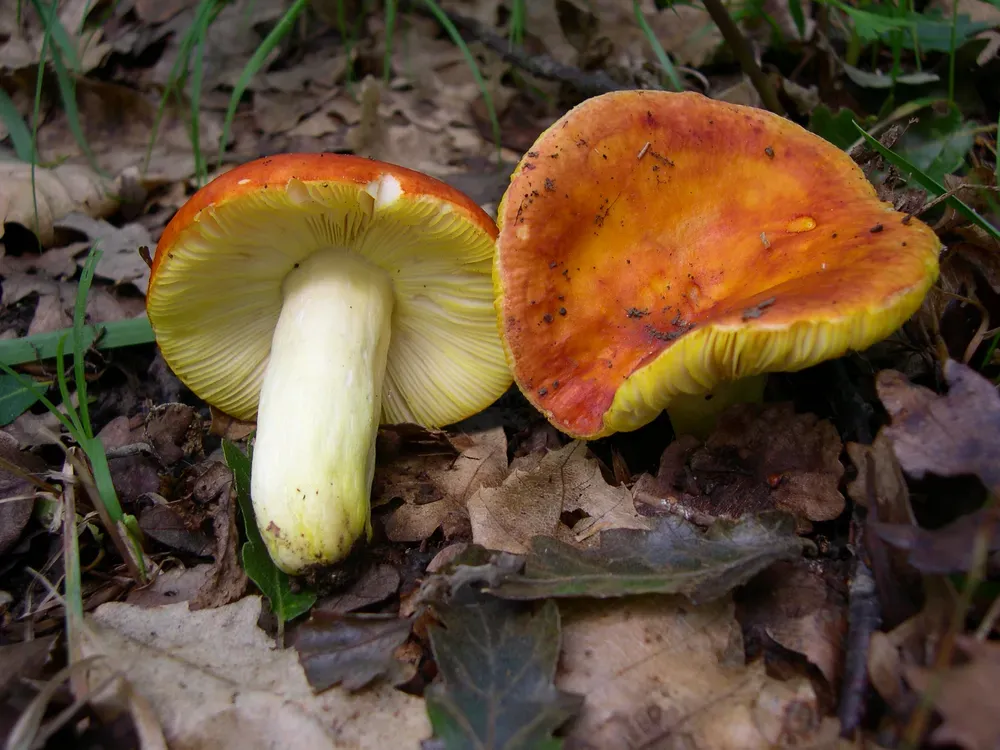
Gilded brittlegill
Russula aurea
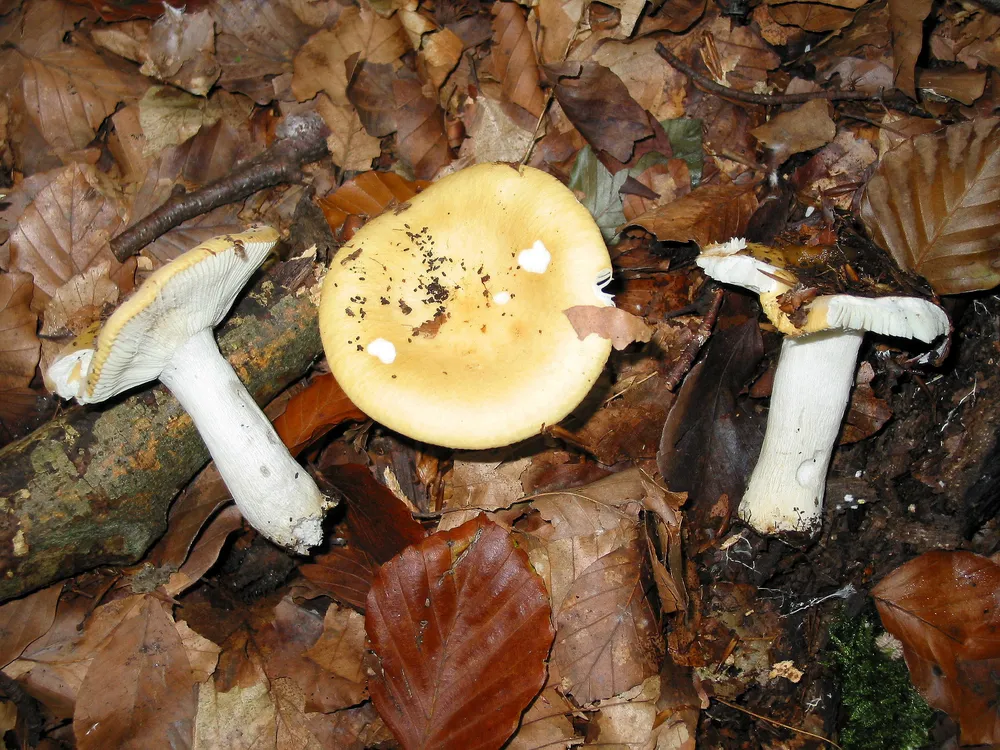
Golden brittlegill
Russula lutea
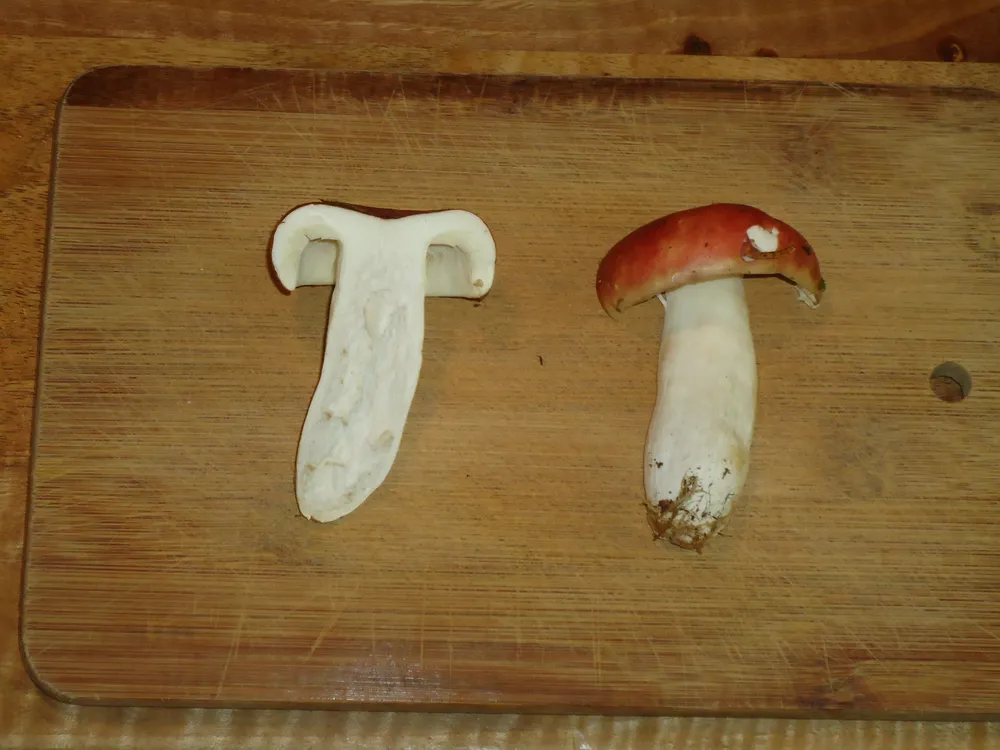
Hintapink
Russula paludosa
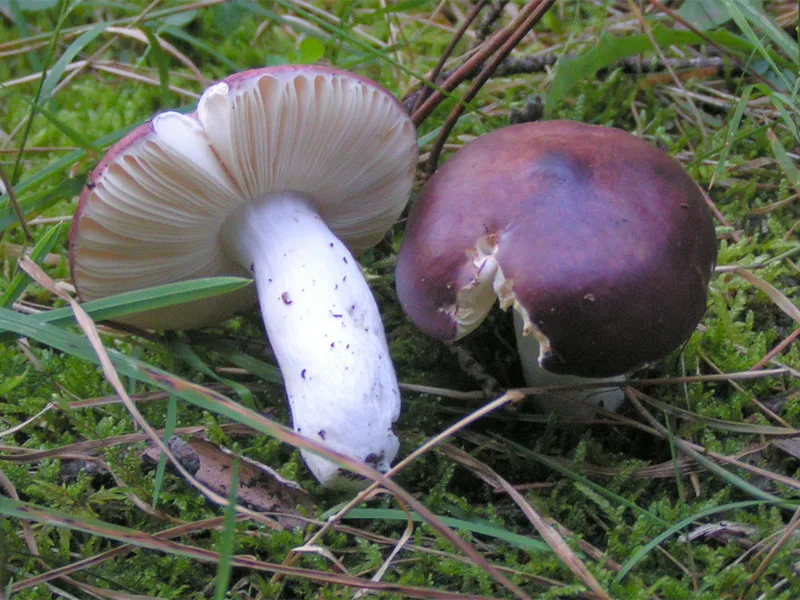
Humpback brittlegill
Russula caerulea
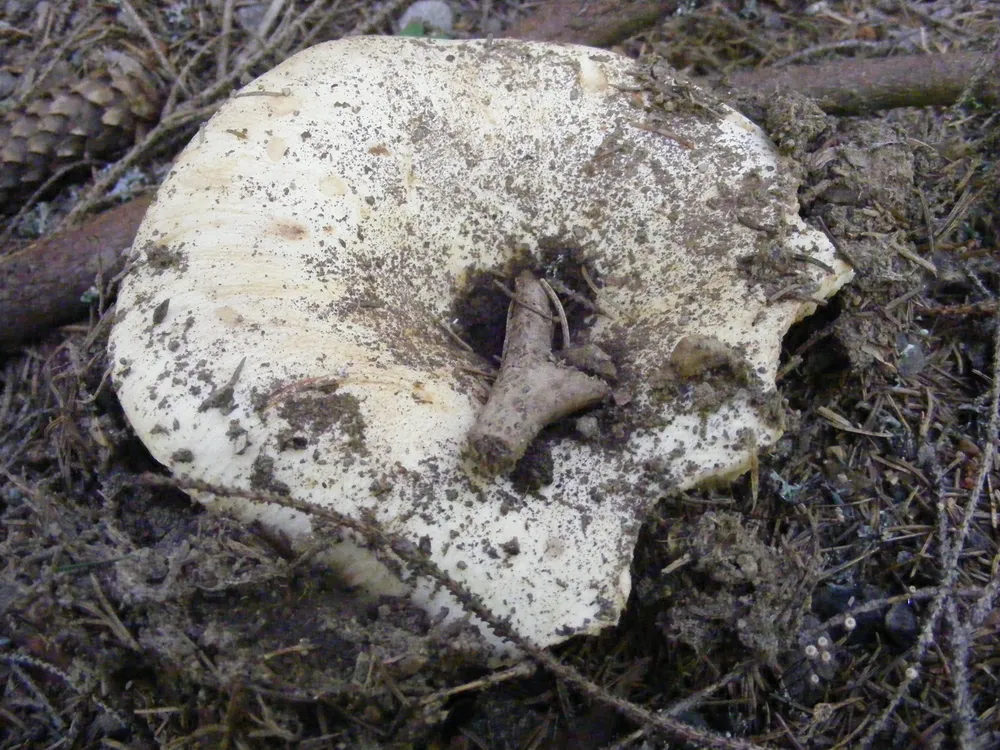
Milk-white brittlegill
Russula delica
Frequently asked questions
How do you tell it from the death cap?
MANDATORY RULE — dig up the stem base. (1) Death cap — WITH a sac-like VOLVA at the base and with a RING on the upper stem. (2) The death cap's flesh is springy, like leather; R. heterophylla — brittle and crumbly. (3) The death cap smells sickly sweet in mature specimens; R. heterophylla — fruity, neutral. (4) Both have a white spore print, so this is NOT diagnostic. If you see even a hint of a sac — DON'T PICK IT.
How do you identify it for sure?
Four features. (1) Green-olive cap. (2) Forked gills near the stem (characteristic). (3) Flesh turns faintly pink when damaged. (4) White spore print. (5) Mild, sweetish taste.
How do you cook it?
No preliminary boiling required (no bitterness when fresh). Young ones — fry with cream, stew with potatoes, add to soups. Pickle — excellent, keeps its shape and color. Dry — fine. In sauces — a nutty flavor.
Where do you find it?
In oak, beech, hornbeam and mixed forests on the forest floor among moss and grass. Prefers rich, moist humus. Often grows in groups of 5-15 fruiting bodies.
Which regions of Ukraine does it grow in?
Common throughout the forest zone: the Carpathians, Prykarpattia, Polissia, the forest-steppe.
When do you look for it?
July — October, peaking in August-September.
Which brittlegills is it confused with?
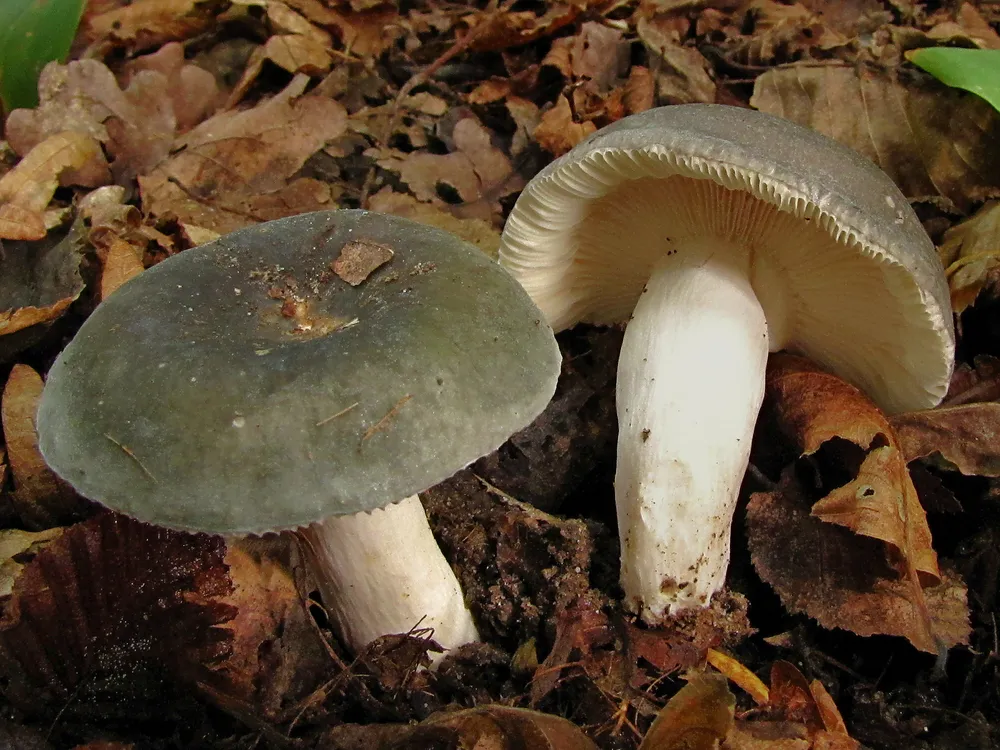
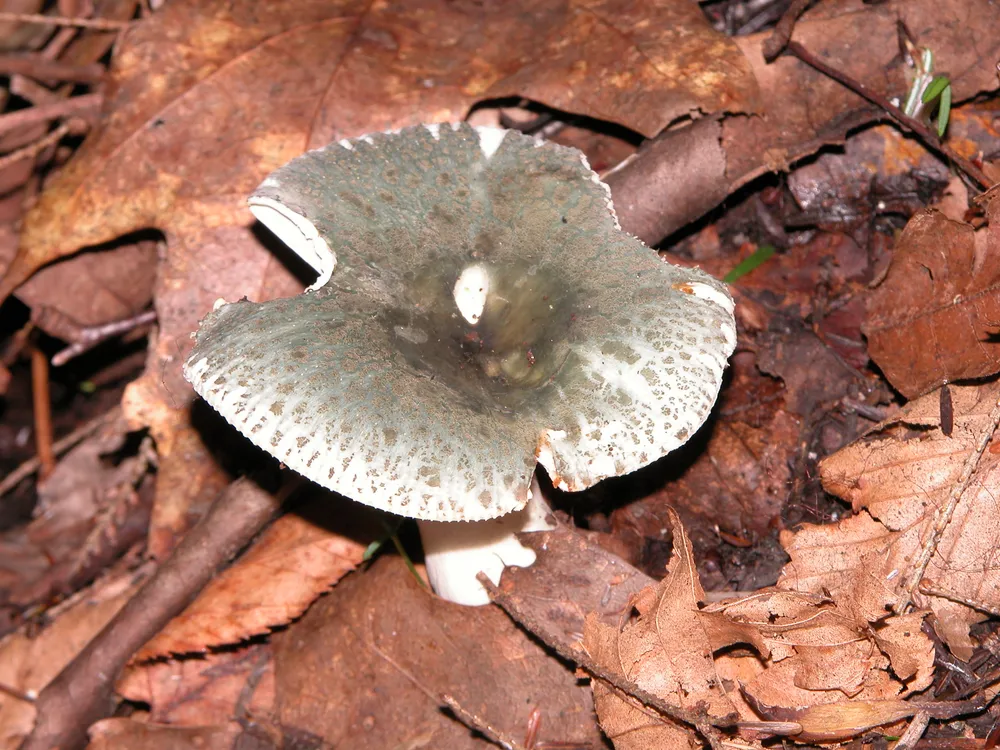
With R. cyanoxantha (charcoal burner, edible, excellent) — also green-violet, with distinctly flexible, springy gills. With R. virescens (greencracked brittlegill, edible) — with a scaly, cracked cap skin. With R. aeruginea (green brittlegill) — also green, but with a yellowish spore print.
Is Greasy green brittlegill edible or poisonous?
Does Greasy green brittlegill have gills or pores?
What does the cap of Greasy green brittlegill look like?
What does the stem of Greasy green brittlegill look like?
What do Greasy green brittlegill smell and taste like?
Sources
- [1]Вікіпедія (українська)
- [2]Атлас грибів України, Зеров Д.К. (1979)
- [3]MycoBank Database
- [4]Index Fungorum
- [5]GBIF
- [6]iNaturalist Ukraine