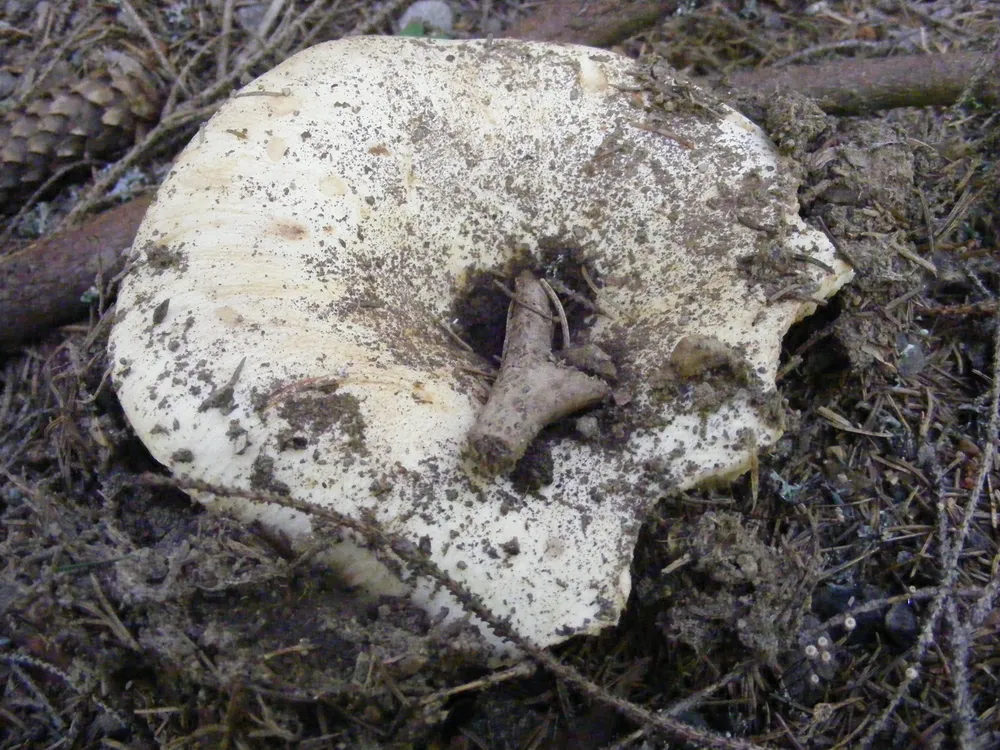
Milk-white brittlegillRussula delica
Expert-verifiedUpdated August 15, 2026
Passport
- Edibility
- Conditionally edible
- Season
- Jul — Oct
- Hymenophore
- Gilled
- Cap color
- White
- Size
- Large (over 15 cm)
- Smell
- Odorless
- Reviewed
- Yes ✓
Quick answers
Where to look?
Deciduous forest, Conifer forest, Mixed forest
When does it appear?
Jul — Oct
Active months: July, August, September, October.
How to recognize it? Three signs
- Cap color: White, Cream, Brown
- Cap shape: Depressed
- Smell: Odorless
Fruiting season
July – October
Description
The milk-white brittlegill, known in Ukraine as the "white pidhruzok" (Russula delica), is a distinctive large white brittlegill with a funnel-shaped cap and a very short, thick stem that looks more like a milk cap (Lactarius) than a typical brittlegill. The Latin epithet delica means "weaned" or "milkless," a nod to its resemblance to milk caps, but without any milk. The cap is 5-20 cm across (it can get very big!), whitish-cream with an ochre-brown center, funnel-shaped, with an inrolled margin when young.
Conditionally edible after boiling for 10-15 min and draining the water. The raw flesh has a strongly burning, acrid aftertaste (typical of young specimens), which largely disappears with boiling. Folk tradition rates it as middling — a "filler" mixed with more aromatic mushrooms, especially for salting and pickling. In Western Europe some traditions consider it mediocre; in Eastern European and Scandinavian ones it is a traditional mushroom for winter salting.
The key thing is to recognize it, because it is easy to confuse with milk caps: the rufous milk cap (L. rufus), white milk caps (L. piperatus, L. vellereus). The key test: when damaged, Russula delica DOES NOT EXUDE MILK, while milk caps exude it freely. If you see white or colored "blood" when you cut it, it's a milk cap, not a brittlegill.
The second characteristic feature of R. delica is a greenish-gray or bluish tone at the top of the stem and on the gills (especially in mature specimens). These "grooves" on the stem and the bluish tint are a diagnostic feature of the species.
In Ukraine, the milk-white brittlegill is common in broadleaf and mixed forests: the Carpathians, Prykarpattia, Polissia, the forest-steppe. A mycorrhizal partner of oak, beech, hornbeam, birch and spruce. Season: July — October. It often grows in groups in grass and forest litter.
Cap
Cap 5-20 cm across (often very large), convex-flat with a distinctly inrolled margin when young, with age becoming deeply funnel-shaped. The skin is matte white with an ochre-brown center; in adult specimens with noticeable bits of soil and moss stuck to it (because of the funnel shape). Base color white to cream, ochre-brown to brownish in the center. The skin is peels only at the margin, not easily. The margin is even, with a fine felty down when young.
Hymenophore
Gilled hymenophore — the gills are decurrent, moderately spaced, fleshy, brittle. Color: whitish to creamy white, in the upper part, near the stem, often with a characteristic greenish-bluish tint — a diagnostic feature. Spore print white to creamy white.
Stem
Stem 2-5 cm tall, 2-4 cm thick — very short and thick, even when the cap is large. Cylindrical to conical, thickening toward the base. Color: whitish, in the upper part, with a characteristic greenish-bluish tint, with fine crosswise wrinkled grooves. No ring.
Flesh
Flesh very firm, fleshy, white, brittle. Exudes no milk when damaged (it's not a milk cap!). When cut, it slowly takes on a yellowish tint. Smell faintly mushroomy, with a fruity note in young specimens, taste mild at first, then distinctly burning and acrid (especially in the gills). Boiling removes the acridity.
Smell
Faintly mushroomy with a fruity note in young specimens, nothing striking.
Lookalikes
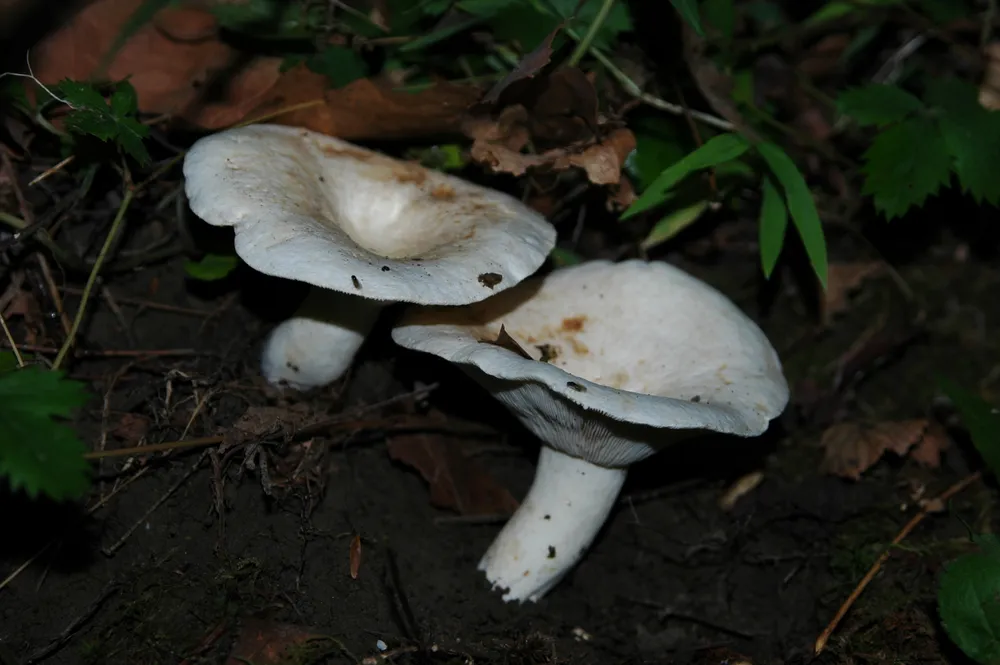
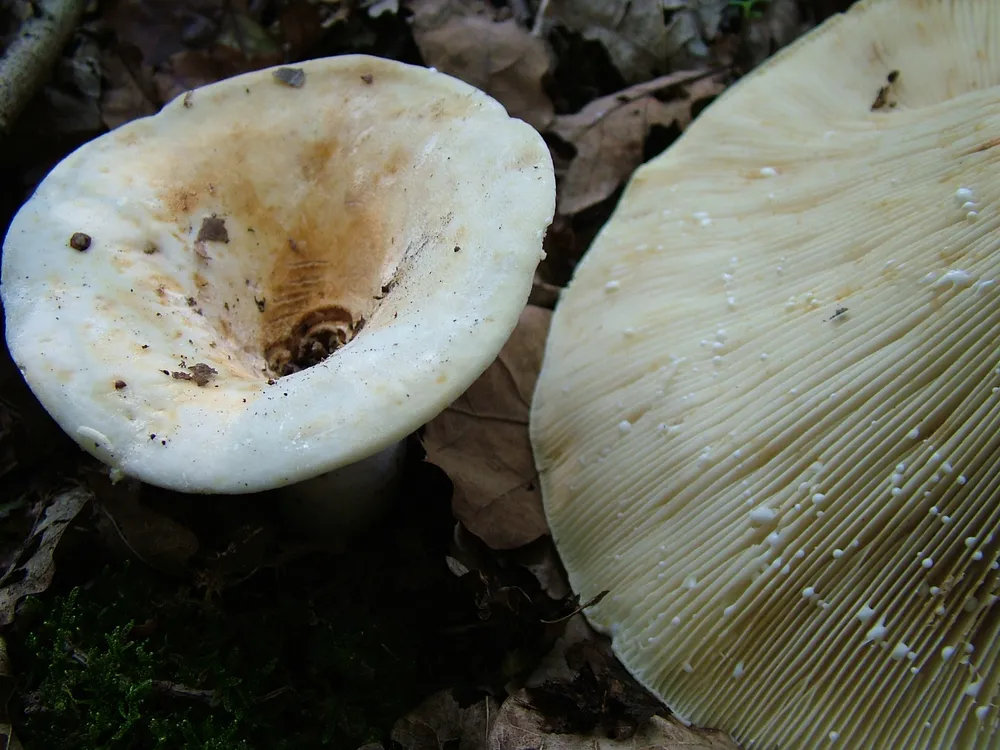
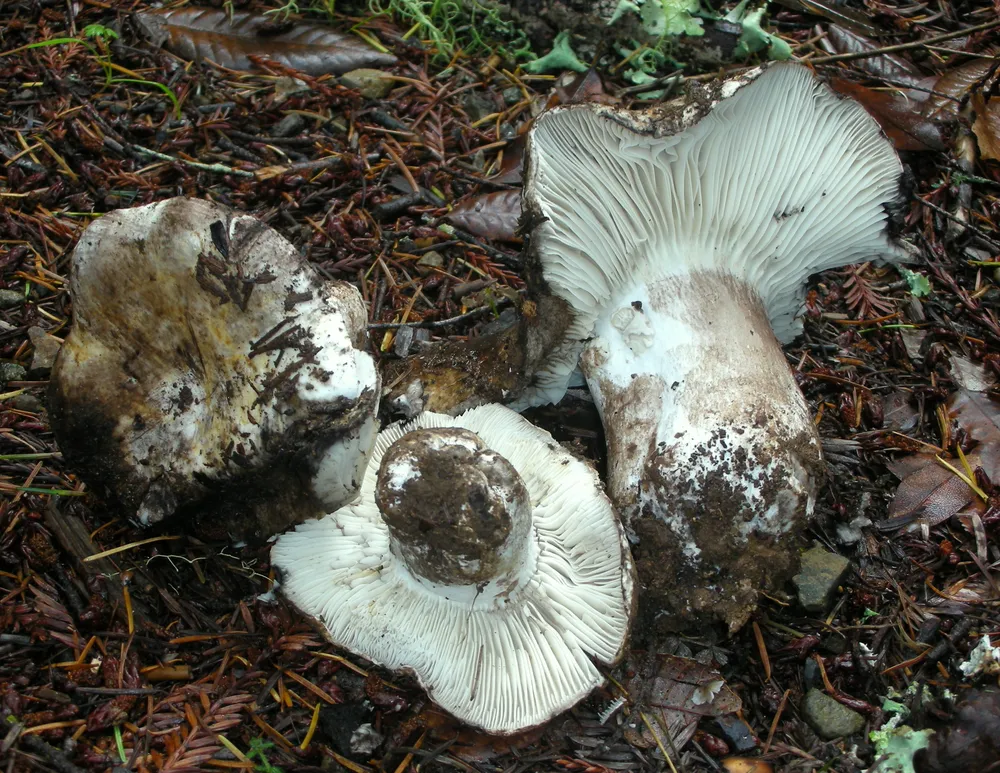
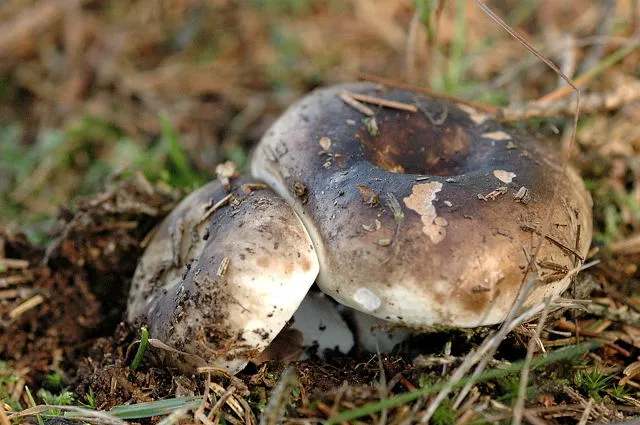
Related species
Mushrooms of the same genus and habitat — to study side by side and never mix up.
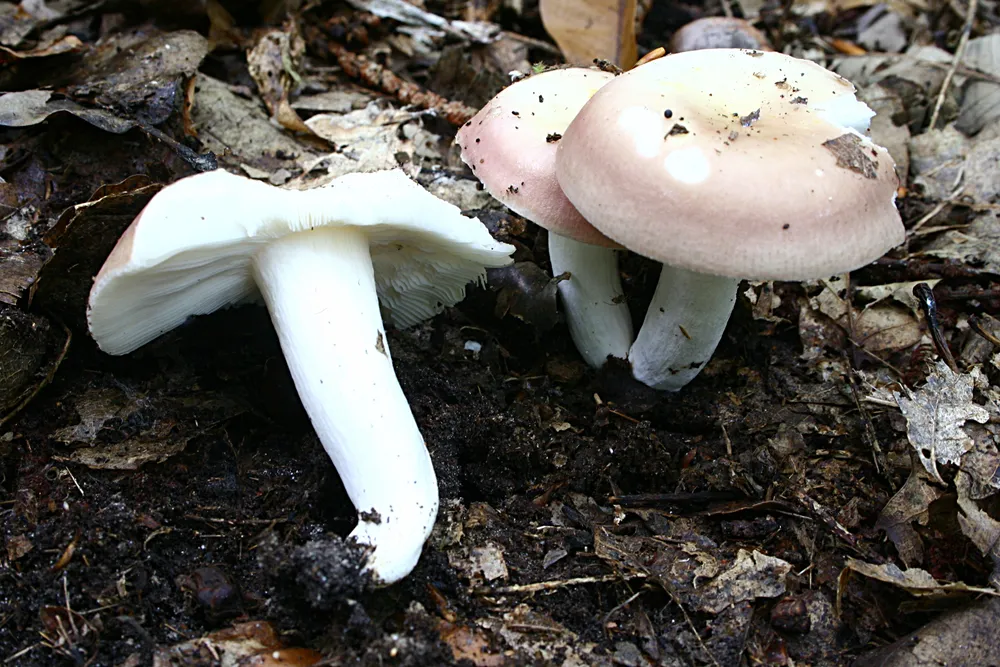
Bare-toothed russula
Russula vesca
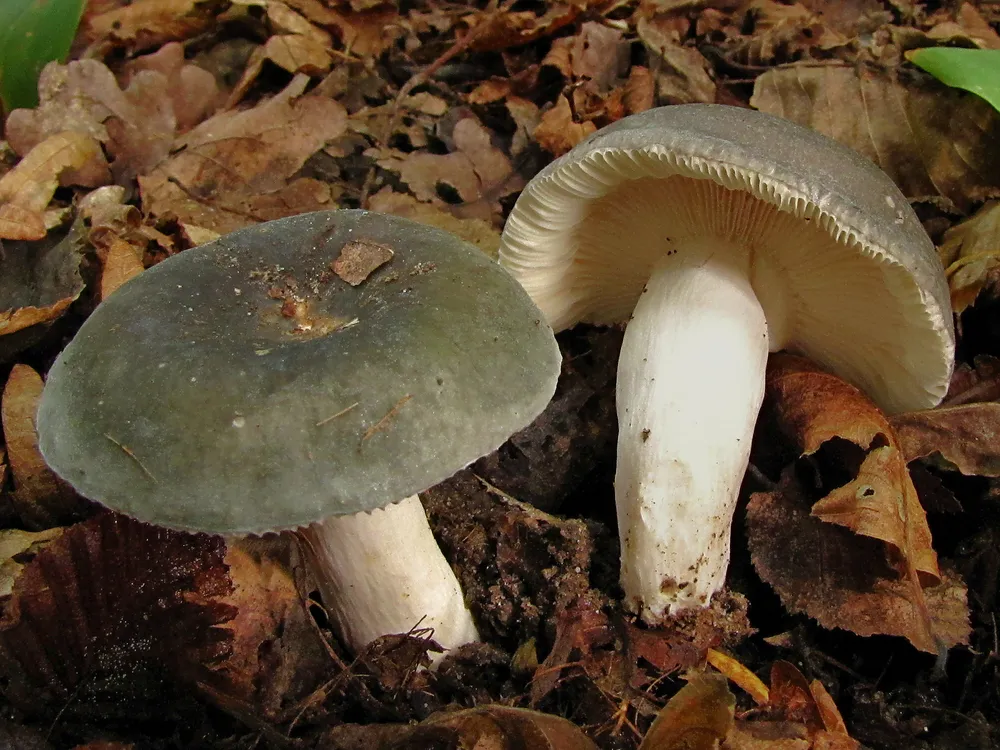
Charcoal burner
Russula cyanoxantha
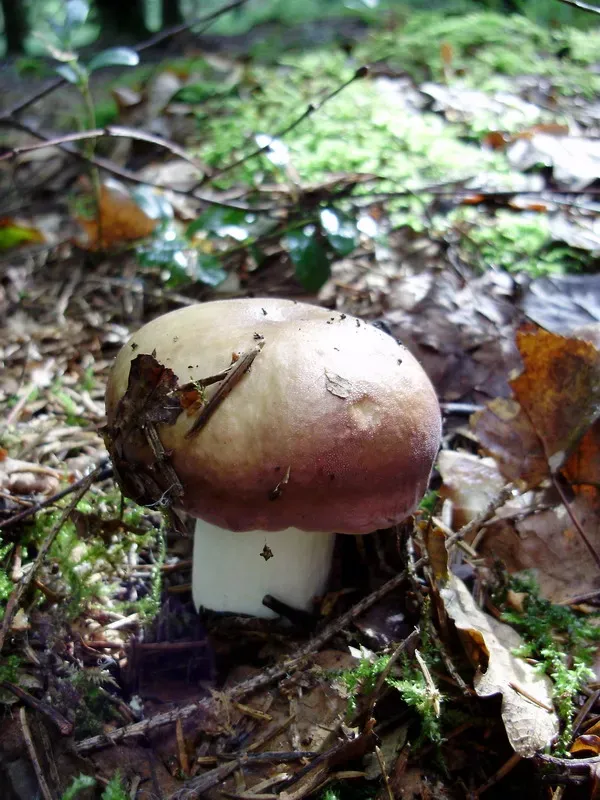
Copper brittlegill
Russula decolorans
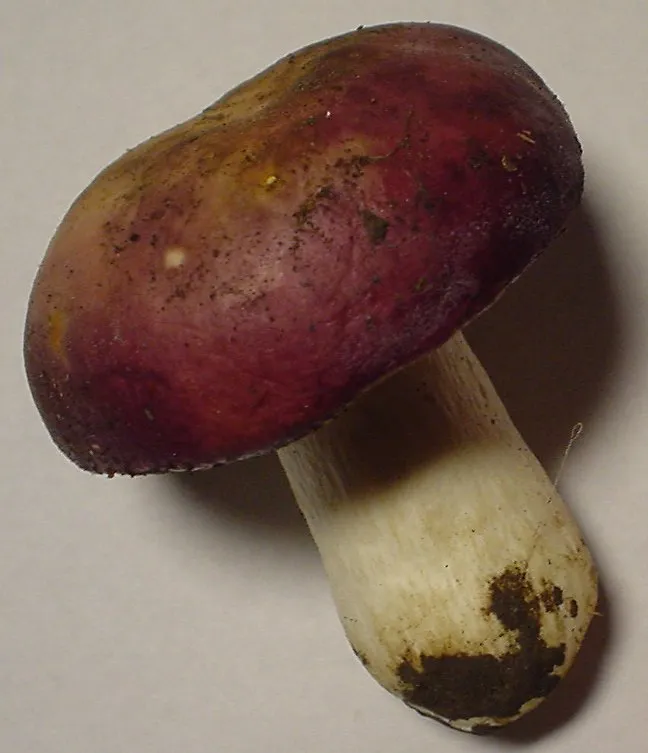
Crab brittlegill
Russula xerampelina
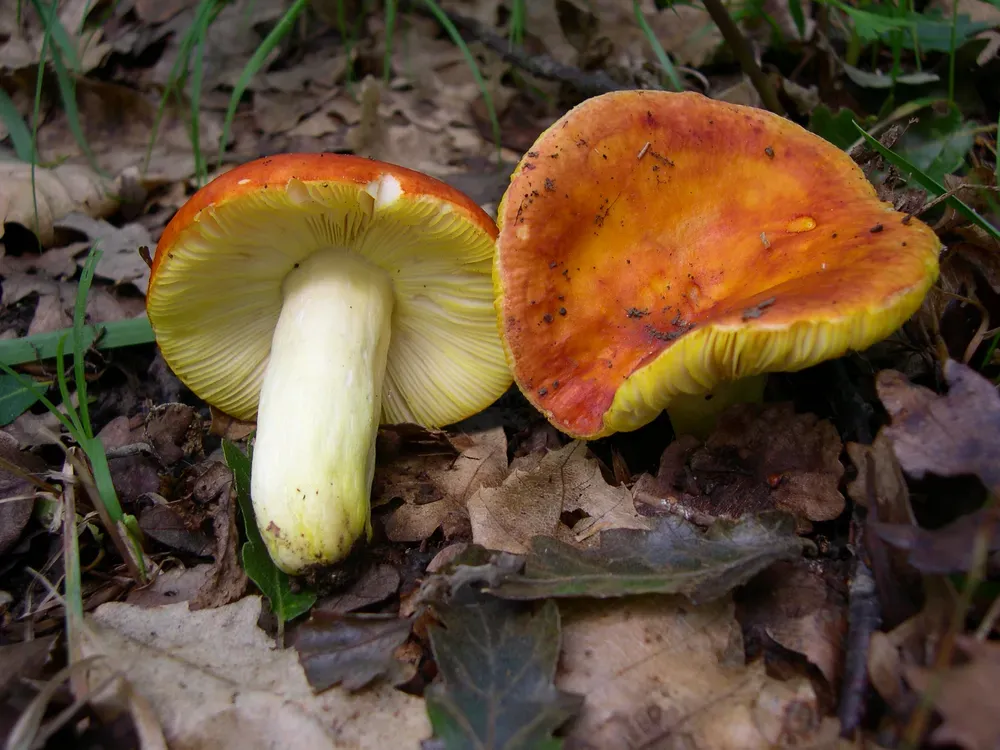
Gilded brittlegill
Russula aurea
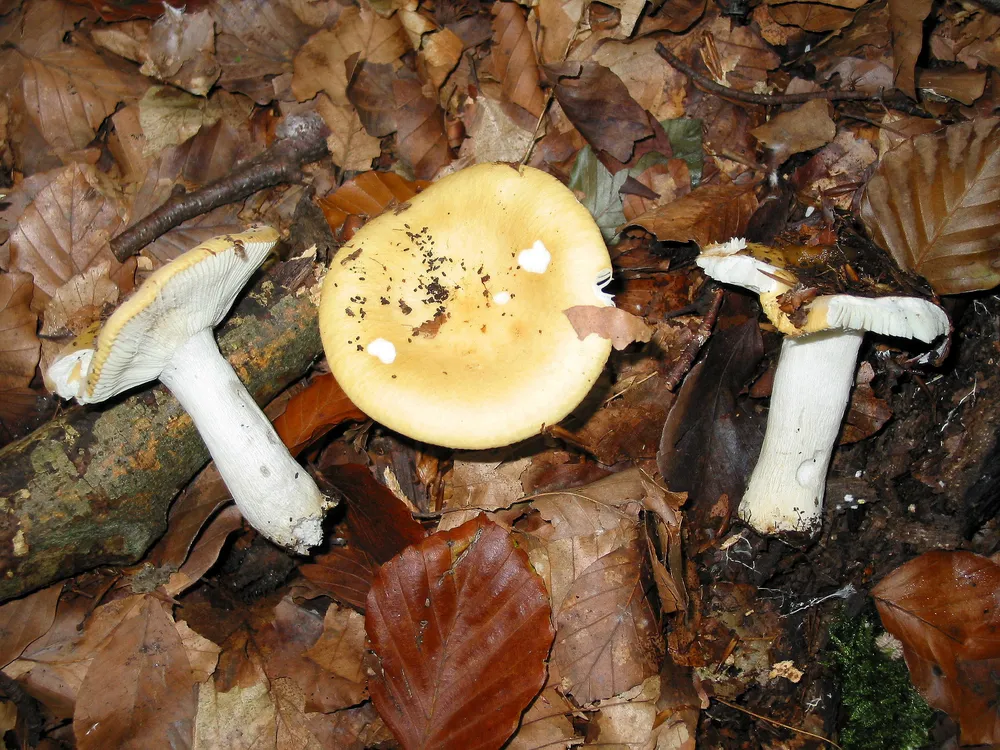
Golden brittlegill
Russula lutea
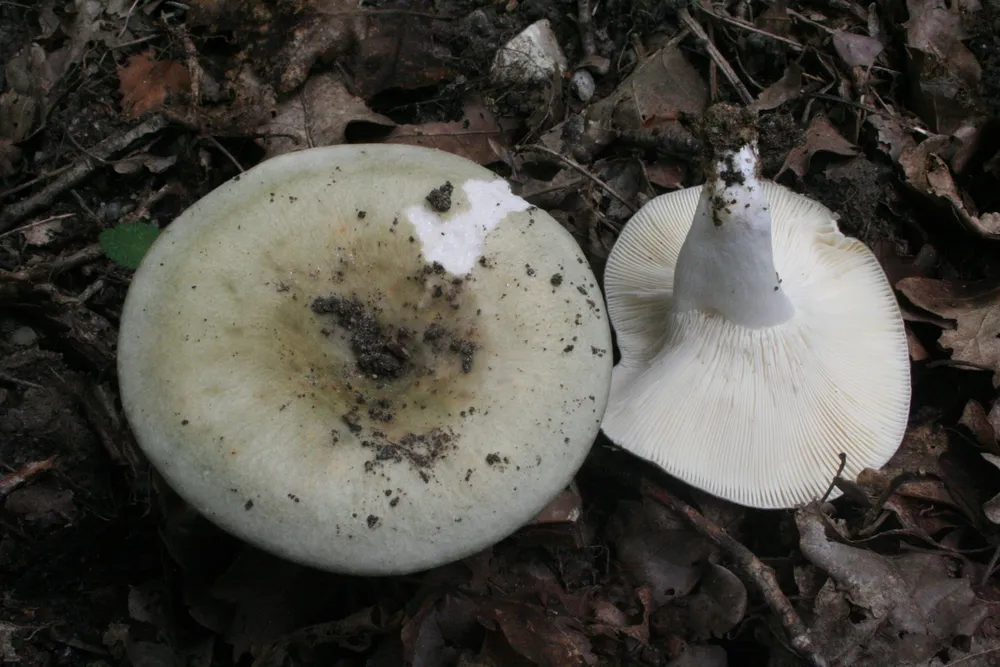
Greasy green brittlegill
Russula heterophylla
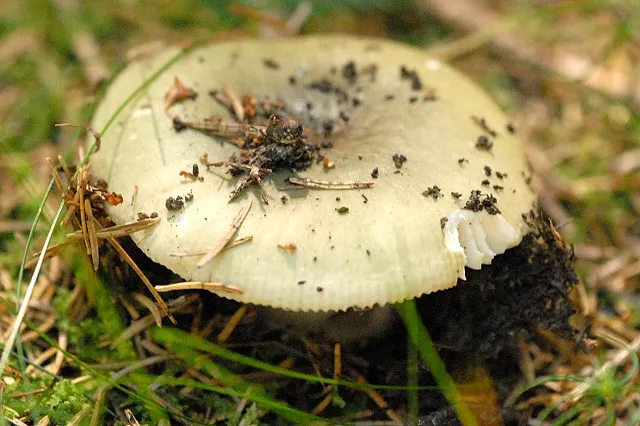
Green brittlegill
Russula aeruginea
Related reading
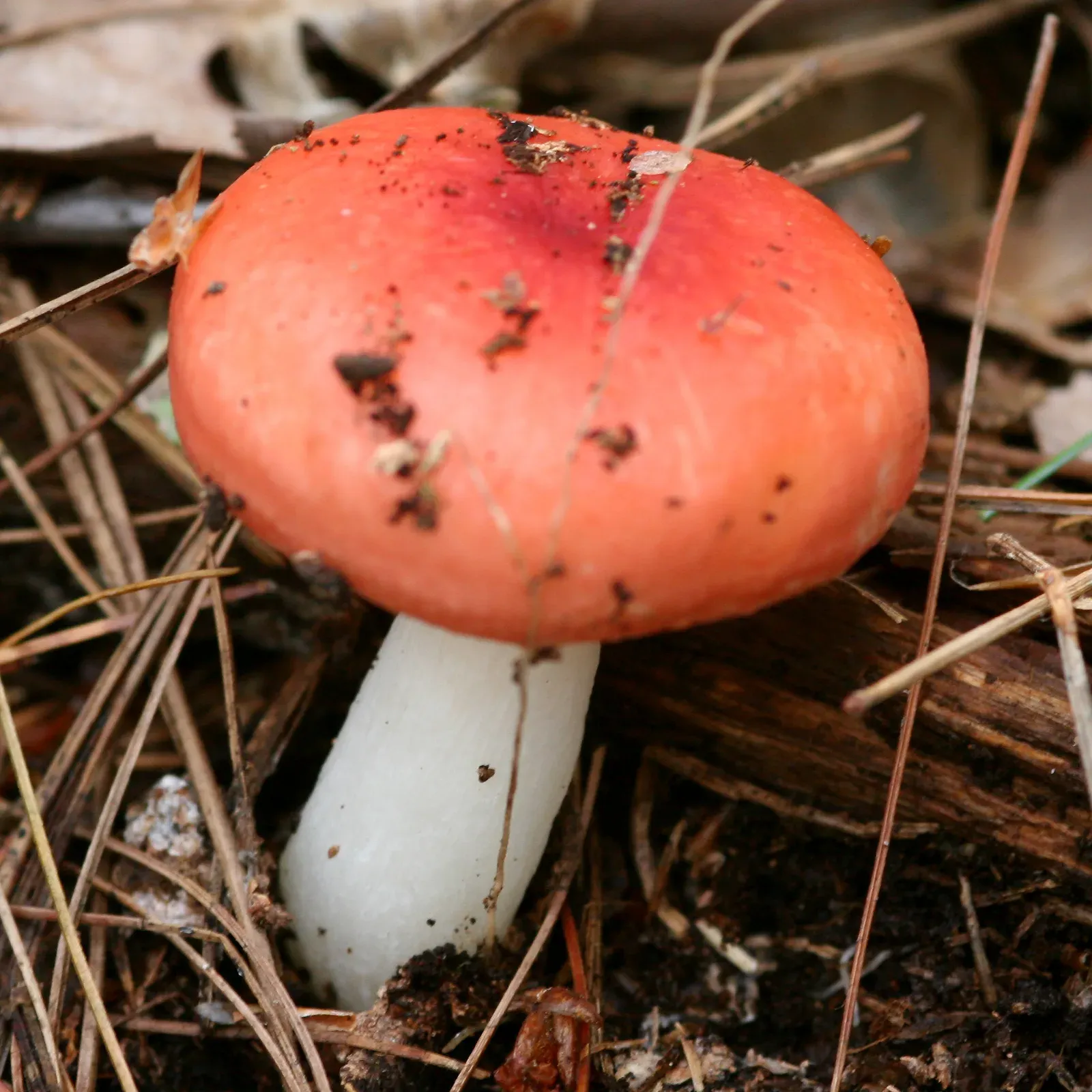 How to identify
Types of brittlegills in Ukraine: a complete guide
Brittlegills are the most colorful family in our forests: green, red, blue, yellow. Some are tasty, others are…
July 18, 2026·2 min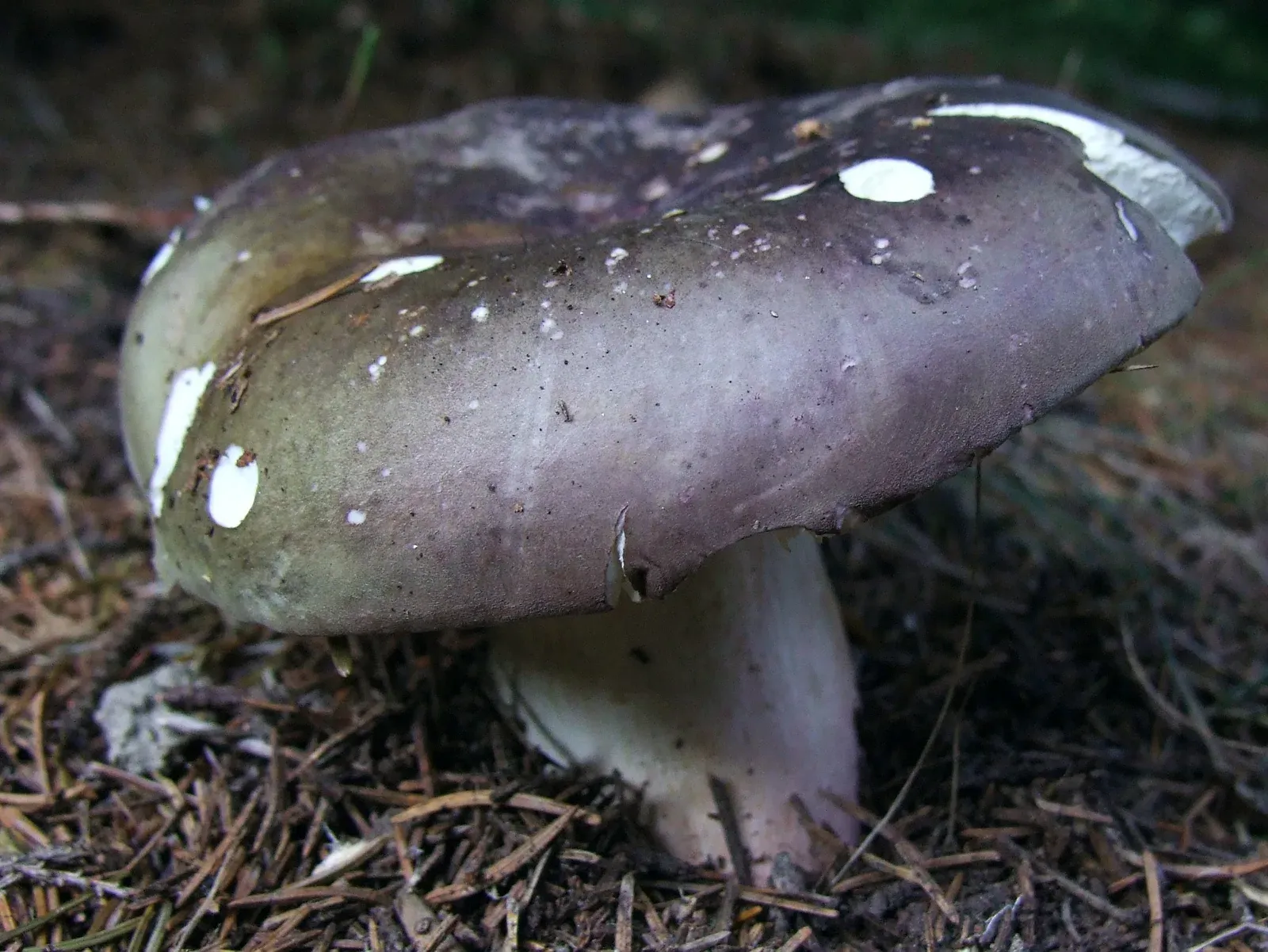 Where & when to forage
Brittlegills: when and where to pick them
Brittlegills are perhaps the most common mushrooms in our forests: their colorful caps turn up from early summ…
July 15, 2026·3 min
Frequently asked questions
How do you tell it from milk caps?
The key test is to CUT it. When cut, Russula delica exudes no milk; milk caps (Lactarius spp.) freely exude white or colored milk from the gills and flesh. If you see drops of "milk" when it's damaged, it's a milk cap (L. vellereus, L. piperatus, L. rufus), not a brittlegill. They are prepared differently, and some milk caps are acrid or acrid-bitter.
Does it have to be boiled first?
Yes, because of its distinctly burning, acrid taste when raw. 10-15 min in salted water, then drain the water. After that the flesh turns tender and is good for frying, stewing and pickling. Without boiling it can cause gastroenteritis in some people.
How do you cook it?
The classic is cold salting (like saffron milk caps): boil for 10-15 min, pack into a container gills down, layer with salt (50 g/kg), add dill, garlic and currant leaves. Ready in 30-40 days. You can also pickle it (it holds its shape beautifully), fry it with onions, or add it to a mix with saffron milk caps and slippery jacks. Drying — poor.
Where should you look for it?
In broadleaf and mixed forests — under oak, beech, hornbeam, birch, spruce. In the forest litter among moss and grass. The cap often hides in the litter — pushing up through it, it raises characteristic mounds. Check the bumps between the moss and fallen leaves — milk-white brittlegills may be hiding there.
Which regions of Ukraine is it found in?
Common throughout the forest zone: the Carpathians, Prykarpattia, Polissia, the forest-steppe. In the steppe — in planted shelterbelts and ravine (bairak) forests.
When should you look for it?
July — October, peaking in August-September. One of the earliest brittlegills — it appears right after the first August thunderstorms.
Which mushrooms is it confused with?
With Lactarius piperatus (peppery milk cap) — also white, also acrid, but exudes a distinct white milk with a bitter taste. With Lactarius vellereus (fleecy milk cap) — also white, with a felty skin, also with milk. With Russula chloroides (blue band brittlegill) — a close relative, with more distinctly greenish gills. Rule of thumb: look for milk (none — Russula, present — Lactarius).
Is Milk-white brittlegill edible or poisonous?
Does Milk-white brittlegill have gills or pores?
What does the cap of Milk-white brittlegill look like?
What does the stem of Milk-white brittlegill look like?
What do Milk-white brittlegill smell and taste like?
Sources
- [1]Вікіпедія (українська)
- [2]Атлас грибів України, Зеров Д.К. (1979)
- [3]MycoBank Database
- [4]Index Fungorum
- [5]GBIF
- [6]iNaturalist Ukraine