Fleecy milk capLactarius vellereus
Expert-verifiedUpdated August 15, 2026
Passport
- Edibility
- Conditionally edible
- Season
- Aug — Oct
- Hymenophore
- Gilled
- Cap color
- White
- Size
- Giant (>25 cm)
- Smell
- Odorless
- Reviewed
- Yes ✓
Quick answers
Where to look?
Deciduous forest, Mixed forest
When does it appear?
Aug — Oct
Active months: August, September, October.
How to recognize it? Three signs
- Cap color: White, Cream
- Cap shape: Funnel-shaped
- Smell: Odorless
Fruiting season
August – October
Description
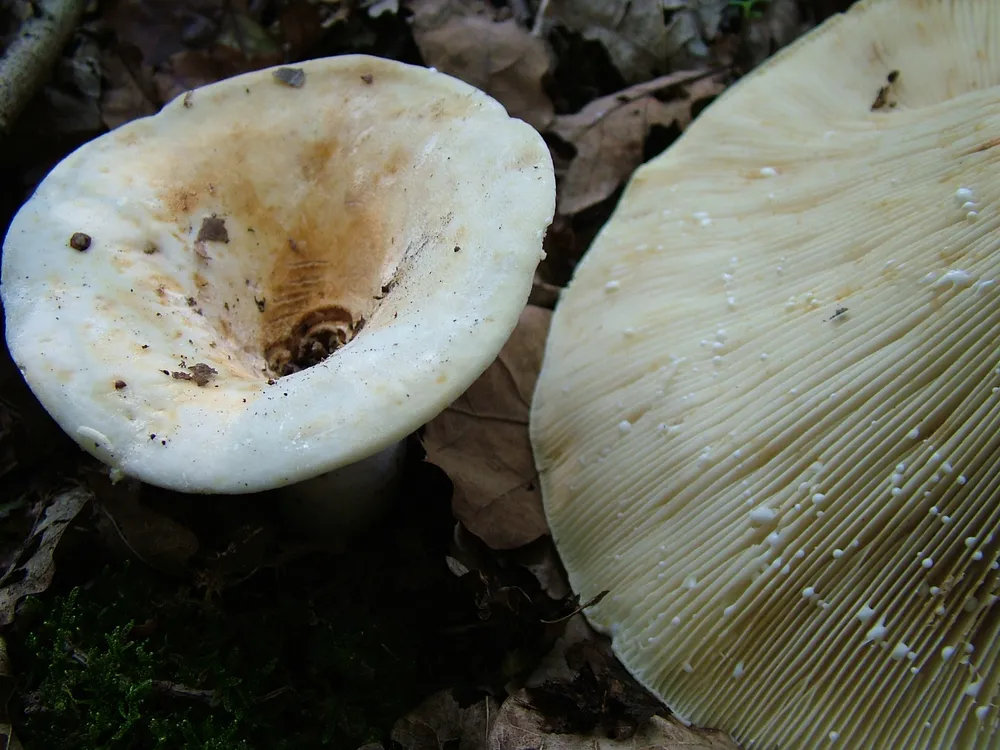
The fleecy milk cap is the largest white milk cap in Ukraine, with a massive white cap up to 25 cm across and a distinctive felted (downy, like a winter felt hat) surface. The name “fleecy” comes from this dense white or cream fuzz that covers the cap and stem of young specimens. In old age the fuzz wears down to a dirty cream, but the margin often stays thickly downy.
In the kitchen this is a conditionally edible mushroom, traditionally used for salting. Raw or simply boiled it is inedible — it causes gastroenteritis because of its burning white milk. The classic method: soak for 1-2 days or boil for 15-20 minutes and discard the water, then salt. Because of its very dense, even “woody” flesh, some foragers consider it “middling,” but one or two large fruiting bodies are enough for a whole jar of salted mushrooms.
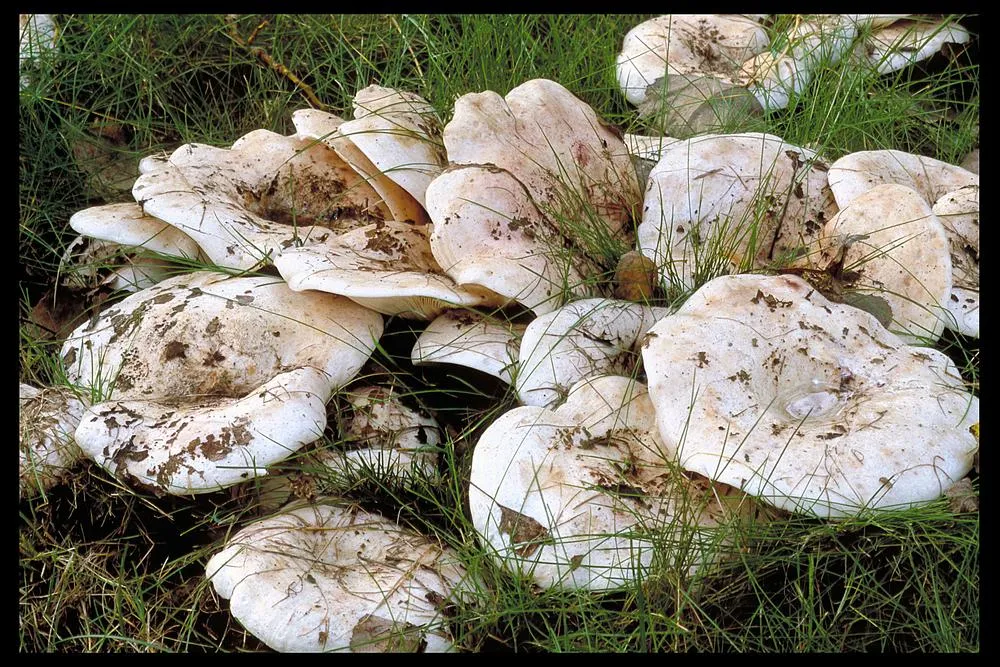
In Ukraine it is widespread throughout the forest and forest-steppe zones in broadleaf and mixed forests, mainly in old oak and oak-hornbeam stands. The season is August–October. It's common, fruiting as single fruiting bodies or in small groups.
Cap
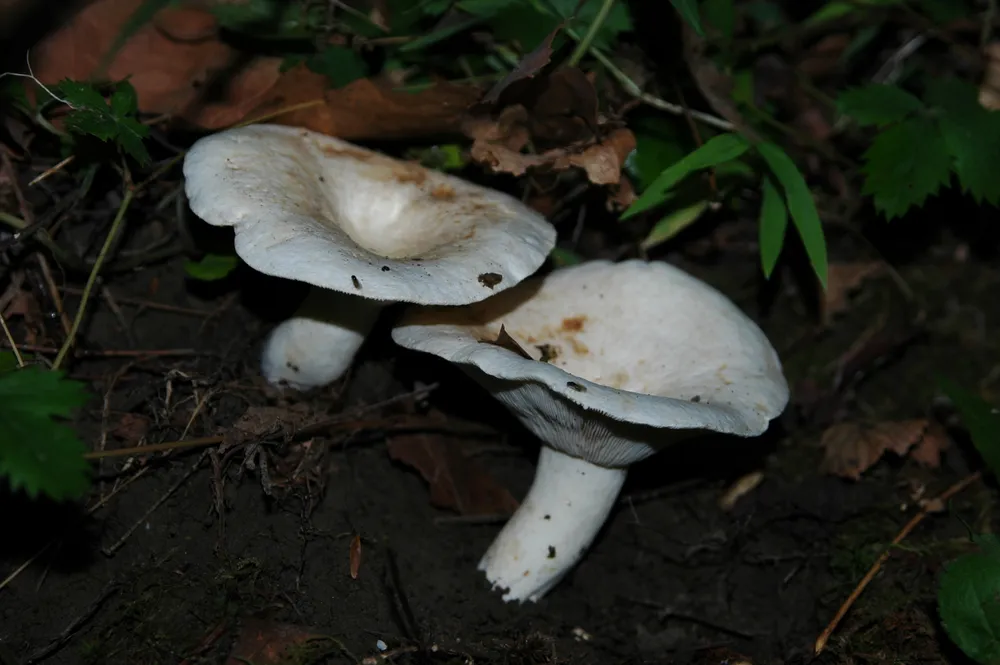
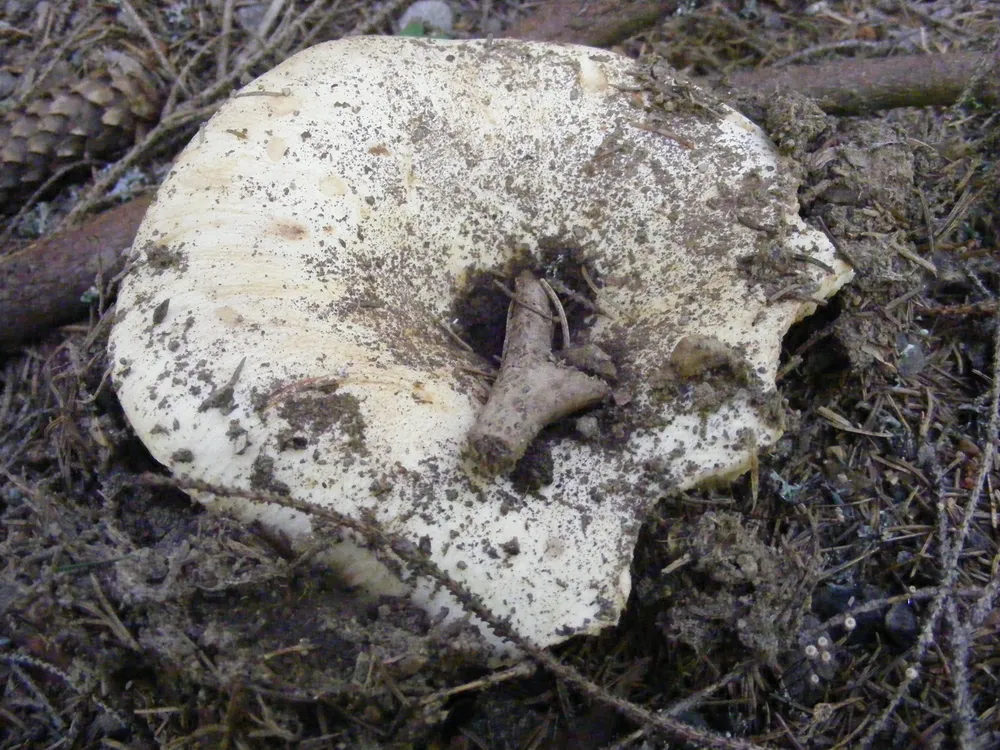
Cap 8-25 cm — the largest white milk cap, very fleshy. Hemispherical at first with a thickly downy inrolled margin, then flattened and finally funnel-shaped. Color white, creamy white, in old specimens with an ochre or dirty-yellow tint, especially in the center. The surface is characteristically felted, downy, soft to the touch, like suede or felt. The downiness is especially noticeable at the margin.
Hymenophore
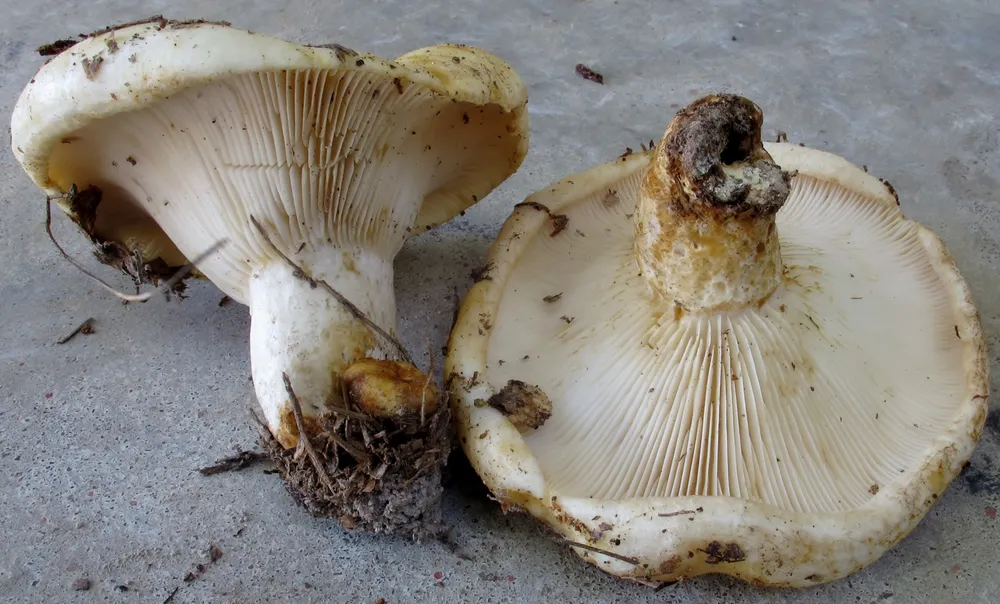
Gilled hymenophore. Gills distant (which sets it apart from L. piperatus with its crowded gills), broad, adnate or slightly decurrent. Color creamy white, turning yellowish or ochre with age, graying where damaged. They release white milk. Spore print white to pale cream.
Stem
Stem 3-6 cm tall, 1.5-4 cm thick — massive, short, cylindrical or thickened toward the base, very firm. Color white to cream. The surface is downy, like the cap, especially in the upper part. No ring and no volva.
Flesh
Flesh white, very dense, fleshy, even “woody” — a characteristic feature of the species; the mushroom is sturdy and rarely wormy. When damaged it releases plenty of white milk, which slowly turns yellow in the air after 1-2 hours. The cut flesh itself may also turn slightly yellow.
Smell
Smell faint, mushroomy, slightly earthy in old specimens. Taste of the raw flesh and milk — very burning, peppery, sharp, with a characteristic “dirty” aftertaste. Don't taste it raw.
Lookalikes
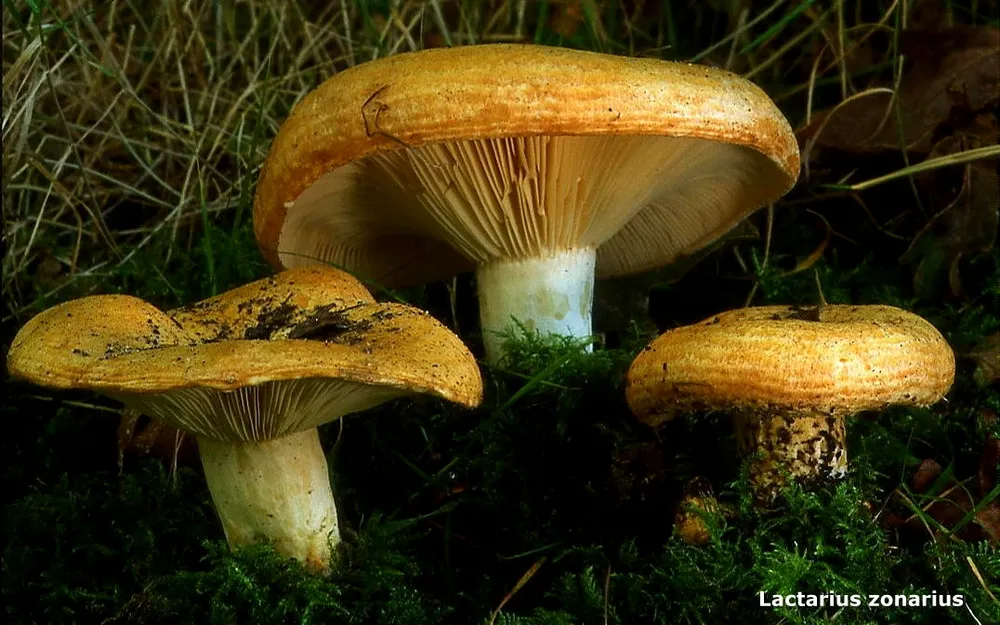
Related species
Mushrooms of the same genus and habitat — to study side by side and never mix up.

Coconut milk cap
Lactarius glyciosmus
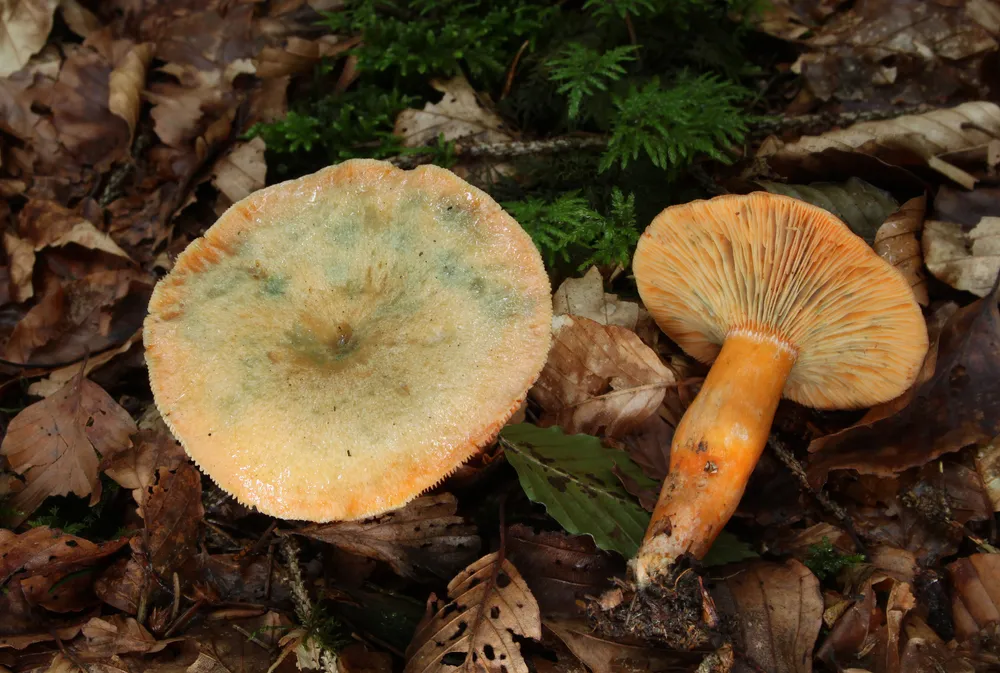
False saffron milk cap
Lactarius deterrimus
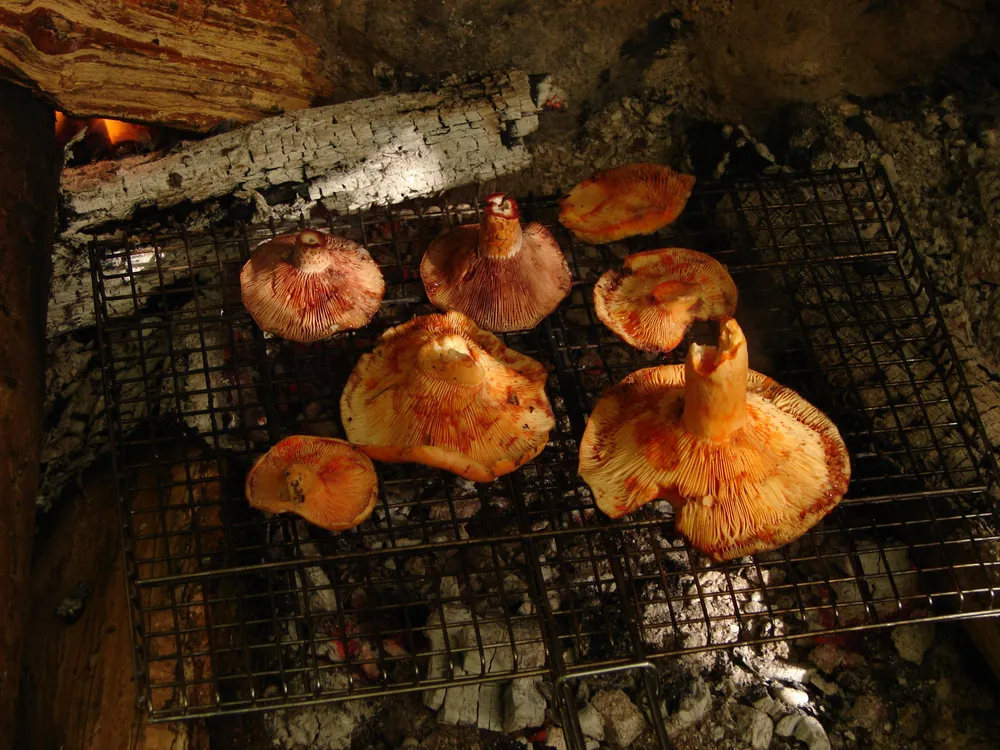
Lactarius salmonicolor
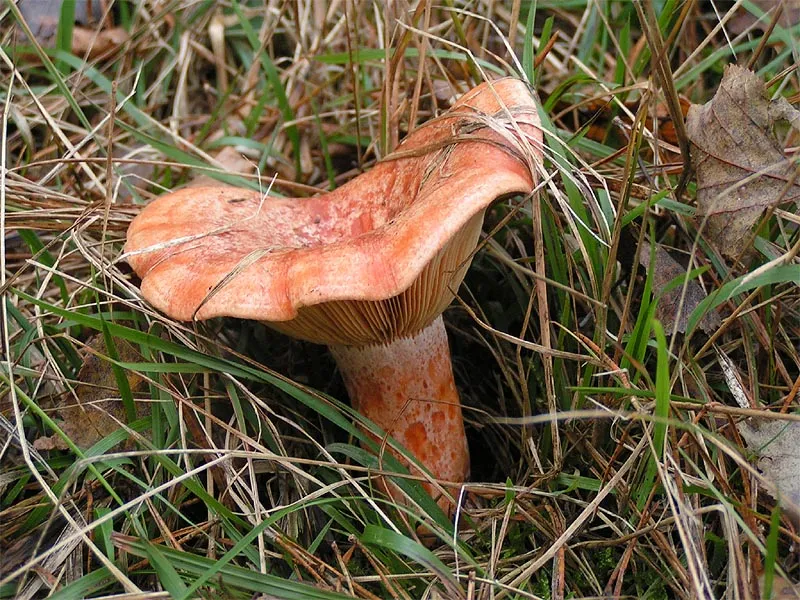
Saffron milk cap
Lactarius deliciosus
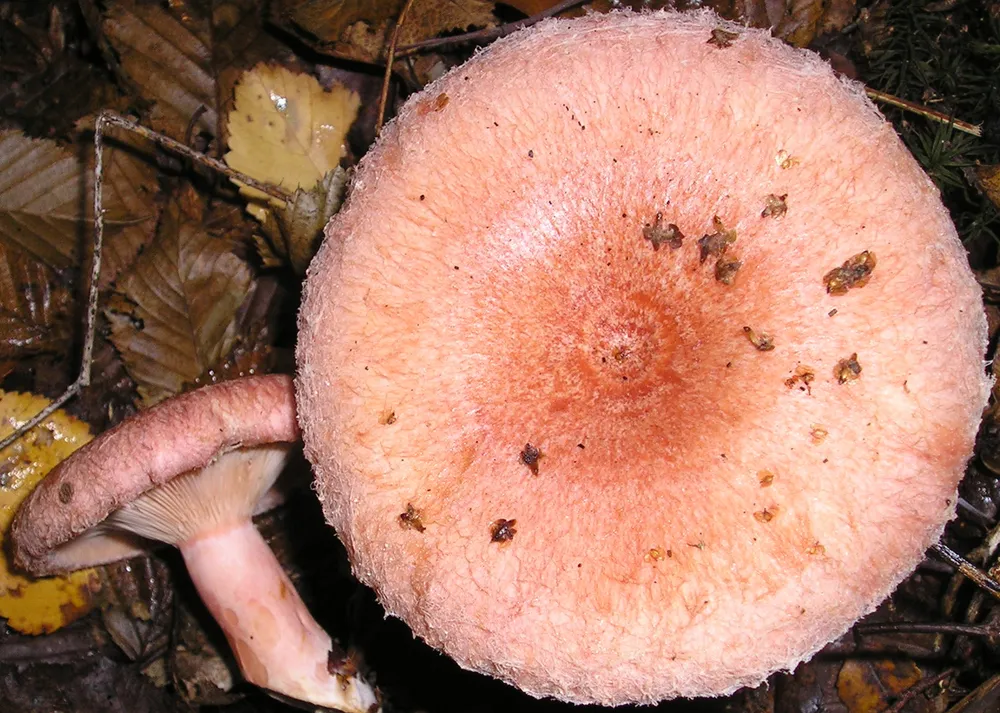
Woolly milk cap
Lactarius torminosus
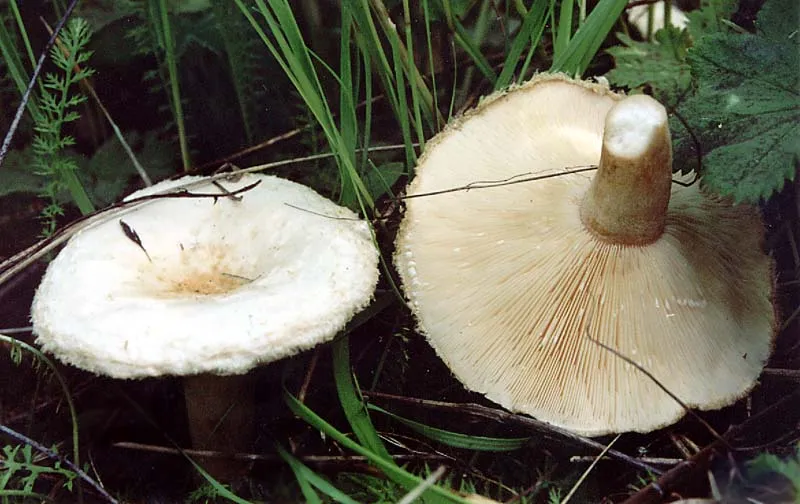
Bearded milk cap
Lactarius pubescens
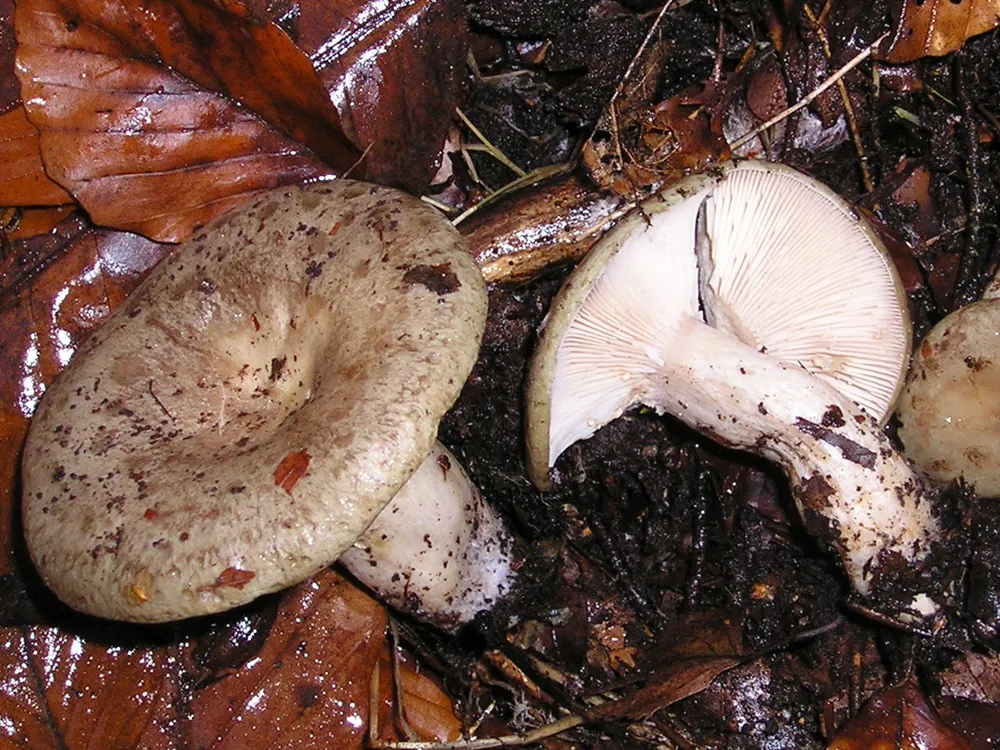
Beech milk cap
Lactarius blennius
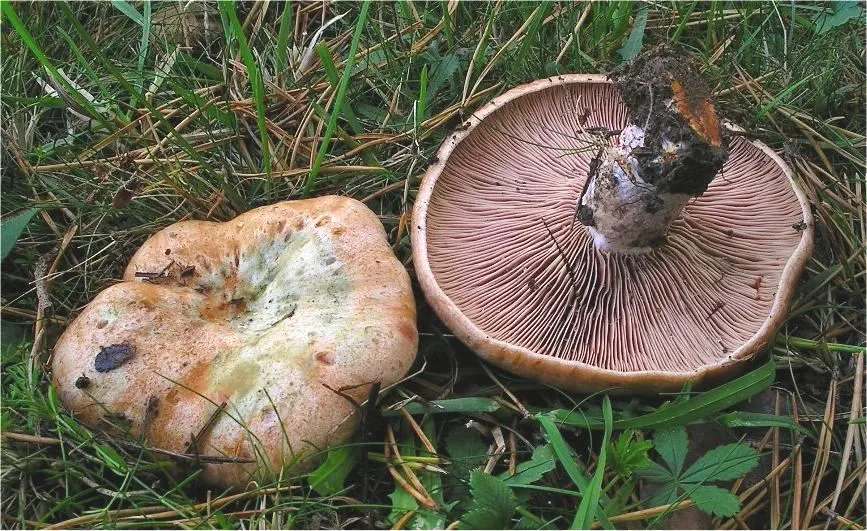
Bloody milk cap
Lactarius sanguifluus
Frequently asked questions
Can you eat it?
Yes, after treatment: soak for 1-2 days, changing the water, then boil for 15-20 minutes and discard the water, then salt for 40 days. The flesh is very dense and gives a characteristic “woody” crunch when salted. Raw or simply boiled, it causes gastroenteritis.
Why do some field guides advise against it?
Because of its very dense, “woody” flesh and its rather unremarkable flavor when salted — in the kitchen it's average. Plus, some modern sources state that its toxins (as in L. turpis) may have weak mutagenic properties, although this is less clearly proven. Most Ukrainian foragers still gather it as a “gruzd” (a salting milk cap).
Where does it grow?
In broadleaf and mixed forests, mainly under oak, beech, and hornbeam, more rarely under birch. It likes old forests, forest edges, and well-lit clearings. It's almost never found in purely coniferous forests.
Which regions of Ukraine?
Throughout the forest and forest-steppe zones. Oak and oak-hornbeam forests of Polissia, the forest-steppe, the Carpathians, and Prykarpattia. In the steppe — in planted oak stands. One of the most common large white milk caps.
When should you look for it?
August–October. Peak fruiting is in September. It holds on until the first hard frosts. In a warm autumn it can keep fruiting until mid-October.
How do you recognize it?
Three features together: 1) a very large (10-25 cm) white cap; 2) a felted, downy surface like suede or felt; 3) distant cream gills. If all of these match — it's definitely L. vellereus. The downiness is the main marker.
What is it confused with?
With the peppery milk cap (L. piperatus) — its cap is smooth, not downy, and its gills are very crowded rather than distant. With L. controversus — it has pink gills and spots and grows under poplar. With the milk-white brittlegill (Russula delica) — it has no milk at all when cut.
Are the lookalikes dangerous?
There are no seriously poisonous lookalikes in Ukraine. As always with white mushrooms, the main check is the milk when you cut it. Milk present = a milk cap (conditionally edible after treatment). No milk, plus a volva and a ring = suspect a destroying angel, don't eat it.
Is Fleecy milk cap edible or poisonous?
Does Fleecy milk cap have gills or pores?
What does the cap of Fleecy milk cap look like?
What does the stem of Fleecy milk cap look like?
Sources
- [1]Вікіпедія (українська)
- [2]Атлас грибів України, Зеров Д.К. (1979)
- [3]MycoBank Database
- [4]Index Fungorum
- [5]GBIF
- [6]iNaturalist Ukraine