Poplar milk capLactarius controversus
Expert-verifiedUpdated October 3, 2026
Passport
- Edibility
- Conditionally edible
- Season
- Aug — Oct
- Hymenophore
- Gilled
- Cap color
- White
- Size
- Large (over 15 cm)
- Smell
- Odorless
- Reviewed
- Yes ✓
Quick answers
Where to look?
Deciduous forest, Mixed forest
When does it appear?
Aug — Oct
Active months: August, September, October.
How to recognize it? Three signs
- Cap color: White, Cream, Pink
- Cap shape: Funnel-shaped
- Smell: Odorless
Fruiting season
August – October
Description
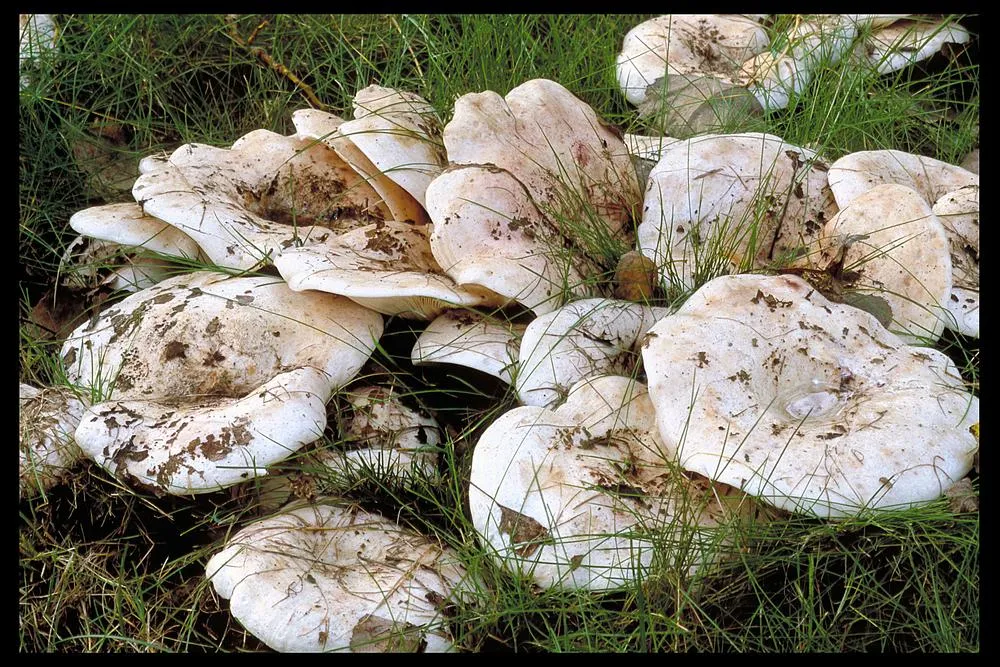
The poplar milk cap (Lactarius controversus) is a large white milk cap with faint pink “blotches” on the cap and burning white milk, which grows only in poplar or aspen stands. Many foragers call it the “aspen gruzd” — for its resemblance to Lactarius resimus in size and use. In Polissia in particular it has long been known and salted in quantity, especially where old aspen groves have survived around villages.
In the kitchen it's a classic “gruzd-type” salting mushroom: large, fleshy, springy; after boiling and salting it becomes a characteristically crunchy mushroom with a rich flavor. Raw or simply boiled it is inedible — the burning milk causes gastroenteritis. The classic method: soak for 1-2 days, changing the water, or boil for 15-20 minutes and discard the water, then salt for 40 days.
In Ukraine it grows throughout the forest and forest-steppe zones wherever there are poplars or aspens — in poplar shelterbelts, aspen groves, along riverbanks, in floodplains, and in mixed forests with aspen. The season is August–October; it fruits in groups of several dozen fruiting bodies under a single tree.
Cap
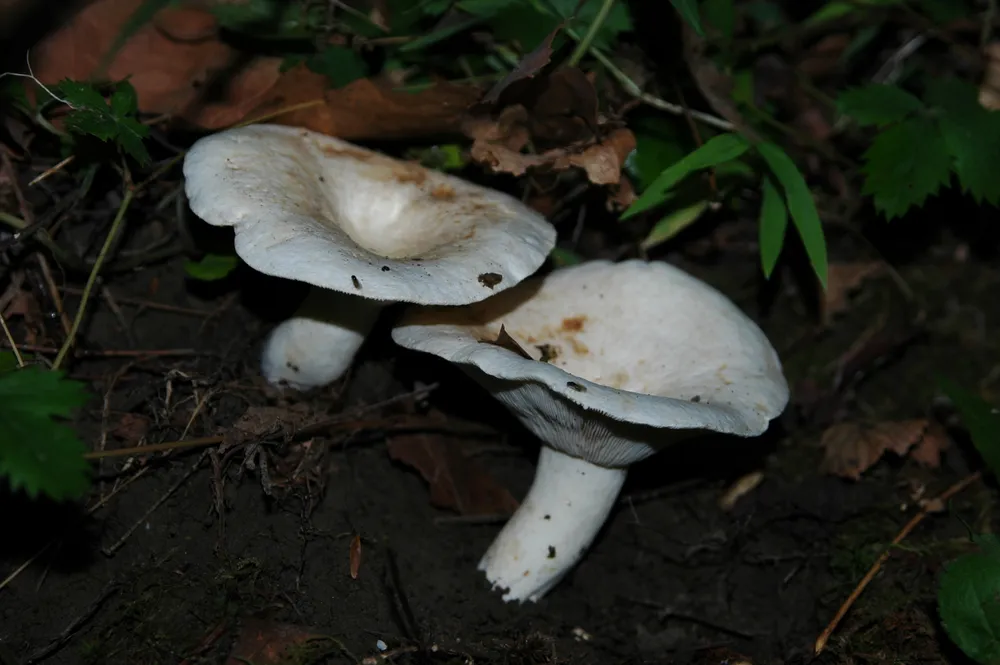
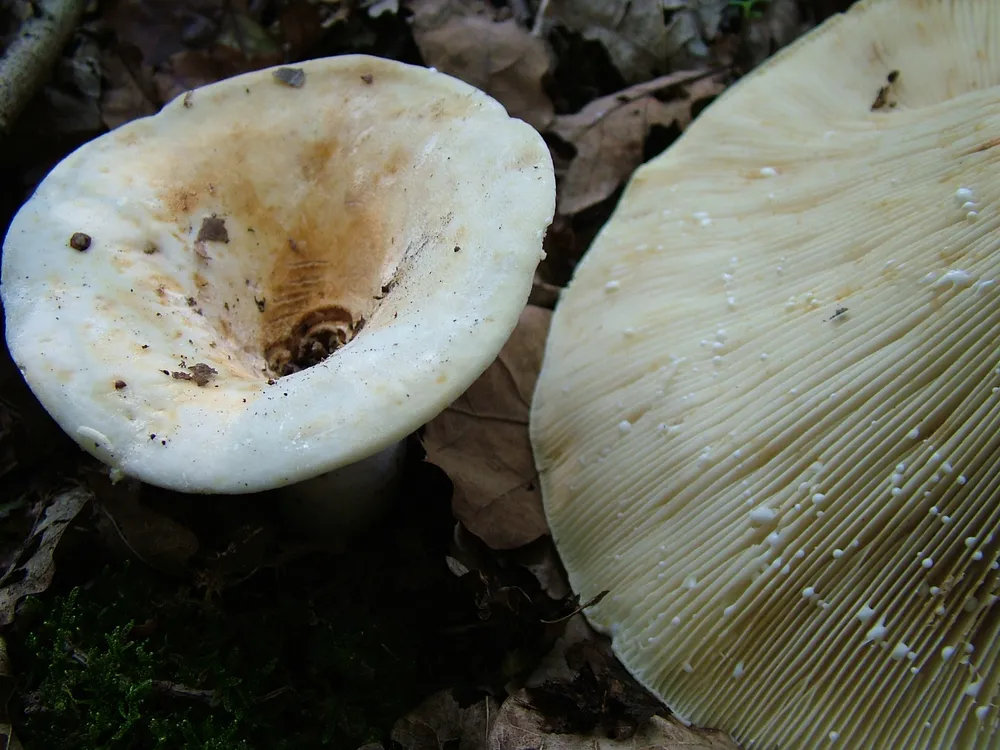
Cap 7-20 cm — one of the largest milk caps. Convex at first with a thickly downy inrolled margin, then flattened and finally funnel-shaped with a depressed center. Color white, creamy white, in mature specimens with characteristic pink or wine-colored “blotches” and spots, with barely visible concentric zones. The surface is slightly sticky in wet weather, and thickly downy at the margin in young specimens.
Hymenophore
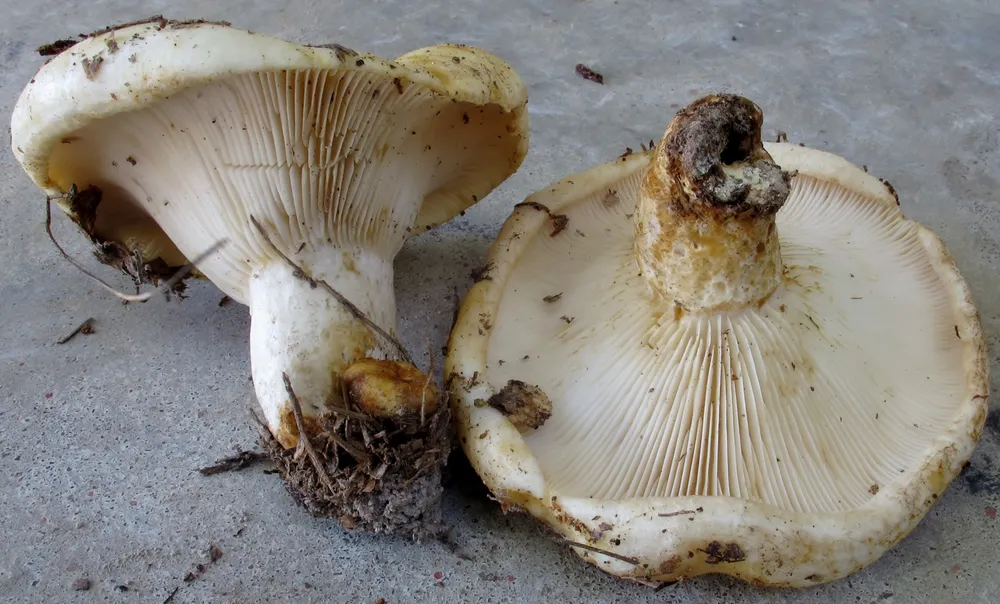
Gilled hymenophore. Gills crowded, narrow, adnate or slightly decurrent. Color pale pink to pinkish cream — a characteristic feature of the species that sets it apart from other large white milk caps. When damaged, they release white milk. Spore print pale pink to creamy pink.
Stem
Stem 3-7 cm tall, 1.5-3 cm thick — massive, short, cylindrical or slightly tapering toward the base, firm in young specimens. Color white or with a pink tint. Surface smooth, slightly sticky in wet weather, no ring and no volva.
Flesh
Flesh white, very dense, fleshy. When damaged it releases plenty of white milk, which does not change color or turn yellow in the air. The cut flesh itself also stays white or with a faint pink tint.
Smell
Smell faint, mushroomy, with no distinct notes. Taste of the raw flesh and milk — very burning, sharp, peppery. Don't taste it raw — it will cause blisters on your tongue.
Lookalikes
Related species
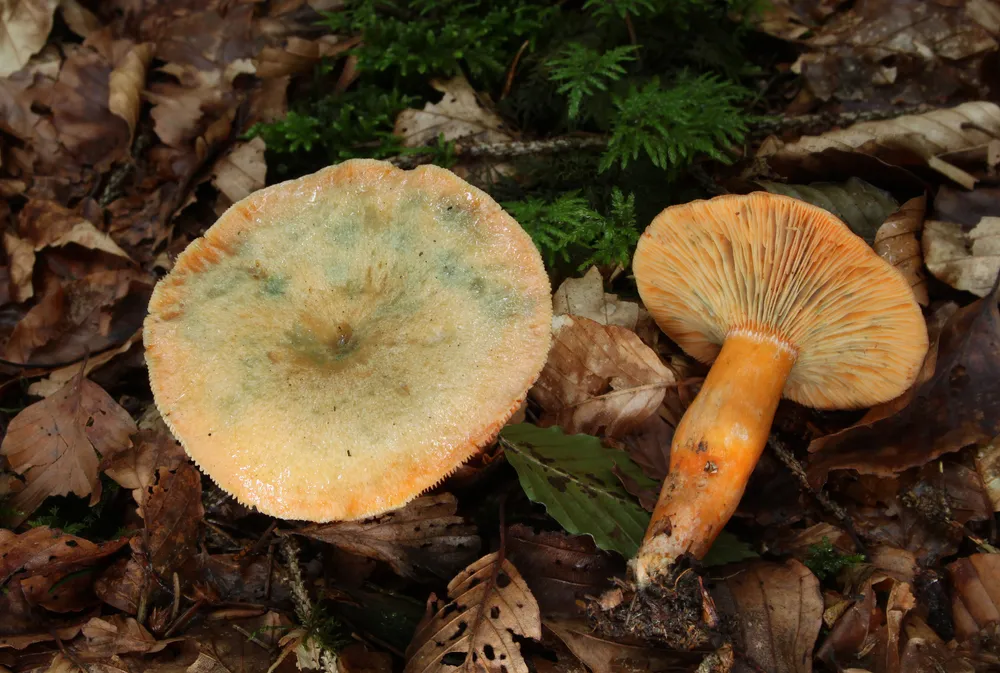
Mushrooms of the same genus and habitat — to study side by side and never mix up.

Coconut milk cap
Lactarius glyciosmus
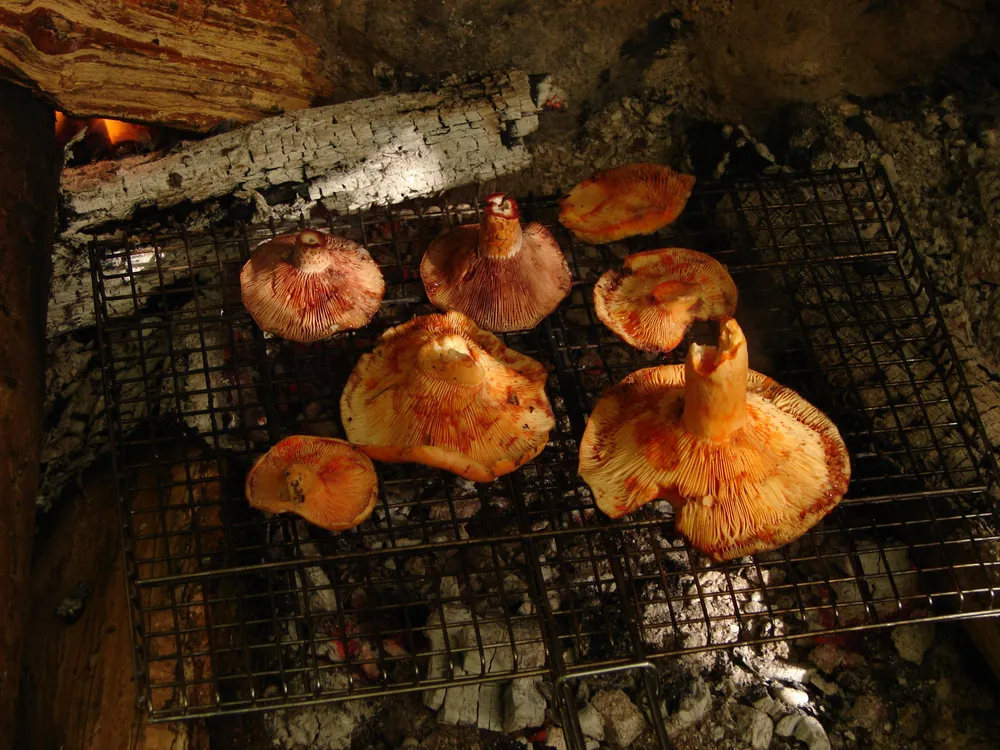
False saffron milk cap
Lactarius deterrimus
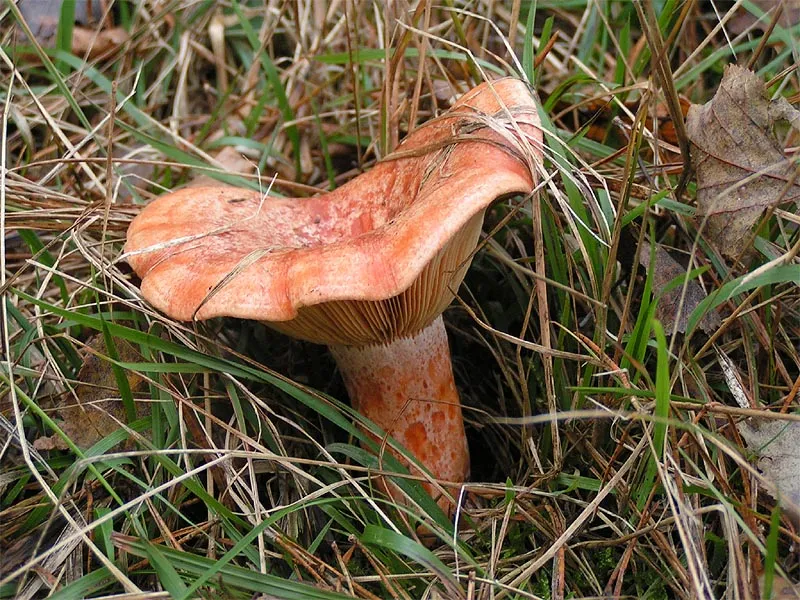
Lactarius salmonicolor
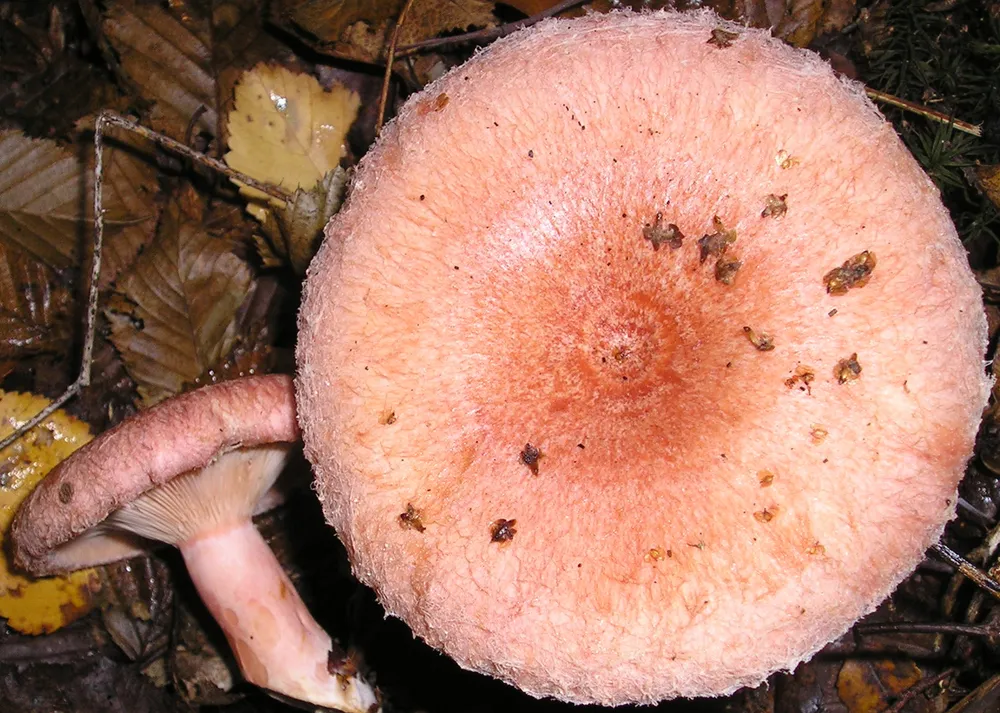
Saffron milk cap
Lactarius deliciosus
Woolly milk cap
Lactarius torminosus
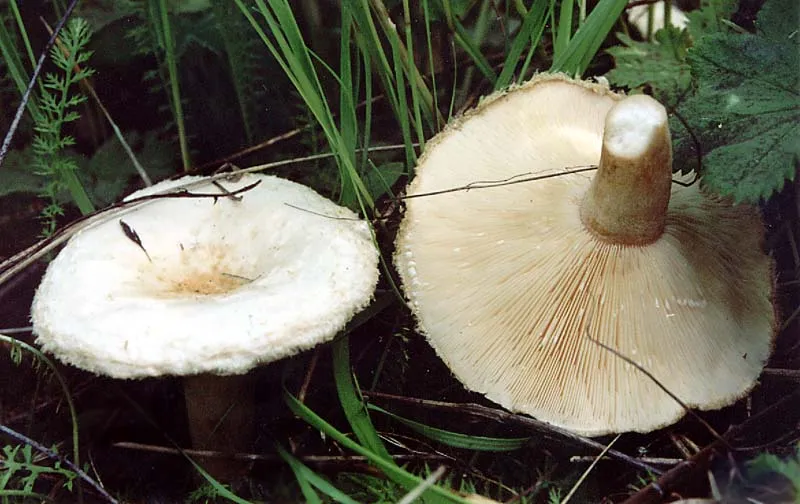
Bearded milk cap
Lactarius pubescens
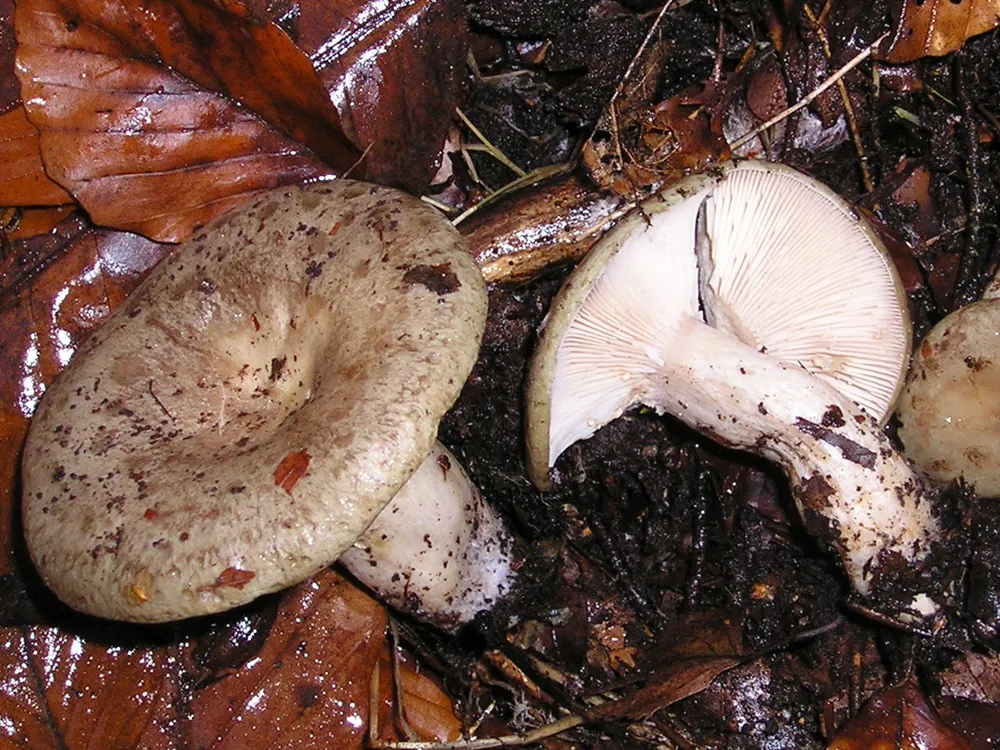
Beech milk cap
Lactarius blennius
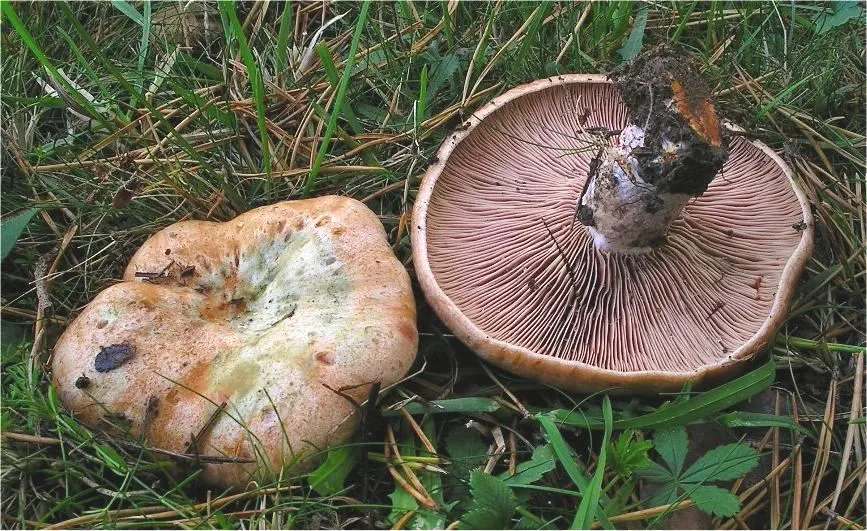
Bloody milk cap
Lactarius sanguifluus
Frequently asked questions
Can you eat it?
Yes, after treatment: soak for 1-2 days, changing the water, then boil for 15-20 minutes and discard the water, then salt for 40 days. Salted, it's a wonderful “gruzd-style” mushroom with a characteristic crunch. Raw or simply boiled, it causes gastroenteritis.
What happens if you eat it poorly prepared?
After 2-6 hours — nausea, abdominal pain, diarrhea. It passes within a day or two without serious consequences. There is no antidote; treatment is symptomatic: drink plenty of water. There is no damage to the kidneys or liver.
Where does it grow?
Only under poplars or aspens — it's an obligate mycorrhizal partner of these trees. It grows in poplar shelterbelts, aspen groves, river floodplains, and mixed forests with aspen. Without poplar or aspen it doesn't occur.
Which regions of Ukraine?
Throughout the forest and forest-steppe zones wherever there are poplars or aspens. Especially plentiful in Polissia (Chernihiv and Kyiv regions) and in the forest-steppe. In the steppe — in poplar shelterbelts. In the Carpathians and Prykarpattia — in river floodplains with poplars.
When should you look for it?
August–October. Peak fruiting is late August — September, after prolonged rain. It holds on until the first hard frosts.
How do you tell it apart from Lactarius resimus?
Lactarius resimus — a white cap without pink “blotches,” with a fluffy margin, grows under birch. L. controversus is also white, but with characteristic pink spots on the cap and pink gills, and grows under poplar or aspen. The tree decides: birch = resimus, poplar/aspen = controversus.
Which other white milk caps is it confused with?
With the peppery milk cap (L. piperatus) — its gills are very crowded, the cap has no pink spots, and the stem is longer. With the fleecy milk cap (L. vellereus) — the surface is thickly downy (“felted”), and the gills are distant and cream-colored. Pink gills and growth under poplar — definitely L. controversus.
Are the lookalikes dangerous?
Among milk caps in Ukraine there are no seriously poisonous lookalikes. The biggest risk is confusing it with the destroying angel (Amanita virosa), which is also white but has a ring on the stem, a volva at the base, and white gills with no milk. Milk at the cut is the main check: white milk present = milk cap, absent = something else.
Is Poplar milk cap edible or poisonous?
Does Poplar milk cap have gills or pores?
What does the cap of Poplar milk cap look like?
What does the stem of Poplar milk cap look like?
Sources
- [1]Вікіпедія (українська)
- [2]Атлас грибів України, Зеров Д.К. (1979)
- [3]MycoBank Database
- [4]Index Fungorum
- [5]GBIF
- [6]iNaturalist Ukraine