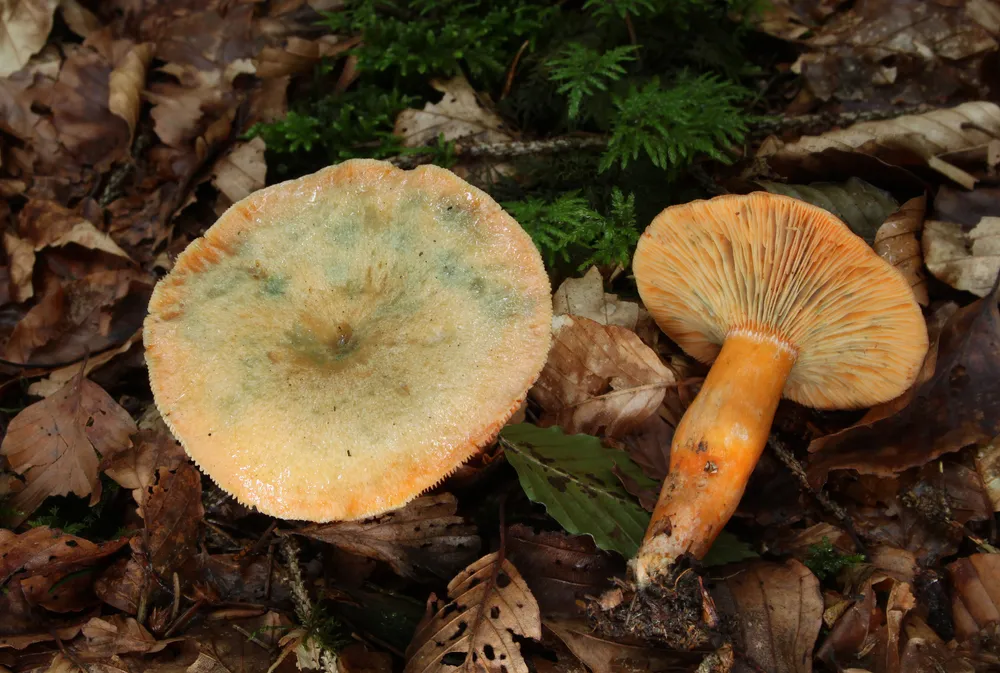
False saffron milk capLactarius deterrimus
Expert-verifiedUpdated October 3, 2026
Passport
- Edibility
- Edible
- Season
- Aug — Oct
- Hymenophore
- Gilled
- Cap color
- Orange
- Size
- Medium (5–15 cm)
- Smell
- Pleasant
- Reviewed
- Yes ✓
Quick answers
Where to look?
Conifer forest, Mixed forest
When does it appear?
Aug — Oct
Active months: August, September, October.
How to recognize it? Three signs
- Cap color: Orange, Brown
- Cap shape: Depressed
- Smell: Pleasant
Fruiting season
August – October
Description
The false saffron milk cap (Lactarius deterrimus) is the closest relative of the saffron milk cap (L. deliciosus), and it differs in its spruce (Picea abies) mycorrhizal partner instead of pine. The Latin epithet deterrimus means "worse" (compared with L. deliciosus) — a slightly unfair name, since the taste is practically the same and the flesh is tender, classic saffron-milk-cap flesh — salmon-orange with distinct greening wherever it's damaged.
Cap 3-10 cm across, distinctly funnel-shaped, depressed in the center, orange-ginger with darker concentric zones, and when damaged it quickly turns blue-green. The milk is orange, slowly turning wine-red in the air, then goes green along with the flesh. The smell is pleasantly fruity and resinous, the taste mild and sweetish.
An excellent edible mushroom — the traditional "ryzhyk" of Ukrainian home cooks. The classic is cold salting with dill, garlic and currant leaves; it's also good fried, pickled or in borscht. Unlike L. salmonicolor (the fir one), L. deterrimus turns green more intensely, so in your basket it will show greenish-blue patches (that's normal).
In practice nobody tells them apart in the basket — the saffron milk cap (under pine), the false saffron milk cap (under spruce) and Lactarius salmonicolor (under fir) all go by the shared name "ryzhyk", and all are edible and tasty. The key check for every saffron milk cap: the milk must be ORANGE, not white. White juice means it's not a saffron milk cap but possibly a poisonous milk cap.
In Ukraine the false saffron milk cap grows throughout the forest zone in spruce and mixed spruce-broadleaf forests: the Carpathians (spruce stands of the polonyna uplands), Prykarpattia, Polissia, and partly the forest-steppe in planted stands. The season runs August — October, peaking in September after the first autumn rains.
Cap
Cap 3-10 cm across, when young convex with an inrolled margin, becoming with age flattened and spread out with a pronounced funnel in the center. The cap skin is smooth, slimy in wet weather, dry and matte in dry weather. Color orange-ginger, less often flesh-orange, with characteristic darker concentric zones. Quickly turns blue-green when pressed — a diagnostic feature. The margin is even and smooth, without fluffy hairs.
Hymenophore
Gilled hymenophore — the gills are decurrent, crowded, orange-cream at first, with age ochre with green spots. Quickly turn green when touched. Spore print ochre-cream.
Stem
Stem 3-7 cm tall, 1-2 cm thick, cylindrical, hollow in old specimens. Color orange to rusty-ginger, with characteristic darker shallow pits ("scrobicules") — a typical feature of saffron milk caps. Quickly turns green when pressed. No ring.
Flesh
Flesh thin, brittle, salmon-orange. When cut it releases orange milk, which turns wine-red in the air after 5-15 min, then turns blue-green together with the flesh — a characteristic reaction, stronger than in L. salmonicolor. Smell fruity-resinous, pleasant, taste mild, sweetish, not bitter.
Smell
Pleasant, fruity and resinous with a hint of conifer needles — typical of saffron milk caps.
›Scientific synonyms (1)
Lactarius deliciosus var. deterrimus (Gröger) Hesler & A.H. Sm.
Lookalikes
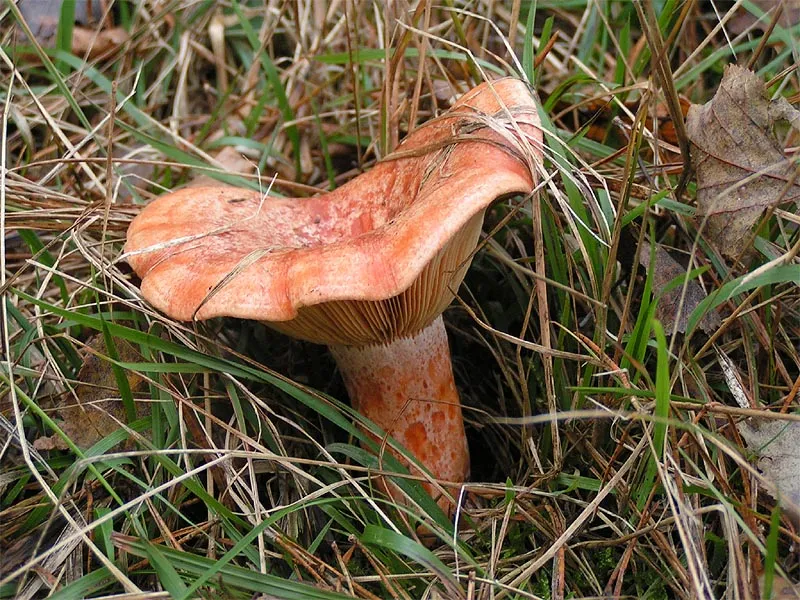
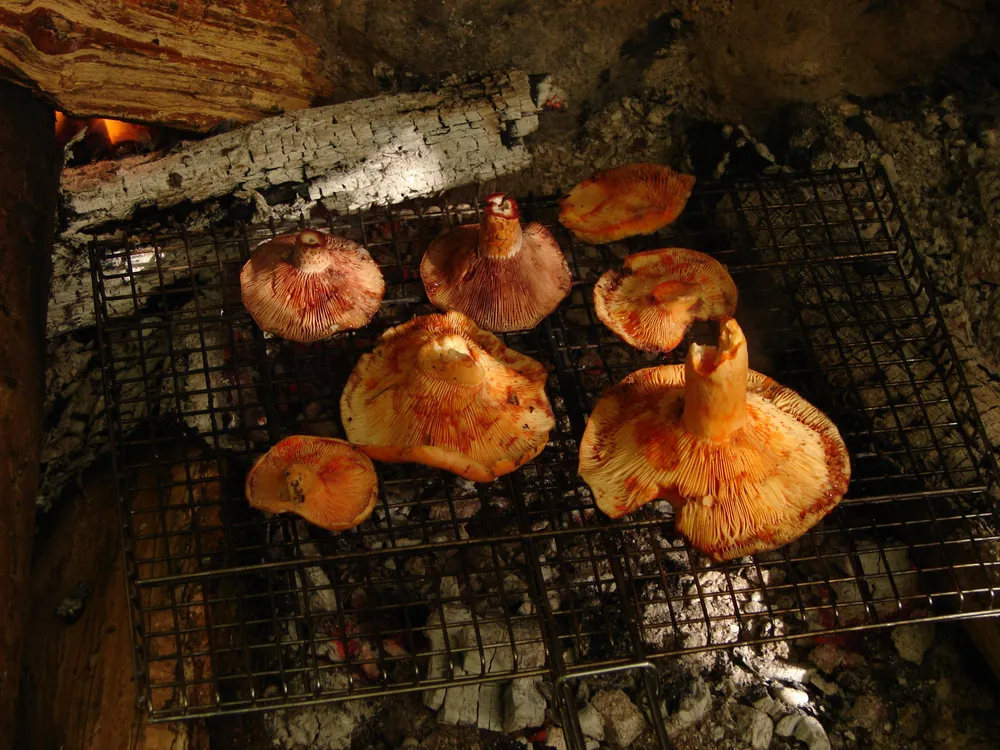
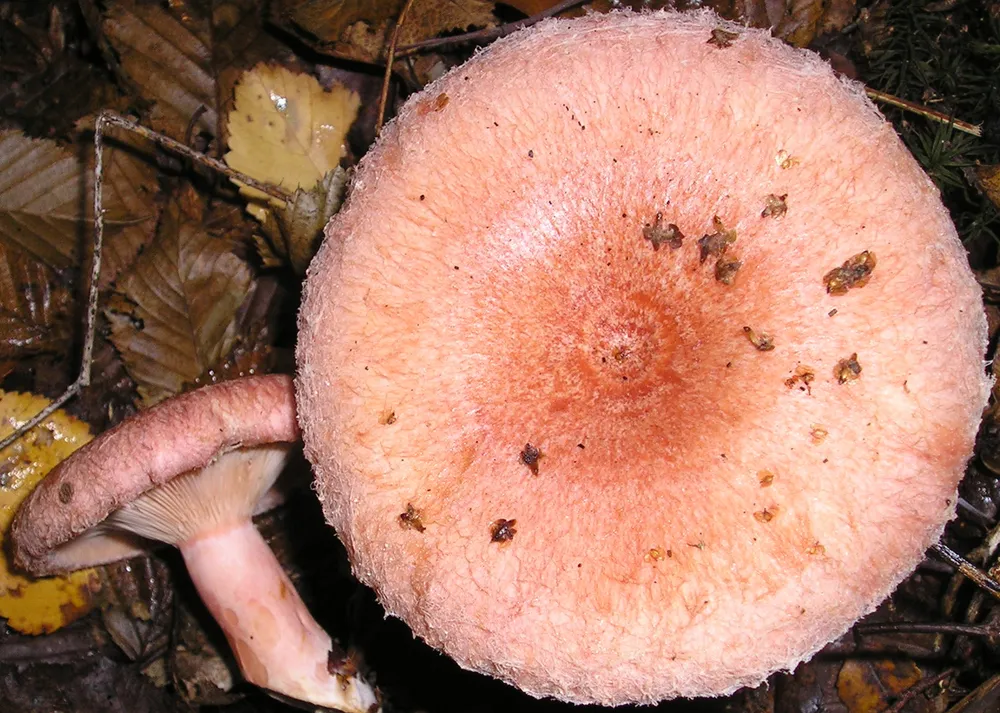
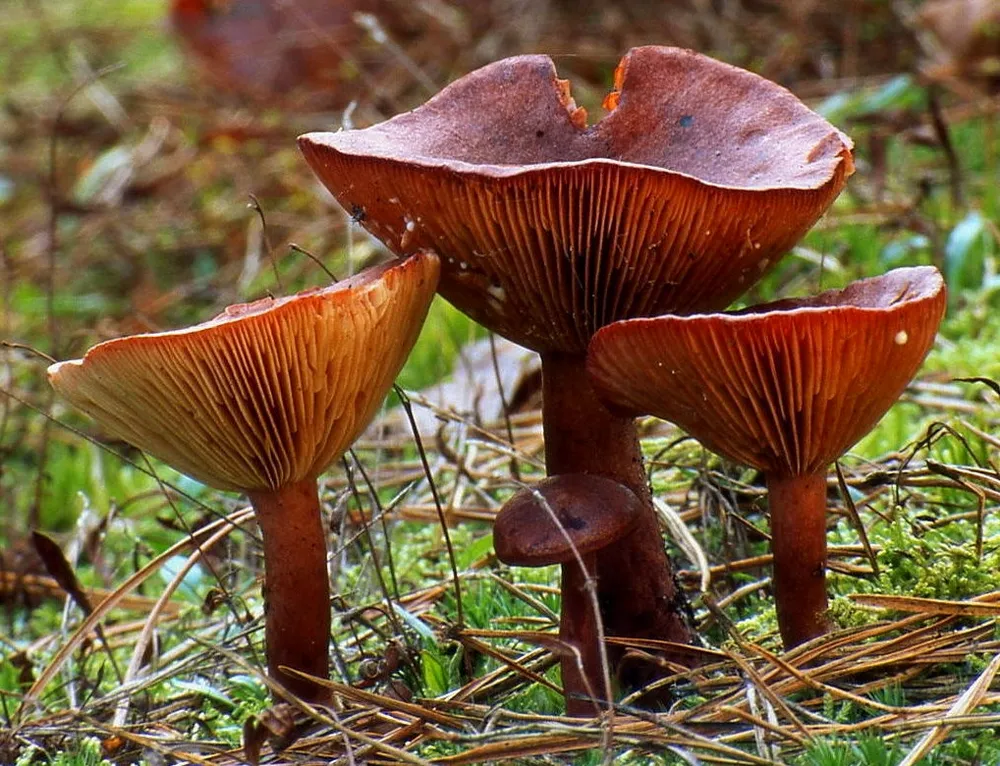
Related species
Mushrooms of the same genus and habitat — to study side by side and never mix up.
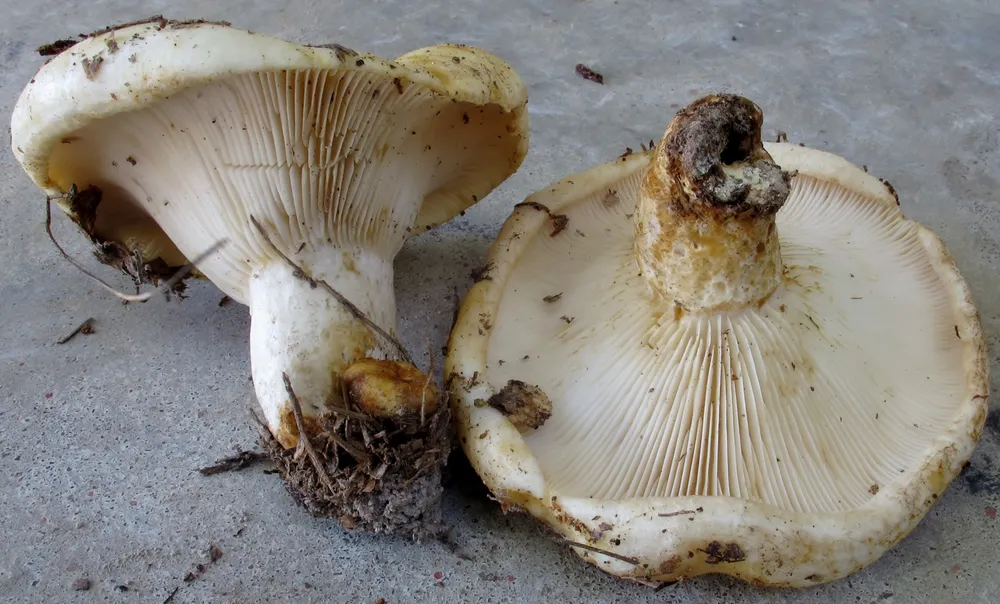
Lactarius resimus

Coconut milk cap
Lactarius glyciosmus
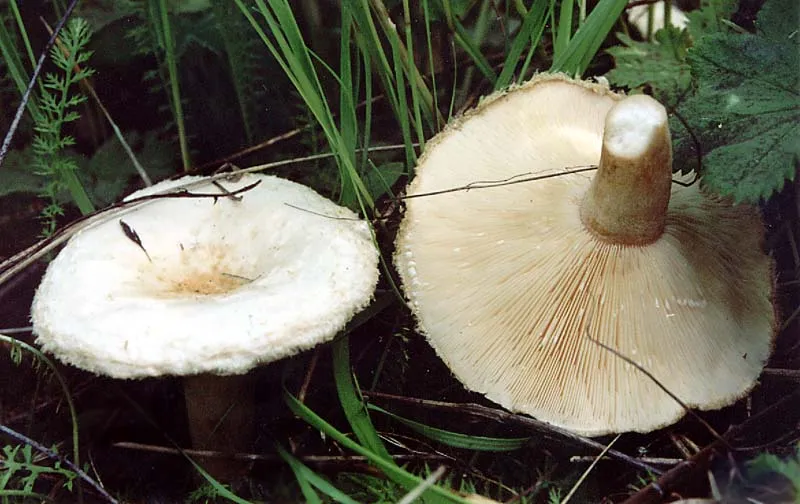
Bearded milk cap
Lactarius pubescens
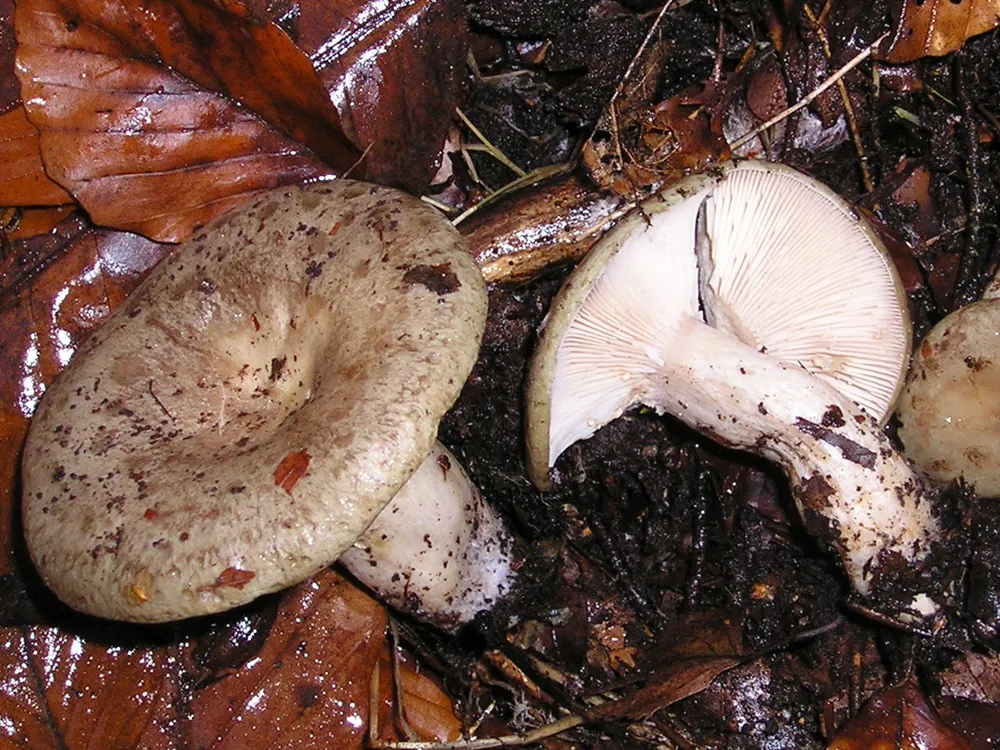
Beech milk cap
Lactarius blennius
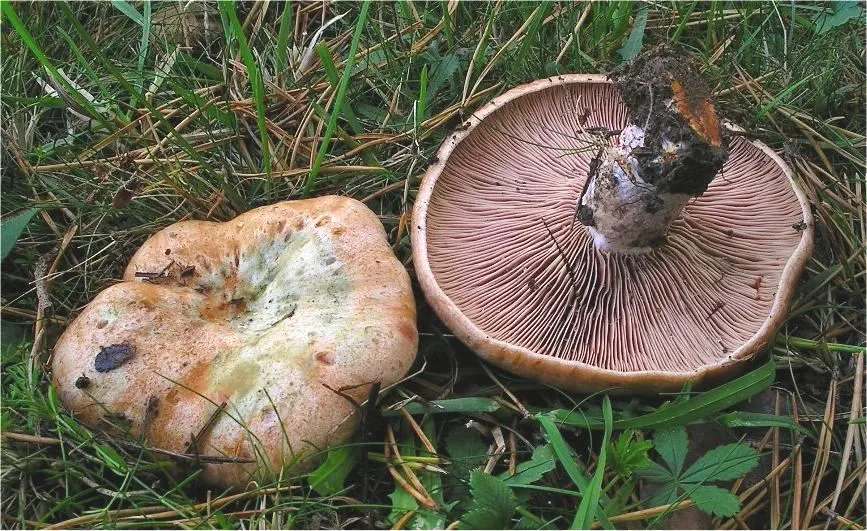
Bloody milk cap
Lactarius sanguifluus
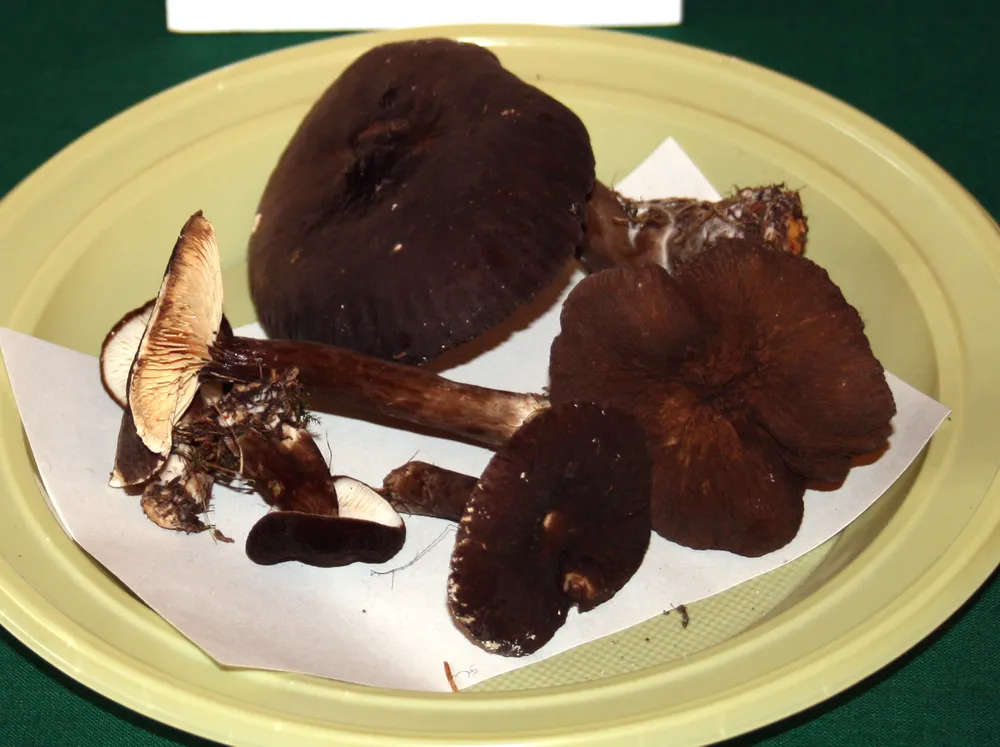
Chocolate milky
Lactarius lignyotus
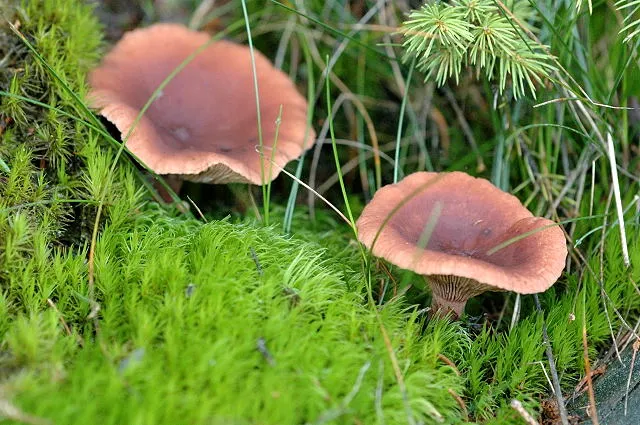
Curry milk cap
Lactarius camphoratus
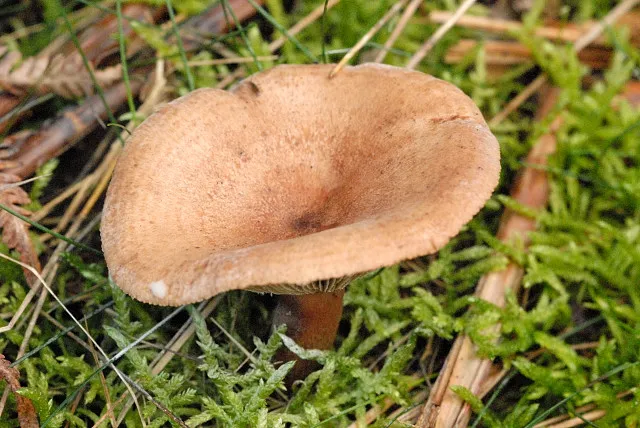
Fenugreek milk cap
Lactarius helvus
Related reading
 How to identify
Saffron milk cap: when it appears, where to look, and how to tell it apart
The saffron milk cap is one of the tastiest mushrooms for salting, and you can salt it almost raw. Here's when…
August 5, 2026·3 min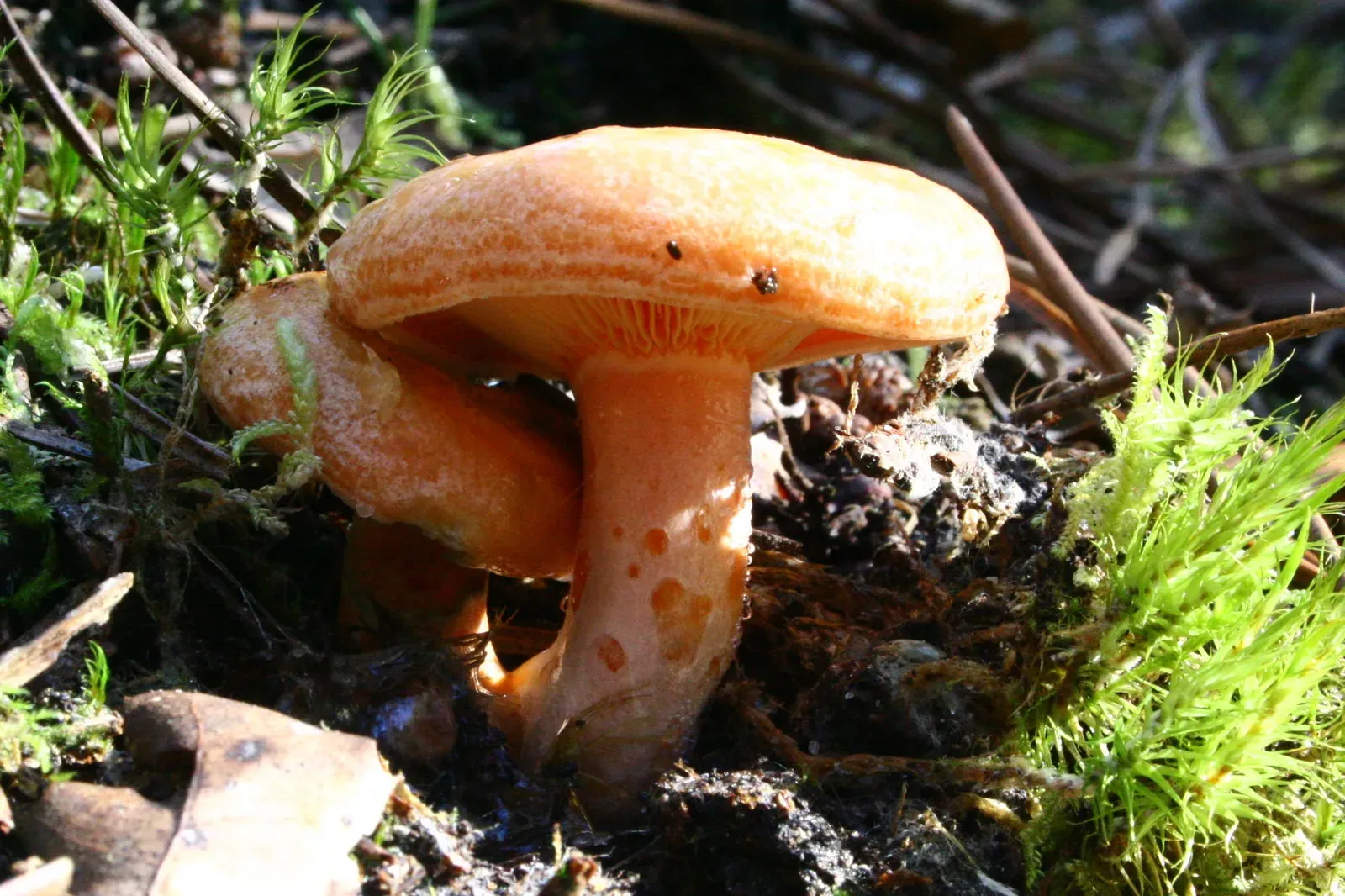 How to identify
Types of saffron milk caps: pine, spruce, and the true one
Saffron milk caps are orange mushrooms of conifer forests, prized for salting. But there are several species:…
July 18, 2026·2 min
Frequently asked questions
How do you tell it from the saffron milk cap?
By its mycorrhizal partner and how strongly it turns green. L. deliciosus, the saffron milk cap, grows under pine, its milk is orange and greens more slowly. L. deterrimus, the spruce one, grows under spruce, and its flesh turns green more intensely and faster (sometimes the moment you touch it). Both are excellent edible mushrooms. In practice nobody tells them apart in the basket.
Does it have dangerous lookalikes?
No seriously poisonous ones. But there are acrid milk caps with white milk that look similar: L. torminosus (woolly milk cap) — pink with a fluffy cap margin, white acrid milk; L. rufus (rufous milk cap) — brownish-orange, white acrid milk. The absolute check: saffron milk cap milk is ORANGE, not white. If it's white, it's not a saffron milk cap.
Why does it turn so green? Is that safe?
Yes, it's safe and even diagnostic. When it's damaged (cut or pressed), wherever the flesh meets the air you get oxidation of carotenoid pigments — the flesh takes on a greenish-blue color. It doesn't spoil the culinary quality — after salting or pickling the green color disappears. In L. deterrimus the reaction is faster and more pronounced than in other saffron milk caps — it's a trait of the species.
How do you cook it?
The classic is cold salting. Clean them (no boiling!), lay them gills down, sprinkle with salt (50 g/kg), add dill, garlic and currant leaves. Weigh them down, and in 30-40 days they're ready. Also: fried with potatoes and onions (a superb dish), pickled (with vinegar and bay leaves), in borscht or soup. Drying is a poor choice — the flesh loses its flavor.
Where should you look for it?
Only under spruce (Picea abies, Norway spruce) — in spruce and mixed spruce-broadleaf forests. On the forest floor among moss, in the grass near old spruces. If you found it under pine, it's L. deliciosus, not L. deterrimus.
Where in Ukraine does it grow?
Throughout the forest zone wherever spruce grows naturally or has been planted: the Carpathians (polonyna spruce stands at 800-1500 m), Prykarpattia, Polissia (mixed forests). In the forest-steppe — in spruce plantations.
When should you look for it?
August — October, peaking in September. The first flush comes after the first August thunderstorms, the main one after the first autumn rains. It loves a warm autumn with moderate rain.
What else does it look like?
Like L. deliciosus (saffron milk cap) — under pine, greens less intensely. Like L. salmonicolor — under fir in the Carpathians, pinker, its flesh greens more slowly. Like L. semisanguifluus — rare, its milk turns wine-red right away. Like inedible milk caps with white milk — checking the milk color settles it.
Is False saffron milk cap edible or poisonous?
Does False saffron milk cap have gills or pores?
What does the cap of False saffron milk cap look like?
What does the stem of False saffron milk cap look like?
Sources
- [1]Вікіпедія (українська)
- [2]Атлас грибів України, Зеров Д.К. (1979)
- [3]MycoBank Database
- [4]Index Fungorum
- [5]GBIF
- [6]iNaturalist Ukraine