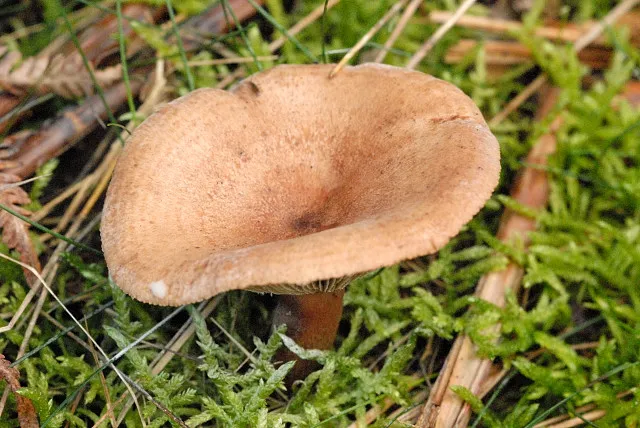
Fenugreek milk capLactarius helvus
Expert-verifiedUpdated October 3, 2026
Passport
- Edibility
- Poisonous
- Season
- Jul — Oct
- Hymenophore
- Gilled
- Cap color
- Brown
- Size
- Large (over 15 cm)
- Smell
- Pleasant
- Reviewed
- Yes ✓
POISONOUS
Eating it causes poisoning. Do not pick it unless you have identified it with certainty.
Mildly poisonous (category: irritant + suspected muscarinic). The toxins are not fully understood — the main suspect is a substance with muscarine-like action plus a group of sesquiterpene irritants. Unlike the Death cap or webcaps, there is no kidney or liver damage. Symptoms — gastroenteritis that develops 3–8 hours after the meal: nausea, heavy vomiting, abdominal pain, profuse diarrhea, profuse sweating, watery eyes, and sometimes brief pupil dilation. It lasts 12–48 hours. The toxins are heat-stable — ordinary boiling, salting and drying do NOT fully neutralize them. Poisonings have been described from the dried mushroom added to soup. Because of the severe dehydration, it is especially dangerous for children and older people. Treatment is symptomatic: IV fluids in hospital in cases of severe dehydration. With marked cholinergic symptoms (sweating, salivation, bradycardia), atropine may be used, but this is rarely needed for this species. There is no specific antidote. All modern field guides give a clear recommendation — do NOT collect it and do NOT use it as a seasoning.
If you suspect poisoning, call an ambulance immediately: 112 (the European emergency number) or your local emergency number
Quick answers
Where to look?
Conifer forest, Mixed forest
When does it appear?
Jul — Oct
Active months: July, August, September, October.
How to recognize it? Three signs
- Cap color: Brown, Cream, Orange
- Cap shape: Depressed
- Smell: Pleasant
Fruiting season
July – October
Description
The Fenugreek milk cap (also known in Ukrainian as the “sticky milk cap”, Lactarius helvus) is a large beige-brown milk cap with a distinctive strong smell of dry hay, chicory or maple syrup. This is that rare case where the Ukrainian scientific name warns you outright — it literally means “inedible”, and that’s no exaggeration. The mushroom contains toxins of still unclear nature that cause prolonged gastroenteritis with symptoms resembling muscarine syndrome.
What makes it especially treacherous is that its smell is very appealing — some foragers deliberately collected it as an aromatic addition to soups. This led to repeated poisonings, because the toxins are heat-stable: neither boiling, nor salting, nor drying fully neutralizes them. Dried, it is just as dangerous as fresh — you must never add it to soups as a seasoning.
In Ukraine it is widespread in Polissia, the Carpathians and the Carpathian foothills, in damp conifer and mixed forests. It very often grows in pine and pine-birch stands, on peaty and boggy ground, in mossy “carpets”. The season runs August–October. Don’t put it in your basket, don’t add it to food — there are far safer aromatic alternatives.
Cap
Cap 6–15 (up to 20) cm — a large milk cap. At first convex, then flattened with a sunken center, often with a small umbo in mature specimens. Color beige-brown, flesh-ocher or brownish-gray, fading with age. The surface is dry, finely granular or mealy, without distinct concentric zones.
Hymenophore
Gills. The gills are crowded, narrow, adnate or slightly decurrent. Color pale cream to cream-ocher, darkening with age. When damaged they exude a small amount of watery, clear-white or whey-like milk — a special feature of the species: neither thick nor abundant.
Stem
Stem 5–10 cm tall, 1–2.5 cm thick, cylindrical or slightly tapering toward the base, hollow in mature specimens. Same color as the cap or slightly lighter — beige, flesh-colored. The surface is dry and finely fibrous; no ring and no volva.
Flesh
Flesh pale cream, watery, thin for such a large mushroom, becoming brittle as it dries. The milk is watery and whey-like, scanty, and does not change color in the air. The cut flesh does not noticeably darken.
Smell
A very strong, distinctive smell of dry hay, chicory, burnt sugar or even maple syrup — especially pronounced as it dries. This is the most characteristic diagnostic feature. The paradox: the smell is appealing, but it is a warning sign, not a sign of “edibility”. The raw flesh tastes bitterish with a faintly acrid aftertaste.
Lookalikes

Related species
Mushrooms of the same genus and habitat — to study side by side and never mix up.
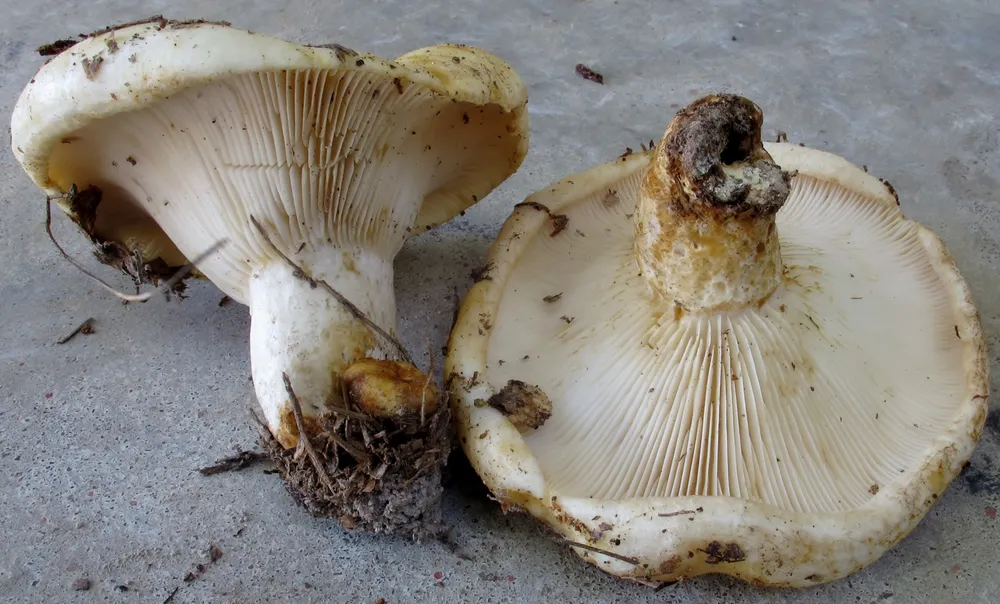
Lactarius resimus
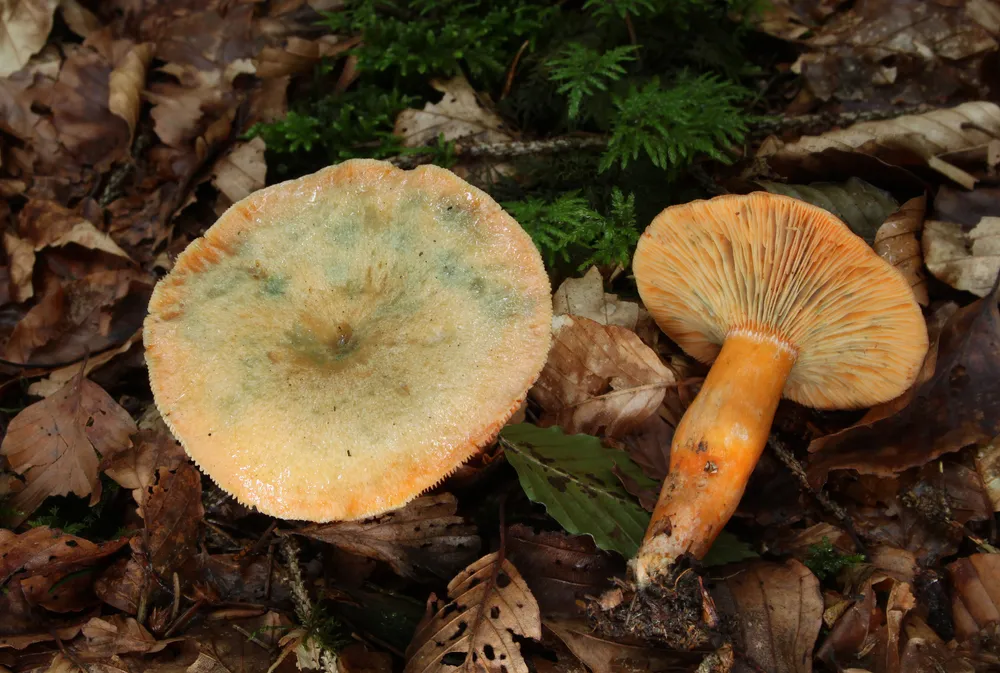
False saffron milk cap
Lactarius deterrimus
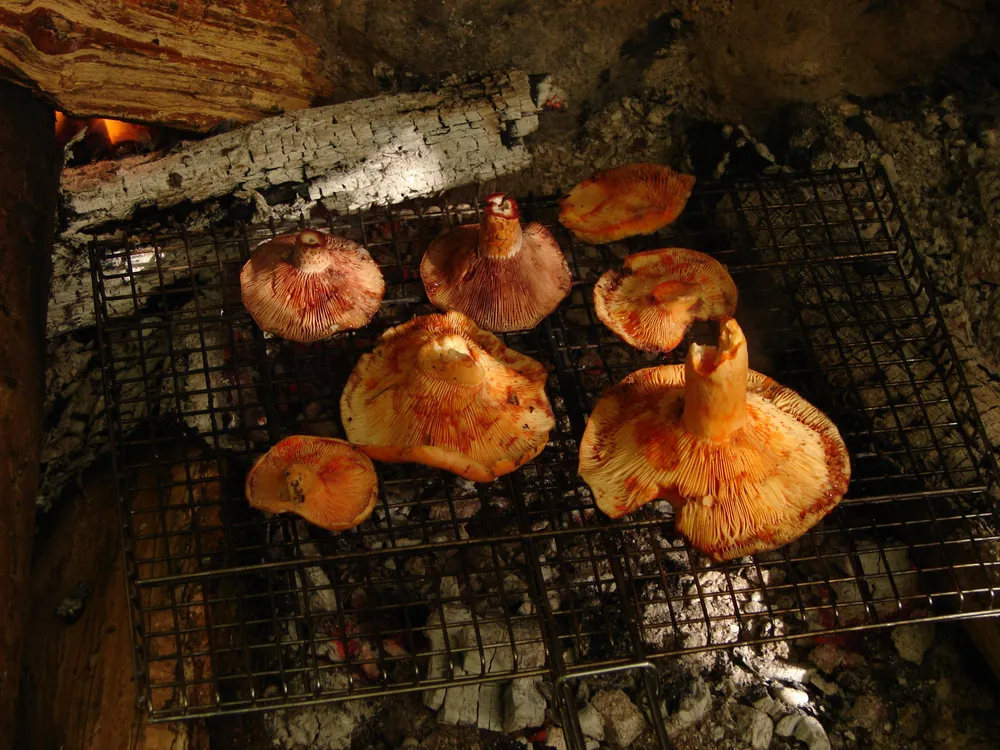
Lactarius salmonicolor
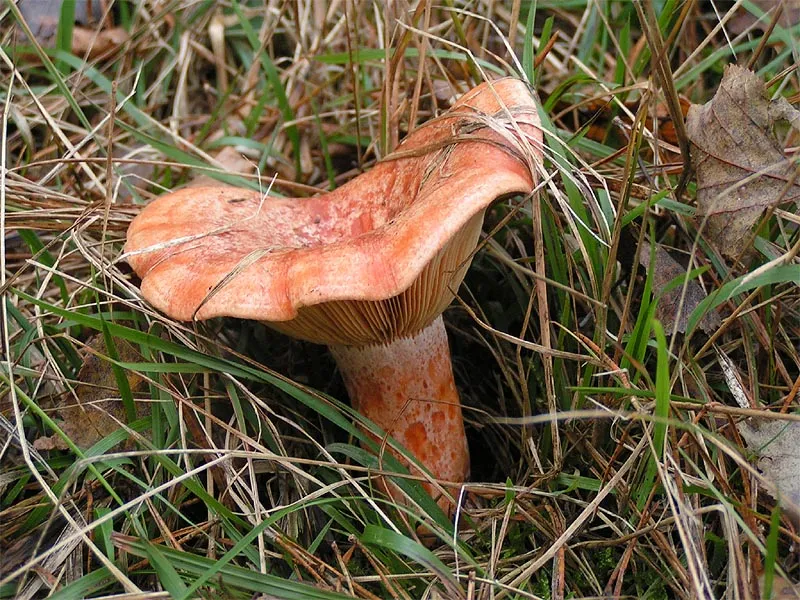
Saffron milk cap
Lactarius deliciosus
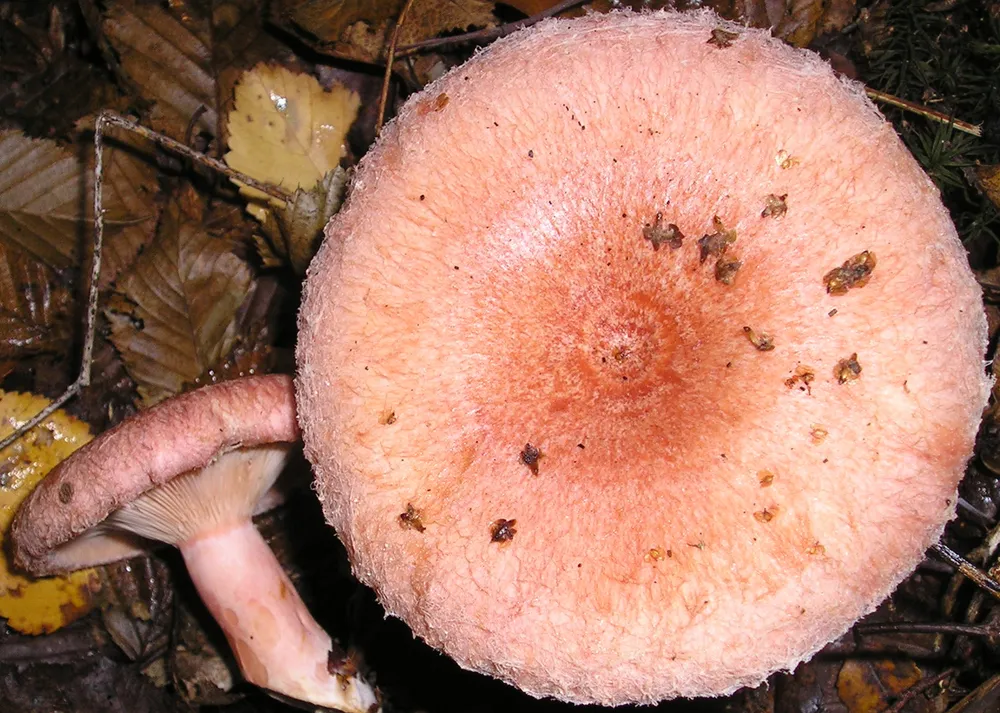
Woolly milk cap
Lactarius torminosus
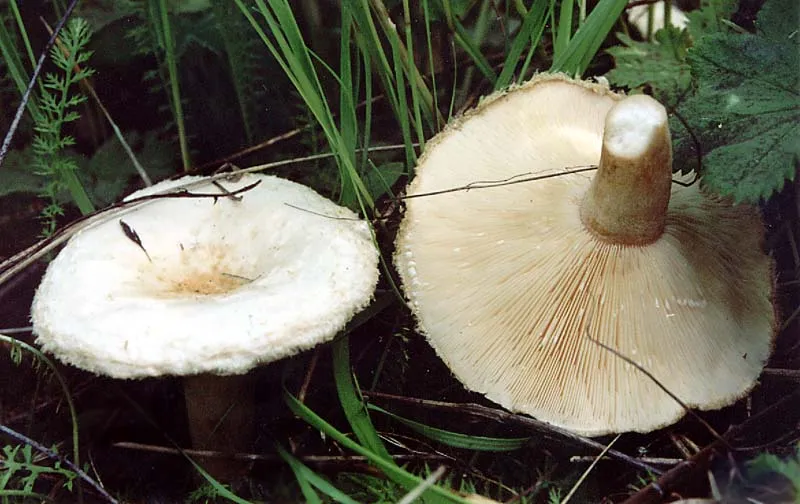
Bearded milk cap
Lactarius pubescens
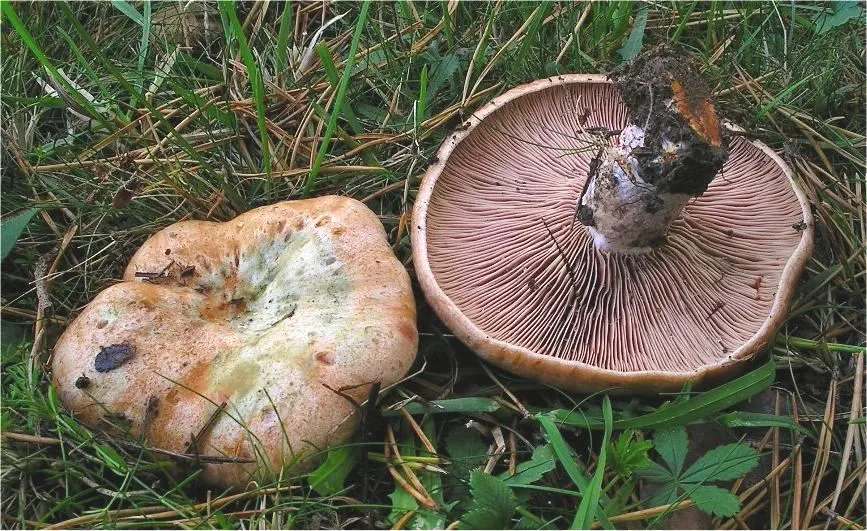
Bloody milk cap
Lactarius sanguifluus
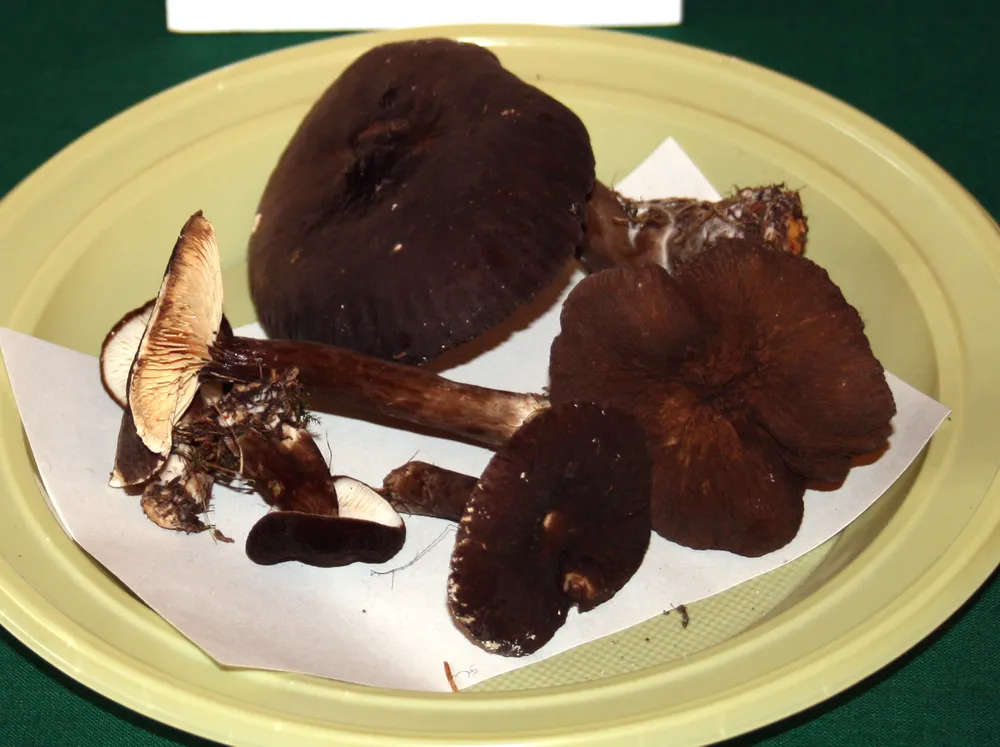
Chocolate milky
Lactarius lignyotus
Frequently asked questions
Can you eat it?
No. This is a mildly poisonous mushroom that causes prolonged gastroenteritis with severe dehydration. Ordinary boiling does NOT neutralize the toxins — unlike the “normal” conditionally edible milk caps. Don’t put it in your basket and don’t add it to soups, not even in small amounts.
What if I just add a little dried mushroom for the aroma?
Absolutely not. This is a classic trap: the smell really is pleasant (chicory, caramel), and people used it as a “mushroom seasoning”. The toxins are heat-stable — dried, it is just as dangerous. Serious poisonings have been described from a gram or two of dried mushroom added to soup.
What happens if you eat it by accident?
After 3–8 hours, severe gastroenteritis develops: heavy vomiting, profuse diarrhea, abdominal pain, sweating, salivation. It lasts 12–48 hours. There is no antidote; treatment is symptomatic — drink plenty of water or electrolytes. With severe dehydration (dizziness, infrequent urination), call 112 or your local emergency number — IV fluids are needed. Deaths have been described only among small children, due to rapid dehydration.
Where does it grow?
In damp conifer and mixed forests, mainly with pine and birch. Especially often on peaty, boggy ground, in sphagnum moss, and along the edges of swampy pine woods. In Ukraine — Polissia (especially Chernihiv, Kyiv and Volyn regions), the Carpathians, the Carpathian foothills.
Which regions of Ukraine?
Most of all — Polissia, with its peat bogs and damp pine forests. Less so — the Carpathians, the Carpathian foothills and the western forest-steppe. It is almost never found in the steppe. If you forage in Polissia, it’s worth learning to recognize it with certainty, because it grows often and in conspicuous groups.
When should you look for it?
August–October. Fruiting peaks in August–September, after long spells of rain. In a wet summer it can start at the end of July. It holds on until the first hard frosts.
How do you recognize it without fail?
Three features together: 1) large size (6–15 cm); 2) a dry, matte, beige cap without zones; 3) a very strong smell of dry hay, chicory or maple syrup. The smell is the key marker. If you find a “fruity, aromatic” milk cap in a damp pine wood, it is almost certainly helvus. When in doubt — don’t eat it.
What is it confused with?
With the edible Curry milk cap (L. camphoratus) — that one is small (2–5 cm) and also smells of chicory as it dries, but the smell is weaker. Size settles it: helvus is 6–15 cm, camphoratus 2–5 cm. With L. vietus — that one is smaller and lacks the strong smell. With the Milk-white brittlegill (Russula delica) — that one has no milk at all.
Is Fenugreek milk cap edible or poisonous?
Does Fenugreek milk cap have gills or pores?
What does the cap of Fenugreek milk cap look like?
What does the stem of Fenugreek milk cap look like?
Sources
- [1]Вікіпедія (українська)
- [2]Атлас грибів України, Зеров Д.К. (1979)
- [3]MycoBank Database
- [4]Index Fungorum
- [5]GBIF
- [6]iNaturalist Ukraine