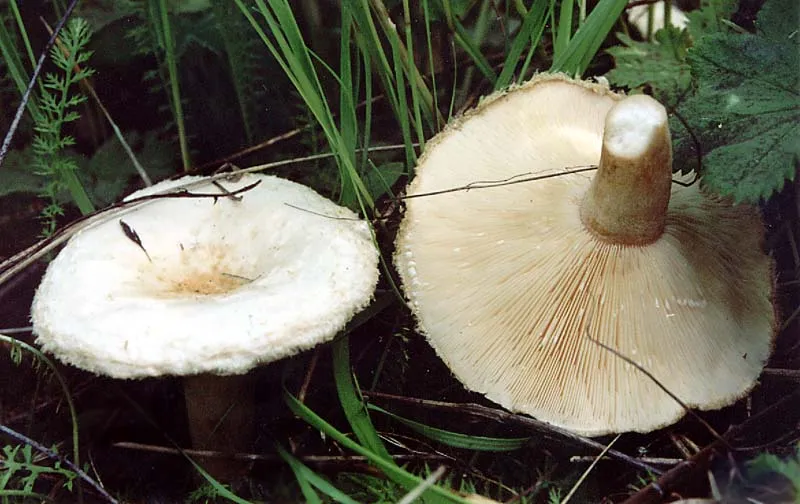
Bearded milk capLactarius pubescens
Expert-verifiedUpdated October 3, 2026
Passport
- Edibility
- Conditionally edible
- Season
- Jul — Sep
- Hymenophore
- Gilled
- Cap color
- White
- Size
- Medium (5–15 cm)
- Smell
- Odorless
- Reviewed
- Yes ✓
Quick answers
Where to look?
Deciduous forest, Mixed forest, Conifer forest
When does it appear?
Jul — Sep
Active months: July, August, September.
How to recognize it? Three signs
- Cap color: White, Cream
- Cap shape: Funnel-shaped
- Smell: Odorless
Fruiting season
July – September
Description
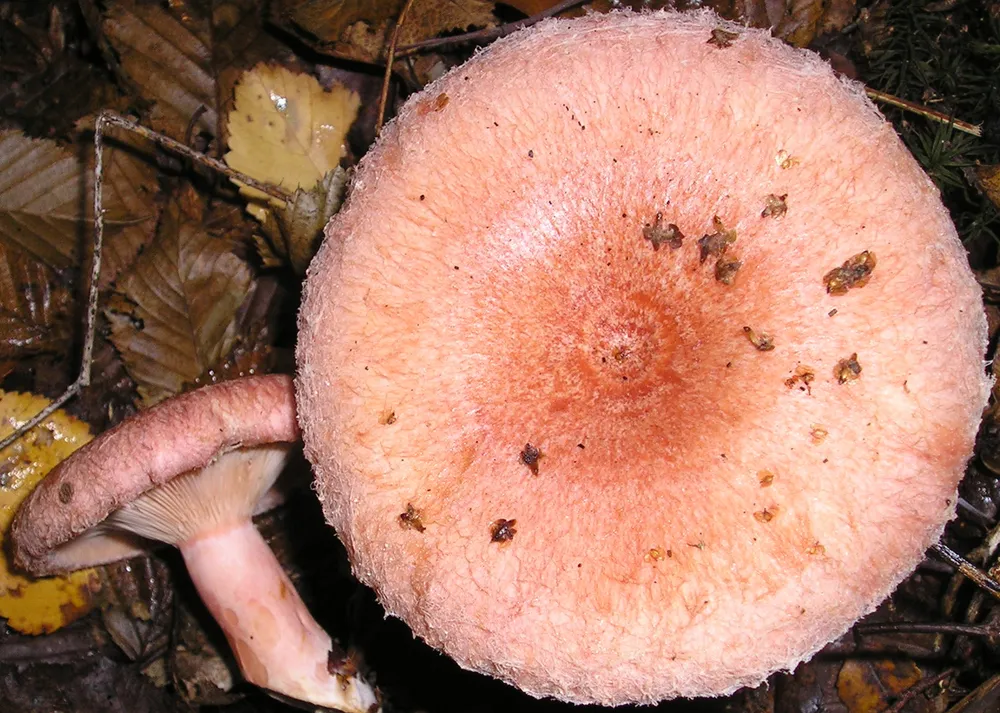
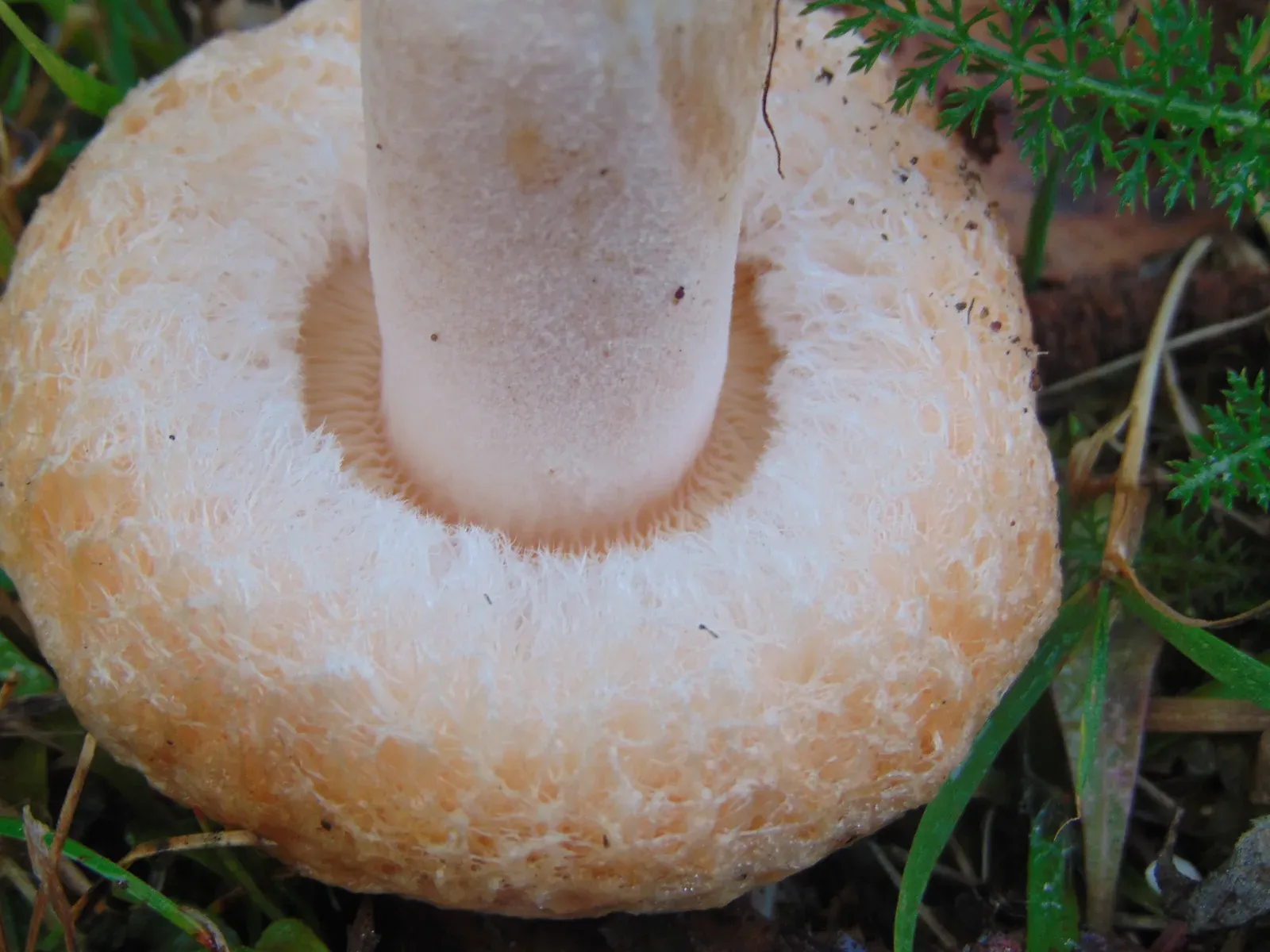
The Bearded milk cap is the pale sister of the Woolly milk cap. It looks more modest: a white or creamy-white funnel-shaped cap with a downy margin, a pinkish stem and white, bitter milk. Concentric zones are absent or barely visible — that's the main difference from the brick-pink L. torminosus.
This is a conditionally edible mushroom of the second category, meant only for salting or pickling. The flesh and milk are bitter and acrid, and you must not eat them without processing — just like with the Woolly milk cap, the risk of gastroenteritis is quite real. The classic processing method: boil it or soak it for 2-3 days, changing the water often, then salt it for 40 days. Salted, the mushroom is tasty and firm, with a delicate “salty” aroma.
In Ukraine it grows in deciduous and mixed forests, less often in pine woods, but still always near birches. It loves damp hollows, moist forest edges and boggy clearings. The season is July–September — earlier than the Woolly milk cap, peaking in August.
Cap
Cap up to 9 cm, convex at first, becoming funnel-shaped with age. White or creamy-white, sometimes slightly darker in the center. Concentric zones are usually absent — that's the key difference from the Woolly milk cap. The margin is inrolled and downy (with whitish hairs).
Hymenophore
Gilled hymenophore. Gills crowded, narrow, adnate or slightly decurrent. Whitish, turning cream with age; when damaged they take on a yellowish tint from the milk. Spore print cream.
Stem
Stem up to 5 cm tall, 0.8-1.5 cm thick, cylindrical, hollow or pithy inside. Pink or pinkish-white — paler than the cap. Surface smooth, with no ring and no volva.
Flesh
The flesh is white and brittle, releasing abundant white milk when damaged. The flesh doesn't darken in the air, but the milk may turn slightly yellow. Bitter taste.
Smell
Faint mushroomy smell. The milk is very bitter and acrid. Raw flesh tastes sharp and unpleasant. Don't taste it raw.
›Scientific synonyms (5)
Agaricus pubescens Fr. (1794), Lactarius controversus var. pubescens (Fr.) Gillet (1876), Lactifluus pubescens (Fr.) Kuntze (1891), L. torminosus subsp. pubescens (Fr.) Konrad & Maubl. (1935), L. torminosus var. pubescens (Fr.) S.Lundell (1956)
Lookalikes

Related species
Mushrooms of the same genus and habitat — to study side by side and never mix up.
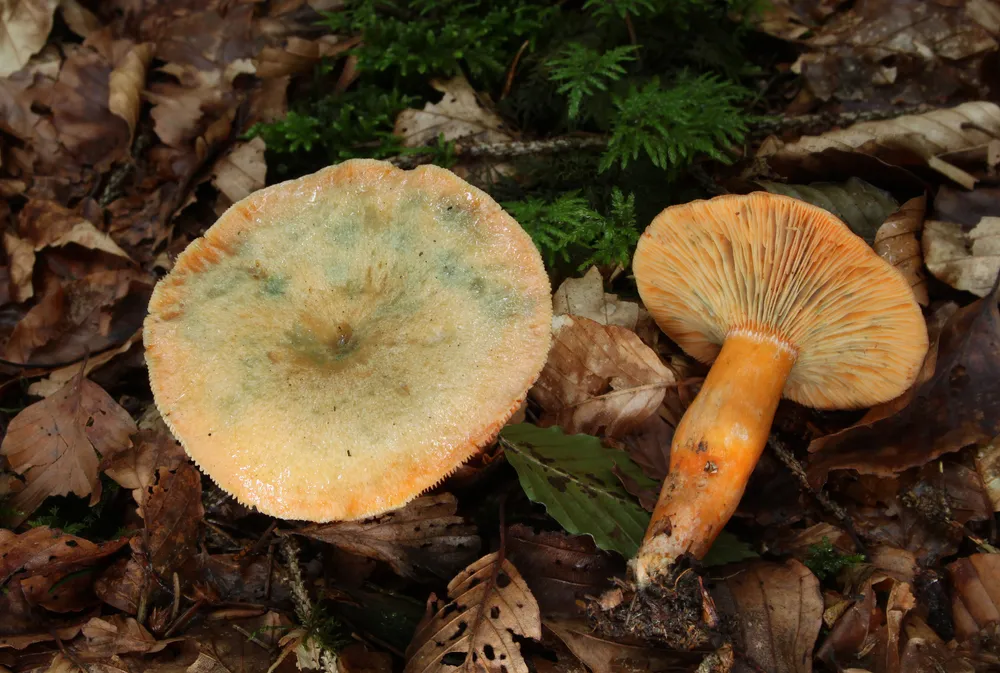
False saffron milk cap
Lactarius deterrimus
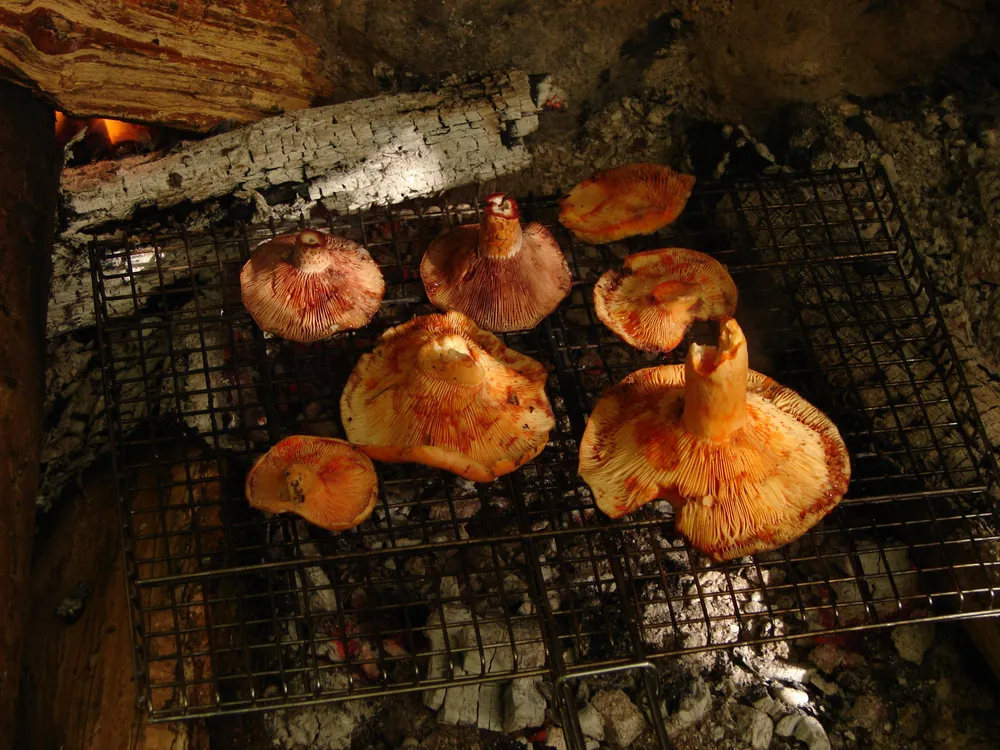
Lactarius salmonicolor
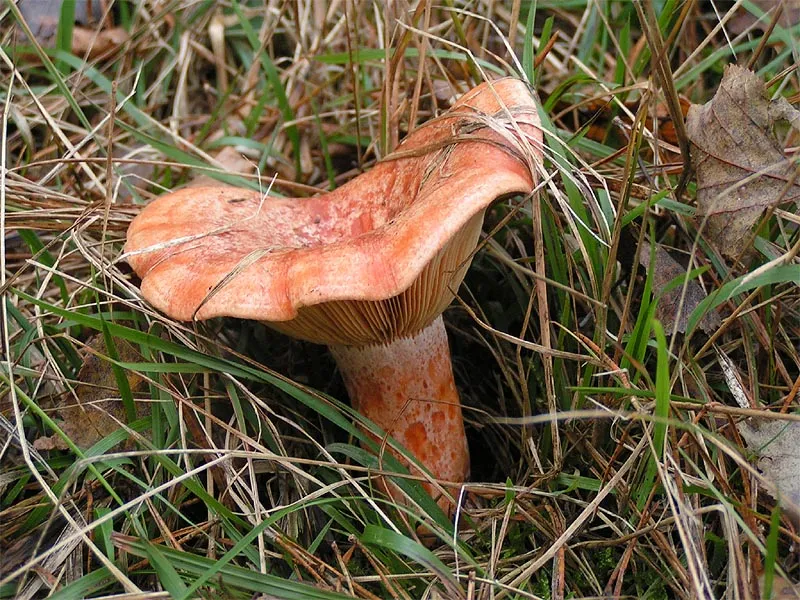
Saffron milk cap
Lactarius deliciosus
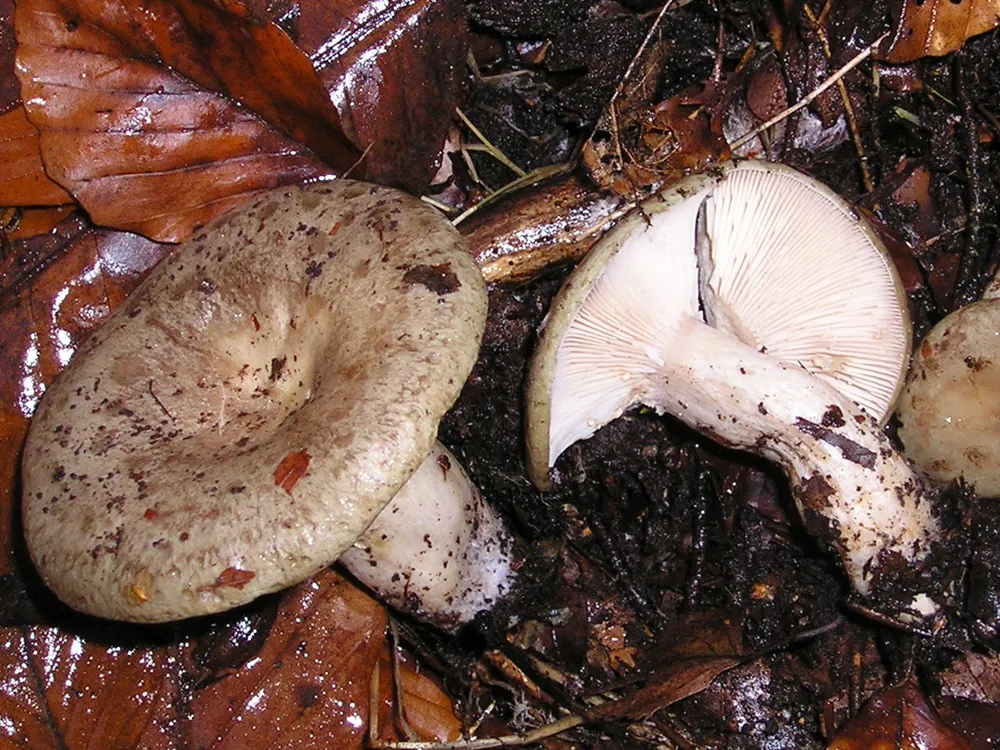
Beech milk cap
Lactarius blennius
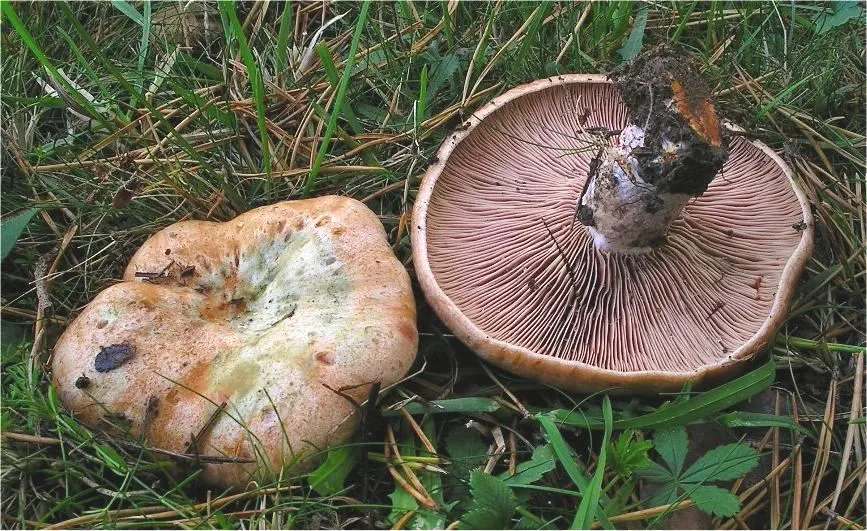
Bloody milk cap
Lactarius sanguifluus
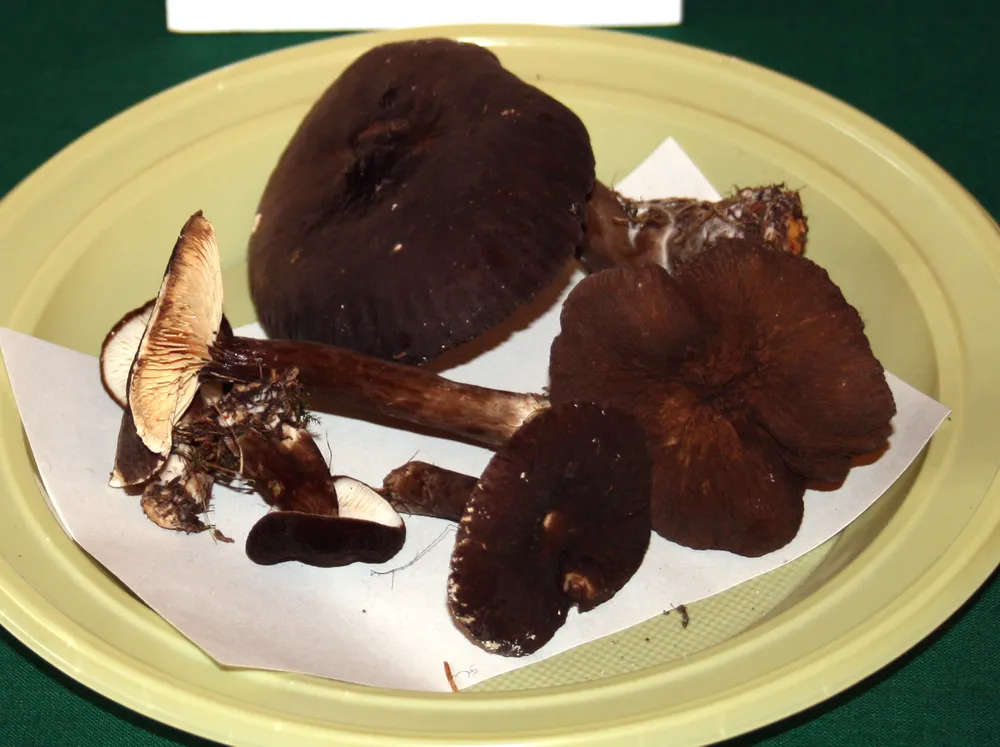
Chocolate milky
Lactarius lignyotus
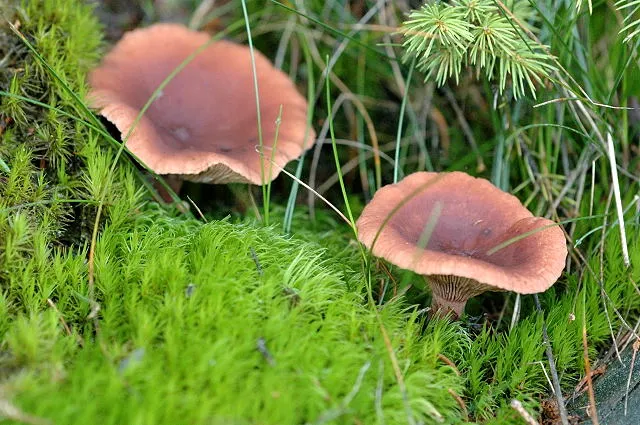
Curry milk cap
Lactarius camphoratus
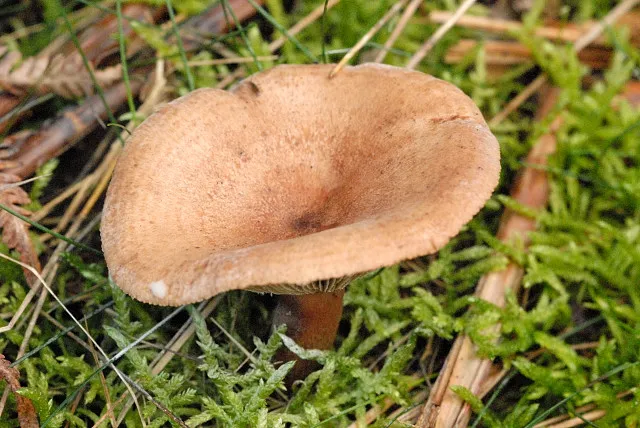
Fenugreek milk cap
Lactarius helvus
Related reading
Frequently asked questions
Can you eat it?
Yes, but only after thorough processing: soak it for 2-3 days, changing the water often, or boil it for 15-20 minutes and discard the water, then salt it for 40 days. Without processing, the raw mushroom is very bitter and can cause gastroenteritis — nausea, stomach pain, diarrhea.
Can you fry it?
Technically, yes — after boiling. But it still tastes somewhat bitter, and the Bearded milk cap's traditional use is salting or pickling. That's where it shines. Fried, it's an acquired taste — and not safe for everyone.
Where should you look for it?
Always near birches. It can grow in deciduous, mixed and even pine forests — but always where there are birches. It loves damp hollows, moist forest edges, boggy clearings and mossy “carpets.”
Which regions of Ukraine does it grow in?
Polissia, the Forest-Steppe and the Carpathian foothills. The richest harvests come from the Chernihiv, Kyiv, Zhytomyr, Volyn, Rivne and Lviv regions. In the steppe and Crimea it's rare, found only in planted birch stands.
When does it appear?
July–September. It's an earlier species than the Woolly milk cap — it starts in mid-July and peaks in August. By the end of September it has mostly finished fruiting.
Can it fruit in October?
Rarely. If autumn is warm and long, you may find the odd one into the first days of October. But you won't find it in numbers in October.
What is it confused with?
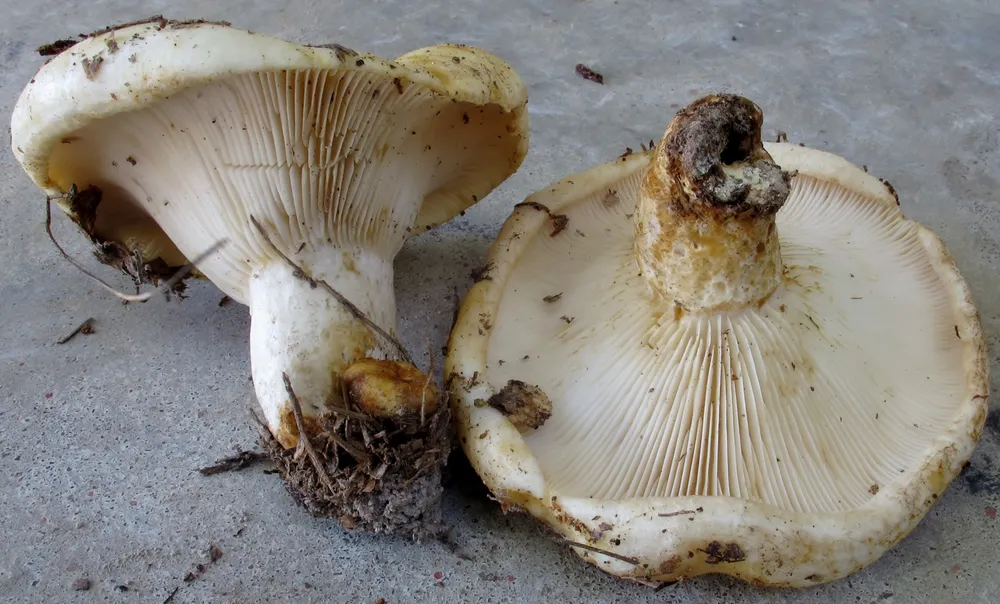
Most often with the Woolly milk cap (L. torminosus). The difference: the Bearded milk cap is entirely white with no zones and no brick-pink tints. In the kitchen the two are equivalent (both are salted). It can also be confused with Lactarius resimus — but that one is much larger, with a yellowish tint.
Is it really a separate species?
In modern taxonomy the question is debated. Many sources treat the Bearded milk cap as a subspecies of the Woolly milk cap — L. torminosus subsp. pubescens. For a forager it makes no real difference in practice: both are processed the same way and are often salted together in the same jar.
Is Bearded milk cap edible or poisonous?
Does Bearded milk cap have gills or pores?
What does the cap of Bearded milk cap look like?
What does the stem of Bearded milk cap look like?
Sources
- [1]Вікіпедія (українська)
- [2]Атлас грибів України, Зеров Д.К. (1979)
- [3]MycoBank Database
- [4]Index Fungorum
- [5]GBIF
- [6]iNaturalist Ukraine