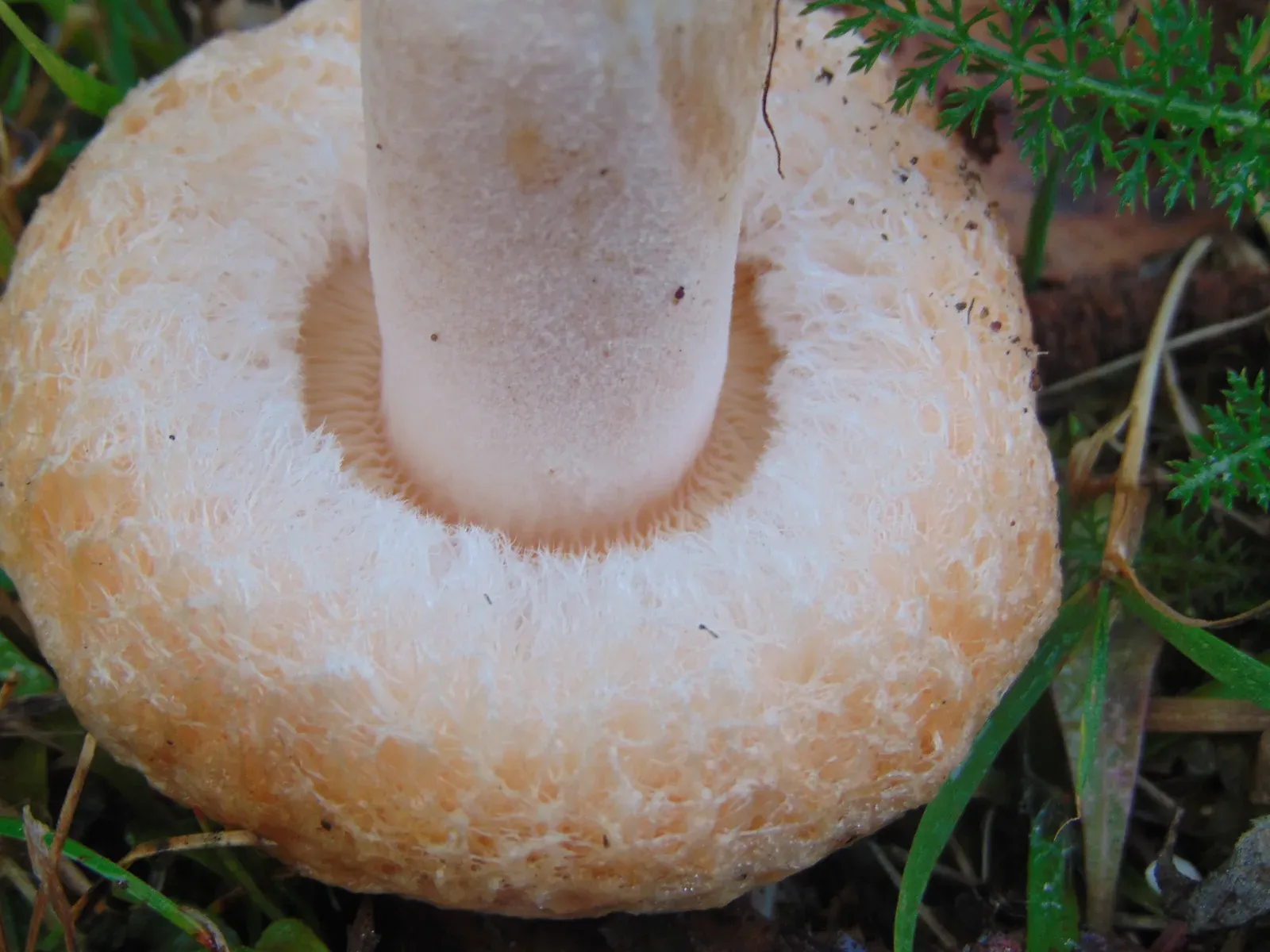
The woolly milk cap is easy to spot by its fluffy, almost woolen cap — hence the name. It's a relative of the classic milk caps, with milky latex, and people have salted it for winter for centuries. It's conditionally edible and needs proper preparation, but if you know its features, it's a reliable autumn harvest.
Let's look at how to recognize the woolly milk cap, where it grows and how to prepare it safely.
Pink and white woolly milk caps
Two species are the most common:
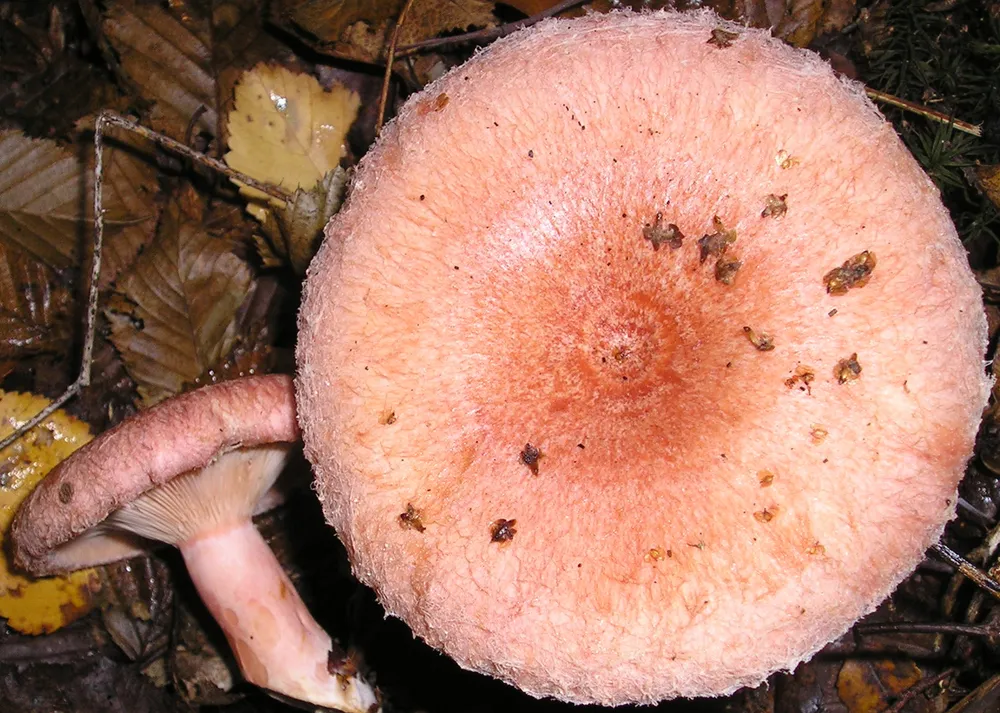
- Woolly milk cap (pink). The cap is pinkish with concentric zones and an inrolled, fluffy-shaggy margin. Its favorite tree is birch.
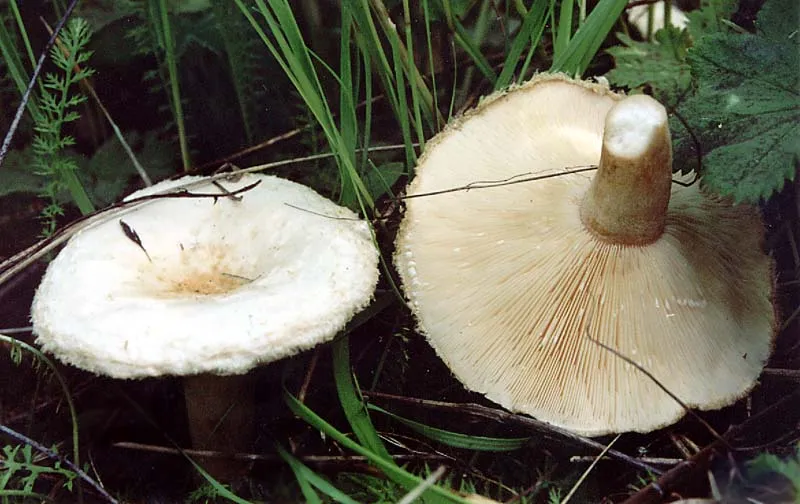
- Bearded milk cap (the white one). Smaller, whitish or cream, also with a fluffy margin; it grows in damper spots.
When broken, both release white, acrid milky latex — the key trait of the genus.
How to recognize the woolly milk cap
- Cap with a depressed center and a fluffy, shaggy margin; pink or whitish, often zoned.
- Gills whitish-pink, running down the stem.
- Stem short, firm, the same color as the cap.
- Milky latex white, acrid, doesn't change color in the air.
The fluffy margin is what instantly sets the woolly milk cap apart from smooth brittlegills and many milk caps.
Where and when it grows
The woolly milk cap is closely tied to birch, so look for it in birch and mixed forests, on forest edges and in damp spots. The season runs from August to October, often in large groups. It's a typical autumn relative of the milk caps.
Is it edible, and how to cook it
The woolly milk cap is conditionally edible: because of its acrid latex, it's never eaten fresh. It's prepared like other milk caps — salted:
- Soak for several days in cold water, changing it often.
- Boil, draining the water.
- Salt.
Once salted, the woolly milk cap turns crunchy and fragrant. Pick young, firm mushrooms.
What to watch out for
- Don't eat it fresh. Without soaking, the acrid latex causes an upset stomach.
- The fluffy margin is the key. It's the main feature of the woolly milk cap.
- Only near birches. The pink woolly milk cap almost always grows under birch.
Sources
- “Key to the Fungi of Ukraine” (Kyiv, Naukova Dumka publishing house).
- Lactarius torminosus in GBIF, the Global Biodiversity Information Facility.
- Lactarius torminosus in MycoBank, the international fungal nomenclature database.
- Lactarius on Wikipedia.
Frequently asked questions
How do you recognize a woolly milk cap?
By its fluffy cap with a shaggy margin (pink or whitish), white acrid milky latex where it breaks, and its habit of growing under birches.
Is the woolly milk cap edible?
Conditionally edible: it isn't eaten fresh because of its acrid latex. Woolly milk caps are soaked, boiled and salted, like other milk caps.
How is the white woolly milk cap different from the pink one?
The white one (bearded milk cap) is smaller and whitish and grows in damper spots; the pink one is larger, with pink zones on the cap, and almost always grows under birch.
Where and when does the woolly milk cap grow?
In birch and mixed forests, on forest edges and in damp spots, from August to October, often in large groups.
Why does the woolly milk cap need soaking?
Its milky latex is acrid and bitter. Soaking for several days and boiling remove the bitterness and make the mushroom fit for salting.
Can a woolly milk cap poison you?
If you eat it fresh or poorly soaked, you'll get an upset stomach. After proper soaking and salting, the mushroom is safe.
Why is the woolly milk cap fluffy?
The shaggy cap margin is a natural feature of this milk cap species, and it gave the mushroom its name. It's a reliable identification feature.
What does the woolly milk cap grow with?
It forms mycorrhiza mainly with birch, so you'll almost always find it in birch woods and mixed forests with birches.
Mushrooms in this article
Related articles
 How to identify
Truffles in Ukraine: do they grow here, and where to look
Truffles aren't just a French delicacy. Several species grow in Ukraine too. Here's which ones, where they occ…
August 24, 2026·2 min Recipes & cooking
How to store fresh mushrooms, and for how long
Fresh mushrooms spoil faster than you might think. Here's how long they keep in the fridge, how to store them…
August 21, 2026·4 min Recipes & cooking
How long to boil mushrooms
Boiling time depends on the type of mushroom and on what you're cooking next. Here's a clear cheat sheet: how…
August 22, 2026·4 min