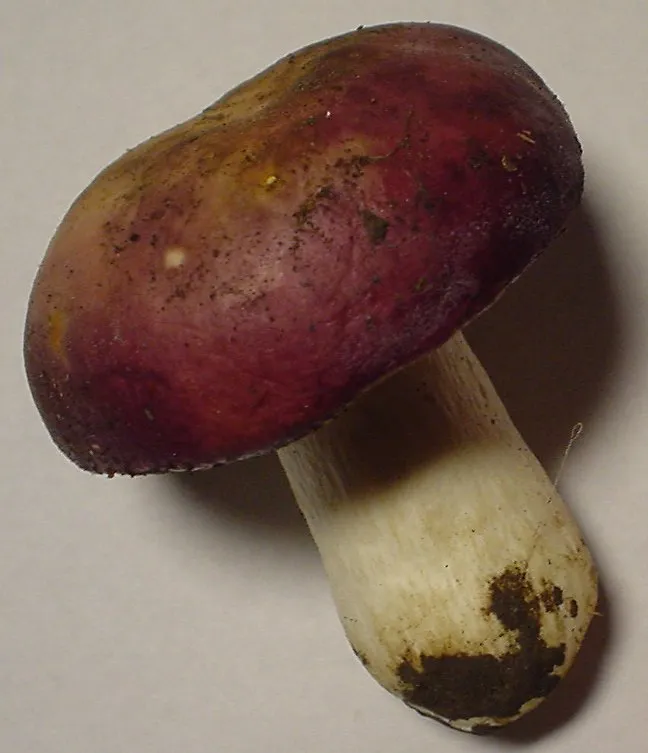
Crab brittlegillRussula xerampelina
Expert-verifiedUpdated October 3, 2026
Passport
- Edibility
- Edible
- Season
- Aug — Oct
- Hymenophore
- Gilled
- Cap color
- Red
- Size
- Medium (5–15 cm)
- Smell
- Pleasant
- Reviewed
- Yes ✓
Quick answers
Where to look?
Conifer forest, Mixed forest
When does it appear?
Aug — Oct
Active months: August, September, October.
How to recognize it? Three signs
- Cap color: Red, Violet
- Cap shape: Depressed
- Smell: Pleasant
Fruiting season
August – October
Description
The crab brittlegill, or "herring brittlegill" (Russula xerampelina, popularly also called the "shrimp brittlegill") — is one of the most distinctive and **tastiest" edible brittlegills, with a clear smell of shrimp, smoked herring or fish. The Latin epithet xerampelina comes from the Greek for "dried-wine colored" — a nod to the wine-red cap. The Ukrainian folk name "vonyucha" ("stinky") can be misleading: the smell isn't unpleasant, just characteristically "fishy and briny" — experienced foragers actually look for exactly this smell, because it identifies the species unmistakably.
Cap 5-15 cm across, fleshy, convex to flat and spreading with a slightly depressed center, wine-red, purple-violet, richer and burgundy in the center, paler toward the edge, pinkish-gray with an ochre tint. The cap skin is matte and dry, slightly sticky in wet weather, peels easily up to 2/3 of the cap. The smell is distinctly fishy — like smoked herring or cooked shrimp, especially in mature fruiting bodies — this is the key diagnostic feature, and it doesn't disappear with cooking (it gets fainter, but is still recognizable).
An excellent edible mushroom of outstanding culinary quality — the flesh is tender, with a mild nutty flavor and a fishy, briny aftertaste. Cook it like porcini: fry, stew, pickle. It's especially good in sauces and paired with fish or seafood (it brings out their flavor). Folk tradition values it on a par with the best brittlegills — as a "mushroom for gourmets".
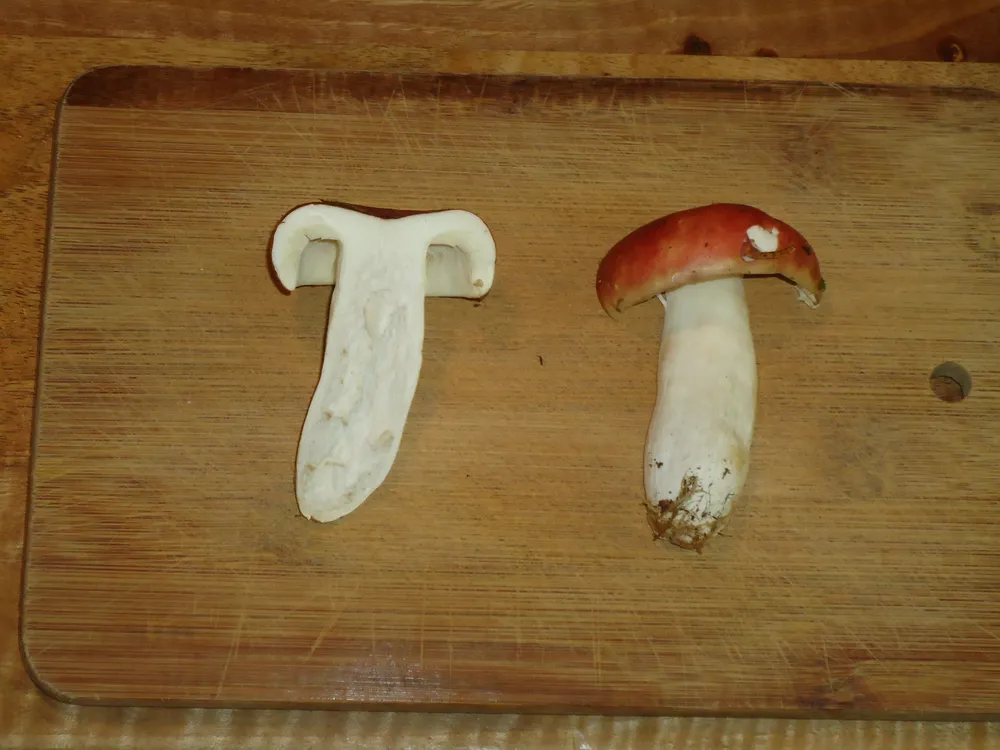
The second distinctive feature — the stem flesh quickly turns yellow to rusty brown when damaged, and then turns almost brown after longer exposure to air. This is a reaction specific to Russula xerampelina, with a characteristic positive FeSO₄ reaction (iron salts turn the flesh pinkish — a mycologists' test).
The main risk is confusing it with other wine-red brittlegills (R. queletii, R. integra, R. olivacea). The essential check is the fishy smell and yellow-brown discoloration of the stem flesh after cutting. R. queletii is burning-acrid with no fishy smell; R. integra is mild and sweetish, with no yellowing of the flesh; R. olivacea is olive-green, not wine-colored.
In Ukraine, Russula xerampelina is common in pine and spruce-pine forests: the Carpathians, Prykarpattia, Polissia, and in places the forest-steppe. A mycorrhizal partner of pine and spruce. Season: August — October.
Cap
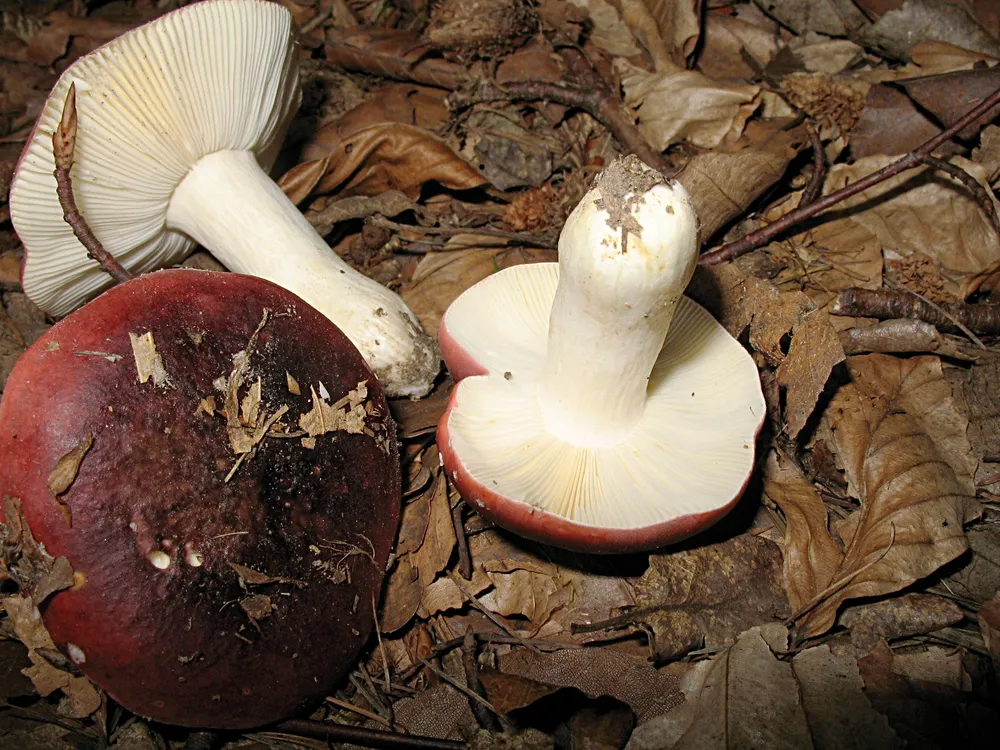
Cap 5-15 cm across, when young hemispherical, becoming with age flat and spreading with a slightly depressed center. The cap skin is matte, slightly sticky in wet weather, dry and matte in dry weather, peels easily 2/3 of the way to the center. Color wine-red, purple-violet, burgundy in the center, paler toward the edge, fading to pinkish-gray and ochre. In mature caps the edge has fine radial grooves.
Hymenophore
Gilled hymenophore — the gills are attached or free from the stem, moderately crowded, fleshy, brittle. Color cream-white when young, becoming ochre-yellow to yellow-brown with age (from the mature spore powder). Spore print yellow-ochre to yellow-brown.
Stem
Stem 5-10 cm tall, 1.5-3 cm thick, firm, fleshy, cylindrical, hollow inside in old specimens. Color white when young, with a characteristic pink or wine-colored tint, where pressed or cut it quickly turns yellow to rusty brown — a diagnostic feature. Surface smooth with fine lengthwise wrinkles. No ring.
Flesh
Flesh firm, brittle, white, quickly turns yellow to rusty yellow when cut, then brownish with age (especially in the stem) — a characteristic reaction of the species. Smell distinctly fishy and briny (smoked herring, shrimp, fish) — the main diagnostic. Taste mild, nutty, with no bitterness or acridity.
Smell
Distinctly fishy and briny: smoked herring, cooked shrimp, fish. A diagnostic feature of the species, clearly noticeable when cut and in the finished dish.
›Scientific synonyms (7)
Agaricus xerampelina Schaeff. (1774), Agaricus rubellus Batsch, Agaricus esculentus var. xerampelinus (Schaeff.) Pers., Russula xerampelina var. xerampelina, Russula atrorosea Schwalb, Russula borealis Kauffman, Russula atrosanguinea Velen.
Lookalikes
.webp)
Related species
Mushrooms of the same genus and habitat — to study side by side and never mix up.
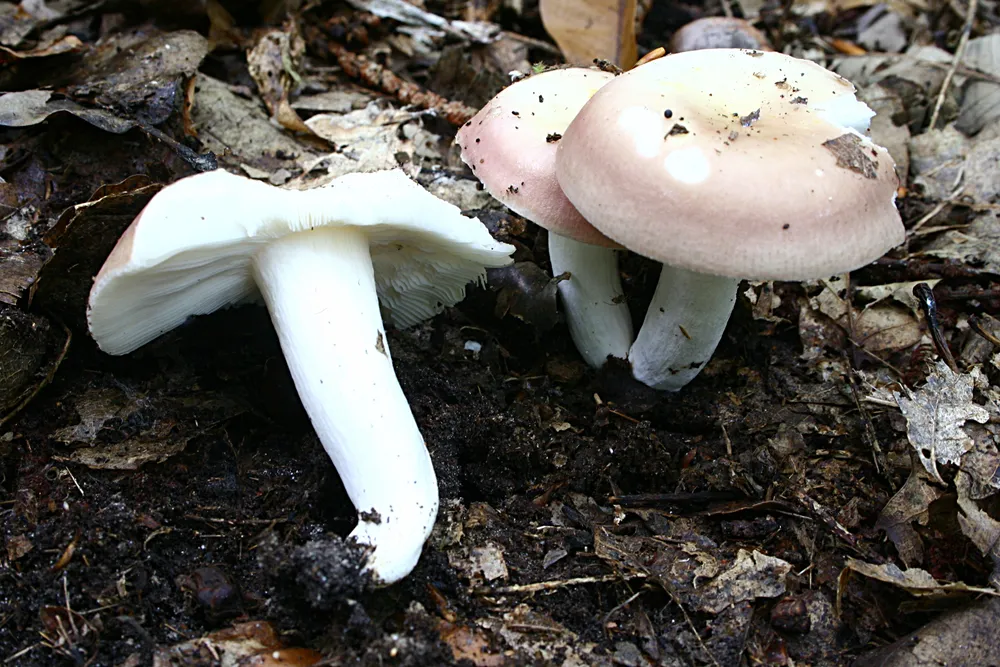
Bare-toothed russula
Russula vesca
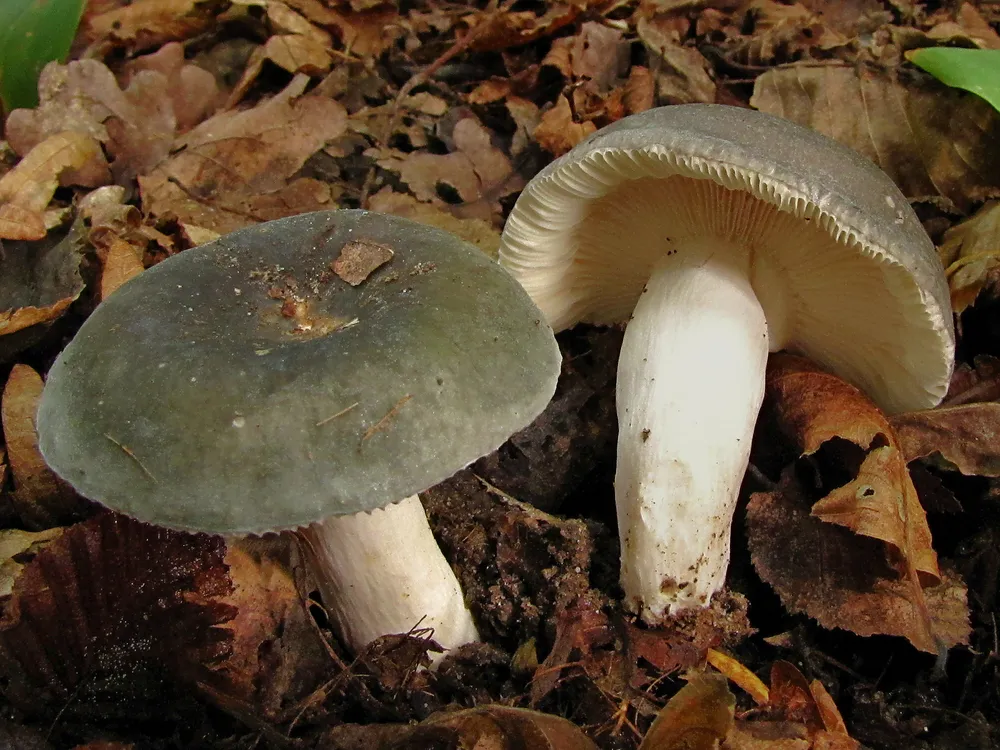
Charcoal burner
Russula cyanoxantha
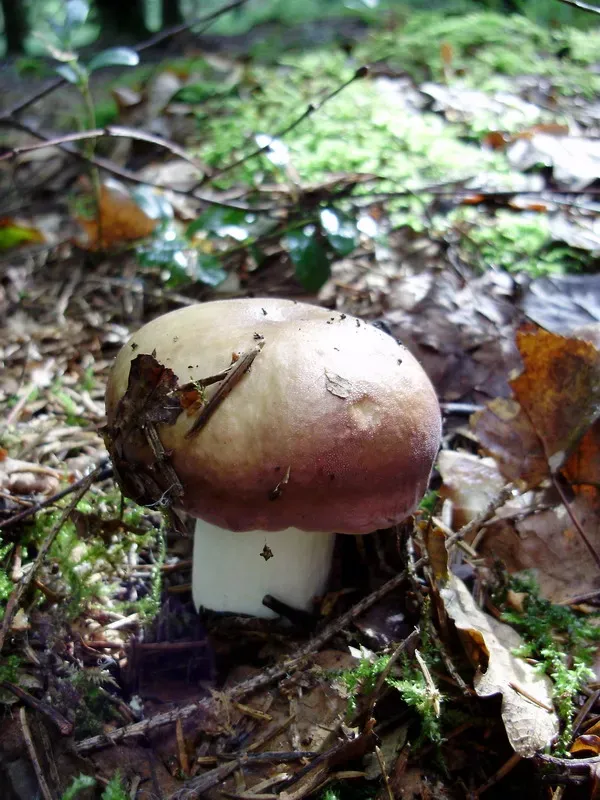
Copper brittlegill
Russula decolorans
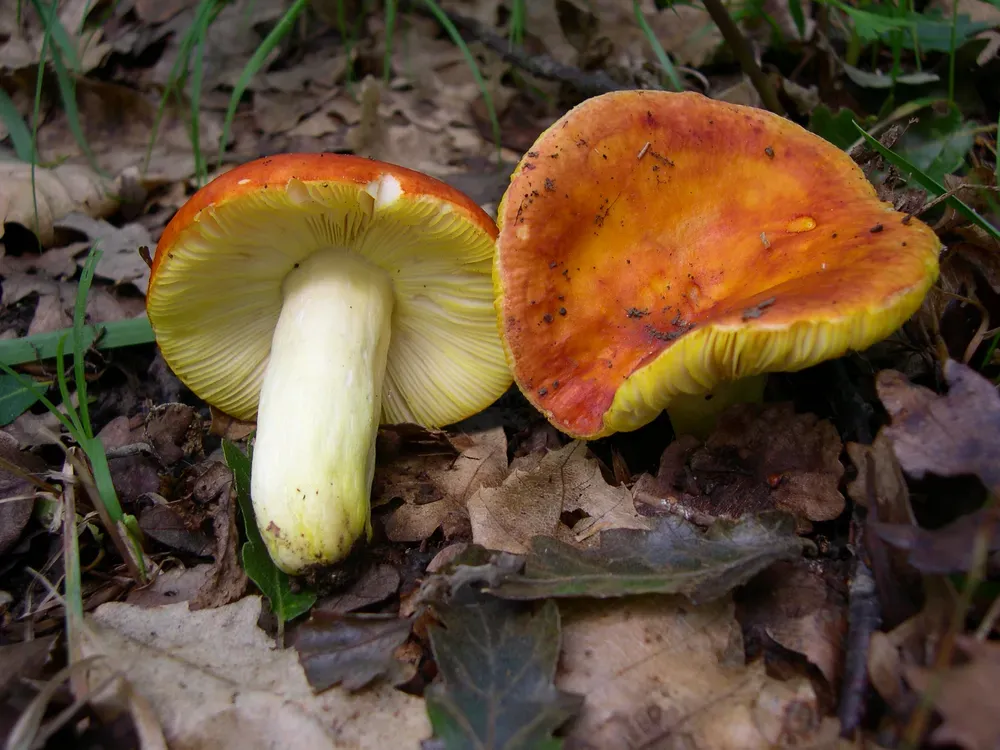
Gilded brittlegill
Russula aurea
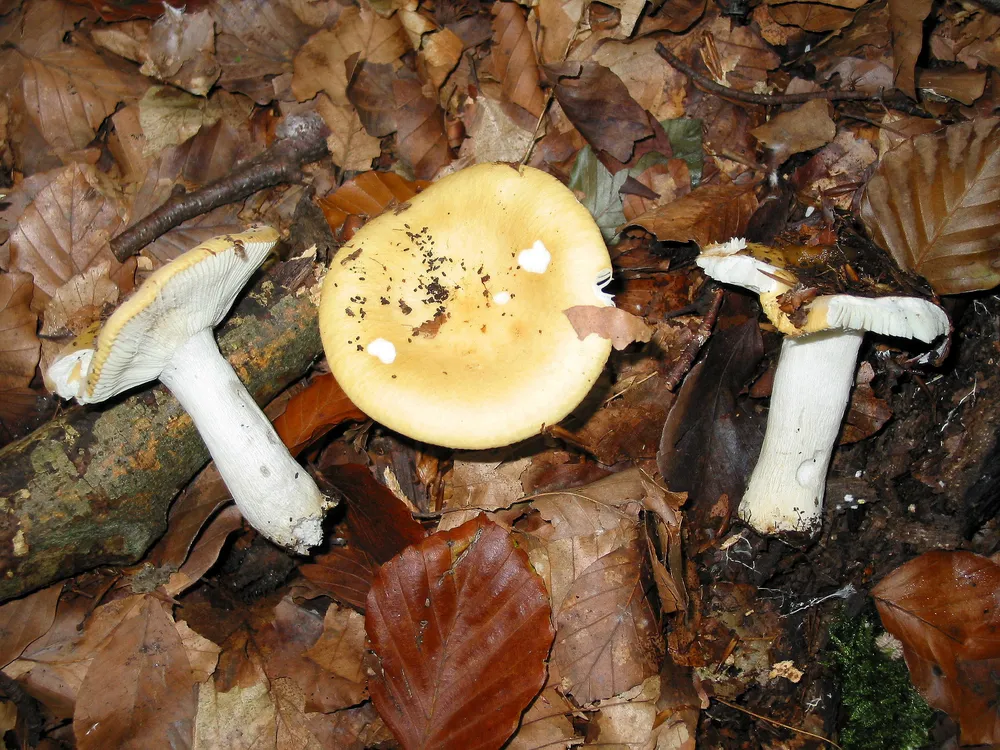
Golden brittlegill
Russula lutea
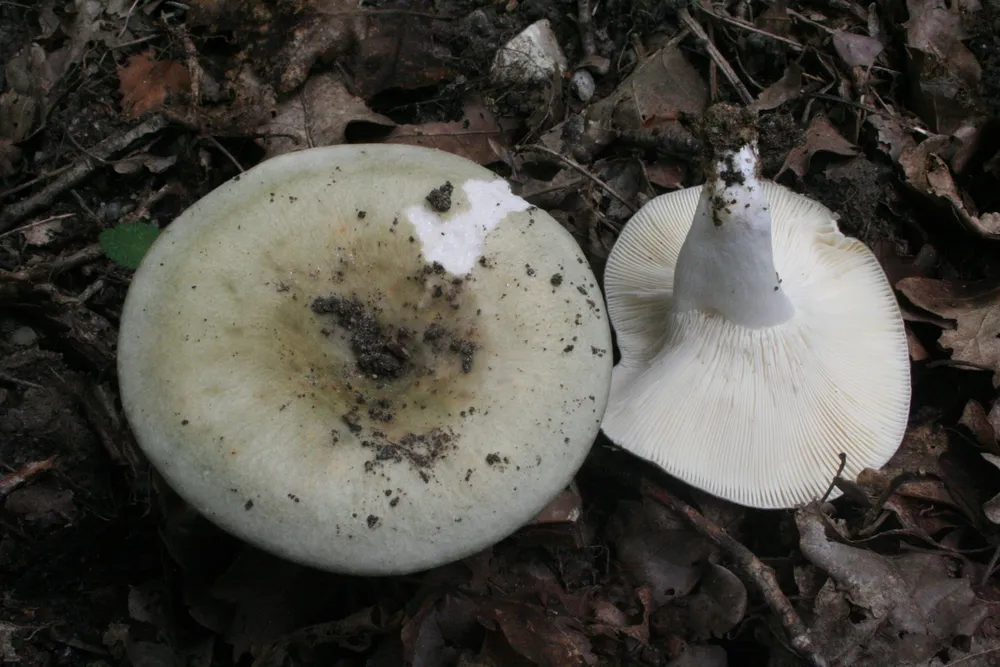
Greasy green brittlegill
Russula heterophylla
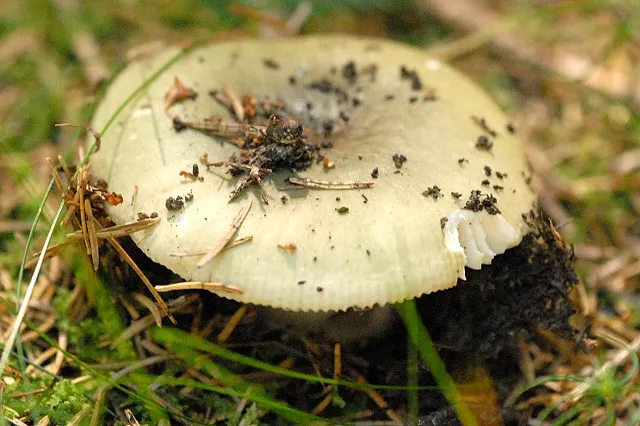
Green brittlegill
Russula aeruginea
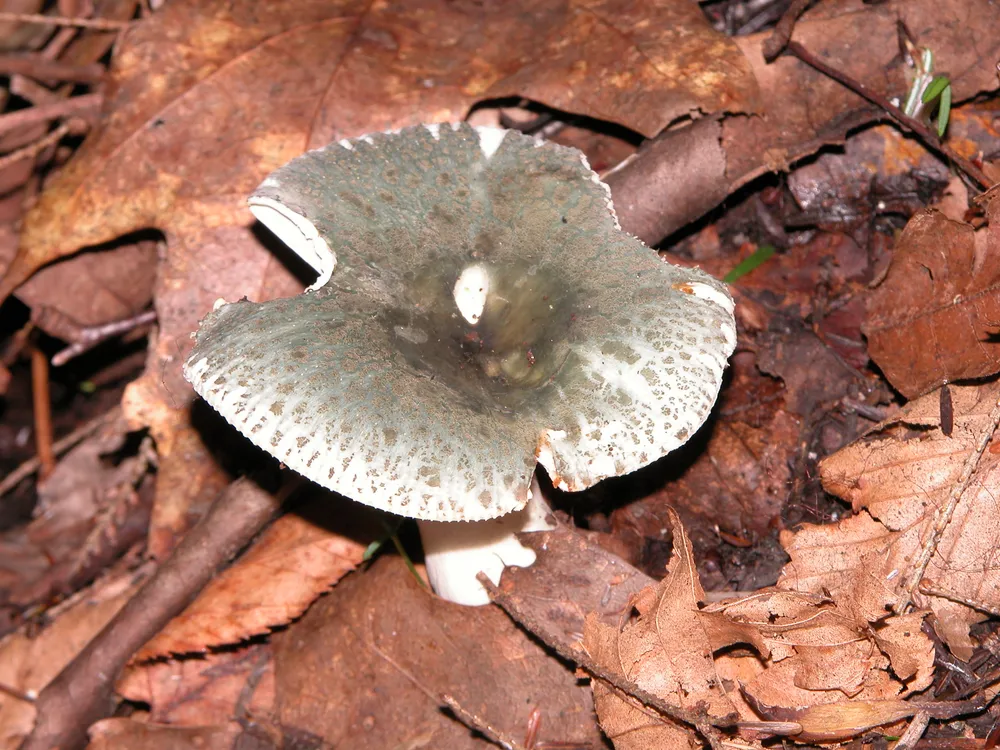
Greencracked brittlegill
Russula virescens
Related reading
Frequently asked questions
Isn't it poisonous because of the "smell"?
No, quite the opposite — it's a very tasty edible mushroom. The fishy, briny smell (like smoked herring or cooked shrimp) is NOT unpleasant, just characteristic. The Ukrainian folk name "vonyucha" ("stinky") is a historical misjudgment; in the literature and among experienced foragers it's an unmistakably identified, prized species. Don't confuse it with rotting mushrooms, which smell completely different (musty, sour).
How do you tell it apart from other wine-red brittlegills?
Key features of R. xerampelina: (1) Distinctly fishy smell (smoked herring, shrimp). (2) Stem flesh quickly yellows and then browns when damaged. (3) No bitterness in the taste (R. queletii is burning-acrid). (4) Spore print yellow-ochre to yellow-brown. (5) Grows in pine and spruce forests.
How do you cook it?
No mandatory pre-boiling needed (fresh specimens aren't bitter). Especially tasty fried with cream, stewed with potatoes, in sauces for fish (it brings out the fishy flavor), in soups. Pickling — keeps its shape beautifully. Drying — works fine, but some of the smell is lost. The classic is a brittlegill "pecheniia" (pan roast) with onions and cream.
Is the fishy smell normal?
Yes, perfectly normal — it's a trait of the species, not a sign of spoilage. The mushroom contains trimethylamine and related compounds (the same ones that give rotten fish its "fishy" smell), but in a healthy fresh mushroom it isn't a sign of spoilage, just a normal metabolite. If the mushroom is old and also smells sour or musty — it's spoiled, don't eat it.
Where should you look for it?
In pine and spruce-pine forests on the forest floor among moss and grass. It likes sandy and slightly acidic soils. Often grows in groups of 5-15 fruiting bodies.
Which regions of Ukraine is it found in?
Common in the forest zone with conifers: the Carpathians, Prykarpattia, Polissia, and in places the forest-steppe in pine stands.
When should you look for it?
August — October, peaking in September. It likes a warm autumn with moderate rain.
Which brittlegills is it confused with?
With R. queletii (fruity brittlegill) — burning-acrid, no fishy smell, thinner stem. With R. integra — mild and sweetish, no yellowing of the flesh, in spruce-beech forests. With R. paludosa (hintapink) — more orange-red, no fishy smell, on sphagnum. The essential check is the fishy smell and the yellowing of the stem flesh.
Is Crab brittlegill edible or poisonous?
Does Crab brittlegill have gills or pores?
What does the cap of Crab brittlegill look like?
What does the stem of Crab brittlegill look like?
Sources
- [1]Вікіпедія (українська)
- [2]Атлас грибів України, Зеров Д.К. (1979)
- [3]MycoBank Database
- [4]Index Fungorum
- [5]GBIF
- [6]iNaturalist Ukraine