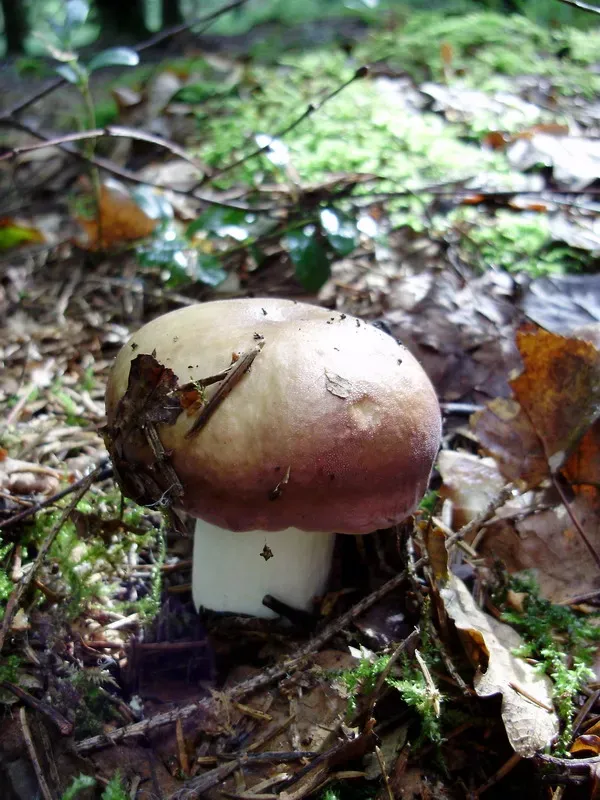
Copper brittlegillRussula decolorans
Expert-verifiedUpdated October 3, 2026
Passport
- Edibility
- Edible
- Season
- Aug — Oct
- Hymenophore
- Gilled
- Cap color
- Red
- Size
- Large (over 15 cm)
- Smell
- Odorless
- Reviewed
- Yes ✓
Quick answers
Where to look?
Conifer forest, Mixed forest
When does it appear?
Aug — Oct
Active months: August, September, October.
How to recognize it? Three signs
- Cap color: Red, Orange, Brown
- Cap shape: Convex
- Smell: Odorless
Fruiting season
August – October
Description
The copper brittlegill (Russula decolorans) is one of many species of the genus Russula in our pine and mixed forests. What sets it apart: its flesh turns gray when cut and in dead parts of the mushroom, and then black. This isn't a sign of toxicity but a characteristic reaction of the species — it's where the species name "decolorans" ("losing color") comes from.
In Ukraine it's widespread in pine and mixed forests with pine throughout the forest zone — Polissia, the Carpathians, the Carpathian foothills, the Western Forest-Steppe. It forms mycorrhiza mainly with pine, less often with spruce and birch. It turns up regularly but not abundantly — single specimens or small groups. Season: from late summer to late fall.
Edibility: good, but with caution. The genus Russula has many species, and not all of them have a clearly established edibility. In Finland and Scandinavia the copper brittlegill is a popular forager's find. Once you know for certain it's a brittlegill (flesh that snaps like chalk, no ring, no volva), you can follow this rule: brittlegills with a mild-tasting crumb are edible; those with a hot, burning, or bitterish taste — do NOT pick. Just touch the crumb to your tongue and spit it out. The rule only applies to the genus Russula: greenish brittlegills can be confused with the death cap, so never taste a mushroom you haven't identified to genus. The copper brittlegill tastes mild, so when correctly identified it's safe. It fries and pickles nicely. You can dry it, but the aroma weakens.
Cap
Cap up to 15 cm, hemispherical in young mushrooms, plano-convex in mature ones or with a slight depression in the center. Color reddish-orange, brick-red, fading with age to ocher-yellowish or gray-brick. The surface is sticky in wet weather and dry and matte in dry weather. The skin partly peels off.
Hymenophore
Gills attached to the stem. White when young, cream with age, yellowish in mature mushrooms. When pressed and in damaged spots they turn slightly gray. Spore print pale ocher.
Stem
Stem up to 12 cm tall, 1.5–3 cm thick, cylindrical, with no ring and no volva. White in young mushrooms, becoming gray or gray-brown with age, especially in the lower part. The surface is smooth, sometimes finely ribbed.
Flesh
Flesh white, springy in young mushrooms and cottony in old ones. A characteristic trait: when cut or damaged it gradually turns gray, sometimes all the way to black. This isn't a sign of toxicity but a diagnostic trait of the species. A dried mushroom has gray-brown flesh.
Smell
Smell faint, mushroomy, with no distinct notes. Taste mild, bland — an important sign, but only for a mushroom already confidently identified as a brittlegill.
Lookalikes
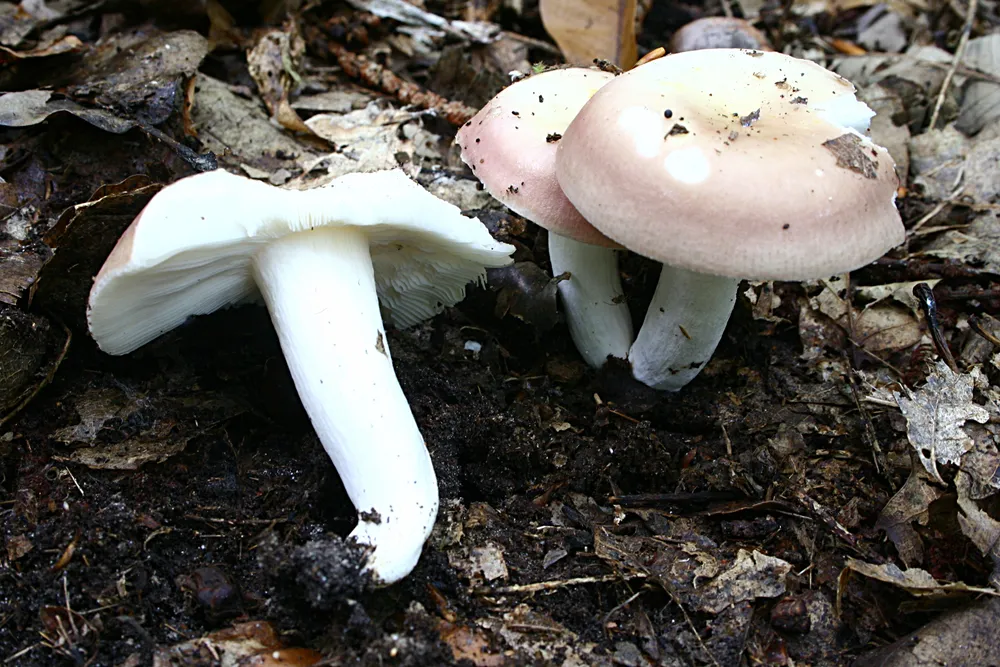
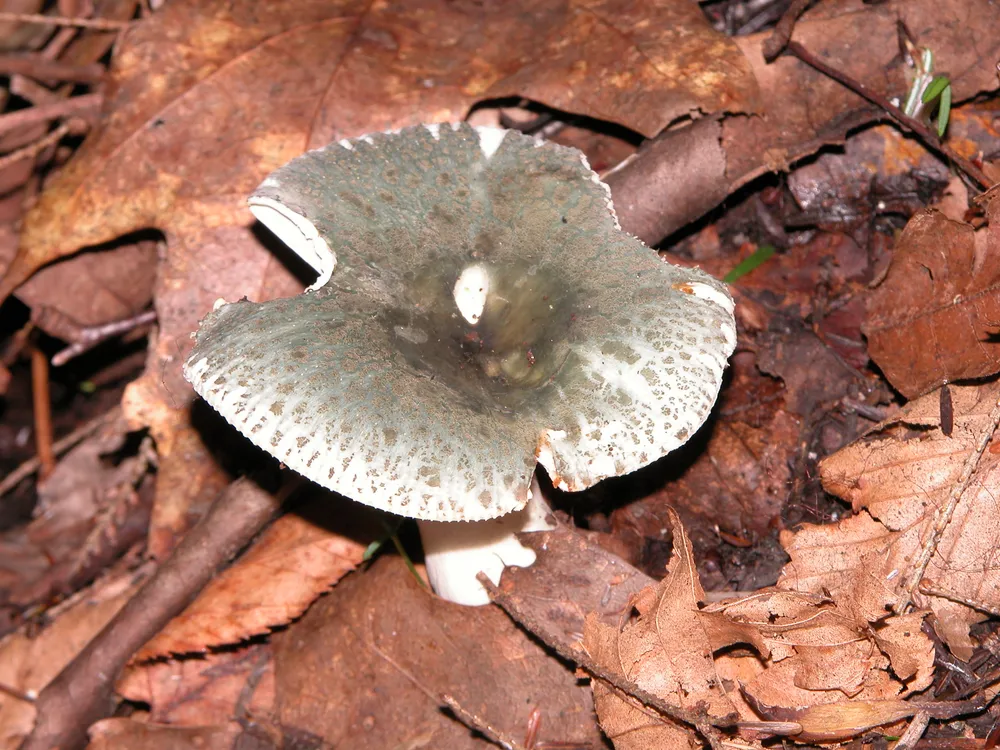
Related species
Mushrooms of the same genus and habitat — to study side by side and never mix up.
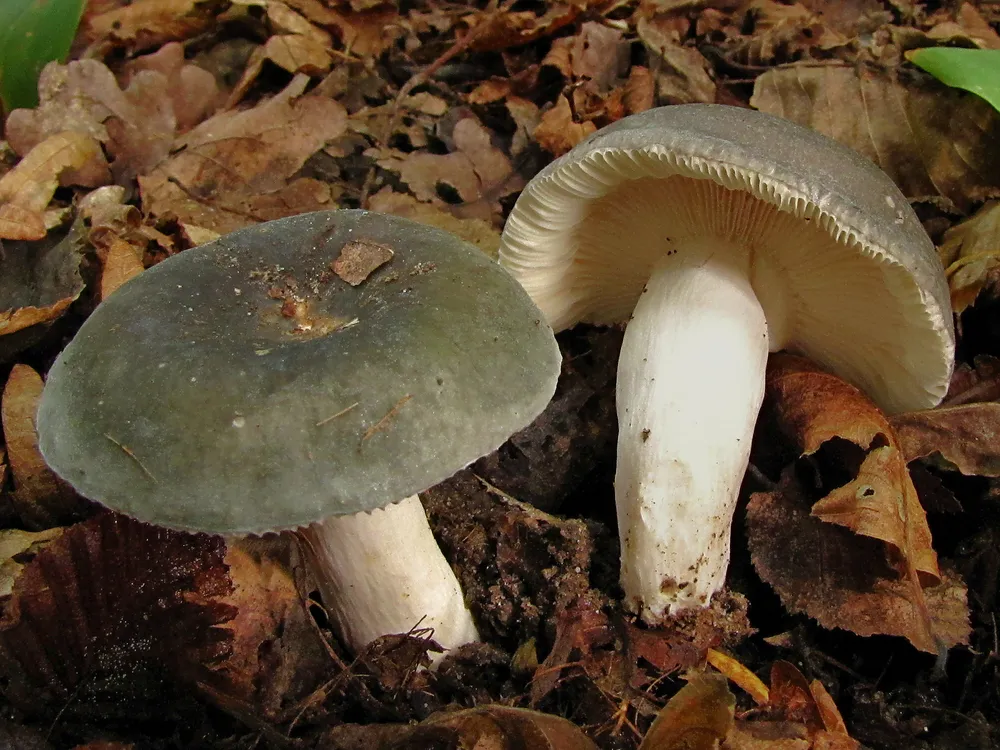
Charcoal burner
Russula cyanoxantha
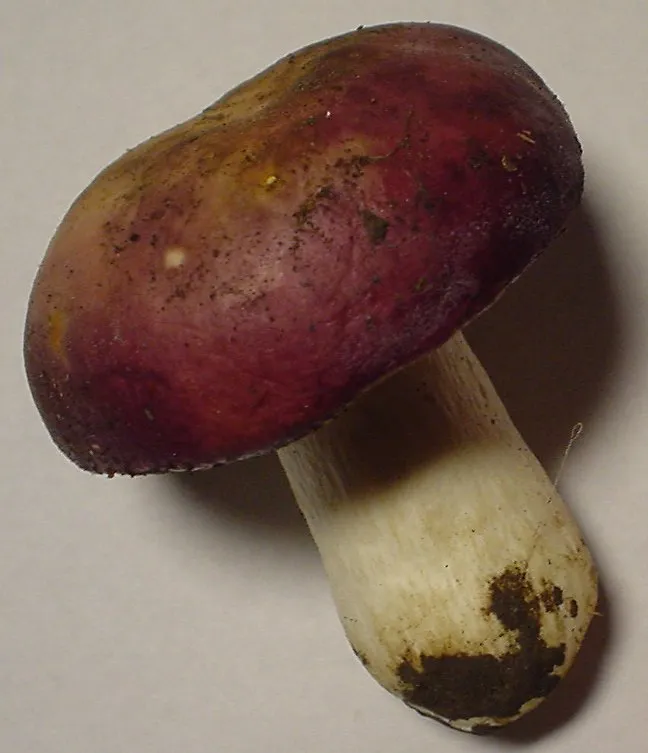
Crab brittlegill
Russula xerampelina
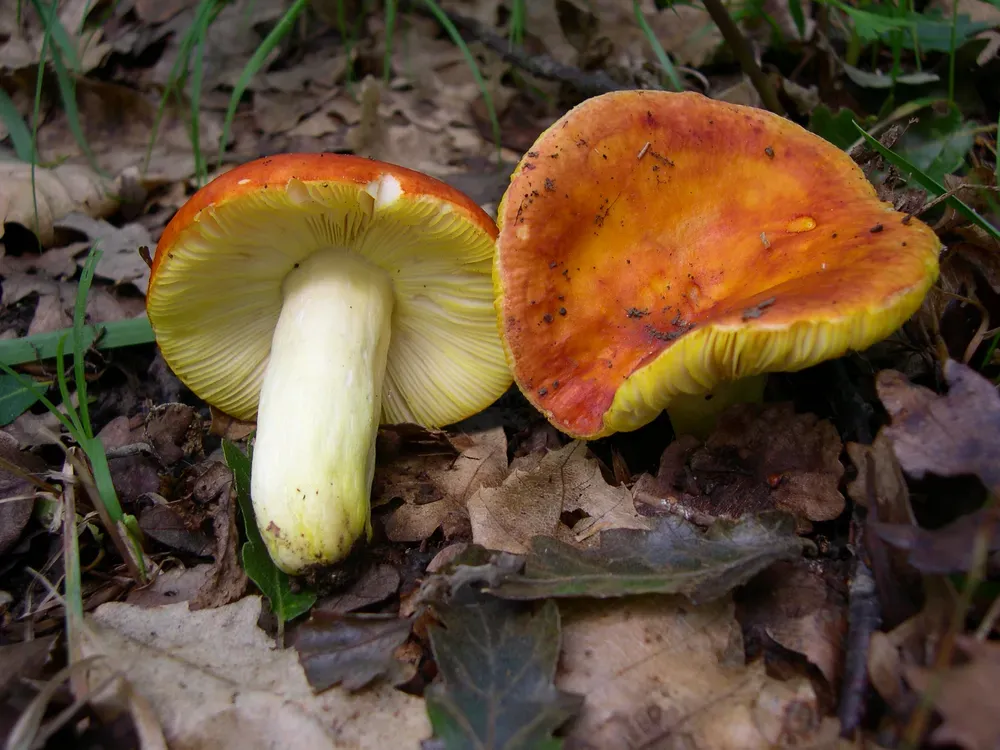
Gilded brittlegill
Russula aurea
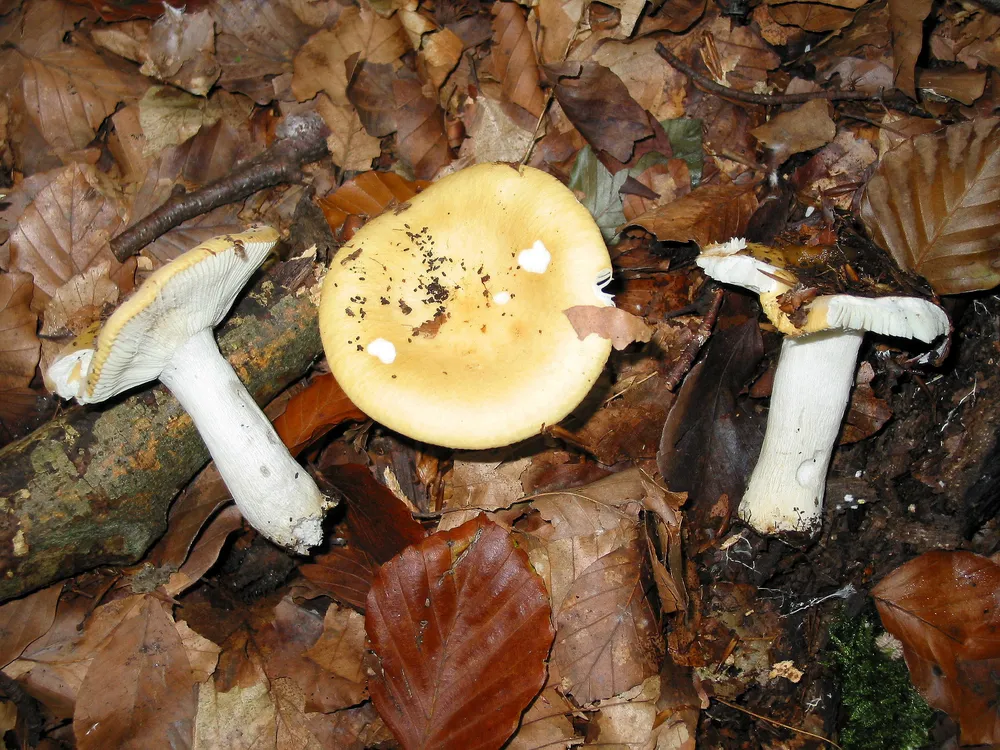
Golden brittlegill
Russula lutea
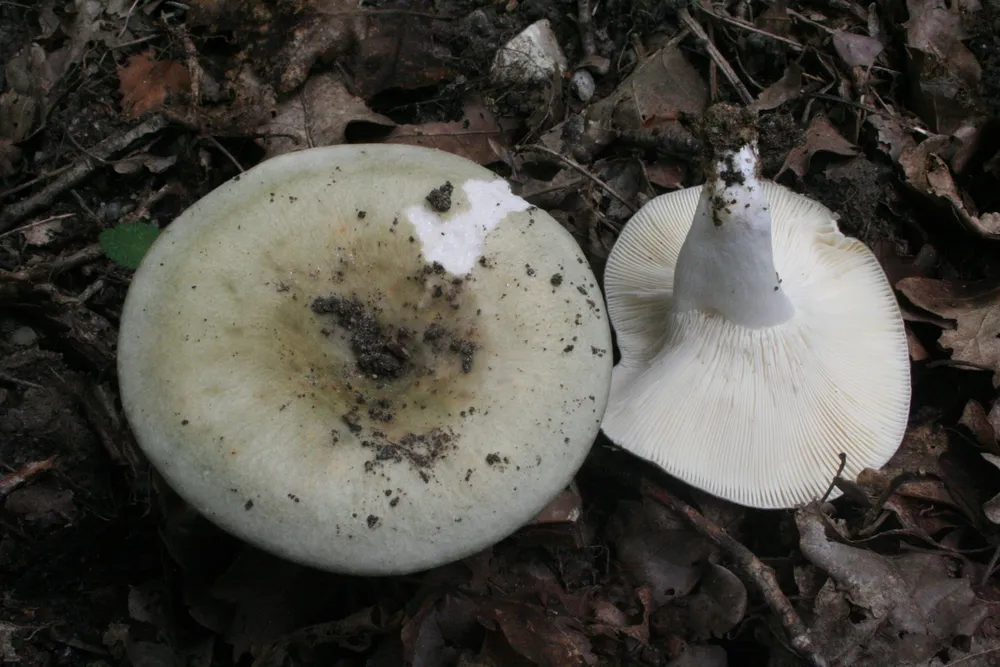
Greasy green brittlegill
Russula heterophylla
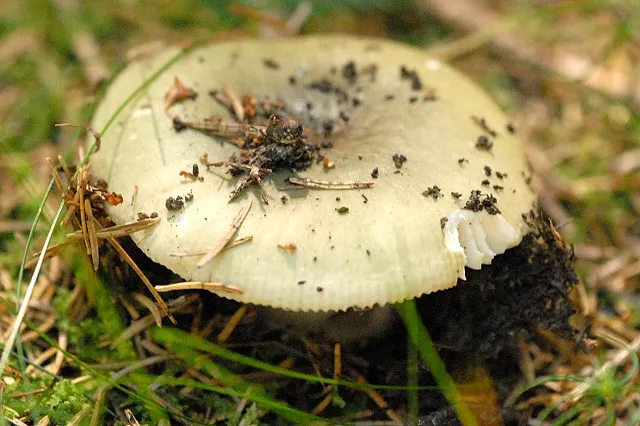
Green brittlegill
Russula aeruginea
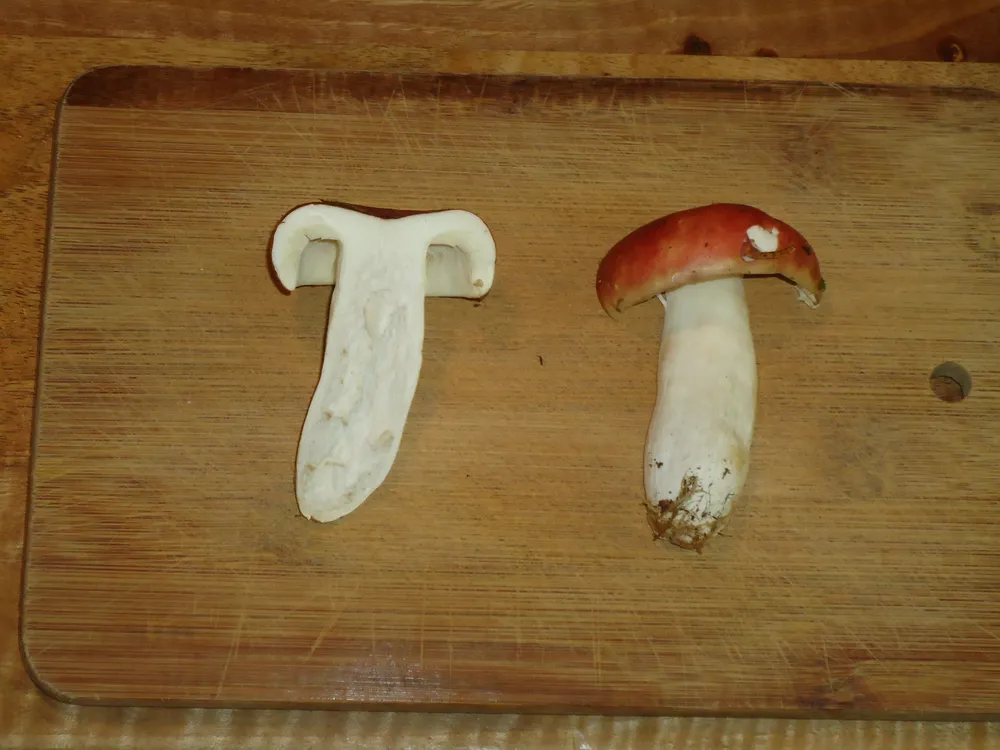
Hintapink
Russula paludosa
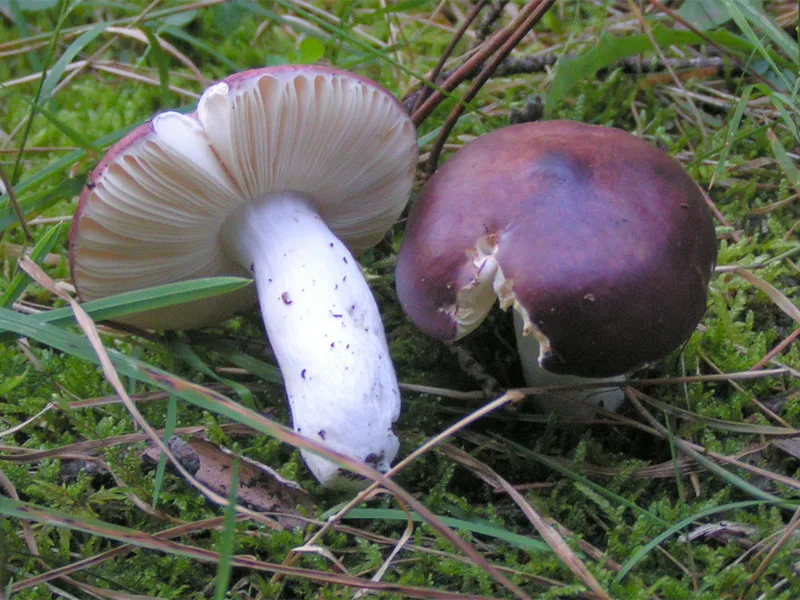
Humpback brittlegill
Russula caerulea
Related reading
Frequently asked questions
How do you check whether a brittlegill is edible?
First make sure it really is a brittlegill: the flesh is brittle and snaps like chalk, there's no ring on the stem, no volva (sac) at the base, and the gills are white or cream. Only then touch a small crumb of the flesh to your tongue — and always spit it out, never swallow. If the taste is mild and bland, that's a good sign for a confidently identified brittlegill. If it's hot, burning, or bitterish, do NOT take it (these are toxic or conditionally poisonous species). Green and greenish brittlegills can be confused with the deadly death cap, so never taste a mushroom you haven't identified to genus. This isn't a universal rule — it only works within the genus Russula. The copper brittlegill tastes mild.
Is it safe that the flesh turns gray?
Yes. Gradual graying and darkening when cut is a characteristic trait of the species (hence the name "decolorans" — "losing color"). It's not a sign of toxicity. Gray spots on old mushrooms and in dead areas are normal too.
Where to look in Ukraine?
Pine and mixed forests with pine. Polissia (Chernihiv, Kyiv and Zhytomyr regions), the Carpathians, the Carpathian foothills, the Western Forest-Steppe. It loves acidic sandy and peaty soils and mossy patches. Less common in pure deciduous forests.
When does it fruit?
August — October, peaking in September. It loves a moderately damp, warm fall. In very dry or cold years it's rare.
How does it differ from other reddish brittlegills?
The genus Russula has dozens of red and orange species. The copper brittlegill stands out by: 1) A gray-brown stem in mature mushrooms, 2) Flesh that turns gray when cut, 3) A mild taste (unlike many acrid red russulas). The gilded brittlegill (R. aurea) is yellower. The sickener (R. emetica) is burning-hot and doesn't turn gray.
Which trees does it form mycorrhiza with?
Mainly with pine (Pinus sylvestris), less often with spruce (Picea abies) and birch (Betula). It's almost absent from pure deciduous forests.
How to cook it?
Young, firm ones — pickle them or fry with onions. In old ones the flesh becomes brittle — good for stewing with vegetables. You don't have to peel the skin. Before cooking, boiling for 5–10 min is enough. You can dry it, but the aroma is weak.
Why do some countries eat it while others are cautious?
In Finland and Scandinavia there's a well-developed tradition of picking brittlegills, and local mycologists tell the species apart well. Ukraine has the tradition too, but species in the genus get mixed up more often. The "taste test for acridity" helps weed out the burning-hot species, but only among mushrooms you've already identified for certain as brittlegills (brittle flesh, no ring, no volva). It doesn't protect you from the death cap.
Is Copper brittlegill edible or poisonous?
Does Copper brittlegill have gills or pores?
What does the cap of Copper brittlegill look like?
What does the stem of Copper brittlegill look like?
Sources
- [1]Вікіпедія (українська)
- [2]Атлас грибів України, Зеров Д.К. (1979)
- [3]MycoBank Database
- [4]Index Fungorum
- [5]GBIF
- [6]iNaturalist Ukraine