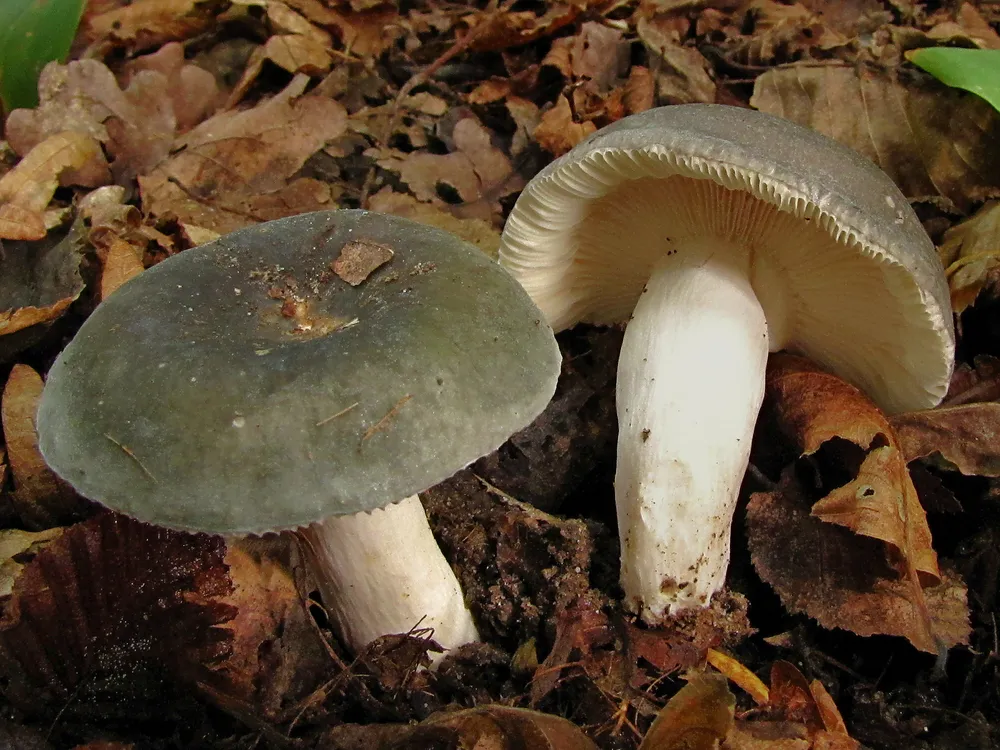
Charcoal burnerRussula cyanoxantha
Expert-verifiedUpdated October 3, 2026
Passport
- Edibility
- Edible
- Season
- Jul — Oct
- Hymenophore
- Gilled
- Cap color
- Violet
- Size
- Medium (5–15 cm)
- Smell
- Pleasant
- Reviewed
- Yes ✓
Quick answers
Where to look?
Deciduous forest, Mixed forest
When does it appear?
Jul — Oct
Active months: July, August, September, October.
How to recognize it? Three signs
- Cap color: Violet, Olive, Brown
- Cap shape: Depressed
- Smell: Pleasant
Fruiting season
July – October
Description
The charcoal burner (Russula cyanoxantha) — one of the best and most popular edible brittlegills in Europe, and alongside R. vesca the flagship of the genus. The Latin epithet cyanoxantha comes from the Greek kyanos — "blue" and xanthos — "yellow" — a nod to the remarkably variable cap color: from violet-blue through green-gray to brownish violet with yellow and olive patches. Folk names include "Madame Green" for its mostly green-violet tones.
Its main unique diagnostic feature — the gills are soft, springy and flexible, bending without breaking when pressed. In all other brittlegills the gills are brittle and crumbly, as in the fragile brittlegill. R. cyanoxantha is the only brittlegill with flexible, springy gills you can run your finger across without breaking them. It is an entirely distinctive trait that lets you recognize the species from your very first encounter.
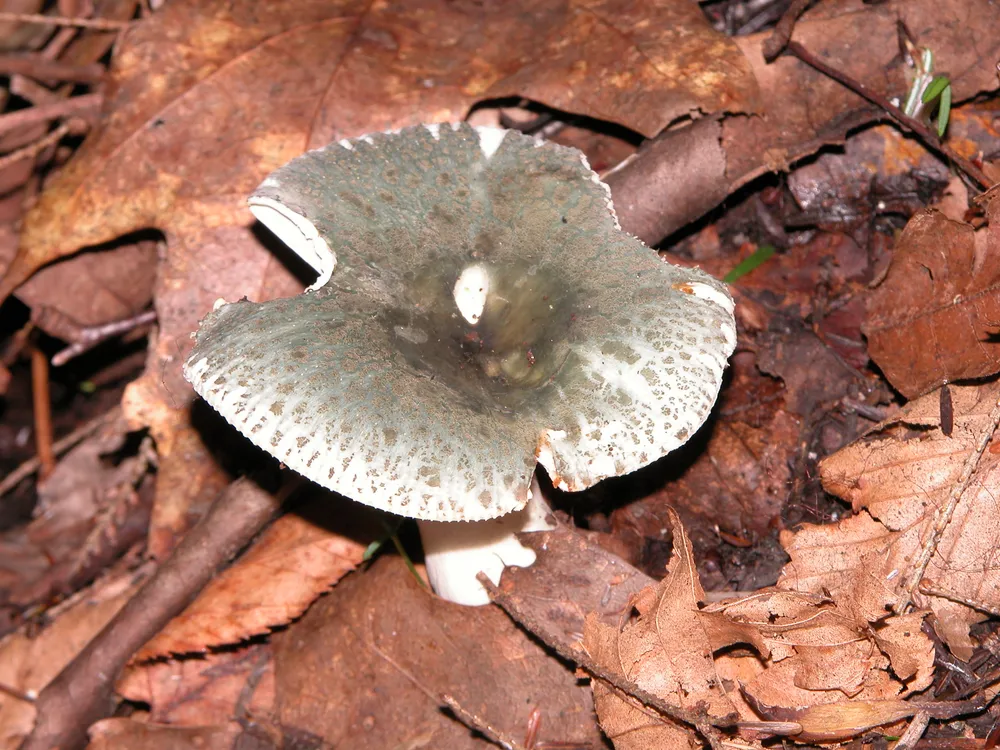
Cap 5-15 cm across, fleshy, convex to flattened with a slightly depressed center, variable in color — violet-blue, green-gray, olive-violet, brownish violet with yellow patches. The color is so diverse that older descriptions long split the species into 4-5 separate species, until molecular phylogenetics showed they are variations of one.
Excellent culinary quality — the flesh is tender, very tasty, with no bitterness and a characteristic nutty note. Cook it like porcini: fry, stew, pickle, dry. No preliminary boiling required. Foragers prize it as one of the finest brittlegills.
Diagnostic features of Russula cyanoxantha: Flexible, springy gills (the only one in the genus!) — the key feature Variable cap color with violet-green dominating Spore print white Flesh pure white, does not change when damaged Taste mild, sweetish and nutty (tongue test) Smell faint, pleasant, neutral-fruity FeSO₄ test: NEGATIVE or very weak (sets it apart from other Russula) Grows in deciduous and mixed forests (beech, oak, birch, hornbeam, spruce)
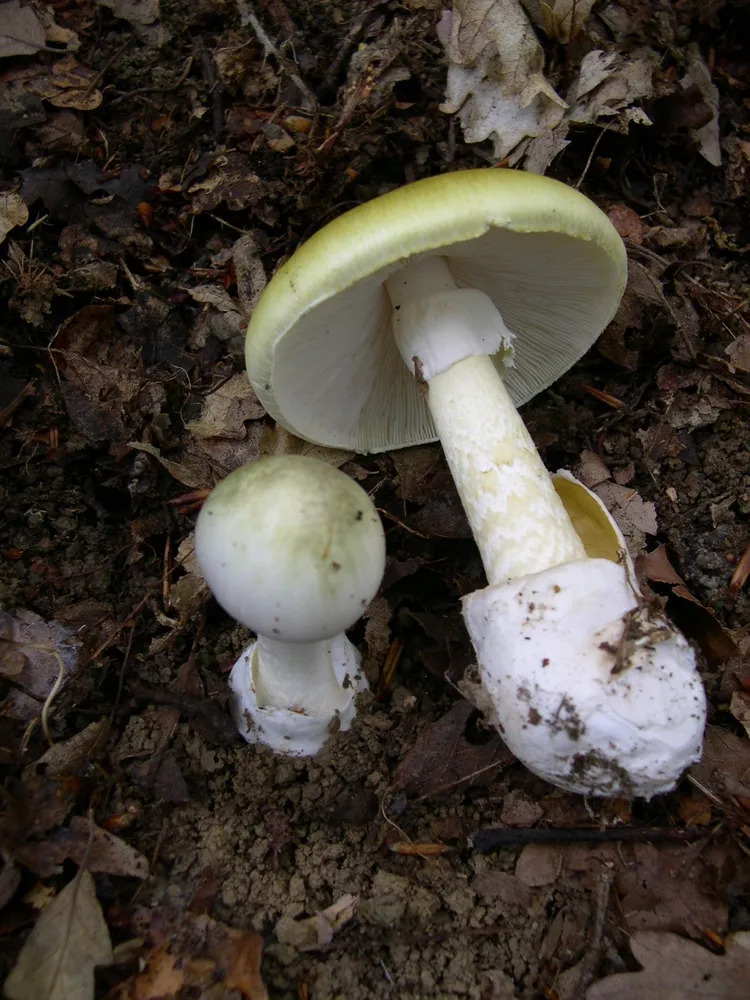
The main risk is confusing it with a young death cap (Amanita phalloides) because of the green-violet palette. Dig up the stem base: no sac/ring — it's a brittlegill. Plus, R. cyanoxantha has flexible gills (the death cap's are ordinary and brittle).
In Ukraine Russula cyanoxantha is common in deciduous and mixed forests: the Carpathians, Prykarpattia, Polissia, the forest-steppe. A mycorrhizal partner of beech, oak, hornbeam and birch. Season July — October.
Cap
Cap 5-15 cm across, when young hemispherical, with age becoming flattened with a slightly depressed center. The cap skin is smooth, slimy in wet weather, dry and matte in dry weather, peeling 2/3 of the way to the center. Color very variable — violet-blue, green-gray, olive-violet, brownish violet with yellow patches. In a single cluster of fruiting bodies you'll often see caps in different shades. Deeper in the center, paler toward the margin, with fine radial grooves.
Hymenophore
Gilled hymenophore — gills adnate or free from the stem, partly forked near the stem, moderately crowded. UNIQUE FEATURE: the gills are flexible and springy and don't break when pressed — run your finger over them and they bend and spring back (unlike all other brittlegills, whose gills are brittle and crumbly). Color pure white to creamy white. Spore print white.
Stem
Stem 5-10 cm tall, 1.5-3 cm thick, firm, fleshy, cylindrical, with a small cavity in old specimens. Color white to cream, sometimes with a faint violet tinge toward the base. Surface smooth with fine lengthwise wrinkles. No ring, no volva.
Flesh
Flesh firm, fleshy, pure white, does not change color when cut — a characteristic of the species. Smell faint, pleasant, fruity-mushroomy, taste mild, sweetish and nutty, with no bitterness or acridity.
Smell
Faint, pleasant, fruity-mushroomy, neutral.
›Scientific synonyms (7)
Agaricus cynoxanthus Pers., Agaricus lividus var. angustatus Pers., Agaricus linnaei var. vagus Fr., Agaricus virescens Krombh., Russula cutifracta Cooke (1881), Russula cutefracta Cooke, Russula aeruginascens Peck
Lookalikes
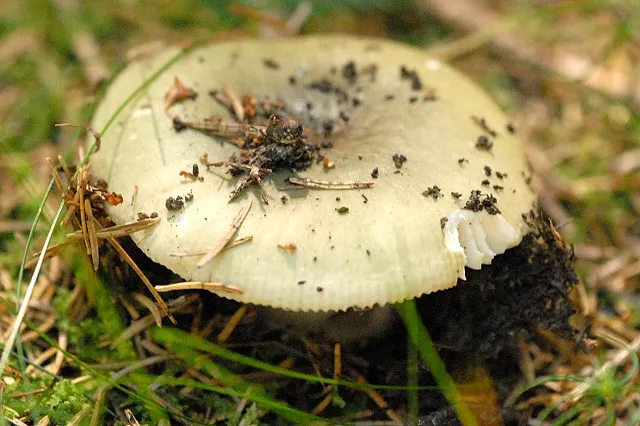
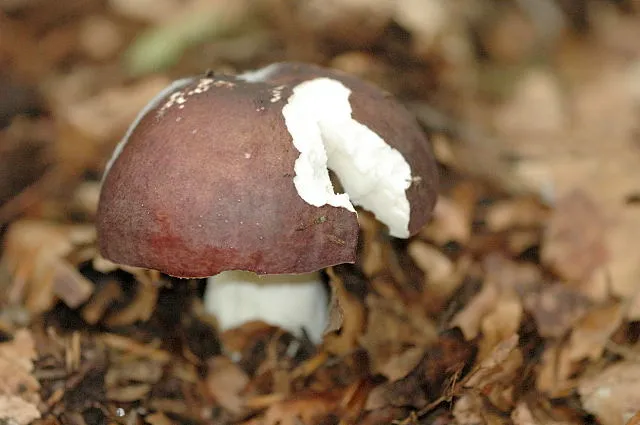
Related species
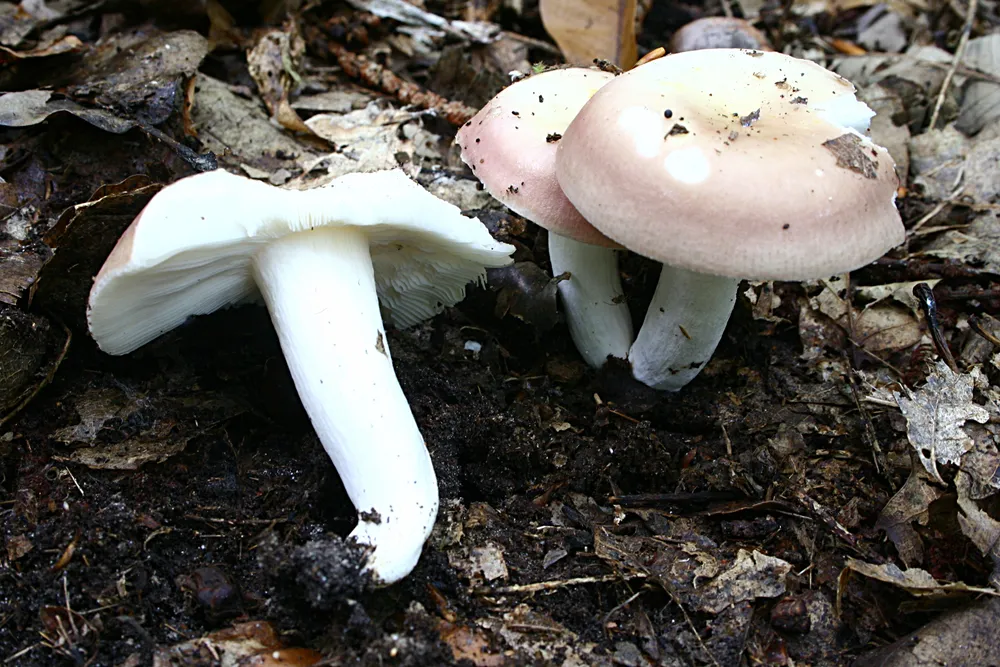
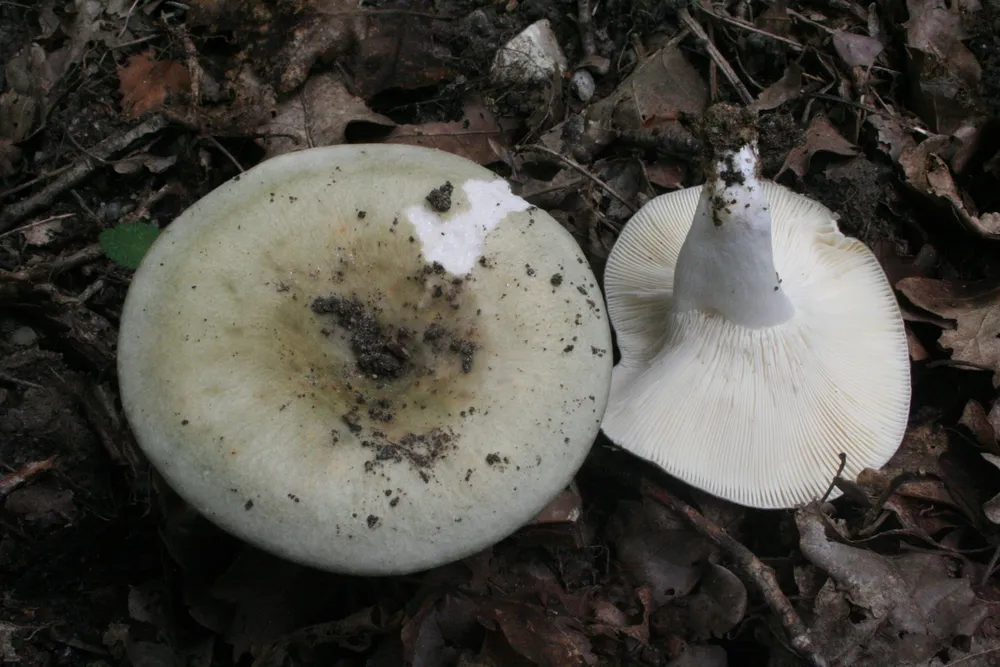
Mushrooms of the same genus and habitat — to study side by side and never mix up.
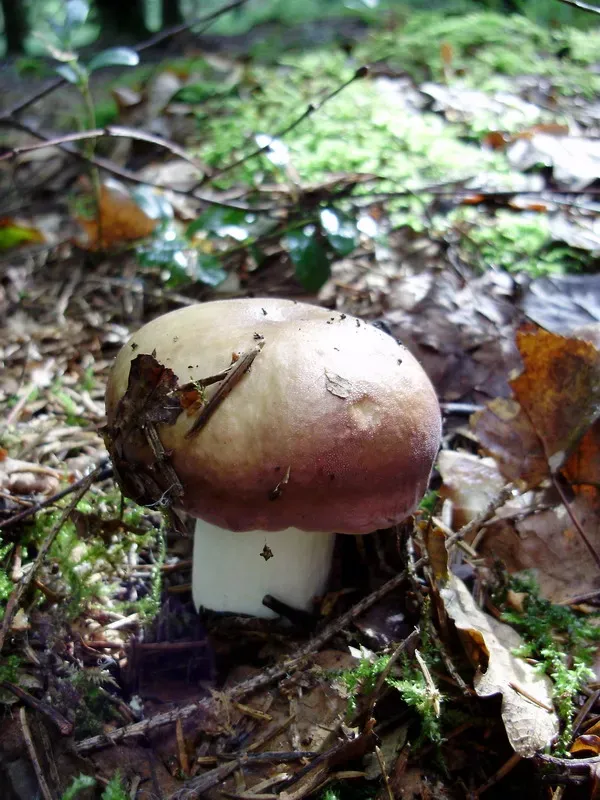
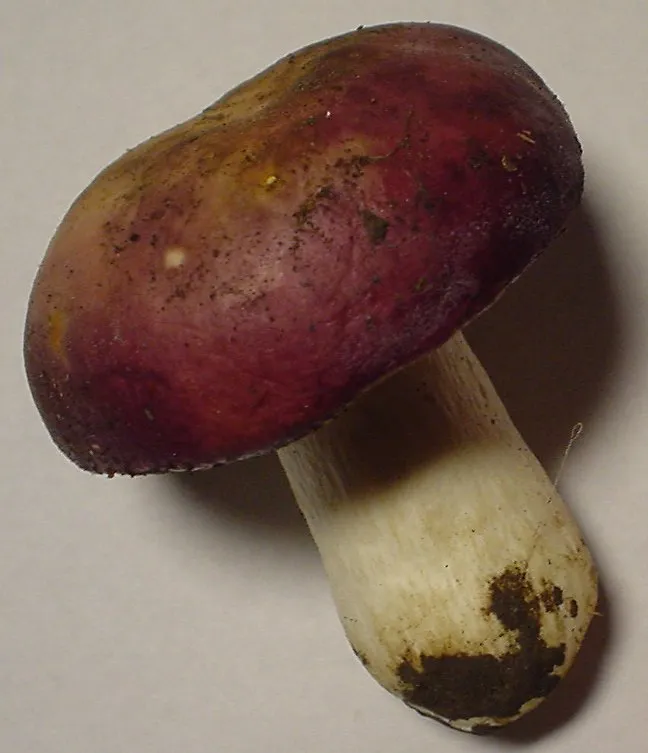
Copper brittlegill
Russula decolorans
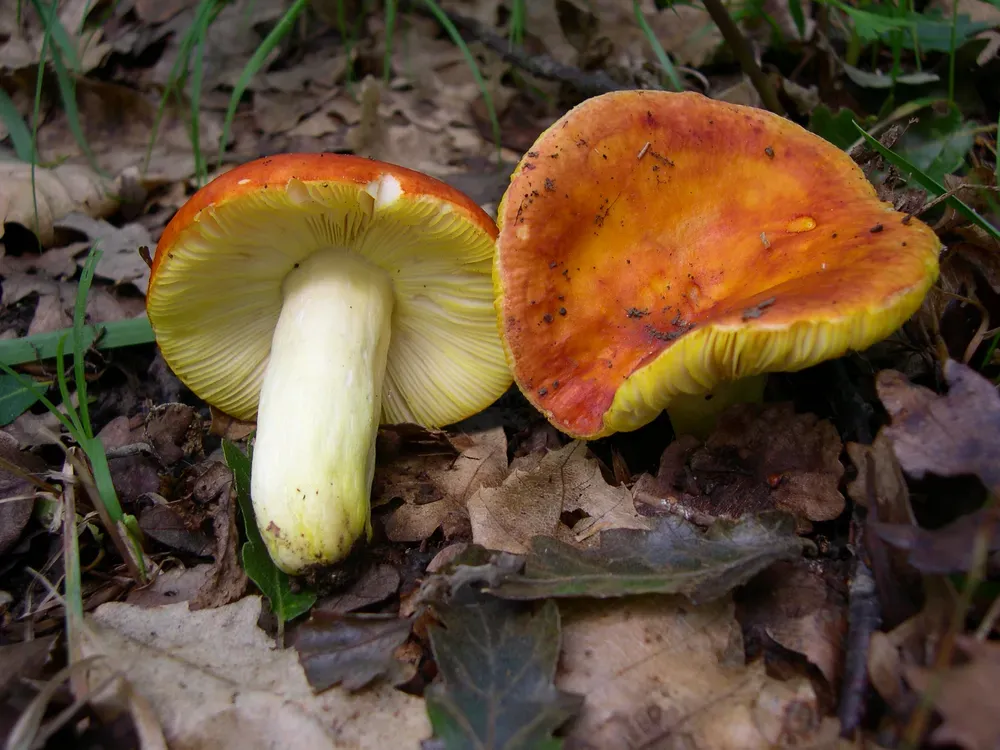
Crab brittlegill
Russula xerampelina
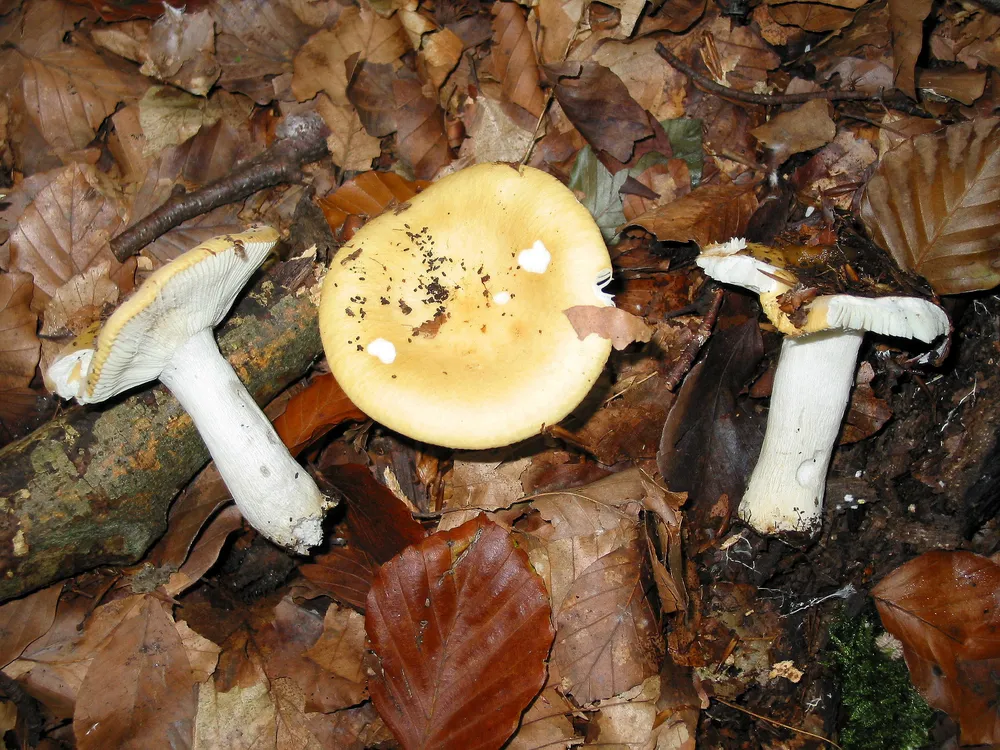
Gilded brittlegill
Russula aurea
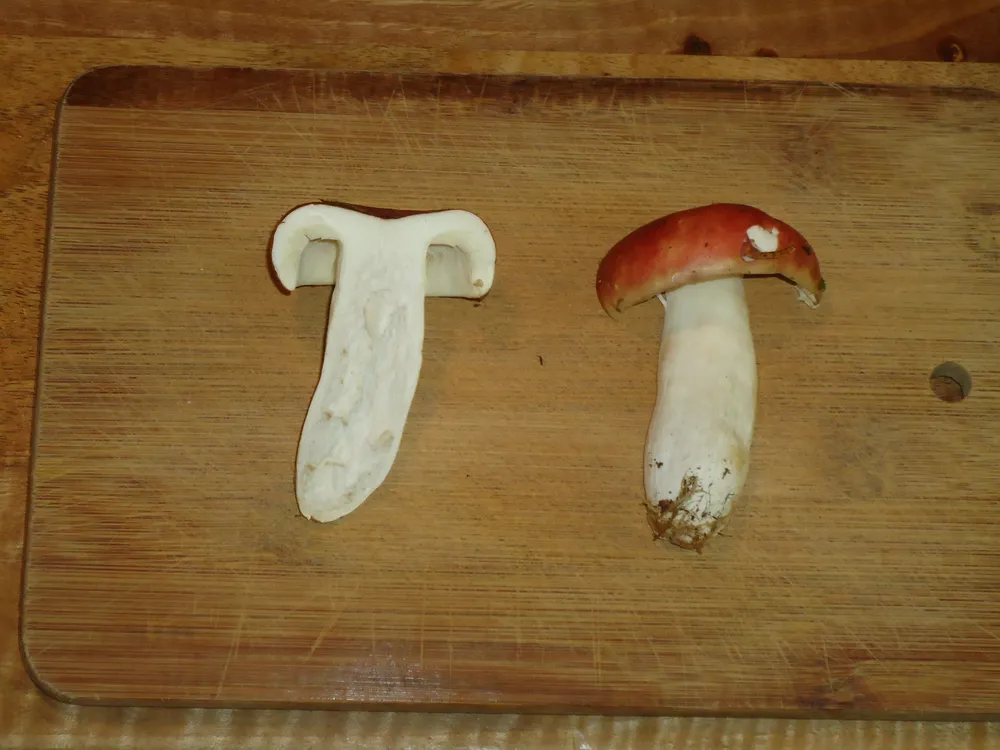
Golden brittlegill
Russula lutea
Hintapink
Russula paludosa
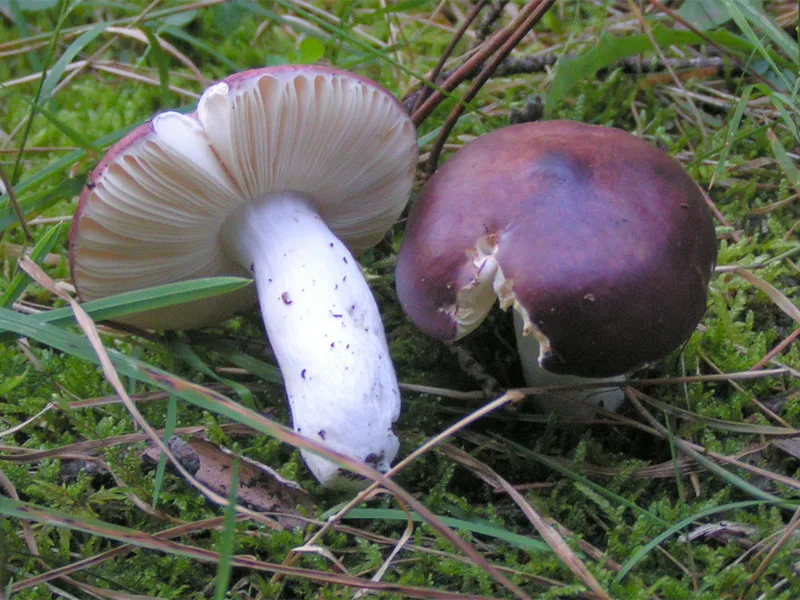
Humpback brittlegill
Russula caerulea
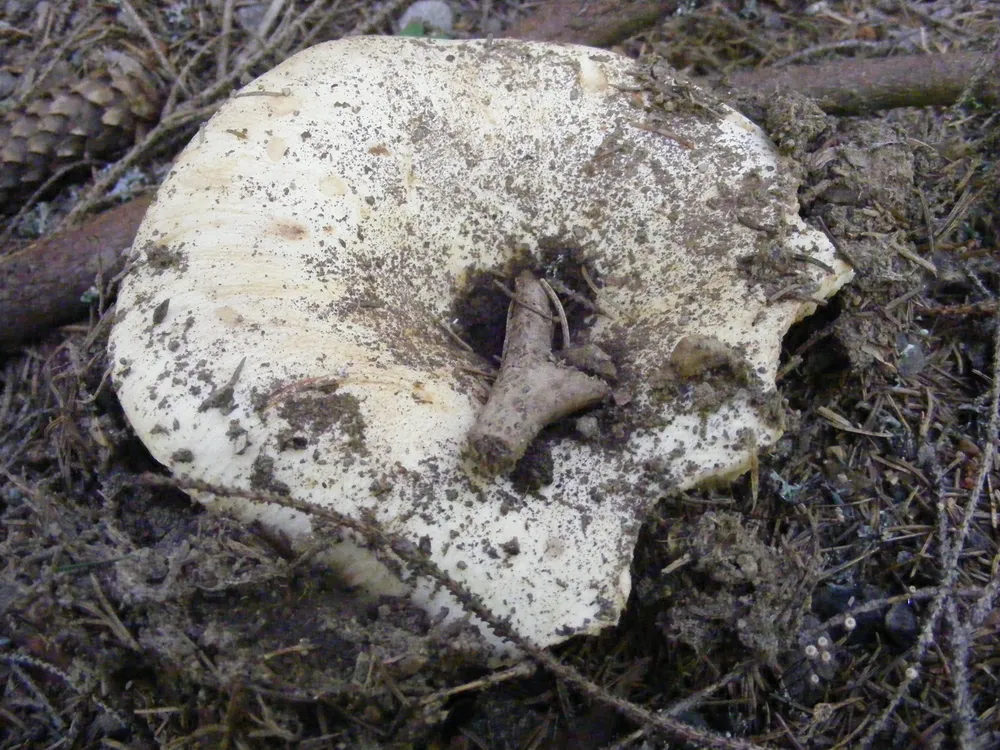
Milk-white brittlegill
Russula delica
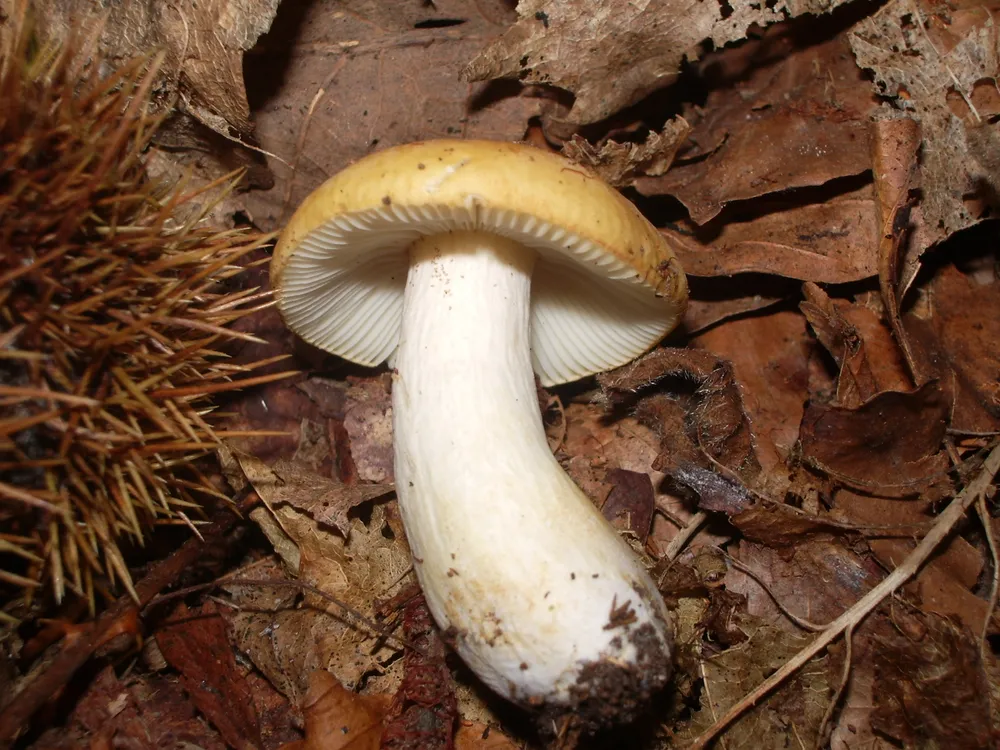
Ochre brittlegill
Russula ochroleuca
Related reading
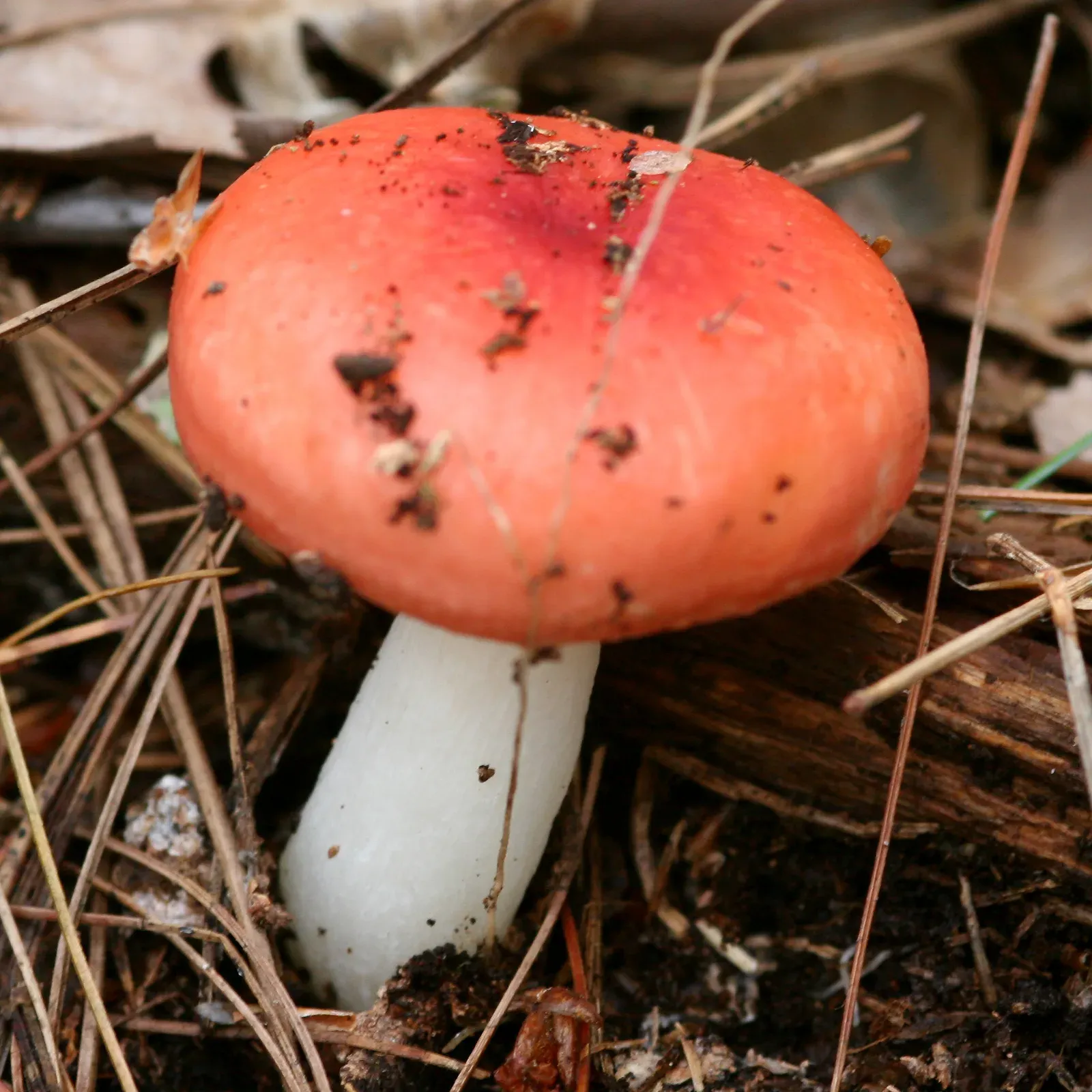 How to identify
Types of brittlegills in Ukraine: a complete guide
Brittlegills are the most colorful family in our forests: green, red, blue, yellow. Some are tasty, others are…
July 18, 2026·2 min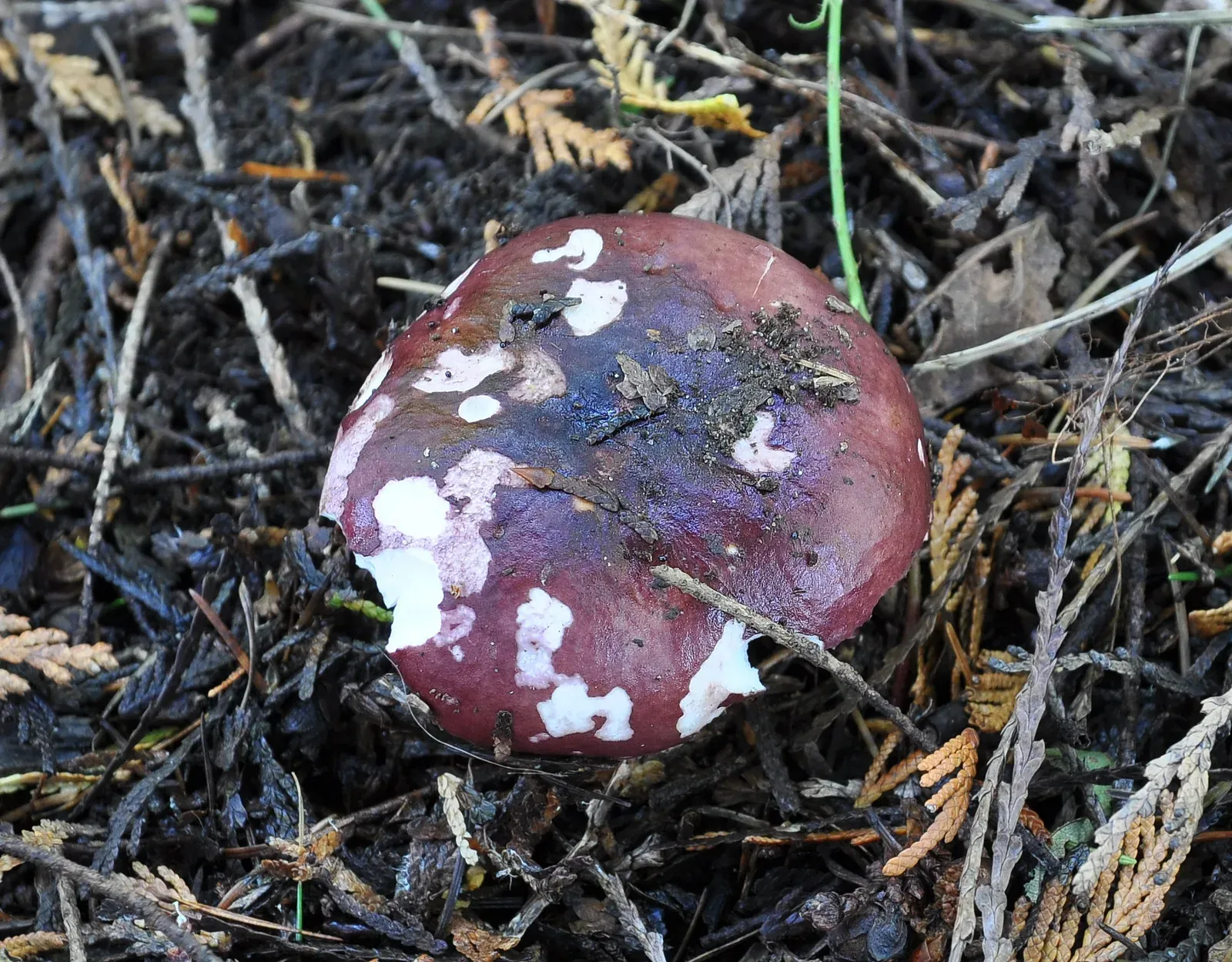 Where & when to forage
Brittlegills in June, the first big flush
Brittlegills are among the most common summer mushrooms. Here's when they appear in June, where they grow, and…
June 2, 2026·3 min Where & when to forage
What mushrooms to pick in June in Ukraine
June opens the real mushroom season. Here's which mushrooms are already growing, where to look for them, and w…
June 2, 2026·6 min
Frequently asked questions
How do you identify it for sure?
UNIQUE FEATURE — flexible, springy gills. Run your finger across the gills: if they bend springily without breaking, it's definitely R. cyanoxantha. If they break and crumble (as in the fragile brittlegill), it's a different brittlegill. Plus — variable violet-green cap color, white spore print, mild taste.
How do you tell it from the death cap?
Dig up the stem base. (1) Death cap — WITH a sac-like VOLVA at the base and a RING on the stem; R. cyanoxantha — neither. (2) Gills: in R. cyanoxantha — flexible and springy (unique!); in the death cap — ordinary and brittle. (3) Smell: R. cyanoxantha — fruity, neutral; death cap — sickly sweet in mature specimens. If there's even a hint of a sac — DON'T PICK IT.
How do you cook it?
No preliminary boiling required (no bitterness when fresh). Young ones — fry with cream (a superb dish!), stew with potatoes, add to soups. Pickle — it keeps its shape and color beautifully. Dry — works fine, the aroma partly survives. In sauces — a rich nutty flavor.
Where do you find it?
In deciduous and mixed forests — under beech, oak, hornbeam, birch, spruce. On the forest floor among moss and grass. Prefers slightly acidic and neutral soils. Often grows in groups of 5-15 fruiting bodies.
Which regions of Ukraine does it grow in?
Common throughout the forest zone: the Carpathians, Prykarpattia, Polissia, the forest-steppe. In the steppe — in planted oak and beech woods.
When do you look for it?
July — October, peaking in August-September. Loves a warm autumn with moderate rain.
Which brittlegills is it confused with?
With R. vesca (edible, a flagship) — flesh-pink with a "toothed crown" of gills, with brittle gills. With R. heterophylla (greasy green brittlegill) — also green-olive, but with brittle gills and flesh that turns faintly pink. With R. virescens (greencracked brittlegill) — scaly, cracked cap skin. The decisive check — flexible gills = R. cyanoxantha.
Is Charcoal burner edible or poisonous?
Does Charcoal burner have gills or pores?
What does the cap of Charcoal burner look like?
What does the stem of Charcoal burner look like?
What do Charcoal burner smell and taste like?
Sources
- [1]Вікіпедія (українська)
- [2]Атлас грибів України, Зеров Д.К. (1979)
- [3]MycoBank Database
- [4]Index Fungorum
- [5]GBIF
- [6]iNaturalist Ukraine